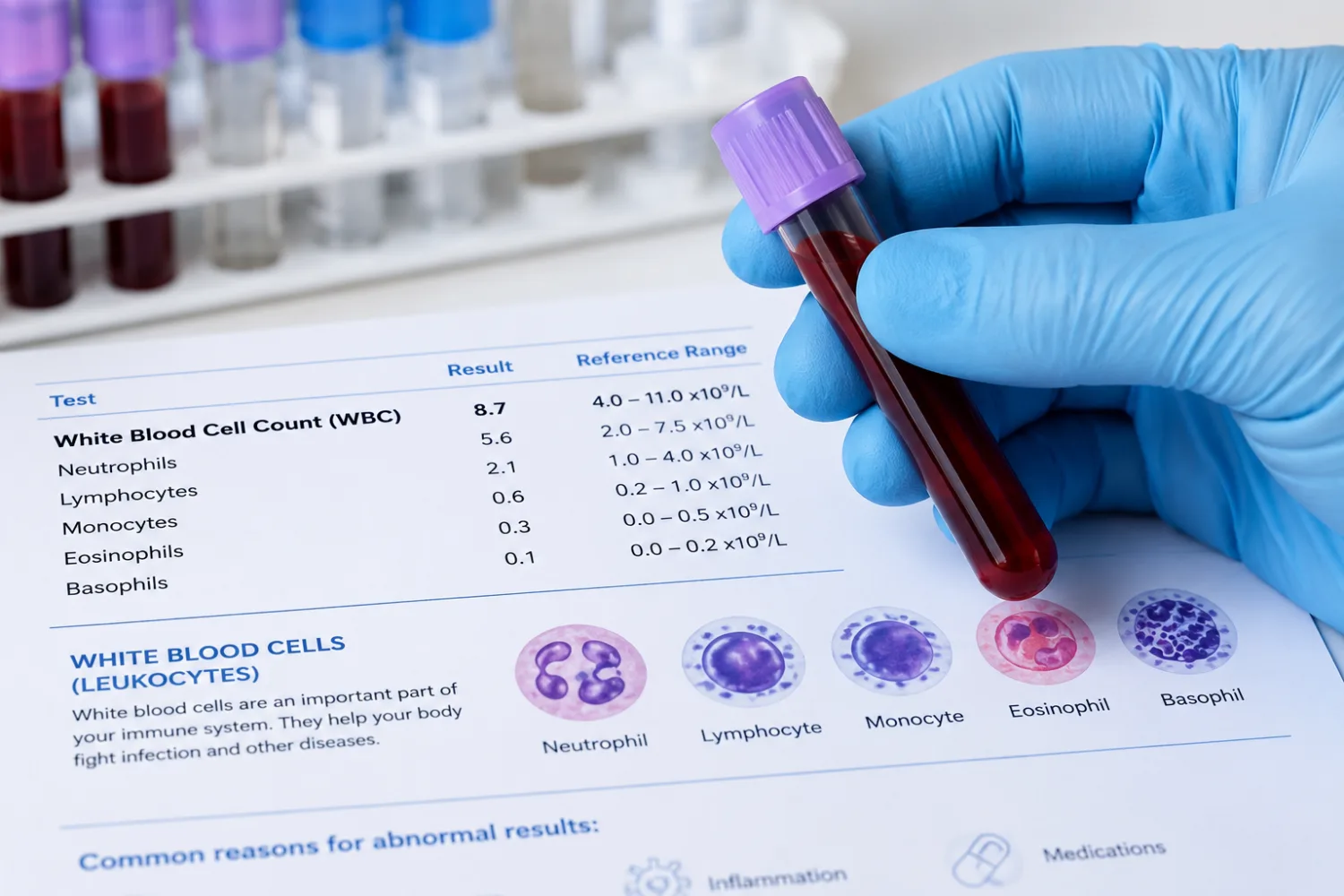
A white blood cell count, often shortened to WBC or white cell count, is part of a full blood count. It measures the number of white blood cells in your blood and often breaks them down into different types, such as neutrophils, lymphocytes, monocytes, eosinophils and basophils.
White blood cells are part of your immune system. They help your body fight infection, respond to inflammation and deal with injury. When your result is high or low, it does not usually point to one diagnosis by itself. Instead, it gives your doctor a clue about what may be happening in your body.
A high white blood cell count can happen with infection, inflammation, stress, steroid medicines, smoking, pregnancy, autoimmune conditions and, less commonly, blood disorders. A low white blood cell count can happen after viral infections, with some medicines, autoimmune conditions, vitamin deficiencies, bone marrow problems or cancer treatments. Sometimes a result is only slightly outside the range and settles when repeated.
This guide explains what your white blood cell count means, what the different white cell types do, what can cause high or low results, when to seek medical advice, and what usually happens next.
Important: This article is for general information only. Blood test results must be interpreted alongside your symptoms, medical history, medicines, examination findings and previous results. Always discuss abnormal results with your GP, specialist or the clinician who arranged the test, especially if you feel unwell or have persistent symptoms.
What are white blood cells?
White blood cells, also called leucocytes or leukocytes, are immune cells that circulate in the blood and move into tissues when needed. They help defend the body against infection, remove damaged tissue, control inflammation and respond to allergic or immune triggers.
Most white blood cells are made in the bone marrow. Some mature and work mainly in the blood, while others live in lymph nodes, the spleen, the gut, the skin and other tissues. That is why a blood test only shows part of the immune system picture.
White blood cells are measured as part of a full blood count. If you want a broader explanation of the whole test, including red blood cells, haemoglobin and platelets, see our guide to Full Blood Count Results Explained.
What is a white blood cell count?
A white blood cell count measures the total number of white blood cells in a set volume of blood. On UK blood test reports, it is usually shown as:
- WBC
- White cell count
- White blood cells
- Total white count
- Leucocyte count
The result is usually reported in x 109/L. For example, a WBC of 7.2 means 7.2 x 10⁹ white blood cells per litre of blood.
Lab Tests Online UK explains that the white blood cell count is used to help detect infections, inflammation, immune disorders and blood diseases, and to monitor conditions that affect the immune system. You can read their overview of the white blood cell count.
What is the white blood cell differential?
The total white blood cell count is useful, but the differential is often even more helpful. The differential shows the number of each main type of white blood cell.
The main types are:
- Neutrophils — often rise with bacterial infection, inflammation, stress and steroid medicines.
- Lymphocytes — important for viral infections and longer-term immune responses.
- Monocytes — help clean up infection and inflammation; can rise during recovery or chronic inflammation.
- Eosinophils — often linked with allergy, asthma, eczema, parasites and some drug reactions.
- Basophils — usually present in very small numbers; sometimes linked with allergy or rare blood conditions.
So, if your report says your “white cells are high”, the next question is usually: which type is high? A high neutrophil count means something different from a high lymphocyte count or a high eosinophil count.
Typical white blood cell count reference range
Reference ranges vary by laboratory, age, pregnancy status and clinical context. Always use the range printed next to your own result.
As a broad adult guide, many UK laboratories use a total white blood cell count range of around:
4.0 to 11.0 x 10⁹/L
One NHS pathology reference range lists typical adult ranges as WBC 4.0–11.0 x 10⁹/L, neutrophils 1.5–8.0 x 10⁹/L, lymphocytes 1.0–4.0 x 10⁹/L, monocytes 0.2–1.0 x 10⁹/L, eosinophils 0.0–0.5 x 10⁹/L and basophils 0.0–0.2 x 10⁹/L. You can see an example from North Bristol NHS Trust.
| Result | Broad meaning |
|---|---|
| Low WBC | Fewer white blood cells than expected. May increase infection risk depending on which type is low and how low it is. |
| Normal WBC | Reassuring, but does not rule out all infection, inflammation or immune conditions. |
| High WBC | More white blood cells than expected. Often due to infection, inflammation, stress or medicines, but sometimes needs further investigation. |
Why might a white blood cell count be checked?
A white blood cell count is checked for many reasons. It may be part of a routine health check, or it may be requested because you have symptoms.
Common reasons include:
- fever or suspected infection;
- tiredness, weakness or feeling generally unwell;
- recurrent infections;
- unexplained weight loss or night sweats;
- swollen lymph nodes;
- abdominal pain or suspected inflammation;
- monitoring inflammatory or autoimmune conditions;
- checking for side effects of medicines;
- monitoring after chemotherapy or other treatments affecting the immune system;
- following up an abnormal private blood test.
If your result was part of a wider private blood test panel and you are not sure what to do next, see What to Do After Abnormal Private Blood Test Results.
High white blood cell count explained
A high white blood cell count is called leucocytosis. It means there are more white blood cells in the blood than expected. This often happens because the immune system has been activated.
In many cases, a high white blood cell count is temporary. It may rise during an infection, after physical stress, after surgery, during inflammation or while taking certain medicines. The level may return towards normal once the trigger settles.
Common causes of a high white blood cell count
Possible causes include:
- infection, especially bacterial infection;
- inflammation, such as inflammatory bowel disease, arthritis or other inflammatory conditions;
- physical stress, including surgery, trauma, seizures, burns or severe illness;
- emotional stress, which can cause short-term changes;
- steroid medicines, such as prednisolone;
- smoking;
- pregnancy;
- allergic disease, especially if eosinophils are high;
- autoimmune conditions;
- some cancers or blood disorders, less commonly.
The most important question is not just whether the WBC is high, but how high it is, which white cell type is high, whether it is new, and whether you have symptoms.
Does a high white blood cell count mean cancer?
Usually, no. Most high white blood cell counts are caused by infection, inflammation, medicines or temporary stress on the body. However, a high or persistently abnormal white blood cell count can sometimes be a sign of a blood disorder, including leukaemia or other haematological conditions.
Blood cancer is more likely to be considered if the white blood cell count is very high, keeps rising, is associated with abnormal cells on a blood film, or comes with other abnormal full blood count results such as anaemia or low platelets.
Symptoms that should be taken seriously include:
- unexplained weight loss;
- night sweats;
- persistent fevers;
- frequent or unusual infections;
- easy bruising or bleeding;
- unexplained tiredness or breathlessness;
- swollen lymph nodes;
- bone pain;
- persistent abdominal fullness or pain, especially under the left ribs.
Cancer Research UK lists symptoms of leukaemia such as weakness or tiredness, high temperature, infections, bruising or bleeding, weight loss, breathlessness and swollen lymph nodes. Their patient information on leukaemia symptoms is useful if you are worried, but remember that these symptoms can also have many non-cancer causes.
Low white blood cell count explained
A low white blood cell count is called leucopenia. It means there are fewer white blood cells than expected. The most important subtype is often the neutrophil count, because neutrophils are key cells for fighting bacterial and fungal infections.
The NHS explains that a low white blood cell count can increase the risk of infections. You can read their page on low white blood cell count.
Common causes of a low white blood cell count
Possible causes include:
- recent viral infection;
- some medicines, including certain antibiotics, anti-thyroid medicines, anti-epileptic medicines and immunosuppressants;
- autoimmune conditions;
- vitamin B12, folate or copper deficiency;
- bone marrow suppression;
- chemotherapy or radiotherapy;
- some long-term infections;
- enlarged spleen;
- some blood disorders;
- normal ethnic or inherited variation in neutrophil count in some people.
A mildly low white cell count in someone who feels well may simply be repeated. A very low result, a falling trend, or a low count with fever or infections needs more urgent attention.
Neutrophil count explained
Neutrophils are the most common type of white blood cell. They respond quickly to bacterial infection, tissue injury and inflammation. On your report, you may see them listed as:
- neutrophils
- neutrophil count
- absolute neutrophil count
- ANC
High neutrophils
High neutrophils are called neutrophilia. This is one of the most common reasons for a high white blood cell count.
Possible causes include:
- bacterial infection;
- inflammation;
- recent surgery or injury;
- physical stress or severe illness;
- steroid medicines;
- smoking;
- pregnancy;
- heart attack, burns or other major body stress;
- less commonly, blood disorders.
If neutrophils are high and you have symptoms such as fever, cough, painful urination, abdominal pain, skin redness, shortness of breath or feeling very unwell, your clinician will usually think first about infection or inflammation.
Depending on symptoms, follow-up may include a urine test, CRP, repeat full blood count, cultures, chest X-ray, abdominal tests or scans. For urinary symptoms, see Pain When Urinating: UTI, Kidney Stones, STIs or Something Else?. For abdominal symptoms, see Abdominal Pain: Common Causes by Location.
Low neutrophils
Low neutrophils are called neutropenia. This matters because neutrophils help protect against bacterial and fungal infections.
Possible causes include:
- recent viral infection;
- medicine side effects;
- chemotherapy or radiotherapy;
- autoimmune conditions;
- vitamin B12 or folate deficiency;
- bone marrow disorders;
- some inherited or ethnic variations.
Neutropenia can be mild, moderate or severe. The lower the neutrophil count, the higher the risk of serious infection. The exact thresholds vary by clinical setting, but a neutrophil count below about 1.5 x 10⁹/L is often considered low, and levels below 0.5 x 10⁹/L are generally treated more seriously.
If you have a low neutrophil count and develop a fever, chills, sore throat, mouth ulcers, severe weakness or feel acutely unwell, seek urgent medical advice. This is especially important if you are receiving chemotherapy, immunosuppressive treatment or have been told you are significantly neutropenic.
Lymphocyte count explained
Lymphocytes include T cells, B cells and natural killer cells. They are important for viral infections, immune memory and antibody responses.
High lymphocytes
High lymphocytes are called lymphocytosis. This is often seen with viral infections, especially in younger people.
Possible causes include:
- recent or current viral infection;
- glandular fever;
- whooping cough;
- some chronic infections;
- smoking;
- stress response;
- chronic lymphocytic leukaemia, especially in older adults;
- other lymphoproliferative blood conditions.
A temporary lymphocyte rise after a viral illness is common. But persistent lymphocytosis, especially in an older adult, may need further checks such as a repeat full blood count, blood film and sometimes flow cytometry.
Low lymphocytes
Low lymphocytes are called lymphopenia or lymphocytopenia. It can happen temporarily during acute illness, after some viral infections, with steroid medicines, autoimmune disease, malnutrition, HIV, chemotherapy or other immune-suppressing treatments.
A mild low lymphocyte count often resolves, but persistent or significant lymphopenia may need investigation, especially if you have recurrent infections, weight loss, night sweats or other abnormal blood results.
Monocyte count explained
Monocytes help coordinate immune responses and clear up damaged tissue, infection and inflammation. They can move from the blood into tissues and become macrophages.
High monocytes
High monocytes are called monocytosis. Possible causes include:
- recovery from infection;
- chronic inflammation;
- autoimmune disease;
- some long-term infections;
- inflammatory bowel disease;
- less commonly, blood disorders.
Monocytes are often interpreted alongside the rest of the white cell differential. A small, temporary rise may not be important. A persistent or marked rise may need further tests.
Low monocytes
Low monocytes are less commonly the main concern. They can be seen with bone marrow suppression, some infections or steroid use, but they are usually interpreted as part of the wider blood count.
Eosinophil count explained
Eosinophils are white blood cells involved in allergic inflammation, asthma, eczema, some infections and some drug reactions.
High eosinophils
High eosinophils are called eosinophilia. Common causes include:
- hay fever or allergic rhinitis;
- asthma;
- eczema;
- drug reactions;
- parasite infections, especially after travel;
- some autoimmune or inflammatory conditions;
- less commonly, blood disorders.
If your eosinophils are high, your clinician may ask about allergies, wheeze, skin symptoms, new medicines, travel, gut symptoms and weight loss. If allergy is suspected, our guide to Hay Fever: Symptoms, Treatment and When to Get Help may be useful.
Low eosinophils
Low eosinophils are usually not concerning on their own. They can be seen with stress, steroid medicines or acute illness, but they rarely drive medical decisions by themselves.
Basophil count explained
Basophils are usually the least common white blood cells in the blood. They are involved in allergic and inflammatory responses.
High basophils
High basophils are called basophilia. Mild changes are often not significant, but persistent basophilia can sometimes be seen with inflammatory conditions, allergy, thyroid disease or rare bone marrow disorders.
Low basophils
Low basophils are common and usually not important by themselves. Many people have a basophil count close to zero.
White blood cell count and infection
White blood cell results are often used when infection is suspected, but they are not perfect. A high white blood cell count can support the idea of infection, especially if neutrophils are high, but a normal count does not rule infection out.
Some infections cause high neutrophils. Others, especially viral infections, may cause high lymphocytes or even a low white cell count. Severe infection can sometimes cause a low count if the body is overwhelmed or if white cells are being used up faster than they are produced.
Doctors often interpret WBC alongside:
- temperature;
- heart rate and blood pressure;
- symptoms and examination findings;
- CRP and inflammation markers;
- urine tests;
- cultures if infection is suspected;
- imaging when needed.
White blood cell count and inflammation
Inflammation can raise white blood cells even when there is no infection. This can happen with autoimmune disease, inflammatory bowel disease, arthritis, asthma, tissue injury and some chronic inflammatory conditions.
If inflammation is suspected, a white cell count may be checked alongside CRP, ESR, liver tests, kidney tests, stool tests, urine tests or scans depending on symptoms.
For digestive symptoms, further tests might include colonoscopy, gastroscopy, abdominal ultrasound, CT or MRI. If you are comparing scan types, see Ultrasound vs CT vs MRI.
White blood cell count and stress
White blood cells can rise after physical stress. This includes surgery, trauma, severe pain, seizures, burns, intense exercise, heart attack and severe illness. This rise can happen quickly and may settle as the body recovers.
Emotional stress may also have short-term effects on white blood cells, but doctors are careful not to blame stress until more important causes have been considered.
White blood cell count and medicines
Medicines can raise or lower white blood cells. This is one reason doctors ask about your current and recent medicines when interpreting blood results.
Medicines that may raise white blood cells
- steroid medicines such as prednisolone;
- adrenaline-like medicines in some settings;
- growth factors such as G-CSF used after chemotherapy;
- some medicines that trigger inflammation or allergy.
Medicines that may lower white blood cells
- chemotherapy;
- some immunosuppressants;
- some antibiotics;
- anti-thyroid medicines such as carbimazole or propylthiouracil;
- some anti-epileptic medicines;
- clozapine;
- some anti-inflammatory or autoimmune medicines.
If your white cell count is low and you recently started a new medicine, tell your clinician. Do not stop prescribed medicines without medical advice unless you have been given specific safety instructions.
White blood cell count and vitamin deficiencies
Vitamin deficiencies can sometimes affect white blood cells, especially if they also affect the bone marrow. Vitamin B12 and folate deficiency can cause abnormal blood counts, including low white cells in some cases.
They can also cause anaemia, large red blood cells, tiredness, mouth ulcers, pins and needles, memory symptoms or balance problems. For more detail, see B12 and Folate Blood Test Results Explained.
White blood cell count and autoimmune disease
Autoimmune conditions can affect white blood cells in different ways. Some cause inflammation and raise white cells. Others can lower white cells, especially neutrophils or lymphocytes. Autoimmune conditions can also affect the spleen, bone marrow or blood cell survival.
If autoimmune disease is suspected, a doctor may consider symptoms such as joint pain, rashes, mouth ulcers, dry eyes, weight loss, fevers, gut symptoms, Raynaud’s symptoms or a family history of autoimmune illness.
White blood cell count and smoking
Smoking can raise the white blood cell count, often mildly. This is thought to reflect ongoing inflammation and immune activation. A raised WBC in someone who smokes still needs proper interpretation, but smoking can be one contributing factor.
White blood cell count in pregnancy
White blood cell counts, especially neutrophils, can be higher in pregnancy. This can be normal. However, symptoms still matter. Fever, severe abdominal pain, urinary symptoms, breathlessness, reduced movements later in pregnancy or feeling very unwell should not be dismissed as “just pregnancy”.
Pregnant people should always follow maternity or GP advice if blood results are abnormal or symptoms are concerning.
White blood cell count in children
Children often have different reference ranges from adults, and white blood cell counts vary with age. A result that looks high or low by adult standards may not mean the same thing in a baby or child.
Children also commonly have viral infections that can temporarily change white blood cell counts. However, persistent fever, unusual bruising, weight loss, bone pain, repeated infections, severe lethargy, breathing difficulty or a child who seems seriously unwell should always be assessed promptly.
What does “left shift” mean?
You may see the phrase left shift in a medical note or blood film report. It usually means there are more immature neutrophil forms in the blood than expected. This can happen when the bone marrow is responding strongly to infection, inflammation or stress.
A left shift can support the idea of bacterial infection or acute inflammation, but it is interpreted alongside symptoms, CRP, cultures, examination findings and the overall blood count.
What is a blood film?
A blood film is a test where a thin layer of blood is examined under a microscope. It helps the laboratory look at the size, shape and maturity of blood cells.
A blood film may be done if:
- the white blood cell count is very high or very low;
- the analyser flags abnormal cells;
- there are immature cells in the blood;
- more than one blood cell line is abnormal, such as white cells plus platelets or red cells;
- a blood disorder needs to be excluded.
Many full blood count analysers automatically flag results that need further checking. An abnormal blood film does not always mean cancer, but it can guide whether further tests or specialist referral are needed.
When is a white blood cell result urgent?
Many abnormal white blood cell results are not emergencies. A mild increase during a cold, or a slightly low count after a viral illness, may simply need repeating. But some situations need urgent advice.
Seek urgent medical help if you have an abnormal white blood cell count with:
- fever and you have been told you are neutropenic;
- fever during or soon after chemotherapy;
- fever with severe weakness, confusion, breathlessness or collapse;
- rapidly worsening symptoms or signs of sepsis;
- unusual bruising or bleeding;
- blood spots under the skin that do not blanch;
- severe sore throat or mouth ulcers while taking medicines known to affect white cells;
- inability to keep fluids down or signs of severe dehydration;
- very high or very low white cell count reported as urgent by the laboratory or clinician.
If you are taking clozapine, carbimazole, chemotherapy, immunosuppressants or other medicines that require blood monitoring, follow the safety advice you were given. Some medicine-related white cell problems need immediate action.
When should you speak to a GP?
Arrange a GP or clinician review if your result is abnormal and:
- the abnormality is persistent on repeat testing;
- the white blood cell count is rising or falling over time;
- you have unexplained weight loss;
- you have night sweats or persistent fevers;
- you have swollen lymph nodes that do not settle;
- you have frequent or unusual infections;
- you have unexplained bruising, bleeding or tiny red-purple skin spots;
- you also have anaemia or abnormal platelets;
- you recently started a medicine that can affect white cells;
- the result came from a private test and no clinician has explained it.
If swollen glands are part of the picture, see our guide to Swollen Lymph Nodes: Causes and When to Worry.
What happens after an abnormal white blood cell count?
The next step depends on how abnormal the result is, which white cell type is affected, whether you have symptoms, and whether previous results show a trend.
Your clinician may recommend:
- repeating the full blood count;
- checking a blood film;
- checking CRP or ESR for inflammation;
- checking B12, folate, ferritin, thyroid, liver or kidney tests;
- reviewing medicines and supplements;
- urine testing if urinary infection is possible;
- stool tests if gut infection or inflammation is suspected;
- chest X-ray if there are chest symptoms;
- ultrasound, CT or MRI if symptoms suggest a deeper infection, inflammation or other internal cause;
- referral to haematology if a blood disorder needs to be excluded.
If kidney function, dehydration or electrolyte balance are also being checked, see U&E Blood Test Results Explained.
Can a normal white blood cell count still mean something is wrong?
Yes. A normal white blood cell count is reassuring, but it does not rule out every infection, inflammatory condition, autoimmune disease or cancer. Some people with significant illness can have normal white cells, especially early in an illness or if their immune system responds differently.
Doctors do not diagnose based on WBC alone. They interpret it alongside symptoms, examination findings, CRP, other blood results, urine tests and imaging where needed.
Can a high white blood cell count be harmless?
Sometimes, yes. A mildly high white blood cell count can be temporary and may happen after exercise, stress, smoking, pregnancy, minor infection, steroid treatment or recent inflammation. If you feel well and the result is only mildly raised, your clinician may simply repeat the test.
However, do not assume it is harmless if the result is markedly high, persistent, rising, or linked with symptoms such as fever, weight loss, night sweats, swollen lymph nodes, bruising or recurrent infections.
Can a low white blood cell count be harmless?
Sometimes. Some people naturally have a lower neutrophil count without increased infections. This is more common in some ethnic backgrounds and may be called benign ethnic neutropenia. A temporary low count can also follow a viral illness.
But low white cells need more care if the neutrophil count is very low, you have fever, you get recurrent infections, you are on immune-suppressing medicines, or more than one part of the blood count is abnormal.
White blood cell count and other blood results
White blood cell results are much easier to understand when you look at the whole blood count.
| Pattern | Possible significance |
|---|---|
| High WBC + high neutrophils | Often infection, inflammation, stress, steroid medicines or smoking. |
| High WBC + high lymphocytes | Often viral infection; persistent results may need further checks, especially in older adults. |
| Low WBC + low neutrophils | May increase infection risk; causes include viral illness, medicines, autoimmune disease or marrow suppression. |
| High eosinophils | Often allergy, asthma, eczema, drug reaction or parasites; occasionally other inflammatory or blood conditions. |
| Abnormal WBC + anaemia | May need broader investigation, especially if persistent or symptomatic. |
| Abnormal WBC + low platelets | Needs medical review, especially with bruising, bleeding, fever or abnormal blood film. |
Related guides include Iron, Ferritin and Anaemia Blood Test Results Explained, B12 and Folate Blood Test Results Explained and CRP and Inflammation Blood Test Results Explained.
How to read your white blood cell result sensibly
When looking at your result, avoid jumping straight to the worst-case explanation. Instead, work through the result step by step.
- Is the total WBC high, low or normal?
- Which white cell type is abnormal? Neutrophils, lymphocytes, eosinophils and monocytes point to different possibilities.
- How abnormal is it? Borderline changes are different from marked changes.
- Is it new? Previous results are very useful.
- Do you have symptoms? Fever, weight loss, night sweats, infections, bruising and swollen nodes matter.
- Are other blood results abnormal? Anaemia, platelets, CRP, liver tests and kidney tests change the context.
- Have you been unwell recently? Viral illnesses can temporarily affect white cells.
- Are medicines involved? Steroids, chemotherapy, anti-thyroid medicines, clozapine and immunosuppressants are important examples.
One abnormal result is often just the start of interpretation, not the final answer.
FAQ: White blood cell count results
What is a white blood cell count?
A white blood cell count measures the number of white blood cells in your blood. White blood cells are part of your immune system and help fight infection and inflammation.
What is a normal white blood cell count?
Many adult reference ranges are around 4.0 to 11.0 x 10⁹/L, but ranges vary between laboratories. Always use the reference range printed on your own result.
What does a high white blood cell count mean?
A high white blood cell count often means the immune system is responding to infection, inflammation, stress, medicines or smoking. Less commonly, it can be linked with blood disorders or cancer. The differential count helps narrow the possibilities.
What does a low white blood cell count mean?
A low white blood cell count means there are fewer white blood cells than expected. It can happen after viral infections, with some medicines, autoimmune conditions, vitamin deficiencies, chemotherapy, bone marrow problems or normal inherited variation.
Does a high white blood cell count mean leukaemia?
Usually not. Infection and inflammation are much more common causes. Leukaemia may be considered if the count is very high, persistent, associated with abnormal cells, or combined with symptoms such as bruising, infections, weight loss, night sweats, swollen lymph nodes or abnormal platelets and haemoglobin.
Can you have infection with a normal white blood cell count?
Yes. A normal WBC does not rule out infection. Doctors interpret it alongside symptoms, examination, CRP, cultures, urine tests and imaging where needed.
What are neutrophils?
Neutrophils are white blood cells that respond quickly to bacterial infection, tissue injury and inflammation. A high neutrophil count is often seen with infection or stress. A low neutrophil count can increase infection risk.
What are lymphocytes?
Lymphocytes are white blood cells involved in viral infections and longer-term immune responses. High lymphocytes are often linked with viral infections, but persistent high lymphocytes may need further checks.
What are eosinophils?
Eosinophils are white blood cells involved in allergy, asthma, eczema, drug reactions, parasites and some inflammatory conditions. A high eosinophil count is called eosinophilia.
Can stress raise white blood cells?
Yes. Physical stress such as surgery, injury, severe illness, seizures or intense exercise can raise white blood cells temporarily. Emotional stress may also have short-term effects, but other causes should be considered first.
Can steroids raise white blood cells?
Yes. Steroid medicines such as prednisolone can raise the white blood cell count, especially neutrophils. Tell your clinician if you are taking steroids when your result is reviewed.
Can antibiotics lower white blood cells?
Some antibiotics can rarely lower white blood cells. If you develop fever, sore throat, mouth ulcers or feel very unwell while taking a medicine known to affect blood counts, seek medical advice.
What is neutropenia?
Neutropenia means a low neutrophil count. It can increase the risk of bacterial and fungal infections, especially when the neutrophil count is very low.
When is low white blood cell count urgent?
It can be urgent if you have fever, feel acutely unwell, are receiving chemotherapy, take immune-suppressing medicines, or have been told your neutrophil count is very low. Fever with significant neutropenia needs urgent medical advice.
Can a viral infection lower white blood cells?
Yes. Viral infections can temporarily lower white blood cells or change the balance of lymphocytes and neutrophils. The count often improves after recovery, but persistent abnormalities may need follow-up.
Can vitamin deficiency affect white blood cells?
Yes. Vitamin B12 and folate deficiency can sometimes affect white blood cells, red blood cells and platelets. They may be checked if blood count abnormalities persist or if symptoms suggest deficiency.
What is a blood film?
A blood film is a microscope examination of blood cells. It may be requested if the full blood count is significantly abnormal or if the analyser flags unusual cells.
Should I repeat an abnormal white blood cell count?
Often, yes. Mild abnormalities may be repeated to see whether they settle. Very abnormal results, symptoms, abnormal blood film findings or multiple abnormal blood count markers may need faster investigation.
Can dehydration affect white blood cells?
Dehydration can concentrate the blood and may contribute to changes in blood results, but it is usually not the only explanation for a clearly abnormal white cell count. If dehydration or kidney function is also being assessed, U&E results may be checked.
What should I do if my private blood test shows abnormal white cells?
Contact the provider or a qualified clinician for interpretation. If you have fever, severe symptoms, bruising, bleeding, recurrent infections, swollen lymph nodes, night sweats or weight loss, seek medical advice promptly rather than waiting.