A colonoscopy is one of the most important tests for checking the inside of the large bowel. It can help investigate symptoms such as blood in the stool, ongoing diarrhoea, changes in bowel habit, unexplained anaemia, abdominal pain, suspected inflammatory bowel disease, and possible bowel cancer. It is also used after certain bowel screening results.
Many people feel nervous before a colonoscopy. That is understandable. The idea of bowel preparation, sedation, a camera test and possible results can feel overwhelming. But for most people, the procedure is more manageable than they expect. The preparation is often the hardest part, and the test itself is usually over fairly quickly.
This guide explains what a colonoscopy is, why it is done, how to prepare, what bowel preparation involves, what happens on the day, sedation options, possible findings, recovery, risks, and when to seek help afterwards.
Quick answer: A colonoscopy is a test that uses a thin flexible camera to look inside the large bowel. You usually need bowel preparation the day before so the bowel is clean. You may have sedation or gas and air for comfort. The test can find inflammation, polyps, bleeding, diverticular disease and bowel cancer, and small polyps or biopsies may be taken during the procedure.
What is a colonoscopy?
A colonoscopy is a procedure that examines the inside of your large bowel, also called the colon. A specialist passes a long, thin, flexible tube with a camera at the end through the bottom and around the bowel. The camera sends pictures to a screen so the endoscopy team can look for abnormalities.
During the test, the specialist may:
- look for inflammation, ulcers, bleeding, polyps or growths
- take small tissue samples, called biopsies
- remove small polyps
- check areas seen on scans or previous tests
- investigate symptoms that have not been explained by blood tests or stool tests
The NHS has a clear patient guide to colonoscopy, including preparation, what happens on the day and results.
Why might you need a colonoscopy?
A colonoscopy is usually recommended when a doctor needs a direct view of the bowel lining. It may be arranged through the NHS, after bowel cancer screening, after a private GP or specialist appointment, or as part of follow-up for an existing bowel condition.
Common reasons include:
- blood in the stool or bleeding from the bottom
- a persistent change in bowel habit
- ongoing diarrhoea
- unexplained constipation with other symptoms
- unexplained iron deficiency anaemia
- unexplained weight loss
- persistent abdominal pain or bloating
- a positive bowel screening test
- suspected bowel cancer
- suspected inflammatory bowel disease, such as Crohn’s disease or ulcerative colitis
- monitoring known inflammatory bowel disease
- follow-up after previous polyps
- checking abnormal scan findings
If you are having colonoscopy because of symptoms, you may also find our guides to blood in stool, abdominal pain, bloating, constipation in adults and digestive health symptoms helpful.
What can a colonoscopy find?
A colonoscopy can find many different bowel conditions. Some are minor. Some need monitoring or treatment. Some findings, such as certain polyps, matter because they can become cancerous over time if not removed.
Possible findings include:
- Polyps: small growths on the bowel lining. Many are harmless, but some can develop into cancer over time.
- Bowel cancer: colonoscopy can help diagnose cancer and take biopsies.
- Inflammation: this may suggest inflammatory bowel disease, infection or other causes of colitis.
- Diverticular disease: small pouches in the bowel wall, which are common with age.
- Haemorrhoids: piles may explain bleeding, although colonoscopy looks further inside the bowel too.
- Ulcers or bleeding areas: these may need biopsy or treatment.
- Narrowing or strictures: areas where the bowel has become narrowed.
- Normal bowel lining: sometimes the test is reassuring and does not find a serious cause.
Related guides include inflammatory bowel disease explained, diverticular disease and diverticulitis, piles and haemorrhoids and unexplained weight loss.
Colonoscopy after bowel cancer screening
In the UK, some people are offered colonoscopy after an abnormal bowel screening result. This does not automatically mean cancer. It means the screening test found something that needs further investigation.
The NHS bowel cancer screening programme may use a stool test called FIT. FIT looks for tiny amounts of blood in the stool that may not be visible. If the result is above the threshold, colonoscopy may be offered to look for the cause.
Possible causes of a positive screening test include polyps, haemorrhoids, inflammation, diverticular disease, or bowel cancer. Colonoscopy is useful because it can both diagnose and sometimes treat the problem, such as by removing polyps.
GOV.UK has information on having a colonoscopy after bowel cancer screening.
Is colonoscopy painful?
Most people describe colonoscopy as uncomfortable rather than painful. You may feel bloating, pressure, cramping or the urge to open your bowels. This happens because the bowel needs to be gently inflated so the camera can see clearly.
Discomfort varies from person to person. It can depend on bowel shape, previous abdominal surgery, diverticular disease, anxiety, inflammation, how much air or carbon dioxide is used, and whether sedation or gas and air is given.
You should tell the team if you are uncomfortable during the procedure. They can pause, adjust position, give more pain relief if appropriate, or change technique.
How long does a colonoscopy take?
The procedure itself often takes around 30 to 45 minutes, although it can be shorter or longer. Removing polyps, taking biopsies, difficult bowel anatomy or poor bowel preparation can make it take longer.
You should expect to be in the endoscopy unit for longer than the test itself. Time is needed for admission checks, consent, changing, cannula placement if sedation is used, recovery, discharge advice and arranging transport home.
What is bowel preparation?
Bowel preparation, often called bowel prep, is the process of emptying the bowel before colonoscopy. It usually involves a special laxative drink and a restricted diet. The aim is to clear stool from the bowel so the endoscopist can see the lining properly.
Good bowel preparation matters. If the bowel is not clean enough, small polyps or inflammation may be missed, the test may take longer, or the colonoscopy may need to be repeated.
Bowel preparation can be inconvenient. You may need to stay close to a toilet for several hours. The laxative causes frequent watery diarrhoea. This is expected and means the preparation is working.
Why preparation matters so much
A colonoscopy is only as good as the view inside the bowel. Even a skilled endoscopist cannot properly examine areas covered by stool. Good preparation improves the chance of completing the test, seeing the bowel lining clearly, finding polyps, and avoiding repeat procedures.
If you are worried about the preparation, contact the endoscopy unit before the test rather than changing instructions yourself. This is especially important if you have kidney disease, heart failure, diabetes, constipation, previous bowel surgery, frailty, or take medicines that may need adjustment.
What can you eat before a colonoscopy?
Your hospital or clinic will give specific instructions. Always follow the instructions you are given, because different bowel prep medicines and appointment times use different schedules.
In general, you may be asked to follow a low-fibre or low-residue diet for a short period before the test. This usually means avoiding foods that leave residue in the bowel.
You may be told to avoid:
- wholegrain bread, brown rice and wholemeal pasta
- nuts and seeds
- fruit skins, pips and dried fruit
- vegetables with skins, sweetcorn and pulses
- high-fibre cereals
You may be allowed foods such as white bread, white rice, plain pasta, eggs, chicken, fish, cheese, yoghurt and clear soups depending on your instructions. The day before the procedure, you may be asked to switch to clear fluids only for part of the day.
Do not guess. If your instructions differ from general advice online, follow your endoscopy unit’s instructions.
What can you drink before a colonoscopy?
Clear fluids are usually encouraged during the bowel preparation period to reduce dehydration risk. Examples may include water, clear squash, black tea or coffee, clear soup, strained broth and certain electrolyte drinks, depending on your instructions.
You may be told to avoid red, purple or dark-coloured drinks because they can stain the bowel and make interpretation harder. You will also be told when to stop drinking before the procedure.
If you are prone to dehydration, have kidney problems, are older or frail, or take water tablets, blood pressure medicines or diabetes medicines, ask for advice before starting bowel prep.
What does bowel prep feel like?
Bowel prep usually causes urgent watery diarrhoea. You may feel bloated, nauseous, cold, tired or irritated around the bottom from frequent wiping. Some people find the taste unpleasant.
Helpful practical tips include:
- chill the bowel prep drink if allowed
- drink it through a straw if the taste bothers you
- stay near a toilet once it starts working
- use soft toilet paper or moist toilet tissue if suitable
- apply a barrier cream around the bottom to reduce soreness
- wear loose, comfortable clothing
- keep drinking clear fluids as instructed
- do not make major plans during the preparation period
Contact the endoscopy unit if you vomit repeatedly, cannot finish the prep, feel faint, become confused, develop severe abdominal pain, or are worried the prep has not worked.
Medicines before colonoscopy
Some medicines may need special instructions before colonoscopy. Do not stop regular medicines unless your doctor, specialist nurse or endoscopy unit tells you to.
Tell the endoscopy team if you take:
- blood thinners, such as warfarin, apixaban, rivaroxaban, edoxaban, dabigatran or clopidogrel
- aspirin or anti-platelet medicines
- diabetes medicines, including insulin, sulfonylureas, metformin or GLP-1 medicines
- iron tablets
- water tablets or diuretics
- blood pressure medicines
- opioid painkillers
- medicines for constipation
- immunosuppressants or steroid tablets
If you have diabetes, bowel prep and fasting can affect blood sugar. You should receive specific instructions about food, fluids and medication adjustments.
If you take GLP-1 medicines for diabetes or weight management, such as semaglutide or tirzepatide, tell the endoscopy team. These medicines can affect stomach emptying and may be relevant to sedation and fasting advice. Our guides to what GLP-1 actually does and weight-loss injections in the UK explain these medicines in more detail.
What to tell the endoscopy team before the test
Before colonoscopy, make sure the team knows about your medical history. This helps them choose safe preparation, sedation and aftercare.
Tell them if you:
- are pregnant or might be pregnant
- have diabetes
- have kidney disease
- have heart or lung disease
- have sleep apnoea
- have had reactions to sedation or anaesthetic
- take blood thinners
- have a pacemaker or implanted heart device
- have inflammatory bowel disease
- have had bowel surgery
- have a stoma
- have severe constipation
- have allergies
- have mobility, communication or learning disability needs
If you need reasonable adjustments, such as extra time, accessible information, an interpreter or support with anxiety, tell the unit in advance.
What happens when you arrive?
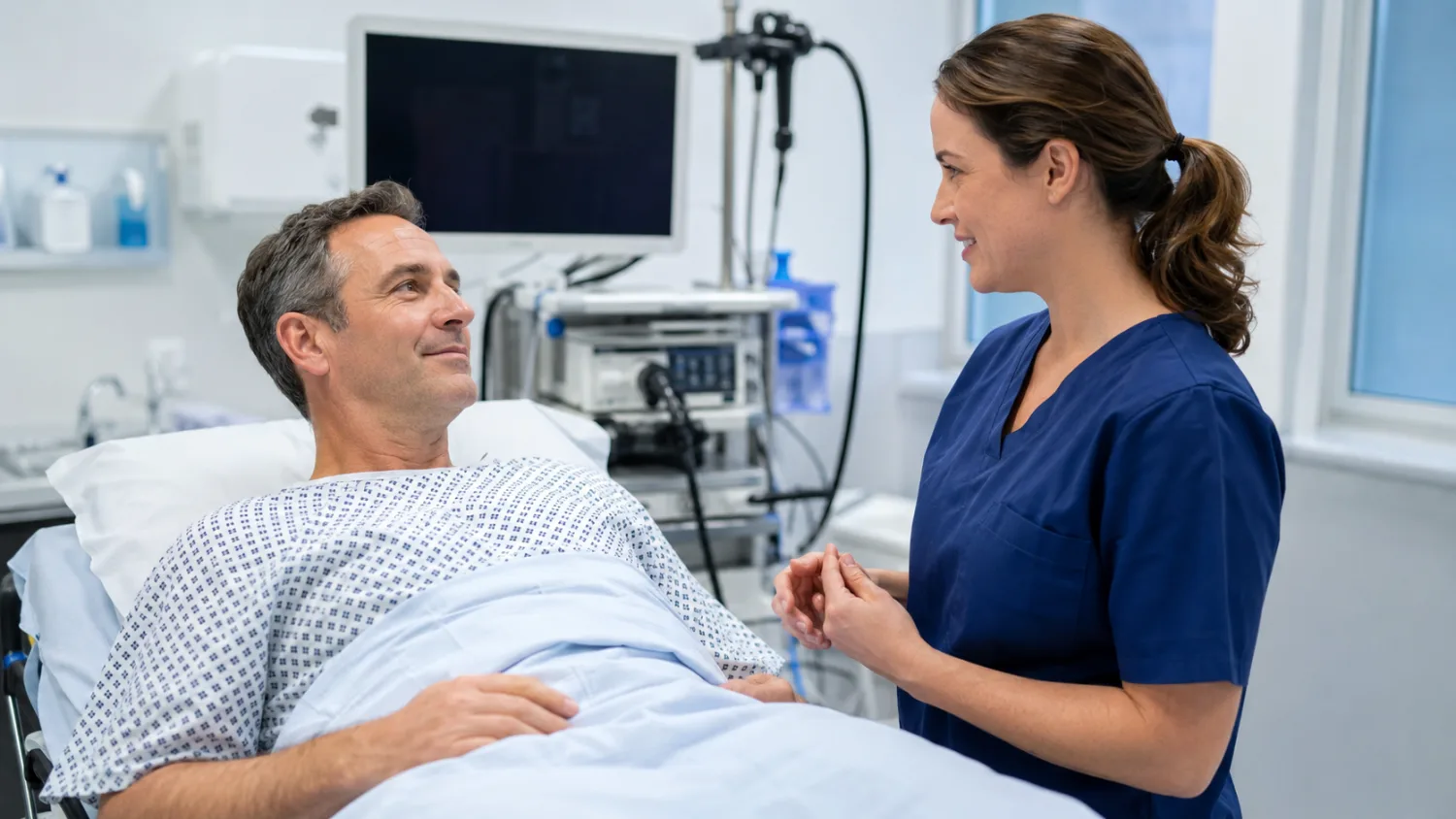
When you arrive at the endoscopy unit, you will usually check in and be seen by a nurse. They will confirm your details, check your medical history, ask about medicines and allergies, and make sure you understand the procedure.
You may be asked to change into a hospital gown or special shorts. Your blood pressure, pulse and oxygen levels may be checked. If you are having sedation or pain relief through a vein, a small cannula may be placed in your hand or arm.
You will be asked to sign a consent form. This means you understand why the procedure is being done, what it involves, and the possible risks and benefits.
What happens during the colonoscopy?
You will usually lie on your left side with your knees slightly bent. The endoscopist gently passes the colonoscope through the bottom into the rectum and around the colon.
Air or carbon dioxide is used to open the bowel so the lining can be seen clearly. Carbon dioxide is often absorbed more quickly by the body and may reduce bloating afterwards, although practice varies.
During the test, the team may ask you to change position, such as onto your back or right side, to help the camera move around bends. A nurse may press gently on your abdomen to help the scope move safely.
If polyps are found, they may be removed during the procedure. If an area looks inflamed or abnormal, small biopsies may be taken. Biopsies are tiny samples of tissue and are usually not painful.
Will you be awake?
Many people are awake but relaxed. Colonoscopy is usually done with one of several comfort options:
- No sedation: some people choose to stay fully awake and avoid sedative medicines.
- Gas and air: also called Entonox, this can reduce discomfort and wears off quickly.
- Conscious sedation: medicine through a vein makes you relaxed and drowsy, but it is not the same as a general anaesthetic.
- Pain relief: some units use opioid pain relief with or without sedation.
- Deep sedation or anaesthetic support: less common and usually reserved for selected cases or private/hospital settings.
British Society of Gastroenterology sedation guidance highlights the importance of explaining sedation options and risks in a way patients can understand. If you are worried about sedation, ask the unit what options are available and what they recommend for your situation.
Colonoscopy sedation: what to expect
Conscious sedation is commonly used. It may make you feel calm, sleepy and less aware of discomfort. You may remember parts of the procedure or very little. You should still be able to breathe for yourself and respond if needed.
Because sedation affects judgement, coordination and reaction time, you will need someone to take you home. You should not drive, drink alcohol, operate machinery, sign important documents or make major decisions for 24 hours after sedation. GOV.UK bowel screening advice says that if you have sedation, you should have a responsible adult stay with you and avoid driving, alcohol and machinery for 24 hours.
If you cannot arrange an escort home, tell the endoscopy unit in advance. They may discuss alternatives such as gas and air or an unsedated procedure, depending on the situation.
Gas and air for colonoscopy
Gas and air can be a good option for some people. You breathe it in through a mouthpiece when needed. It can reduce discomfort and anxiety, and it wears off quickly. Many people can go home without the same restrictions required after sedation, although local rules vary.
Gas and air may not be enough for everyone, especially if the procedure is difficult or you are very anxious. Ask the team what pain relief options are available before the test starts.
Can colonoscopy be done without sedation?
Yes. Some people choose colonoscopy without sedation. Reasons may include wanting to drive afterwards, avoiding sedative medicines, previous good experience, or preferring to remain fully alert.
Unsedated colonoscopy is not a test of bravery. If you need comfort medication, that is completely reasonable. The best option depends on your anxiety, pain tolerance, medical history, bowel anatomy and the unit’s practice.
What are polyps and why are they removed?
Polyps are small growths on the bowel lining. Many are benign, but some types can develop into bowel cancer over years. Removing polyps can reduce future cancer risk.
Polyps may be removed using a wire loop, tiny instrument or heat treatment. You usually do not feel this. Removed polyps are sent to a laboratory to check what type they are and whether follow-up is needed.
The NHS colonoscopy results guidance explains that if polyps are found and removed, results will say whether further treatment or future check-up colonoscopy is needed.
What are biopsies?
A biopsy is a tiny tissue sample. During colonoscopy, biopsies may be taken from inflamed, abnormal or sometimes normal-looking areas. They are sent to a laboratory and examined under a microscope.
Biopsies can help diagnose conditions such as inflammatory bowel disease, microscopic colitis, infection, coeliac-related issues in some investigations, or cancer. Taking biopsies does not usually hurt because the bowel lining has different pain sensitivity from the skin.
What happens after the colonoscopy?
After the procedure, you will usually go to a recovery area. Nurses will monitor you until you are well enough to leave. If you had sedation, you may feel sleepy, lightheaded or forgetful. If you had gas and air, recovery may be quicker.
You may feel bloated or have wind because air or gas was used during the test. Walking gently and passing wind usually helps. You may have mild cramps for a short time.
You may be offered something to drink and sometimes a light snack. Once you are ready, the team will explain what happened, whether biopsies or polyps were taken, and what to do next.
Can you eat after a colonoscopy?
Most people can eat and drink after colonoscopy once they feel ready, unless the team gives different instructions. Start with light food if your stomach feels unsettled.
Because your bowel has been emptied, it may take a few days for bowel movements to return to normal. You may pass wind, have mild bloating or feel tired for the rest of the day.
How long does recovery take?
Most people recover quickly and feel back to normal by the next day. If you had sedation, you should rest for the remainder of the day and follow the 24-hour restrictions. If polyps were removed, you may receive extra instructions about bleeding, blood thinners, exercise or travel.
Your bowel habit may take two or three days to settle because the bowel was emptied by the preparation.
When will you get results?
Some results are explained before you leave. The endoscopist may tell you whether the bowel looked normal, whether polyps were removed, whether inflammation was seen, or whether biopsies were taken.
Biopsy and polyp results take longer because samples must be examined in the laboratory. Cancer Research UK says biopsy results can take up to around two weeks, although timing varies by hospital and urgency.
Ask before you leave:
- What did the colonoscopy show?
- Were any biopsies taken?
- Were any polyps removed?
- When should I expect results?
- Who will contact me?
- Do I need a follow-up appointment?
- Do I need another colonoscopy in future?
If you are waiting for test results, our guides to how to understand medical test results, how to understand scan results and what to do after abnormal private blood test results may be useful.
What if the colonoscopy is normal?
A normal colonoscopy can be reassuring, especially if bowel cancer, significant inflammation or large polyps have been ruled out. But it does not always mean symptoms are imaginary. Some conditions do not show obvious changes on colonoscopy, or symptoms may come from other parts of the digestive system.
Depending on your symptoms, your doctor may consider:
- irritable bowel syndrome
- functional bowel symptoms
- microscopic colitis if biopsies were taken
- food intolerances
- coeliac disease
- medication side effects
- gallbladder, stomach or small bowel problems
- pelvic or gynaecological causes of abdominal pain
Related guides include IBS symptoms and treatment, coeliac disease, gallstones and ovarian cysts.
What are the risks of colonoscopy?
Colonoscopy is generally safe, but no medical procedure is completely risk-free. The endoscopy team should explain the risks before you consent.
Possible risks include:
- discomfort, bloating or cramps
- reaction to sedation
- bleeding, especially after polyp removal
- perforation, meaning a small tear in the bowel wall
- missed abnormalities if the view is poor
- dehydration or salt imbalance from bowel preparation
- rare infection or aspiration complications
The NHS says rare risks include reaction to sedation, heavy bleeding afterwards and a small tear in the bowel. These are uncommon, but it is important to know warning signs after the test.
When to seek help after colonoscopy
Mild bloating, wind, tiredness and a small amount of bleeding after biopsies or polyp removal can happen. But some symptoms need urgent advice.
Call the endoscopy unit, NHS 111 or seek urgent medical advice if you have:
- heavy bleeding from the bottom
- bleeding that does not stop or is getting worse
- severe or worsening abdominal pain
- a swollen or hard abdomen
- fever or chills
- vomiting that does not settle
- dizziness, fainting or feeling very weak
- black, tarry stool
- shortness of breath or chest pain
Call 999 if symptoms are severe, you collapse, have severe chest pain, severe breathlessness, or heavy bleeding with faintness.
Colonoscopy and private healthcare
Some people have colonoscopy privately because of waiting times, insurance cover, preference, or referral from a private GP or specialist. Private colonoscopy may offer faster appointment times, but the basics should be the same: proper assessment, consent, safe bowel preparation, trained endoscopy staff, clear aftercare and results follow-up.
Before booking privately, ask:
- Who will perform the procedure?
- Is the endoscopist accredited and experienced?
- What sedation options are available?
- Are biopsies and polyp removal included?
- What happens if a complication occurs?
- Who explains the results?
- Are pathology fees included?
- Will your GP receive a copy?
- What follow-up is included?
If you are comparing NHS and private pathways, see NHS vs private healthcare in the UK, private GP services and costs and how hospital referrals work in the UK.
How to make colonoscopy easier
Many people worry more about the preparation and embarrassment than the actual procedure. Endoscopy teams do this every day and will try to preserve your dignity.
Practical tips:
- read your instructions several days before, not the night before
- buy allowed clear fluids in advance
- plan to stay near a toilet during bowel prep
- arrange transport home if having sedation
- ask about medicines early, especially blood thinners or diabetes medicines
- use barrier cream to reduce soreness during prep
- wear comfortable clothes
- tell staff if you are anxious, in pain or have past trauma
- ask questions before signing consent
- do not be embarrassed about symptoms or bowel preparation
Common worries before colonoscopy
“What if the bowel prep does not work?”
If you followed instructions and are passing watery stool, it is likely working. If you have not opened your bowels, vomited the preparation, or are worried the bowel is not clear, contact the endoscopy unit for advice.
“What if I have an accident on the way?”
This is a common fear. Most bowel prep timing is designed so the worst diarrhoea happens before travel, but urgency can continue. Wear comfortable clothing, consider a pad if anxious, and allow extra time. If you live far away, ask the unit for advice.
“Will I be exposed?”
You will be covered as much as possible. Endoscopy staff are used to protecting dignity during intimate procedures.
“What if they find cancer?”
This is one of the hardest fears. Remember that many colonoscopies do not find cancer. If cancer is found, the purpose of colonoscopy is to diagnose it so treatment can start. Earlier diagnosis usually gives more treatment options.
“Can I stop the procedure?”
Yes. You can tell the team if you are in too much discomfort or want to stop. They may pause, give extra comfort measures if safe, or stop if needed.
Final thoughts
A colonoscopy can feel daunting, but it is a valuable test. It allows doctors to see the bowel lining directly, take biopsies, remove polyps and investigate symptoms that cannot be fully assessed from the outside.
The preparation is usually the most inconvenient part. Follow your bowel prep instructions carefully, ask early about medicines, arrange an escort if you are having sedation, and tell the team about your health conditions and worries.
Most colonoscopies are completed safely and provide useful answers. Seek urgent advice afterwards if you develop heavy bleeding, severe abdominal pain, fever, fainting, persistent vomiting or symptoms that worry you.
For official guidance, see the NHS guide to colonoscopy, NHS information on colonoscopy results, and GOV.UK guidance on bowel cancer screening colonoscopy.
This article is for general information only and should not replace medical advice. Always follow the instructions from your hospital, endoscopy unit or clinician, especially about bowel preparation, medicines, sedation and aftercare.
Frequently asked questions
What is a colonoscopy?
A colonoscopy is a test that uses a thin flexible camera to look inside the large bowel. It can help find polyps, inflammation, bleeding, diverticular disease, bowel cancer and other bowel problems.
Why would I need a colonoscopy?
You may need a colonoscopy for symptoms such as blood in stool, persistent diarrhoea, a change in bowel habit, unexplained anaemia, abdominal pain, unexplained weight loss, suspected inflammatory bowel disease, or after an abnormal bowel screening test.
Is colonoscopy painful?
It can be uncomfortable, with bloating, pressure or cramps, but many people tolerate it well. Sedation, pain relief or gas and air may be offered to make it more comfortable.
Do you get put to sleep for a colonoscopy?
Most colonoscopies are not done under general anaesthetic. Many people have conscious sedation, which makes them relaxed and drowsy but not fully asleep. Some people choose gas and air or no sedation.
How long does a colonoscopy take?
The procedure itself often takes around 30 to 45 minutes, although it can vary. You will usually be in the endoscopy unit longer because of checks, preparation, recovery and discharge advice.
What is bowel preparation?
Bowel preparation is a laxative process used to empty the bowel before colonoscopy. It usually causes frequent watery diarrhoea. A clean bowel helps the specialist see the bowel lining properly.
What can I eat before a colonoscopy?
You will receive specific instructions. Many people are asked to follow a low-fibre diet for a short period and then clear fluids before the procedure. Always follow your hospital or clinic instructions rather than general online advice.
Can I take my normal medicines before colonoscopy?
Some medicines can be taken as usual, but others need special instructions. Tell the team if you take blood thinners, diabetes medicines, iron tablets, water tablets or GLP-1 medicines. Do not stop prescribed medicines unless told to.
Can polyps be removed during colonoscopy?
Yes. Many small polyps can be removed during colonoscopy and sent to a laboratory. Removing certain polyps can reduce future bowel cancer risk.
Are biopsies painful?
No, biopsies taken from the bowel lining are usually not painful. They are tiny tissue samples used to help diagnose inflammation, microscopic changes, infection or cancer.
When will I get my colonoscopy results?
You may be told the initial findings before you leave. Biopsy or polyp results usually take longer because samples need laboratory testing. Ask the unit when and how you will receive results.
Can I drive after a colonoscopy?
If you had sedation, you must not drive for 24 hours and will need someone to take you home. If you had gas and air or no sedation, rules may differ, so follow your unit’s advice.
What are the risks of colonoscopy?
Colonoscopy is generally safe, but rare risks include reaction to sedation, heavy bleeding, especially after polyp removal, and a small tear in the bowel wall. Bowel prep can also cause dehydration or salt imbalance in some people.
When should I seek help after colonoscopy?
Seek urgent advice if you have heavy bleeding, severe or worsening abdominal pain, fever, persistent vomiting, fainting, a swollen abdomen, black stools, chest pain or severe weakness after colonoscopy.
What if my colonoscopy is normal but I still have symptoms?
A normal colonoscopy is reassuring, but it does not mean symptoms are not real. Conditions such as IBS, microscopic colitis, food intolerance, coeliac disease, gallbladder problems or other causes may still need consideration depending on your symptoms.