Inflammatory bowel disease, usually called IBD, is the name for a group of long-term conditions that cause inflammation in the digestive system. The two main types are Crohn’s disease and ulcerative colitis. Both can cause diarrhoea, abdominal pain, bleeding from the bowel, fatigue and weight loss, but they are not the same condition and they do not affect the gut in exactly the same way.
This is where many people get confused. They may have heard of “IBD”, “IBS”, “Crohn’s” and “colitis” and assume they all overlap. In reality, IBS and IBD are very different. IBS is a functional bowel disorder. IBD is an inflammatory disease that can damage the bowel and sometimes affect the rest of the body too.
This guide explains what IBD is, how Crohn’s disease differs from ulcerative colitis, what symptoms to look out for, how diagnosis works in the UK, what treatment may involve, and when symptoms need urgent attention.
If you want a broader overview first, see Digestive Health: Symptoms, Common Conditions and Treatments. If you are trying to understand symptoms that may turn out not to be inflammatory, these articles may also help: IBS (Irritable Bowel Syndrome): Symptoms, Diagnosis and Treatment, Bloating: Common Causes, Relief and When to Worry, and Constipation in Adults: Causes, Remedies and Laxatives.
What is inflammatory bowel disease?
IBD is long-term inflammation in the digestive tract. The inflammation tends to come and go. Many people have periods when symptoms flare up and periods when they improve or settle. A flare does not mean you have done something wrong. It means the disease has become more active again.
The two main forms are:
- Crohn’s disease, which can affect any part of the digestive tract from the mouth to the anus
- Ulcerative colitis, which affects the large bowel, including the rectum and colon
That basic difference matters. Crohn’s disease can be patchy and may affect deeper layers of the bowel wall. Ulcerative colitis usually affects the lining of the large bowel in a more continuous pattern, starting at the rectum.
IBD is not the same as IBS
This is one of the most important points for patients. IBS and IBD are not the same thing.
IBS can cause bloating, abdominal pain, diarrhoea or constipation, but it does not cause the type of bowel inflammation seen in IBD.
IBD is an inflammatory disease. It can cause bleeding, weight loss, anaemia, nutritional problems, and complications in the bowel and elsewhere in the body.
That does not mean every person with diarrhoea or bloating has IBD. Far from it. But symptoms such as blood in the stool, ongoing diarrhoea, weight loss and fatigue should never just be labelled “IBS” without proper thought.
Common symptoms of IBD
Symptoms vary from person to person, but common ones include:
- diarrhoea that lasts for weeks
- tummy pain or cramping
- blood or mucus in the stool
- bleeding from the bottom
- urgency or needing to rush to the toilet
- fatigue or feeling run down
- weight loss without trying
- loss of appetite
Some people also get joint pain, mouth ulcers, skin problems, or pain around the bottom. Others feel generally unwell long before they receive a diagnosis.
Real-life example: someone in their 20s or 30s develops repeated episodes of diarrhoea, abdominal pain and urgency, then starts noticing blood in the stool and increasing tiredness. Another person may initially think they just have a “sensitive stomach”, but over time they begin losing weight and can no longer ignore the pattern.
Crohn’s disease: what it is and how it behaves
Crohn’s disease can affect any part of the digestive tract. In some people it mainly affects the last part of the small bowel. In others it affects the colon. In others it may affect several areas. The inflammation is often patchy, with diseased areas separated by more normal-looking bowel.
Crohn’s disease can cause:
- diarrhoea
- stomach pain
- blood or mucus in the stool
- constipation in some people
- pain in the bottom
- tiredness
- poor appetite and weight loss
Because Crohn’s can affect deeper layers of the bowel wall, it may sometimes lead to complications such as narrowing of the bowel, fistulas or abscesses. Not everyone gets these, but they are part of why Crohn’s is taken seriously and often needs specialist monitoring over time.
Smoking is particularly important in Crohn’s disease. It is associated with worse disease outcomes, so stopping smoking can make a meaningful difference.
Ulcerative colitis: what it is and how it behaves
Ulcerative colitis affects the lining of the large bowel. It usually starts in the rectum and can extend further up the colon. Unlike Crohn’s disease, it does not affect the whole digestive tract from mouth to anus.
Common symptoms of ulcerative colitis include:
- recurring diarrhoea, often with blood, mucus or pus
- tummy pain
- needing to poo frequently
- urgency
- fatigue
- loss of appetite
- weight loss
Some people have relatively mild disease for long periods. Others have more severe flares that affect daily life, sleep, work, confidence and nutrition. Severe colitis can be serious and sometimes needs urgent hospital treatment.
Crohn’s disease vs ulcerative colitis: the main differences
Here is the simple comparison most patients actually need:
- Crohn’s disease can affect any part of the digestive tract; ulcerative colitis affects the large bowel
- Crohn’s can involve deeper bowel layers; ulcerative colitis mainly affects the lining
- Crohn’s is often patchy; ulcerative colitis is usually continuous from the rectum upwards
- Crohn’s is more associated with fistulas and narrowing; ulcerative colitis is more specifically a colon disease
That said, patients should not get too hung up on memorising textbook differences. What matters most is getting the right diagnosis and treatment plan for the pattern you actually have.
What causes IBD?
The exact cause of IBD is not fully understood. It is thought to involve an abnormal immune response in the gut, along with a mix of genetic and environmental factors. It is not caused by stress alone, and it is not simply caused by one “bad” food.
Stress can worsen symptoms and make flare-ups harder to cope with, but it is not the whole explanation. Many people spend too long being told their symptoms are “probably stress” before proper investigations are done.
IBD also tends to run in some families, so family history can matter.
When to suspect IBD rather than a simple bowel upset
IBD should be considered more seriously if symptoms:
- last for several weeks
- keep coming back
- include blood in the stool
- come with weight loss
- cause ongoing tiredness or anaemia
- wake you at night
- make you rush urgently to the toilet
- come with pain around the bottom, especially in Crohn’s disease
A one-off stomach bug is common. A repeating pattern of diarrhoea, bleeding and fatigue is different.
How IBD is diagnosed in the UK
Diagnosis usually starts with a GP appointment. Your doctor will ask about symptoms, how long they have been going on, whether there is bleeding, whether you are losing weight, whether symptoms wake you at night, and whether anyone in your family has bowel disease.
You may then be offered tests such as:
- blood tests to look for inflammation, anaemia and nutritional problems
- stool tests to check for infection and inflammatory markers
- faecal calprotectin, a stool test that can help suggest whether inflammation is present in the bowel
- colonoscopy or sigmoidoscopy to look directly at the bowel and take biopsies
- scans such as MRI or CT in some cases, especially with Crohn’s disease
Faecal calprotectin can be especially helpful because it may help distinguish inflammatory bowel disease from non-inflammatory problems such as IBS. It does not diagnose everything on its own, but it can be a very useful step in deciding who needs further investigation.
What is colonoscopy and why is it important?
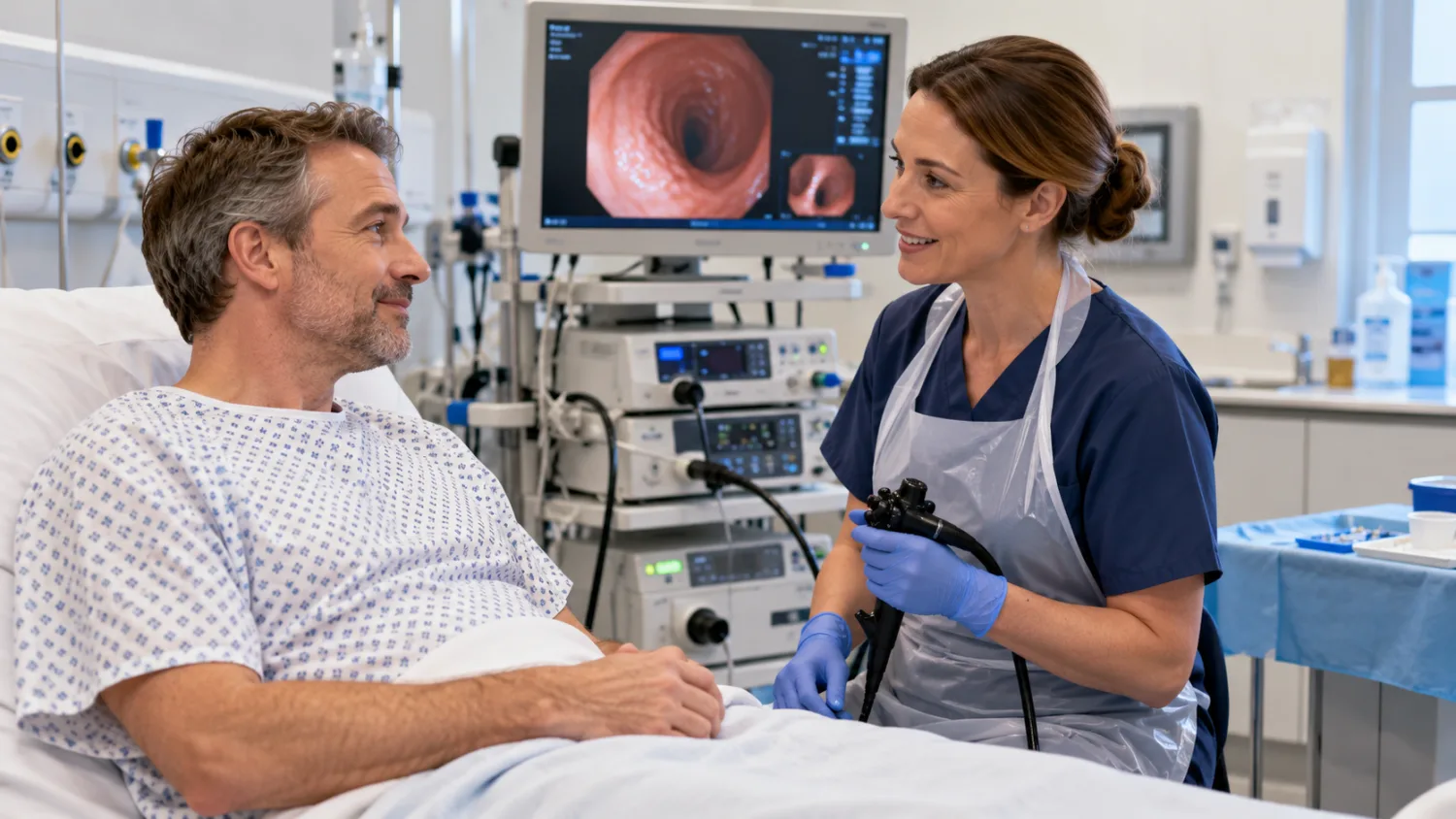
A colonoscopy is a test that uses a thin flexible camera to examine the bowel. It allows specialists to look for inflammation, ulcers, bleeding and other changes, and to take biopsies. Those biopsies can help confirm whether the pattern fits Crohn’s disease, ulcerative colitis or something else.
Many people are anxious about colonoscopy, and that is understandable. In practice, the bowel preparation is often the part people dislike most. The test itself is routine and extremely important when IBD is suspected.
What treatment for IBD may involve
Treatment depends on the type of IBD, how active it is, which part of the bowel is affected, and how severe symptoms are. The broad goals are to treat flare-ups, reduce inflammation, maintain remission and improve quality of life.
Treatment may include:
- steroids to help control active inflammation during flares
- other medicines to maintain remission
- biological or advanced therapies in more moderate or severe disease
- nutrition support, especially in Crohn’s disease
- surgery in selected cases
Not everyone will need the same level of treatment. Some people have milder disease. Others need long-term specialist treatment and close follow-up.
Can IBD be cured?
IBD is usually a long-term condition rather than something that is simply cured and forgotten. Many people, however, do achieve long periods of remission and live full, active lives.
The aim is often to get inflammation under control, prevent complications and reduce how much the disease interferes with daily life. Some people go through long calm periods. Others have a more unpredictable course.
When surgery may be needed
Surgery is not the first step for everyone, but it can be an important part of treatment in some cases.
In Crohn’s disease, surgery may be needed for complications such as strictures, fistulas, abscesses or bowel segments that are badly affected.
In ulcerative colitis, surgery may be considered if the disease is severe, difficult to control with medicines, or causing serious complications.
Patients often fear surgery, but when it is needed, it can be life-changing rather than a sign of failure.
Long-term health and complications
IBD is not just about the toilet. Over time it can affect nutrition, energy, mental wellbeing, work and social life. Some people develop anaemia, vitamin deficiencies, poor appetite or weight loss. Bone health can also matter, especially in people with chronic active disease or repeated steroid use.
Some people with ulcerative colitis also develop other inflammatory conditions affecting the liver, joints, eyes or skin. This is another reason ongoing specialist follow-up matters.
Food, diet and flare-ups
Diet matters, but not in the simplistic way social media often suggests. There is no one universal IBD diet that suits everyone. During a flare, some foods may feel harder to tolerate, and some people need tailored nutrition advice. In Crohn’s disease, nutrition support can be an especially important part of care.
What to avoid: assuming one food caused your disease, copying highly restrictive online diets without guidance, or stopping essential medicines in favour of supplements alone.
A sensible approach is to work with your IBD team or dietitian if food is becoming a major concern.
What daily life with IBD can feel like
IBD affects more than digestion. It can create anxiety about toilets, commuting, travel, eating out and work meetings. Fatigue can be one of the hardest symptoms, even when other people cannot see anything visibly wrong.
Some people feel embarrassed about symptoms for a long time before seeking help. Others are relieved to finally receive a diagnosis because it explains years of unexplained bowel problems, bleeding or exhaustion.
It is important to say this clearly: needing support does not mean you are coping badly. These are real medical conditions that can have a significant effect on everyday life.
When to seek urgent medical help
You should seek urgent help if you have:
- severe abdominal pain
- heavy bleeding from the bowel
- signs of dehydration
- persistent vomiting
- fever with a severe flare
- a swollen, tender abdomen
- rapid worsening of symptoms
Do not just assume it is “another flare” if symptoms are suddenly much worse than usual.
When to see a GP
Book a GP appointment if you have:
- diarrhoea lasting several weeks
- blood or mucus in the stool
- weight loss without trying
- ongoing abdominal pain
- unusual fatigue
- a repeated pattern of bowel symptoms that is not settling
If getting an appointment is difficult, you may find this useful: How to Get a GP Appointment Quickly in the UK.
Frequently asked questions
Is IBD the same as IBS?
No. IBS is a functional bowel disorder. IBD is an inflammatory disease that can damage the bowel and sometimes cause complications outside the gut.
Which is worse, Crohn’s disease or ulcerative colitis?
Neither is “better” or “worse” in a simple way. Both can be mild or severe. What matters is how active the disease is, where it is, and how it responds to treatment.
Can IBD cause constipation?
Yes, especially in some Crohn’s disease patterns, although diarrhoea is more commonly discussed.
Does blood in the stool always mean IBD?
No. Bleeding can also happen with piles, fissures, infection, diverticular disease and bowel cancer. But it should never be ignored.
Can stress cause IBD?
Stress can worsen symptoms and make flare-ups harder to manage, but it is not thought to be the sole cause of IBD.
Final thoughts
Inflammatory bowel disease is a serious but manageable group of conditions. Crohn’s disease and ulcerative colitis share many symptoms, but they are not identical and they do not follow exactly the same pattern. The key is early recognition, proper diagnosis and the right long-term care.
If you have ongoing diarrhoea, bleeding, weight loss, fatigue or abdominal pain that keeps coming back, do not keep guessing. Some bowel problems are functional and relatively benign. IBD is different, and it deserves proper assessment. The earlier it is recognised, the sooner treatment and support can begin.