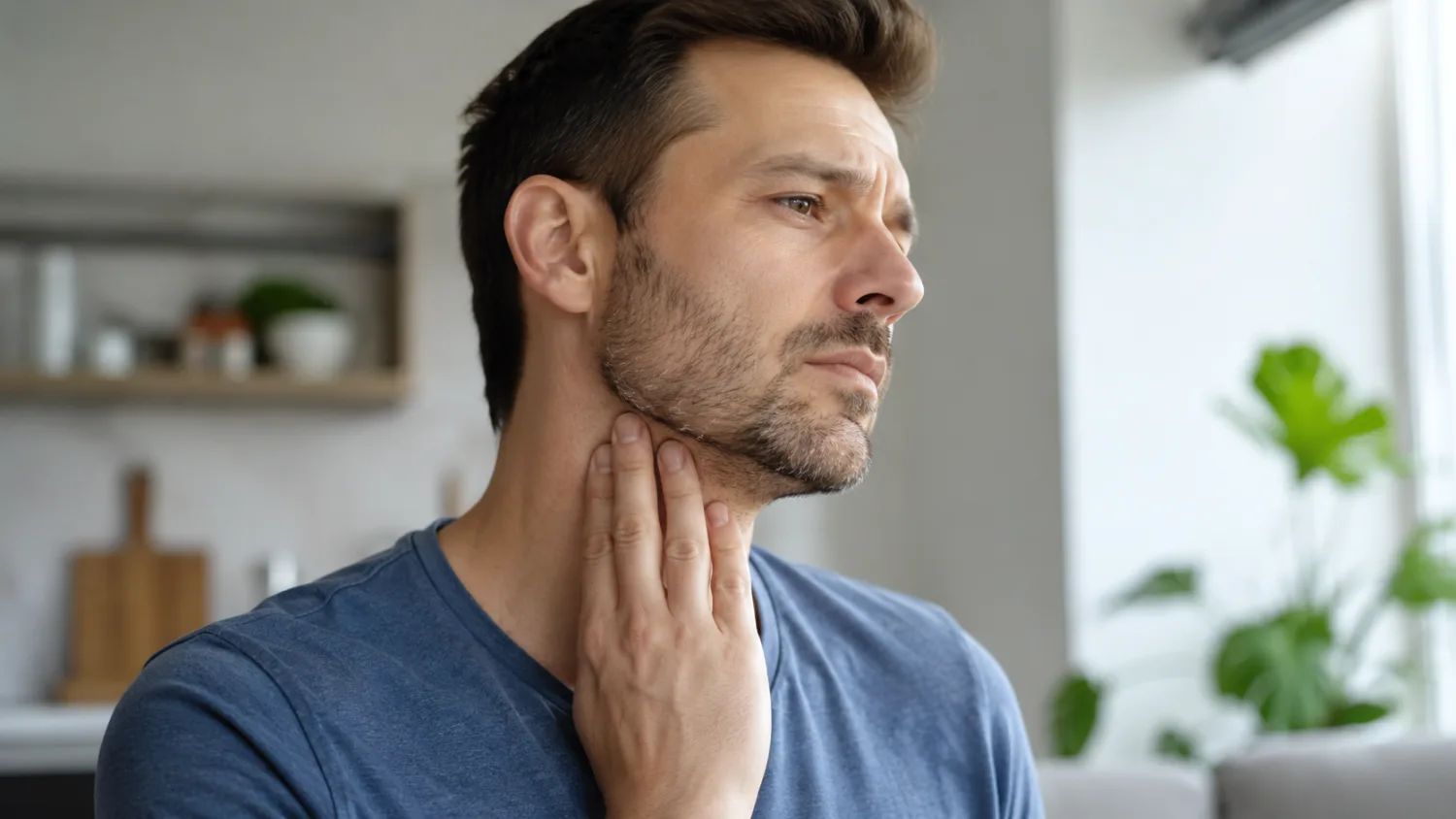
Swollen lymph nodes, often called swollen glands, are common. You may notice a lump in your neck after a sore throat, under your jaw during a dental infection, in your armpit after a skin irritation, or in your groin after an infection in the leg or genital area.
Most swollen lymph nodes are a sign that your immune system is doing its job. They often become enlarged when your body is fighting an infection, such as a cold, tonsillitis, flu, glandular fever, a skin infection or a dental problem. In many cases, they settle as the infection improves.
However, swollen lymph nodes should not always be ignored. If a lump is getting bigger, feels hard or fixed, appears above the collarbone, lasts longer than expected, or comes with symptoms such as night sweats, unexplained weight loss or a persistent fever, it is important to speak to a GP.
This guide explains what lymph nodes are, why they swell, common causes, what to look for, and when to seek medical advice.
Important: See a GP if swollen glands are getting bigger, have not gone down within a week, feel hard or do not move, appear above or below the collarbone, or happen with night sweats, a very high temperature, unexplained weight loss or no obvious infection.
What are lymph nodes?
Lymph nodes are small, bean-shaped parts of the immune system. They help filter lymph fluid and contain immune cells that help the body fight infection. They are found throughout the body, including the neck, under the jaw, behind the ears, in the armpits, in the chest and abdomen, and in the groin.
Most of the time, lymph nodes are small and difficult to feel. When they react to infection or inflammation, they can become larger, tender or noticeable under the skin.
People often call them “swollen glands”, although lymph nodes are not the same as saliva glands or sweat glands. The NHS uses the term swollen glands to describe enlarged lymph nodes and explains that they are usually a sign the body is fighting an infection. You can read the NHS guide to swollen glands.
Where do swollen lymph nodes appear?
The location of swollen lymph nodes can give clues about what may be causing them. Lymph nodes often swell near the area of infection or irritation.
- Neck or under the jaw: common with colds, sore throats, tonsillitis, dental infections, ear infections and scalp problems.
- Behind the ears: may happen with scalp irritation, ear infections or viral illness.
- Armpit: may be linked with skin infections, shaving irritation, infected cuts, breast symptoms or vaccination.
- Groin: may happen with leg or foot infections, genital infections, shaving irritation, skin problems or sexually transmitted infections.
- Above the collarbone: should always be checked by a GP, especially if persistent.
Sometimes lymph nodes are swollen in several areas at once. This can happen with viral infections such as glandular fever, some immune conditions, medication reactions and, less commonly, blood cancers such as lymphoma.
What do swollen lymph nodes feel like?
Swollen lymph nodes can feel different depending on the cause. Nodes caused by infection are often tender, soft or rubbery, and may move slightly under the skin when pressed. They may feel sore when you turn your head, swallow, shave, wash or touch the area.
More concerning lymph nodes may feel hard, fixed in place, painless, or continue getting larger. A painless lump is not automatically serious, but it should be checked if it does not settle or has red flag features.
Try not to repeatedly press or squeeze the lump. Constant checking can irritate the area and make it feel more tender, which can make it harder to judge whether it is improving.
Common causes of swollen lymph nodes
Most swollen lymph nodes are caused by short-term infections. The lymph nodes enlarge because immune cells are responding to germs or inflammation nearby.
Common causes include:
- colds, flu and other viral infections
- sore throat or tonsillitis
- ear infections
- sinus infections
- dental infections or abscesses
- skin infections, boils or infected cuts
- glandular fever
- insect bites or stings that become inflamed or infected
- some sexually transmitted infections
- vaccinations, which can temporarily enlarge nearby lymph nodes
Less common causes include autoimmune conditions, certain medicines, tuberculosis, HIV, some other infections, and cancers such as lymphoma or cancers that have spread to lymph nodes.
Swollen lymph nodes in the neck
Swollen lymph nodes in the neck are very common. They often appear with a sore throat, cold, cough, flu, tonsillitis, dental infection or ear infection. They may feel tender and sit under the jaw, along the sides of the neck or behind the ears.
If you have a sore throat, fever, pain when swallowing or white patches on the tonsils, tonsillitis may be one possibility. Our guide to tonsillitis symptoms, causes and treatment explains this in more detail.
Sinus and nasal infections can also contribute to swollen nodes around the neck and jaw. You may find our guide to sinusitis symptoms, causes and treatment useful if you also have facial pressure, blocked nose, thick mucus or headache.
Neck lumps should be checked if they are getting bigger, are hard or fixed, are not settling, or come with symptoms such as night sweats, unexplained weight loss, persistent fever, difficulty swallowing or ongoing hoarseness.
Swollen lymph nodes under the jaw and dental problems
Lymph nodes under the jaw can swell when there is an infection in the mouth, teeth or gums. Tooth decay, gum disease, dental abscesses, mouth ulcers and infected wisdom teeth can all cause nearby lymph nodes to react.
If you have tooth pain, gum swelling, facial swelling, a bad taste in the mouth, fever or pain when biting, dental infection may need prompt attention. Our guides to toothache causes and when to see a dentist, dental abscess symptoms and treatment and bleeding gums and gum disease may help.
Seek urgent dental or medical advice if swelling is spreading to the face or neck, you feel very unwell, have difficulty swallowing, have breathing problems, or cannot open your mouth properly.
Swollen lymph nodes in the armpit
Armpit lymph nodes can swell because of infection or irritation in the arm, hand, chest wall or breast area. Common causes include shaving cuts, infected hair follicles, boils, skin infections, insect bites, eczema flare-ups, or recent vaccination in the arm.
Sometimes armpit swelling can be related to breast changes. If you notice a breast lump, nipple changes, skin dimpling, breast pain that does not settle, or swelling in the armpit without an obvious cause, speak to a GP.
An armpit lump that is painful and red may be an inflamed cyst, abscess or infected hair follicle. A lump that is hard, fixed, painless or persistent should be checked.
Swollen lymph nodes in the groin
Groin lymph nodes often react to problems in the lower body. This may include infections or inflammation in the legs, feet, genitals, lower abdomen or skin around the groin.
Possible causes include:
- cuts, blisters or infected skin on the foot or leg
- athlete’s foot with broken skin
- infected insect bites
- shaving irritation or ingrown hairs
- boils or abscesses
- sexually transmitted infections
- genital herpes or other genital infections
If groin swelling is linked with genital sores, unusual discharge, pelvic pain, testicular pain, fever or possible STI exposure, seek advice from a GP or sexual health clinic.
Can insect bites cause swollen lymph nodes?
Yes. Insect bites and stings can cause local inflammation, and nearby lymph nodes may swell if the immune system reacts strongly or if the bite becomes infected.
For example, an infected bite on the arm may cause tender lymph nodes in the armpit. An infected bite on the leg may cause swelling in the groin. Signs of infection include spreading redness, warmth, increasing pain, pus, fever or red streaks.
If bites or stings are part of the problem, read our guide to insect bites and stings. If a tick bite is involved, especially with a spreading rash or flu-like symptoms, see our guide to tick bites and Lyme disease.
Swollen lymph nodes after vaccination
Some people develop swollen lymph nodes after vaccination, usually near the injection site. For example, a vaccine given in the arm may cause temporary swelling in the armpit on the same side.
This usually settles by itself. However, if the swelling persists, gets bigger, feels hard or fixed, or you have other worrying symptoms, speak to a GP.
If you are due breast screening or imaging and have recently had a vaccine, mention this to the healthcare team, as it may be relevant when interpreting swollen armpit nodes.
Swollen lymph nodes in children
Children often get swollen lymph nodes, especially around the neck. This is usually because they pick up frequent viral infections, sore throats, coughs and minor skin infections. In many children, small “pea-sized” neck nodes can remain noticeable for a while after an infection.
However, children should be checked if the swelling is large, getting bigger, very painful, red or hot, persistent, above the collarbone, or linked with fever, weight loss, night sweats, unusual tiredness, bruising or repeated infections.
Seek urgent advice if a child is very unwell, has difficulty breathing, has a stiff neck, is unusually drowsy, has a non-blanching rash, or has rapidly worsening swelling.
When swollen lymph nodes may be linked to lymphoma
Most swollen lymph nodes are not cancer. However, persistent swollen lymph nodes can sometimes be a symptom of lymphoma, a type of blood cancer that affects the lymphatic system.
Lymphoma-related lymph nodes are often painless and may appear in the neck, armpit or groin. Other symptoms can include night sweats, unexplained weight loss, persistent fever, itching, tiredness, breathlessness or repeated infections.
The NHS lists a painless lump or swelling, usually in the neck, armpit or groin, as the most common symptom of Hodgkin lymphoma. It also lists symptoms such as high temperature, night sweats, shortness of breath, itchy skin and sudden weight loss. You can read the NHS guide to Hodgkin lymphoma symptoms.
Cancer Research UK also explains that non-Hodgkin lymphoma can cause one or more painless swellings in the neck, armpit or groin, along with symptoms such as night sweats, temperatures or itching. See Cancer Research UK’s information on non-Hodgkin lymphoma symptoms.
It is important not to panic if you find a swollen lymph node. But if it has red flag features, book a GP appointment.
Red flag symptoms to watch for
Some features make swollen lymph nodes more concerning. These do not always mean something serious, but they should be checked.
See a GP if swollen lymph nodes:
- are getting bigger
- have not gone down within a week
- feel hard
- do not move when you press them
- are above or below the collarbone
- appear without signs of infection or illness
- keep coming back without a clear reason
- are accompanied by night sweats
- come with unexplained weight loss
- come with a persistent or very high temperature
- come with severe tiredness, easy bruising or repeated infections
The NHS advises seeing a GP if swollen glands are getting bigger, have not gone down within one week, feel hard or do not move, occur with night sweats or a very high temperature, appear with no other signs of infection, or are above or below the collarbone.
When to seek urgent help
Most swollen lymph nodes do not need emergency care. But urgent help is needed if swelling is linked with symptoms that suggest a serious infection, allergic reaction or airway problem.
Call 999 or seek urgent medical help if you have swollen glands with:
- difficulty breathing
- difficulty swallowing saliva
- rapidly worsening swelling in the face, mouth, throat or neck
- severe weakness, confusion or collapse
- a stiff neck, severe headache or sensitivity to light
- a non-blanching rash
- blue or grey lips
- signs of sepsis, such as feeling extremely unwell, cold, clammy, confused or breathing very fast
If chest pain, severe breathlessness or palpitations occur with feeling faint or very unwell, seek urgent help. You may find our guides to chest pain and heart palpitations useful for recognising urgent symptoms.
Should you press or check lymph nodes often?
It is understandable to keep checking a lump once you notice it. But pressing repeatedly can irritate the area, make it sore, and make you more anxious. It can also make it harder to tell whether the lump is genuinely changing.
If you are monitoring a swollen lymph node, check gently once every few days rather than many times a day. Notice whether it is getting smaller, staying the same or getting larger. If it is not improving, or has red flag features, book a GP appointment.
Some hospital guidance suggests checking lymph nodes no more than about once a month when monitoring routinely, because checking too often can make changes harder to notice.
What can you do at home?
If swollen lymph nodes seem linked with a mild infection such as a cold or sore throat, they may settle as the illness improves. Home care is mainly about managing the underlying symptoms and giving your body time to recover.
You may find it helpful to:
- rest and drink enough fluids
- use paracetamol or ibuprofen if suitable for pain or fever
- avoid repeatedly pressing the swollen node
- use warm compresses for tenderness if comfortable
- treat the underlying cause, such as a skin infection or dental problem
- speak to a pharmacist if you need advice about symptom relief
Do not take antibiotics unless they have been prescribed. Many swollen lymph nodes are caused by viral infections, where antibiotics do not help.
If symptoms are mild and you are unsure whether to see a pharmacist or GP, our guide to when to see a pharmacist instead of a GP may help.
What will a GP do?
A GP will usually ask how long the lymph nodes have been swollen, whether they are painful, whether they are getting bigger, and whether you have symptoms such as fever, sore throat, dental pain, skin infection, night sweats, weight loss or fatigue.
They may examine the lump and check other areas where lymph nodes can be felt, such as the neck, armpits and groin. They may also examine your throat, ears, skin, abdomen, teeth or other areas depending on your symptoms.
Depending on the situation, a GP may suggest:
- watching and waiting if infection is likely and symptoms are improving
- treatment for a bacterial infection if appropriate
- blood tests
- an ultrasound scan
- a chest X-ray in some cases
- referral to a specialist if the lump is persistent or concerning
- a biopsy if further investigation is needed
Blood tests may include a full blood count, infection markers, liver tests or other tests depending on symptoms. Our guides to full blood count results, liver function test results and how to understand blood test results may be useful if tests are arranged.
Can swollen lymph nodes be prevented?
You cannot prevent every swollen lymph node because they are often part of a normal immune response. But you can reduce some causes by looking after infections and skin problems early.
Helpful steps include:
- washing hands regularly during cold and flu season
- keeping cuts and bites clean
- not scratching insect bites
- seeking dental care for tooth or gum infections
- using condoms to reduce STI risk
- checking skin for infected spots, boils or wounds
- managing eczema or skin conditions that can break the skin
If lymph nodes keep swelling in the same place or you keep getting infections, speak to a GP.
How long do swollen lymph nodes last?
Swollen lymph nodes caused by infection often improve as the infection clears. They may take a little longer to return fully to normal size. Some small nodes can remain slightly enlarged for a while after a viral illness, especially in children.
However, do not wait indefinitely if you are worried. If a lymph node is getting bigger, has not gone down within a week, feels hard or fixed, is above or below the collarbone, or comes with red flag symptoms, book a GP appointment.
Final thoughts
Swollen lymph nodes are usually a sign that your immune system is reacting to an infection or inflammation. Common causes include colds, sore throats, tonsillitis, dental infections, skin infections, insect bites and viral illnesses.
Most settle as the underlying problem improves. But swollen lymph nodes should be checked if they are getting bigger, hard, fixed, persistent, above the collarbone, or linked with night sweats, unexplained weight loss, persistent fever or no obvious infection.
For official advice, see the NHS guide to swollen glands. For information on lymphoma symptoms, see the NHS guide to Hodgkin lymphoma symptoms and Cancer Research UK’s guide to non-Hodgkin lymphoma symptoms.
This article is for general information only and should not replace medical advice. If you are worried about swollen lymph nodes or any other symptoms, contact your GP, NHS 111, or call 999 in an emergency.
Frequently asked questions
Are swollen lymph nodes usually serious?
No. Most swollen lymph nodes are caused by common infections such as colds, sore throats, dental infections or skin infections. They often settle as the infection improves. However, they should be checked if they are getting bigger, hard, fixed, persistent, above the collarbone, or linked with night sweats, weight loss or fever.
How long should swollen lymph nodes last?
Swollen lymph nodes caused by infection often improve as the infection clears, but they may take longer to fully return to normal. See a GP if they are getting bigger, have not gone down within a week, feel hard or fixed, or appear with no obvious infection.
Can stress cause swollen lymph nodes?
Stress itself does not usually directly cause swollen lymph nodes. However, stress can make you more aware of normal body sensations and may affect sleep and immune function. If you can feel a new lump or swollen node, it is better to judge it by size, tenderness, duration and associated symptoms rather than assuming it is stress.
What do cancerous lymph nodes feel like?
There is no reliable way to tell by touch alone. More concerning lymph nodes may be painless, hard, fixed in place, growing, persistent or located above the collarbone. They may also come with symptoms such as night sweats, unexplained weight loss, persistent fever, itching or severe tiredness. A GP assessment is needed if you are worried.
Can a sore throat cause swollen lymph nodes?
Yes. Sore throats, tonsillitis, colds and other upper respiratory infections commonly cause swollen lymph nodes in the neck or under the jaw. These nodes are often tender and improve as the infection settles.
Can dental problems cause swollen glands?
Yes. Tooth infections, dental abscesses, gum disease and mouth infections can cause swollen lymph nodes under the jaw or in the neck. Seek dental advice if you have tooth pain, gum swelling, facial swelling, fever or pain when biting.
Should I massage swollen lymph nodes?
It is best not to repeatedly press, squeeze or massage swollen lymph nodes. This can irritate the area and make it more tender. Gentle monitoring is fine, but if a node is persistent, growing, hard, fixed or worrying, see a GP.
When should I see a doctor about swollen lymph nodes?
See a GP if swollen lymph nodes are getting bigger, have not gone down within a week, feel hard or fixed, are above or below the collarbone, appear without signs of infection, or come with night sweats, unexplained weight loss, persistent fever or feeling very unwell.