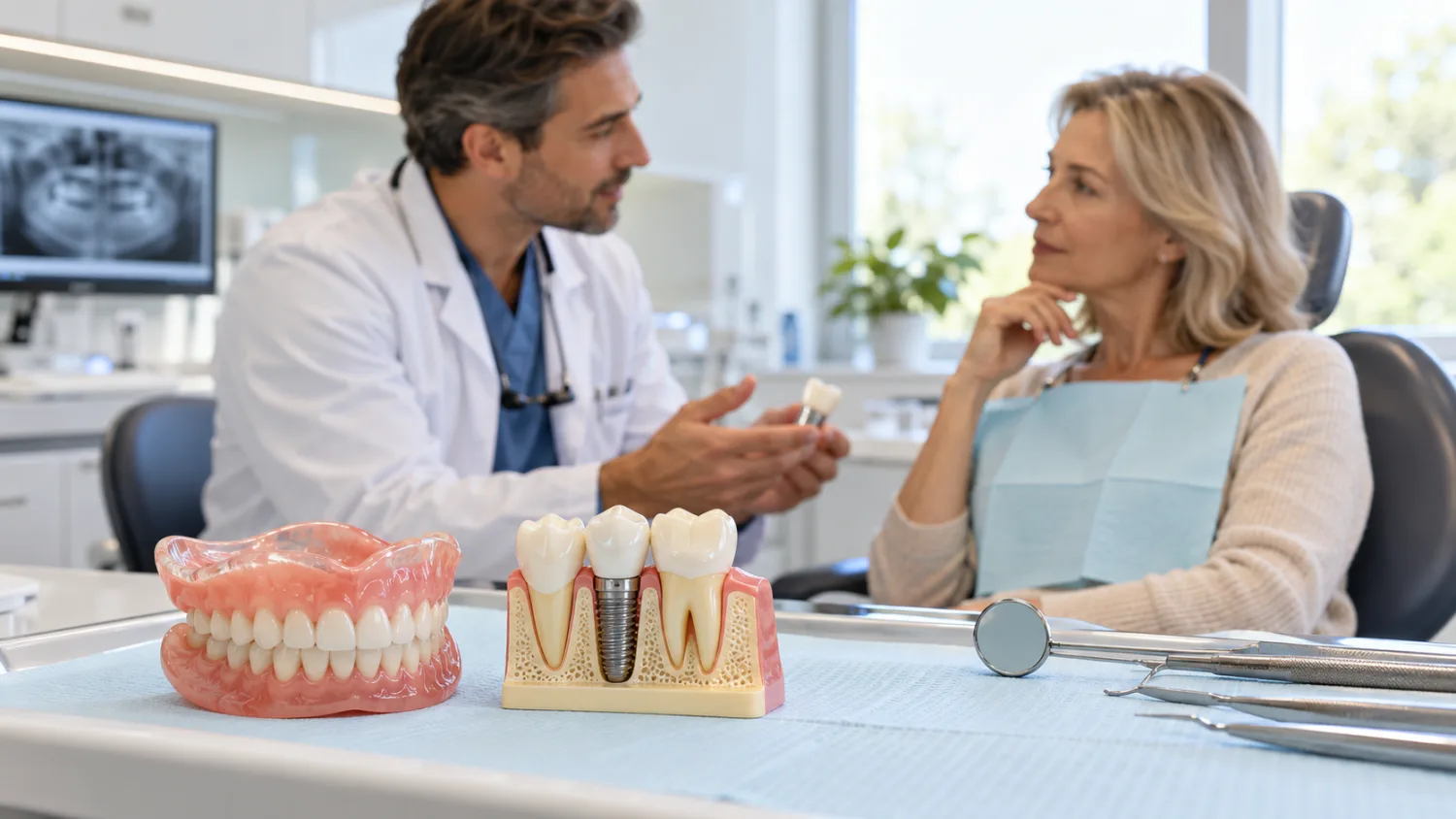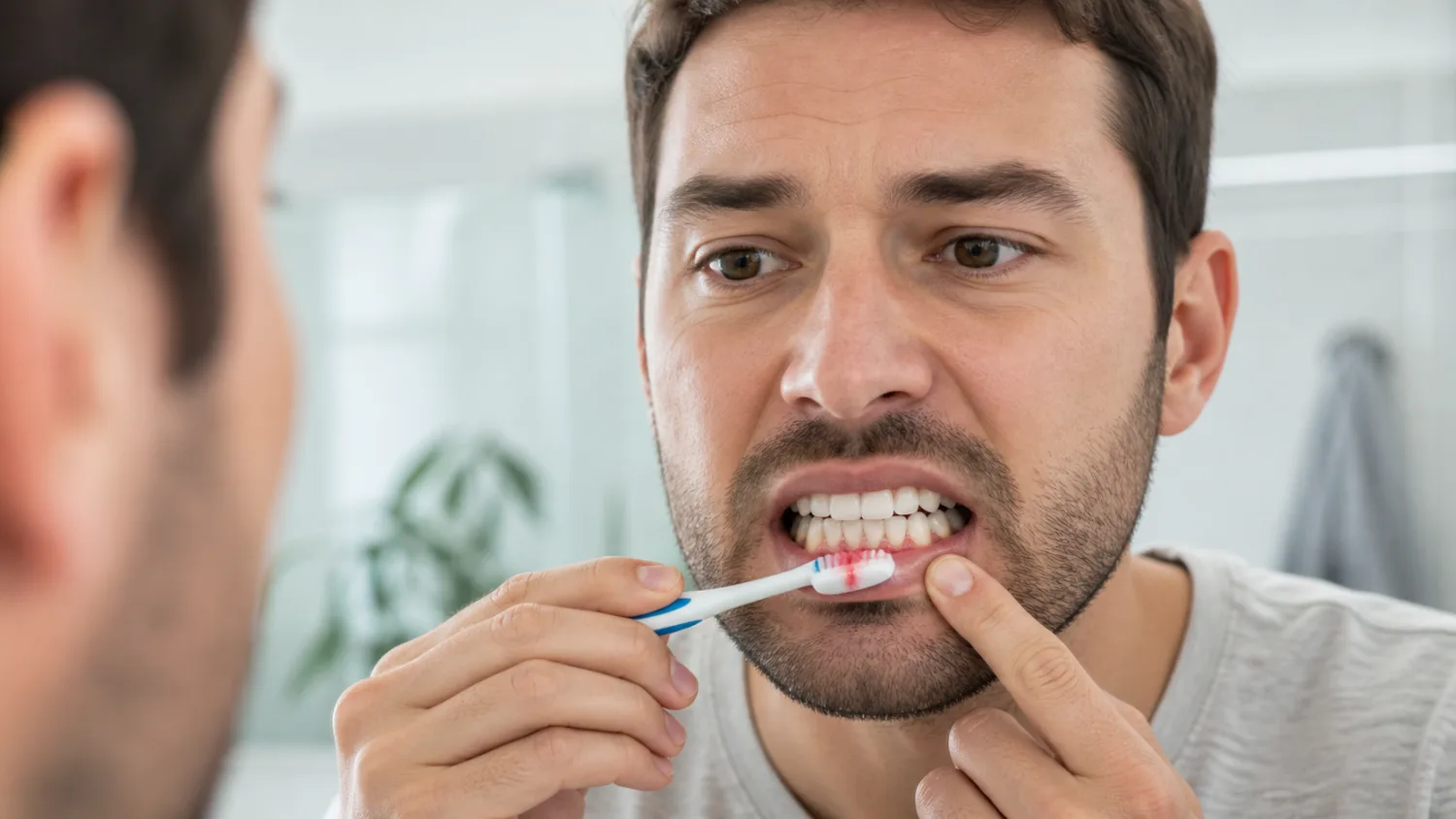
Bleeding gums are common, but they are not something to ignore. If your gums bleed when you brush, floss, use interdental brushes or eat hard foods, it often means the gum tissue is inflamed. In many cases, that inflammation is caused by plaque building up around the gumline. The early stage is called gingivitis, and it can usually be improved with better cleaning and professional dental care. If it is left untreated, however, it can progress into periodontitis, a more serious form of gum disease that can damage the tissues and bone supporting the teeth.
Gum disease is one of the main reasons adults lose teeth, but it is also one of the dental problems where early action can make a big difference. The difficulty is that gum disease does not always hurt. You may have bleeding, bad breath or gum recession for months before you feel pain. By the time teeth feel loose, the condition may already be advanced.
This guide explains why gums bleed, what gum disease is, how gingivitis differs from periodontitis, what dentists and hygienists can do, how to improve gum health at home, and when bleeding gums need urgent attention.
If your bleeding gums are accompanied by tooth pain, see our guide to toothache causes, relief and when to see a dentist. If you have swelling, pus, a bad taste, fever or severe dental pain, read our guide to dental abscess symptoms and treatment. If you are also worried about cavities, see tooth decay explained. To find dental care, use our UK dentist directory or search dentists near me.
Are bleeding gums normal?
No. Bleeding gums are common, but they are not normal in the sense of being healthy. Healthy gums should usually be firm, pale pink or naturally pigmented depending on your skin tone, and should not bleed with gentle brushing or interdental cleaning.
The NHS advises seeing a dentist if your gums bleed when you brush your teeth or eat hard foods, if your gums are painful and swollen, or if you have bad breath. You can read the NHS overview of gum disease symptoms and treatment for further guidance.
That said, bleeding does not always mean advanced disease. If you have recently started flossing or using interdental brushes, your gums may bleed at first because the area was already inflamed. With correct daily cleaning, bleeding often reduces over one to two weeks. If bleeding continues, worsens, or is linked with swelling, pain, bad breath, receding gums or loose teeth, you should book a dental appointment.
What causes bleeding gums?
The most common cause of bleeding gums is inflammation from plaque. Plaque is a sticky film of bacteria that forms on teeth every day. If plaque is not removed properly, it irritates the gumline. The gums become inflamed, tender and more likely to bleed.
However, bleeding gums can have several causes. Some are simple and local to the mouth. Others relate to general health, medication or hormonal changes.
Plaque and gingivitis
Gingivitis is early gum inflammation. It happens when plaque builds up along the gumline. The gums may look red, swollen or shiny, and they may bleed when brushed. Gingivitis is usually reversible with thorough home cleaning and professional dental advice.
The challenge is that gingivitis can be painless. Many people only notice blood in the sink after brushing, or a metallic taste when flossing. Because it does not always hurt, it is easy to underestimate.
Tartar build-up
If plaque stays on the teeth, it can harden into tartar, also called calculus. Tartar cannot be brushed away at home. It creates a rough surface that makes it easier for more plaque to collect, keeping the gums inflamed. A dentist, hygienist or dental therapist can remove tartar professionally.
Poor brushing technique
Brushing too lightly can leave plaque behind. Brushing too hard can irritate the gumline and contribute to gum recession. The ideal technique is gentle but thorough, using fluoride toothpaste and making sure the bristles reach the gumline without aggressive scrubbing.
Not cleaning between the teeth
A toothbrush cannot fully clean between teeth. Plaque left between teeth can inflame the gums, even if the visible front surfaces look clean. This is why gums may bleed when flossing or using interdental brushes. The bleeding is often a sign that the area needs more regular cleaning, not less.
Smoking and vaping
Smoking is a major risk factor for gum disease. It affects blood flow, immune response and healing, and can also make gum disease harder to spot because smokers may have less bleeding even when disease is present. Vaping may also irritate the mouth for some people, although the long-term effects are still being studied.
Pregnancy and hormonal changes
Pregnancy can make gums more sensitive to plaque, leading to swollen or bleeding gums. This does not mean gum bleeding should be ignored. It means careful cleaning and dental care are especially important. In the UK, NHS dental care is free during pregnancy and for 12 months after your baby is born if you have a valid maternity exemption certificate.
Diabetes
Diabetes and gum disease can affect each other. Poorly controlled blood sugar can increase the risk of gum infection and slow healing, while gum inflammation may make diabetes harder to manage. The British Society of Periodontology notes strong evidence of links between diabetes and gum disease in its gum health resources for patients.
Dry mouth
Saliva helps protect the mouth by washing away food particles and neutralising acids. A dry mouth can increase the risk of plaque build-up, tooth decay, gum irritation and bad breath. Dry mouth can be caused by dehydration, mouth breathing, smoking, alcohol, medical conditions or medicines.
Medication
Some medicines can affect the gums or increase bleeding tendency. Blood-thinning medicines, some blood pressure medicines, certain epilepsy medicines and some immune-suppressing treatments may be relevant. Do not stop prescribed medicine because of bleeding gums, but tell your dentist what you take.
Vitamin deficiencies and general health problems
Less commonly, bleeding gums can be linked to vitamin deficiencies, blood disorders or other medical conditions. This is more likely if you bleed easily elsewhere, bruise without explanation, have nosebleeds, feel very unwell, or have bleeding that seems out of proportion to the amount of brushing. In that situation, you may need medical advice as well as dental assessment.
What is gum disease?
Gum disease is inflammation and infection affecting the tissues around the teeth. It ranges from mild gingivitis to advanced periodontitis.
The important distinction is this:
- Gingivitis affects the gums and is usually reversible with good oral hygiene and professional care.
- Periodontitis affects the deeper supporting structures of the teeth, including the ligament and bone. It is not simply “sore gums”; it can lead to gum recession, pockets around teeth, bone loss, loose teeth and tooth loss.
NHS Inform explains that periodontitis is not reversible, but it can be controlled and stopped with treatment. That means lost bone support does not simply grow back with brushing, but treatment can reduce inflammation, stabilise the condition and help prevent further damage.
Gingivitis vs periodontitis: what is the difference?
| Feature | Gingivitis | Periodontitis |
|---|---|---|
| Main problem | Inflammation of the gumline | Inflammation and damage to deeper supporting tissues |
| Common signs | Bleeding, redness, swelling, tenderness, bad breath | Bleeding, gum recession, deeper pockets, loose teeth, drifting teeth, bad breath |
| Pain | Often painless | Can be painless until advanced, though tenderness or abscesses can occur |
| Reversibility | Usually reversible | Damage is not fully reversible, but disease can often be controlled |
| Treatment | Better cleaning, professional scale, prevention advice | Detailed periodontal assessment, deep cleaning, risk-factor control, maintenance and sometimes specialist care |
Symptoms of gum disease
Gum disease can be quiet. You may not have all the symptoms, and the severity of bleeding does not always match the severity of disease. Smokers, for example, may have less bleeding because smoking affects blood flow, even when gum disease is present.
Possible symptoms include:
- bleeding when brushing, flossing or using interdental brushes;
- bleeding when eating hard foods such as apples or crusty bread;
- red, swollen or tender gums;
- bad breath that keeps returning;
- a bad taste in the mouth;
- gum recession, where teeth look longer;
- sensitivity near the gumline;
- food getting trapped between teeth and gums;
- pus around the gumline;
- loose teeth;
- teeth drifting or gaps appearing;
- changes in how your teeth meet when you bite;
- dentures or bridges fitting differently.
If you have pus, swelling, severe pain, fever or facial swelling, this may suggest a dental abscess or spreading infection and needs urgent advice. See our guide to dental abscess symptoms and treatment.
Why do gums bleed when brushing?
The usual reason is inflammation. Inflamed gum tissue has more fragile blood vessels and bleeds more easily when touched by a toothbrush, floss or interdental brush. The instinct is often to stop brushing the bleeding area, but that usually makes plaque build-up worse.
In many cases, the solution is not to avoid the area but to clean it more effectively and gently. Bleeding may increase briefly when you restart proper interdental cleaning, especially if plaque has been building up for a while. It should gradually reduce as the gums become healthier. If bleeding does not improve after consistent cleaning, or if there is pain, swelling or bad breath, see a dentist.
Why do gums bleed when flossing?
Bleeding when flossing can happen because the gums between the teeth are inflamed. This is common if interdental cleaning has been irregular. It can also happen if floss is used too forcefully and cuts into the gum.
The aim is to slide the floss gently between the teeth, curve it around the side of each tooth, and move it up and down rather than snapping it into the gum. Many adults find interdental brushes easier and more effective than floss, especially where there are small gaps between teeth. Ask a dentist or hygienist which size is right for you.
When bleeding gums may be urgent
Bleeding gums are usually not an A&E problem, but they should not be ignored. Most cases need a dental appointment rather than emergency medical care. However, some symptoms suggest infection, trauma or a wider medical problem.
Book a dental appointment soon if:
- your gums bleed regularly when brushing or eating;
- your gums are swollen, red or tender;
- you have persistent bad breath;
- your gums are receding;
- your teeth feel loose;
- you notice pus near a tooth or gum;
- you have pain when biting;
- you have not had a dental check for a long time;
- you have diabetes, smoke, or have a history of gum disease.
Seek urgent dental advice if:
- you have gum bleeding with severe toothache;
- there is swelling in the gum, jaw, cheek or face;
- you have pus or a bad taste from one area;
- you have fever or feel generally unwell;
- you cannot open your mouth properly;
- you have a painful wisdom tooth area;
- bleeding follows dental treatment and does not stop with pressure.
Get emergency medical help if:
- swelling affects breathing, swallowing or speaking;
- swelling spreads to the neck or around the eye;
- bleeding is heavy and will not stop;
- you feel faint, confused or seriously unwell;
- you have unexplained bleeding from other parts of the body as well as the gums.
If you need urgent dental help and cannot reach a dentist, use NHS 111 online or call 111. For life-threatening symptoms, call 999.
How dentists check for gum disease
A gum disease assessment is usually straightforward. Your dentist or hygienist will look at your gums, check plaque and tartar levels, ask about bleeding and medical history, and measure the spaces around your teeth.
Gum pocket measurements
The dentist may use a small measuring probe to check the depth of the gum pockets around teeth. Healthy gums usually have shallow spaces. Deeper pockets can suggest that the gum has detached from the tooth and that periodontitis may be present.
Bleeding scores
Bleeding on probing helps show where gum inflammation is active. If many areas bleed, it usually means plaque control needs improvement or more treatment is needed.
X-rays
X-rays may be used to check bone levels around teeth. This is especially important if periodontitis is suspected, because bone loss cannot always be seen just by looking in the mouth.
Risk assessment
Your dentist may also consider smoking, diabetes, family history, medication, pregnancy, dry mouth, previous gum treatment and how easily you can clean your teeth. Gum disease treatment is not just about cleaning teeth once; it is about controlling risk over time.
How bleeding gums and gum disease are treated
Treatment depends on whether you have simple gingivitis, tartar build-up, established periodontitis, or another cause of bleeding. The first step is usually to remove plaque and tartar and help you clean effectively at home.
Oral hygiene advice
This may sound basic, but it is one of the most important parts of treatment. A dentist or hygienist can show you where plaque is collecting and which tools fit your teeth. For many people, the breakthrough is learning how to use interdental brushes properly, not just brushing harder.
Scale and polish
A scale and polish removes tartar and staining from the teeth. For gingivitis, this may be enough alongside better home care. Your gums may feel tender afterwards, and they may bleed a little at first, but this should improve as inflammation settles.
Deep cleaning or root surface debridement
If periodontitis is present, deeper cleaning below the gumline may be needed. This aims to remove plaque, tartar and bacteria from root surfaces and deep pockets. It may be done over several appointments and sometimes with local anaesthetic.
Periodontal maintenance
Gum disease often needs ongoing care. After active treatment, you may need regular maintenance visits to monitor pocket depths, remove plaque and tartar, and keep the disease stable. This is particularly important for people with periodontitis, diabetes or a smoking history.
Antibiotics
Antibiotics are not usually the main treatment for gum disease. They may be used in specific situations, such as certain infections or abscesses, but gum disease is generally managed through cleaning, risk control and long-term maintenance. Antibiotics alone will not remove tartar or fix deep gum pockets.
Specialist periodontal care
If gum disease is advanced, progressing quickly, or not responding to routine care, you may be referred to a periodontist. This is a dentist with advanced training in gum disease and the supporting structures of the teeth.
How to stop bleeding gums at home
The goal is not just to stop the bleeding. The goal is to make the gums healthy enough that they no longer bleed easily. That usually means removing plaque consistently and gently every day.
Brush twice a day, especially at the gumline
Brush for about two minutes, twice daily, using fluoride toothpaste. Angle the bristles towards the gumline and use small gentle movements. An electric toothbrush can help many people clean more consistently, especially if it has a pressure sensor.
Clean between your teeth every day
Use interdental brushes or floss once daily. Interdental brushes are often easier for adults, but the correct size matters. The brush should fit snugly but not be forced. If it bends, hurts or will not fit, ask your dentist or hygienist for advice.
Do not stop cleaning because gums bleed
If bleeding is caused by inflammation, stopping cleaning usually makes the problem worse. Continue gently and consistently. If bleeding does not improve after one to two weeks, or if symptoms are severe, book a dental check.
Use mouthwash at the right time
Mouthwash can help some people, but it should not replace brushing and interdental cleaning. If using a fluoride mouthwash, use it at a different time from brushing so you do not rinse away concentrated fluoride from toothpaste. Some medicated mouthwashes are intended for short-term use only, so follow dental or pharmacy advice.
Stop smoking if possible
Stopping smoking is one of the best things you can do for gum health. Smoking makes gum disease more likely, reduces healing and can make treatment less successful. If you smoke and have bleeding gums, tell your dentist; it changes your risk profile.
Manage dry mouth
If your mouth is often dry, sip water regularly, avoid frequent sugary lozenges, and ask a dentist or pharmacist about saliva substitutes or sugar-free options. Dry mouth can increase both gum and tooth decay risk.
Control diabetes and other health risks
If you have diabetes, good blood sugar control supports gum health, and good gum health may support diabetes management. Make sure your dentist knows you have diabetes and whether it is well controlled.
Should you use floss or interdental brushes?
The best tool is the one that cleans the space effectively without damaging the gum. For tight contacts between teeth, floss may be useful. For larger spaces, gum recession, bridges, implants or teeth with small gaps, interdental brushes often work better.
Many people need a mixture: floss for tight front teeth and interdental brushes for back teeth or wider spaces. A hygienist can show you the right sizes. Using the wrong size can be frustrating and may make you give up, so it is worth asking.
Can mouthwash cure gum disease?
No mouthwash can cure gum disease by itself. Mouthwash may reduce bacteria temporarily, freshen breath or support a short-term treatment plan, but plaque and tartar still need physical removal. Think of mouthwash as an add-on, not the foundation.
If you have persistent bleeding, bad breath or gum pockets, you need dental assessment rather than simply switching mouthwash brands.
Can gum disease be reversed?
Gingivitis can often be reversed. When inflammation is limited to the gums and there has been no loss of supporting bone, better cleaning and professional care can usually restore gum health.
Periodontitis is different. Once bone and attachment have been lost, that damage is not fully reversible in the same simple way. However, periodontitis can often be controlled. Treatment can reduce inflammation, shrink pocket depths, stabilise teeth and reduce the risk of further loss. The earlier it is diagnosed, the better.
Can bleeding gums cause tooth loss?
Bleeding itself does not cause tooth loss. But bleeding can be a sign of gum disease, and advanced gum disease can lead to tooth loss by damaging the bone and tissues that hold teeth in place.
This is why bleeding gums should be treated as an early warning sign. If you act while the problem is gingivitis, you may prevent progression to periodontitis. If periodontitis is already present, treatment can still help stabilise the condition.
Gum disease and tooth decay: how they overlap
Gum disease and tooth decay are different conditions, but they often appear together because both are linked to plaque. Tooth decay damages the hard tooth structure, while gum disease affects the tissues supporting the teeth.
Gum recession from periodontal disease can expose tooth roots. Root surfaces are more vulnerable to decay than enamel-covered crowns. This means people with gum recession may be at higher risk of sensitivity and root decay. If you are concerned about cavities as well as gum bleeding, read tooth decay explained.
Bleeding gums in children
Children can develop bleeding gums too. The cause is often plaque-related gingivitis, especially if brushing is rushed or difficult around erupting teeth, braces or crowded teeth. Children may also have sore gums when teeth are coming through, but persistent bleeding should not be dismissed.
Book a dental appointment if your child has sore, swollen or bleeding gums, bad breath, visible plaque, tooth pain, mouth ulcers that do not heal, or difficulty eating. The NHS specifically advises seeing a dentist if a child has sore, bleeding gums.
Children need help with brushing until they have the coordination to do it well themselves. Many children brush the biting surfaces but miss the gumline. A small-headed toothbrush, fluoride toothpaste and supervised brushing can make a major difference.
Bleeding gums during pregnancy
Pregnancy gingivitis is common. Hormonal changes can make gums respond more strongly to plaque, so bleeding and swelling may appear even if your brushing routine has not changed. This does not mean you should accept bleeding as harmless. It means gum care is especially important.
Brush twice daily, clean between teeth, and book dental advice if gums bleed regularly. Tell the dental team you are pregnant. NHS dental care is free during pregnancy and for 12 months after birth with a valid maternity exemption certificate.
Bleeding gums and bad breath
Bad breath that keeps returning is often linked to plaque, gum inflammation, tongue coating, food trapping, dry mouth, smoking or dental infection. If bad breath comes with bleeding gums, it may suggest gingivitis or periodontitis.
Mints and mouthwash may cover the smell temporarily, but they do not remove the cause. Cleaning between teeth, brushing the gumline, cleaning the tongue gently and seeing a hygienist can help. If bad breath is associated with pus, a bad taste from one area, swelling or toothache, seek dental advice urgently.
Bleeding gums after dental cleaning
It is common for gums to feel tender or bleed slightly after a professional clean, especially if there was a lot of inflammation or tartar. This should settle. Continue brushing and interdental cleaning as advised, even if there is some bleeding at first.
If bleeding is heavy, does not stop, or you are taking blood-thinning medication and are concerned, contact the dental practice for advice.
How often should you see a dentist or hygienist?
There is no single interval that suits everyone. NICE guidance on dental recall intervals supports a personalised approach based on risk. Adults may be advised to return anywhere from 3 months to 24 months depending on oral health, disease risk and stability. Children and young people are usually reviewed at shorter maximum intervals.
If you have active gum disease, you may need more frequent visits for treatment or maintenance. These are not just routine check-ups; they are part of disease control. Your dentist or hygienist should explain your gum scores, your risk level and the recommended review interval.
What to ask your dentist about bleeding gums
If you are worried about gum disease, it helps to ask specific questions. Good questions include:
- Do I have gingivitis or periodontitis?
- Are there any deep gum pockets?
- Have I lost any bone support around my teeth?
- Do I need X-rays to check bone levels?
- Which areas am I missing when I brush?
- Should I use floss or interdental brushes?
- What size interdental brushes should I use?
- Do I need hygienist treatment?
- How often should I come back for gum maintenance?
- Does smoking, diabetes or medication affect my gum health?
Do not be embarrassed to ask for a demonstration. Gum disease treatment depends heavily on what you do at home, so practical instruction matters.
Frequently asked questions about bleeding gums and gum disease
Why are my gums bleeding when I brush?
The most common reason is gum inflammation caused by plaque around the gumline. Inflamed gums bleed more easily when touched by a toothbrush. Brushing more gently but more thoroughly, especially at the gumline, can help. If bleeding continues, see a dentist.
Should I stop flossing if my gums bleed?
Usually no. If bleeding is due to inflammation, stopping interdental cleaning can make plaque build-up worse. Use gentle technique and continue daily. Bleeding should improve as gums become healthier. If it does not improve after one to two weeks, or if there is pain or swelling, book a dental appointment.
Can bleeding gums heal?
Yes, bleeding caused by gingivitis can often improve with good brushing, daily interdental cleaning and professional removal of tartar. If periodontitis is present, the condition may not be fully reversible, but treatment can often control it and reduce further damage.
How long does it take for bleeding gums to stop?
If bleeding is due to mild gingivitis and you clean effectively every day, you may notice improvement within one to two weeks. More advanced gum disease may take longer and needs professional treatment. Persistent bleeding should be checked.
Can gum disease be painless?
Yes. Gum disease is often painless, especially in the early stages. Bleeding, bad breath, gum recession or loose teeth may be the first signs. Do not wait for pain before seeking advice.
Can gum disease make teeth loose?
Advanced gum disease can damage the bone and tissues supporting teeth, which may eventually make teeth loose or cause them to drift. Loose teeth should always be assessed by a dentist.
Is bad breath a sign of gum disease?
It can be. Persistent bad breath may be caused by plaque, gum inflammation, food trapping, dry mouth, smoking or infection. If bad breath comes with bleeding gums, swollen gums or a bad taste, book a dental check.
Can gum disease cause toothache?
Gum disease can cause tenderness, sensitivity, pain when chewing or gum abscesses. Toothache can also be caused by decay, cracks or infection inside the tooth. If you have dental pain, see our guide to toothache causes and relief.
Can mouthwash stop bleeding gums?
Mouthwash may help temporarily, but it will not remove plaque or tartar by itself. The foundation is brushing, interdental cleaning and professional dental care. Persistent bleeding needs assessment.
Can smoking hide gum disease?
Yes. Smoking can reduce blood flow to the gums, so smokers may have less bleeding even when gum disease is present. Smoking also increases the risk of gum disease and makes treatment less successful.
Are bleeding gums a sign of cancer?
Bleeding gums are most often caused by gum inflammation, not cancer. However, any mouth ulcer, lump, red or white patch, unexplained bleeding, numbness or sore area that does not heal should be checked by a dentist or doctor.
Can diabetes cause bleeding gums?
Diabetes can increase the risk of gum disease, especially if blood sugar is not well controlled. Gum disease can also make diabetes management harder. If you have diabetes and bleeding gums, arrange a dental review.
Why do my gums bleed only in one area?
Bleeding in one area may be due to trapped food, a rough filling, tartar, local gum inflammation, a deep pocket, a cracked tooth, decay or an abscess. Localised bleeding that keeps returning should be checked.
Can brushing too hard make gums bleed?
Brushing too hard can irritate gums and contribute to recession, but persistent bleeding is often due to inflammation rather than brushing force alone. Use a soft or medium toothbrush, avoid scrubbing, and ask a dentist or hygienist to check your technique.
The bottom line
Bleeding gums are an early warning sign that should not be ignored. Most often, they are caused by plaque-related gum inflammation. In the early stage, gingivitis can usually be improved with better cleaning and professional care. If gum disease progresses to periodontitis, it can damage the tissues and bone that support your teeth, but treatment can often stabilise it.
Brush twice daily with fluoride toothpaste, clean between your teeth every day, do not stop cleaning just because gums bleed, and book a dental check if bleeding continues or comes with swelling, bad breath, gum recession, loose teeth, pain or pus.
To find local dental care, use our UK dentist directory or search dentists near me. For related dental problems, see our guides to tooth decay, toothache and dental abscesses.
This article is for general information only and is not a substitute for professional dental or medical advice. If you have severe pain, swelling, pus, fever, loose teeth, heavy bleeding, or swelling affecting breathing or swallowing, seek urgent help.