Tooth decay is one of the most common dental problems, but it often starts quietly. A tooth can be decaying long before it hurts. By the time there is a visible hole, sharp sensitivity or toothache, the damage may already have reached deeper layers of the tooth.
The good news is that tooth decay is often preventable, and when it is caught early, treatment is usually simpler. Early enamel changes may sometimes be stabilised with fluoride and better oral care. A small cavity may need a filling. A deeper infection may need root canal treatment or extraction. The stage at which decay is found makes a big difference.
This guide explains what tooth decay is, how it develops, the early signs, what cavities look and feel like, how dentists treat decay, and what you can do to reduce your risk. It is written for patients in the UK, where people may be deciding whether they need routine care, urgent dental advice, NHS treatment or private dentistry.
If you already have tooth pain, see our related guide to toothache causes, relief and when to see a dentist. If you have swelling, pus, fever or a bad taste with dental pain, read our guide to dental abscess symptoms, treatment and when it is an emergency. To find local dental care, you can search our UK dentist directory or use our dentists near me page.
What is tooth decay?
Tooth decay is damage to the hard surface of a tooth caused by acids made by bacteria in plaque. Plaque is a sticky film that builds up on teeth. When bacteria in plaque come into contact with sugars from food and drink, they produce acid. Over time, that acid can weaken and dissolve the minerals in tooth enamel.
At first, this may appear as a white or chalky patch on the tooth. This early stage may not cause pain. If the process continues, the enamel breaks down and a cavity, or hole, can form. Once the decay reaches the softer dentine underneath the enamel, it may spread more quickly. If it reaches the pulp — the soft inner part of the tooth containing nerves and blood vessels — it can cause severe pain, infection or a dental abscess.
The NHS guide to tooth decay explains that treatment depends on severity. Early decay may be treated with fluoride, a cavity may need a filling, decay reaching the pulp may need root canal treatment, and badly affected teeth may sometimes need removal.
How tooth decay develops
Tooth decay is not usually caused by one chocolate bar or one missed brushing session. It is more often the result of repeated acid attacks over time. Every time you eat or drink something sugary, bacteria in plaque produce acids. Saliva helps neutralise acid and repair early mineral loss, but if sugar exposure is frequent, the teeth may spend too much time under attack and not enough time recovering.
That is why frequency matters. A sugary drink sipped slowly over two hours can be more harmful than the same drink consumed with a meal, because the teeth are exposed to acid again and again. Sticky sweets, frequent snacking, sweetened tea or coffee, fizzy drinks, fruit juices, smoothies and bedtime sugary drinks can all increase risk.
Decay often begins in places that are harder to clean:
- between teeth;
- in the grooves of back teeth;
- around old fillings or crowns;
- near the gumline;
- around braces, bridges or dentures;
- on exposed tooth roots where gums have receded.
Because these areas can be hidden, you may not see decay yourself. This is one reason dental check-ups and X-rays can be useful, especially for people at higher risk.
Early signs of tooth decay
Early tooth decay may have no symptoms. This is one of the main reasons people are surprised when a dentist says they need a filling. A tooth can look normal in the mirror, feel normal when eating, and still have decay developing between the teeth or underneath a damaged filling.
Possible early signs include:
- a white, chalky or dull patch on the enamel;
- a brown, grey or black mark on a tooth;
- food repeatedly getting trapped in the same place;
- a rough area you can feel with your tongue;
- mild sensitivity to cold, sweet or acidic foods;
- bad breath or an unpleasant taste;
- floss catching or shredding between two teeth;
- slight discomfort when biting on one tooth.
These signs do not always mean decay. Staining, enamel defects, gum recession and old dental work can look or feel similar. But they are good reasons to book a dental check rather than waiting for pain.
What does a cavity feel like?
A cavity is a hole in the tooth caused by decay. Small cavities may not hurt. Larger cavities can cause sensitivity, toothache, pain when biting, or a feeling that food is getting stuck. If the cavity becomes deep, pain may linger after hot or cold drinks, disturb sleep, or become a deep throbbing ache.
Common cavity symptoms include:
- toothache that comes and goes;
- sharp pain with sweet foods;
- sensitivity to cold drinks or ice cream;
- pain after hot drinks;
- pain when chewing;
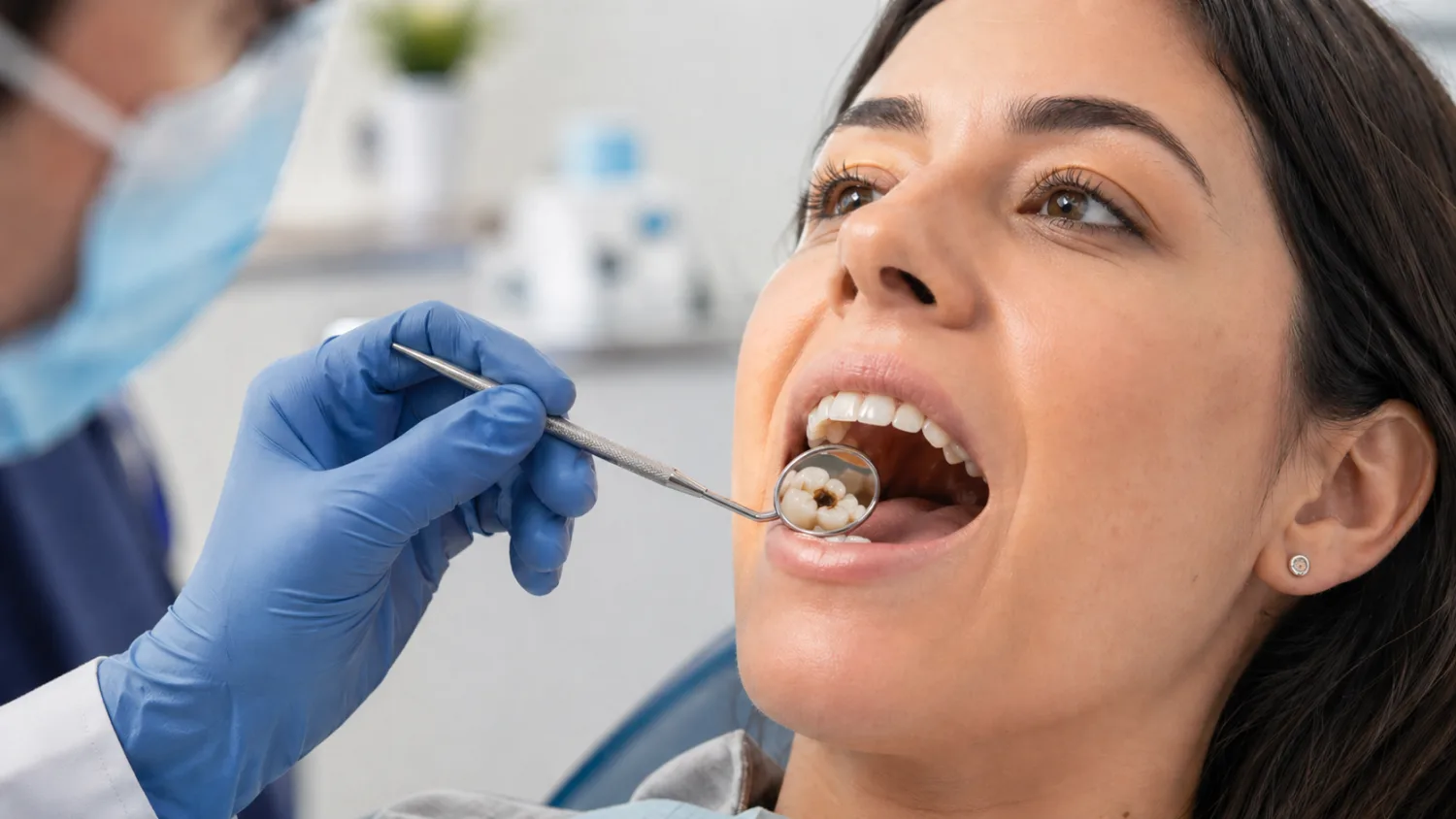
- a visible hole or dark area;
- food packing into the tooth;
- a broken edge or rough surface;
- bad breath that does not improve with brushing.
If the tooth becomes infected, symptoms can become more serious. Pain may be severe and throbbing. The gum may swell. You may notice pus, a bad taste, fever, facial swelling or swollen glands. These symptoms may suggest a dental abscess and need urgent advice.
Stages of tooth decay
Tooth decay is a process, not a single event. Understanding the stages can help explain why early treatment matters.
Stage 1: Early enamel mineral loss
At this stage, the enamel is starting to lose minerals. You may see a white chalky patch, or there may be no visible sign at all. The surface may still be intact. With fluoride, better brushing and reduced sugar frequency, very early decay may sometimes be stopped or slowed before a cavity forms.
Stage 2: Enamel cavity
If mineral loss continues, the enamel breaks down and a small hole appears. This usually needs a filling because the tooth surface is no longer intact. Waiting may allow decay to spread into deeper layers.
Stage 3: Decay reaches dentine
Dentine is softer than enamel, so decay can progress more quickly once it reaches this layer. Sensitivity is more likely. You may feel pain with cold, sweet or acidic foods. A filling may still be possible, but the cavity may be larger.
Stage 4: Decay reaches the pulp
The pulp contains nerves and blood vessels. When decay reaches this area, the tooth may become inflamed or infected. Pain may linger after hot or cold drinks, become spontaneous, or wake you at night. Root canal treatment or extraction may be needed.
Stage 5: Abscess or spreading infection
If infection spreads beyond the tooth root, a dental abscess can form. This may cause severe pain, swelling, pus, fever or a bad taste. A dental abscess needs urgent dental assessment. In rare cases, dental infections can spread into the face, neck or other tissues and become a medical emergency.
Why tooth decay may not hurt at first
Enamel has no nerves. Early decay in enamel can develop silently because there is no nerve tissue to send pain signals. Pain is more likely when decay reaches dentine, irritates the pulp, causes a crack, traps food, or leads to infection.
This is why “no pain” does not always mean “no problem”. Dental check-ups are partly about spotting problems before they become painful. A small hidden cavity between teeth may be much easier to treat than a tooth that has become infected.
Who is more likely to get tooth decay?
Anyone can develop tooth decay, even people who brush regularly. Risk depends on a mix of oral hygiene, diet, saliva, tooth shape, dental history, medical conditions and access to care.
Tooth decay may be more likely if you:
- eat or drink sugary foods and drinks frequently;
- sip sweetened drinks, fizzy drinks, juice or sports drinks over long periods;
- brush less than twice a day;
- do not use fluoride toothpaste;
- do not clean between your teeth;
- have a dry mouth;
- take medicines that reduce saliva or contain sugar;
- have gum recession exposing tooth roots;
- have braces, bridges, dentures or crowded teeth that make cleaning harder;
- have had several fillings or cavities before;
- have an eating disorder, reflux or frequent vomiting;
- struggle to access regular dental care.
Children, older adults and people with dry mouth can be particularly vulnerable. Children may have thinner enamel on baby teeth, and decay can progress quickly. Older adults may have gum recession, more exposed root surfaces, dry mouth from medicines, or older restorations that need monitoring.
Tooth decay in children
Tooth decay in children is common, but it should not be dismissed as “just baby teeth”. Baby teeth help children chew, speak and keep space for adult teeth. Decay can cause pain, infection, sleep problems, difficulty eating, time off school and dental anxiety.
Children may not always say they have toothache. They may avoid certain foods, chew on one side, wake at night, become irritable, complain when brushing, or develop bad breath. Visible brown or black marks, holes, swelling or broken baby teeth should be checked by a dentist.
Prevention starts early. Children should brush twice daily with fluoride toothpaste, with the amount of toothpaste appropriate for their age. Sugary drinks in bottles, frequent snacks, bedtime milk with added sugar, juice in sipping cups and sweets used as regular rewards can all increase risk.
If a child has tooth pain, facial swelling, fever, pus or seems very unwell, seek urgent dental advice.
Tooth decay in adults
Adults often assume tooth decay is mainly a childhood problem, but cavities can happen at any age. Adults may develop decay around older fillings, under crowns, between teeth, or on exposed roots where gums have receded.
Root decay is especially important. The root surface is not protected by enamel in the same way as the crown of the tooth. When gums recede, roots can become more vulnerable to decay and sensitivity.
Adults with busy routines may also graze throughout the day, sip sweetened coffee, use energy drinks, take medications that dry the mouth, or delay dental appointments because of cost or access problems. These everyday factors can quietly increase risk.
Dry mouth and tooth decay
Saliva protects teeth. It helps wash away food particles, neutralise acids and provide minerals that support enamel repair. When the mouth is dry, the risk of decay can rise.
Dry mouth can be caused by dehydration, mouth breathing, smoking, alcohol, some medical conditions and many medicines, including some antidepressants, antihistamines, blood pressure medicines and pain medicines. It can also occur after radiotherapy to the head and neck.
Signs of dry mouth include needing water at night, sticky saliva, difficulty swallowing dry foods, cracked lips, burning mouth, bad breath or frequent cavities. If you have persistent dry mouth, speak to a dentist, pharmacist or GP. Do not simply use sugary sweets or acidic drinks to stimulate saliva, as this can worsen decay risk.
Can tooth decay be reversed?
Very early enamel mineral loss may sometimes be halted or partly repaired through remineralisation. This usually involves fluoride, good brushing, reduced sugar frequency and improved oral hygiene. However, once a physical cavity has formed, the lost tooth structure does not grow back by itself. A filling or other dental restoration is usually needed.
This distinction matters. “Reversing decay” is possible only in the earliest stages before a hole has formed. If you can feel a hole, see a dark cavity, have food trapping or pain, you should not rely on home care alone.
How dentists diagnose tooth decay
A dentist will examine your teeth and gums, ask about symptoms, look for soft or damaged areas, check existing fillings, and may use X-rays to look between teeth or under old restorations. X-rays can reveal decay that is not visible in the mirror, particularly between back teeth.
The dentist may also assess your overall risk. This includes your history of cavities, diet, brushing routine, fluoride use, saliva, medical conditions, medications, gum health and whether you wear braces, dentures or other appliances.
Not every dark mark is decay, and not every cavity is obvious. A proper dental assessment is the safest way to know what is happening.
How tooth decay is treated
Treatment depends on how advanced the decay is and whether the tooth is painful, infected or structurally weakened.
Fluoride treatment for early decay
If decay is at a very early stage, a dentist may recommend fluoride varnish, high-fluoride toothpaste or other preventive steps. The goal is to strengthen enamel and stop decay progressing.
Filling
If a cavity has formed, the decayed part of the tooth is usually removed and the hole is filled. Fillings can be made from different materials, depending on the tooth, the size of the cavity, NHS or private options, and clinical suitability.
Inlay, onlay or crown
If a tooth has lost a lot of structure, a simple filling may not be strong enough. An inlay, onlay or crown may be recommended to protect the tooth and restore function.
Root canal treatment
If decay reaches the pulp and the tooth can be saved, root canal treatment may be recommended. This removes infected or inflamed tissue from inside the tooth, cleans the root canals and seals them. The tooth may then need a crown or filling.
Extraction
If a tooth is too badly damaged or infected to restore, removal may be needed. This is usually considered when saving the tooth is not possible or not advisable. If a tooth is removed, your dentist can discuss options for replacing it if appropriate.
Is tooth decay treatment painful?
Many people delay treatment because they fear pain. Modern dental treatment is usually done with local anaesthetic when needed, so the area is numbed. You may feel pressure or vibration, but treatment should not be sharply painful. If you are anxious, tell the dentist before treatment starts. Dental teams are used to helping nervous patients.
Delaying treatment often makes things harder. A small filling is usually simpler than emergency treatment for severe toothache or abscess. If anxiety is the reason you are avoiding care, say so when booking. Many practices can explain the appointment, offer shorter visits, or discuss options for anxious patients.
What happens if tooth decay is left untreated?
Untreated tooth decay can progress from enamel damage to a cavity, then to deeper infection. Possible complications include:
- worsening toothache;
- larger cavities;
- broken or weakened teeth;
- infection of the tooth pulp;
- dental abscess;
- facial swelling;
- difficulty eating or sleeping;
- bad breath or bad taste;
- need for root canal treatment;
- tooth extraction.
Decay does not always progress at the same speed. Some cavities worsen quickly; others move slowly. But once a cavity exists, it should be assessed. Waiting for pain is not a good strategy because pain often appears after the problem has become more complex.
How to prevent tooth decay
Prevention is about reducing acid attacks, strengthening enamel and cleaning plaque away before it causes damage. The basics sound simple, but doing them consistently makes a real difference.
Brush twice a day with fluoride toothpaste
The NHS recommends brushing teeth twice a day with fluoride toothpaste. Brush last thing at night and one other time during the day. Night brushing is especially important because saliva flow reduces during sleep, giving the mouth less natural protection.
After brushing, spit out excess toothpaste rather than rinsing heavily with water. This leaves more fluoride on the teeth. You can read more in the NHS guide to taking care of your teeth and gums.
Clean between your teeth daily
Toothbrushes do not fully clean between teeth. Floss or interdental brushes help remove plaque and food from areas where cavities often start. If you are not sure what size interdental brush to use, ask a dentist, hygienist or dental therapist.
Reduce how often you have sugar
It is not just the amount of sugar that matters, but how often your teeth are exposed to it. Try to keep sugary foods and drinks to mealtimes rather than grazing through the day. Water and milk are usually better everyday drinks than juice, fizzy drinks, sweetened coffee, energy drinks or sports drinks.
Be careful with “healthy” acidic drinks
Fruit juice, smoothies, flavoured waters and some diet fizzy drinks may be acidic. Acid can soften enamel and contribute to tooth wear, even when a drink is marketed as healthy or has no added sugar. If you have these drinks, having them with meals and not sipping them slowly can reduce exposure.
Do not snack constantly
Frequent snacking gives bacteria repeated fuel. If you snack often because of work, shift patterns, pregnancy nausea, sport, diabetes or medication routines, ask a dentist for practical prevention advice rather than simply trying to manage alone.
Ask about fluoride if you are high risk
Some people benefit from extra fluoride, such as fluoride varnish or prescription high-fluoride toothpaste. This is usually recommended by a dentist based on risk. NHS Inform has a helpful overview of fluoride and dental health.
Attend dental checks based on your risk
Not everyone needs the same check-up schedule. NICE guidance supports personalised dental recall intervals based on risk, rather than a fixed “every six months” rule for everyone. Some people need more frequent review, while others with stable oral health may be advised to attend less often. See the NICE guideline on dental checks and recall intervals.
Tooth decay and diet: what matters most?
Diet advice for tooth decay is sometimes oversimplified into “avoid sweets”. Sweets are part of the picture, but the bigger issue is repeated exposure to fermentable carbohydrates and sugars, especially between meals.
Common high-risk habits include:
- sipping sugary tea or coffee throughout the day;
- drinking fizzy drinks, juice or energy drinks regularly;
- grazing on biscuits, sweets, dried fruit or cereal bars;
- giving children juice in bottles or sipping cups;
- having sweet drinks or snacks before bed;
- using sugary lozenges or sweets frequently for dry mouth;
- frequent sports gels or energy drinks during training.
You do not need a perfect diet to protect your teeth. Small changes can help: drink water between meals, keep sweet foods to mealtimes, reduce sipping, choose sugar-free medicines where appropriate, and avoid brushing immediately after acidic drinks because enamel may be temporarily softened.
Tooth decay and dental costs
One reason people delay dental care is cost. Unfortunately, waiting can make treatment more expensive. Early decay may need prevention advice and monitoring. A small cavity may need a filling. Advanced decay may need root canal treatment, a crown or extraction.
If you are unsure whether to choose NHS or private treatment, ask the practice what is available, what the likely costs are, and whether urgent care will be temporary or definitive. If you do not have a dentist, you can search our dentists near me page or browse dentist listings.
When tooth decay becomes urgent
Tooth decay itself is not always an emergency, but complications can be. Seek urgent dental advice if you have:
- severe toothache;
- pain that keeps you awake;
- facial, jaw or gum swelling;
- pus or a bad taste from the gum;
- fever or feeling generally unwell;
- difficulty opening your mouth;
- pain when swallowing;
- a broken tooth with severe pain;
- signs of a dental abscess.
If you cannot access a dentist and need urgent dental help, use NHS 111 online or call 111. Go to A&E or call 999 if swelling affects breathing, swallowing or speaking, spreads to the neck or eye area, or you feel seriously unwell.
Frequently asked questions about tooth decay
What is the first sign of tooth decay?
The first sign may be no symptom at all. Early decay can appear as a white chalky patch, a brown mark, mild sensitivity, food trapping, or a rough area on the tooth. Decay between teeth may only be seen on a dental X-ray.
Can tooth decay go away on its own?
Very early enamel mineral loss may sometimes be stopped or improved with fluoride and better oral care. But once a cavity or hole has formed, it will not repair itself. A dentist usually needs to restore the tooth.
Does a cavity always hurt?
No. Small cavities can be painless. Pain often appears when decay reaches deeper layers, irritates the nerve, causes a crack, or leads to infection. This is why regular dental checks can find decay before it becomes painful.
What does tooth decay look like?
Tooth decay may look like a white chalky patch, brown or black mark, visible hole, rough area, broken edge or dark shadow. However, some decay is hidden between teeth or under old fillings and may not be visible at home.
Can tooth decay cause bad breath?
Yes. Cavities can trap food and bacteria, which may contribute to bad breath or a bad taste. Gum disease, dry mouth, smoking, diet and other health conditions can also cause bad breath, so persistent symptoms should be checked.
Can tooth decay cause an abscess?
Yes. If decay reaches the pulp inside the tooth, bacteria can infect the root and surrounding tissues. This can lead to a dental abscess, which may cause severe pain, swelling, pus, fever or feeling unwell.
Is tooth decay contagious?
Tooth decay itself is not caught like a cold, but decay is linked to bacteria in the mouth and shared habits. Families often share similar diets, routines and oral bacteria. This is one reason parents and carers should avoid sharing toothbrushes and should support good brushing habits in children.
How often should I see a dentist if I get cavities?
It depends on your risk. People with frequent cavities may need more regular review and prevention support. NICE guidance supports personalised recall intervals based on risk rather than one fixed schedule for everyone. Your dentist can advise how often you should attend.
Can brushing too hard cause tooth decay?
Brushing too hard does not directly cause decay, but it can contribute to gum recession and enamel wear, which may expose more vulnerable tooth surfaces and cause sensitivity. Use a fluoride toothpaste and a gentle technique rather than scrubbing aggressively.
Are sugar-free drinks safe for teeth?
Sugar-free drinks may reduce sugar exposure, but many fizzy or flavoured drinks are still acidic and can contribute to enamel erosion. Water and milk are usually better everyday choices. If you drink acidic drinks, avoid sipping them slowly over long periods.
The bottom line
Tooth decay is common, but it is not inevitable. It begins when plaque bacteria use sugars to produce acids that damage enamel. Early decay may not hurt, but it can progress to cavities, toothache, infection and dental abscess if ignored.
The most effective approach is early action: brush twice daily with fluoride toothpaste, clean between your teeth, reduce frequent sugar exposure, attend dental checks based on your risk, and book advice if you notice sensitivity, food trapping, visible marks, holes or toothache.
For local dental care, search our UK dentist directory or use dentists near me. For related symptoms, read our guides to toothache and dental abscesses.
This article is for general information only and is not a substitute for professional dental or medical advice. If you have severe pain, swelling, fever, pus, difficulty swallowing or breathing, or you feel very unwell, seek urgent help.