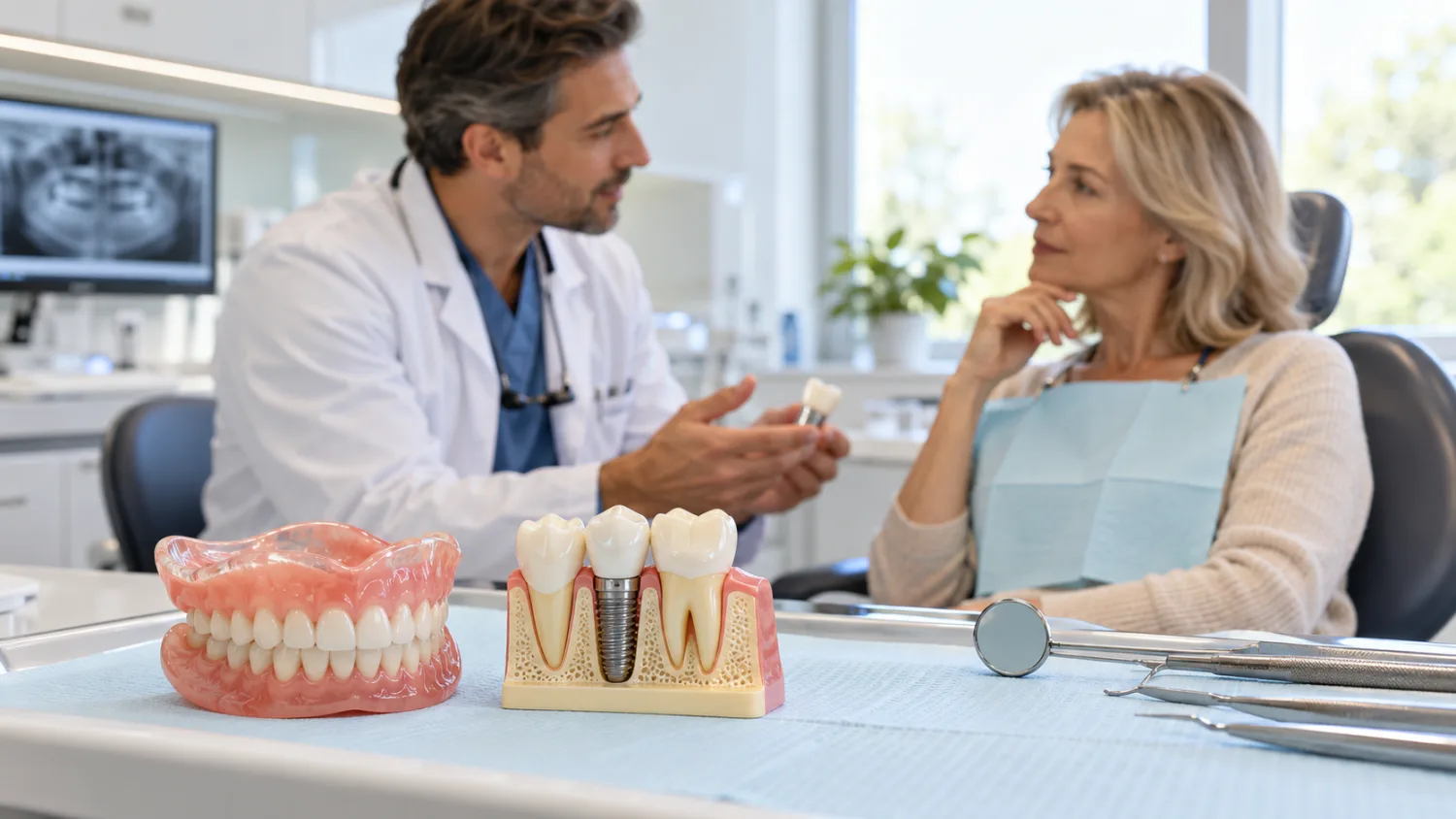
Cosmetic dentistry can improve the appearance of your smile, but it is still dental treatment. Some options are simple and relatively low-risk, such as professional whitening or small amounts of composite bonding. Others are irreversible, expensive and need long-term maintenance, such as porcelain veneers, crowns, implants or full smile makeovers.
The most important question is not “what will make my teeth look best on day one?” It is “what is safe, suitable, affordable and maintainable for my mouth over the next 5, 10 or 20 years?” A good cosmetic dentist should protect your natural teeth, explain alternatives, discuss risks clearly and never pressure you into treatment.
This guide explains the main cosmetic dentistry treatments in the UK, typical costs, NHS vs private availability, safety rules, risks, red flags, and what to ask before agreeing to whitening, bonding, veneers, aligners, crowns, implants or a full smile makeover.
You may also find these related guides useful: Teeth Whitening in the UK, Composite Bonding in the UK, Veneers in the UK, Invisalign and Clear Aligners in the UK, Dental Implants in the UK, Private Dentist Prices UK, Dental Payment Plans Explained and Dental Treatment Abroad vs UK Dentist.
Quick summary
- Cosmetic dentistry includes treatments such as whitening, composite bonding, veneers, clear aligners, gum contouring, crowns, implants and smile makeovers.
- Most cosmetic dental treatment is private in the UK.
- The NHS says that, with the exception of teeth whitening, implants and veneers, many dental treatments such as crowns and bridges are usually available on the NHS when clinically needed. Cosmetic treatment for appearance alone is generally private.
- Teeth whitening should only be provided by registered dental professionals. The General Dental Council warns that people who are not registered and offer tooth whitening are likely to be breaking the law.
- Composite bonding is usually less invasive than veneers but may stain, chip and need repair or replacement.
- Porcelain veneers can look excellent but are irreversible and may need replacement in the future.
- Crowns should usually be used when teeth need structural protection, not just to make healthy teeth look whiter.
- Clear aligners can improve tooth position, but they need compliance and retainers afterwards.
- Dental implants can replace missing teeth, but they need surgery, healing time, maintenance and good gum health.
- Before treatment, your dentist should explain options, risks and possible costs so you can give valid consent.
What is cosmetic dentistry?
Cosmetic dentistry is dental care that aims to improve the appearance of your teeth, gums or smile. It may involve changing tooth colour, shape, size, position, spacing, symmetry or the appearance of missing teeth.
Cosmetic dentistry can include:
- Teeth whitening.
- Composite bonding.
- Porcelain veneers.
- Composite veneers.
- Clear aligners or braces.
- Tooth contouring.
- Gum contouring.
- Replacement of stained fillings.
- Crowns.
- Bridges.
- Dentures.
- Dental implants.
- Smile makeovers.
Some treatments are mostly cosmetic. Others may be both functional and cosmetic. For example, a crown may be needed to protect a heavily damaged tooth, but the colour and shape also affect appearance.
Is cosmetic dentistry available on the NHS?
Usually not if the main aim is appearance. NHS dental care is based on clinical need, not cosmetic preference. The NHS says that, with the exception of teeth whitening, implants and veneers, treatments such as crowns, bridges, root canals, fillings and dentures are usually available on the NHS when clinically needed. It also advises patients to ask whether recommended treatment is available on the NHS and how much it will cost before going ahead. The NHS dental treatments page explains this.
In England, NHS dental charges from 1 April 2026 are:
- Band 1: £27.90 for examination, diagnosis, advice, X-rays if needed, preventive care and scaling if clinically necessary.
- Band 2: £76.60 for Band 1 care plus treatments such as fillings, root canal treatment and extractions.
- Band 3: £332.10 for Band 1 and 2 care plus more complex work such as crowns, dentures and bridges.
- Urgent treatment: £27.90.
These NHS charges are for clinically necessary treatment. Cosmetic improvements such as whitening, veneers for appearance, cosmetic bonding, smile makeovers and most private orthodontic treatments are usually private.
Private cosmetic dentistry costs in the UK
Private cosmetic dentistry prices vary widely by clinic, location, dentist experience, laboratory quality, materials and complexity. The table below gives broad UK guide prices only.
| Treatment | Typical private UK cost range | Notes |
|---|---|---|
| Cosmetic consultation | £50 to £250+ | May include photos, scans or treatment planning; X-rays may cost extra. |
| Professional teeth whitening | £250 to £700+ | Home whitening trays, in-surgery whitening or combination systems. |
| Composite bonding | £150 to £400+ per tooth | Often used for chips, small gaps, edges and shape changes. |
| Composite veneers | £250 to £600+ per tooth | Usually cheaper than porcelain, but may stain or chip more easily. |
| Porcelain veneers | £600 to £1,300+ per tooth | Laboratory-made, long-lasting but irreversible. |
| Clear aligners | £1,500 to £5,500+ | Depends on brand, number of aligners and complexity. |
| Fixed braces | £2,000 to £6,000+ | Metal, ceramic or lingual options vary greatly. |
| Gum contouring | £150 to £500+ per tooth or area | May need specialist assessment if more than minor reshaping. |
| Private crown | £500 to £1,500+ per tooth | Used for protection or restoration; not ideal on healthy teeth purely for appearance. |
| Private bridge | £800 to £3,000+ | Depends on number of teeth and materials. |
| Single dental implant with crown | £2,000 to £4,000+ | Bone grafting, scans or temporary teeth may cost extra. |
| Full smile makeover | £3,000 to £20,000+ | Depends on number of teeth and treatment mix. |
Always ask for a written treatment plan. It should show what is included, what is optional, what could cost extra, and what maintenance may be needed later.
Teeth whitening
Teeth whitening is one of the most popular cosmetic dental treatments in the UK. It aims to lighten the natural colour of teeth using whitening gel, usually containing hydrogen peroxide or carbamide peroxide.
Whitening can help with general yellowing and some staining, but it does not work on everything. It will not whiten crowns, veneers, bridges, dentures, fillings or bonding. If you have visible fillings or crowns at the front, these may need replacing after whitening to match the new shade.
Typical cost
Professional whitening commonly costs around £250 to £700+, depending on the system and practice.
Main risks
- Tooth sensitivity.
- Gum irritation.
- Uneven shade if teeth have fillings, crowns or white spots.
- Disappointing results if staining is internal or severe.
- Unsafe treatment if provided illegally or without dental assessment.
The General Dental Council says that if someone is not on the GDC register and offers tooth whitening, they are likely to be breaking the law. It also explains that tooth whitening is a dental service and should only be provided by registered dental professionals. The GDC guidance on illegal tooth whitening is available here.
Read more: Teeth Whitening in the UK: Options, Safety and Costs.
Composite bonding
Composite bonding uses tooth-coloured resin to change the shape, edge, size or surface of a tooth. It can be used for small chips, worn edges, minor gaps, uneven tooth shape and sometimes discolouration.
Bonding is often described as “minimally invasive” because it may require little or no drilling of the natural tooth. This makes it attractive for younger patients or people who want to avoid porcelain veneers.
Typical cost
Composite bonding commonly costs around £150 to £400+ per tooth. More complex artistic bonding or composite veneers may cost more.
Main risks
- Staining over time.
- Chipping or wear.
- Need for polishing, repair or replacement.
- Colour mismatch.
- Bulky results if too much composite is added.
- Not suitable for every bite or severe tooth wear case.
Composite bonding can be excellent when used carefully, but it is not maintenance-free. It may need repair every few years, especially if you grind your teeth, bite nails, chew pens or use front teeth heavily.
Read more: Composite Bonding in the UK: Cost, Pros, Cons and How Long It Lasts.
Porcelain veneers
Porcelain veneers are thin shells made in a dental laboratory and bonded to the front of teeth. They can change colour, shape, size and symmetry. They are often used for visible front teeth.
Veneers can produce very attractive results, but they are usually irreversible because some enamel may need to be removed. Even minimal-prep veneers still need careful assessment.
Typical cost
Porcelain veneers commonly cost around £600 to £1,300+ per tooth. Full smile cases can cost several thousand pounds.
Main risks
- Permanent tooth preparation.
- Sensitivity.
- Veneers chipping, cracking or debonding.
- Need for replacement later.
- Colour mismatch if only some teeth are treated.
- Gum recession exposing veneer edges.
- Future costs if several veneers need replacing together.
Before veneers, ask whether whitening, bonding or orthodontics could achieve a good result with less tooth preparation.
Read more: Veneers in the UK: Composite vs Porcelain, Cost and Risks.
Composite veneers
Composite veneers are built directly on the tooth using composite resin, or sometimes made indirectly. They can be cheaper than porcelain veneers and may involve less tooth preparation.
They can be useful for improving tooth shape, colour and symmetry, but they are more prone to staining and chipping than porcelain. They also require polishing and maintenance.
Typical cost
Composite veneers commonly cost around £250 to £600+ per tooth.
Main risks
- Staining.
- Chipping.
- Wear.
- Bulkiness.
- Need for regular maintenance.
- Less predictable long-term appearance than porcelain in some cases.
Clear aligners and braces
Clear aligners and braces move teeth into better positions. They may be used for crowding, gaps, rotations, protrusion or bite problems. Cosmetic orthodontics can improve appearance, but it also needs careful diagnosis.
Clear aligners are removable trays. Fixed braces use brackets and wires. Aligners may be discreet, but they depend heavily on wearing them as instructed. Fixed braces may be better for some complex movements.
Typical cost
Clear aligners commonly cost around £1,500 to £5,500+. Fixed private braces commonly cost around £2,000 to £6,000+, depending on type and complexity.
Main risks
- Tooth movement not tracking as planned.
- Bite changes.
- Gum recession in susceptible patients.
- Root shortening in some cases.
- Decay or white marks if cleaning is poor.
- Relapse if retainers are not worn.
- Unsuitable treatment if assessment is too limited.
Retainers are essential after orthodontic treatment. Without them, teeth can move back.
Read more: Invisalign and Clear Aligners in the UK.
Gum contouring
Gum contouring changes the shape of the gumline. It may be used when teeth look short, the gumline is uneven, or there is a “gummy smile”. Minor gum reshaping may be straightforward, but more complex cases need careful assessment.
Sometimes teeth look short because too much gum covers them. In other cases, the issue is jaw position, lip movement, tooth wear or tooth eruption. Treatment depends on the cause.
Typical cost
Minor gum contouring may cost around £150 to £500+ per tooth or area. More complex surgical or specialist periodontal treatment can cost much more.
Main risks
- Gum sensitivity.
- Uneven healing.
- Gum regrowth in some cases.
- Exposure of root surfaces.
- Tooth sensitivity.
- Unsatisfactory appearance if the cause is not properly diagnosed.
If gum health is poor, gum contouring should usually wait until inflammation is controlled.
Dental crowns for cosmetic reasons
Crowns cover the whole visible part of a tooth. They can improve appearance, but they are much more invasive than whitening or bonding. A crown may be appropriate if a tooth is heavily filled, cracked, root-filled or structurally weak.
Crowning healthy teeth mainly for cosmetic reasons should be approached very carefully. It involves removing natural tooth tissue. Once a tooth has been crowned, it will usually need crowns for life.
Typical cost
Private crowns commonly cost around £500 to £1,500+ per tooth.
Main risks
- Irreversible tooth reduction.
- Sensitivity.
- Need for root canal treatment later.
- Crown fracture or debonding.
- Gum recession exposing crown margins.
- Replacement costs in future.
- Overtreatment if used instead of less invasive cosmetic options.
Read more: Dental Crowns Explained.
Dental implants for missing teeth
Dental implants are used to replace missing teeth. An implant is a titanium or ceramic fixture placed into the jawbone, usually with a crown, bridge or denture attached.
Implants can improve appearance and chewing, but they are not purely cosmetic. They involve surgery, healing time and maintenance. Not everyone is suitable.
Typical cost
A single dental implant with crown commonly costs around £2,000 to £4,000+. Full-arch implant treatment can cost much more.
Main risks
- Implant failure.
- Infection.
- Nerve injury or numbness.
- Sinus complications for upper implants.
- Bone grafting may be needed.
- Gum recession or aesthetic problems.
- Long-term maintenance costs.
- Higher risk in smokers or people with uncontrolled gum disease.
Read more: Dental Implants in the UK: Costs, Procedure, Risks and Alternatives.
Replacing old fillings for appearance
Replacing old silver or stained fillings with tooth-coloured fillings can improve appearance. It may also be clinically needed if a filling is cracked, leaking or decayed around the edges.
However, replacing sound fillings only for appearance removes more tooth tissue and may irritate the tooth. The decision should balance appearance with tooth preservation.
Typical cost
Private white fillings commonly cost around £100 to £350+ per tooth, depending on size and complexity.
Main risks
- Sensitivity after replacement.
- Loss of more natural tooth tissue.
- Need for larger restorations if the filling is deep.
- Possible future crown if the tooth is weakened.
Tooth contouring
Tooth contouring, also called enameloplasty, involves reshaping tiny amounts of enamel. It can smooth rough edges, slightly shorten uneven teeth or improve symmetry.
It is usually quick and relatively low-cost, but enamel does not grow back. It must be conservative.
Typical cost
Tooth contouring may cost around £50 to £250+ per tooth or appointment, depending on the practice and complexity.
Main risks
- Removing too much enamel.
- Sensitivity.
- Uneven results.
- Not suitable if teeth are already worn or thin.
Smile makeovers
A smile makeover is not one treatment. It is a combination of treatments designed to change the overall appearance of the smile.
It may include:
- Whitening.
- Bonding.
- Aligners or braces.
- Veneers.
- Crowns.
- Gum contouring.
- Implants.
- Replacement of missing teeth.
- Hygiene and gum treatment first.
The safest smile makeovers are usually planned in stages. For example, a dentist may recommend gum treatment first, then whitening, then alignment, then small amounts of bonding. This can be more conservative than jumping straight to veneers or crowns.
Typical cost
Smile makeovers can range from a few hundred pounds for whitening and minor bonding to £10,000 to £20,000+ for full-mouth treatment.
Main risks
- Overtreatment.
- Unrealistic expectations.
- Large future replacement costs.
- Bite problems.
- Sensitivity.
- Gum problems if oral health is not stable first.
- Disappointment if cosmetic planning is poor.
Most conservative to most invasive cosmetic options
A useful principle in cosmetic dentistry is to start with the least invasive option that can achieve a good result.
| Approximate invasiveness | Treatment | What it can help with |
|---|---|---|
| Least invasive | Hygienist cleaning and stain removal | Surface stains, roughness, gum health. |
| Low | Professional whitening | Natural tooth colour. |
| Low to moderate | Tooth contouring | Small edge adjustments. |
| Low to moderate | Composite bonding | Chips, gaps, shape, worn edges. |
| Moderate | Clear aligners or braces | Crowding, spacing, tooth position. |
| Moderate to high | Porcelain veneers | Colour, shape, symmetry, surface changes. |
| High | Crowns | Structurally damaged teeth; sometimes cosmetic but more invasive. |
| Surgical | Implants | Missing teeth. |
A dentist who protects tooth tissue should explain why a more invasive option is needed if less invasive options exist.
Risks of cosmetic dentistry
Cosmetic dentistry can be safe and successful, but it is not risk-free.
General risks include:
- Tooth sensitivity.
- Gum irritation.
- Chipped bonding, veneers or crowns.
- Colour mismatch.
- Unnatural appearance.
- Bite problems.
- Need for root canal treatment after aggressive preparation.
- Decay around restorations.
- Gum recession exposing margins.
- Future replacement costs.
- Disappointment if expectations are unrealistic.
- Difficulty getting repairs if treatment was done abroad.
Cosmetic dentistry should not be started until dental disease is under control. Decay, gum disease, infections, loose teeth, heavy tartar or unstable bite problems should be addressed first.
Consent: what your dentist should explain
Before treatment, you should understand what is being done and why. The General Dental Council says dental professionals must obtain valid consent before starting treatment, explaining relevant options and possible costs. The GDC standards on consent explain this.
Your dentist should explain:
- The diagnosis.
- Your treatment options.
- The option of no treatment.
- The risks and benefits.
- What is reversible and what is irreversible.
- How long results may last.
- What maintenance is needed.
- What future replacement may cost.
- Whether treatment is NHS or private.
- The total cost and payment terms.
Consent is not just signing a form. It is understanding your choices.
Cosmetic dentistry red flags
Be cautious if a clinic or provider:
- Pushes you to decide quickly.
- Offers a large discount only if you book today.
- Does not check your gum health or X-rays.
- Suggests crowns on many healthy teeth without explaining why.
- Calls crowns “veneers” or avoids explaining the difference.
- Promises “perfect teeth” without discussing risks.
- Provides whitening without dental professional involvement.
- Does not provide a written treatment plan.
- Does not explain maintenance or replacement costs.
- Does not discuss less invasive options.
- Uses heavily filtered before-and-after photos.
- Dismisses your questions.
Questions to ask before cosmetic dental treatment
- Is my mouth healthy enough for cosmetic treatment?
- Do I have decay, gum disease or bite problems that need treatment first?
- What is the least invasive option?
- What are the alternatives?
- What happens if I do nothing?
- How much natural tooth will be removed?
- Is this treatment reversible?
- How long should it last?
- What maintenance will I need?
- What could go wrong?
- What happens if I am unhappy with the result?
- Can I see similar cases you have treated?
- What is included in the price?
- Are repairs, reviews and retainers included?
- Will I receive a written treatment plan?
Cosmetic dentistry and dental anxiety
Some people seek cosmetic dentistry after years of feeling embarrassed about their teeth. This is understandable, but it can also make people vulnerable to pressure selling.
A good cosmetic dentist should not shame you or rush you. They should help you prioritise dental health first, then appearance.
If fear has stopped you seeing a dentist, read: Dental Anxiety: How to Find a Gentle Dentist.
Can dental insurance cover cosmetic dentistry?
Usually not. Dental insurance often excludes purely cosmetic treatments such as whitening, veneers, bonding for appearance and elective orthodontics. It may cover clinically necessary treatment such as fillings, crowns or emergency care, depending on the policy.
Before relying on insurance, check exclusions, waiting periods and annual limits.
Read more: Dental Insurance UK: Is It Worth It?.
Payment plans for cosmetic dentistry
Many private dental practices offer payment plans or finance for cosmetic treatment. This can make treatment feel more affordable, but it does not reduce the total cost.
Before signing finance, check:
- Total treatment cost.
- Deposit.
- Monthly payment.
- APR.
- Total amount repayable.
- Cancellation rights.
- What happens if treatment changes.
- What happens if you are unhappy with the result.
Read: Dental Payment Plans Explained.
Cosmetic dentistry abroad
Some patients travel abroad for veneers, crowns, implants or full smile makeovers because prices look lower. Some have good experiences, but risks include rushed treatment, aggressive tooth preparation, poor aftercare, unclear legal protection and difficulty getting repairs in the UK.
This is especially important for irreversible treatment. If many teeth are prepared for crowns or veneers abroad, future replacement and repair costs can be significant.
Read: Dental Treatment Abroad vs UK Dentist.
How to choose a cosmetic dentist in the UK
Cosmetic dentistry is about judgement, planning and restraint as much as technical skill. Choose carefully.
Look for:
- GDC registration.
- Clear communication.
- Full dental assessment before cosmetic treatment.
- Gum health and bite checks.
- Discussion of less invasive options.
- Realistic before-and-after examples.
- Written treatment plans.
- Transparent pricing.
- No pressure selling.
- Clear aftercare and maintenance advice.
You can browse local dental providers through All Health and Care, including our Top 10 Dentists in the UK and local pages such as Top 10 Dentists in London.
When to get a second opinion
Consider a second opinion if:
- You have been told you need many crowns or veneers.
- Healthy teeth will be drilled down.
- Implants or extractions are recommended.
- The quote is very expensive.
- You feel pressured.
- You are unsure whether treatment is cosmetic or clinically necessary.
- You are considering treatment abroad.
- The dentist does not explain alternatives.
- You are not given a written plan.
A second opinion can be especially valuable before irreversible treatment.
Final thoughts
Cosmetic dentistry can improve confidence, but the best results are not just about white, straight teeth. They are about healthy teeth, stable gums, a comfortable bite, realistic planning and treatment that you can maintain long term.
Start conservatively where possible. Whitening, cleaning, small bonding or orthodontics may achieve a good result without removing healthy tooth tissue. Veneers, crowns and implants can be excellent when appropriate, but they need careful planning and future maintenance.
Before agreeing to treatment, ask what is reversible, what is permanent, what could go wrong, how long it should last, and what it may cost to maintain or replace in future. A good cosmetic dentist should welcome these questions.
For more patient-friendly dental guides, visit our Dental Health & Dentistry section.
Frequently asked questions about cosmetic dentistry in the UK
What is cosmetic dentistry?
Cosmetic dentistry is dental treatment that improves the appearance of the teeth, gums or smile. It can include whitening, bonding, veneers, aligners, crowns, implants and smile makeovers.
Is cosmetic dentistry available on the NHS?
Usually not if the main aim is appearance. NHS dental care is based on clinical need. Cosmetic whitening, veneers and implants are generally private.
How much does cosmetic dentistry cost in the UK?
Costs vary widely. Whitening may cost £250 to £700+, bonding £150 to £400+ per tooth, veneers £600 to £1,300+ per tooth, and implants £2,000 to £4,000+ per tooth.
What is the cheapest cosmetic dental treatment?
Professional cleaning, stain removal, tooth contouring and small composite bonding are usually among the lower-cost options. Whitening can also be relatively affordable compared with veneers or implants.
What is the safest cosmetic dental treatment?
The safest option depends on your mouth, but less invasive treatments such as professional cleaning, whitening and small bonding usually preserve more natural tooth structure than veneers or crowns.
Is teeth whitening safe?
Professional whitening by a registered dental professional is generally safe for suitable patients. Whitening from unregistered providers can be unsafe and may be illegal.
Can anyone whiten teeth legally in the UK?
No. Tooth whitening is a dental service and should only be provided by registered dental professionals.
Does whitening work on crowns or veneers?
No. Whitening only works on natural tooth tissue. Crowns, veneers, fillings, bonding and dentures will not whiten.
Is composite bonding worth it?
It can be worth it for small chips, gaps and shape improvements, especially when you want a less invasive option. It may stain or chip and need maintenance.
How long does composite bonding last?
It varies, but bonding often lasts several years with good care. Repairs or polishing may be needed sooner if it chips, stains or wears.
Are veneers permanent?
Veneers are usually considered irreversible because some enamel may be removed. They may need replacement in the future.
How long do porcelain veneers last?
Many porcelain veneers last 10 to 15 years or longer with good care, but they can chip, debond or need replacement.
Are crowns better than veneers?
Not necessarily. Crowns are more invasive and usually better for structurally damaged teeth. Veneers may be more appropriate for selected cosmetic cases.
Should healthy teeth be crowned for cosmetic reasons?
This should be approached very cautiously because crowns require significant tooth reduction. Ask about whitening, bonding, orthodontics or veneers first.
Are clear aligners cosmetic dentistry?
They can be cosmetic, but they also affect bite and tooth position. They need proper assessment and retainers afterwards.
Can cosmetic dentistry fix crooked teeth?
Sometimes. Aligners or braces can move teeth. Veneers or bonding can camouflage minor irregularities, but they do not correct the underlying tooth position.
Can cosmetic dentistry fix missing teeth?
Missing teeth may be replaced with implants, bridges or dentures. These treatments can improve both function and appearance.
Are dental implants cosmetic?
Implants replace missing teeth and can improve appearance, but they are also functional surgical treatments that need careful planning and maintenance.
What is a smile makeover?
A smile makeover combines treatments such as whitening, bonding, aligners, veneers, crowns, implants or gum contouring to change the overall appearance of the smile.
How do I avoid fake-looking cosmetic dentistry?
Choose a dentist who plans carefully, considers your face and bite, uses natural shapes and shades, and avoids overtreatment.
Can cosmetic dentistry damage teeth?
It can if poorly planned or too aggressive. Irreversible treatments such as veneers and crowns need careful consent and conservative preparation.
What should I do before cosmetic dentistry?
Have a full dental assessment, treat decay or gum disease first, discuss options, understand risks and get a written treatment plan.
Can gum disease affect cosmetic dentistry?
Yes. Cosmetic treatment should usually wait until gum disease is controlled, because unstable gums can affect results and longevity.
Does dental insurance cover cosmetic dentistry?
Usually not. Cosmetic whitening, veneers, bonding and elective orthodontics are often excluded.
Can I use a payment plan for cosmetic dentistry?
Many private practices offer finance or payment plans. Check the total cost, APR, monthly payments and cancellation terms before signing.
Is cosmetic dentistry abroad safe?
It can be safe in some clinics, but risks include rushed treatment, poor aftercare, aggressive tooth preparation and difficulty getting repairs in the UK.
Should I get a second opinion before veneers or crowns?
Yes, especially if several healthy teeth will be prepared or the treatment is expensive, irreversible or mainly cosmetic.
How do I choose a cosmetic dentist?
Look for GDC registration, clear communication, full assessment, written treatment plans, realistic examples, transparent pricing and no pressure selling.