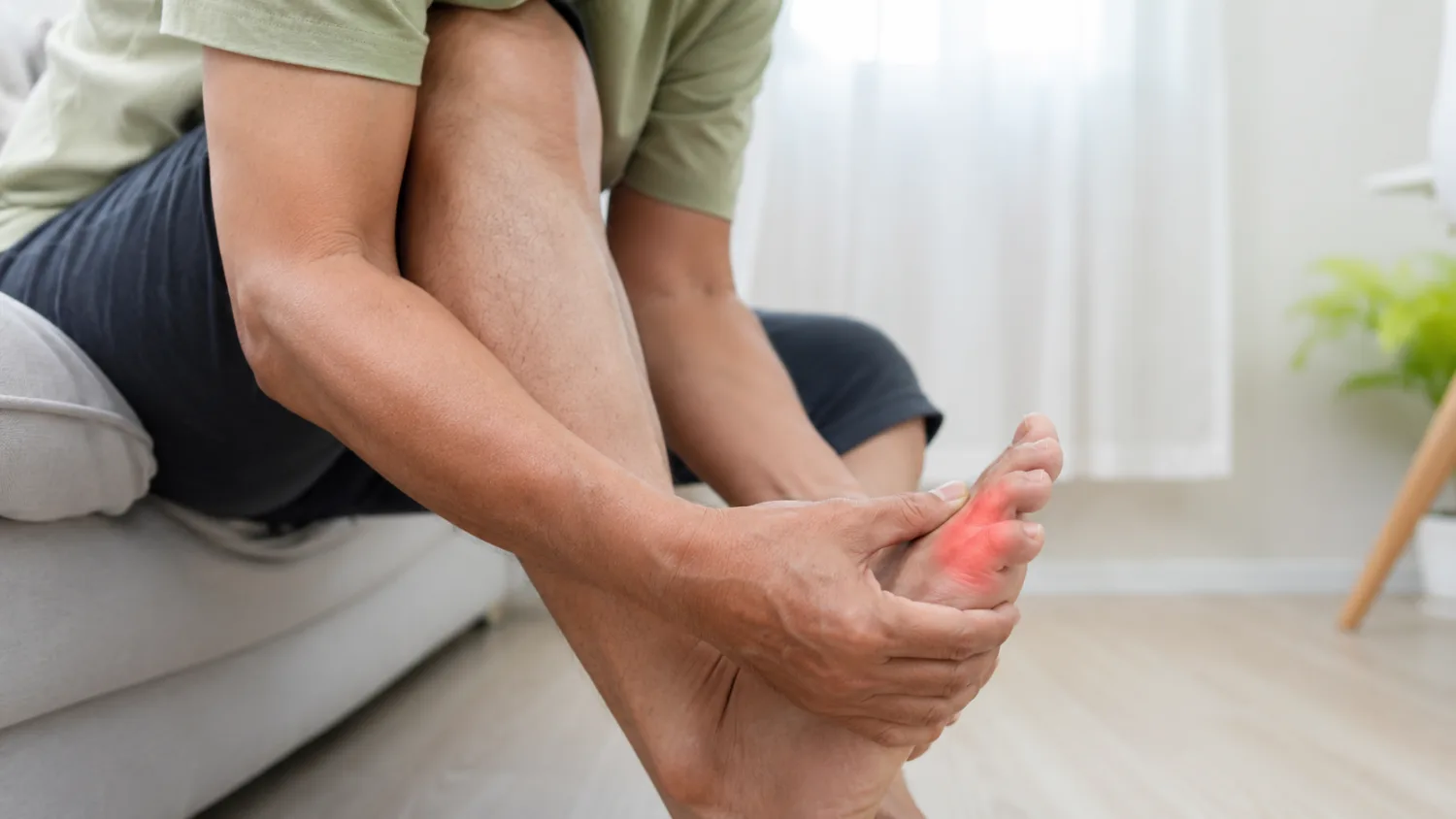
Gout is a painful type of inflammatory arthritis that can come on very suddenly. One day your foot, toe, ankle or knee may feel normal; the next, the joint can become intensely painful, swollen, hot and difficult to touch or move.
Many people associate gout with rich food or alcohol, but it is not simply a lifestyle problem. Gout happens when uric acid builds up in the blood and forms tiny crystals in or around a joint. These crystals can trigger sudden attacks of inflammation, known as gout flares.
Gout can be extremely painful, but it is also treatable. The right treatment can calm a flare, reduce the chance of future attacks and help prevent long-term joint damage.
This guide explains what gout feels like, why it happens, what can trigger a flare, how it is diagnosed, what treatments may be used in the UK, and when to seek medical advice.
Important: Seek urgent medical advice if you have a hot, swollen, very painful joint and you also feel generally unwell, have a fever, cannot move the joint, or there is any chance it could be an infection. A joint infection can be serious and needs urgent assessment.
What is gout?
Gout is a type of arthritis caused by urate crystals forming inside and around joints. These crystals develop when there is too much uric acid in the blood. Uric acid is a waste product made when the body breaks down substances called purines, which are found naturally in the body and in some foods and drinks.
Having high uric acid does not always mean you will get gout. Some people have raised uric acid for years without symptoms. But if crystals form in a joint, the immune system may react strongly, causing sudden pain, swelling, heat and redness.
Gout often affects the big toe, but it can also affect the ankles, knees, feet, wrists, fingers and elbows. It usually affects one joint at a time, although some people can have several joints involved.
The NHS has a useful overview of gout symptoms and treatment, and Versus Arthritis also explains how gout affects the joints.
What does a gout attack feel like?
A gout flare can be dramatic. The pain often starts suddenly, sometimes overnight or early in the morning. The joint may feel so tender that even the weight of a bedsheet is unbearable.
Common gout symptoms include:
- sudden severe joint pain
- swelling around the joint
- red, shiny or tight-looking skin
- warmth or heat over the joint
- extreme tenderness to touch
- difficulty walking or using the joint
- peeling or itchy skin as the flare settles
A flare often reaches its worst point within 12 to 24 hours. It may then gradually improve over several days, although some attacks last longer.
Because gout can look like other causes of joint pain and swelling, it is worth getting a diagnosis rather than assuming. A swollen, painful joint can also be caused by injury, infection, other types of inflammatory arthritis, osteoarthritis, pseudogout or cellulitis.
If your symptoms are more like long-term joint stiffness, wear-and-tear pain or multiple painful joints, you may also find our guide to arthritis, osteoarthritis and rheumatoid arthritis useful.
Why does gout usually affect the big toe?
Gout commonly affects the big toe because urate crystals are more likely to form in cooler parts of the body. The feet and toes are cooler than the centre of the body, which may make crystal formation more likely there.
The big toe joint also takes a lot of pressure during walking. For some people, a flare starts after a minor knock, long walk, tight shoes or strain on the joint.
However, gout is not limited to the big toe. Ankle, foot, knee, wrist, finger and elbow flares can also happen. If you have swelling in the legs or ankles that does not feel like a sudden painful gout flare, our guide to swollen legs and ankles may help explain other possible causes.
What causes high uric acid?
Uric acid levels can rise for several reasons. In many people, the kidneys do not remove uric acid from the blood as efficiently as needed. In others, the body produces more uric acid than usual. Diet and alcohol can contribute, but they are usually only part of the picture.
Factors that can increase the chance of gout include:
- being male
- being older
- having a family history of gout
- being overweight or living with obesity
- drinking alcohol, especially beer or spirits
- having kidney disease or reduced kidney function
- having high blood pressure
- having type 2 diabetes or insulin resistance
- having high cholesterol or cardiovascular disease
- taking certain medicines, including some water tablets
- having recently been unwell, dehydrated or fasting
- eating a lot of high-purine foods, such as some meats, offal and seafood
Gout is more common in men, but women can get it too, particularly after menopause. It is also more likely in people with kidney problems because the kidneys play a key role in clearing uric acid from the body.
If kidney function has been mentioned in your blood tests, you may find our guides to kidney blood test results, eGFR and creatinine and U&E blood test results helpful.
Common gout triggers
Not everyone has a clear trigger, and a flare can happen even when you have not eaten or drunk anything unusual. But some triggers are commonly reported.
Possible gout triggers include:
- dehydration
- alcohol, especially beer and spirits
- large meals rich in meat or seafood
- crash dieting or fasting
- illness or infection
- surgery or injury
- stress on a joint
- starting or changing certain medicines
- very hot weather, if it leads to dehydration
Dehydration is a common and often overlooked trigger. When you are dehydrated, uric acid can become more concentrated in the blood. This may partly explain why some people get flares during hot weather, after alcohol, after illness, or after heavy exercise.
For related advice, read our guides to dehydration symptoms in adults and children and how to prevent heat exhaustion and heatstroke in hot weather.
Is gout caused by diet?
Diet can contribute to gout, but it is rarely the whole explanation. This matters because people with gout sometimes feel blamed or embarrassed, when in reality gout is a medical condition linked to uric acid handling, genetics, kidney function, metabolic health and other factors.
That said, food and drink can still affect uric acid levels and flare risk. Some high-purine foods can raise uric acid. Alcohol can reduce uric acid removal and may trigger flares. Sugary drinks may also increase risk in some people.
Foods and drinks often discussed in gout include:
- beer and spirits
- offal, such as liver and kidneys
- red meat and processed meats
- some seafood, such as sardines, mussels and anchovies
- sugary drinks and high-fructose drinks
- large, heavy meals
You do not usually need an extreme diet. For many people, a balanced eating pattern is more realistic and helpful: plenty of vegetables, wholegrains, lower-fat dairy if tolerated, enough fluids, sensible portions, and limiting alcohol and sugary drinks.
If weight is part of the picture, avoid crash diets, as rapid weight loss can trigger gout flares. A gradual approach is safer. You may find our guides to how weight loss really works and losing weight and when to get help useful.
How is gout diagnosed?
A GP may suspect gout based on your symptoms, which joint is affected, how quickly the pain started, and whether the joint is red, hot and swollen. They will also ask about previous flares, medicines, alcohol, diet, kidney problems and family history.
Tests may include a blood test for uric acid. However, uric acid can sometimes be normal during a flare, so a single normal result does not always rule gout out. NICE guidance says serum urate should be measured to support diagnosis, and if it is below the diagnostic threshold during a flare but gout is still suspected, it may be repeated after the flare has settled.
Sometimes fluid is taken from the joint with a needle to look for urate crystals. This can be especially useful if the diagnosis is uncertain or infection needs to be ruled out. Imaging such as ultrasound or X-ray may be used in some cases.
NICE has detailed UK guidance on gout diagnosis and management.
Could it be something other than gout?
Yes. A painful swollen joint should not always be assumed to be gout, especially if it is your first episode.
Other possible causes include:
- joint infection, also called septic arthritis
- cellulitis or skin infection
- pseudogout, caused by different crystals
- injury, sprain or fracture
- osteoarthritis flare
- rheumatoid arthritis or another inflammatory arthritis
- bursitis or tendon problems
A joint infection can be serious. Seek urgent help if you have a hot, swollen joint with fever, chills, feeling very unwell, severe pain, inability to move the joint, or if you are immunosuppressed or have recently had surgery or an injection into the joint.
If you have severe pain after an injury, deformity, numbness, or cannot put weight on the foot or leg, urgent assessment may also be needed.
What helps during a gout flare?
A gout flare can be extremely painful, so treatment is usually aimed at reducing inflammation quickly. The earlier treatment starts, the better it often works.
During a flare:
- rest the affected joint
- raise the joint if possible
- keep pressure off it
- use an ice pack wrapped in a towel for short periods
- drink enough fluids, unless you have been told to restrict fluids
- avoid alcohol during the flare
- speak to a pharmacist, GP or NHS 111 about suitable pain relief
Do not put ice directly on the skin. Use a towel or cloth barrier, and remove the ice pack if the skin becomes painful, numb or very pale.
Medicines for a gout attack
Gout flares are commonly treated with anti-inflammatory medicines, colchicine or steroids. The right choice depends on your medical history, kidney function, stomach ulcer risk, other medicines and whether you have had side effects before.
Possible treatments include:
- NSAIDs, such as naproxen or ibuprofen, where suitable
- colchicine, a prescription medicine used for gout flares
- steroids, either tablets or sometimes an injection
NSAIDs are not suitable for everyone. They may be risky for people with stomach ulcers, kidney disease, some heart conditions, people taking blood thinners, or people on certain medicines. Colchicine also needs care, especially in people with kidney or liver problems and those taking medicines that interact with it.
Because of this, it is best to get advice rather than repeatedly self-treating severe joint pain. A pharmacist can help with some medicines and advise when a GP or urgent care is needed. Our guide to when to see a pharmacist instead of a GP may help you choose the right route.
Can gout be prevented?
Yes. If gout keeps coming back, long-term treatment can reduce uric acid and prevent future flares. This is important because repeated gout attacks can damage joints over time and may lead to firm urate crystal deposits under the skin, called tophi.
The main long-term treatment is urate-lowering therapy. The most common medicine is allopurinol. Another medicine, febuxostat, may be used in some people. These medicines are not painkillers. They work by lowering uric acid over time.
Urate-lowering treatment is usually continued long term. It may take months to reach a target uric acid level and reduce the risk of flares. Some people have more flares when starting treatment, so doctors may prescribe a short-term anti-inflammatory medicine or colchicine during the early stage.
Do not stop allopurinol during a flare unless a doctor tells you to. Stopping and starting can make uric acid levels swing and may increase the risk of further attacks.
When might long-term gout treatment be discussed?
A GP may discuss urate-lowering treatment if you have recurrent gout flares, tophi, kidney stones, chronic gouty arthritis, kidney disease, or high uric acid with other risk factors. NICE guidance supports a treat-to-target approach, meaning uric acid is monitored and treatment is adjusted to reach a level that reduces crystal formation.
This is one reason follow-up blood tests matter. If you are prescribed long-term gout medicine, you may need uric acid checks, kidney function tests and sometimes liver function tests, depending on the medicine used.
For help understanding related blood tests, see:
- How to understand blood test results
- Kidney blood test results explained
- Liver function test results explained
- CRP and inflammation blood test results explained
Lifestyle changes that may reduce gout flares
Lifestyle changes may not replace medicine for people with frequent gout, but they can help reduce triggers and support overall health.
Helpful steps may include:
- drinking enough water through the day
- reducing alcohol, especially beer and spirits
- avoiding binge drinking
- eating a balanced diet rather than crash dieting
- limiting large portions of red meat, offal and high-purine seafood
- reducing sugary drinks
- losing weight gradually if overweight
- staying active in a way that suits your joints
- managing blood pressure, cholesterol and blood sugar
Gout is often linked with wider metabolic and cardiovascular risk factors. If you have gout, it may be worth checking blood pressure, cholesterol, blood sugar and kidney function, particularly if you have other risk factors.
Related guides include high blood pressure, cholesterol blood test results, HbA1c and blood sugar results and cardiovascular risk.
What should you eat if you have gout?
There is no single “gout diet” that works for everyone, and overly strict rules can be difficult to maintain. A sensible approach is to focus on patterns rather than perfection.
Many people do better with:
- regular meals
- plenty of vegetables
- wholegrain carbohydrates
- beans, lentils and other plant proteins if tolerated
- lower-fat dairy such as milk or yoghurt, if suitable
- smaller portions of red meat
- fish in sensible amounts, avoiding very high-purine choices if they trigger flares
- water as the main drink
Try not to become anxious about every individual food. If you notice a clear pattern — for example, a flare after beer, heavy meals or dehydration — that is useful information. But if attacks keep happening, medicine may be needed to lower uric acid, not just diet changes.
Gout and alcohol
Alcohol can raise the risk of gout flares in several ways. It can increase uric acid production, reduce uric acid removal and contribute to dehydration. Beer is often a problem because it contains purines as well as alcohol.
You do not necessarily have to avoid alcohol completely, unless advised, but reducing intake can help. Avoiding binge drinking is particularly important. If you already have a flare, it is sensible to avoid alcohol until it settles.
Gout and medicines
Some medicines can increase uric acid or affect gout risk. These include some diuretics, sometimes called water tablets, and some medicines used after transplant. Low-dose aspirin can affect uric acid levels, although it may still be important for people taking it for heart or stroke prevention.
Do not stop prescribed medicines without medical advice. If you think a medicine may be contributing to gout, speak to your GP or pharmacist. They can review the overall benefits and risks and consider alternatives if appropriate.
If you take medicines for blood pressure, cholesterol, heart disease, kidney disease or diabetes, it is especially important to manage gout as part of your wider health picture rather than in isolation.
When to see a GP
Book a GP appointment if you think you may have gout, especially if it is your first attack. A diagnosis matters because treatment can reduce pain now and prevent future joint problems.
You should also speak to a GP if:
- you have repeated attacks of gout
- the pain is not improving with initial treatment
- you have a hot, swollen joint and are unsure of the cause
- you have kidney disease or reduced kidney function
- you have kidney stones
- you notice firm lumps under the skin around joints, fingers, elbows or ears
- you are taking medicines that may affect gout
- you are getting side effects from gout medicine
- gout is affecting walking, work, sleep or daily life
If you are unsure how to arrange an appointment, our guide to how to get a GP appointment quickly in the UK may help.
When to get urgent help
Get urgent medical advice today if:
- the joint is very painful, hot and swollen and this is your first episode
- you have a fever or feel very unwell
- you cannot move the joint
- the pain is severe after an injury
- you are immunosuppressed or at higher risk of infection
- redness is spreading around the skin
- you have diabetes and a painful swollen foot
Use NHS 111 online if you are in England and need help deciding what to do, or call 111. Call 999 if you are seriously unwell, confused, have severe breathing problems, chest pain, collapse, or signs of sepsis.
Can gout cause long-term damage?
Untreated gout can come back more often over time. Repeated inflammation can damage joints and tendons. Some people develop tophi, which are chalky deposits of urate crystals under the skin. These can appear around the fingers, toes, elbows, ears or other areas.
Long-term high uric acid can also be linked with kidney stones and kidney problems. This is why recurrent gout should not be treated as a series of isolated painful episodes. Preventing future flares is part of protecting joints and wider health.
Living with gout
Gout can be frustrating because flares may interrupt work, sleep, walking, exercise and family life. People sometimes feel embarrassed or blame themselves, but gout is a common medical condition and effective treatment is available.
A practical plan can make a big difference. This may include knowing what medicine to take at the first sign of a flare, staying hydrated, limiting known triggers, having uric acid monitored, and discussing long-term prevention if attacks keep happening.
If you have other conditions such as high blood pressure, diabetes, kidney disease or high cholesterol, managing these alongside gout can improve your overall health and may reduce future risks.
Final thoughts
Gout is a painful but treatable type of inflammatory arthritis. It often causes sudden severe pain, swelling, redness and heat in one joint, commonly the big toe, foot, ankle or knee.
A first suspected gout attack should be assessed so that other causes, including infection, can be ruled out. Treatment can help calm a flare, while long-term urate-lowering medicine may prevent future attacks in people with recurrent gout.
Diet, alcohol and dehydration can all play a role, but gout is not simply a lifestyle issue. Kidney function, genetics, weight, medicines and wider metabolic health are also important. If gout keeps coming back, speak to a GP about a prevention plan rather than only treating each flare as it happens.
For official advice, see the NHS guide to gout, NICE guidance on gout diagnosis and management, and Versus Arthritis information on gout symptoms and treatment.
This article is for general information only and should not replace medical advice. If you are worried about your symptoms or someone else’s, contact NHS 111, your GP, or call 999 in an emergency.