Sports and soft tissue injuries are common, frustrating and often slow to heal. A pulled hamstring, painful Achilles tendon, tennis elbow, shoulder tendon problem, ligament sprain or recurring muscle injury can affect work, exercise, sleep and confidence. For active people, the biggest question is often simple: how can I recover properly and get back to normal without making it worse?
This is where regenerative medicine is sometimes discussed. Private clinics may offer PRP injections, stem cell-related procedures, exosome therapy or other orthobiologic treatments for tendons, ligaments, muscles and sports injuries. Some claims are reasonable and cautious. Others can sound too good to be true.
The important point is this: regenerative medicine is not a shortcut around diagnosis, rehabilitation or sensible recovery. In selected cases, treatments such as PRP may have a role, especially for persistent tendon problems. But soft tissue healing depends on many factors, including the type of injury, severity, training load, strength, movement patterns, general health and whether the treatment is combined with a proper rehabilitation plan.
This UK guide explains how regenerative medicine may fit into sports and soft tissue injury care, what the evidence says, what conditions are commonly treated, what costs to expect, what red flags to avoid, and what questions to ask before paying for private treatment.
If you are new to this topic, you may also want to read our guides to what regenerative medicine is, PRP therapy in the UK, stem cell therapy in the UK, exosome therapy in the UK and how much regenerative medicine costs in the UK.
What are sports and soft tissue injuries?
Soft tissue injuries affect the body’s non-bony structures, especially muscles, tendons, ligaments and fascia. They can happen suddenly during sport or exercise, or build gradually because of repeated load, poor recovery, weakness, technique issues or overtraining.
Common examples include:
- Muscle strains - overstretching or tearing of muscle fibres, such as a hamstring, calf or groin strain.
- Ligament sprains - stretching or tearing of ligaments, such as an ankle sprain or knee ligament injury.
- Tendinopathy - persistent tendon pain and reduced load tolerance, such as Achilles tendinopathy, tennis elbow or patellar tendinopathy.
- Tendon tears - partial or complete tendon damage, sometimes needing specialist assessment.
- Overuse injuries - pain caused by repeated loading without enough recovery, common in runners, gym users and racquet sports.
- Soft tissue inflammation or irritation - such as bursitis, plantar fasciitis or rotator cuff-related shoulder pain.
NHS guidance explains that sprains and strains are common injuries affecting muscles and ligaments, while tendonitis can cause joint pain and stiffness and affect how a tendon moves. Mild injuries may improve with self-care, but persistent, severe or recurring symptoms should be assessed properly.
For general background, see our guide to sports injuries, causes, treatment and recovery in the UK.
Where regenerative medicine fits into injury care
Regenerative medicine is sometimes presented as a way to “boost healing” or “repair damaged tissue”. In sports medicine, it usually refers to treatments that aim to influence the local healing environment, reduce pain, support tissue repair or improve recovery. The most commonly discussed options include PRP, stem cell-related procedures and exosome therapy.
However, regenerative medicine should usually sit inside a proper injury pathway, not replace it.
A good injury pathway usually includes:
- clear diagnosis
- assessment of severity
- screening for red flags
- imaging if needed
- pain and swelling control
- progressive rehabilitation
- load management
- sport-specific return-to-play planning
- prevention of recurrence
Regenerative medicine may be considered when symptoms are persistent, the diagnosis is clear, standard conservative care has not worked well enough, and the treatment is supported by at least some evidence for that specific injury type.
It should not be used as a quick fix when the real issue is poor training load, inadequate rehab, weak muscles, poor biomechanics, repeated overload, untreated inflammatory disease or a more serious injury that needs surgical assessment.
Common sports injuries where PRP or regenerative treatments may be discussed
Regenerative medicine is most often discussed for tendon and joint-related sports injuries. It may also be marketed for muscle injuries and ligament problems, but the evidence varies significantly between conditions.
Common examples include:
- Achilles tendinopathy - pain and stiffness in the Achilles tendon, often worse with running, jumping or hill walking.
- Patellar tendinopathy - pain at the front of the knee, common in jumping sports and running.
- Tennis elbow - pain on the outside of the elbow, often linked to gripping, lifting, racquet sports or repetitive work.
- Golfer’s elbow - pain on the inside of the elbow.
- Rotator cuff-related shoulder pain - tendon-related shoulder pain, often worse with overhead movement.
- Plantar fasciitis - heel pain related to the plantar fascia and foot loading.
- Hamstring or calf injuries - muscle strains that may recur if return to sport is rushed.
- Ligament sprains - such as ankle sprains or some knee ligament injuries.
- Early joint wear and tear - especially knee osteoarthritis in active people.
For joint-related problems, you may also find our guides to knee pain, arthritis, frozen shoulder and lower back pain useful.
The most important thing is matching the treatment to the diagnosis. A painful tendon, torn muscle, inflamed joint, nerve-related pain and complete rupture are different problems. They should not all be treated with the same injection.
What does the evidence say about PRP for sports injuries?
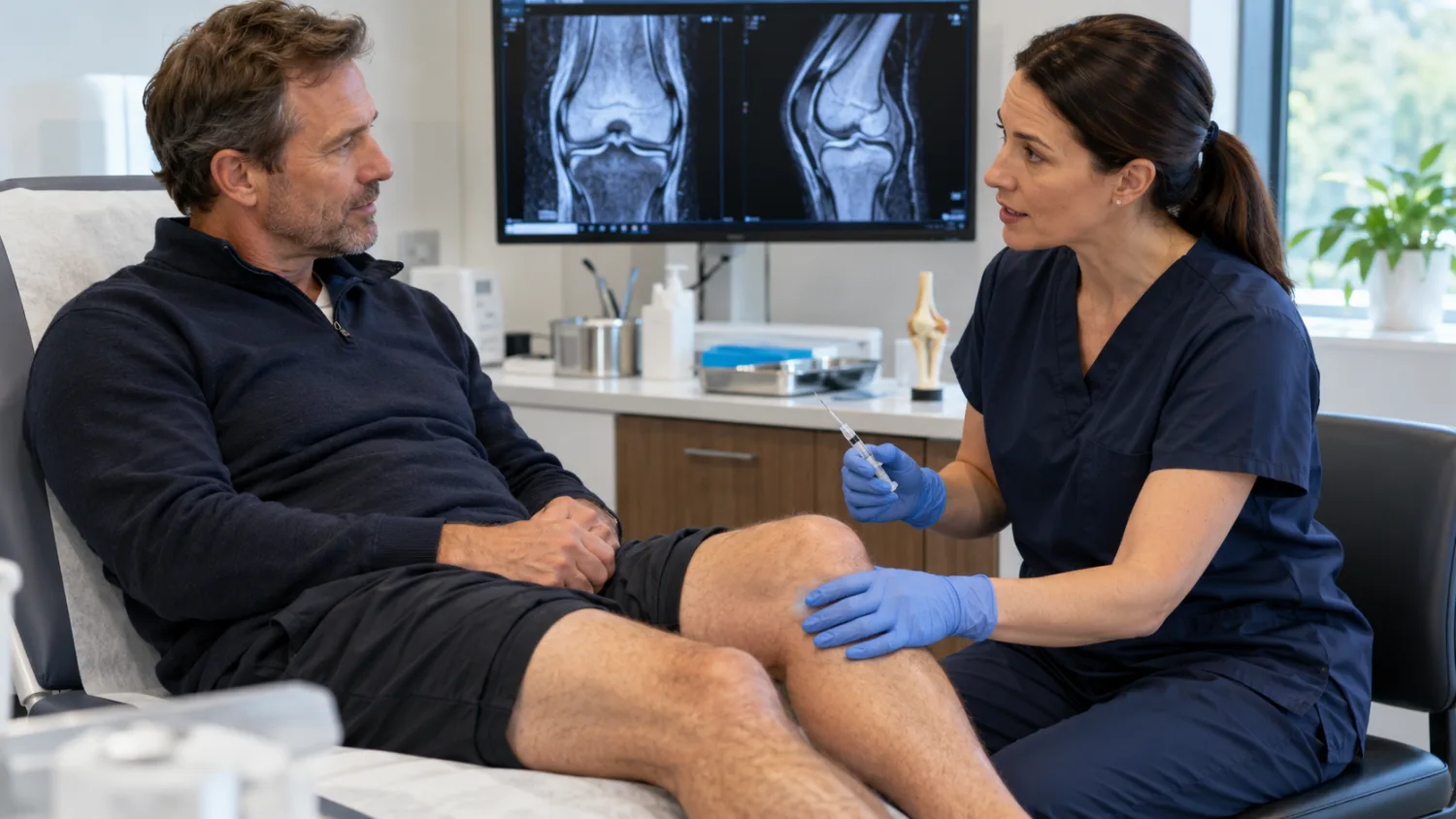
PRP, or platelet-rich plasma, is the most common regenerative-style treatment offered for sports and soft tissue injuries in the UK. It is made from a sample of your own blood, processed to concentrate the platelet-rich part, and then injected into the target area.
Platelets contain growth factors and signalling molecules involved in repair and inflammation. The idea is that PRP may help create a local healing response. In tendon injuries, some clinicians use PRP when symptoms have persisted despite rehabilitation, activity modification and other treatment.
The evidence is mixed. PRP may be helpful for some patients and some tendon conditions, but it is not a guaranteed treatment. Results vary because studies use different PRP systems, injection techniques, patient groups, rehabilitation protocols and outcome measures.
For knee osteoarthritis, NICE has published guidance on platelet-rich plasma injections for knee osteoarthritis. For tendon problems, the Royal National Orthopaedic Hospital explains that PRP involves taking the patient’s blood, spinning it to obtain platelet-rich plasma, and injecting it into the affected tendon with the aim of supplying growth factors that start the healing process and reduce pain and swelling.
For patients, the evidence can be summarised like this:
- PRP may be considered for selected persistent tendon problems.
- PRP should usually be combined with a rehabilitation plan.
- PRP is not a guaranteed repair treatment.
- PRP is not the same as stem cell therapy.
- PRP may not help complete tendon ruptures or severe structural injuries.
- PRP claims should be specific to the condition being treated.
Be cautious if a clinic says PRP will definitely repair a tendon, regrow tissue, avoid surgery in all cases or get you back to sport quickly without rehabilitation.
Stem cells, exosomes and newer treatments for soft tissue injuries
Some private clinics market stem cell-related or exosome-based treatments for sports injuries, tendon pain and joint problems. These may sound more advanced than PRP, but they also raise bigger questions about evidence, regulation, cost and product quality.
Stem cell-related treatments may involve bone marrow concentrate, adipose-derived cell procedures or other cell-based approaches. In established medicine, stem cell treatments have important approved uses, especially stem cell or bone marrow transplants for certain blood cancers and blood disorders. That is very different from private injections for sports injuries or arthritis.
Exosome therapy involves tiny cell-derived particles involved in cell signalling. Exosomes are an important research area, but many private claims are ahead of the evidence, especially when they are marketed for broad tissue regeneration, joint repair or sports recovery.
For soft tissue injuries, patients should be especially careful with claims such as:
- “repairs any tendon”
- “regrows cartilage”
- “heals ligaments without surgery”
- “reverses chronic pain”
- “gets athletes back faster with no downtime”
- “works where physiotherapy has failed”
These claims may be too broad. A responsible clinic should explain what is known, what is uncertain, and whether the treatment is licensed, approved, experimental or privately offered with limited evidence.
For more detail, read Stem Cell Therapy in the UK: Approved Uses vs Private Claims and Exosome Therapy in the UK.
Why diagnosis matters before any injection
A sports injury should not be treated only from the name of the painful area. “Knee pain”, “shoulder pain” or “Achilles pain” is not a diagnosis. It is a symptom.
For example:
- knee pain may come from patellar tendinopathy, meniscus injury, osteoarthritis, ligament damage, referred hip pain or inflammatory arthritis
- shoulder pain may come from rotator cuff tendinopathy, frozen shoulder, instability, nerve pain, arthritis or a tear
- heel pain may come from plantar fasciitis, Achilles tendinopathy, nerve irritation, stress fracture or inflammatory disease
- calf pain may be a muscle strain, but in some cases could be a blood clot or another medical problem
Before regenerative treatment, a good clinic should take a proper history, examine the area, review your training or activity pattern, and consider imaging where appropriate. Ultrasound, X-ray or MRI may be useful depending on the suspected injury.
You should seek urgent medical help rather than booking private injection treatment if you have:
- severe pain after major trauma
- obvious deformity
- inability to weight-bear
- a hot, swollen joint
- fever or feeling very unwell
- sudden calf swelling or shortness of breath
- new numbness or weakness
- loss of bladder or bowel control with back pain
- unexplained night pain or weight loss
Regenerative medicine is not an emergency treatment. Red-flag symptoms need proper medical assessment.
What treatment may involve
The exact process depends on the treatment. For PRP, the appointment often involves taking blood from your arm, spinning it in a centrifuge, collecting the platelet-rich layer and injecting it into the target area. For some tendon and joint problems, ultrasound guidance may be used to improve accuracy.
A good treatment pathway may include:
- consultation and diagnosis
- review of previous treatment and training load
- imaging if needed
- discussion of alternatives
- written consent
- the procedure itself
- aftercare instructions
- rehabilitation plan
- follow-up review
- return-to-sport progression
After PRP or similar injections, some people feel more sore for a few days. Clinics may advise avoiding heavy loading for a short period before gradually restarting movement and strengthening. Anti-inflammatory medicines such as ibuprofen may be avoided around PRP treatment in some protocols, but you should not stop prescribed medication without medical advice.
For stem cell-related or more complex procedures, the process may involve harvesting material from bone marrow or fat, processing it, and injecting it into the target area. These procedures are usually more expensive and require more careful discussion about evidence, regulation and risk.
Rehabilitation is still the foundation of recovery
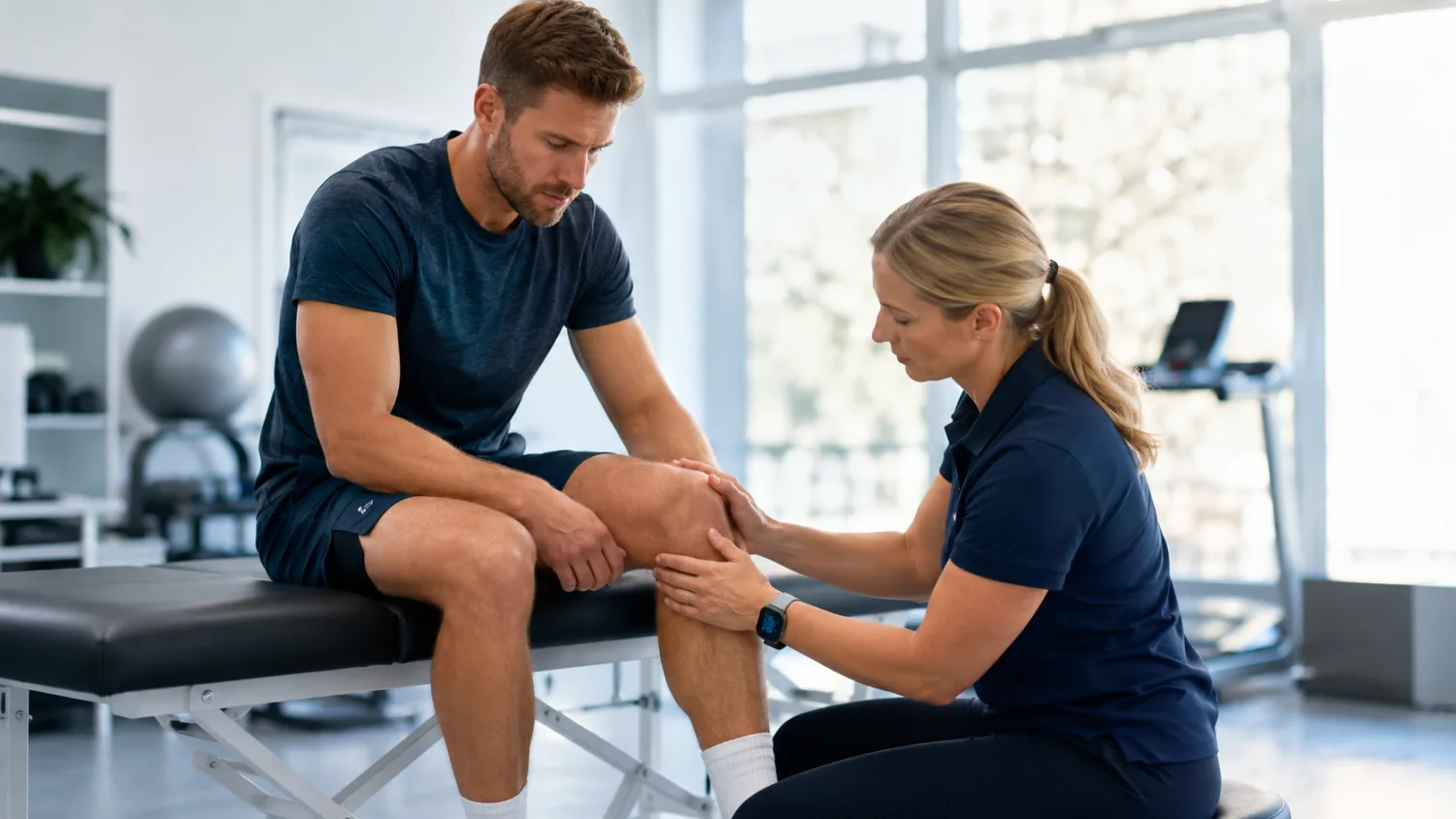
One of the biggest misunderstandings about regenerative medicine is that an injection can replace rehabilitation. For most sports and soft tissue injuries, rehab is not optional. It is the foundation of recovery.
Soft tissues respond to load. Too much load too soon can worsen symptoms. Too little load for too long can reduce strength, tendon capacity and confidence. Good rehab gradually exposes the injured tissue to the right amount of stress so it can adapt.
A proper rehabilitation plan may include:
- pain and swelling control
- mobility work
- progressive strengthening
- balance and control exercises
- tendon loading exercises
- running or sport-specific drills
- gradual return to training
- technique and workload review
- long-term prevention exercises
For tendon problems, rehab may continue for weeks or months. This is normal. A tendon that has been painful for six months is unlikely to be fully solved by one injection in a few days.
The best clinics usually combine regenerative treatments with physiotherapy or sports rehabilitation. Be cautious if a clinic sells injections but gives little attention to strengthening, movement, load management or return-to-sport planning.
How much does treatment cost in the UK?
Costs vary widely depending on the treatment, clinic, clinician, body area, imaging and follow-up.
As a broad guide:
- Initial sports medicine or orthopaedic consultation: often around £150-£400+
- Ultrasound scan or imaging review: may be included or charged separately
- PRP injection: commonly around £400-£1,200 per session
- Course of PRP injections: may cost £1,200-£3,000+
- Stem cell-related procedures: may cost several thousand pounds, sometimes £4,000-£10,000+
- Exosome-style treatments: may cost hundreds to thousands of pounds depending on product and package
- Physiotherapy or rehab: usually charged separately unless included in a package
Before paying, ask what is included. A low headline injection price may not include consultation, imaging, ultrasound guidance, follow-up or rehabilitation. A higher price may include more clinical support, but expensive does not automatically mean better evidence.
For a wider cost breakdown, read How Much Does Regenerative Medicine Cost in the UK?
Risks, side effects and who may not be suitable
Regenerative medicine treatments are often marketed as natural, especially when they use your own blood or tissue. But natural does not mean risk-free.
Possible risks include:
- pain during or after the procedure
- temporary symptom flare
- bruising or bleeding
- infection
- nerve irritation
- tissue irritation
- no improvement
- delayed proper treatment if the diagnosis is wrong
- wasted money on poorly evidenced treatment
Some people may need extra caution or may not be suitable, including those with:
- active infection
- unexplained swelling or severe pain
- blood disorders
- very low platelet count
- poorly controlled diabetes
- immune suppression
- active cancer or recent cancer treatment
- pregnancy or breastfeeding
- use of blood-thinning medication
- complete tendon rupture or major ligament instability needing surgical review
Always tell the clinic about your medical history and medicines. Do not stop prescribed medication unless a qualified medical professional advises you to do so.
How to choose a clinic
Choosing a regenerative medicine clinic for a sports injury should not be based only on price, social media posts or promises of fast recovery. Look for careful assessment, realistic advice and clear aftercare.
Before booking, ask:
- What exact injury or diagnosis are you treating?
- Do I need ultrasound, X-ray or MRI before treatment?
- Why is regenerative medicine suitable for my case?
- What evidence supports this treatment for this injury?
- What are the alternatives?
- Will the injection be ultrasound-guided?
- Who performs the procedure and what are their qualifications?
- What are the risks?
- What is the full cost?
- What rehabilitation plan will I follow afterwards?
- When can I return to training?
- What happens if treatment does not help?
Be cautious if a clinic:
- guarantees healing or tissue regeneration
- offers treatment without proper assessment
- claims one injection can replace rehab
- uses pressure selling or limited-time discounts
- does not explain risks
- cannot explain what product or preparation is being used
- does not discuss alternatives
- discourages you from speaking to your GP, physiotherapist or specialist
In England, some providers may need Care Quality Commission registration depending on the regulated activities they carry out. Patients should feel comfortable asking what professional and regulatory oversight applies.
For clinics and healthcare providers: if you offer evidence-led sports injury care, physiotherapy, orthopaedic assessment, PRP, regenerative medicine or private musculoskeletal services in the UK, All Health and Care helps patients discover and compare healthcare providers. Contact us to discuss clinic listings, featured placement or inclusion in relevant patient guides.
Sports and soft tissue injury FAQs
Can regenerative medicine heal a sports injury faster?
Sometimes regenerative treatments may support recovery in selected cases, especially persistent tendon problems, but they are not guaranteed to speed healing. Diagnosis, injury severity, rehabilitation and load management are usually more important than the injection alone.
Is PRP good for tendon injuries?
PRP may be considered for some persistent tendon problems, but evidence varies by condition. It should usually be combined with a proper rehabilitation plan rather than used as a standalone cure.
Can PRP repair a torn ligament?
PRP should not be seen as a guaranteed ligament repair treatment. Mild sprains may heal with rehabilitation, while severe ligament injuries may need bracing, specialist review or surgery. The right treatment depends on the exact ligament and severity.
Can stem cell therapy repair sports injuries?
Private stem cell-related treatments are sometimes marketed for sports injuries, but patients should be cautious. Evidence varies, costs are high, and claims should be specific to the injury being treated. They should not be sold as guaranteed repair treatments.
Can exosome therapy help tendon or ligament injuries?
Exosome research is active, but private treatment claims for tendon, ligament and sports injuries are often ahead of the evidence. Ask whether the product is authorised for the intended use and what clinical evidence supports the claim.
Should I try physiotherapy before PRP?
In many cases, yes. Physiotherapy, strengthening and load management are first-line for many tendon and soft tissue injuries. PRP may be considered later if symptoms persist and the diagnosis is suitable.
How long should I rest after a soft tissue injury?
Complete rest is usually only useful for a short period. Many injuries benefit from gradual, controlled loading once severe pain and swelling settle. The exact timing depends on the injury and should be guided by a clinician or physiotherapist.
When should I get a scan?
You may need imaging if pain is severe, symptoms persist, there is suspected rupture, instability, inability to weight-bear, repeated injury, or uncertainty about the diagnosis. Ultrasound, X-ray or MRI may be used depending on the problem.
Can I return to sport after a PRP injection?
Usually not immediately. Most clinics recommend a period of relative rest followed by gradual rehabilitation. Returning too quickly may increase the risk of flare-up or recurrence.
How much does PRP cost for sports injuries in the UK?
PRP for sports injuries commonly costs around £400-£1,200 per session privately. Costs vary depending on the clinic, clinician, body area, imaging guidance and follow-up.
Is regenerative medicine covered by private health insurance?
Often not. Many insurers consider PRP, stem cell-related procedures and exosome treatments experimental or outside standard cover. Some may cover consultation or imaging but not the treatment itself. Check before booking.
What is the biggest red flag?
The biggest red flag is a clinic promising guaranteed tissue repair, rapid return to sport or regeneration without proper diagnosis and rehabilitation. A good clinic should be specific, cautious and evidence-led.
When should I seek urgent medical help?
Seek urgent help for severe injury, inability to weight-bear, deformity, a hot swollen joint, fever, sudden calf swelling, shortness of breath, new weakness, numbness, or loss of bladder or bowel control with back pain.