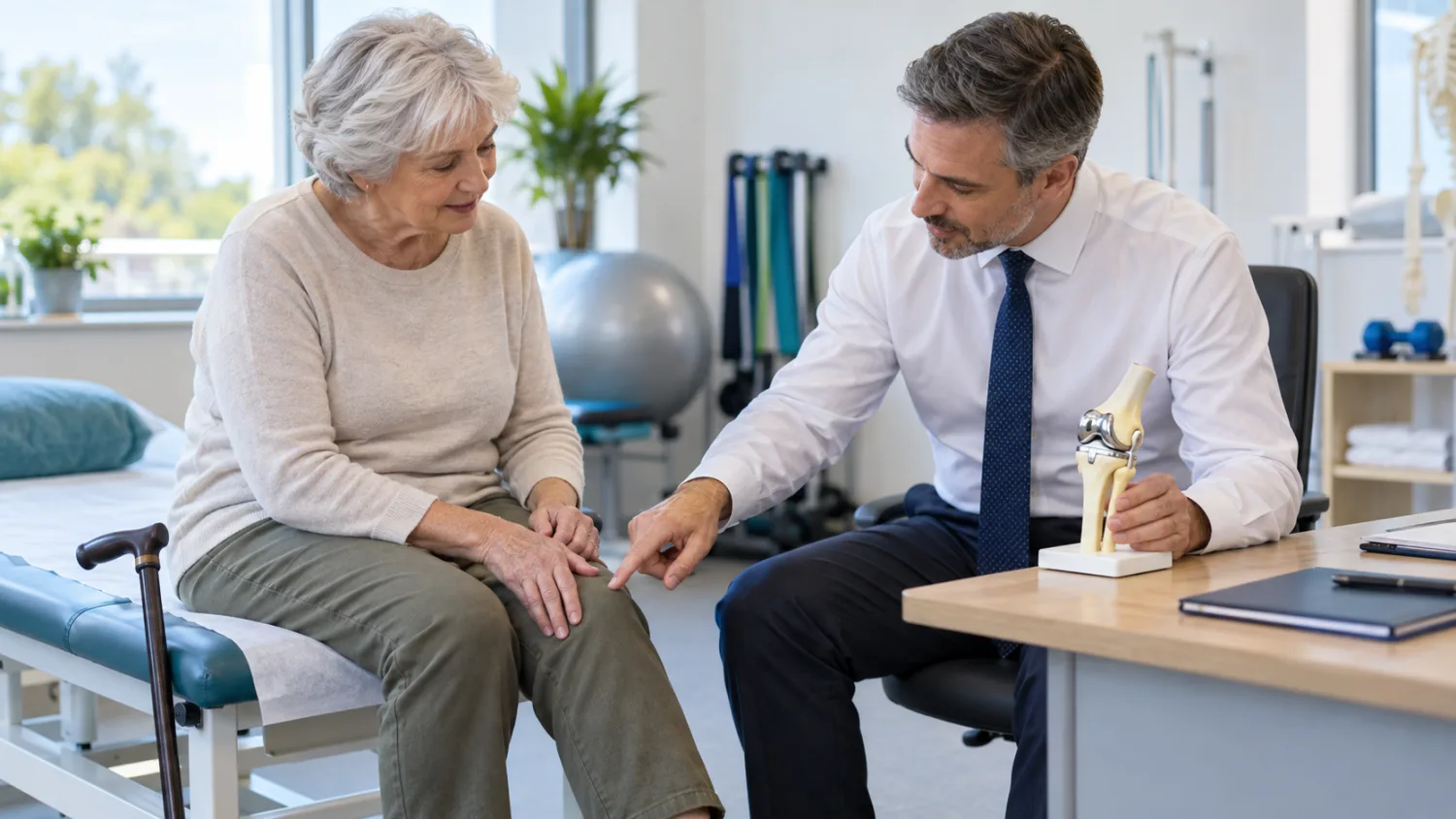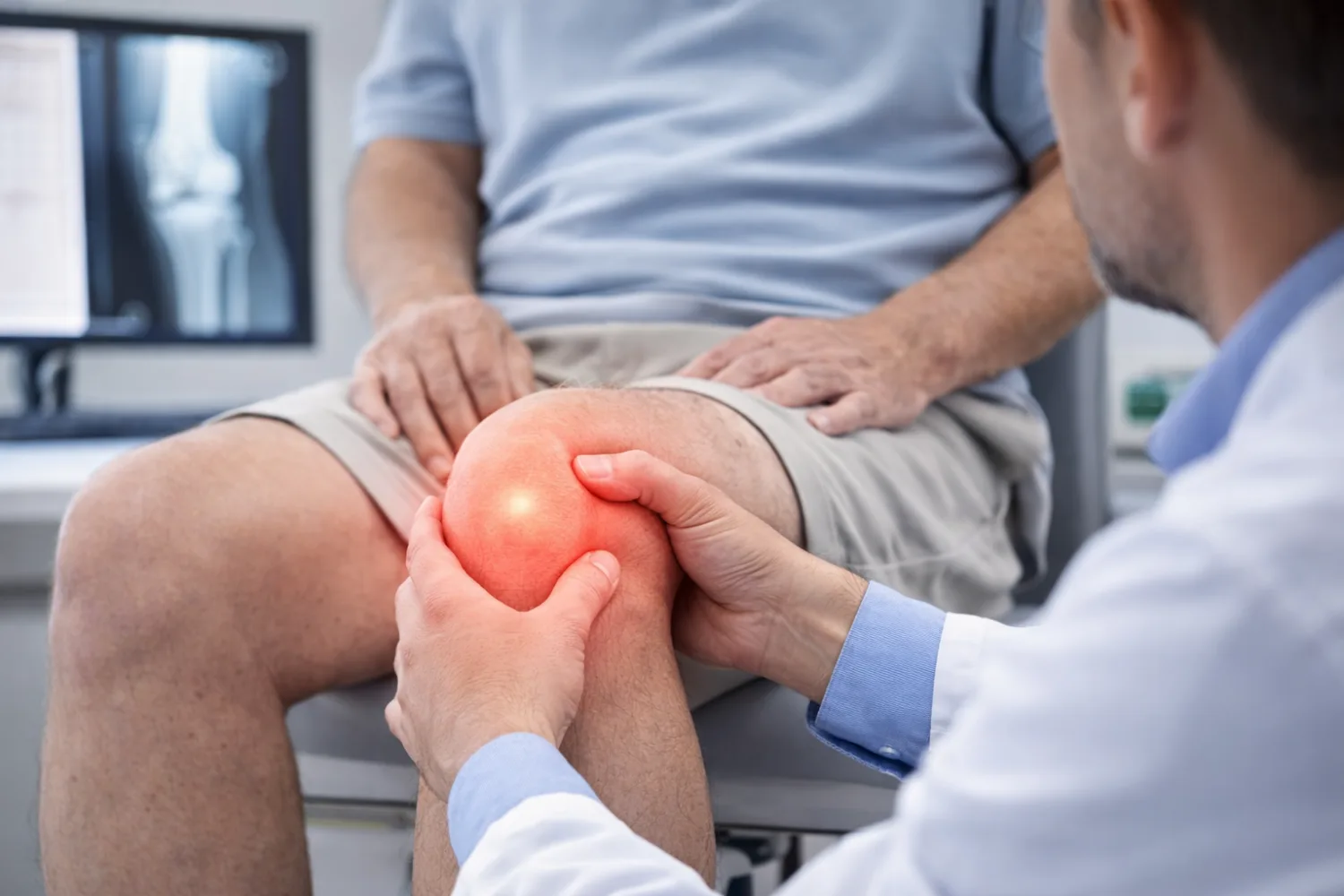
Knee pain is one of the most common musculoskeletal problems in the UK. It can affect people of all ages, from young athletes to older adults, and may develop suddenly after an injury or gradually over time.
For some people, knee pain is a short-lived inconvenience. For others, it can interfere with walking, work, sleep, exercise, driving, stairs and independence.
Because the knee is a complex weight-bearing joint, pain can come from several different structures, including cartilage, ligaments, tendons, bones, muscles and fluid-filled sacs. Understanding the possible causes, and knowing when to seek medical help, can make treatment more effective.
Why knee pain happens
The knee connects the thigh bone, called the femur, to the shin bone, called the tibia. It is supported by ligaments, tendons, cartilage, muscles and bursae, which are small fluid-filled sacs that help reduce friction.
Pain may come from:
- joint cartilage
- meniscus cartilage
- ligaments
- tendons
- bones
- muscles around the knee and hip
- bursae
- inflammation inside the joint
- referred pain from the hip or lower back
The location of pain can give clues. Pain may be felt at the front, back, inside or outside of the knee. Some people also notice swelling, stiffness, clicking, locking, weakness or instability.
Sudden vs gradual knee pain
Sudden knee pain often follows an injury, fall, twist, sports movement or awkward landing. It may suggest a ligament injury, meniscus tear, fracture, dislocation, tendon injury or acute swelling inside the joint.
Gradual knee pain often develops from overuse, osteoarthritis, tendon irritation, patellofemoral pain, bursitis, muscle weakness or inflammatory conditions.
The timing matters because sudden swelling after injury may need more urgent assessment than mild aching that improves with rest and gentle movement.
Common causes of knee pain
Knee pain has many possible causes. The right treatment depends on whether the pain is coming from arthritis, an injury, tendon overload, inflammation, referred pain or another problem.
Osteoarthritis
Osteoarthritis is one of the most common causes of chronic knee pain, especially in people over 50. It happens when the protective cartilage in the joint gradually wears down, causing pain, stiffness and reduced movement.
Symptoms often develop slowly and may include:
- aching pain after activity
- stiffness after sitting or first thing in the morning
- swelling
- reduced range of movement
- grinding or creaking sensations
- pain when walking, climbing stairs or standing for long periods
The NHS has an overview of osteoarthritis, including symptoms and treatment options.
Ligament injuries
The knee has several ligaments that stabilise the joint. These can be stretched or torn during sports, falls, twisting injuries or accidents.
The anterior cruciate ligament, often called the ACL, is commonly injured in sports involving sudden direction changes, such as football, netball, rugby or skiing.
A ligament injury may cause:
- sudden pain at the time of injury
- a popping sensation
- rapid swelling
- instability or giving way
- difficulty bearing weight
- reduced confidence turning or pivoting
Significant ligament injuries often need assessment by a physiotherapist, GP or orthopaedic specialist.
Meniscus tears
The menisci are cartilage pads that act as shock absorbers between the thigh bone and shin bone. They can tear during twisting injuries or gradually with age-related degeneration.
A meniscus tear may cause:
- sharp pain inside or outside the knee
- swelling
- clicking or catching
- locking of the knee
- difficulty fully straightening the leg
- pain with squatting or twisting
In younger people, meniscus tears often happen after a clear injury. In older adults, they can occur with little or no obvious trauma, especially when arthritis is also present.
Tendon problems
Tendons connect muscles to bones. Overuse, sudden increases in activity or repetitive strain can irritate tendons around the knee.
Patellar tendinopathy, sometimes called jumper’s knee, causes pain below the kneecap. It is common in sports involving jumping or running, but can also affect people who kneel frequently or increase exercise too quickly.
Tendon pain often worsens with:
- running
- jumping
- stairs
- squatting
- kneeling
- getting up from a chair
Bursitis
Bursitis happens when one of the small fluid-filled sacs around the knee becomes inflamed. It can cause local swelling, tenderness and warmth.
It may develop after prolonged kneeling, repetitive pressure, a fall or minor injury. People who work on their knees, such as gardeners, cleaners, plumbers or floor layers, may be more prone to some types of knee bursitis.
Patellofemoral pain syndrome
Patellofemoral pain syndrome causes pain at the front of the knee, around or behind the kneecap. It is common in runners, younger adults and people with muscle imbalance or altered kneecap tracking.
Symptoms may be worse when:
- going downstairs
- squatting
- running
- sitting for long periods
- getting up from a low chair
Physiotherapy is often very helpful because strengthening the hip, thigh and core muscles can reduce stress around the kneecap.
Inflammatory arthritis, gout and infection
Not all knee pain is mechanical. Inflammatory conditions can also affect the knee.
Possible causes include:
- rheumatoid arthritis
- gout
- psoriatic arthritis
- reactive arthritis
- joint infection
A hot, swollen, very painful knee, especially with fever or feeling unwell, needs urgent medical assessment because infection in a joint can be serious.
Referred pain from the hip or back
Sometimes pain felt in the knee actually comes from another area, such as the hip or lower back. This is called referred pain.
This is one reason persistent knee pain should be assessed properly, especially if knee scans do not explain symptoms or if there is also hip pain, back pain, numbness or pain travelling down the leg.
Symptoms that need medical attention
Many knee problems improve with rest, physiotherapy and self-care. However, some symptoms need prompt medical advice.
When to seek urgent help
Seek urgent help through your GP, NHS 111, an urgent treatment centre or A&E depending on severity if you have:
- severe pain after an injury
- inability to bear weight
- significant swelling soon after injury
- visible deformity
- a hot, red, swollen knee
- fever or feeling very unwell with knee swelling
- calf swelling, redness or breathlessness after injury or surgery
- the knee locking and not moving normally
- loss of movement after trauma
- new numbness or weakness in the leg
Do not wait for a routine appointment if the knee is severely painful, infected-looking, deformed or you cannot walk on it.
When to book a routine assessment
Consider medical advice if knee pain lasts more than a few weeks, keeps returning, or affects work, walking, sleep, exercise or daily activities.
Referral to a specialist may be appropriate if:
- pain is severe or persistent
- the knee repeatedly gives way
- there is locking or major loss of movement
- there was a significant injury
- symptoms do not improve with physiotherapy
- arthritis is causing major disability
- surgery may be needed
- the diagnosis is unclear
Early assessment can prevent some problems from becoming long-term and can help you access the right treatment sooner.
How knee pain is diagnosed in the UK
Assessment usually starts with a GP, physiotherapist or first contact physiotherapist, depending on local services. Some areas allow direct access to NHS physiotherapy without seeing a GP first.
A clinician will usually ask about:
- where the pain is
- when it started
- whether there was an injury
- whether swelling appeared quickly or gradually
- whether the knee locks, clicks or gives way
- what makes pain better or worse
- sports, work or kneeling activities
- previous knee problems
- arthritis, gout or other medical conditions
- how pain affects daily life
The examination may check swelling, tenderness, movement, strength, walking pattern and knee stability.
If you are struggling to access care, see how to get a GP appointment quickly in the UK.
Imaging and tests for knee pain
Not everyone with knee pain needs a scan. Many cases can be diagnosed from the history and examination, especially when symptoms are mild or improving.
Tests may be arranged if symptoms are severe, persistent, unclear or linked with injury.
- X-ray: useful for arthritis, fractures, bone alignment and some joint changes.
- MRI scan: useful for meniscus, ligament, cartilage and soft tissue injuries.
- Ultrasound: may help assess some tendon, cyst or soft tissue problems.
- Blood tests: may be used if inflammatory arthritis, gout or infection is suspected.
- Joint fluid test: may be needed if infection or gout is suspected.
If imaging is recommended, read ultrasound vs CT vs MRI, what an MRI scan shows and how to understand scan results.
Treatment options for knee pain
Treatment depends on the cause, severity, age, activity level and how much the pain affects daily life.
Self-care and lifestyle measures
Mild or moderate knee pain often improves with simple measures, especially when caused by minor strain or overuse.
Helpful steps may include:
- relative rest from aggravating activities
- ice for swelling after injury
- gentle movement to avoid stiffness
- supportive footwear
- avoiding repeated kneeling where possible
- using a knee support temporarily if advised
- gradually returning to activity
- weight management if excess weight is adding pressure to the joint
Complete rest for too long can lead to weakness and stiffness. Most people need a balance of protection, movement and gradual strengthening.
Physiotherapy
Physiotherapy is often central to knee pain treatment. A physiotherapist can assess movement, strength, flexibility and function, then create a tailored exercise plan.
Physiotherapy may focus on:
- quadriceps strengthening
- hamstring strength and flexibility
- hip and glute strengthening
- balance and control
- kneecap tracking
- walking and running mechanics
- return-to-sport planning
- activity pacing
For many causes of knee pain, especially osteoarthritis and patellofemoral pain, consistent exercise over weeks and months is more useful than short-term rest alone.
Medication and pain relief
Pain relief can help people stay active and engage with rehabilitation. Options may include paracetamol, anti-inflammatory medicines such as ibuprofen, or topical anti-inflammatory gels.
Anti-inflammatory tablets are not suitable for everyone, especially people with stomach ulcers, kidney disease, heart disease, blood pressure problems or certain medications. Ask a pharmacist, GP or clinician if unsure.
Stronger pain medicines may occasionally be prescribed, but long-term use is usually avoided unless clearly needed.
Injections
For persistent symptoms, injections may sometimes be considered. Corticosteroid injections can reduce inflammation and pain in some cases, especially for osteoarthritis flare-ups or bursitis.
Some private clinics offer hyaluronic acid or other injections, but evidence, availability and suitability vary. Ask about expected benefit, risks, cost and alternatives before agreeing.
NICE provides guidance on osteoarthritis management, including non-surgical and surgical approaches.
Surgery
Surgery is usually reserved for cases where conservative treatment has not worked, symptoms are severe, or there is significant structural damage.
Options may include:
- ligament reconstruction after some ACL injuries
- meniscus repair or partial removal in selected cases
- procedures for kneecap instability
- partial knee replacement
- total knee replacement
Arthroscopic keyhole surgery is not routinely recommended for degenerative knee arthritis alone, but it may still be used in selected situations, depending on symptoms and specialist assessment.
Knee replacement surgery may be considered for advanced osteoarthritis when pain and disability significantly affect quality of life. Read our guide to knee replacement surgery in the UK.
NHS, private care and living with knee pain
Knee pain can be assessed and treated through the NHS or privately. The right route depends on urgency, symptoms, waiting times, cost and whether you need scans, physiotherapy, injections or specialist review.
NHS vs private treatment for knee pain
On the NHS, the pathway may include GP or physiotherapy assessment, imaging where needed, pain management, referral to musculoskeletal services or orthopaedics, and surgery if appropriate.
Private care may offer faster access to physiotherapy, MRI scans, specialist review or surgery, but costs can build up. It is important to ask what is included, especially for scans, follow-up, injections or surgery.
For more detail, see NHS vs private healthcare in the UK and private GP services in the UK.
Living with knee pain
Chronic knee pain can affect sleep, mood, confidence and independence. Staying active within comfortable limits is important, because complete rest can worsen weakness and stiffness.
Low-impact activities may help, such as:
- walking on even surfaces
- cycling
- swimming
- water-based exercise
- strength training adapted to symptoms
- gentle mobility exercises
Pacing can also help. This means balancing activity and rest to avoid large flare-ups, rather than doing too much on good days and being unable to move the next day.
Support from physiotherapists, occupational therapists, pharmacists, GPs and pain specialists can help people remain active and independent.
How to protect your knees long term
Long-term knee care usually focuses on strength, sensible activity and reducing avoidable strain.
Helpful habits may include:
- building leg and hip strength gradually
- keeping active with low-impact exercise
- wearing supportive footwear
- avoiding sudden jumps in running, sport or gym load
- managing weight if excess weight is adding pressure to the knees
- using pacing strategies during flare-ups
- seeking advice early if symptoms keep returning
FAQ: knee pain in the UK
What is the most common cause of knee pain?
Osteoarthritis is one of the most common causes of chronic knee pain, especially in people over 50. In younger people, overuse, sports injuries, patellofemoral pain and ligament or meniscus injuries are common.
When should I worry about knee pain?
Seek urgent help if you cannot bear weight, have severe pain after injury, major swelling, deformity, fever, redness, a hot swollen knee, or the knee is locked and will not move normally.
Should I rest or exercise with knee pain?
It depends on the cause. Short-term rest from painful activities may help after injury, but prolonged complete rest can worsen stiffness and weakness. Gentle movement and strengthening are often important.
Do I need an X-ray or MRI for knee pain?
Not always. Many cases are diagnosed from symptoms and examination. X-rays are useful for arthritis and bone problems, while MRI scans are more useful for ligament, meniscus and soft tissue injuries.
Can a pharmacist help with knee pain?
Yes. A pharmacist can advise on pain relief, anti-inflammatory gels, suitable tablets and when symptoms need GP or urgent assessment.
Is physiotherapy good for knee pain?
Yes, physiotherapy is often one of the most effective treatments for knee pain, especially osteoarthritis, patellofemoral pain, tendon problems and recovery after injury.
What does arthritis knee pain feel like?
Arthritis pain often feels like an ache that worsens with activity and improves with rest. Stiffness, swelling, reduced movement and difficulty with stairs are common.
Can knee pain come from the hip or back?
Yes. Hip arthritis, nerve irritation or lower back problems can sometimes cause pain felt around the knee. Assessment can help identify the true source.
Are knee injections worth it?
They may help some people, especially with inflammatory flare-ups or osteoarthritis pain, but benefits vary. Ask about expected duration of relief, risks and whether physiotherapy or other treatments are also needed.
When is knee replacement considered?
Knee replacement is considered when advanced arthritis causes severe pain and disability, and non-surgical treatments no longer provide enough relief.
Can I get knee treatment privately?
Yes. Private care may offer faster access to physiotherapy, scans, injections, specialist review or surgery, but costs vary. Ask what is included before booking.
How can I protect my knees long term?
Maintain leg strength, stay active, manage weight if needed, wear supportive footwear, avoid sudden jumps in activity, and seek advice early if pain persists or keeps returning.
Final takeaway
Knee pain is common, but it should not simply be dismissed as ageing or something you have to live with. Causes range from minor strain and overuse to arthritis, ligament injuries, meniscus tears and inflammatory conditions.
Most people improve with the right combination of diagnosis, activity changes, physiotherapy, pain relief and time. Some need scans, injections or specialist treatment, and a smaller number may need surgery.
If knee pain is persistent, worsening, linked with injury, or affecting your daily life, getting assessed is the first step towards protecting mobility and reducing pain.