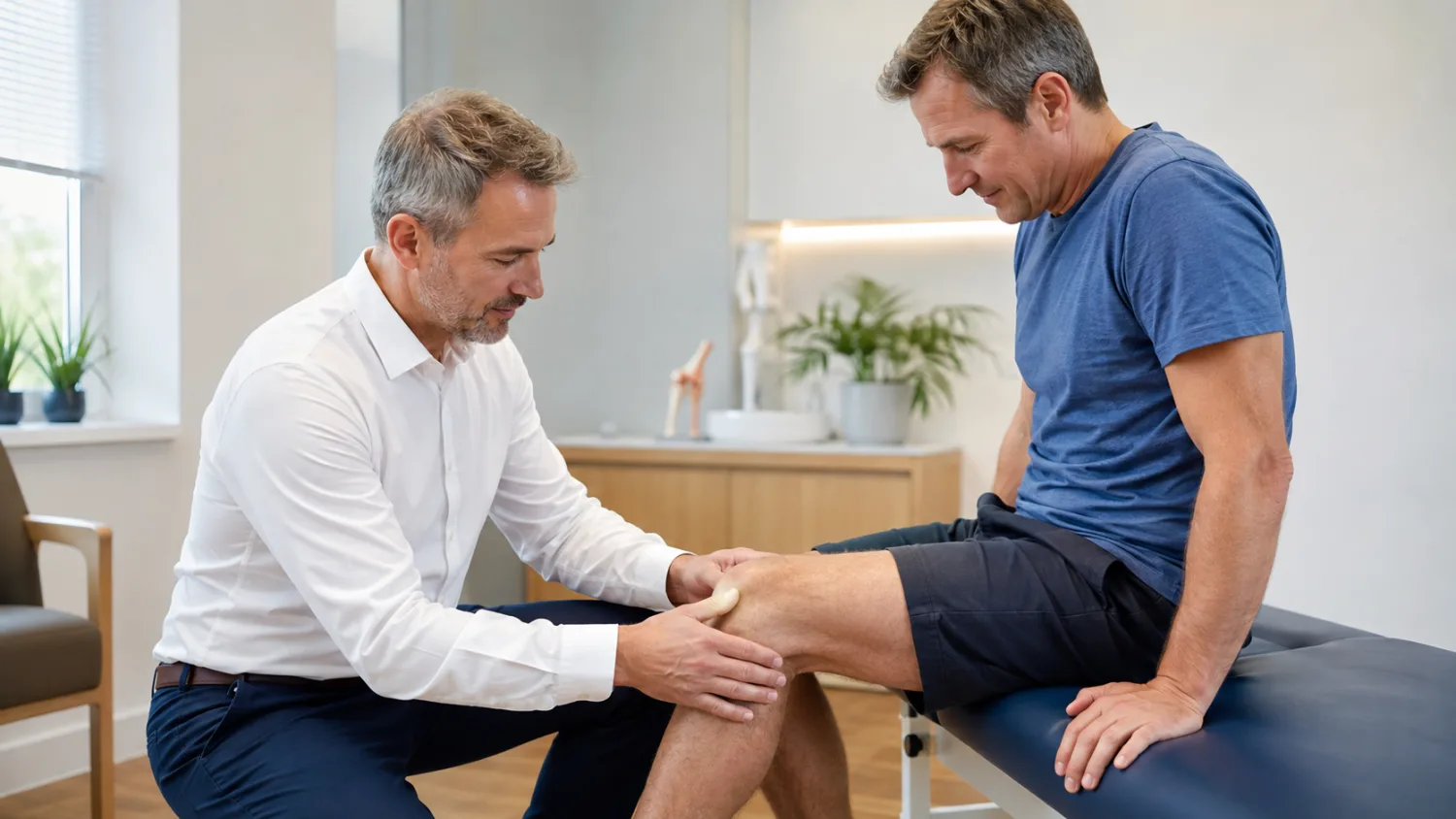
Private orthopaedic surgery in the UK can cost from a few thousand pounds for a keyhole procedure to £12,000–£20,000+ for major joint replacement surgery. Knee replacement, hip replacement and shoulder surgery are among the most common reasons people consider paying privately, especially when pain, reduced mobility, work problems or long NHS waiting times are affecting daily life.
The final cost depends on the joint involved, the operation needed, the hospital, the surgeon, the implant used, whether robotic or computer-assisted surgery is involved, your length of stay, scans, physiotherapy, aftercare and whether any complications occur.
This guide explains typical private orthopaedic surgery costs in the UK, including knee, hip and shoulder surgery, what is usually included in a self-pay package, what may cost extra, when private health insurance may help, and what to ask before booking treatment.
Important: This article is general information, not medical advice or financial advice. Prices vary between hospitals, consultants and regions. Always ask for a written quote and check exactly what is included before agreeing to private surgery.
How much does private orthopaedic surgery cost in the UK?
Private orthopaedic surgery costs vary widely because “orthopaedic surgery” includes many different procedures. A keyhole knee arthroscopy is very different from a total knee replacement. A rotator cuff repair is different from a shoulder replacement. A hip injection is very different from a total hip replacement.
As a broad UK guide, private orthopaedic surgery may cost:
- Initial orthopaedic consultation: around £200–£350;
- Follow-up consultation: around £150–£250;
- X-ray: often around £100–£250;
- MRI scan: often around £300–£800+;
- Joint injection: often around £500–£1,500+ depending on setting and guidance;
- Knee arthroscopy: often around £4,000–£6,000+;
- ACL reconstruction: often around £7,000–£10,000+;
- Total knee replacement: commonly around £12,000–£18,000+;
- Total hip replacement: commonly around £12,000–£18,000+;
- Shoulder arthroscopy: often around £3,000–£6,500+;
- Rotator cuff repair: often around £5,000–£9,000+;
- Shoulder replacement: often around £7,000–£15,000+.
These are broad ranges. PHIN’s 2026 data shows average private knee replacement package prices in many UK cities sitting around the mid-£14,000s to high-£16,000s, with some cities higher. Nuffield Health lists average guide prices of £16,914 for knee replacement and £16,579 for hip replacement, while Circle Health Group says private knee replacement is typically £12,000–£16,000 and private hip replacement averages around £14,500. Practice Plus Group lists hip replacement at £13,199 and knee replacement from £13,799. :contentReference[oaicite:0]{index=0}
For shoulder surgery, PHIN says private shoulder replacement typically costs between £7,000 and £15,000. Practice Plus Group lists shoulder arthroscopy at around £5,149, rotator cuff repair at £5,749 and shoulder replacement at £12,749, while other providers show guide prices for rotator cuff repair and shoulder arthroscopy in the £4,000–£9,000 range depending on the procedure. :contentReference[oaicite:1]{index=1}
Why private orthopaedic surgery prices vary
Two people can have the same joint problem but pay very different amounts privately. This is because the price is affected by more than the name of the operation.
The main cost factors include:
- the type of operation;
- whether it is keyhole surgery, open surgery or joint replacement;
- whether it is day-case surgery or needs an overnight stay;
- the hospital’s fixed package price;
- the surgeon’s fee;
- the anaesthetist’s fee;
- the cost of implants or prostheses;
- whether robotic or computer-assisted technology is used;
- diagnostic scans and X-rays;
- pre-operative tests;
- physiotherapy and rehabilitation;
- medication and pain relief;
- aftercare and follow-up appointments;
- whether complications or extra treatment are needed;
- the hospital location, especially London or other high-cost areas.
Many private hospitals offer fixed-price packages for common procedures. These can make costs easier to understand, but “fixed price” does not always mean every possible cost is included. You still need to check what happens if you need extra scans, longer admission, more physiotherapy, extra pain treatment or revision surgery later.
Private knee surgery costs
Knee surgery is one of the most common areas of private orthopaedics. People may consider private knee treatment for osteoarthritis, meniscus tears, ligament injuries, kneecap problems, sports injuries or long-term pain that has not improved with physiotherapy.
Knee arthroscopy cost
Knee arthroscopy is keyhole surgery. It may be used for selected meniscus tears, loose bodies or other specific problems, although it is not always recommended for general wear-and-tear arthritis.
Private knee arthroscopy often costs around £4,000–£6,000+, depending on the hospital and what is done during the procedure. PHIN notes that initial consultation for knee arthroscopy commonly costs around £195–£250, with operation costs varying by surgery and location. Nuffield’s Oxford guide prices include knee arthroscopy around £4,455–£4,615 depending on the exact procedure. :contentReference[oaicite:2]{index=2}
ACL reconstruction cost
ACL reconstruction is commonly performed after sports injuries, especially when knee instability affects activity, work or sport. It is more complex than simple arthroscopy and often needs structured rehabilitation afterwards.
Private ACL reconstruction often costs around £7,000–£10,000+, depending on graft type, surgeon, hospital and physiotherapy. Some hospitals list starting prices in this range, but final quotes depend on the individual case.
Partial knee replacement cost
Partial knee replacement may be suitable when arthritis affects only one compartment of the knee. It may cost slightly less than total knee replacement, but not always. Implant choice, surgeon technique and hospital pricing can make a big difference.
As a broad guide, private partial knee replacement often sits around £12,000–£16,000+, with some packages higher.
Total knee replacement cost
Total knee replacement is usually considered for severe knee arthritis when pain, stiffness and reduced mobility have not improved enough with non-surgical treatment.
Private total knee replacement commonly costs around £12,000–£18,000+. PHIN’s 2026 average package prices for knee replacement show many UK cities around £15,000–£17,000, while Nuffield Health gives an average guide price of £16,914 and Circle Health Group says typical private knee replacement costs are between £12,000 and £16,000. :contentReference[oaicite:3]{index=3}
If you are considering surgery because of knee pain, you may also find these guides useful: Knee pain: causes, diagnosis and treatment in the UK, Knee replacement surgery in the UK: NHS vs private, Sports injuries: causes, treatment and recovery in the UK and Arthritis explained: osteoarthritis and rheumatoid arthritis.
Private hip surgery costs
Hip surgery is commonly considered for osteoarthritis, hip impingement, labral tears, avascular necrosis, some fractures or severe pain that affects walking, sleep, work and independence.
Hip arthroscopy cost
Hip arthroscopy is keyhole surgery used for selected hip problems such as femoroacetabular impingement or labral tears. It is not the same as hip replacement and is usually considered in a different group of patients.
Private hip arthroscopy often costs around £7,000–£10,000+, depending on the hospital, surgeon and what needs to be repaired. Nuffield’s Oxford guide price listed hip arthroscopy at £9,450. :contentReference[oaicite:4]{index=4}
Total hip replacement cost
Total hip replacement is one of the most common private orthopaedic operations. It is usually considered for severe hip arthritis when pain, stiffness and loss of function have become significant.
Private hip replacement commonly costs around £12,000–£18,000+. Nuffield Health gives an average guide price of £16,579, Circle Health Group says the average cost is around £14,500, and Practice Plus Group lists a private hip replacement cost of £13,199. :contentReference[oaicite:5]{index=5}
Some hospitals may charge more depending on implant type, robotic or computer-assisted technology, complexity and location. London prices may be higher. Revision hip replacement, where a previous implant is replaced or repaired, is usually more complex and more expensive than a first hip replacement.
Related guides include Hip replacement surgery in the UK: the complete guide, Lower back pain: the complete guide and Sciatica: causes, symptoms and treatment in the UK.
Private shoulder surgery costs
Shoulder surgery can range from relatively small keyhole procedures to major joint replacement. Costs vary because shoulder problems are very different: frozen shoulder, impingement, rotator cuff tear, instability, arthritis and trauma may all need different treatment.
Shoulder arthroscopy cost
Shoulder arthroscopy is keyhole surgery. It may be used for impingement, frozen shoulder, labral tears, instability, AC joint problems or some tendon problems.
Private shoulder arthroscopy often costs around £3,000–£6,500+. Practice Plus Group says shoulder arthroscopy costs in the UK range from £3,000 to £6,500, and lists its own shoulder arthroscopy price at around £5,149. New Victoria Hospital lists examples such as shoulder arthroscopy for impingement at £3,895 and frozen shoulder arthroscopy at £4,685. :contentReference[oaicite:6]{index=6}
Rotator cuff repair cost
Rotator cuff repair may be needed when shoulder tendons are torn and symptoms do not improve with non-surgical treatment. It can involve keyhole or open surgery and often requires a sling and months of rehabilitation.
Private rotator cuff repair often costs around £5,000–£9,000+. Practice Plus Group lists rotator cuff repair at £5,749, New Victoria lists arthroscopic rotator cuff repair greater than 2cm at £6,880, and St John & St Elizabeth says private rotator cuff surgery starts from £6,275 for hospital charges, with final costs depending on individual needs. :contentReference[oaicite:7]{index=7}
Shoulder replacement cost
Shoulder replacement may be considered for severe arthritis, complex fractures or some rotator cuff-related shoulder problems. There are different types, including anatomical shoulder replacement and reverse shoulder replacement.
Private shoulder replacement often costs around £7,000–£15,000+. PHIN says shoulder replacement typically costs between £7,000 and £15,000, while Practice Plus Group lists shoulder replacement surgery at £12,749. :contentReference[oaicite:8]{index=8}
Costs may rise if the surgery is complex, if specialist implants are needed, or if the hospital stay is longer than expected.
What is usually included in a private orthopaedic surgery package?
Many private hospitals offer fixed-price packages for common orthopaedic procedures. These packages are designed to make self-pay surgery easier to understand.
A package may include:
- hospital fees;
- surgeon fee;
- anaesthetist fee;
- operating theatre costs;
- standard implant or prosthesis;
- nursing care;
- standard medicines while in hospital;
- standard hospital stay;
- some follow-up appointments;
- a limited amount of physiotherapy;
- aftercare for a defined period.
However, packages differ. You should not assume that every package includes the same things.
Ask whether the quote includes:
- pre-operative assessment;
- blood tests;
- X-rays or MRI scans;
- walking aids, braces or slings;
- take-home medication;
- follow-up X-rays;
- post-operative physiotherapy;
- treatment for complications;
- readmission if something goes wrong;
- revision surgery if the implant fails early;
- extended hospital stay;
- consultant follow-up beyond the package period.
Some providers advertise “all-inclusive” prices, but exclusions can still apply. Always read the written quote carefully.
Extra costs to check before self-paying
The headline surgery price is not always the full cost of your treatment journey. Before you commit, ask about costs before, during and after surgery.
Consultations and diagnostics
You may need an initial consultation, X-ray, MRI scan, CT scan, ultrasound, blood tests or ECG before surgery. These may not be included in the surgery package.
Useful related guides include MRI scan: what it shows, CT scan: what it shows and how it differs from MRI, Ultrasound vs CT vs MRI and How to understand scan results.
Physiotherapy and rehabilitation
Physiotherapy is essential after many knee, hip and shoulder operations. Some packages include a few sessions, but you may need more.
Extra physiotherapy can cost hundreds or thousands of pounds over time, especially after ACL reconstruction, rotator cuff repair, shoulder replacement or joint replacement surgery.
Time off work and home support
Orthopaedic surgery often has indirect costs. You may need time off work, help at home, taxis, childcare, mobility aids, home adaptations or support with daily activities.
For knee and hip replacement, you may need help with shopping, stairs, washing, dressing and transport during early recovery. For shoulder surgery, you may not be able to drive, lift or use one arm normally for several weeks.
Complications or longer recovery
Most planned orthopaedic surgery goes smoothly, but complications can happen. These may include infection, blood clots, stiffness, nerve irritation, dislocation, implant problems, wound issues or persistent pain.
Ask what happens if complications occur. Are they covered by the package? For how long? Would you be transferred to the NHS in an emergency? Would you pay extra for readmission?
Does private health insurance cover orthopaedic surgery?
Private health insurance often covers eligible orthopaedic surgery, but only if the claim meets the policy rules. The condition usually needs to be covered, not pre-existing, medically necessary and authorised before treatment.
Insurance may cover:
- orthopaedic consultation;
- X-rays and scans;
- diagnostic injections;
- knee arthroscopy;
- ACL reconstruction;
- hip replacement;
- knee replacement;
- shoulder arthroscopy;
- rotator cuff repair;
- shoulder replacement;
- some physiotherapy and rehabilitation.
However, cover depends on your policy. Orthopaedic claims can be refused or limited because of:
- pre-existing joint pain or injury;
- arthritis symptoms before the policy started;
- outpatient limits;
- physiotherapy limits;
- hospital list restrictions;
- consultant recognition rules;
- lack of pre-authorisation;
- chronic condition wording;
- shortfalls between insurer limits and provider fees.
Before booking anything privately, contact your insurer. Ask whether the condition is covered, whether scans are authorised, which consultants and hospitals you can use, what excess applies and whether physiotherapy is included.
Useful guides include What does private health insurance actually cover?, Pre-existing conditions and health insurance, How to make a health insurance claim in the UK and What happens if your health insurance claim is refused?.
NHS vs private orthopaedic surgery
The NHS provides orthopaedic surgery based on clinical need. Many people have excellent NHS knee, hip and shoulder treatment, including scans, physiotherapy, injections and surgery. But waiting times can be a major reason people consider paying privately.
Private orthopaedic surgery may appeal if you want:
- faster consultation;
- quicker scans;
- choice of consultant;
- choice of hospital;
- more control over surgery date;
- a private room;
- fixed-price self-pay treatment;
- to return to work or caring responsibilities sooner.
However, private surgery is not always the best route. The NHS may be more appropriate if you have complex medical conditions, need emergency care, have high surgical risk, cannot afford the full pathway, or need long-term coordinated care.
Before deciding, ask:
- What is my NHS waiting time likely to be?
- Is my condition getting worse while I wait?
- Could physiotherapy, injections or medication help first?
- Can I afford the full private pathway?
- What happens if complications occur?
- Can I return to the NHS later if needed?
For broader comparison, see NHS vs private healthcare, NHS waiting times and when treatment abroad may be considered and Private healthcare UK vs treatment abroad: cost comparison.
Questions to ask before paying for private orthopaedic surgery
Before agreeing to private knee, hip or shoulder surgery, ask for a written quote and go through it carefully.
Ask the hospital or consultant:
- What exact operation are you recommending?
- Is surgery definitely needed, or are there non-surgical options?
- What is the full package price?
- Is the initial consultation included?
- Are X-rays, MRI or CT scans included?
- Are blood tests and pre-operative checks included?
- Are surgeon and anaesthetist fees included?
- Is the implant or prosthesis included?
- What type of implant will be used?
- Is robotic or computer-assisted surgery included?
- How many nights in hospital are included?
- How many follow-up appointments are included?
- How many physiotherapy sessions are included?
- What costs extra?
- What happens if I need more physiotherapy?
- What happens if complications occur?
- What happens if I need to stay longer in hospital?
- What is the cancellation policy?
- Can I spread the cost?
- Can I return to NHS care later?
If you are using insurance, also ask your insurer:
- Is the condition covered?
- Could it be considered pre-existing?
- Is this consultant recognised?
- Is this hospital on my list?
- Do I need pre-authorisation?
- Are scans and physiotherapy covered?
- What excess do I pay?
- Could there be a shortfall?
How to reduce financial risk
Private orthopaedic surgery can improve quality of life for the right patient, but it is still a major financial decision. A few simple steps can reduce the risk of unexpected bills.
- Get more than one quote. Prices vary between hospitals and regions.
- Ask for a fixed price. Make sure you understand what is included and excluded.
- Check diagnostics separately. Scans and consultations may be charged before the surgery package starts.
- Budget for physiotherapy. Recovery often depends on good rehabilitation.
- Keep your NHS pathway active. Do not cancel NHS appointments until private treatment is confirmed.
- Be careful with loans. Medical finance can spread cost but may add interest if not interest-free.
- Ask about complications. Understand who pays if recovery is not straightforward.
- Check surgeon experience. Price should not be your only factor.
- Think about recovery time. Lost income, travel and home support can matter as much as the hospital bill.
It may also help to compare the cost of surgery with the cost of ongoing pain, reduced mobility, lost work, private physiotherapy and repeated injections. But do not rush into surgery just because it is available quickly. Orthopaedic surgery should be based on diagnosis, symptoms, imaging, examination and a clear discussion of risks and benefits.
FAQ: Private orthopaedic surgery costs in the UK
How much does private knee replacement cost in the UK?
Private knee replacement commonly costs around £12,000–£18,000+. PHIN’s 2026 package-price data shows many UK city averages around £15,000–£17,000, while some providers list guide prices around £14,000–£17,000.
How much does private hip replacement cost in the UK?
Private hip replacement commonly costs around £12,000–£18,000+. Some providers list prices around £13,000–£16,500, but costs vary by hospital, implant, surgeon and location.
How much does private shoulder surgery cost?
Private shoulder surgery can cost around £3,000–£6,500+ for shoulder arthroscopy, £5,000–£9,000+ for rotator cuff repair and around £7,000–£15,000+ for shoulder replacement.
How much does a private orthopaedic consultation cost?
An initial private orthopaedic consultation often costs around £200–£350. Follow-up appointments may cost around £150–£250, depending on the consultant and hospital.
Are scans included in private surgery prices?
Not always. X-rays, MRI scans, CT scans and blood tests may be charged separately before the surgery package begins. Always check the written quote.
Is physiotherapy included after private joint surgery?
Some packages include a limited number of physiotherapy sessions, but you may need more. Extra physiotherapy can add hundreds or thousands of pounds to the total recovery cost.
Does private health insurance cover knee, hip or shoulder surgery?
It may, if the condition is covered under your policy and the surgery is medically necessary and pre-authorised. Pre-existing symptoms, hospital lists, consultant rules, limits and excesses can affect cover.
Can insurance refuse an orthopaedic claim?
Yes. Claims may be refused if symptoms started before the policy, the condition is excluded, the provider is not approved, authorisation was not obtained, or policy limits have been reached.
Is private joint replacement faster than the NHS?
It can be faster, especially for consultations, scans and planned surgery dates. However, suitability depends on your medical condition, surgical risk, local NHS waiting time and ability to pay.
Can I pay privately for scans but have surgery on the NHS?
Sometimes. However, your NHS team may need to review the scan quality, report and clinical relevance. Ask your NHS clinician before paying privately if your goal is to support NHS treatment.
Can I return to the NHS after private orthopaedic surgery?
Usually yes, but coordination matters. Keep records of your operation, implant details, discharge summary and follow-up. The NHS may provide urgent care if needed, but planned private aftercare may remain your responsibility.
What is the cheapest private orthopaedic surgery?
Smaller procedures such as injections, manipulation, some keyhole procedures or carpal tunnel surgery usually cost less than major joint replacement. The cheapest option is not always the right option clinically.
Are private surgery packages fixed price?
Many common operations are offered as fixed-price packages, but exclusions apply. Ask what happens if you need extra tests, extra nights in hospital, more physiotherapy or treatment for complications.
Why are hip and knee replacements so expensive?
The cost includes surgeon, anaesthetist, theatre time, hospital stay, nursing, implants, equipment, medicines, follow-up and sometimes physiotherapy. Implant type and hospital location can affect the price.
Should I get more than one private quote?
Yes. Prices can vary by thousands of pounds between hospitals. Compare what is included, not just the headline figure.
Should I keep my NHS appointment if I am considering private surgery?
Usually yes. Do not cancel NHS appointments until private surgery is confirmed, affordable and clinically appropriate. Keeping your NHS pathway active gives you options if plans change.