Sciatica is one of the most recognised types of nerve pain, but it is often misunderstood. Many people use the word “sciatica” to describe any back or leg pain, but medically it refers to irritation or compression of the sciatic nerve or the nerve roots that form it.
Sciatica can cause sharp pain, tingling, numbness or weakness that travels from the lower back through the buttock and down the leg. For some people, it is mildly uncomfortable and settles quickly. For others, it can be severe and affect walking, sleep, work and daily life.
The good news is that most cases improve without surgery. Understanding the cause, recognising warning signs and following the right treatment plan can make recovery easier.
What sciatica means
Sciatica happens when the sciatic nerve, or one of the nerve roots that contributes to it, becomes irritated or compressed. The sciatic nerve begins in the lower spine and travels through the buttocks, hips and down each leg.
When a nerve root is irritated, pain can travel along the nerve pathway. This is why sciatica often causes leg symptoms rather than only lower back pain.
The NHS describes sciatica as pain that travels from the lower back down the leg due to irritation of the sciatic nerve.
What sciatica feels like
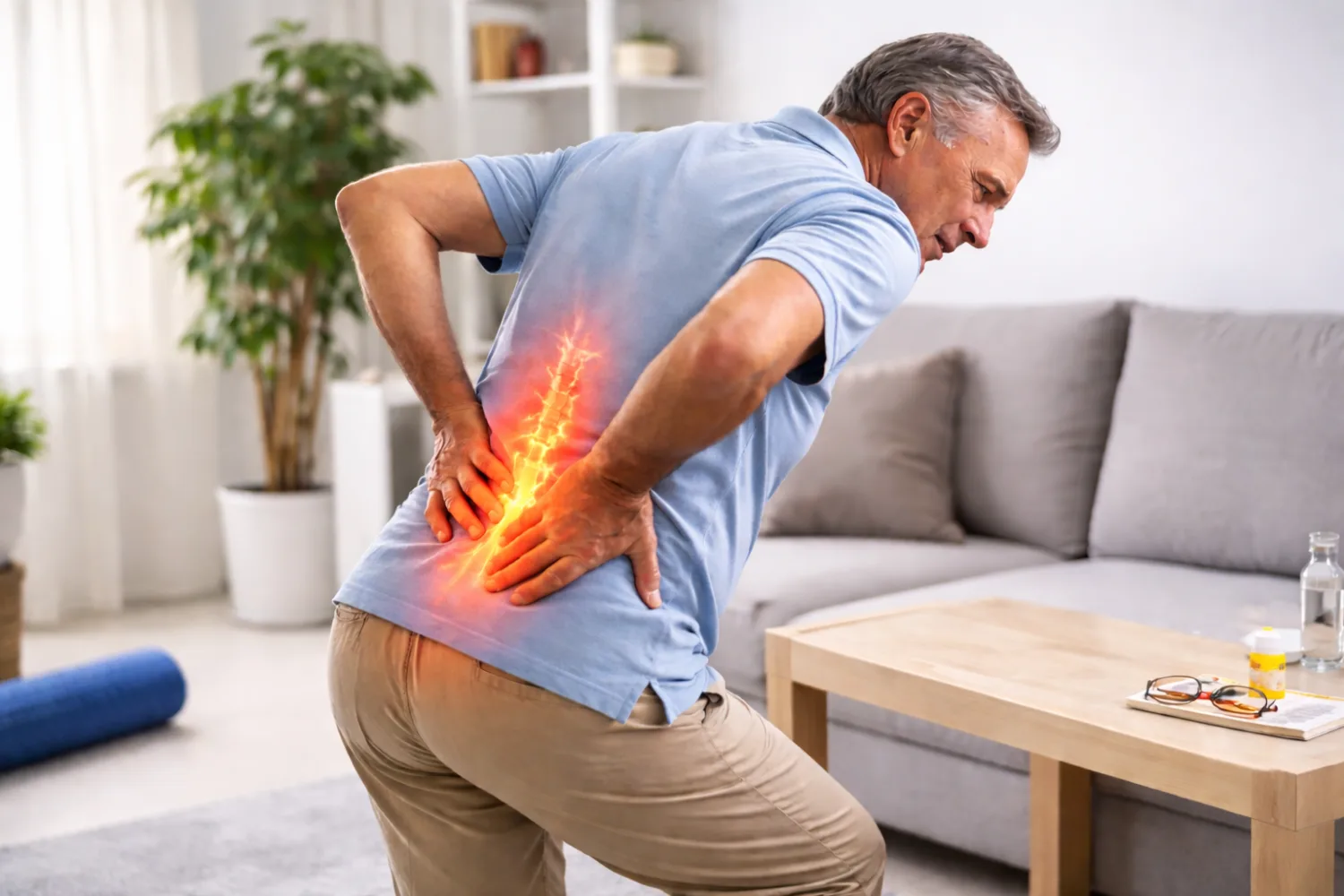
Sciatica symptoms vary, but the pattern is often distinctive. Pain usually starts in the lower back or buttock and travels down one leg.
Sciatica may feel like:
- sharp shooting pain
- burning pain
- electric shock-like pain
- tingling or pins and needles
- numbness in the leg, foot or toes
- weakness in the affected leg
- pain that worsens when sitting, bending, coughing or sneezing
Symptoms usually affect one side of the body. Some people feel temporary relief when standing or walking, while others find walking difficult if the pain is severe.
Sciatica is different from ordinary lower back pain because the main symptom often travels below the buttock and into the leg. For a broader guide, see lower back pain causes, treatment and recovery.
Common causes of sciatica
Sciatica is not usually a diagnosis by itself. It is a symptom caused by irritation or compression of a nerve.
Herniated or slipped disc
The most common cause is a herniated disc in the lower spine. Discs act as cushions between the bones of the spine. When part of a disc bulges or leaks out, it can press on nearby nerves.
This pressure irritates the nerve root and can produce the typical radiating pain down the leg.
Disc problems can develop gradually with age-related wear, but they can also happen suddenly after lifting, bending or twisting.
Spinal stenosis
Spinal stenosis means narrowing around the spinal canal or nerve passages. It is more common in older adults and often develops alongside arthritis of the spine.
Symptoms may worsen when standing or walking and improve when sitting down or leaning forward. Some people describe needing to stop and rest after walking a certain distance.
Degenerative disc changes
As discs age, they can lose height and flexibility. These changes may contribute to nerve irritation, stiffness and chronic lower back pain.
Degenerative changes are common on scans, even in people without symptoms. This is why imaging results need to be interpreted alongside symptoms and examination findings.
Piriformis syndrome
The piriformis is a small muscle in the buttock. In some cases, tightness or irritation around this muscle may irritate the sciatic nerve and cause sciatica-like pain.
This is sometimes linked with long periods of sitting, repetitive movement or muscle imbalance. True piriformis syndrome is less common than disc-related sciatica, but it can cause similar symptoms.
Injury or trauma
Falls, accidents, sports injuries or heavy lifting can damage spinal structures and trigger sciatica.
Less commonly, tumours, infections or spinal fractures can compress nerves and cause sciatica-like symptoms. These causes are uncommon but important, especially when red flags are present.
Risk factors for sciatica
Certain factors can increase the chance of developing sciatica or make symptoms more likely to persist.
- age-related spinal changes
- previous back pain
- long periods of sitting
- low physical activity
- heavy lifting or repetitive twisting
- smoking
- being overweight
- poor sleep
- stress and low mood
- work involving vibration, such as driving heavy vehicles
Lower back problems can overlap with hip, knee and posture issues. Related guides include knee pain causes and treatment, knee replacement surgery in the UK and hip replacement surgery in the UK.
How sciatica is diagnosed in the UK
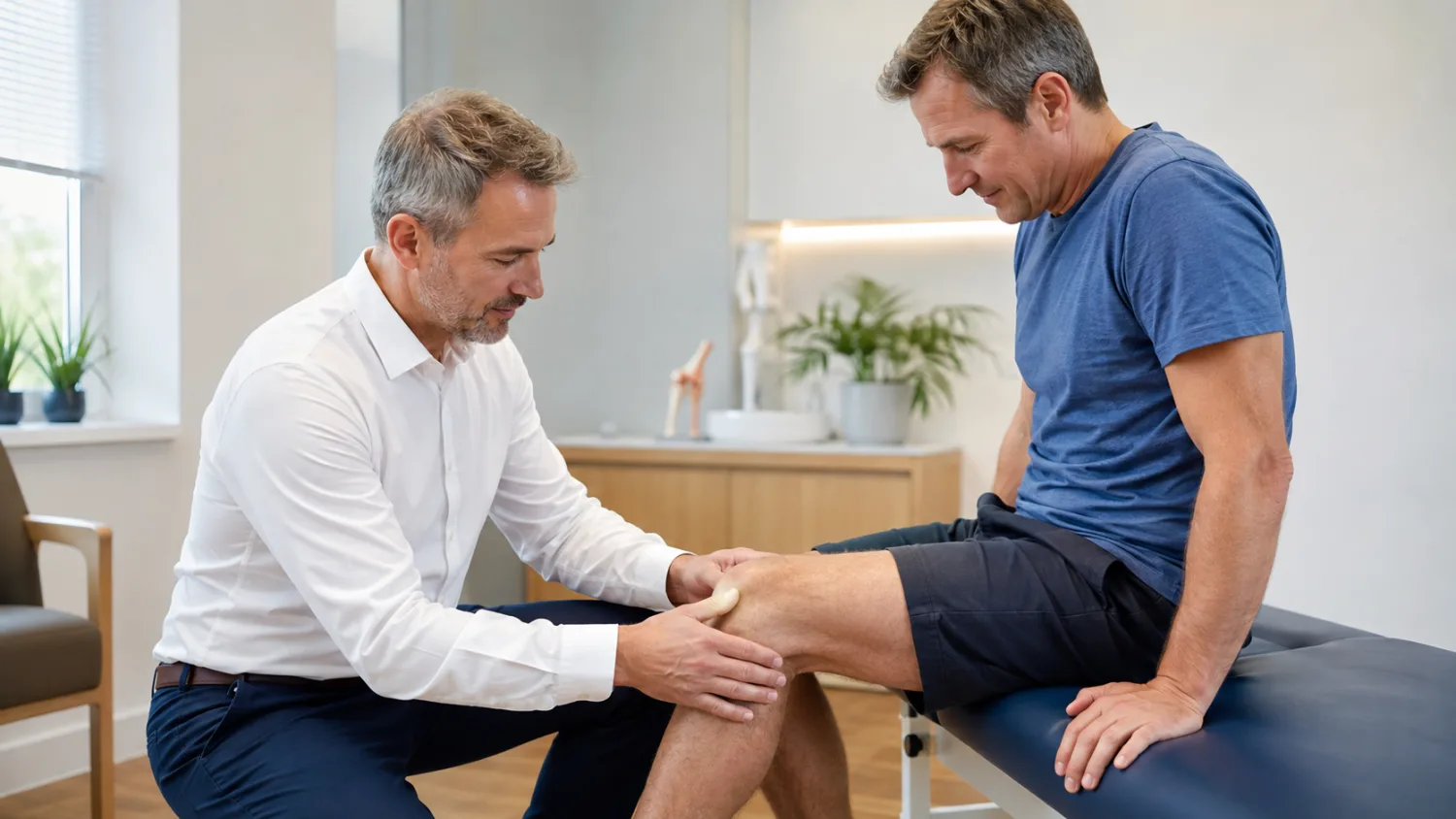
Most people with suspected sciatica start with a GP, physiotherapist or first contact physiotherapist. In some areas, NHS physiotherapy can be accessed directly without a GP referral.
A clinician will usually ask about:
- where the pain starts and where it travels
- whether pain goes below the knee
- numbness, tingling or weakness
- whether coughing, sneezing or bending worsens pain
- when symptoms started
- whether there was an injury
- what makes symptoms better or worse
- bladder, bowel or saddle-area symptoms
- work, activity levels and medical history
The examination may check back movement, walking pattern, reflexes, sensation, leg strength and nerve tension tests, such as raising the straight leg.
If you need help accessing care, see how to get a GP appointment quickly in the UK.
Do you need an MRI scan for sciatica?
Many people with sciatica do not need a scan at first. Symptoms often improve with time and conservative treatment.
MRI scans may be considered if:
- symptoms are severe
- pain persists despite several weeks of treatment
- there is significant or worsening leg weakness
- red flag symptoms are present
- injections or surgery are being considered
- the diagnosis is unclear
An MRI can show discs, nerves and soft tissues in detail, but scan findings do not always match symptoms. Many people have disc bulges on MRI without pain.
If imaging is recommended, read what an MRI scan shows, ultrasound vs CT vs MRI and how to understand scan results.
Best treatments for sciatica
Most sciatica improves within weeks to a few months with conservative treatment. The main goals are to reduce nerve irritation, keep moving, restore strength and prevent recurrence.
Stay active
Prolonged bed rest is no longer recommended for most people with sciatica. Staying gently active helps prevent stiffness and loss of strength.
Helpful activity may include:
- short walks
- changing position regularly
- gentle mobility exercises
- avoiding long periods of sitting
- gradually returning to normal daily activities
This does not mean forcing through severe pain. It means keeping movement within tolerable limits and avoiding complete inactivity.
Physiotherapy
Physiotherapy is often central to recovery. A physiotherapist can identify movement patterns, weakness or stiffness that may be contributing to symptoms.
Treatment may include:
- mobility exercises
- nerve gliding exercises where appropriate
- core strengthening
- hip and glute strengthening
- advice on sitting and lifting
- graded return to work, sport or exercise
- flare-up management
Exercises should be tailored. A stretch that helps one person may aggravate another, especially if nerve irritation is strong.
Pain relief medication
Pain relief can help people stay mobile and sleep while symptoms settle. Options may include anti-inflammatory medicines, topical gels or other medicines recommended by a clinician.
Anti-inflammatory tablets such as ibuprofen are not suitable for everyone, especially people with stomach ulcers, kidney disease, heart disease, high blood pressure, asthma triggered by NSAIDs or certain medications.
For severe nerve pain, a clinician may consider other medicines temporarily, but these can have side effects and are not suitable for everyone.
Heat and cold therapy
Cold packs may help during the early stage of a painful flare-up. Heat packs may help muscle tightness and spasms.
Use heat or cold safely and avoid applying directly to the skin.
Manual therapy
Some people get short-term relief from manual therapy, such as mobilisation, manipulation or massage, delivered by trained professionals.
Manual therapy is usually most helpful when combined with exercise, advice and gradual return to activity.
Epidural steroid injections
If pain is severe or persistent, a specialist may consider an epidural steroid injection. This delivers anti-inflammatory medicine near the irritated nerve.
Injections do not fix every cause of sciatica, but they may provide temporary relief for some people and help them engage with rehabilitation.
Suitability depends on symptoms, imaging findings, general health and specialist assessment.
When sciatica may need surgery or urgent care
Surgery is rarely needed for sciatica. Most people improve without it. However, some symptoms need urgent medical attention, and a small number of people may need specialist surgical assessment.
When surgery may be considered
Surgery may be considered if:
- severe symptoms persist despite conservative treatment
- there is significant nerve compression on imaging
- leg weakness is worsening
- pain remains disabling for several months
- specialist assessment suggests surgery is likely to help
A common operation for disc-related sciatica is a discectomy, where part of the damaged disc is removed to relieve pressure on the nerve.
Spinal surgery requires careful discussion of benefits, risks, recovery and alternatives. It is usually considered only after specialist assessment.
Red flags: when sciatica is an emergency
Most sciatica is not dangerous, but some symptoms need urgent medical attention.
Seek emergency help if sciatica is accompanied by:
- new loss of bladder or bowel control
- numbness around the genitals, buttocks or inner thighs
- new difficulty passing urine
- severe or worsening weakness in one or both legs
- loss of sensation in the saddle area
- severe symptoms after major trauma
- fever, feeling very unwell or unexplained weight loss with back pain
These may indicate a rare but serious condition such as cauda equina syndrome or another urgent spinal problem.
Recovery and prevention
Many cases improve within a few weeks, although some take longer. Recovery depends on the cause, severity, general health, activity levels and whether nerve irritation is settling.
How long sciatica lasts
It is common for symptoms to fluctuate. Pain may reduce gradually, and leg symptoms may improve before back stiffness fully settles.
If symptoms are not improving after several weeks, or if weakness, numbness or severe pain is present, seek medical advice.
Preventing sciatica from returning
Not all cases can be prevented, but certain habits can reduce the chance of recurrence.
Helpful steps include:
- regular walking
- strengthening the core, hips and glutes
- avoiding long periods of sitting without breaks
- using good lifting technique
- building activity gradually
- maintaining a healthy weight where possible
- stopping smoking
- improving sleep and stress management
- keeping up with physiotherapy exercises after pain improves
Prevention is usually about long-term back health, not one perfect stretch or posture.
Living with sciatica while recovering
Sciatica can be painful and frustrating, especially when sitting, sleeping or walking become difficult. A practical approach can make recovery more manageable.
During recovery:
- change position regularly
- use pillows to support sleep if helpful
- take short walks rather than staying still for long periods
- avoid heavy lifting during flare-ups
- keep working within modified duties if possible and safe
- follow a gradual exercise plan
- seek help if symptoms worsen or do not improve
Fear of movement can make recovery harder. Gentle, confident movement is usually part of getting better.
FAQ: sciatica in the UK
What is the main cause of sciatica?
The most common cause is irritation of a nerve root in the lower spine, often due to a herniated or bulging disc. Spinal stenosis and degenerative spinal changes can also cause sciatica.
How do I know if my leg pain is sciatica?
Sciatica usually causes pain that travels from the lower back or buttock down one leg. It may feel sharp, burning or electric and may come with tingling, numbness or weakness.
Does sciatica go away on its own?
Many cases improve without surgery over weeks to months, especially with gentle activity, physiotherapy and appropriate pain management.
Should I rest with sciatica?
Short rest may help during severe flare-ups, but prolonged bed rest is usually not recommended. Gentle movement and walking often support recovery.
Is walking good for sciatica?
Walking is often helpful if tolerated. Start with short walks and build gradually. Stop or reduce activity if symptoms become significantly worse.
Do I need an MRI for sciatica?
Not always. MRI is usually considered if symptoms are severe, persistent, linked with weakness or red flags, or if injections or surgery are being considered.
What painkillers help sciatica?
Some people use anti-inflammatory medicines or other pain relief, but suitability depends on health conditions and other medicines. A pharmacist, GP or clinician can advise.
Can physiotherapy help sciatica?
Yes. Physiotherapy can help improve movement, reduce nerve irritation, build strength and support a gradual return to normal activities.
When is sciatica serious?
Sciatica is serious if it comes with bladder or bowel changes, numbness around the genitals or inner thighs, severe or worsening leg weakness, fever, major trauma or unexplained weight loss.
When is surgery needed for sciatica?
Surgery is considered only for selected cases, such as persistent disabling symptoms, significant nerve compression or worsening weakness despite conservative treatment.
Can sciatica affect the knee or hip?
Yes. Sciatica can cause pain that travels through the buttock, thigh, knee, calf or foot. It can also change walking patterns, which may aggravate hip or knee problems.
How can I stop sciatica coming back?
Regular exercise, core and hip strengthening, avoiding long sitting without breaks, good lifting technique, weight management and not smoking can reduce recurrence risk.
Final takeaway
Sciatica can be painful and disruptive, but it is usually temporary and treatable. Most people recover without surgery using a combination of movement, physiotherapy, pain management and time.
The key is to recognise the pattern, stay as active as safely possible, and seek help if symptoms are severe, persistent or linked with weakness or red flags.
If sciatica is affecting your mobility, sleep or daily life, professional assessment can help confirm the cause and guide the safest route to recovery.