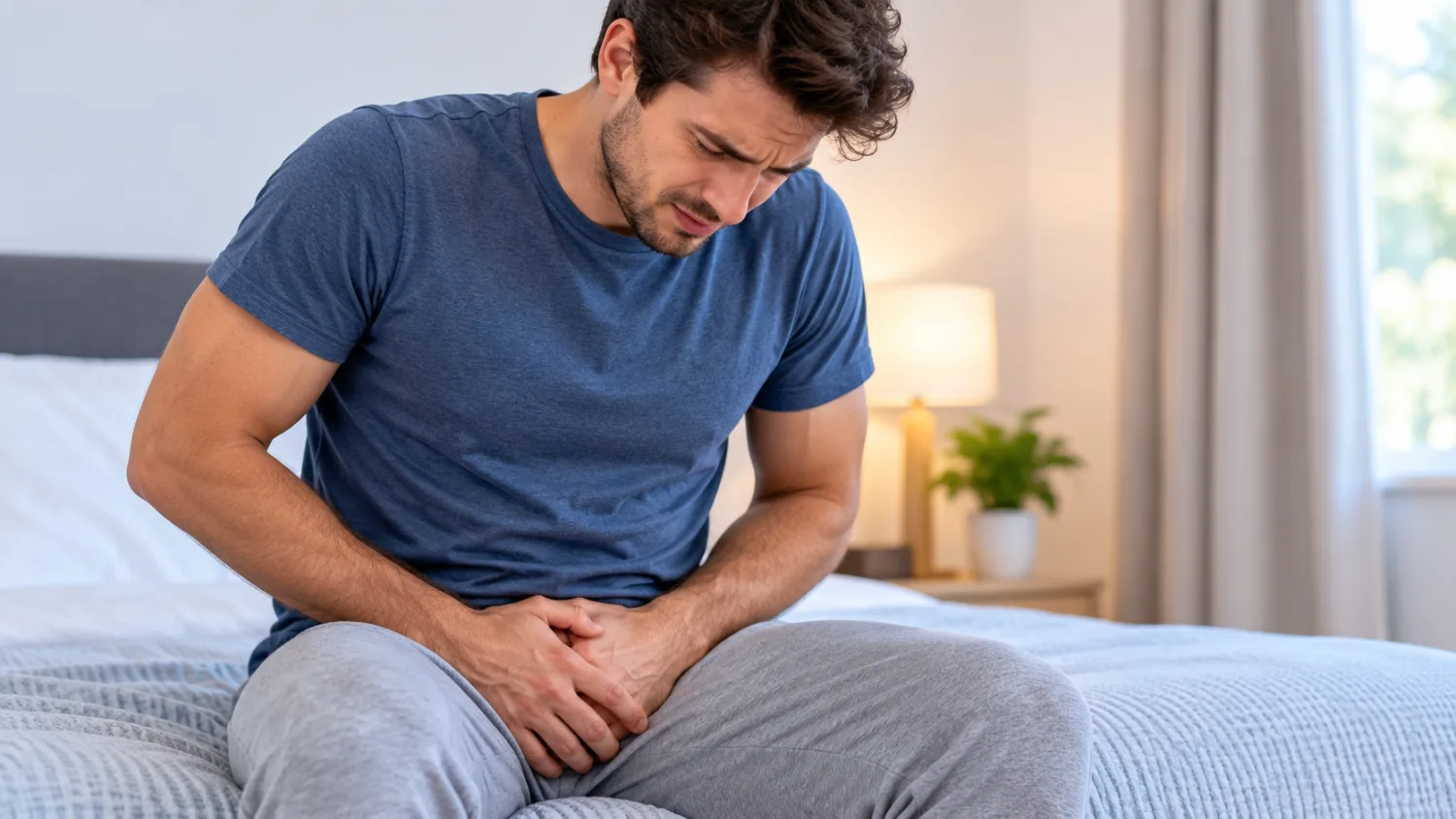
Testicular pain can have causes ranging from a minor injury or infection to a condition that needs emergency surgery within hours.
The most important distinction is how the pain started.
Sudden, severe pain in one testicle — particularly with nausea, vomiting, abdominal pain or rapid swelling — can be caused by testicular torsion. This is a medical emergency because the testicle twists around its blood supply.
Slower-onset aching or tenderness is more often caused by conditions such as epididymitis, a varicocele, hernia or inflammation, although symptoms alone cannot always establish the cause.
Persistent pain, swelling or a new lump should also be examined even if the pain is mild.
This guide explains common causes of testicular pain, how doctors investigate it and which symptoms mean you should go directly to A&E.
When Is Testicular Pain an Emergency?
Go to A&E immediately if you develop sudden, severe pain in a testicle.
The NHS also advises emergency assessment if testicular pain occurs with:
- nausea or vomiting;
- abdominal pain;
- pain lasting more than an hour;
- pain that continues while you are resting.
The main condition doctors need to exclude urgently is testicular torsion.
Torsion occurs when the spermatic cord twists, reducing or completely cutting off the blood supply to the testicle.
The testicle can become permanently damaged within hours.
Current NHS emergency advice emphasises that treatment within roughly the first six hours gives the best chance of saving the testicle. The likelihood of permanent damage rises substantially as treatment is delayed.
Do not wait overnight to see whether severe sudden pain settles.
Do not assume it is a pulled muscle.
Do not delay because discussing testicular symptoms feels embarrassing.
If torsion is possible, speed matters much more than embarrassment.
What Does Testicular Torsion Feel Like?
The classic presentation is sudden, intense pain affecting one side of the scrotum.
The pain may begin:
- during exercise;
- after minor trauma;
- while sitting or resting;
- during sleep.
Some people wake with severe pain.
Other possible features include:
- rapid swelling;
- redness or tenderness;
- nausea;
- vomiting;
- lower abdominal pain;
- one testicle appearing higher than the other.
Torsion is most common in teenagers and young men, but it can happen at any age, including infancy and adulthood.
A dangerous misconception is that torsion always causes unbearable pain from the first second.
Although severe sudden pain is typical, symptoms can vary. There can also be episodes where a testicle twists and then untwists, causing pain that suddenly appears and later improves.
That still deserves urgent medical assessment because another episode may not untwist by itself.
Epididymitis Is Another Common Cause
Epididymitis means inflammation of the epididymis, the coiled tube behind the testicle that stores and transports sperm.
It is often caused by infection.
Unlike torsion, the discomfort often develops more gradually, although epididymitis can sometimes begin suddenly too.
Symptoms can include:
- pain in one or both testicles;
- a tender or warm scrotum;
- swelling;
- pain when urinating;
- penile discharge;
- sometimes fever.
In younger sexually active men, sexually transmitted infections such as chlamydia and gonorrhoea are important causes.
In older men, urinary infections become a more common explanation, particularly when there are prostate or urinary problems.
The NHS notes that epididymitis is usually treated with antibiotics when infection is responsible.
If an STI is possible, a sexual-health clinic can provide testing and treatment. See our guide to sexual-health clinics in the UK.
Importantly, you should not try to distinguish severe epididymitis from torsion at home. Sudden severe pain still requires emergency assessment.
Can Prostatitis Cause Testicular Pain?
Yes.
Pain can sometimes be referred into the testicles from elsewhere in the urinary or reproductive system.
Prostatitis is inflammation of the prostate and may cause:
- pain in the penis, testicles or perineum;
- pain when urinating;
- difficulty passing urine;
- painful ejaculation;
- pelvic discomfort;
- fever in acute bacterial cases.
The pain is often less sharply localised than torsion and may occur alongside urinary symptoms.
You can read more in our guide to prostatitis symptoms, causes and treatment.
Kidney stones can also occasionally cause pain that radiates into the groin or testicle, usually with severe flank or abdominal pain.
What About Varicocele, Hydrocele and Cysts?
Not all testicular discomfort comes from infection or inflammation.
Varicocele
A varicocele is a group of enlarged veins within the scrotum.
It often develops on the left side and can feel like a soft collection of veins above the testicle.
Many cause no symptoms.
When discomfort does occur, it is often described as:
- a dull ache;
- a dragging sensation;
- heaviness;
- pain that becomes more noticeable after standing or exercise.
Varicoceles can sometimes be associated with reduced fertility or testicular growth, but not every varicocele needs treatment.
Hydrocele
A hydrocele is a collection of fluid around a testicle.
It usually causes painless swelling rather than severe pain.
A large hydrocele can, however, feel heavy or uncomfortable.
Epididymal cyst or spermatocele
These are usually benign fluid-filled lumps near the epididymis.
They are often painless and may be discovered accidentally when checking the testicles.
Any new lump should nevertheless be assessed rather than self-diagnosed.
Can a Hernia Cause Pain in the Testicle?
Yes.
An inguinal hernia occurs when abdominal tissue pushes through a weak point in the groin.
It can produce pain or pressure that radiates into the scrotum.
You may notice:
- a bulge in the groin;
- discomfort when coughing or lifting;
- a dragging sensation;
- swelling extending towards the scrotum.
Hernias usually develop more gradually than testicular torsion.
However, a hernia can occasionally become trapped or lose its blood supply.
Seek urgent medical help if a groin lump becomes suddenly very painful, hard or tender, particularly if you also develop vomiting or cannot pass stool or wind.
Does Testicular Cancer Usually Cause Pain?
Testicular cancer can cause pain, but pain is not usually the main symptom.
The more typical presentation is a new lump or swelling in one testicle.
Other possible symptoms include:
- one testicle becoming larger;
- a feeling of heaviness in the scrotum;
- increased firmness;
- a persistent dull ache;
- a change in the shape or feel of the testicle.
The NHS advises seeing a GP for any persistent testicular ache or an unexplained change in the testicle.
This does not mean that a painful testicle is likely to be cancer.
Infection, inflammation and other benign conditions are more common causes of pain.
But a persistent lump or change should never simply be ignored.
Our guide to testicular cancer symptoms and self-checking explains what to look for in more detail.
Can Injury Cause Testicular Pain?
Yes.
The testicles are sensitive and relatively exposed, so a direct blow during sport, cycling, work or an accident can cause significant pain.
Mild trauma may settle with:
- rest;
- supportive underwear;
- a wrapped cold pack;
- simple pain relief if suitable for you.
More significant injury needs assessment.
Seek urgent medical advice if trauma causes:
- severe or worsening pain;
- major swelling;
- significant bruising;
- blood in the urine;
- nausea or vomiting;
- a testicle that feels unusually positioned.
Trauma does not exclude torsion. Occasionally an injury can trigger twisting of the testicle, so severe pain should not automatically be attributed to the knock itself.
How Is Testicular Pain Investigated?
Doctors usually begin with the timing and pattern of the pain.
Useful questions include:
- Did the pain begin suddenly or gradually?
- Is it on one side or both?
- Is there swelling?
- Do you feel sick or have abdominal pain?
- Is there pain when urinating?
- Is there penile discharge?
- Have you recently had unprotected sex?
- Was there an injury?
- Have you noticed a new lump?
The groin and testicles will usually be examined.
Depending on the likely cause, tests may include:
- urine testing;
- STI testing;
- blood tests;
- scrotal ultrasound.
An ultrasound can assess the structure of the testicle and blood flow and is commonly used when investigating swelling, lumps or uncertain causes of pain.
However, suspected torsion is a surgical emergency. If the clinical picture strongly suggests torsion, assessment and surgical management should not be unnecessarily delayed while waiting for routine investigations.
When Should You See a GP?
Arrange a GP assessment if you have:
- a persistent dull ache;
- recurrent testicular discomfort;
- a lump or swelling;
- one testicle becoming larger;
- a change in the shape or consistency of a testicle;
- pain associated with urinary symptoms;
- pain after sex or ejaculation;
- ongoing discomfort after an injury.
You should also be assessed if symptoms initially improve but keep returning.
For a broader overview of common male urinary and reproductive symptoms, see our men's health guide.
If you notice blood in semen alongside pelvic, prostate or testicular symptoms, our guide to blood in semen and when to get checked explains common causes.
Frequently Asked Questions
When is testicular pain an emergency?
Sudden severe testicular pain is an emergency because of the possibility of testicular torsion. Go to A&E immediately, particularly if the pain is accompanied by nausea, vomiting, abdominal pain or rapid swelling.
How quickly does testicular torsion need treatment?
As quickly as possible. The best chance of saving the testicle is generally when treatment occurs within the first few hours, particularly within around six hours of symptoms starting.
Can testicular torsion pain come and go?
Yes. A testicle can sometimes twist and then untwist spontaneously, causing sudden pain that later disappears. This still needs urgent assessment because torsion can recur and may not untwist the next time.
Can epididymitis feel like torsion?
Yes. Both can cause significant testicular pain and swelling. Epididymitis often develops more gradually and may occur with urinary symptoms or discharge, but the distinction cannot always be made safely from symptoms alone.
Can an STI cause testicular pain?
Yes. Chlamydia and gonorrhoea can cause epididymitis, particularly in younger sexually active men. STI testing is appropriate where there has been potential exposure.
Can a urine infection cause testicle pain?
Yes. Urinary infections can sometimes lead to epididymitis, particularly in older men or those with prostate, catheter or urinary-tract problems.
Can kidney stones cause testicular pain?
Yes. Pain from a kidney or ureteric stone can radiate down into the groin and testicle. It is usually accompanied by severe flank or abdominal pain and may come in waves.
Can back pain cause pain in a testicle?
Occasionally, nerve irritation or referred pain from the back, pelvis or groin can be felt in the testicle. Testicular causes should still be excluded, particularly when the pain is new.
Does testicular cancer hurt?
It can, but most testicular cancers present with a lump or swelling rather than severe pain. A persistent ache, heaviness, enlargement or new firm lump should be checked by a GP.
What does a varicocele feel like?
It may feel like soft enlarged veins above the testicle and can cause a dull dragging ache or heaviness, often worse after standing for a long time.
Can cycling cause testicular pain?
Long periods on a bicycle saddle can cause pressure and temporary discomfort. Persistent, severe or one-sided pain should not automatically be blamed on cycling and deserves assessment.
Can sex or ejaculation cause testicle pain?
Sometimes. Inflammation of the prostate or epididymis, pelvic-floor problems and other conditions can cause discomfort during or after ejaculation. Persistent symptoms should be evaluated.
Should I use ice for testicular pain?
A wrapped cold pack can sometimes reduce discomfort after minor injury or with inflammation, but it should never be used as a reason to delay emergency care for sudden severe pain.
What painkiller can I take?
Paracetamol or ibuprofen may help some causes of mild testicular pain if they are normally safe for you. Painkillers should not be used to delay assessment when pain is sudden, severe or unexplained.
Should I go to A&E if the pain has already stopped?
If you experienced sudden severe one-sided testicular pain that then disappeared, urgent medical assessment is still appropriate because intermittent torsion is possible.
This guide provides general information rather than a diagnosis. Sudden severe testicular pain can represent testicular torsion, where delay can lead to permanent damage. If in doubt, seek urgent medical assessment rather than waiting for the pain to settle.