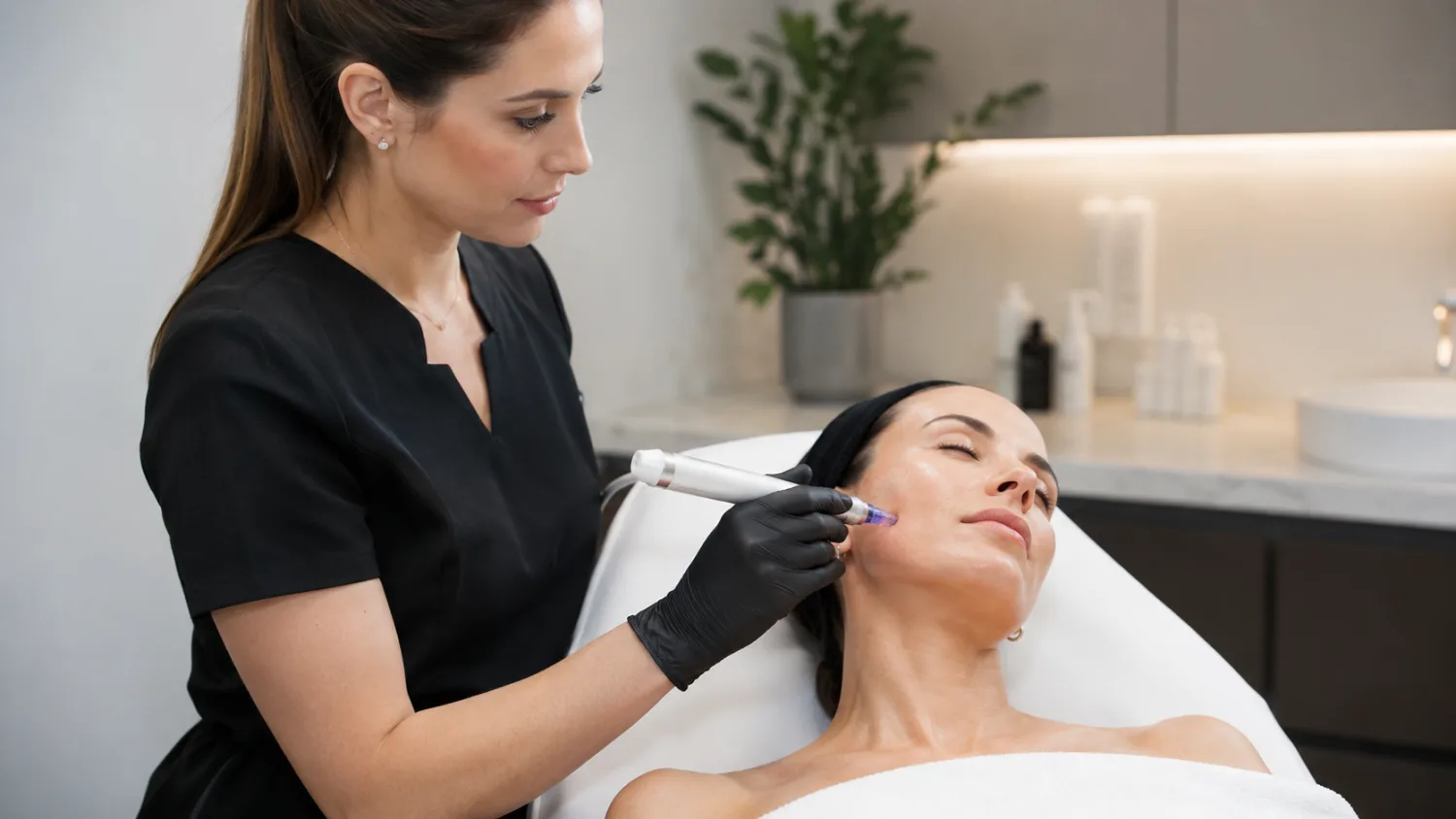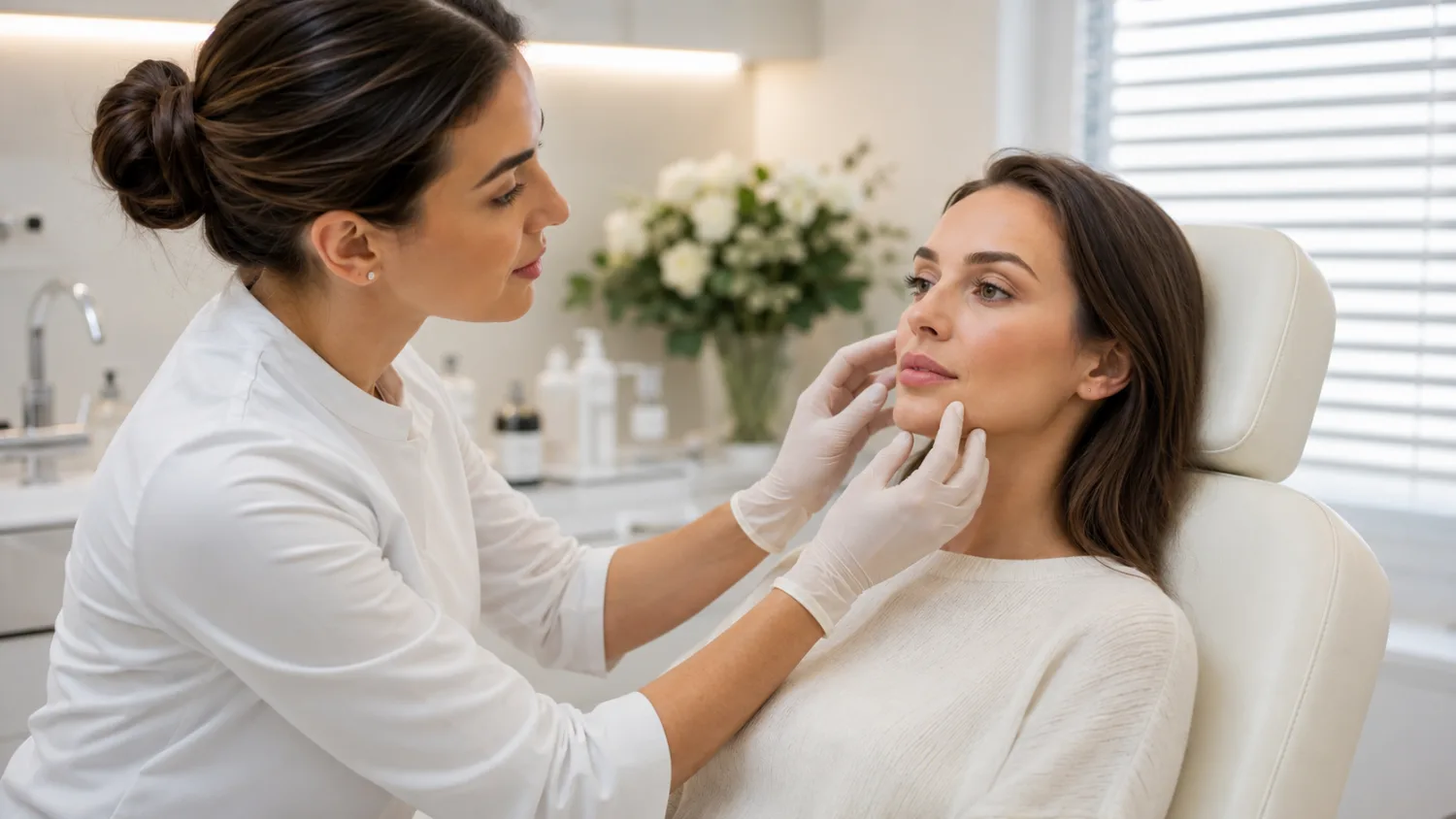
Anti-wrinkle injections are among the most widely recognised non-surgical cosmetic treatments in the UK. They are commonly used to soften forehead lines, frown lines and crow’s feet by temporarily reducing the movement of selected facial muscles.
The treatment is often referred to simply as “Botox”, although Botox is a brand name rather than the name of every product used. The medicine itself is a purified form of botulinum toxin type A, and several licensed brands are available for different medical and cosmetic purposes.
When treatment is carefully planned, the aim is usually not to create a completely motionless face. It is to reduce selected muscle activity while preserving enough movement for natural expression. The result depends on the product, dose, injection points, facial anatomy and the practitioner’s clinical judgement.
Although the appointment may take only a few minutes, anti-wrinkle treatment is not an ordinary beauty service. Botulinum toxin is a prescription-only medicine in the UK. It can produce unwanted eyebrow or eyelid changes, asymmetry, swallowing difficulties and other complications when prescribed or administered inappropriately.
This guide explains how anti-wrinkle injections work, which areas can be treated, what they cost in the UK, how long results last, what can go wrong and how to choose a safer practitioner.
Anti-wrinkle injections and dermal fillers are frequently discussed together, but they work in completely different ways. Read our guide to dermal fillers in the UK for information about injectable volume treatments, filler risks and dissolving.
Important: This article provides general information and cannot determine whether treatment is safe or suitable for you. Seek urgent medical help after an injection if you develop breathing or swallowing difficulty, widespread muscle weakness, severe allergic symptoms, double vision or rapidly worsening symptoms.
What are anti-wrinkle injections?
Anti-wrinkle injections use small amounts of botulinum toxin, most commonly botulinum toxin type A, to temporarily reduce communication between nerves and selected muscles.
Muscles contract when nerves release a chemical messenger called acetylcholine. Botulinum toxin reduces the release of this messenger at the point where the nerve communicates with the muscle. The treated muscle then contracts less strongly for a limited period.
When facial muscles repeatedly crease the skin, lines may gradually become more visible. Reducing the movement can soften these expression-related lines and may stop them becoming as deeply folded while the medicine remains active.
The medicine does not fill wrinkles, remove excess skin or directly stimulate facial volume. This is why it should not be confused with dermal filler.
Botox is a brand name
“Botox” is commonly used as a general term, but it is a registered brand of botulinum toxin. Other botulinum toxin products are also used in UK medical and aesthetic practice.
Products are not automatically interchangeable unit for unit. Their formulations, licensed indications, preparation and dosing may differ. A practitioner should know which product is being prescribed and should record the brand, batch details, dose and treatment sites.
Do not accept a treatment when the practitioner will not identify the product. Descriptions such as “premium toxin”, “Korean Botox” or “strong Botox” are not enough.
Cosmetic and medical uses
Botulinum toxin has been used in medicine for many years. Depending on the product and individual circumstances, it may be used to treat conditions such as:
- certain muscle spasms;
- chronic migraine;
- excessive sweating;
- overactive bladder;
- some eye-muscle disorders;
- jaw-muscle overactivity;
- spasticity; and
- selected neurological conditions.
Medical treatment should be distinguished from cosmetic treatment. The doses, injection sites, clinical goals and practitioner expertise may be different.
Which wrinkles can botulinum toxin treat?
Anti-wrinkle injections work best on dynamic lines: creases caused or made more visible by repeated muscle movement.
Static lines remain visible when the face is relaxed. Reducing muscle activity may soften them over time, but deeper static wrinkles may not disappear completely.
Frown lines
Vertical lines between the eyebrows are often called glabellar lines, “11 lines” or frown lines. They form when muscles pull the eyebrows inwards and downwards.
Treatment can soften a tense or angry-looking expression. The practitioner must consider eyebrow position, eyelid anatomy and existing asymmetry before deciding where and how much to inject.
Forehead lines
Horizontal forehead lines are produced mainly by the frontalis muscle, which raises the eyebrows.
This area requires careful balance. Weakening the forehead too much may make the eyebrows feel heavy or cause them to sit lower. In someone who already relies on the forehead muscle to hold the eyebrows up, excessive treatment can expose or worsen heaviness around the upper eyelids.
A practitioner should therefore assess forehead lines together with the frown muscles and eyebrow position rather than treating the forehead as an isolated grid.
Crow’s feet
Crow’s feet develop around the outer corners of the eyes during smiling and squinting. Small injections may reduce these lines while preserving a natural smile.
Treatment will not correct loose lower-eyelid skin, eye bags, under-eye hollows or every fine line caused by sun damage and skin texture.
Bunny lines
Bunny lines appear along the sides of the upper nose when some people smile or scrunch the nose. They may be treated with very small doses, although poor placement can affect nearby muscles involved in smiling or lifting the lip.
Lip flip
A lip flip uses botulinum toxin around the upper lip to reduce the inward pull of the muscle. This may allow slightly more of the upper lip to show without adding filler volume.
The effect is subtle. It does not produce the same result as lip filler and may temporarily affect drinking through a straw, whistling, pronouncing certain sounds or controlling liquids.
Downturned mouth
Selected injections may reduce the downward pull at the corners of the mouth. The result is generally modest and depends on whether muscle activity is actually responsible for the appearance.
Incorrect placement can affect the smile or cause lower-face asymmetry.
Dimpled chin
A dimpled or “orange-peel” chin may be caused by contraction of the mentalis muscle. Small injections can reduce the texture and excessive upward pull of the chin.
Treatment does not correct every recessed chin or structural imbalance. Some concerns are related to bone shape, dental position or volume rather than muscle activity.
Jaw muscles and facial slimming
Botulinum toxin is sometimes injected into enlarged masseter muscles at the sides of the jaw. It may be used for selected cases of jaw clenching or to reduce the width created by prominent muscle.
It cannot remove bone or facial fat. Weakening the masseter may affect chewing strength, smile balance or facial support, and repeated treatment can sometimes make lower-face laxity more noticeable.
Jaw pain, tooth grinding and temporomandibular joint symptoms should be properly assessed because they may have dental, behavioural, sleep-related or musculoskeletal causes.
Neck bands and lower-face treatments
Botulinum toxin may be used to soften selected vertical neck bands or excessive downward pull in the lower face. These treatments are often more technically demanding than the familiar upper-face areas.
The neck contains muscles involved in swallowing and head movement. Excessive dosing or inaccurate placement can cause clinically significant weakness. Choose a practitioner who regularly performs the specific treatment rather than assuming all toxin injections require the same skill.
What happens during a consultation and treatment?
Because botulinum toxin is a prescription-only medicine, there should be an individual clinical assessment before it is prescribed.
A consultation should not be reduced to choosing “one area”, “two areas” or “three areas” from a price list. The practitioner or prescriber needs to understand your anatomy, medical history, treatment goals and risk factors.
Medical assessment
You may be asked about:
- neurological or muscle disorders;
- previous reactions to botulinum toxin;
- difficulty swallowing or breathing;
- eye problems or previous eye surgery;
- facial weakness or nerve injury;
- pregnancy or breastfeeding;
- active skin infection;
- medicines that affect muscles, nerves or blood clotting;
- antibiotics and other recent medicines;
- previous cosmetic treatment;
- earlier toxin results or complications; and
- your reasons and expectations for treatment.
Tell the practitioner about all prescription, non-prescription and herbal products. Do not stop prescribed treatment without advice from the clinician responsible for it.
Facial examination
The practitioner should assess your face at rest and during expressions such as frowning, smiling and raising the eyebrows.
They should look at:
- natural asymmetry;
- eyebrow height and shape;
- upper-eyelid heaviness;
- muscle strength;
- the depth and location of lines;
- previous treatment effects;
- facial proportions; and
- whether your concern can realistically be improved with toxin.
Most faces are naturally asymmetrical. Treatment may reduce a visible difference but cannot promise perfect equality between both sides.
Consent
You should be told:
- which product is proposed;
- whether the intended use is licensed or off-label;
- where injections will be placed;
- the expected result;
- common side effects;
- important and serious risks;
- reasonable alternatives;
- how long the effect may last;
- what aftercare and review are provided; and
- the full cost.
Consent means understanding the information and choosing freely. Signing a form moments before treatment does not replace a proper discussion.
The injections
The skin is usually cleaned and may be marked. A fine needle is used to inject small quantities into selected muscles.
Most upper-face appointments take around 10 to 30 minutes. Discomfort is generally brief, and anaesthetic cream is not always necessary.
Small raised bumps may be visible at the injection points immediately afterwards. These usually settle quickly.
Who can prescribe and administer anti-wrinkle injections in the UK?
Botulinum toxin is a prescription-only medicine. It must be prescribed by an appropriately qualified prescriber after determining that it is suitable for the individual patient.
Professionals who may hold prescribing rights within their competence include certain doctors, dentists, nurse prescribers and pharmacist prescribers. Registration in a healthcare profession does not automatically mean that the person has prescribing rights or advanced experience in aesthetic medicine.
The person who prescribes the medicine may not always be the person who administers it. Where administration is delegated, responsibilities should be clear and the injector should be appropriately trained and competent.
Face-to-face prescribing
Professional regulators have strengthened their positions on remote prescribing for non-surgical cosmetic medicines.
For example, the Nursing and Midwifery Council states that from 1 June 2025, nurse and midwife prescribers must consult people face to face before issuing prescriptions for non-surgical cosmetic medicines, including certain anti-wrinkle treatments.
A prescription should not be treated as an administrative signature obtained through a messaging service. The prescriber needs enough information to assess the patient properly and take responsibility for the decision.
Ask who the prescriber is
Before treatment, ask:
- Who is prescribing the medicine?
- What professional registration do they hold?
- Have they assessed me personally?
- Will they be available if a clinical problem develops?
- Who is administering the injections?
- What training has the injector completed?
- Who has overall responsibility for follow-up?
Verify claims of professional registration directly through the relevant official register rather than trusting a clinic biography or certificate.
Choosing a practitioner
The NHS advises choosing someone with appropriate training, skills and insurance.
Our detailed guide to choosing a safe aesthetic clinic or practitioner explains how to verify professional registrations, assess insurance, examine clinic regulation and recognise sales red flags.
How much do anti-wrinkle injections cost in the UK?
Prices vary according to the clinic, practitioner, product, dose, treatment complexity and location.
Many UK clinics advertise prices by the number of upper-face “areas”. Broad private-market prices often fall approximately within these ranges:
- One area: around £150 to £250;
- Two areas: around £200 to £320;
- Three areas: around £250 to £400;
- Specialist lower-face or neck treatment: often £250 to £500 or more;
- Masseter or excessive-sweating treatment: commonly £300 to £600 or more.
These figures are general estimates rather than fixed tariffs. London and specialist medical clinics may charge more.
What does an “area” mean?
An area usually refers to a region such as the frown lines, forehead or crow’s feet. It is a pricing convention rather than a medical unit.
Two people purchasing the same number of areas may require different injection patterns and doses. A safe plan should be based on anatomy and treatment goals rather than automatically using a standard amount.
What should the price include?
Ask whether the fee covers:
- the prescribing consultation;
- the medicine;
- administration;
- a review appointment;
- reasonable adjustment where clinically appropriate;
- urgent advice if there is a complication; and
- any follow-up assessment.
Do not assume a “top-up” is always needed or automatically included. Adding more medicine before the initial effect has fully developed can produce overtreatment.
Why unusually cheap treatment deserves caution
A lower price does not prove poor care, but very cheap treatment may reflect:
- brief or inadequate assessment;
- remote or unclear prescribing;
- high-volume treatment sessions;
- limited aftercare;
- an unknown or unlicensed product;
- insufficient practitioner training; or
- medicine stored or prepared incorrectly.
The UK government reported in August 2025 that health authorities were investigating adverse reactions associated with cosmetic botulinum toxin procedures and reminded the public to ensure products are licensed for use and administered by sufficiently trained practitioners.
Is cosmetic treatment available on the NHS?
Botulinum toxin used solely to soften wrinkles is not routinely funded by the NHS.
The NHS may provide botulinum toxin for certain medical conditions when clinical eligibility criteria are met. This is separate from cosmetic treatment and may involve referral to neurology, dermatology, ophthalmology, urology or another specialist service.
When will results appear and how long do they last?
Anti-wrinkle injections do not work immediately. Some people notice an early change after two or three days, but the effect usually develops gradually.
A more complete result is often visible after approximately 10 to 14 days. Certain muscles or treatment areas may continue changing for slightly longer.
It is therefore sensible to wait for the planned review period before deciding that treatment has failed or requesting additional injections.
How long does the effect last?
Cosmetic results commonly last around three to four months, although the duration varies.
The effect may wear off sooner or last longer depending on:
- the product;
- the dose;
- the strength and size of the muscle;
- the treatment area;
- individual response;
- previous treatment history; and
- the degree of movement the practitioner intended to preserve.
Movement usually returns gradually rather than suddenly. Lines may become more noticeable again as muscle activity recovers.
Does treatment last longer after repeated appointments?
Some people find that repeated treatment leads to a longer-lasting or more consistent effect, partly because the muscles may become less powerful. Others continue to need treatment at similar intervals.
Appointments should not be scheduled so frequently that the practitioner cannot assess the true return of movement. Unnecessary dosing can increase cost and may contribute to muscle weakness, an unnatural appearance or reduced response.
Can you become resistant to botulinum toxin?
A small number of patients may develop reduced responsiveness. Possible reasons include insufficient dosing, inaccurate placement, an unsuitable product, unrealistic expectations or the development of neutralising antibodies.
True immune resistance is considered uncommon in cosmetic practice, particularly where appropriate doses and intervals are used.
Will wrinkles become worse when treatment wears off?
Anti-wrinkle injections do not normally cause expression lines to rebound and become inherently worse than they would otherwise have been.
As movement returns, the lines gradually reappear. They may seem more noticeable because the patient has become accustomed to seeing smoother skin.
What results should you realistically expect?
The best result is not always the most frozen result. Many patients want their face to look more rested while retaining natural movement.
A good consultation should establish whether you prefer:
- a subtle softening of movement;
- a stronger reduction in selected lines;
- preservation of eyebrow lift;
- correction of a previous imbalance; or
- a medical outcome such as reduced sweating.
The practitioner should explain what can and cannot be achieved safely with your anatomy.
Dynamic lines versus deep static lines
Lines that appear mainly during expression generally respond better than deep creases visible at rest.
Long-established static lines may soften but remain visible because the skin itself has changed. Skincare, sun protection, resurfacing treatments or other procedures may be considered, but adding treatments does not guarantee complete removal.
Natural asymmetry may remain
Eyebrows, eyelids and smiles are rarely identical on both sides. Muscle strength can also differ.
Treatment can sometimes reduce asymmetry, but it may also reveal differences that were previously concealed by stronger movement. Perfect symmetry is not a realistic promise.
Eyebrow lifting is limited
Strategic treatment may create a small chemical brow lift by reducing muscles that pull the eyebrow down while preserving muscles that lift it.
The result is usually measured in millimetres, not the dramatic change of surgical brow lifting. Treating the wrong muscles or using too much medicine may lower the eyebrow instead.
Preventative treatment
Anti-wrinkle injections are sometimes marketed to young adults as “preventative Botox”. Reducing repeated movement may limit the folding that contributes to expression lines, but this does not mean everyone needs treatment before wrinkles appear.
Starting young creates ongoing cost and long-term exposure to elective treatment. Decisions should be based on an individual concern rather than fear-based claims that treatment must begin before a particular age.
Common side effects of anti-wrinkle injections
Most side effects are temporary and occur around the injection sites.
They can include:
- small bumps immediately after injection;
- redness;
- tenderness;
- bruising;
- minor bleeding;
- headache;
- a tight or heavy sensation;
- temporary discomfort; and
- short-term asymmetry while the effect develops.
Small injection bumps commonly disappear within minutes or hours. Bruising can last several days and may occasionally take longer to fade.
Headache
Some people experience a temporary headache after treatment, particularly after injections around the forehead. It generally settles without intervention.
A severe or unusual headache accompanied by visual, neurological or systemic symptoms requires medical assessment rather than being assumed to be an ordinary side effect.
Heavy forehead or eyebrows
A heavy sensation may occur when forehead movement is reduced, especially in someone who normally uses the frontalis muscle to lift the eyebrows.
Inappropriate dosing can lower the eyebrows or make upper-eyelid heaviness more apparent. This is why the practitioner must assess eyelid and eyebrow position before treating forehead lines.
Uneven result
One side may respond more strongly or quickly than the other. The result should usually be assessed after the medicine has had enough time to work.
A small adjustment may be appropriate, but automatically adding more toxin can worsen imbalance or remove too much movement.
Altered facial expression
Treatment may make the smile, eyebrow movement or lower face feel unfamiliar. This is more likely when injections affect nearby muscles or when several areas are treated aggressively.
Botulinum toxin cannot be dissolved. When the effect is unwanted, the main management is often time, observation and selected supportive treatment until muscle activity returns.
Complications and warning signs
Serious complications are uncommon, but patients need to understand them before consenting.
Eyelid droop
Upper-eyelid drooping, medically called ptosis, can occur if the medicine affects the muscle that helps raise the eyelid.
It may become noticeable several days after treatment and can last for weeks. Prescription eye drops may provide temporary improvement in selected cases, but they do not remove the toxin.
The patient should be assessed because apparent drooping may also come from lowered eyebrows rather than the eyelid muscle itself.
Eyebrow droop or excessive arching
Excessive forehead treatment can lower the eyebrows. An overly arched outer brow—sometimes called a “Spock brow”—may occur when the central forehead is weakened more than the outer muscle.
Careful adjustment may help in some cases. Adding toxin without understanding the cause can make the result worse.
Smile asymmetry
Injections around the mouth, nose or lower face may affect muscles responsible for smiling, speaking and lip control.
This may cause an uneven smile, difficulty drinking, dribbling, altered speech or inability to perform movements such as whistling. The effect generally improves as the medicine wears off but can be distressing.
Dry eye or excessive tearing
Injections around the eyes may alter blinking or tear drainage. This can produce dryness, irritation, blurred vision or excessive watering.
Persistent eye symptoms should be assessed, particularly if the eyelid no longer closes fully.
Difficulty swallowing or speaking
Treatment around the neck, jaw or lower face can sometimes weaken muscles involved in swallowing or speech. More widespread toxin effects are rare but potentially serious.
Seek urgent medical advice for new swallowing difficulty, choking, slurred speech, significant voice change or trouble managing saliva.
Breathing difficulty and generalised weakness
Very rarely, the effect of botulinum toxin may spread beyond the intended area. Symptoms can include widespread weakness, double vision, drooping eyelids, difficulty speaking, swallowing problems or breathing difficulty.
Breathing or severe swallowing difficulty is an emergency. Call 999.
Allergic reaction
Serious allergic reactions are uncommon. Emergency symptoms include swelling of the lips, tongue or throat, difficulty breathing, widespread hives, faintness or collapse.
Call 999 when anaphylaxis is suspected.
Infection
Infection after anti-wrinkle injection is uncommon but possible whenever the skin is pierced.
Increasing redness, heat, tenderness, swelling, discharge or fever should be assessed. Do not continue massaging or applying unapproved products to the area.
Botulism-like illness and unlicensed products
Botulism is a rare but serious illness caused by the effects of botulinum toxin on nerves. Properly licensed products used at appropriate doses have an established clinical role, but counterfeit, unlicensed, improperly stored or incorrectly dosed products can create severe risk.
The NHS advises choosing someone trained and qualified to perform cosmetic procedures. Symptoms such as progressive weakness, double vision, drooping eyelids, swallowing difficulty or breathing problems require urgent medical attention.
Who should avoid or postpone treatment?
Anti-wrinkle injections are not appropriate for everyone. Treatment may need to be delayed or avoided in the presence of:
- pregnancy or breastfeeding;
- infection at the proposed injection site;
- a known allergy to the product or its ingredients;
- certain neurological or neuromuscular conditions;
- significant swallowing or breathing problems;
- unexplained facial weakness;
- recent complications from botulinum toxin;
- medicines that may interact with the treatment;
- unrealistic expectations; or
- inability to give informed consent.
Suitability depends on the exact medicine, indication, medical history and professional assessment.
Pregnancy and breastfeeding
Cosmetic botulinum toxin is generally postponed during pregnancy and breastfeeding. The treatment is elective, and there is insufficient evidence to establish that cosmetic use is risk-free in these circumstances.
Neuromuscular conditions
Conditions that affect communication between nerves and muscles may increase sensitivity to botulinum toxin. Examples include myasthenia gravis and Lambert-Eaton syndrome.
Patients with neurological disease should discuss treatment with an appropriate medical professional rather than relying on a routine cosmetic consultation.
Medicines
Some antibiotics, muscle relaxants and other medicines may influence neuromuscular function. Blood-thinning medicines may increase bruising.
Provide a complete medication history. Do not stop prescribed medicine without medical advice.
Body-image concerns
Aesthetic treatment should not be used to respond impulsively to criticism, social-media pressure, a breakup or a major emotional event.
People experiencing body dysmorphic disorder may remain distressed despite technically successful treatment. A responsible practitioner should explore expectations and may recommend psychological or medical support rather than proceeding.
Under-18s
In England, it has generally been a criminal offence since 1 October 2021 to administer or arrange cosmetic botulinum toxin treatment for someone under 18, even with permission from an adult. Limited exceptions apply where treatment is approved for a medical purpose by an appropriate doctor.
The government guidance explains the English age restriction. Legal arrangements elsewhere in the UK may differ.
Aftercare and what to do if the result is wrong
Follow the written instructions supplied by your practitioner. Aftercare recommendations can vary, but patients are often advised to:
- avoid rubbing or pressing the injection sites immediately;
- avoid strenuous exercise for a short period;
- avoid excessive heat, saunas or steam rooms temporarily;
- delay facial massage and other treatments over the area;
- keep the skin clean;
- avoid applying irritating products to puncture sites; and
- contact the clinic if unexpected symptoms develop.
Advice about lying down, bending, alcohol and exercise differs between practitioners because evidence for some traditional restrictions is limited. Follow the instructions given for your particular treatment rather than mixing advice from multiple social-media sources.
Do not massage the area unless advised
Routine forceful massage is not usually required after cosmetic botulinum toxin. Pressing the treatment area may increase bruising and could theoretically contribute to unwanted spread before the medicine binds.
Wait before judging the result
Do not assess the final result after one or two days. The medicine takes time to act, and different muscles may respond at different rates.
A review around two weeks after treatment is common. The practitioner can then determine whether the result is balanced and whether any adjustment would be safe.
Can anti-wrinkle injections be reversed?
No enzyme can dissolve botulinum toxin in the way hyaluronidase can dissolve hyaluronic acid filler.
Some complications can be managed symptomatically. Eye drops may help selected cases of eyelid droop, for example. However, an unwanted cosmetic effect usually improves gradually as nerve-muscle communication recovers.
When to contact the clinic
Contact the practitioner if you experience:
- an uneven or unexpected result after the settling period;
- eyelid or eyebrow drooping;
- an altered smile;
- persistent headache;
- significant eye dryness or watering;
- increasing redness or swelling;
- difficulty controlling the lips; or
- another symptom not explained in your aftercare information.
When to seek urgent help
Seek urgent medical assessment for:
- difficulty swallowing;
- difficulty speaking clearly;
- double vision;
- widespread or progressive weakness;
- inability to close an eye;
- severe allergic symptoms;
- breathing difficulty; or
- rapidly worsening neurological symptoms.
Call 999 for breathing difficulty, collapse or another life-threatening emergency. Do not wait for the clinic to answer a direct message.
How to choose a safer anti-wrinkle clinic
Choose the practitioner and prescriber before choosing a package or treatment brand.
Ask:
- What is your full name and professional registration?
- Are you the prescriber, injector or both?
- Will I receive a face-to-face clinical assessment?
- What botulinum toxin product will be used?
- Is it licensed in the UK?
- Is this proposed use licensed or off-label?
- How often do you treat this exact area?
- What complications have you personally managed?
- What happens if I develop eyelid droop or swallowing problems?
- Is a review included?
- Who provides urgent advice outside normal hours?
- Does your insurance cover this treatment and location?
Verify professional claims
Depending on the person’s claimed profession, check the relevant official register:
- General Medical Council for doctors;
- General Dental Council for dentists;
- Nursing and Midwifery Council for nurses and midwives; and
- General Pharmaceutical Council for pharmacists in Great Britain.
Registration confirms professional status but does not prove specialist aesthetic competence. You still need to check training, experience and insurance.
Red flags
Pause or walk away when:
- the prescriber is unclear or cannot be identified;
- the prescription appears to be issued through a brief message;
- the practitioner refuses to name the product;
- the medicine is already drawn into an unlabelled syringe;
- you are treated at a party or after drinking alcohol;
- there is no medical history or facial assessment;
- treatment is sold through a countdown discount;
- the practitioner promises a completely risk-free result;
- you are encouraged to treat additional “problem areas” you did not mention;
- no review or emergency support is available; or
- the clinic cannot explain what happens if the result is poor.
Current regulation
The regulation of non-surgical cosmetic procedures is evolving. In August 2025, the UK government confirmed plans for tighter controls in England, including restrictions around higher-risk procedures and a licensing system for other treatments.
Until new arrangements are fully implemented, patients should not assume that every person offering anti-wrinkle injections or every premises has been assessed through one consistent national licensing system.
Prescription rules, professional registration, medicines law and age restrictions already apply. However, legal access to a product does not guarantee that the injector has advanced anatomical training or appropriate emergency arrangements.
Frequently asked questions
Is Botox the same as anti-wrinkle injections?
Botox is one brand of botulinum toxin. Anti-wrinkle injections may use Botox or another licensed botulinum toxin product. Ask which product is being prescribed rather than assuming every injection is Botox.
Are anti-wrinkle injections safe?
Many treatments are completed without serious problems, but no injection is completely risk-free. Safety depends on the medicine, dose, patient, practitioner, injection sites and quality of follow-up.
How quickly do anti-wrinkle injections work?
Some change may appear within two or three days. The fuller effect is commonly assessed after approximately 10 to 14 days.
How long do anti-wrinkle injections last?
Results commonly last around three to four months, but duration varies by treatment area, dose, product and individual response.
Will I look frozen?
Not necessarily. A conservative plan can soften movement while preserving expression. A frozen appearance is more likely when high doses are used, too many muscles are treated or the treatment does not suit the patient’s anatomy.
Can anti-wrinkle injections remove deep forehead lines?
They may soften deep lines by reducing the movement that repeatedly folds the skin. Long-established static lines may remain visible and may require time or other treatment if further improvement is wanted.
What is the difference between anti-wrinkle injections and filler?
Anti-wrinkle injections reduce selected muscle activity. Dermal fillers add volume or structural support. They have different products, uses and complications and should not be treated as interchangeable.
Can botulinum toxin be dissolved?
No. Unlike hyaluronic acid filler, botulinum toxin cannot be dissolved with an enzyme. Unwanted effects normally improve gradually as the medicine wears off.
What happens if one eyebrow is higher?
Minor imbalance may improve as the result develops. A carefully placed adjustment may help after the effect has settled, but adding more toxin too early can worsen the asymmetry.
Can anti-wrinkle injections lift the eyebrows?
They can sometimes produce a small lift by weakening muscles that pull the eyebrows down. The effect is subtle and cannot reproduce a surgical brow lift.
Do the injections hurt?
Most patients feel brief pinching or stinging. The needles are fine, and treatment is usually completed quickly.
Can I exercise after treatment?
Many clinics recommend avoiding strenuous exercise for the remainder of the day or for a short period. Follow your practitioner’s written advice, as recommendations vary.
Can I wear makeup afterwards?
You may be advised to wait until the puncture sites have closed and immediate irritation has settled. Apply products with clean hands and avoid rubbing the area.
Can I drink alcohol after injections?
Alcohol may increase flushing or bruising in some people. Many practitioners recommend limiting it around the appointment, although it does not directly switch off the medicine.
Can I have anti-wrinkle injections while pregnant?
Cosmetic treatment is normally postponed during pregnancy because it is elective and adequate safety evidence is lacking.
Can I have Botox while breastfeeding?
Cosmetic botulinum toxin is generally postponed while breastfeeding because evidence is limited. Discuss any medically necessary treatment with the relevant specialist.
Can I have treatment if I take blood thinners?
Blood-thinning medicine may increase bruising. Do not stop it without advice from the clinician who prescribed it. The aesthetic practitioner should assess whether treatment remains appropriate.
Can anti-wrinkle injections treat migraines?
Botulinum toxin is used for selected patients with chronic migraine, but medical migraine treatment follows a specific clinical protocol and is different from cosmetic forehead injections. Speak to a GP or migraine specialist about eligibility.
Can it treat excessive sweating?
Botulinum toxin may reduce sweating in areas such as the armpits by interrupting signals to sweat glands. The doses, injection pattern, costs and medical assessment differ from cosmetic wrinkle treatment.
Why has my treatment stopped working?
Possible explanations include insufficient dose, strong muscles, inaccurate placement, unrealistic expectations, a different product, storage or preparation problems, or rarely reduced biological responsiveness. Have the result assessed rather than immediately receiving more injections elsewhere.
How often can I have anti-wrinkle injections?
Many people wait around three or four months or until meaningful movement has returned. Treatment should be individually planned. Very frequent dosing may be unnecessary and could increase the risk of unwanted weakness or reduced responsiveness.
What is the biggest warning sign when choosing a clinic?
The clearest warning pattern is an unidentified prescriber, inadequate consultation, unnamed product and pressure to have treatment immediately. A safe clinic should make the prescription, practitioner, medicine, risks and follow-up arrangements transparent.