Microneedling is one of the most widely offered skin treatments in UK aesthetic clinics. It is promoted for acne scars, fine lines, uneven texture, enlarged pores, pigmentation, stretch marks and general skin rejuvenation.
The basic idea is simple: very fine needles create controlled injuries in the skin, prompting a healing response and gradual remodelling. The reality is more complicated. Results depend on the condition being treated, needle depth, device, technique, number of sessions and the person’s ability to heal without infection, pigmentation or new scarring.
Microneedling is not one standardised procedure. A gentle cosmetic treatment performed close to the surface is very different from deeper medical microneedling used for acne scars. Radiofrequency microneedling adds heat beneath the skin and has a different risk profile again.
The term is also used for home dermarollers, salon treatments, automated pens and medical devices, even though these approaches cannot be assumed to produce equivalent results.
For selected patients, professionally performed microneedling can improve skin texture and make certain scars less visible. It cannot completely remove scars, permanently tighten loose skin or deliver the dramatic lifting sometimes suggested in advertising.
This guide explains how microneedling works, what it can realistically treat, how standard and radiofrequency microneedling differ, what treatment costs in the UK, how long recovery takes and how to choose a safer practitioner.
If acne scarring is your main concern, read our detailed guide to acne-scar types and treatment options. Different scar patterns may require subcision, TCA CROSS, laser treatment or surgery rather than microneedling alone.
Important: This article provides general information and cannot determine whether microneedling is suitable for you. Seek professional advice before treatment if you have active acne, a skin infection, eczema, psoriasis, a bleeding disorder, immune suppression, a history of keloid scarring or unexplained pigmentation.
What is microneedling?
Microneedling is a procedure in which multiple fine needles repeatedly enter the skin to create controlled microscopic injuries.
The treatment is sometimes called collagen induction therapy because the healing response may stimulate the production and remodelling of collagen and other supporting tissue.
The needles do not inject filler or remove layers of skin. They create narrow channels at a depth selected by the practitioner. The skin then moves through the normal stages of wound healing, including inflammation, tissue repair and longer-term remodelling.
This process may gradually improve the appearance of selected scars and uneven texture. It does not replace missing tissue instantly, and the result develops over weeks or months rather than immediately.
Chelsea and Westminster Hospital NHS Foundation Trust describes microneedling as a treatment that may improve scar texture and looseness, while emphasising that it will not make a scar disappear completely.
Microneedling pens
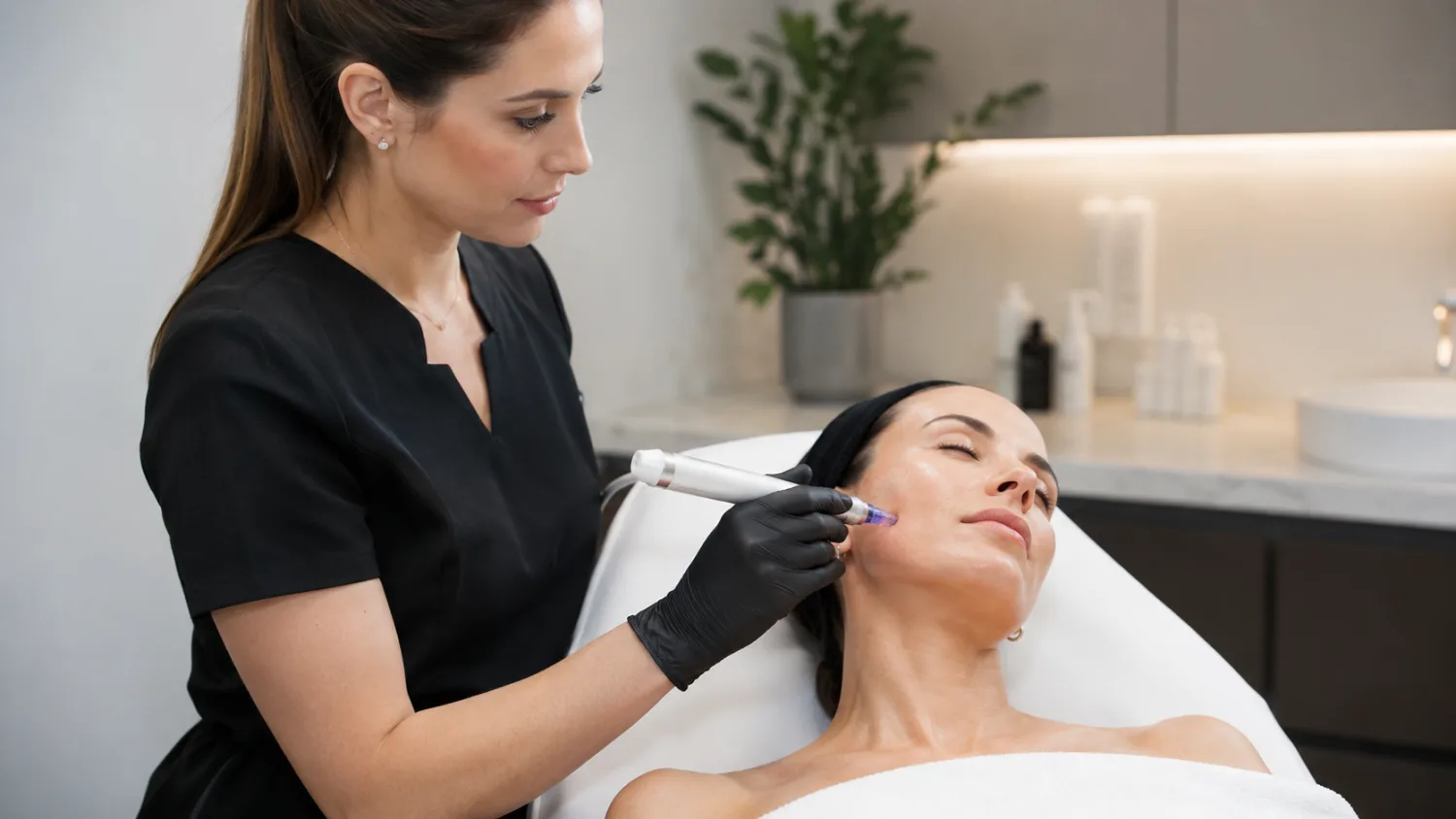
Automated pens contain a cartridge with several needles that move rapidly in and out of the skin. The practitioner can usually adjust the depth and speed for different areas.
A pen may provide more consistent vertical entry than a manual roller, although safety and results still depend on the device, cartridge, settings and operator.
Dermarollers
A dermaroller is a cylindrical device covered in needles. As it rolls across the skin, the needles enter at an angle and create multiple channels.
Professional rollers may be used for selected indications, but automated pens are now common because they allow greater control over depth and treatment areas.
Cosmetic versus medical microneedling
Very shallow needling is often marketed as cosmetic microneedling. It may temporarily improve product absorption or create a short-lived glow, but it is unlikely to remodel established acne scars.
Deeper treatment is more likely to reach tissue involved in scarring, but it also creates more bleeding, inflammation, downtime and risk. The most aggressive treatment is not automatically the most effective or safest.
What can microneedling treat?
Microneedling is offered for many skin concerns, but the quality of evidence and likely degree of benefit vary.
Acne scars
Acne scarring is one of the most established reasons for considering microneedling. It may improve shallow boxcar scars, rolling texture and general surface unevenness.
It is less likely to correct deep ice-pick scars or scars strongly tethered to deeper tissue. These may require focused chemical treatment, punch techniques or subcision.
The British Association of Dermatologists includes microneedling among procedures that may be used to improve acne scars, while noting that such treatments are not routinely available through the NHS.
Surgical, traumatic and burn scars
Microneedling may be used within specialist scar-management services to improve texture, tightness or colour variation in selected mature scars.
A scar should be adequately healed before elective needling. Raised, unstable, infected or actively inflamed scars require assessment because needling may not be appropriate.
Fine lines and skin texture
Collagen remodelling may produce modest improvement in fine lines and general texture. Results are normally subtler than surgical lifting or aggressive laser resurfacing.
Microneedling cannot remove excess skin, restore substantial facial volume or stop ageing. Advertising that promises dramatic lifting from a short course should be treated cautiously.
Enlarged pores
Pores cannot be permanently opened and closed like doors. Their appearance is influenced by oil production, hair follicles, skin elasticity, congestion and surrounding texture.
Microneedling may make pores look less prominent by improving the surrounding skin, but it cannot remove them.
Stretch marks
Stretch marks are a form of dermal scarring that develops when skin changes quickly. Microneedling may improve their texture or colour contrast in selected patients, but complete removal is unlikely.
Older pale stretch marks and newer red or purple marks may respond differently. Several sessions are commonly required.
Hyperpigmentation and melasma
Microneedling is sometimes incorporated into treatment plans for melasma or post-inflammatory hyperpigmentation. The controlled channels may support delivery of selected topical treatments and influence remodelling.
However, inflammation can also worsen pigmentation. The British Association of Dermatologists lists microneedling among possible melasma procedures but stresses the central importance of sun protection.
Melasma frequently returns, particularly after sun exposure or hormonal triggers. Aggressive treatment may make it darker rather than lighter.
Hair loss
Scalp microneedling is promoted for pattern hair loss, sometimes in combination with medicines or platelet-rich plasma.
Evidence suggests possible benefit in selected circumstances, but protocols vary and it should not be assumed that rolling needles over the scalp will treat every cause of hair loss.
Patchy hair loss, inflamed scalp disease, fungal infection and scarring alopecia require diagnosis. Needling an undiagnosed scalp condition may delay treatment or increase damage.
Standard microneedling versus radiofrequency microneedling
Standard microneedling and radiofrequency microneedling both use needles, but they are not the same treatment.
Standard microneedling
Standard microneedling relies mainly on the physical action of the needles and the healing response created by the channels.
Needle depth can be adjusted according to the body area and concern. More sensitive or thin areas generally require shallower treatment than thicker scar tissue.
Recovery commonly involves redness, sensitivity and mild swelling. Pinpoint bleeding may occur with deeper treatment.
Radiofrequency microneedling
Radiofrequency microneedling inserts needles into the skin and then delivers electrical energy that generates controlled heat within the tissue.
The aim is to combine mechanical needling with thermal remodelling. Devices differ in needle configuration, energy delivery, insulation, depth and pulse settings.
It is commonly marketed for:
- acne scars;
- fine lines;
- uneven texture;
- mild skin laxity;
- enlarged pores; and
- selected stretch marks.
Is radiofrequency microneedling more effective?
Radiofrequency treatment may produce greater remodelling for some concerns, but it is not automatically better for every patient.
The addition of heat introduces additional risks, including burns, prolonged inflammation, pigmentation changes, visible grid marks and unintended loss of fat beneath the skin.
The appropriate device and energy level depend on skin thickness, treatment area, scar type and skin tone. A setting suitable for deep cheek scarring may be inappropriate around the eyes or on a thin face.
Which treatment has more downtime?
Downtime varies with intensity. Mild standard microneedling may settle within a few days, while deep needling or radiofrequency treatment may produce more swelling, crusting and prolonged redness.
Clinics should describe the recovery expected from the exact settings they plan to use rather than advertising the procedure generally as having “no downtime”.
What happens during a microneedling appointment?
A proper appointment begins with assessment rather than immediate treatment.
Consultation
The practitioner should examine your skin and determine:
- what concern is being treated;
- whether the diagnosis is clear;
- whether microneedling is appropriate;
- how deep treatment needs to be;
- whether active acne or another condition should be treated first;
- your risk of pigmentation or raised scarring;
- whether another procedure may work better; and
- what improvement is realistic.
A clinic should not recommend an identical standard package for everyone with acne scars, pigmentation or ageing skin.
Medical history
You may be asked about:
- medicines and supplements;
- blood-thinning treatment;
- isotretinoin use;
- cold sores;
- skin infections;
- eczema, psoriasis or rosacea;
- diabetes;
- immune suppression;
- bleeding or clotting conditions;
- pregnancy or breastfeeding;
- allergies;
- previous laser, peel or injectable treatments;
- keloid or hypertrophic scars; and
- pigmentation after previous inflammation.
Do not stop prescribed medicine simply to qualify for treatment unless the clinician responsible for it advises you to do so.
Preparation and anaesthetic
The skin should be cleaned thoroughly. For deeper treatment, topical anaesthetic cream is commonly applied before needling.
The practitioner should remove the anaesthetic and clean the skin again before treatment. Using needling to drive excessive anaesthetic or unsuitable products deeply into the skin may create additional risks.
The procedure
The practitioner passes the device over the treatment area using settings selected for the skin and concern.
You may feel vibration, scratching, pressure or stinging. Bony areas such as the forehead can feel more uncomfortable than fleshy areas such as the cheeks.
The procedure itself may take around 20 to 60 minutes, depending on the size and complexity of the area.
Products applied during treatment
Microneedling creates channels that can allow substances to penetrate more deeply than they normally would. This is why the products used during and immediately after treatment matter.
Only products suitable for use with needling should be applied. Ordinary cosmetic serums may contain fragrance, preservatives or ingredients not intended to enter deeper tissue.
Be cautious when clinics promote unregulated mixtures, exosomes, vitamins or “growth factors” without explaining exactly what is being applied, its source and its regulatory status.
How many sessions are needed and when will results appear?
Microneedling is usually performed as a course rather than a single treatment.
For general texture or mild concerns, a clinic may recommend three to six sessions. Deeper acne scarring or stretch marks may require more treatment or a combination plan.
Sessions are often spaced approximately four to eight weeks apart to allow inflammation to settle and remodelling to begin. The correct interval depends on the treatment depth, area and healing response.
Early appearance
Immediately after treatment, swelling may temporarily make scars and fine lines look smoother. This is not the final result.
As swelling resolves, some of the early improvement may disappear. Longer-term change develops gradually as the skin remodels.
When collagen changes become visible
Some improvement may be noticed after several weeks, but scar remodelling can continue for three to six months or longer after a treatment course.
It is therefore misleading to judge the procedure entirely through photographs taken immediately after needling.
How much improvement is realistic?
Results depend on:
- the diagnosis;
- scar type and depth;
- device and treatment settings;
- the number of sessions;
- practitioner technique;
- skin tone and healing response;
- control of active acne;
- sun exposure; and
- adherence to aftercare.
Microneedling may make scars shallower or texture more even, but it will not create completely unmarked skin.
NHS patient information similarly warns that the procedure may not achieve the desired change in texture, tightness or colour and will not make a scar disappear.
When combination treatment is needed
Many people with acne scarring have several scar types. A treatment plan may include:
- subcision for tethered rolling scars;
- TCA CROSS for ice-pick scars;
- punch treatment for selected deep boxcar scars;
- microneedling for broader shallow texture;
- laser treatment for additional resurfacing;
- vascular treatment for red marks; and
- pigment-directed treatment for brown marks.
Combination treatment should be staged thoughtfully rather than sold as an aggressive same-day package.
How much does microneedling cost in the UK?
Microneedling prices vary according to location, device, practitioner, treatment area and intensity.
Broad private-market estimates include:
- Basic facial microneedling: approximately £100 to £250 per session;
- Medical microneedling for acne scars: around £150 to £350 per session;
- Radiofrequency microneedling: approximately £300 to £700 per session;
- Full-face and neck radiofrequency treatment: around £500 to £1,000 or more;
- Body or stretch-mark treatment: commonly £250 to £800, depending on area; and
- Combination treatment: potentially £500 to more than £1,500 per session.
These are estimates rather than fixed tariffs. London clinics and treatment by specialist doctors may cost more.
What should be included?
Ask whether the price includes:
- consultation;
- topical anaesthetic;
- single-use needle cartridge;
- the procedure;
- aftercare products;
- follow-up;
- photographs;
- treatment of complications; and
- VAT where applicable.
Packages
A course may cost less per session, but avoid paying for a long package before seeing how your skin responds.
Ask what happens if:
- you experience pigmentation;
- the treatment causes prolonged inflammation;
- you become medically unsuitable;
- the clinic changes device or practitioner;
- you need a different procedure; or
- you decide not to complete the course.
Is microneedling available on the NHS?
Cosmetic microneedling is not routinely available on the NHS. The British Association of Dermatologists notes that procedures used for acne scarring, including microneedling, are generally not routinely funded.
Some NHS specialist scar services use microneedling for selected burn, surgical or traumatic scars where there is a clinical indication. Availability depends on local services and referral criteria.
Side effects, complications and warning signs
Expected temporary effects include:
- redness;
- mild to moderate swelling;
- tightness;
- heat or tenderness;
- dryness;
- flaking;
- pinpoint bleeding; and
- temporary darkening of pigmentation.
The skin may look and feel sunburned for one to three days after mild treatment. Redness after deeper or radiofrequency microneedling can last longer.
Infection
Microneedling breaches the skin barrier. Infection can occur through contaminated equipment, poor hygiene, unsuitable products or improper aftercare.
Warning signs include increasing pain, warmth, swelling, pus, spreading redness, unpleasant discharge or fever.
The needle cartridge should be sterile and single-use. A practitioner should not reuse a cartridge between patients or save it for your next appointment.
The MHRA has previously issued a safety alert concerning affected microneedling pen cartridges because of the risk of injury or infection, illustrating why device traceability and cartridge quality matter.
Cold-sore reactivation
Treatment around the mouth may trigger a herpes simplex outbreak in someone with a history of cold sores.
Tell the practitioner about previous outbreaks. An appropriate prescriber may recommend preventative antiviral medicine for higher-risk treatment.
Post-inflammatory hyperpigmentation
Inflammation can trigger brown or grey discolouration, particularly in darker skin tones or people who pigment easily.
Risk increases with excessive treatment depth, heat, infection, picking, sun exposure and irritating products.
Hypopigmentation
Although less common, loss of pigment can occur after substantial inflammation or thermal injury. This may be difficult to treat.
Track marks and grid patterns
Visible lines or stamped patterns may develop when the device is used too aggressively, repeatedly passed over the same area or applied with unsuitable settings.
Radiofrequency devices may leave a temporary grid pattern. Persistent marks can indicate deeper injury or pigmentation.
Burns
Standard microneedling does not deliver heat, but radiofrequency microneedling can cause burns when energy is excessive, needles are positioned incorrectly or tissue contact is poor.
Burns can lead to blistering, infection, pigment change and permanent scarring.
New or worsened scarring
Any procedure that injures the skin can potentially create scars. Risk is greater when:
- treatment is excessively deep;
- infection develops;
- the person forms keloids;
- healing is impaired;
- the skin is repeatedly treated before recovery; or
- crusts and peeling skin are picked.
Fat loss after radiofrequency microneedling
Radiofrequency energy delivered too deeply or intensely may affect fat beneath the skin. In a thin face, unintended volume loss can create hollowing or make laxity more visible.
Ask how the practitioner controls treatment depth around delicate areas and whether fat reduction is an intended or possible effect.
Allergic and inflammatory reactions
Reactions may be caused by topical anaesthetic, antiseptic, metal, aftercare products or substances applied through the channels.
Using unknown serums or biologically active products can make the cause of a reaction difficult to identify.
Who should avoid or postpone microneedling?
Microneedling may need to be delayed or avoided when there is:
- active inflammatory or cystic acne in the treatment area;
- bacterial, fungal or viral skin infection;
- an active cold sore;
- open wounds;
- uncontrolled eczema or psoriasis;
- sunburn or recent tanning;
- a history of keloid scarring;
- poor wound healing;
- uncontrolled diabetes;
- significant immune suppression;
- a bleeding disorder;
- medicine that substantially affects clotting or healing;
- pregnancy or breastfeeding;
- recent aggressive laser, peel or surgery; or
- an unexplained lesion or changing mole.
This is not a complete list. The decision should be based on the procedure depth, body area, device and individual medical history.
Active acne
Needling directly through infected or inflamed acne may increase irritation, spread bacteria across the skin and create further injury.
Active acne should usually be brought under control before elective scar treatment. An occasional small non-inflamed spot does not necessarily prevent treatment, but the practitioner should decide after examination.
Isotretinoin
Tell the practitioner about current and recent isotretinoin use.
Older advice often required every invasive procedure to be delayed for a fixed period after isotretinoin. Current decisions are more individualised, but aggressive treatment may still be unsuitable when skin is fragile, dry or healing poorly.
The dermatologist prescribing isotretinoin should be involved where there is uncertainty.
Keloid tendency
Someone who has developed keloids after acne, surgery, piercing or injury may be at greater risk of abnormal scarring after needling.
Do not rely on a clinic’s reassurance that the needles are too small to cause a keloid. The relevant issue is how your skin responds to injury.
Pregnancy and breastfeeding
Elective medical microneedling is often postponed during pregnancy. Clinics may also defer treatment during breastfeeding, particularly when topical anaesthetic or active products are involved.
There is usually no medical need to proceed immediately, and pigmentation conditions such as melasma may be hormonally active during pregnancy.
Blood-thinning medicines
Anticoagulants and antiplatelet medicines may increase bleeding and bruising. Do not stop prescribed treatment without advice from the clinician responsible for it.
The microneedling practitioner may decide the procedure is unsuitable or may request medical input.
Microneedling for darker skin tones
Microneedling is often described as suitable for every skin tone because it does not target melanin in the same way as some lasers.
It may indeed be an option for a wider range of skin tones, but this does not remove the risk of post-inflammatory hyperpigmentation.
Darker skin can produce more pigment after irritation, injury or heat. The risk is influenced by treatment depth, energy, number of passes, active skin disease, aftercare and sun exposure.
Questions to ask
Ask the practitioner:
- How often do you treat patients with my skin tone?
- How will you reduce the risk of pigmentation?
- Will the depth or energy be adjusted?
- Is a test area appropriate?
- Should I use skincare before treatment?
- What should I do if the area darkens?
- Do you have examples using consistent lighting?
Test patches
A test patch may help show how the skin responds to a device or energy setting. It cannot guarantee that a full treatment will not cause a reaction, especially when larger areas or repeated passes are involved.
Melasma
Melasma needs particular caution. Needling may be included within a carefully controlled medical plan, but heat and inflammation can worsen it.
Radiofrequency microneedling should not automatically be recommended simply because a clinic describes it as safe for darker skin.
Sun protection
Broad-spectrum sun protection is essential after treatment. Physical measures such as hats, shade and avoiding peak sunlight are also important.
In pigmentation-prone skin, visible light may contribute to melasma. A dermatologist may recommend a tinted sunscreen containing iron oxides in addition to high ultraviolet protection.
Home microneedling and dermarollers
Home dermarollers and microneedling pens are widely available online. They are often marketed as a cheaper way to reproduce clinic treatment.
A home device cannot safely reproduce every aspect of professional medical microneedling. Problems include:
- uncertain needle quality;
- bent or blunt needles;
- difficulty sterilising reusable devices;
- incorrect depth;
- repeated treatment of the same area;
- needling active acne or infection;
- using unsuitable serums;
- poor assessment of skin conditions; and
- lack of support if a complication develops.
Short cosmetic rollers
Very short needles may cause temporary redness and increase surface product penetration, but they are unlikely to remodel deep acne scars.
Increasing needle length at home to obtain stronger results also increases risk.
Do not share devices
A microneedling device should never be shared. Blood and tissue fluid may contaminate the needles even when the device appears clean.
Cleaning is not the same as sterilisation
Rinsing a roller or spraying it with household alcohol does not necessarily produce medical sterilisation. Repeated use can also blunt or damage the needles.
Products used after home needling
Do not apply acids, retinoids, fragranced serums, essential oils or unknown cosmetic mixtures immediately after needling. The disrupted skin barrier can allow greater penetration and more intense irritation.
When to seek help
Stop home treatment and obtain medical advice for spreading redness, increasing pain, discharge, fever, blistering, persistent swelling, new pigmentation or scarring.
How to choose a safer microneedling clinic
Microneedling regulation is not uniform across the UK. Requirements can differ by nation and local authority, and some councils require registration for skin-piercing treatments while others do not classify microneedling in the same way.
The government confirmed plans in August 2025 to strengthen regulation of non-surgical cosmetic procedures in England. Microneedling is expected to fall within the broader licensing approach, but the detailed framework is still being implemented. Do not assume every practitioner currently works under one national qualification or inspection standard.
Choose the practitioner based on training, experience, hygiene and complication management rather than social-media popularity.
Ask about training and professional background
Ask:
- What is your professional background?
- What microneedling training have you completed?
- Did it include supervised practical assessment?
- How often do you perform this treatment?
- Do you regularly treat my condition and skin tone?
- Are you insured for this exact device and premises?
Where a practitioner claims to be a doctor, dentist, nurse or pharmacist, verify their status through the relevant statutory register.
Ask about the device
Find out:
- the exact device name;
- whether it is standard or radiofrequency microneedling;
- how treatment depth is selected;
- whether cartridges are sterile and single-use;
- how device maintenance is recorded;
- which products are used during treatment; and
- how batch or cartridge details are documented.
The MHRA explains that medical devices supplied in Great Britain must meet applicable legal requirements. A clinic should be able to identify its device rather than describing it only as a “medical-grade pen”.
Check hygiene
The treatment area should have:
- cleanable surfaces;
- appropriate hand-hygiene facilities;
- fresh gloves;
- single-use cartridges;
- safe sharps disposal;
- clean product preparation;
- secure clinical records; and
- a clear infection-control process.
Ask about complications
A practitioner should be able to explain how they would identify and manage:
- infection;
- cold-sore reactivation;
- post-inflammatory hyperpigmentation;
- burns after radiofrequency treatment;
- persistent grid marks;
- allergic reactions;
- new scarring; and
- unexpected fat loss.
“Microneedling is completely natural and therefore cannot cause complications” is a significant warning sign.
Red flags
Pause or walk away when a clinic:
- does not assess your skin;
- needles through active acne or infection;
- reuses cartridges;
- cannot name the device;
- uses ordinary cosmetic serums during deep needling;
- promises complete scar removal;
- calls every treatment suitable for every skin tone;
- does not ask about keloids or medicines;
- provides no written aftercare;
- cannot offer clinical review after a reaction; or
- pressures you into buying a large package.
The NHS advises people considering cosmetic procedures to choose a practitioner with appropriate training, skills and insurance. Our guide to choosing a safe aesthetic clinic or practitioner provides a more detailed checklist.
Microneedling aftercare and recovery
Aftercare varies with the depth and type of treatment. Follow the clinic’s written instructions rather than a generic routine found online.
The first 24 to 48 hours
Your skin may be red, warm, tight and mildly swollen. There may be pinpoint bleeding or small crusts after deeper treatment.
You may be advised to:
- avoid touching the skin unnecessarily;
- wash your hands before applying aftercare;
- use a gentle cleanser;
- apply only recommended products;
- avoid makeup until the skin surface has recovered;
- avoid strenuous exercise and heavy sweating;
- avoid swimming, saunas and steam rooms;
- avoid direct sun exposure; and
- not pick flakes or crusts.
Skincare products
Retinoids, exfoliating acids, scrubs, benzoyl peroxide, strong vitamin C products and fragranced skincare may need to be paused temporarily.
Restart active products only when the skin barrier has recovered and according to professional advice.
Makeup
Applying makeup too soon can irritate the skin and introduce contamination. The appropriate waiting period depends on treatment depth and how quickly the puncture channels close.
When makeup is restarted, use clean hands, brushes and products.
Exercise and heat
Sweating and heat may increase redness and discomfort. Many clinics recommend avoiding strenuous exercise, saunas and hot baths for at least the first day or two after treatment.
Sun exposure
Freshly treated skin is more vulnerable to sun damage and pigmentation. Use broad-spectrum sun protection and avoid deliberate tanning.
Do not use a sunbed before or after treatment.
When to contact the clinic
Contact the treating practitioner for:
- redness that continues to spread;
- pain that is worsening rather than improving;
- yellow crusting, pus or discharge;
- significant blistering;
- fever or feeling unwell;
- a cold-sore outbreak;
- persistent grid marks;
- darkening or loss of pigment;
- new raised scar tissue; or
- swelling lasting longer than expected.
Severe symptoms, rapidly progressing infection or a serious allergic reaction require urgent medical assessment.
Frequently asked questions
Does microneedling really work?
Microneedling can improve selected scars and texture concerns, but results vary. It is more likely to help shallow boxcar and rolling acne scars than deep ice-pick or strongly tethered scars. It does not completely remove scars.
How many microneedling sessions will I need?
Many treatment courses involve three to six sessions. Deeper scars may require more sessions or combination treatment. The number should be based on your response rather than a universal package.
How long does microneedling take to work?
Some improvement may be visible after several weeks. Collagen remodelling can continue for three to six months or longer after treatment.
How long does redness last?
Mild redness may settle within one to three days. Deeper medical or radiofrequency microneedling can cause redness and swelling for longer.
Is microneedling painful?
Most people describe scratching, stinging, heat or pressure. Topical anaesthetic is commonly used for deeper treatment. Discomfort varies by body area and treatment intensity.
Can microneedling remove acne scars completely?
No. The goal is to make scars shallower, smoother or less noticeable. Deep or tethered scars may require other treatments.
Does microneedling help ice-pick scars?
Deep ice-pick scars often respond poorly to microneedling alone. TCA CROSS or punch techniques may be more appropriate.
Is radiofrequency microneedling better for acne scars?
It may produce additional remodelling in selected scars, but it also adds heat-related risks. It is not automatically safer or more effective for every skin type or scar.
Can microneedling tighten loose skin?
It may create modest improvement in fine texture and mild laxity. It cannot remove substantial loose skin or reproduce a surgical lift.
Does microneedling reduce pores?
It may make pores appear less prominent by improving surrounding texture, but it cannot permanently remove or close pores.
Can microneedling worsen pigmentation?
Yes. Inflammation can trigger post-inflammatory hyperpigmentation, particularly in darker or pigmentation-prone skin. Excessive depth, heat and sun exposure increase the risk.
Is microneedling safe for dark skin?
It can be used across a wide range of skin tones, but it is not risk-free. Choose a practitioner experienced in treating similar skin and managing pigmentation.
Can microneedling treat melasma?
It may form part of a specialist treatment plan, sometimes alongside topical medication. Because inflammation and heat can worsen melasma, aggressive treatment is inappropriate.
Can I have microneedling with active acne?
Deep or inflamed acne should generally be controlled first. Needling through active lesions may spread bacteria, increase inflammation and create more scars.
Can I have microneedling while using retinol?
You may be advised to stop retinoids temporarily before and after treatment to reduce irritation. Follow the practitioner’s instructions and disclose prescription retinoid use.
Can I have microneedling after isotretinoin?
Timing depends on your current dose, skin condition, healing and proposed treatment depth. Tell the practitioner and involve the prescribing dermatologist where appropriate.
Can I wear makeup after microneedling?
It is usually sensible to wait until the surface has recovered and the puncture channels have closed. Your clinic should provide a specific timeframe based on treatment depth.
Can I exercise after microneedling?
Many practitioners recommend avoiding strenuous exercise and heavy sweating for at least 24 to 48 hours. Deeper or radiofrequency treatment may require a longer pause.
Can I wash my face after microneedling?
Yes, but the clinic may advise waiting for a short period and using only cool or lukewarm water and a gentle cleanser. Avoid scrubbing.
Can microneedling cause infection?
Yes. The risk increases with reused cartridges, contaminated equipment, unsuitable products, touching the skin and poor aftercare.
Can microneedling cause scars?
Yes, although this is uncommon when treatment is appropriately performed. Excessive depth, infection, burns, poor healing and keloid tendency can cause new or worsened scars.
Is home microneedling safe?
Home devices carry risks of infection, irritation, pigmentation and scarring. Short rollers cannot reproduce professional scar treatment, while longer needles increase the danger of injury.
How much does microneedling cost in the UK?
Standard professional treatment commonly costs around £100 to £350 per session. Radiofrequency microneedling often costs £300 to £700 or more, depending on area and device.
Is microneedling available on the NHS?
It is not routinely funded for cosmetic skin rejuvenation or ordinary acne scarring. Selected NHS scar services may use it for clinically significant burn, surgical or traumatic scars.
What is the biggest warning sign when choosing a clinic?
The clearest warning sign is a clinic that performs treatment without diagnosing the concern, checking your medical history or explaining the device, depth, risks and aftercare.