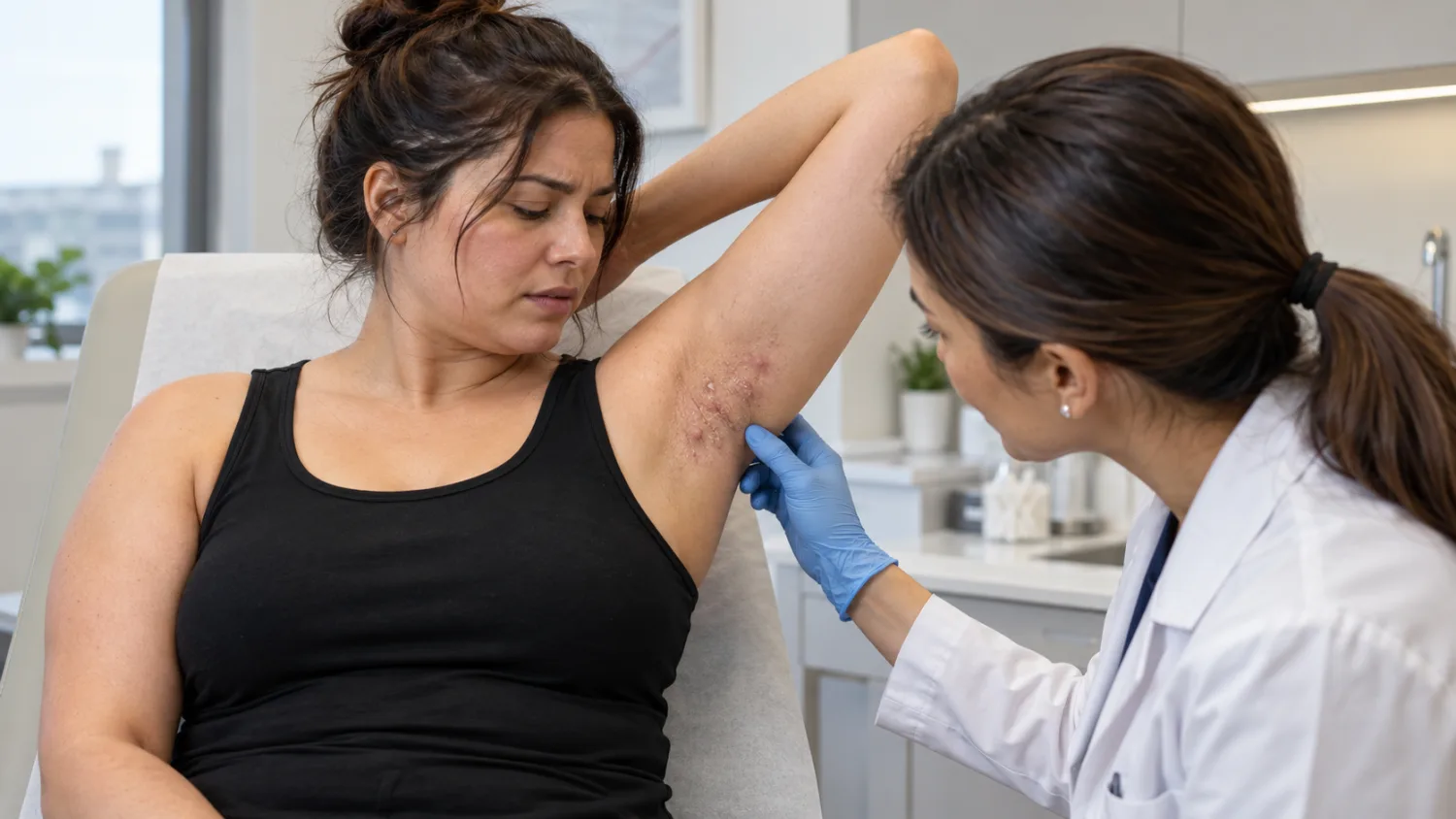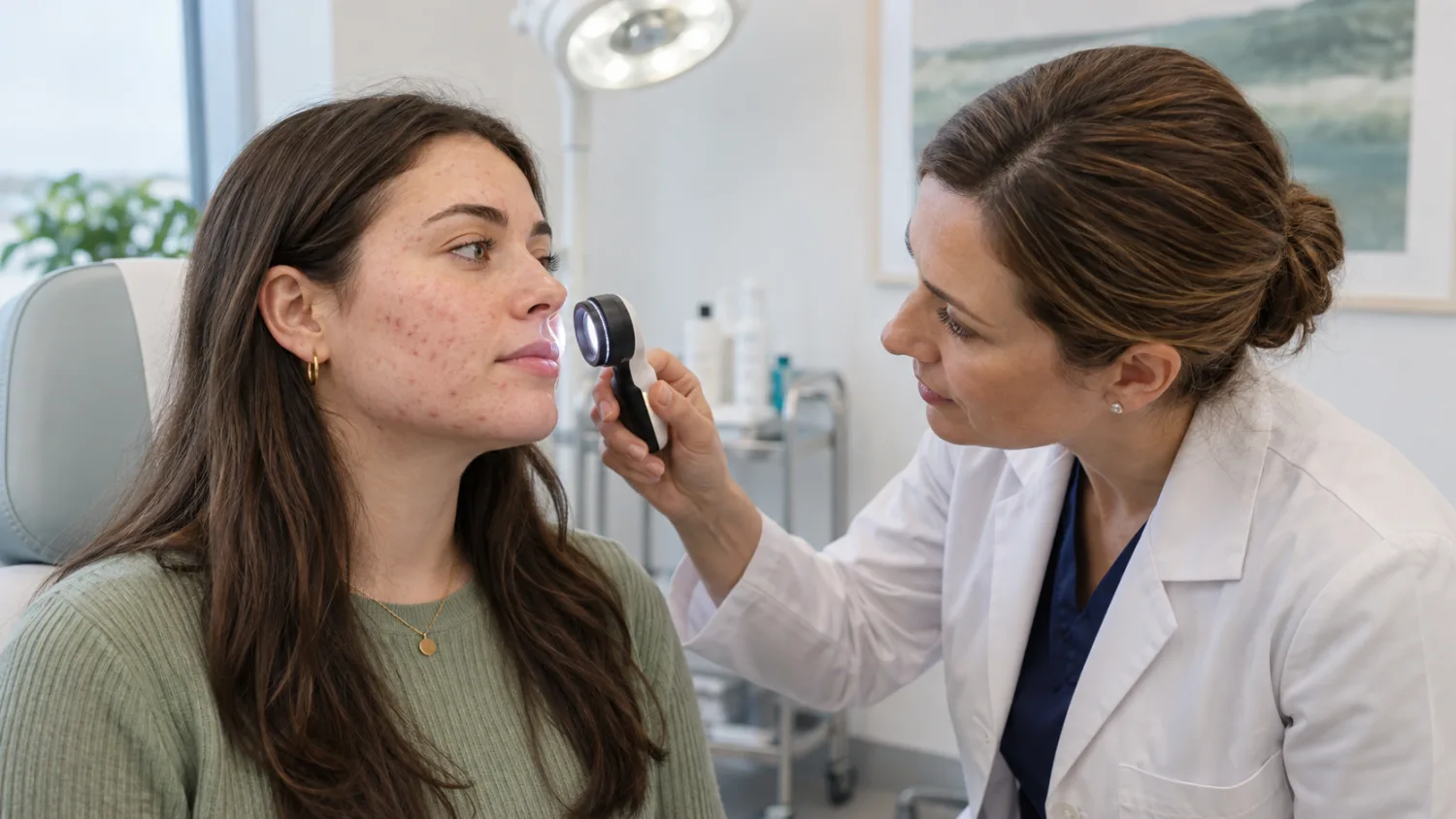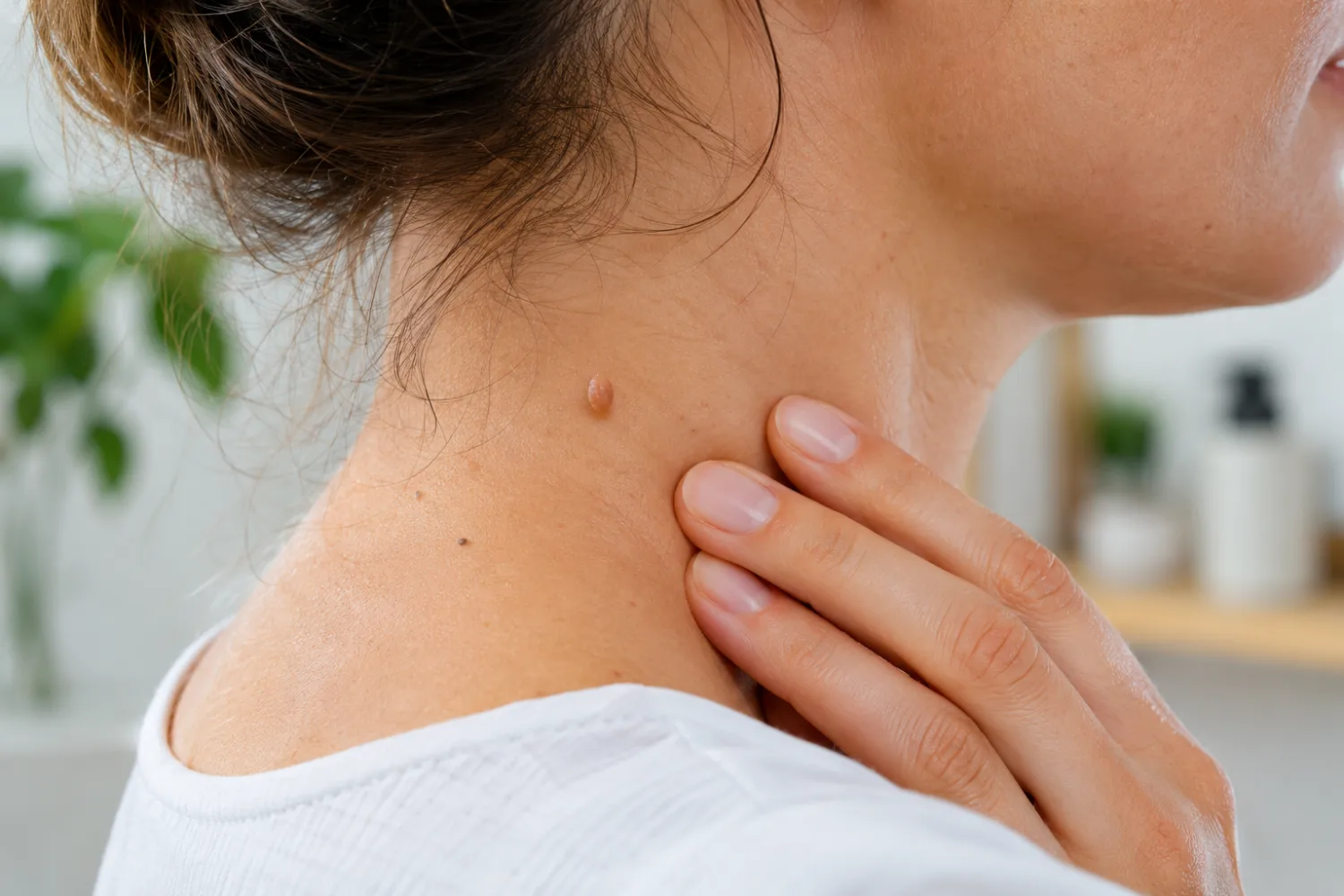
Skin tags are small, soft growths that often appear on the neck, under the arms, beneath the breasts, around the groin or on other areas where skin rubs against skin.
They are extremely common and usually harmless.
Because many skin tags hang from the skin by a thin stalk, removing one can look deceptively simple. This has led to a huge number of home remedies involving scissors, nail clippers, string, freezing sprays, acids and products bought online.
But there is an important catch: you need to be certain that the growth really is a skin tag before removing it.
A mole, wart or occasionally a skin cancer can be mistaken for a skin tag. Even when the diagnosis is correct, cutting or burning skin yourself can cause bleeding, infection, scarring and changes in skin colour.
The NHS therefore advises people not to remove their own skin tags unless a GP has recommended it.
This guide explains what skin tags look like, what you can safely do at home, which popular DIY methods are best avoided and when professional removal is the better option.
What Does a Skin Tag Look Like?
A skin tag, medically known as an acrochordon, is usually a soft piece of skin that sticks or hangs away from the surface.
The NHS says skin tags are usually the same colour as your skin or slightly darker. They commonly occur where skin folds or rubs together, including the neck, armpits, eyelids, underneath the breasts and around the bottom.
They can be tiny — only a few millimetres — although some grow considerably larger.
A classic skin tag is usually:
- soft rather than hard;
- smooth rather than rough;
- skin-coloured or slightly darker;
- attached by a small stalk or narrow base;
- painless unless rubbed, twisted or irritated.
You can see the NHS description of typical skin tags at NHS: Skin tags.
Skin Tag, Wart or Mole?
This distinction is one of the main reasons DIY removal can go wrong.
Warts are usually firmer and tend to have a rougher surface. Moles are often flatter or more rounded and may be pink, brown or darker than the surrounding skin.
But real skin lesions do not always look like textbook photographs.
A raised mole can resemble a skin tag. Some harmless growths can look wart-like. More importantly, a changing or unusual skin lesion should not be destroyed before anyone has had the opportunity to identify it.
The American Academy of Dermatology warns that people can mistake a mole or even a skin cancer for a skin tag. Removing the growth yourself can delay diagnosis because the abnormal tissue is no longer available to assess properly.
If you are uncertain what the growth is, have it checked rather than treating it as a skin tag.
Our guide to skin cancer checks in the UK explains how suspicious lesions are assessed. If the growth looks more like a mole, see our guide to mole removal in the UK. These are part of the site's existing dermatology resources.
Do Skin Tags Actually Need Removing?
Usually, no.
Skin tags are benign and often cause no health problems at all.
You might want one removed if it repeatedly catches on jewellery, gets irritated by clothing, is nicked while shaving or bothers you cosmetically.
Some people simply dislike how they look.
If a tag is not causing any trouble, leaving it alone is completely reasonable.
The NHS notes that skin tags do not normally require treatment and that removal is usually considered cosmetic. As a result, cosmetic removal is not normally provided by the NHS.
Can You Safely Remove a Skin Tag at Home?
The safest answer is generally not to remove it yourself.
The NHS explicitly advises against home removal unless a GP has recommended it because of the risks of infection, bleeding and scarring.
The American Academy of Dermatology gives similar advice and does not recommend home skin-tag removal products.
This does not mean touching a skin tag is dangerous.
There are several things you can safely do at home if a tag is irritating you while you decide whether to have it removed.
You can:
- avoid jewellery or clothing that repeatedly catches it;
- take care when shaving around it;
- cover it temporarily with a small dressing if friction is irritating it;
- keep irritated skin clean and dry;
- monitor it for changes in size, colour, pain or bleeding.
These measures do not remove the tag, but they can prevent repeated trauma.
Why Cutting Off a Skin Tag With Scissors Is Risky
One of the most common DIY methods is simply cutting the tag off.
Clinicians do sometimes remove skin tags using sterile surgical scissors or a blade.
But that does not make cutting one off at home equivalent to professional removal.
A doctor can first confirm what the lesion is, assess how large the blood supply is, clean and numb the area where appropriate, use sterile equipment and control bleeding afterwards.
At home, a tag with a thicker stalk can bleed much more than expected.
Using household scissors or nail clippers also creates an infection risk.
The American Academy of Dermatology warns that at-home cutting can result in difficult-to-control bleeding as well as infection and scarring.
For that reason, do not cut a skin tag off yourself.
What About Tying a Skin Tag With String or Dental Floss?
Another popular method is tying thread or dental floss tightly around the base of the tag.
The theory is straightforward: restricting its blood supply should make the tissue die and eventually fall off.
Doctors sometimes use controlled ligation techniques for certain lesions, but attempting it yourself still has problems.
You can accidentally tie off normal skin, create pain and inflammation or introduce infection.
It is also difficult to judge whether a lesion is appropriate for ligation simply by looking at it.
A larger or broad-based lesion should not be treated this way at home.
And if it is not actually a skin tag, deliberately destroying it may make diagnosis more difficult.
Do Skin Tag Removal Bands Work?
Commercial skin-tag bands use a similar principle.
A tiny elastic band is placed around the stalk to cut off the blood supply. The tag then shrivels and may eventually fall off.
The concept is plausible for a very small, clearly identified tag with a narrow stalk.
The difficulty is diagnosis and placement.
Home devices can damage surrounding skin, and a broad lesion may not be suitable.
Professional dermatology organisations remain cautious about home-removal products because of the risk of injury and because consumers can misidentify the lesion.
If you are thinking of using a kit, getting the growth identified by a GP, pharmacist with appropriate expertise or dermatologist first is safer than assuming that every dangling growth is a skin tag.
Should You Use an At-Home Freezing Kit?
Doctors can remove skin tags with cryotherapy, usually using liquid nitrogen.
The cold damages the skin-tag tissue, which then dies and falls away.
This can make supermarket or pharmacy freezing products sound like an obvious alternative.
However, over-the-counter freezing products may not work in exactly the same way as clinical cryotherapy, and inaccurate application can freeze normal surrounding skin.
Possible consequences include blistering, burns, scarring and lighter or darker patches of skin.
Clinical cryotherapy is particularly useful because the clinician can control exactly where and how long the freezing agent is applied.
If a tag is close to the eye or another sensitive structure, home freezing should be avoided.
Do Wart Removers Work on Skin Tags?
Do not use wart-removal acid on a skin tag.
Warts and skin tags are different types of growth.
Wart treatments commonly contain substances such as salicylic acid designed to destroy thickened wart tissue.
Skin tags are softer and surrounded by normal skin that can be easily damaged.
The American Academy of Dermatology specifically advises that wart remover is not appropriate for skin tags because it can irritate or scar the surrounding skin.
What About Apple Cider Vinegar?
Apple cider vinegar is one of the most frequently recommended skin-tag remedies online.
The idea is that its acidity will gradually damage the skin tag until it falls off.
There is no good reason to prefer this over established removal methods.
Acidic substances can irritate or chemically burn normal skin, particularly if vinegar is repeatedly held against the skin underneath a dressing.
The same applies to other strong acids, essential oils and homemade chemical treatments.
A remedy being natural does not mean it cannot burn skin.
Does Tea Tree Oil Remove Skin Tags?
Tea tree oil is also widely promoted as a skin-tag treatment.
There is not good clinical evidence showing that tea tree oil reliably removes skin tags.
Repeated application can also cause irritation or allergic contact dermatitis in some people.
If the aim is simply to remove a benign skin tag, professional snipping, freezing or cautery are much more established methods.
Can You Burn a Skin Tag Off?
Doctors sometimes remove skin tags using cautery or electrodesiccation, which uses controlled heat or electrical energy to destroy the tissue.
This is very different from trying to burn a tag at home.
Do not use heated metal, chemical cautery products or other improvised burning methods.
Burns can extend beyond the tag, become infected and leave permanent scars or pigmentation changes.
Do Skin Tags Fall Off by Themselves?
Occasionally.
A skin tag can twist enough that its own blood supply is interrupted. It may then become darker, shrivel and eventually fall off.
This does not happen predictably, however.
Many skin tags remain unchanged for years.
If a tag suddenly becomes black, painful or inflamed without an obvious explanation, it is reasonable to have it assessed rather than automatically assuming it is naturally falling off.
What If a Skin Tag Starts Bleeding?
A skin tag may bleed if it is caught on clothing, jewellery or a razor.
For minor bleeding, apply firm direct pressure with clean gauze or a clean cloth until it stops.
Do not repeatedly lift the dressing every few seconds to check it because this can disturb the forming clot.
If bleeding will not stop, the tag has been partly torn away, or you take medicines that affect blood clotting, seek medical advice.
A growth that starts bleeding repeatedly without being caught or injured should also be assessed.
The NHS advises seeing a GP if a suspected skin tag starts bleeding, becomes painful or gets larger.
Never Remove a Skin Tag Near the Eye Yourself
Eyelids are a common place for skin tags to develop, but they are a poor place for home treatment.
The skin is thin and the eye itself is extremely close.
Cutting, freezing, acid treatments or ligation could injure the eyelid or eye.
The American Academy of Dermatology notes that skin tags affecting the eyelid or vision are appropriate for professional assessment and removal.
Some eyelid lesions may also require assessment by an eye specialist rather than ordinary cosmetic removal.
What About Skin Tags Around the Genitals?
Do not automatically assume that a soft growth around the penis, vulva, groin or anus is an ordinary skin tag.
Genital warts and other skin conditions can sometimes look similar.
The area is also sensitive and more vulnerable to irritation from acids, freezing products or cutting.
If you are uncertain what the lesion is, have it examined before trying to remove it.
When Should You Not Attempt Any Home Treatment?
Professional assessment is particularly important when:
- you are not completely sure it is a skin tag;
- the growth has recently changed in colour, shape or size;
- it repeatedly bleeds without being caught;
- it is painful;
- it has a broad rather than narrow base;
- it is unusually large;
- it is on the eyelid or close to the eye;
- it is in the genital area and could be a wart or another lesion;
- you suddenly develop many new skin tags;
- you have problems with wound healing;
- you take anticoagulants or other medicines that increase bleeding risk.
The NHS specifically recommends GP assessment if a suspected skin tag becomes larger, painful, starts bleeding or many new tags appear.
How Are Skin Tags Removed Professionally?
Professional removal is usually straightforward.
The main methods are snipping, freezing and cautery.
Snip removal
The clinician removes the tag using sterile surgical scissors or a blade. Larger tags may require local anaesthetic.
Cryotherapy
Liquid nitrogen freezes the tissue. A blister or scab may form before the tag drops away.
Cautery or electrodesiccation
Controlled heat or electrical energy destroys the tissue while helping control bleeding.
The American Academy of Dermatology describes all three as standard professional skin-tag treatments.
The best method depends on the size and location of the tag, your skin type and whether there is any uncertainty about the diagnosis.
If you are considering private treatment, see our guide to private dermatologist costs in the UK. That resource, along with the site's mole-removal and skin-cancer guides, is part of the existing dermatology content.
Will Skin Tag Removal Leave a Scar?
It can.
No removal technique can promise zero scarring.
The NHS notes that removal can leave a scar or cause hyperpigmentation, particularly in black or brown skin. Pigment changes may be temporary but can occasionally persist.
Cutting, burning or applying acids at home may increase the risk because damage to the surrounding skin is harder to control.
If avoiding a visible scar is important — particularly on the face or neck — professional treatment is usually the more sensible option.
Why Do Skin Tags Develop?
The exact reason is not always known.
Friction appears to play a role, which explains why skin tags commonly form around the neck, armpits, groin and beneath the breasts.
They also become more common with age.
The NHS notes that skin tags are more common in people living with obesity, people with type 2 diabetes and during pregnancy.
Having a few skin tags does not mean that you have diabetes.
However, suddenly developing many tags alongside other risk factors may be worth mentioning during a routine health consultation.
Can You Prevent Skin Tags?
There is no reliable way to prevent every skin tag.
Reducing repeated friction may help in areas where skin or jewellery constantly rubs, but skin tags can occur even without an obvious trigger.
If one is removed successfully, that particular tag usually does not grow back.
That does not prevent new skin tags appearing elsewhere.
Frequently Asked Questions
Can I cut a tiny skin tag off myself?
The NHS advises against removing your own skin tags because of the risks of bleeding, infection and scarring. Even a small growth should first be correctly identified.
Can I tie dental floss around a skin tag?
Tying off the blood supply may cause a tag to die, but doing this yourself can damage surrounding skin, cause infection and is unsafe if the lesion has been misidentified.
Does apple cider vinegar remove skin tags?
There is no good clinical evidence supporting it as a preferred treatment. Acidic vinegar can irritate or chemically burn the surrounding skin.
Can tea tree oil remove skin tags?
There is not good evidence that it reliably removes skin tags, and tea tree oil can cause skin irritation or contact dermatitis.
Can I use wart remover on a skin tag?
No. Wart treatments are designed for different tissue and may burn or scar normal skin around a soft skin tag.
Do skin-tag removal bands work?
They attempt to cut off the tag's blood supply. The main problem is ensuring that the lesion really is a small skin tag and that surrounding skin is not trapped in the device.
Can I freeze a skin tag at home?
Professional cryotherapy can remove skin tags, but home freezing can injure surrounding skin and should not be used near the eyes or other sensitive areas.
How long does a skin tag take to fall off?
It depends on the treatment. A professionally frozen tag may develop a scab or blister and fall away later rather than disappearing immediately.
Do skin tags grow back?
Once a particular tag has been completely removed, it usually does not return, although new tags can develop elsewhere.
Why has my skin tag turned black?
A tag may darken if its blood supply becomes twisted or restricted. If the change is sudden, painful, unexplained or you are uncertain that it is actually a skin tag, have it checked.
Why is my skin tag bleeding?
Tags can bleed after catching on clothing, jewellery or a razor. Repeated or unexplained bleeding should be assessed by a GP.
Are skin tags cancerous?
Ordinary skin tags are benign. The important issue is that other skin lesions can sometimes be mistaken for a tag.
Can skin tags be removed on the NHS?
Cosmetic skin-tag removal is not normally available on the NHS. If a lesion is suspicious, painful, bleeding or causing another clinical problem, it should still be assessed appropriately.
When should I see a dermatologist?
Seek professional assessment if you are unsure of the diagnosis, the growth changes, bleeds or hurts, is close to the eye, is unusually large or broad-based, or you simply want it removed with a lower risk of complications than DIY treatment.
This article provides general information about skin tags. A skin growth should not be cut, burned, frozen or chemically treated at home if there is any uncertainty about what it is. Changing, bleeding or unusual lesions should be assessed by an appropriate healthcare professional.