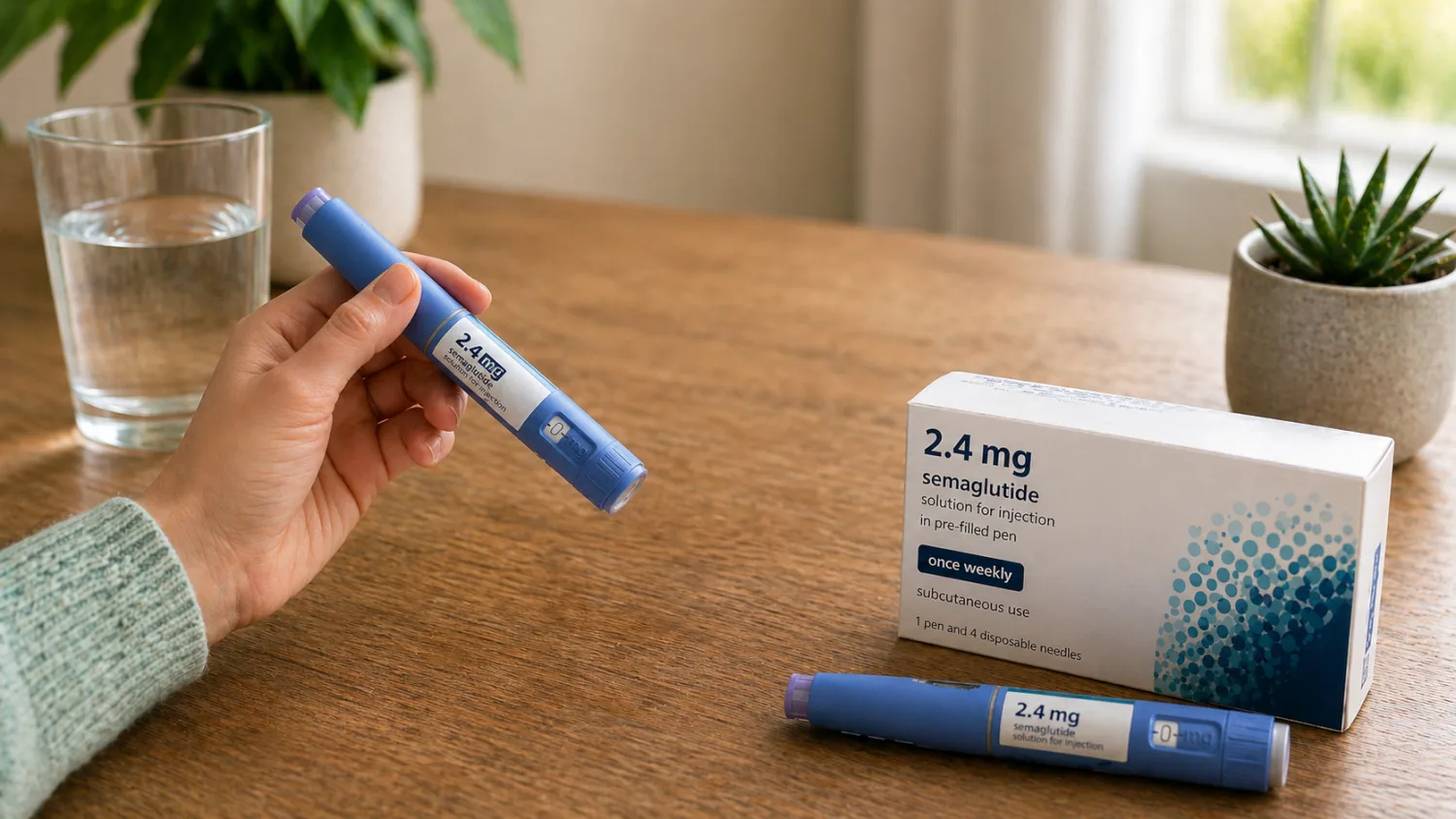
They can be. But only if you are getting them from the right place.
This is the most important thing to understand about online weight loss jabs in the UK. The issue is not simply whether the medicine itself is legitimate. It is whether the whole process is safe: the assessment, the prescribing, the pharmacy, the product, the follow-up and the advice you get if something goes wrong.
That distinction matters because the online market is now crowded. Some providers are regulated and careful. Others are too casual. And some are not legitimate at all. In February 2026, the MHRA issued a warning after a falsified version of the Mounjaro KwikPen 15mg was found in the UK supply chain. The agency advised the public to report suspected counterfeit medicines through the Yellow Card scheme. You can read the MHRA warning here: Falsified Mounjaro KwikPen 15mg pre-filled pens.
That is why this topic deserves a calm, practical answer rather than hype or panic. Online weight loss jabs are not automatically unsafe. But they are not automatically safe either.
This guide explains when buying online can be reasonable, what the real risks are, how to check whether a provider is legitimate, and what warning signs should make you stop before you put your money — or your health — at risk.
If you want the broader medical background too, it may help to read Weight Loss Injections in the UK: Who They’re For, Risks, Costs and What to Expect and Can You Get Weight Loss Treatment on the NHS? alongside this article.
What are people actually buying online?
When people talk about “weight loss jabs”, they usually mean prescription medicines such as Wegovy (semaglutide) or Mounjaro (tirzepatide). These are real medicines used in obesity treatment, not supplements or cosmetic products. The MHRA says GLP-1 medicines are licensed to treat specific medical conditions and should not be used for purely aesthetic or cosmetic weight loss. Its public guidance is here: GLP-1 medicines for weight loss and diabetes: what you need to know.
That matters because the way these medicines are marketed online can make them look deceptively simple: choose a pen, answer a few questions, wait for delivery. But these are prescription-only medicines that affect appetite, digestion and sometimes overall health risk. The decision to use them should be based on proper clinical assessment, not just on whether a website has a smooth checkout page.
The GPhC’s public FAQ on weight-loss medications makes this clear too: these medicines can be useful when appropriately prescribed, but they should sit within proper clinical care rather than casual online shopping.
So, are online weight loss jabs safe?
They can be safe when supplied by a properly regulated UK prescriber and pharmacy that carries out appropriate checks, confirms identity, assesses whether the medicine is clinically suitable and provides proper aftercare. The General Pharmaceutical Council says medicines for weight management can be effective when combined with dietary and lifestyle changes and when they are supplied safely and appropriately. That position is reflected in its public guidance here: Weight-loss medications: patient FAQs.
But the GPhC has also made clear that there are serious concerns in this area. Its April 2026 review of inspections and concerns found issues around how some pharmacies and prescribers were supplying weight-management medicines, particularly via private and online services. You can read that report here: Weight management medicines and services: a review of GPhC inspections and concerns.
The GPhC has also set out specific expectations for online supply in its update on supplying medicines for weight management. So the real answer is this: the online route is only as safe as the service behind it.
What makes an online service safer?
A safer online provider usually does several things well.
First, it is linked to a GPhC-registered pharmacy if medicine supply is involved. The public can check this through the GPhC register. The regulator also has a dedicated page on buying medicines safely online.
Second, it checks more than your payment details. The GPhC says pharmacies and prescribers should take appropriate steps to verify identity and assess whether supply is clinically appropriate. In weight-management medicines specifically, it has highlighted the need for stronger safeguards and more robust checks. That is discussed in its update on strengthening safeguards to prevent unsafe supply.
Third, it does not treat weight loss jabs as a generic consumer product. A safer service will ask about your BMI, medical history, current medicines, previous weight-management efforts, side effects, pregnancy-related issues where relevant, mental health and whether there could be reasons the medicine is not appropriate.
NHS England’s interim guidance on tirzepatide also says prescribers should consider broader wellbeing, including eating disorders, body dysmorphia and mental health when requests are made for weight-loss medicines. That document is here: Interim commissioning guidance: tirzepatide.
And fourth, it gives you somewhere to turn if something goes wrong. If a provider has no meaningful follow-up, no side-effect advice and no route for review, that is not good medical care.
What are the real risks of buying online?
There are three main categories of risk: fake products, unsafe prescribing and poor follow-up.
Fake or falsified pens are not a theoretical problem. In February 2026, the MHRA warned about falsified Mounjaro 15mg pens found in the UK supply chain. The agency also said the public should report suspected counterfeit medicines through Yellow Card. The alert is here: MHRA falsified Mounjaro alert.
Separately, the MHRA said it seized more than 5,000 illegally traded GLP-1 products during 2025 and disrupted illegal manufacturing linked to unlicensed weight-loss medicines. Those enforcement updates are here: MHRA seizures of illegal medicines and MHRA disruption of illegal weight-loss medicine manufacturing.
Unsafe prescribing is another risk. The concern here is not that the medicine is fake, but that it is supplied without enough clinical checking. The GPhC has specifically tightened expectations for online pharmacies to help prevent medicines being supplied where they are not clinically appropriate. Its update is here: Online pharmacies strengthen safeguards.
Poor follow-up matters because these medicines can cause side effects such as nausea, vomiting, diarrhoea and constipation, and they often require dose adjustments over time. If a service simply sends a pen and disappears, that is a warning sign. NHS England’s information on tirzepatide wraparound care and the NHS obesity treatment page both reflect the importance of monitoring and support.
What should make you suspicious?
There are a few warning signs that should make you stop immediately.
- The seller is on social media, a marketplace, messaging app or informal website rather than a regulated pharmacy or clinic.
- You are offered the medicine with almost no questions asked.
- The provider does not check your identity or ask for clinical information.
- The product is described like a lifestyle accessory rather than a prescription medicine.
- The price seems unusually cheap compared with normal UK pharmacy pricing.
- There is no clear information about who prescribed it, where the pharmacy is registered or what happens if you have side effects.
The GPhC’s guidance on buying medicines safely online says some websites sell medicines that may not be genuine or may not have been checked by a pharmacist.
That matters especially now. There is a big difference between buying from a legitimate UK online pharmacy and buying from someone who simply happens to be selling online.
Can a registered online pharmacy still be a problem?
Potentially, yes.
This is one of the more uncomfortable truths. A registered pharmacy is a much better starting point than a random online seller, but regulation does not mean every service is perfect. That is exactly why the GPhC carried out its 2026 review of inspections and concerns specifically related to weight-management services, and why it published updated expectations for supply in this area.
You can read those documents here: GPhC review of inspections and concerns and GPhC position on supplying medicines for weight management.
So you should not only ask, “Is it registered?” You should also ask, “Does this feel like a proper medical service?”
What questions should a good service ask you?
A safer provider should usually want to know:
- your height and weight, to assess BMI
- whether you have obesity-related health conditions
- what medicines you already take
- whether you have had pancreatitis, gallbladder problems or significant digestive symptoms
- whether you may be pregnant or planning pregnancy where relevant
- whether you have a history of eating disorders, body dysmorphia or relevant mental health concerns
- whether the medicine is clinically appropriate rather than simply requested
This is not the provider being awkward. It is what safe prescribing looks like. NHS England’s tirzepatide guidance explicitly references eating disorders, body dysmorphia and mental health in prescribing decisions, which you can read here: NHS England interim tirzepatide guidance.
What about people buying jabs for cosmetic reasons?
This is an important safety issue. The MHRA says GLP-1 medicines should only be used if you are overweight or diabetic within their licensed use, and not if you simply want to lose weight for aesthetic or cosmetic purposes. It also says the agency has not assessed their safety and effectiveness when used outside their licensed use.
That MHRA guidance is here: GLP-1 medicines: what you need to know.
That matters because some online demand is being driven by appearance pressure rather than medical need. A safer prescriber should not simply say yes to that.
How can you check whether an online supplier is legitimate?
There are a few sensible checks you can do.
First, check whether the pharmacy is registered with the General Pharmaceutical Council register.
Second, read the GPhC’s public page on buying medicines safely online.
Third, check whether the site explains who is prescribing, how suitability is assessed and what clinical support exists after supply.
Fourth, be very cautious about social media sellers, beauty settings, gyms or private messaging groups. A March 2026 London Assembly report on weight-loss medication heard evidence of illicit and unlicensed sales through places such as beauty salons, gyms and even pubs, with concerns that some products may be counterfeit or not legitimately prescribed. That report is here: London Assembly report on weight-loss medication.
If the source feels informal, that is the problem.
What should you do if you think a pen is fake or faulty?
Do not use it.
The MHRA says anyone who suspects they have received a counterfeit medicine or noticed a fault with a weight-loss pen should report it to the Yellow Card scheme. If you have already used it and feel unwell, seek medical advice promptly.
The related MHRA public notice is here: Fake Mounjaro tirzepatide KwikPen 15mg pre-filled pens.
That may sound obvious, but counterfeit or illegally supplied medicines are not just a licensing problem. They can be a direct health risk.
Are NHS weight loss jabs safer than online private ones?
NHS care has the advantage of being delivered within a more structured system, with clearer pathways, monitoring and wraparound support. But that does not mean private online care is automatically unsafe. It means the standard you should expect from a private online provider should still look like real clinical care, not just convenient retail.
If you want the full picture, our article Can You Get Weight Loss Treatment on the NHS? explains current NHS access, while Weight Loss Injections in the UK covers the medicines themselves, side effects and what treatment should involve.
The wider NHS context is also set out in the NHS obesity treatment guidance and NHS England’s tirzepatide wraparound care information.
So what is the safest way to buy them online?
The safest route is not the cheapest or fastest. It is the one that looks most like proper healthcare.
That means a registered UK pharmacy or regulated clinic, proper assessment, sensible questions, explanation of side effects, clear aftercare, and a prescriber willing to say no if the medicine is not appropriate.
The GPhC’s public pages on weight-loss medication FAQs and supplying medicines for weight management are useful benchmarks for what good pharmacy care should look like here.
If the service feels more like online shopping than medical care, it is probably not safe enough.
The bottom line
Yes, online weight loss jabs can be safe — but only when they come from a properly regulated provider with real clinical checks, real follow-up and genuine UK pharmacy oversight.
The UK regulators are clear that this area carries real risks. In 2026 alone, the MHRA warned about falsified Mounjaro pens, and the GPhC published a review highlighting concerns around weight-management services and online supply. You can read those here: MHRA falsified pen alert and GPhC 2026 review.
The safest mindset is simple: treat these jabs as prescription medicines, not lifestyle products. Ask who is prescribing. Ask who is dispensing. Ask how they know it is appropriate for you. And if the whole process feels too easy, too vague or too cheap, walk away.