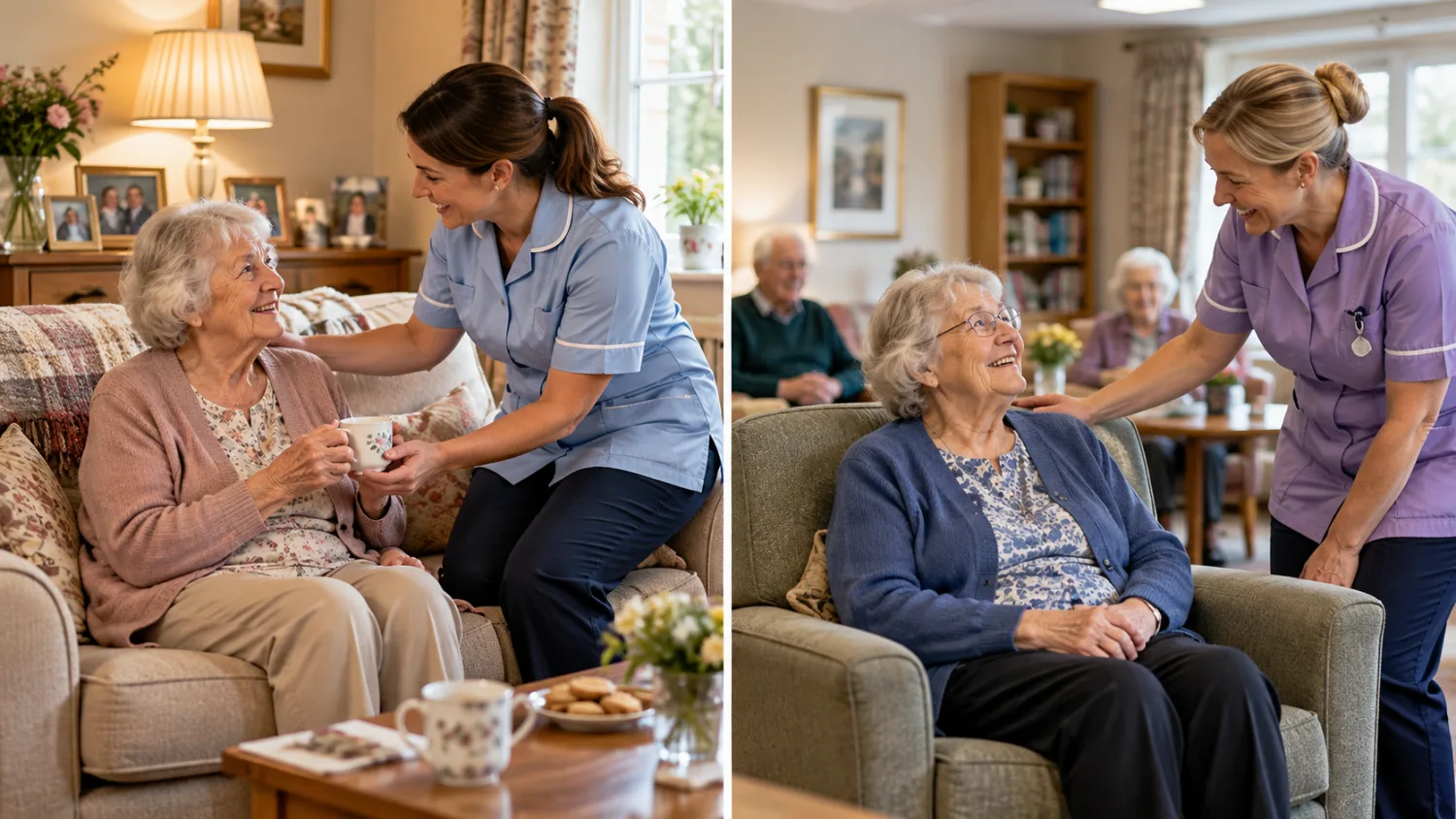
Choosing a dementia care home is one of the most emotional and important decisions a family can make. It is rarely just about finding a room in a nearby care home. The right home needs to understand memory loss, confusion, distress, changing mobility, personal care, safety, medication, nutrition and, just as importantly, the person behind the diagnosis.
A good dementia care home should feel safe without feeling clinical. It should offer structure without removing dignity. It should reassure families that their loved one will be treated with patience, warmth and respect, even when communication becomes difficult or behaviour changes.
This guide explains what dementia care homes are, how much they cost in the UK, what families should look for, how funding works and how to compare homes confidently. You can also use the All Health and Care UK care home directory to start searching for care homes by town, city or postcode, and compare options alongside our Top 10 care home lists.
What is a dementia care home?
A dementia care home is a residential or nursing care home that supports people living with Alzheimer’s disease, vascular dementia, Lewy body dementia, frontotemporal dementia or another form of dementia. Some homes have dedicated dementia units, while others support residents with dementia throughout the home.
It is important to understand that “dementia care home” is not a single legal category. It usually describes the type of care provided. A person with dementia may live in a residential care home, a nursing home or a specialist dementia unit depending on their needs.
A residential dementia care home usually supports people who need help with daily living, personal care, meals, medication prompts, supervision and routines. A nursing dementia care home supports people who also need regular input from registered nurses, often because of complex mobility, swallowing, continence, wound care, diabetes, frailty or advanced dementia needs.
The NHS explains that care homes for people with dementia can provide accommodation, personal care and, where needed, nursing care. It also recommends checking inspection reports before choosing a home. You can read the NHS guidance here: NHS: Dementia and care homes.
When might someone with dementia need a care home?
Many people with dementia live well at home for years, especially when they have family support, home care, day services or adaptations in place. A care home usually becomes part of the conversation when home is no longer safe, or when the level of support needed is more than family carers or visiting care workers can realistically provide.
The signs are often gradual. A parent may start leaving the house at night, forgetting to eat, missing medication or becoming frightened when alone. Falls may become more frequent. Personal care may become difficult. Family carers may be sleeping badly, worrying constantly or feeling that they can no longer keep the person safe.
There may also be a crisis, such as a hospital admission, a serious fall, a safeguarding concern or carer breakdown. In these situations, families often have to make decisions quickly, which is why it helps to understand care home options before a crisis happens.
Moving into a dementia care home should not be seen as a family failing. In many cases, it allows the person to receive safer 24-hour care while relatives return to being a spouse, son, daughter or friend rather than an exhausted full-time carer.
If you are still comparing care at home with residential care, you may find these All Health and Care guides useful: Home Care: Types of Support, Funding & How to Choose and Cost of Live-in Care vs Care Home in the UK.
Residential dementia care, nursing dementia care and specialist dementia units
One of the first questions families face is whether their loved one needs residential dementia care or nursing dementia care. This is not always obvious at the start, and it should usually be confirmed through a proper assessment by the care home, social care professionals or NHS staff.
Residential dementia care is usually suitable when the main needs are supervision, personal care, reassurance, meals, medication support and a safe daily routine. Nursing dementia care is more appropriate when the person has medical or clinical needs that require registered nursing input. This might include complex medication, pressure care, swallowing risks, wound care, severe frailty or significant mobility problems.
Some homes also have specialist dementia units. These are often designed for people who need a more structured environment, secure outdoor space, higher levels of supervision or staff with specific experience in distressed behaviour, wandering, agitation or advanced dementia.
Do not rely only on the words used in a brochure. A home may describe itself as “dementia-friendly”, but that can mean different things in practice. Ask exactly what dementia needs the home can support, what it cannot support and what might trigger a future move.
How much do dementia care homes cost in the UK?
Dementia care home fees vary significantly across the UK. Location makes a major difference, but so do room type, staffing levels, whether nursing care is required and how complex the person’s needs are.
As a broad benchmark, Age UK says the average cost of a residential care home is around £949 per week, while the average cost of a nursing home is around £1,267 per week. You can read Age UK’s guidance here: Age UK: Paying for a care home.
Dementia care may cost more than standard residential care because it can require more supervision, specialist staff training, safer environments, adapted activities and more detailed care planning. Nursing dementia care is usually more expensive again because registered nurses are involved.
In many areas, families should expect dementia residential care to cost around £1,000 to £1,500+ per week. Nursing dementia care may often be around £1,300 to £1,800+ per week, and highly specialist placements can cost more. These are broad guide figures only. The actual fee depends on the home and the person’s assessed needs.
Always ask for the weekly fee in writing and check what is included. Some homes charge separately for hairdressing, chiropody, toiletries, continence products, transport, escorts to appointments, newspapers, private phone lines, activities or specialist equipment. The headline weekly price does not always tell the whole story.
For a deeper explanation of care home charges, property rules, self-funding and deferred payment agreements, read our guide to care home fees in the UK.
Who pays for dementia care?
There are three main funding routes for dementia care homes: self-funding, local authority support and NHS funding. Which route applies depends on the person’s care needs, savings, income, property and health complexity.
Self-funding
A person will usually self-fund their care if their capital is above the upper threshold used in their part of the UK. In England, the upper capital limit for social care charging remains £23,250 for 2026 to 2027, while the lower capital limit remains £14,250, according to government charging guidance. You can check the latest GOV.UK circular here: Social care charging for local authorities 2026 to 2027.
If your loved one is self-funding, they can usually choose a care home directly, provided the home can meet their needs and has availability. Even so, it is still worth requesting a council needs assessment. This creates an official record of care needs and can be helpful later if savings reduce and council support becomes necessary.
Local authority funding
If the person has eligible care needs and falls below the relevant financial threshold, the local council may contribute towards care home fees. The council will usually carry out a needs assessment first, followed by a financial assessment.
The council will decide how much it expects to pay for a suitable placement. If the family chooses a home that costs more than the council’s usual amount, a third-party top-up may be requested. Top-up fees should be treated carefully because they can increase over time and may become difficult to sustain.
You can read more in our full guide to how social care funding works in the UK.
NHS Continuing Healthcare
NHS Continuing Healthcare, often called CHC, is a package of care arranged and funded by the NHS for adults with long-term complex health needs. It can cover care in a care home, nursing home or other setting. The NHS explains the process here: NHS Continuing Healthcare.
Dementia does not automatically qualify someone for NHS Continuing Healthcare. Eligibility depends on whether the person has a “primary health need”. Assessors look at the nature, intensity, complexity and unpredictability of the person’s needs. Someone with advanced dementia, severe distress, complex medication, swallowing risks, pressure damage, repeated infections or high nursing needs may be more likely to need a CHC assessment.
NHS-funded nursing care
If your loved one lives in a nursing home and needs care from a registered nurse, but does not qualify for NHS Continuing Healthcare, they may be eligible for NHS-funded nursing care. In England, the standard NHS-funded nursing care rate from 1 April 2026 is £267.68 per week, paid directly to the nursing home. The NHS guidance is available here: NHS-funded nursing care.
What does good dementia care actually look like?
Good dementia care is often visible in small moments. It is the care worker who kneels to speak at eye level. The nurse who notices that a resident is more confused than usual and checks for pain or infection. The activities coordinator who knows which songs calm someone. The manager who can explain not only what the home does, but why it matters.
The best dementia care homes are not just safe. They are personal. They make an effort to understand each resident’s history, routines, preferences and fears. They know that someone who is asking to “go home” may not be asking for a building, but for comfort, familiarity and reassurance.
When visiting a home, pay close attention to how staff speak to residents. Do they use people’s names? Do they wait for an answer? Do they explain what they are doing before helping with care? Do they seem calm when residents are confused or repetitive? These details tell you a great deal about the culture of the home.
The environment matters too. A dementia-friendly home should be easy to navigate, with good lighting, clear signs, accessible toilets and safe walking routes. Secure gardens can be especially valuable for people who like to move around. The home should feel homely rather than chaotic, with quiet spaces available for residents who become overwhelmed by noise.
Activities should also feel meaningful. A good home will not rely only on bingo, television or a printed calendar. It will offer music, reminiscence, gentle exercise, sensory activities, gardening, baking, one-to-one time and opportunities for residents to feel useful and connected. For someone with dementia, a short moment of recognition or calm can be just as important as a formal activity session.
Food, hydration and everyday routines
Eating and drinking can become harder as dementia progresses. Some people forget to eat, lose interest in food, struggle with cutlery or become distracted during meals. Others develop swallowing problems or lose weight without anyone noticing quickly enough.
During a visit, try to observe a mealtime if possible. It can reveal more than a formal tour. Are residents supported patiently? Are staff sitting with people who need encouragement? Is food adapted for different needs? Are drinks within reach? Does the atmosphere feel calm?
Ask how the home monitors weight, hydration and swallowing concerns. Also ask whether it can provide finger foods, fortified meals, culturally appropriate meals and flexible eating times. A person with dementia may not always want to eat at a set mealtime, so flexibility can make a real difference.
How care homes should support distressed behaviour
People with dementia may become distressed, frightened, suspicious, restless or angry. This is often communication, not “bad behaviour”. The person may be in pain, constipated, hungry, overstimulated, tired, unwell or unable to explain what they need.
A good dementia care home should look for causes rather than simply trying to stop the behaviour. Staff should understand that sudden changes can be linked to infection, delirium, medication side effects, pain or changes in routine. They should also know how to use reassurance, distraction, calm communication and personalised support before considering medication.
When speaking to the manager, ask how the home supports residents who become distressed, walk around at night, resist personal care or ask repeatedly to leave. A confident, thoughtful answer is a good sign. A vague answer such as “we deal with that all the time” is less reassuring.
How to use CQC ratings when choosing a dementia care home
In England, care homes are regulated by the Care Quality Commission. The CQC rates services as Outstanding, Good, Requires Improvement or Inadequate. Reports consider whether a service is safe, effective, caring, responsive and well-led.
CQC ratings are important, but they should not be used in isolation. A home rated Good may be excellent for your loved one. A home rated Outstanding may still not be the right choice if it cannot meet their specific dementia needs. A home rated Requires Improvement is not automatically unsafe, but you should ask what has changed since inspection and whether improvements have been sustained.
Read the full report, not just the headline rating. Look especially at the “Safe” and “Well-led” sections. Check whether dementia care is mentioned, whether staffing concerns were raised and how the provider responded to any issues.
You can search care homes through the All Health and Care care home directory, compare highly rated providers using our Top 10 care home lists, and check official inspection reports on the CQC care home search.
Questions to ask when visiting a dementia care home
You do not need to interrogate the manager, but you should ask direct questions. Good care homes are used to this and should welcome it.
- What stages of dementia do you support?
- Can you support residents who walk around, become distressed or ask to leave?
- How many staff are on duty during the day and at night?
- What dementia training do staff receive?
- How do you learn about each resident’s life story and routines?
- How do you support residents who resist washing, dressing or medication?
- What happens if my loved one’s needs increase?
- Is a registered nurse on duty at all times, or is this residential care only?
- How are falls, infections, weight loss and swallowing concerns managed?
- What is included in the weekly fee, and what costs extra?
- Do you accept local authority-funded residents?
- How do you involve families in care planning and reviews?
After the visit, write down how the home felt. Did staff seem kind? Did residents seem comfortable? Did the manager answer clearly? Could you imagine your loved one being treated with patience here on a difficult day? Your instinct is not everything, but it matters.
Warning signs to take seriously
Some care homes look impressive on the surface but feel less reassuring once you spend time there. Be cautious if staff seem rushed, residents are left without interaction, call bells ring for long periods or the manager gives vague answers about dementia care.
Strong odours, poor cleanliness, unsupported mealtimes, high agency staff use or visible distress among residents should also prompt questions. A single issue does not always mean a home is poor, but repeated concerns should not be ignored.
Be especially careful if a home says it can manage “everything” without carrying out a proper assessment. Dementia care is complex. A responsible home should be honest about what it can and cannot safely support.
How to find the right dementia care home
The best search starts with the person’s needs, not the home’s availability. Before contacting homes, write down what support your loved one needs now. Include mobility, falls, medication, continence, eating and drinking, sleep, communication, behaviour, risks and any nursing needs.
Then search locally. Distance matters because regular family visits can make a major difference to wellbeing. Use the All Health and Care UK care home directory to build an initial shortlist, then compare ratings, inspection reports, fees and dementia suitability.
Call homes before visiting. Explain the person’s needs honestly, including anything that feels difficult to talk about, such as night waking, agitation, wandering, resistance to care or incontinence. It is much better to find out early whether a home can meet those needs than to discover after a move that the placement is unsuitable.
Visit more than one home if possible. Try to see the home at a normal time of day, not only during a polished tour. Mealtimes, afternoons and early evenings can give a more realistic sense of staffing, atmosphere and routines.
Before admission, the home should complete a pre-admission assessment. This is a crucial step. It should confirm whether the home can meet your loved one’s needs safely and what care plan will be put in place.
Making the move easier
Moving into a care home can be unsettling for someone with dementia. The first few days and weeks may bring increased confusion, distress or requests to go home. This does not always mean the move is wrong. It often means the person needs time, reassurance and consistent support.
Families can help by sharing a life story document with the home. Include names of close relatives, former jobs, hobbies, favourite music, food preferences, daily routines, important memories and anything that helps when the person is upset. These details can make care more personal from day one.
Bring familiar belongings where possible: photographs, a favourite blanket, ornaments, familiar bedding or a favourite chair. Label clothing, glasses, hearing aids, dentures and mobility aids clearly. Small practical steps can prevent avoidable stress later.
It is also worth agreeing a communication plan with the home. Ask who will update the family, how often reviews take place and who to contact if you are worried. The best homes understand that families need support during the transition too.
Common mistakes families make
One common mistake is choosing a home mainly because it looks attractive. A beautiful lounge and modern bedroom are welcome, but they do not guarantee good dementia care. Staff skill, patience, leadership and culture matter more.
Another mistake is waiting until a crisis forces a rushed decision. This is sometimes unavoidable, especially after a hospital admission, but early research gives families more choice and less pressure.
Families also sometimes assume that a home will be able to support every future stage of dementia. This is not always true. Before choosing a placement, ask whether the home can support later-stage dementia, hoisting, swallowing problems, distressed behaviour, nursing needs and end-of-life care.
Funding misunderstandings are also common. Dementia does not automatically mean the NHS will pay. Many people with dementia pay for their own care or receive means-tested council support. NHS Continuing Healthcare is possible, but it depends on the level and complexity of health needs.
Documents to prepare before choosing a home
Having documents ready can make assessments and admissions smoother. Useful information includes diagnosis letters, medical history, medication lists, allergy information, hospital discharge notes, falls history, mobility assessments, current care plans and details of any Lasting Power of Attorney.
Financial information may also be needed for a council financial assessment, including savings, pensions, income, benefits and property ownership. If there is a Lasting Power of Attorney, the care home may ask to see evidence of it before discussing decisions or contracts in detail.
Final thoughts
The right dementia care home is not always the most expensive, the newest or the one with the smartest brochure. It is the home that can meet your loved one’s needs safely, treat them as a person, communicate honestly with family and adapt as dementia progresses.
Take time to compare homes carefully. Read inspection reports, ask direct questions, visit in person and trust what you observe. A good dementia care home should give you confidence not because it promises perfection, but because it shows warmth, competence and honesty.
To begin your search, browse the All Health and Care UK care home directory or explore our Top 10 care home lists to compare highly rated care homes across the UK.
Frequently asked questions
What is the difference between a dementia care home and a normal care home?
A dementia care home has staff, routines, care planning and environments designed to support people with memory loss, confusion, communication difficulties and dementia-related distress. Some general care homes support dementia well, while others may only be suitable for mild memory problems.
Do all care homes accept people with dementia?
No. Some care homes accept people with mild dementia only, while others specialise in moderate, advanced or complex dementia. A home should assess the person before agreeing to admission.
Does dementia mean someone needs a nursing home?
Not always. Many people with dementia live in residential care homes. A nursing home may be needed if the person also requires registered nursing care, such as pressure care, complex medication, swallowing support or advanced frailty care.
How much does a dementia care home cost?
Costs vary by location and care needs. Age UK estimates average care home costs at around £949 per week for residential care and £1,267 per week for nursing care, but dementia care may cost more, especially where needs are complex.
Can the council pay for dementia care?
Yes, if the person has eligible care needs and qualifies financially. The council will usually complete a needs assessment and financial assessment before deciding how much support it can provide.
Does NHS Continuing Healthcare pay for dementia care?
It can, but dementia alone does not automatically qualify. NHS Continuing Healthcare is based on whether the person has a primary health need, assessed by looking at the nature, intensity, complexity and unpredictability of their needs.
What should I look for when visiting a dementia care home?
Look at how staff interact with residents, whether the environment feels calm and safe, how mealtimes are supported, what activities are available, how dementia distress is managed and whether the manager can answer detailed questions clearly.
Is a CQC Outstanding care home always the best choice?
Not necessarily. A strong CQC rating is a positive sign, but the best care home is the one that can meet your loved one’s specific needs, is accessible for family and provides the right kind of dementia support.