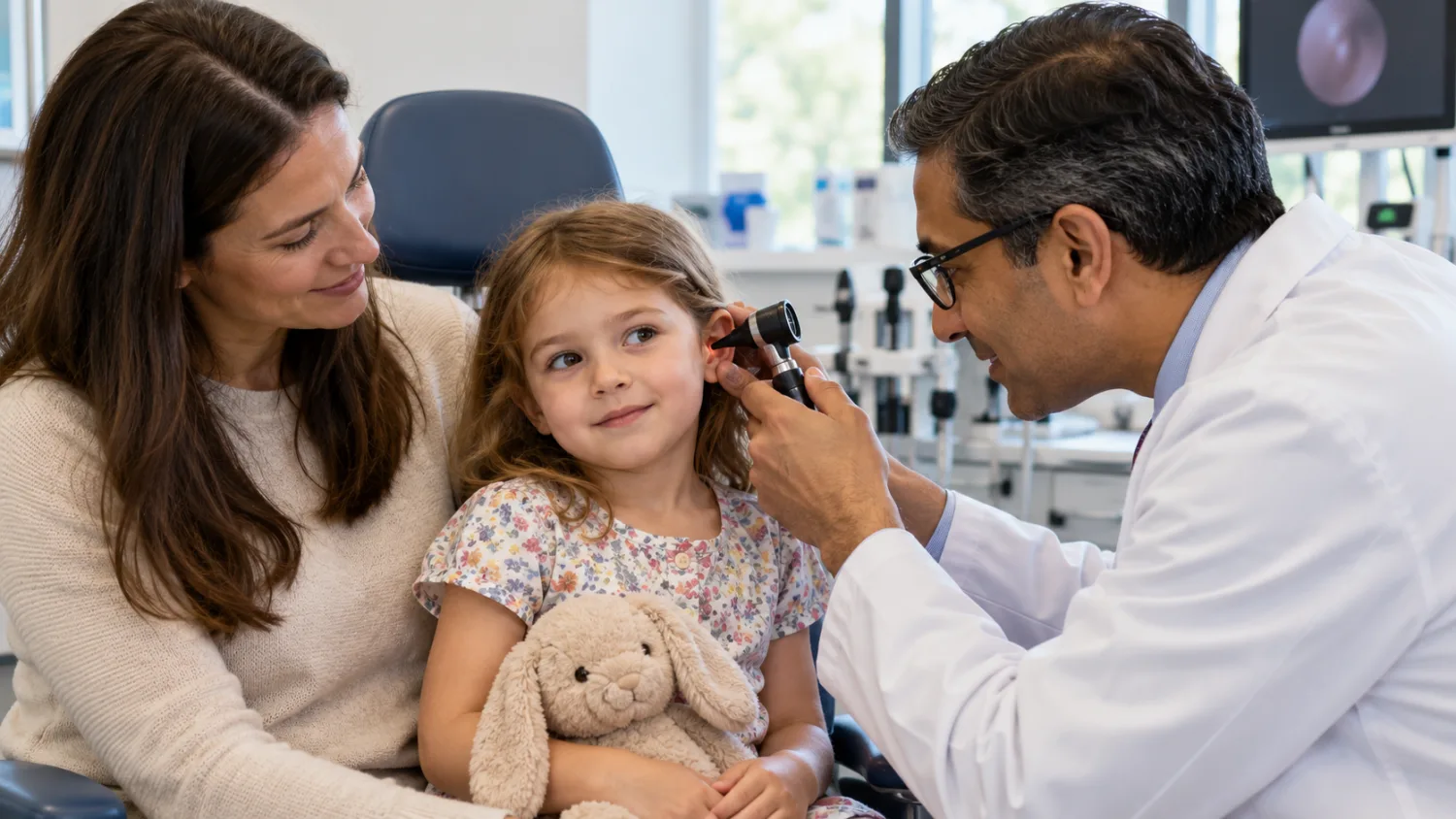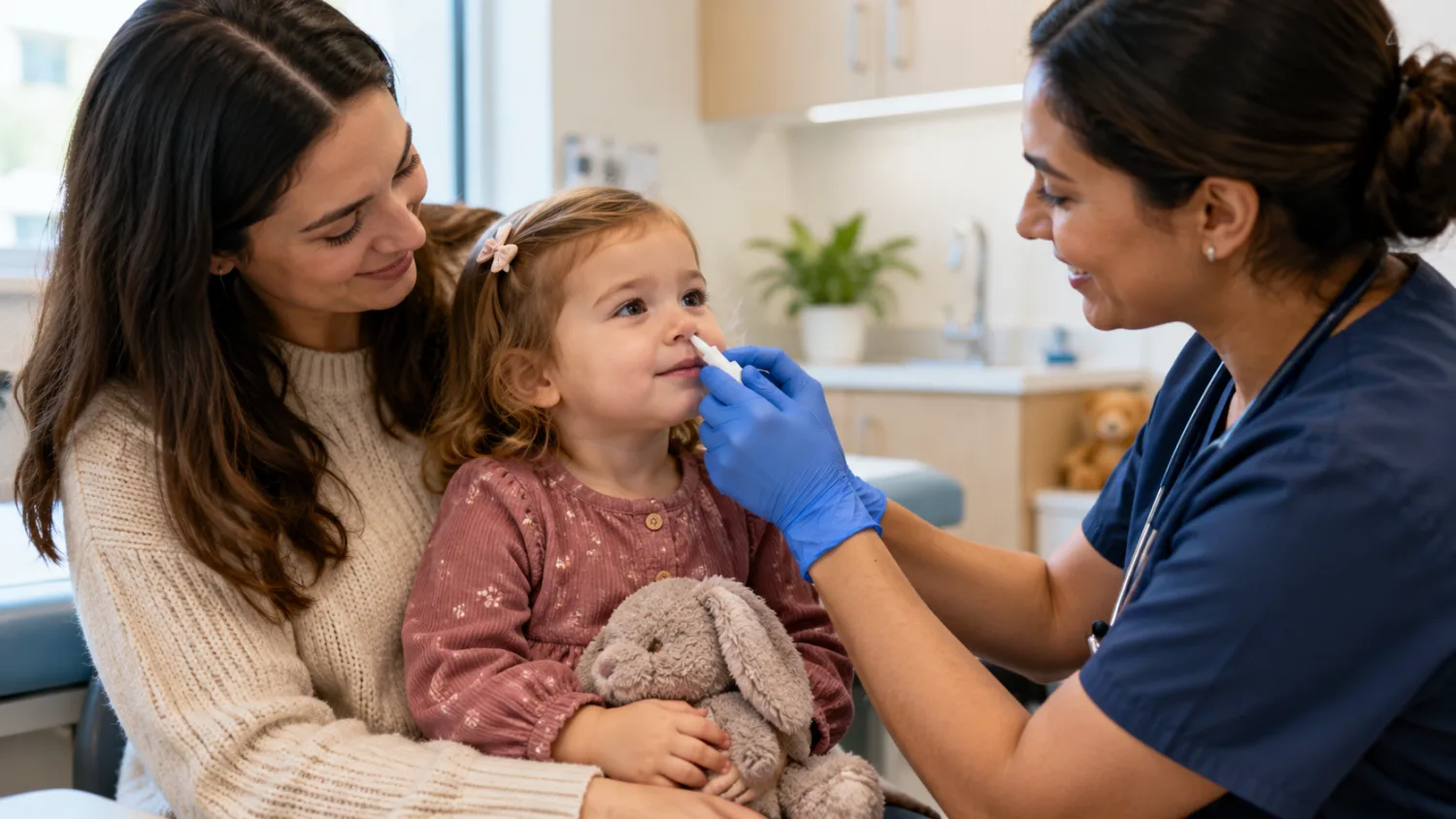
Every autumn, children aged 2 and 3 are offered a free NHS flu vaccination.
For most children, it is not an injection. It is a quick nasal spray given into each nostril.
Parents may reasonably ask why healthy toddlers need a flu vaccine at all and, perhaps more importantly:
How well does it actually work?
The answer is that flu vaccination does not prevent every case of influenza. Its effectiveness changes from year to year depending on which flu viruses circulate and how closely the vaccine matches them.
However, recent UK surveillance provides reasonably strong evidence that vaccination substantially reduces children's risk of medically attended flu and, particularly importantly, hospital admission.
During the 2025–26 flu season, UK Health Security Agency data estimated that vaccination reduced laboratory-confirmed flu presenting to primary care by about 52% among children aged 2 to 17.
Against hospital admission with laboratory-confirmed flu, effectiveness was approximately 68%.
Those figures are not specific to 2- and 3-year-olds. UK surveillance normally combines children into a broader 2–17 age group when estimating effectiveness because dividing the data into very small age groups would produce much less reliable estimates.
This guide explains why preschool children are offered the vaccine, what the effectiveness numbers mean, how the nasal spray works, its safety record and where parents can read the official evidence themselves.
Which 2- and 3-Year-Olds Are Offered the Flu Vaccine?
In England for the 2026–27 season, the NHS programme includes all children who were aged 2 or 3 on 31 August 2026.
That means children born between:
1 September 2022 and 31 August 2024.
A child who was 3 on 31 August but turns 4 during the winter is still eligible.
A child who does not turn 2 until 1 September 2026 or later is not included purely on the basis of age for that season, although children with certain medical conditions may be eligible through a clinical risk group.
Children aged 2 and 3 can currently obtain the vaccine through:
- their GP surgery;
- participating community pharmacies;
- some locally organised NHS community vaccination sessions.
For the 2026–27 season, community pharmacies in England began offering vaccination to eligible 2- and 3-year-olds from 1 October 2026.
You do not necessarily need to wait for an invitation from the GP before arranging it.
If you are checking other routine childhood vaccines as well, see our UK childhood vaccination schedule guide.
Why Vaccinate Healthy Young Children Against Flu?
Most healthy children who catch influenza recover.
But flu is not simply a heavy cold.
It can cause:
- high fever;
- extreme tiredness;
- muscle aches;
- cough;
- sore throat;
- poor appetite.
Complications can include ear infections, bronchitis and pneumonia.
The NHS says that every winter thousands of UK children without an underlying health condition require hospital care because of influenza.
Children under 5 also have relatively high flu hospital-admission rates compared with many other age groups.
There is a second reason children are vaccinated.
Young children can spread flu efficiently through households and childcare settings.
Vaccinating children therefore provides some indirect protection to people around them, including:
- babies who are too young to be vaccinated;
- pregnant family members;
- grandparents;
- people with weakened immune systems;
- people with serious long-term conditions.
The children's vaccination programme is therefore designed both to protect the individual child and to reduce transmission through the wider population.
How Effective Is the Children's Flu Vaccine?
Flu vaccine effectiveness is not a fixed percentage.
It changes every season.
That is because influenza viruses continually change, and scientists have to choose the vaccine strains before the winter flu season develops fully.
The Joint Committee on Vaccination and Immunisation says current influenza vaccines generally show effectiveness somewhere in the region of 30% to 70%, depending on:
- age;
- the vaccine used;
- the circulating flu strain;
- whether the outcome being measured is infection, GP attendance or hospital admission.
Protection against severe disease and hospitalisation is often stronger than protection against every mild infection.
What happened in the 2025–26 flu season?
UKHSA's final surveillance report estimated that among children aged 2 to 17:
| Outcome | Estimated vaccine effectiveness |
|---|---|
| Laboratory-confirmed flu presenting in primary care | About 52% |
| Hospital admission with laboratory-confirmed flu | About 68% |
The hospital figure is particularly relevant when parents are deciding whether vaccination is worthwhile.
An effectiveness estimate of 68% against hospitalisation does not mean that 68% of vaccinated children cannot catch flu.
It means that, after adjusting for relevant factors, vaccinated children had substantially less risk of being admitted to hospital with confirmed influenza than comparable unvaccinated children.
Do we know the effectiveness specifically in 2- and 3-year-olds?
Not with the same precision.
The main UK effectiveness results are usually published for the combined 2–17-year-old age group.
This is an important limitation to be transparent about.
It would therefore be misleading to say:
“The vaccine is exactly 68% effective in a 2-year-old.”
What we can say is that the national programme uses the same preferred nasal flu vaccine across much of this child age range, and recent UK real-world data show meaningful protection in children overall.
Why Is the Vaccine Given as a Nasal Spray?
The preferred vaccine for most children from age 2 is the live attenuated influenza vaccine, usually called LAIV.
For the 2026–27 season the product used in the UK children's programme is Fluenz.
The vaccine contains weakened influenza viruses.
They have been specially adapted so that they can reproduce at the cooler temperature inside the nose but do not replicate efficiently at normal body temperature deep in the lungs.
This allows the immune system to respond where influenza normally first enters the body.
UKHSA explains that the nasal vaccine produces both:
- local immune responses in the lining of the nose and airways;
- systemic antibodies in the blood.
The weakened vaccine viruses do not cause clinical influenza in children with normal immune systems.
The practical advantage is also obvious: a spray into the nose is generally easier to give to a toddler than an injection.
JCVI continues to recommend LAIV as the preferred children's vaccine because of its ease of administration, safety profile and evidence of effectiveness.
Can a Child Still Get Flu After the Vaccine?
Yes.
No flu vaccine provides complete protection.
A child might still catch influenza because:
- the vaccine does not match every circulating strain perfectly;
- their individual immune response may be weaker;
- they may encounter flu before immunity has fully developed.
The NHS says the vaccine can take up to around 14 days to provide its full protection.
Vaccination can still be worthwhile even when it does not prevent every infection because vaccinated children are less likely to become seriously ill or require hospital treatment.
The vaccine also needs to be repeated annually.
This is partly because immunity reduces over time and partly because the flu strains included in the vaccine are reviewed and updated each year.
For 2026–27, all UK flu vaccines are trivalent, meaning they target two influenza A strains and one influenza B strain.
What Are the Side Effects?
Most side effects are mild and resolve within a day or two.
After the nasal spray, the NHS lists common effects including:
- blocked or runny nose;
- reduced appetite;
- tiredness;
- headache.
A child may therefore seem slightly under the weather after vaccination.
This is not the same as having influenza.
The vaccine cannot give an immunocompetent child clinical flu.
Serious allergic reactions such as anaphylaxis are possible with vaccines but are very rare. Vaccination staff are trained to recognise and treat them.
If a child develops fever for another reason, our guide to fever in children and when to seek help explains the main warning signs parents should know.
Who Should Not Have the Nasal Spray?
Most eligible children can receive it, but the injected vaccine may be more appropriate for some.
The NHS says alternatives should be considered when a child:
- has previously had a serious allergic reaction to the nasal vaccine or one of its ingredients;
- has a severely weakened immune system;
- lives with someone who is extremely immunosuppressed, such as someone recently receiving a bone-marrow transplant;
- has certain severe forms of asthma;
- has recently had significant wheezing or needed their reliever inhaler more often;
- is receiving salicylate treatment.
The nasal spray also contains a small amount of porcine gelatine.
Parents who do not want their child to receive a vaccine containing porcine gelatine can ask about an injected inactivated flu vaccine that does not contain gelatine.
A child with a high temperature should usually wait until they are feeling better before vaccination.
A severely blocked or runny nose may also mean the nasal spray is postponed or an injected vaccine is offered instead.
If your child has significant asthma, immune problems or previous serious vaccine reactions, discuss their individual suitability with the GP, practice nurse, pharmacist or vaccination team.
Where Does the Evidence Come From?
Parents who want to read beyond the NHS patient leaflet have several useful primary sources.
UK Health Security Agency
UKHSA produces the UK's annual influenza epidemiology reports.
These combine information including:
- laboratory-confirmed flu tests;
- GP and primary-care surveillance;
- hospital admissions;
- vaccination records.
For vaccine-effectiveness studies, UKHSA can compare people testing positive for influenza with similar patients testing negative and examine whether they were vaccinated.
This is known as a test-negative study design and is widely used internationally to measure real-world influenza vaccine effectiveness.
The key report for the latest completed season is:
UKHSA: Influenza in the UK, annual epidemiological report, winter 2025 to 2026.
Joint Committee on Vaccination and Immunisation
JCVI is the independent expert committee that advises UK health departments on vaccination programmes.
It reviews:
- vaccine effectiveness;
- safety;
- disease burden;
- available vaccine products;
- cost effectiveness.
Its current recommendations can be read in the JCVI statement on influenza vaccines for 2026–27.
Interestingly, JCVI does not pretend that every flu vaccine performs equally against every strain.
Its recent review noted some concern that the nasal vaccine had shown lower effectiveness against A(H1N1) than the cell-based injected vaccine over several seasons.
However, confidence intervals overlapped, and JCVI concluded that the nasal vaccine remained effective in preventing hospitalisation and should remain the preferred vaccine for most children.
That is a useful example of how vaccine policy changes in response to surveillance rather than assuming that a vaccine is equally effective every year.
NHS information
The NHS children's flu vaccine page provides the practical information most parents need, including:
- eligibility;
- where vaccination is available;
- side effects;
- contraindications;
- alternative injected vaccines.
You can read it directly at NHS: Children's flu vaccine.
Frequently Asked Questions
Is the flu vaccine recommended for healthy 2-year-olds?
Yes. In England, all children who were aged 2 or 3 on 31 August 2026 are offered the vaccine through the national programme, not only children with chronic health conditions.
How effective is the flu vaccine in young children?
The exact figure varies by season. In 2025–26, UK data estimated approximately 52% effectiveness against laboratory-confirmed flu presenting in primary care and approximately 68% effectiveness against hospitalisation among children aged 2 to 17.
Is that 68% figure specifically for 2- and 3-year-olds?
No. The main UK estimate combines children aged 2 to 17. There is not an equally robust published national figure specifically for only 2- and 3-year-olds.
Why vaccinate if children can still catch flu?
Vaccination reduces the probability of getting influenza and, importantly, reduces the risk of serious illness and hospital admission. No influenza vaccine is expected to prevent every infection.
Why do children get a nasal spray instead of an injection?
The live attenuated nasal vaccine produces immune responses in the nose and elsewhere in the body and is easy to administer. JCVI continues to recommend it as the preferred vaccine for most eligible children aged 2 and over.
Can the nasal flu vaccine give my child flu?
No. The viruses are weakened and cold-adapted so that they do not replicate effectively at normal body temperature in the lungs and cannot cause clinical flu in a child with a normal immune system.
What side effects should I expect?
The commonest effects are a blocked or runny nose, reduced appetite, tiredness or headache. They are usually mild and settle within one or two days.
Does the nasal vaccine contain pork gelatine?
Yes. Fluenz contains a small amount of porcine gelatine. Parents who do not want a vaccine containing porcine gelatine can ask about an appropriate injected inactivated flu vaccine.
What if my child has asthma?
Many children with asthma can have the nasal vaccine. However, children with severe asthma or recent significant wheezing may need an injected vaccine instead. Ask the vaccination team if you are unsure.
What if my child has a cold?
A mild illness is not always a reason to delay vaccination. If the child has a high temperature, vaccination is usually postponed until they are better. A severely blocked nose may also interfere with giving the nasal vaccine.
How quickly does the vaccine start working?
The NHS advises that it can take up to around 14 days to develop protection.
Why does my child need it every year?
Flu viruses change and vaccine protection also declines with time. Vaccine strains are therefore reviewed each season and vaccination is offered annually.
Where can a 2- or 3-year-old get the vaccine?
In England during 2026–27, eligible children can receive it through GP practices and participating community pharmacies, with some areas also running community vaccination sessions.
Do I need to wait for my GP to invite us?
No. The NHS says eligible parents can contact their GP or use the available NHS booking and pharmacy routes without waiting for an invitation.
Is flu actually dangerous for healthy toddlers?
Most children recover, but healthy children can still become seriously ill. The NHS reports that thousands of children without underlying health conditions need hospital care for flu each winter.
What are the best sources if I want to read the evidence myself?
For UK parents, the strongest starting points are the NHS children's flu vaccine guidance, UKHSA's annual influenza epidemiological report and JCVI's annual influenza vaccine recommendations. These provide practical guidance, real-world effectiveness data and the scientific rationale behind the national programme.