A fever can look frightening, especially in babies and young children. In most cases, it is the body’s normal response to an infection and settles with simple care at home. The important part is knowing when a fever is expected — and when your child needs medical help.
Few things make a parent feel more anxious than touching their child’s forehead and realising they are burning hot. A child who was running around an hour ago may suddenly look flushed, clingy, tired and miserable. It is natural to focus on the number on the thermometer, but the temperature alone does not always tell the whole story.
In children, fever is usually a sign that the immune system is reacting to an infection. Common causes include coughs and colds, flu-like viruses, ear infections, sore throats, tummy bugs, urinary tract infections and childhood rashes. Most children with a fever improve within a few days, but some need urgent assessment, especially babies under 3 months or children who look seriously unwell.
This guide explains what counts as a fever, how to look after your child, which medicines may help, and the warning signs that mean you should call NHS 111, contact your GP, or call 999. It is written for parents and carers in the UK and should be read alongside official NHS advice on fever in children.
What is a fever in children?
A fever, sometimes called a high temperature, is usually defined as a temperature of 38°C or above. The NHS advises that a child may have a high temperature if their chest or back feels hotter than usual, they feel sweaty, or they look and feel unwell.
It is worth remembering that children’s temperatures naturally rise and fall during the day. They can also feel warm after running around, crying, being wrapped in too many layers, or sitting in a hot room. That is why a thermometer is helpful — but your child’s overall behaviour matters just as much.
A child with a temperature of 39°C who is drinking, responding normally, passing urine and perking up between doses of medicine may be less worrying than a child with a lower temperature who is floppy, confused, breathing hard, dehydrated or difficult to wake.
How to check your child’s temperature
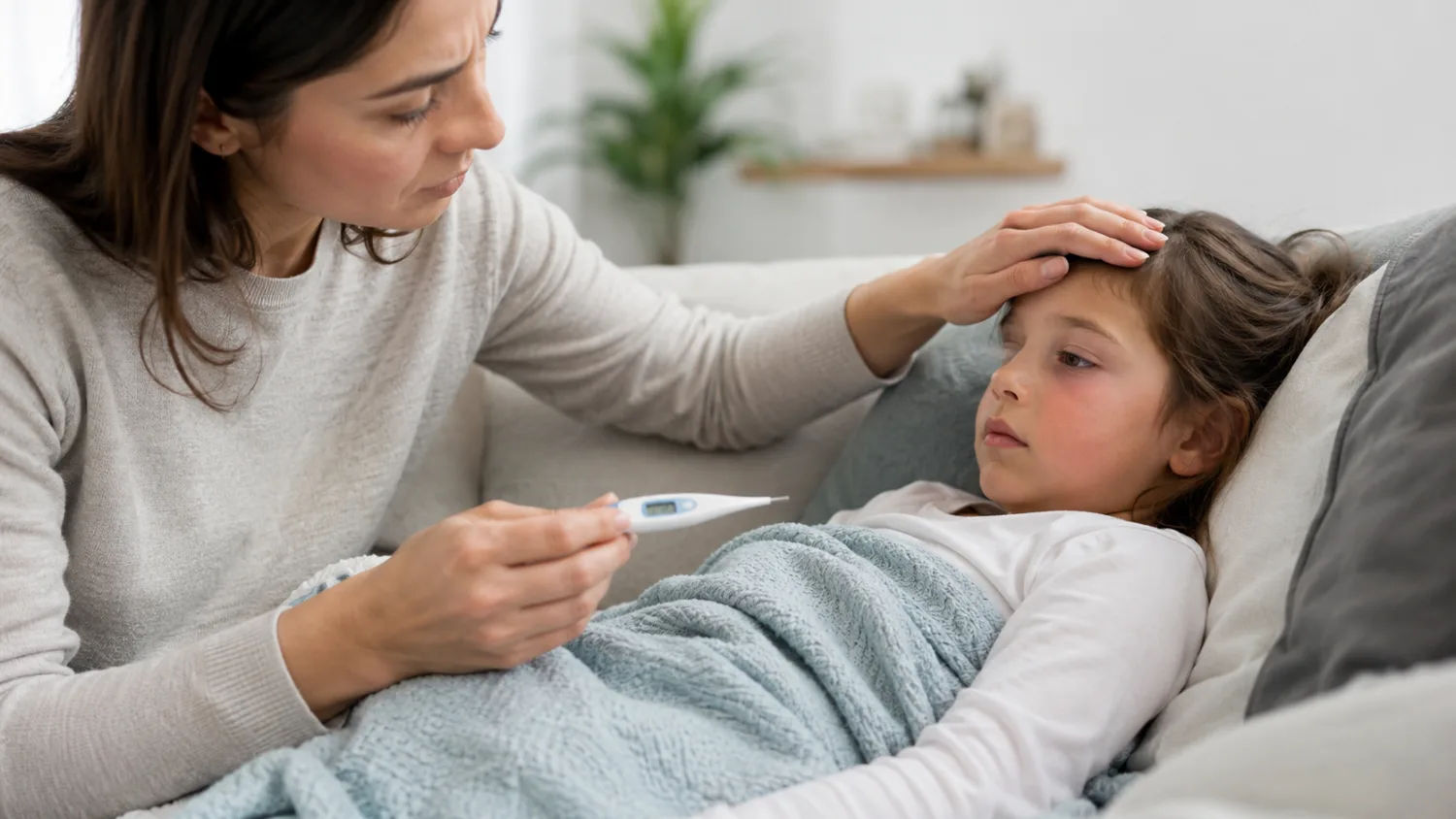
A digital thermometer is the simplest and safest option for home use. For babies and young children, many parents find an underarm thermometer easiest. Follow the thermometer instructions carefully and try to measure when your child has been resting for a few minutes, rather than immediately after a bath, heavy crying, exercise or being wrapped in blankets.
Avoid old-fashioned glass mercury thermometers. Ear thermometers can be quick, but they need careful positioning and may be less reliable if the child is wriggling or has lots of earwax. Forehead strips are convenient, but they are generally less accurate than a digital thermometer.
If your child is clearly unwell, do not delay getting help just because you cannot get a perfect reading. A parent’s concern is important. If your child looks seriously ill, seek help based on how they are behaving, not just the number on the screen.
What usually causes fever in children?
Most childhood fevers are caused by viral infections. These include common colds, flu-like illnesses, viral sore throats, bronchiolitis, croup, viral wheeze, vomiting and diarrhoea, and many childhood rashes. Viral infections usually do not need antibiotics because antibiotics only treat bacterial infections.
Some fevers are caused by bacterial infections, such as a urinary tract infection, some ear infections, pneumonia, tonsillitis caused by certain bacteria, or skin infections. These may need medical assessment and sometimes antibiotics.
Fever can also happen after routine childhood vaccinations. This is usually mild and short-lived, although babies under 3 months with a temperature of 38°C or above should still be treated with extra caution unless you have been specifically advised otherwise after immunisation.
If your child has symptoms that point to a particular problem, it can help to read more around that symptom. For example, fever with a cough may be linked to a cold, chest infection, asthma flare or viral wheeze. Fever with vomiting or loose stools may suggest gastroenteritis and can increase the risk of dehydration. Fever with a rash needs careful attention because most rashes are harmless, but some can signal serious illness.
You may also find these related All Health and Care guides useful: dehydration symptoms in adults and children, tonsillitis symptoms, causes and treatment, spring allergies in children, and hay fever symptoms and treatment.
The first question: how does your child look?
When a child has a fever, the most useful question is not simply “How high is the temperature?” It is “How ill does my child seem?”
A child who is alert, making eye contact, drinking, passing urine and settling with comfort is usually less concerning. They may be miserable, tired and clingy, but they still respond to you in a familiar way.
A child who is unusually drowsy, floppy, confused, difficult to wake, struggling to breathe, has blue lips, has a non-blanching rash, or is not passing urine needs urgent help. The NHS and Healthier Together advice both use this kind of “traffic light” approach: green signs are reassuring, amber signs mean seek advice, and red signs mean urgent or emergency care. You can see a parent-friendly version on Healthier Together’s fever guidance.
When to get urgent medical help
Call 999 or go to A&E now if your child has a fever and any signs of serious illness. These include being very difficult to wake, being floppy or confused, having blue lips, struggling to breathe, having a seizure, developing a stiff neck, being extremely pale or mottled, or having a rash that does not fade when pressed with a glass.
You should also seek urgent help if your child is under 3 months old and has a temperature of 38°C or higher. Babies this young can become seriously unwell quickly, and they may not show the same clear symptoms as older children.
Contact your GP or call NHS 111 promptly if your child is 3 to 6 months old with a temperature of 39°C or higher, has a fever lasting 5 days or more, has signs of dehydration, is getting worse, has persistent vomiting, has a rash as well as fever, or is not their usual self and you are worried. The NHS gives similar thresholds in its guidance on high temperature in children.
Trust your instincts
If you are seriously worried about your child, seek medical advice even if their temperature does not seem very high. Parents and carers often notice subtle changes before anyone else.
The glass test: fever with a rash
Many childhood illnesses cause a rash. Most are not dangerous, but a fever with a rash should always be watched carefully.
One important check is the “glass test”. Press the side of a clear glass firmly against the rash. If the rash does not fade under pressure, this is called a non-blanching rash. A non-blanching rash can be a sign of meningitis or sepsis and needs emergency medical help.
Call 999 if your child has a fever and a rash that does not fade when pressed, especially if they also seem very sleepy, confused, floppy, have a stiff neck, dislike bright lights, have cold hands and feet, or are breathing unusually. For more detailed safety information, see the charity Meningitis Now’s advice on the glass test.
How to look after a child with fever at home
If your child is not showing urgent warning signs, home care is usually about comfort, fluids and observation. You do not need to force the temperature down just to make the thermometer look better. The aim is to help your child feel more comfortable and to spot if they are getting worse.
Offer regular drinks. Breastfed babies may want to feed more often. Bottle-fed babies can continue their usual feeds. Older children may prefer small sips of water, diluted squash, oral rehydration solution, ice lollies or watery foods. Do not worry too much if they eat less for a day or two, but drinking and passing urine are important.
Keep clothing light and the room comfortably cool, but do not make your child cold. Avoid wrapping them in heavy blankets if they are hot. Equally, do not use cold baths, cold showers, ice packs or tepid sponging. These can make a child shiver and feel worse. The NHS advises against sponging children down to reduce a fever.
Let your child rest, but check on them regularly, including during the night if you are concerned. A child who wakes, recognises you, drinks and settles is more reassuring than one who is very hard to rouse or seems unusually confused.
Can children have paracetamol or ibuprofen for fever?
Children’s paracetamol or ibuprofen can help if your child is distressed, uncomfortable or in pain. You do not usually need to give medicine just because the temperature is high if your child is otherwise comfortable.
Always follow the dose instructions on the bottle or sachet and use the measuring syringe or spoon provided. Doses depend on age and sometimes weight, so check the label carefully. Do not give more than the recommended daily dose.
Do not give ibuprofen to babies under 3 months or under 5kg unless a doctor tells you to. Avoid ibuprofen if your child has chickenpox unless advised by a clinician, because it may increase the risk of skin complications. Children under 16 should not be given aspirin unless it has been prescribed by a doctor.
The NHS has clear medicine advice on paracetamol for children and ibuprofen for children.
Should you alternate paracetamol and ibuprofen?
In general, start with one medicine if your child is distressed. If they remain uncomfortable before the next dose is due, you can speak to a pharmacist, GP or NHS 111 for advice. Some clinical guidance allows cautious alternating in certain situations, but it is easy to accidentally give too much if you lose track of timings.
If you do alternate medicines, write down the time, medicine and dose each time you give it. Never exceed the maximum dose for either medicine. If your child needs repeated doses for more than a short period, or they are not improving, it is better to seek advice than simply keep adding medication.
Fever in babies: why age matters
Babies under 3 months are different from older children. Their immune systems are still developing, and serious infections may not show obvious symptoms at first. That is why a temperature of 38°C or above in a baby under 3 months should be discussed urgently with a healthcare professional.
In babies, look for changes in feeding, fewer wet nappies, unusual sleepiness, weak or high-pitched crying, breathing difficulty, a rash, vomiting, or a colour change such as looking very pale, blue or mottled. If your baby seems seriously unwell, call 999.
For babies aged 3 to 6 months, a temperature of 39°C or above should also prompt medical advice. For older babies and children, the overall picture becomes more important: alertness, breathing, hydration, rash, pain and whether they are getting better or worse.
Fever and dehydration
Children lose more fluid when they have a fever, especially if they are also vomiting, having diarrhoea, breathing fast or not drinking normally. Dehydration can creep up gradually, so it is worth checking nappies, toilet trips and general alertness.
Signs of dehydration include fewer wet nappies or passing urine much less often, dark urine, dry mouth, no tears when crying, sunken eyes, unusual drowsiness, dizziness, or cold hands and feet. Babies may have a sunken soft spot on the head.
If you are worried about dehydration, read our guide to dehydration symptoms in adults and children and contact NHS 111 or your GP if your child is not drinking, has repeated vomiting, or is passing much less urine than usual.
Fever seizures: what if my child has a fit?
Some young children have a seizure when their temperature rises. These are called febrile seizures or febrile convulsions. They are most common between around 6 months and 5 years. They can be terrifying to watch, even though many are brief and do not cause long-term harm.
If your child has a seizure, place them on their side on a safe surface, move objects away from them, do not put anything in their mouth, and note the time. Call 999 if it is their first seizure, if the seizure lasts more than 5 minutes, if they have trouble breathing, if they do not recover as expected, or if you are seriously worried.
After any first seizure, your child should be medically assessed. The NHS has more information about febrile seizures.
Does the height of the fever tell you how serious it is?
Not always. A high temperature can happen with a simple viral illness, while a serious infection may sometimes cause only a modest fever. The number matters most at certain ages — especially under 3 months and 3 to 6 months — but in older children the bigger clues are behaviour, breathing, hydration, rash, pain and whether symptoms are improving.
That said, a temperature that stays high for several days, keeps returning, or comes with worrying symptoms should be assessed. The NHS advises seeking help if a child’s high temperature lasts for 5 days or more.
When fever may suggest a specific illness
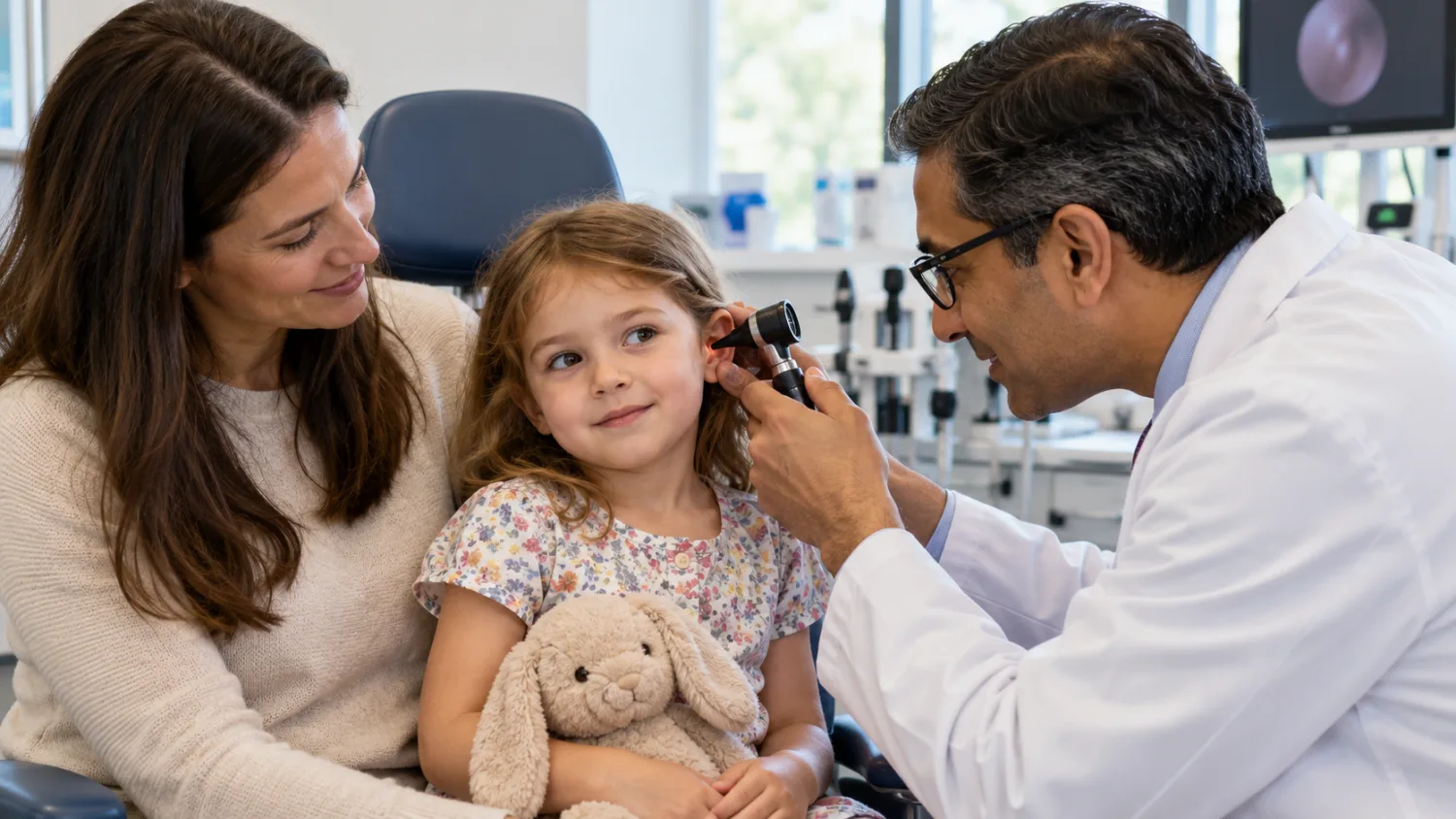
Fever with ear pain, pulling at the ear or poor sleep may suggest an ear infection. Fever with sore throat, swollen glands and difficulty swallowing may suggest tonsillitis or another throat infection. Fever with cough, fast breathing or chest indrawing may suggest a chest infection, bronchiolitis, croup or wheeze.
Fever with vomiting and diarrhoea often points towards a tummy bug, but severe tummy pain, green vomit, blood in the stool, signs of dehydration or pain that moves to the lower right side of the abdomen needs medical advice.
Fever with pain when passing urine, tummy pain, wetting accidents, smelly urine or unexplained irritability may suggest a urinary tract infection. In younger children, a UTI can show up simply as fever without an obvious source, which is one reason persistent fever should not be ignored.
Fever with a widespread rash may be caused by many childhood infections. Some, such as chickenpox, hand, foot and mouth disease, scarlet fever or measles, have particular patterns and school or nursery implications. If your child has fever and rash and you are unsure, seek advice before sending them into a childcare setting.
Should my child go to nursery or school with a fever?
No. A child with a fever should stay at home until they are well enough and the fever has settled. Even if the illness is mild, they may need rest, fluids and observation, and they may be infectious to other children.
Different infections have different return-to-school rules. For example, UK Health Security Agency guidance gives specific exclusion advice for infections such as impetigo, scarlet fever, diarrhoea and vomiting, and chickenpox. If your child has a named infection, check official UKHSA guidance for schools and childcare settings or ask your nursery, school, pharmacist or GP surgery.
What not to do when your child has a fever
Do not use cold baths, ice packs or alcohol rubs. Do not wrap a hot child in lots of blankets to “sweat it out”. Do not give adult medicines, aspirin, leftover antibiotics, or cough and cold remedies that are not suitable for your child’s age.
Do not rely only on fever-reducing medicine to judge whether your child is safe. A child whose temperature comes down but remains floppy, confused, breathless, dehydrated or very unwell still needs medical attention.
Finally, do not feel you are “bothering” the NHS if your child seems seriously unwell. Fever is common, but parents are not expected to diagnose serious illness at home. Services such as NHS 111 exist to help you decide what to do next.
A simple way to monitor your child at home
If your child is well enough to stay at home, keep a simple note of their symptoms. Write down their temperature, medicines given, fluid intake, wet nappies or toilet trips, and any new symptoms such as rash, breathing changes, pain, vomiting or diarrhoea.
This is useful because feverish illnesses can change over time. A child may seem stable in the morning and worse by evening. If you later speak to a pharmacist, GP or NHS 111, clear details will help them judge the situation more safely.
As a general rule, your child should gradually become brighter, drink more and need less medicine as they recover. If the direction is the opposite — they are becoming more sleepy, drinking less, breathing harder, passing less urine or developing new symptoms — seek medical advice.
Key takeaways
Fever is common in children and usually means the body is fighting an infection. In many cases, children recover with rest, fluids and comfort at home. The safest approach is to look at the whole child, not just the thermometer reading.
Get urgent help for babies under 3 months with a temperature of 38°C or above, children with breathing difficulty, blue lips, a seizure, a non-blanching rash, severe drowsiness, confusion, signs of dehydration or any child who seems seriously unwell. Contact your GP or NHS 111 if the fever lasts 5 days or more, your child is getting worse, or you are worried.
Medical disclaimer: This guide is for general information only and is not a substitute for medical advice. If you are worried about your child, contact your GP, pharmacist, NHS 111, or call 999 in an emergency.
FAQs about fever in children
What temperature is a fever in a child?
A temperature of 38°C or above is usually considered a fever in children. However, your child’s behaviour, breathing, hydration and other symptoms are just as important as the number on the thermometer.
When should I worry about my child’s fever?
You should seek urgent advice if your child is under 3 months with a temperature of 38°C or above, 3 to 6 months with a temperature of 39°C or above, has a fever lasting 5 days or more, has signs of dehydration, has a rash, is struggling to breathe, is unusually sleepy, or is not their usual self and you are worried.
When should I call 999 for a fever?
Call 999 if your child has blue lips, severe breathing difficulty, a seizure, a stiff neck, a rash that does not fade when pressed, is very difficult to wake, is floppy or confused, or looks seriously ill.
Should I wake my child to give fever medicine?
Usually, no. If your child is sleeping comfortably, you do not normally need to wake them just to give paracetamol or ibuprofen. However, if you are worried about their breathing, colour, hydration or responsiveness, check on them and seek medical advice if something does not seem right.
Is 40°C dangerous for a child?
A temperature of 40°C can happen with common infections, but it should be taken seriously, especially if your child looks very unwell, is drowsy, dehydrated, has breathing difficulty, has a rash, or the fever is not settling. Seek medical advice if you are concerned, and urgent help if there are red-flag symptoms.
Can teething cause a fever?
Teething may make babies unsettled and slightly warm, but it should not usually cause a true high fever. If your baby has a temperature of 38°C or above, especially under 3 months, do not assume it is just teething.
Can I give paracetamol and ibuprofen together?
Do not give both at exactly the same time unless a healthcare professional advises it. You can start with one medicine if your child is distressed. If it does not help, ask a pharmacist, GP or NHS 111 for advice. If alternating medicines, record each dose carefully to avoid giving too much.
Should I sponge my child with cold water?
No. Cold sponging, cold baths and ice packs are not recommended. They can make your child shiver and feel worse. Keep them comfortable, lightly dressed and offer regular fluids.
How long should a child’s fever last?
Many viral fevers improve within 2 to 3 days, although some last longer. Contact your GP or NHS 111 if your child’s high temperature lasts 5 days or more, or sooner if they are getting worse or have worrying symptoms.
Can my child go to school or nursery with a fever?
No. A child with a fever should stay at home until they are well enough and the fever has settled. Some infections have specific exclusion rules, so check school, nursery or UKHSA guidance if your child has a diagnosed infectious illness.
What if my child has a fever but no other symptoms?
A fever with no obvious symptoms can still be caused by a viral infection, but it can also happen with infections such as a urinary tract infection. If the fever persists, your child is under 6 months, or you are worried, seek medical advice.
What is the most important thing to watch?
Watch your child, not just the thermometer. Breathing, alertness, drinking, urine output, skin colour, rash, pain and whether they are improving or getting worse are the most important clues.