The UK childhood vaccination programme protects children against serious infections at the ages when they are most vulnerable. Some vaccines begin when a baby is just eight weeks old, while others are offered later through schools.
The schedule can look complicated, especially after the changes introduced in 2025 and 2026. These included moving some infant vaccines to different appointments, adding an 18-month vaccination visit and replacing the routine MMR vaccine for young children with MMRV, which also protects against chickenpox.
This guide explains the current schedule in plain English. The core programme is broadly similar across the UK, but invitations, catch-up arrangements and school programmes can vary between England, Scotland, Wales and Northern Ireland. Always follow the appointment offered by your local NHS service.
What does the childhood vaccination programme protect against?
Routine vaccinations train a child’s immune system to recognise particular bacteria or viruses. If the child encounters the infection later, their body is better prepared to fight it.
The programme protects against diseases that can cause severe illness, disability or death, including:
- diphtheria, tetanus and whooping cough
- polio
- Haemophilus influenzae type b, known as Hib
- hepatitis B
- meningococcal disease
- pneumococcal disease
- rotavirus
- measles, mumps and rubella
- chickenpox
- human papillomavirus, or HPV
- flu
Some of these infections may sound uncommon. That is partly because vaccination has greatly reduced their spread. They have not disappeared, however, and outbreaks can occur when vaccination rates fall. Measles, for example, is highly infectious and can sometimes cause pneumonia, inflammation of the brain or other serious complications. You can read more in our guide to measles symptoms and risks.
All routine childhood vaccinations offered by the NHS are free.
UK childhood vaccination schedule at a glance
The following table summarises the routine schedule applying to children entering the programme in 2026. A child’s exact schedule may differ because of their date of birth, health, previous vaccinations or local arrangements.
| Age | Vaccinations usually offered | What they protect against |
|---|---|---|
| 8 weeks | First 6-in-1 vaccine, first MenB vaccine and first rotavirus vaccine | Diphtheria, tetanus, whooping cough, polio, Hib, hepatitis B, meningococcal B disease and rotavirus |
| 12 weeks | Second 6-in-1 vaccine, second MenB vaccine and second rotavirus vaccine | The same infections covered at 8 weeks |
| 16 weeks | Third 6-in-1 vaccine and pneumococcal vaccine | Six serious infections plus pneumococcal disease |
| 1 year | MMRV vaccine, MenB booster and pneumococcal booster | Measles, mumps, rubella, chickenpox, meningococcal B disease and pneumococcal disease |
| 18 months | Fourth 6-in-1 vaccine and MMRV vaccine for eligible children | Boosts protection against several infections, including measles and chickenpox |
| 3 years and 4 months | Preschool 4-in-1 booster; some children also receive MMRV | Diphtheria, tetanus, whooping cough and polio, with MMRV according to date of birth |
| Every year for eligible children | Flu vaccine | Seasonal influenza |
| 12 to 13 years | HPV vaccine | Cancers and other conditions caused by human papillomavirus |
| Around 14 years | Teenage 3-in-1 booster and MenACWY vaccine | Tetanus, diphtheria, polio and meningococcal groups A, C, W and Y |
The government’s complete UK routine immunisation schedule contains the detailed clinical timetable. Parents in England can also check the NHS vaccination schedule.
Vaccinations at 8, 12 and 16 weeks
The first routine appointment is usually offered when a baby is eight weeks old. Babies receive several vaccines during the same visit because they need protection early in life. Their immune systems can safely respond to many vaccine components at once.
The 6-in-1 vaccine is given at 8, 12 and 16 weeks. It protects against six diseases: diphtheria, tetanus, whooping cough, polio, Hib and hepatitis B.
The MenB vaccine protects against meningococcal group B bacteria, which can cause meningitis and septicaemia. It is normally given at eight and 12 weeks, followed by a booster at one year. MenB vaccination commonly causes a temperature in babies, particularly when given alongside other vaccines.
The rotavirus vaccine is given as liquid into the baby’s mouth at eight and 12 weeks. It protects against a highly infectious stomach infection that can cause severe diarrhoea, vomiting and dehydration. There are upper age limits for its doses, so contact the GP surgery promptly if an appointment is missed.
At 16 weeks, babies usually receive their third 6-in-1 dose and a pneumococcal vaccine. Pneumococcal bacteria can cause pneumonia, meningitis and bloodstream infections, as well as some less serious illnesses.
The timing changed in July 2025: the second MenB dose moved from 16 to 12 weeks, while the first pneumococcal dose moved from 12 to 16 weeks. This means an older sibling’s Red Book may show a different schedule without either record being wrong.
Vaccinations at 12 and 18 months
At around one year, children are normally offered an MMRV vaccine, a MenB booster and a pneumococcal booster.
MMRV is a combined vaccine protecting against measles, mumps, rubella and varicella, the virus that causes chickenpox. It replaced routine MMR for young children from January 2026. Combining the four components means children can receive broad protection with fewer injections and appointments.
A new routine appointment at 18 months was also introduced in January 2026. Children born on or after 1 July 2024 are offered a fourth 6-in-1 dose at this appointment. MMRV is also given, but the number and timing of MMRV doses depend on the child’s birth date:
- Born on or after 1 January 2025: MMRV is normally offered at 12 and 18 months.
- Born from 1 July to 31 December 2024: MMRV is normally offered at 18 months and again at 3 years and 4 months. These children may already have received MMR at one year.
- Born from 1 September 2022 to 30 June 2024: one MMRV dose is normally offered at 3 years and 4 months, following the earlier MMR dose.
- Born from 1 January 2020 to 31 August 2022: eligible children who have not had chickenpox or a chickenpox vaccine are due to be contacted about a catch-up MMRV dose between November 2026 and March 2028.
These transitional arrangements are based on the programme in England. Other UK nations have also introduced MMRV, but their catch-up delivery may differ. Your child’s invitation and vaccination record are the best guide to what they need.
Having had chickenpox does not remove the need for protection against measles, mumps and rubella. Tell the vaccination team about any confirmed or suspected previous chickenpox so they can check the appropriate vaccine.
Preschool and teenage vaccinations
At around 3 years and 4 months, children receive a preschool booster covering diphtheria, tetanus, whooping cough and polio. Depending on their date of birth and previous doses, they may also receive MMRV at this appointment.
These boosters matter because protection from some early vaccines can reduce over time. The appointment strengthens immunity before children spend more time in school, where infections can spread quickly.
At around 12 to 13 years, both girls and boys are offered the HPV vaccine, usually through school. HPV is a very common virus. Persistent infection with certain types can cause cervical cancer and several other cancers, including cancers of the mouth, throat, anus and genitals. Vaccination works particularly well when given before exposure to the virus.
At around 14 years, usually in school Year 9 in England, young people are offered:
- a teenage booster against tetanus, diphtheria and polio; and
- the MenACWY vaccine against four groups of meningococcal bacteria.
If a child is home educated, absent on vaccination day or does not attend a mainstream school, they are still entitled to these vaccines. Contact the local school-age immunisation team, GP practice or local health service to arrange them.
Annual flu vaccination for children
The NHS offers flu vaccination to eligible children every autumn or early winter. The ages and school years included can change from one season to the next, so check the invitation or current guidance for your part of the UK.
Most children receive a nasal spray. It is quick, painless and contains weakened flu viruses that cannot cause flu. Some children cannot have the nasal vaccine—for example, because of certain medical conditions or treatments—and may be offered an injected vaccine instead.
Flu is often more severe than an ordinary cold. Children can become seriously unwell, and they can pass the infection to babies, older relatives and people with weakened immune systems. Vaccination helps protect the child and reduces wider transmission.
Extra vaccines for children at higher risk
The routine schedule is designed for most children, but some need additional protection because of their health, family circumstances or likelihood of exposure.
BCG vaccination against tuberculosis may be offered shortly after birth to babies at greater risk. This can include babies living in an area with high rates of tuberculosis or those with a parent or grandparent born in a country where tuberculosis is common.
Babies born to a mother with hepatitis B require additional hepatitis B vaccination from birth and follow-up testing. This is arranged alongside the routine schedule.
Children with certain long-term conditions or weakened immune systems may be offered extra flu, pneumococcal or meningococcal vaccines. Recommendations can apply to children with conditions affecting the heart, lungs, kidneys, liver or spleen, as well as those receiving treatments that suppress immunity.
Travel may create different vaccination needs. Some babies aged 6 to 11 months are offered an early measles-containing vaccine before travel to an area with a measles outbreak or high risk. An early dose does not replace the routine doses given later. Ask a GP surgery or travel clinic well before departure.
What if a vaccination is late or missed?
Being late does not normally mean the entire course has to be restarted. The vaccination team can check which doses have already been given and create an appropriate catch-up plan.
Contact your GP surgery or local vaccination service if:
- your child has missed an appointment;
- you have recently moved to another part of the UK;
- your child was vaccinated abroad;
- their vaccination history is incomplete or uncertain;
- you have lost the Red Book; or
- you think a school-age vaccination was missed.
Bring any records you have, including documents from another country. If reliable records cannot be found, clinicians may recommend catch-up vaccination. Receiving an additional dose of many routine vaccines is generally safer than leaving a child potentially unprotected, although the decision is made individually.
There is no need to wait until the next routine appointment to mention a missing vaccine. Some vaccines have age limits or work best when given promptly.
What happens at a vaccination appointment?
Before vaccination, a nurse or another trained professional will check the child’s identity, age and vaccination history. They will ask about allergies, current illness, previous reactions and medicines or treatments that may affect the immune system.
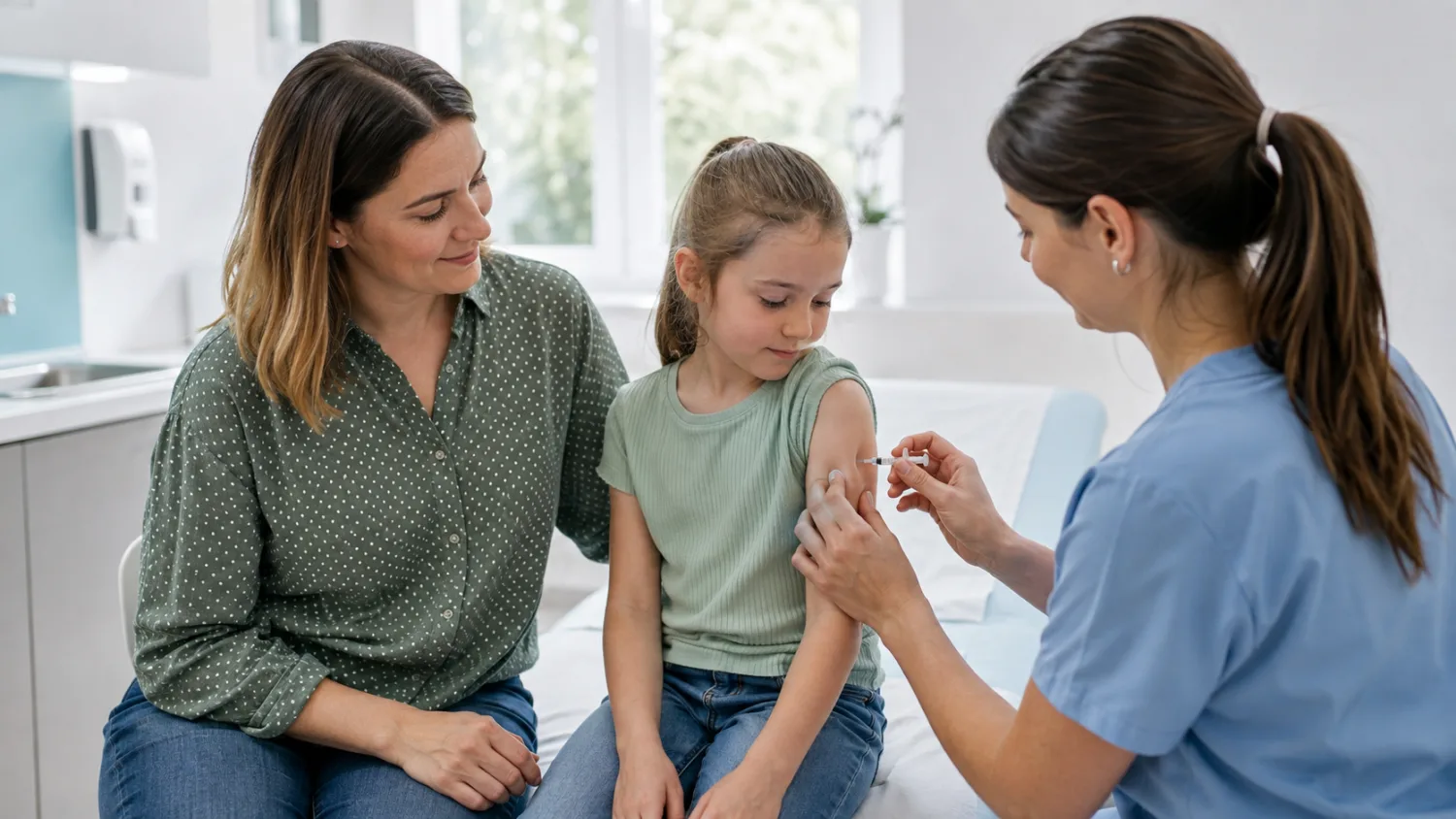
Babies usually receive injections in the thigh, while older children are commonly vaccinated in the upper arm. Rotavirus vaccine is given by mouth, and the usual childhood flu vaccine is given as a nasal spray.
It is fine to ask which vaccines are being given, what they contain and which side effects to expect. If your family has religious, ethical or allergy-related concerns about an ingredient such as gelatine, raise these before the appointment. The team can explain the available products and whether a suitable alternative exists.
Bring the child’s Red Book or other vaccination record where possible. Dress babies and young children in clothes that make their thighs or upper arms easy to reach. Feeding, cuddling, distraction and a favourite toy can all help make the appointment less stressful.
Premature babies are usually vaccinated according to their actual age from birth, rather than their corrected age. This is because they may be especially vulnerable to infection. The neonatal or vaccination team will advise if an individual baby needs a different plan.
Side effects and when to seek medical help
Most vaccine reactions are mild and settle within a few days. The injection site may become sore, red or slightly swollen. A child may be irritable, sleepy, less hungry than usual or develop a mild temperature.
After a live vaccine such as MMRV, a mild fever or rash can appear later rather than immediately. A few chickenpox-like spots may develop. These reactions are usually much milder than the infections themselves.
Fever is particularly common after infant MenB vaccination. Parents may be advised to give infant paracetamol after certain MenB appointments. Follow the instructions provided by the vaccination team and use the correct product and dose for the child’s age. Do not give aspirin to anyone under 16 unless it has been specifically prescribed.
Our guide to fever in children explains how to monitor a temperature and when to get advice. If a rash appears, you may also find our overview of common childhood rashes helpful.
Serious allergic reactions are very rare, and vaccination staff are trained and equipped to treat them. Call 999 if a child has difficulty breathing, swelling of the mouth or throat, becomes limp or unresponsive, collapses, or has another sign of a severe allergic reaction.
Get urgent medical help if a child seems seriously unwell, has a seizure lasting more than five minutes, develops a rash that does not fade under a clear glass, is difficult to wake or shows signs of severe dehydration. Do not assume that a serious symptom is simply a vaccine reaction.
When might vaccination need to be delayed?
A minor cough, cold or runny nose without a significant fever is not usually a reason to postpone vaccination. Delaying unnecessarily leaves a child without protection for longer.
The team may rearrange an appointment if the child is acutely unwell with a high temperature. Certain vaccines may also be unsuitable after a severe allergic reaction to an earlier dose or one of its ingredients.
Live vaccines, including MMRV and the nasal flu vaccine, may not be appropriate for children with severe immune suppression or those taking particular medicines. Pregnancy is also relevant for some live vaccines in older teenagers. These situations need individual clinical advice rather than a decision made at home.
If you are unsure, contact the vaccination provider before cancelling. In many cases the appointment can go ahead safely.
Frequently asked questions
Can children safely receive several vaccines at once?
Yes. The recommended combinations have been studied for safety and effectiveness. A child’s immune system encounters many more substances during ordinary daily life than are contained in vaccines. Giving vaccines together also provides protection sooner and avoids additional appointments.
Do childhood vaccines cause autism?
No reliable evidence shows that vaccines cause autism. The original publication suggesting a connection with MMR was found to be seriously flawed and was retracted. Large studies involving many children have found no link between MMR vaccination and autism.
Can my child be vaccinated with a cold?
Usually, yes. A mild cold without a high temperature is not normally a reason to delay. Tell the nurse how the child has been feeling so they can assess them before vaccination.
What happens if my child has already had chickenpox?
Tell the vaccination team. Previous chickenpox may affect catch-up arrangements, but the child still needs protection against measles, mumps and rubella. Do not deliberately expose a child to chickenpox; the infection can occasionally cause serious complications. Our guide to chickenpox in children and adults explains the symptoms and risks.
Why does my older child’s Red Book show different timings?
The programme changed in July 2025 and January 2026. MenB and pneumococcal timings were adjusted, an 18-month visit was added for eligible children, and MMRV began replacing routine MMR for young children. Follow the schedule based on each child’s date of birth rather than copying a sibling’s appointments.
What if we do not have a Red Book?
Your GP practice should hold a vaccination record, and school immunisation services may hold details of vaccines given at school. Ask them to check their systems. A missing paper record does not prevent a child from receiving catch-up vaccination.
Are vaccinations compulsory in the UK?
Routine childhood vaccinations are not generally compulsory in the UK. Parents or carers are asked to give consent after receiving information about benefits and risks. Older children who understand the decision sufficiently may sometimes be able to provide their own consent under established legal and clinical principles.
Where can I check the schedule for my part of the UK?
Use the information sent by your local vaccination provider. You can also consult the NHS in England, NHS inform in Scotland, Public Health Wales or nidirect in Northern Ireland. If the online timetable differs from an invitation, ask the vaccination team, as transitional arrangements may depend on the child’s exact date of birth.
This article provides general information and is not a substitute for advice from your child’s GP, health visitor or vaccination team.