Chickenpox is a common viral infection best known for causing an itchy, blister-like rash. Many people think of it as a normal childhood illness, and in many children it is mild. But chickenpox can still be unpleasant, highly contagious and, in some people, more serious than expected.
Children often recover at home with simple care, fluids, rest and itch relief. Adults, pregnant women, newborn babies and people with weakened immune systems have a higher risk of complications and may need medical advice earlier. Chickenpox can also be confused with other rashes, insect bites, hand, foot and mouth disease, impetigo, shingles or allergic reactions.
This guide explains what chickenpox looks like, how it spreads, how long it is contagious, what helps at home, when children should stay off nursery or school, what adults should know, when to seek urgent help, and how vaccination now fits into UK care.
Quick answer: Chickenpox is caused by the varicella-zoster virus. It usually causes a fever, tiredness and an itchy rash that turns into fluid-filled blisters before scabbing over. It spreads very easily and is contagious from around 1 to 2 days before the rash appears until all spots have crusted over. Most children recover at home, but adults, pregnant women, newborn babies and people with weakened immune systems should seek advice because complications are more likely.
What is chickenpox?
Chickenpox, also called varicella, is an infection caused by the varicella-zoster virus. It is one of the classic childhood infections, but adults can catch it too if they have not had chickenpox before and have not been vaccinated.
The infection usually starts with feeling generally unwell, followed by an itchy rash. The rash develops in crops, which means new spots can appear while older spots are turning into blisters or scabs. This is one reason chickenpox can look different from one day to the next.
The same virus can later reactivate in life as shingles. Chickenpox is the first infection. Shingles is reactivation of the virus that has remained dormant in the body after earlier infection.
The NHS describes chickenpox as common and mostly affecting children, but it can occur at any age. It is highly infectious and usually gets better by itself, although some people are at higher risk of complications. NHS chickenpox guidance.
Chickenpox symptoms: how it usually starts
Chickenpox does not always begin with the rash. Some children seem a little tired, warm or off their food before spots appear. Adults may feel more flu-like, with aching, headache and fever before the rash becomes obvious.
Early symptoms can include:
- fever or high temperature
- tiredness
- headache
- aching muscles
- loss of appetite
- feeling generally unwell
- sore throat or mild cough in some cases
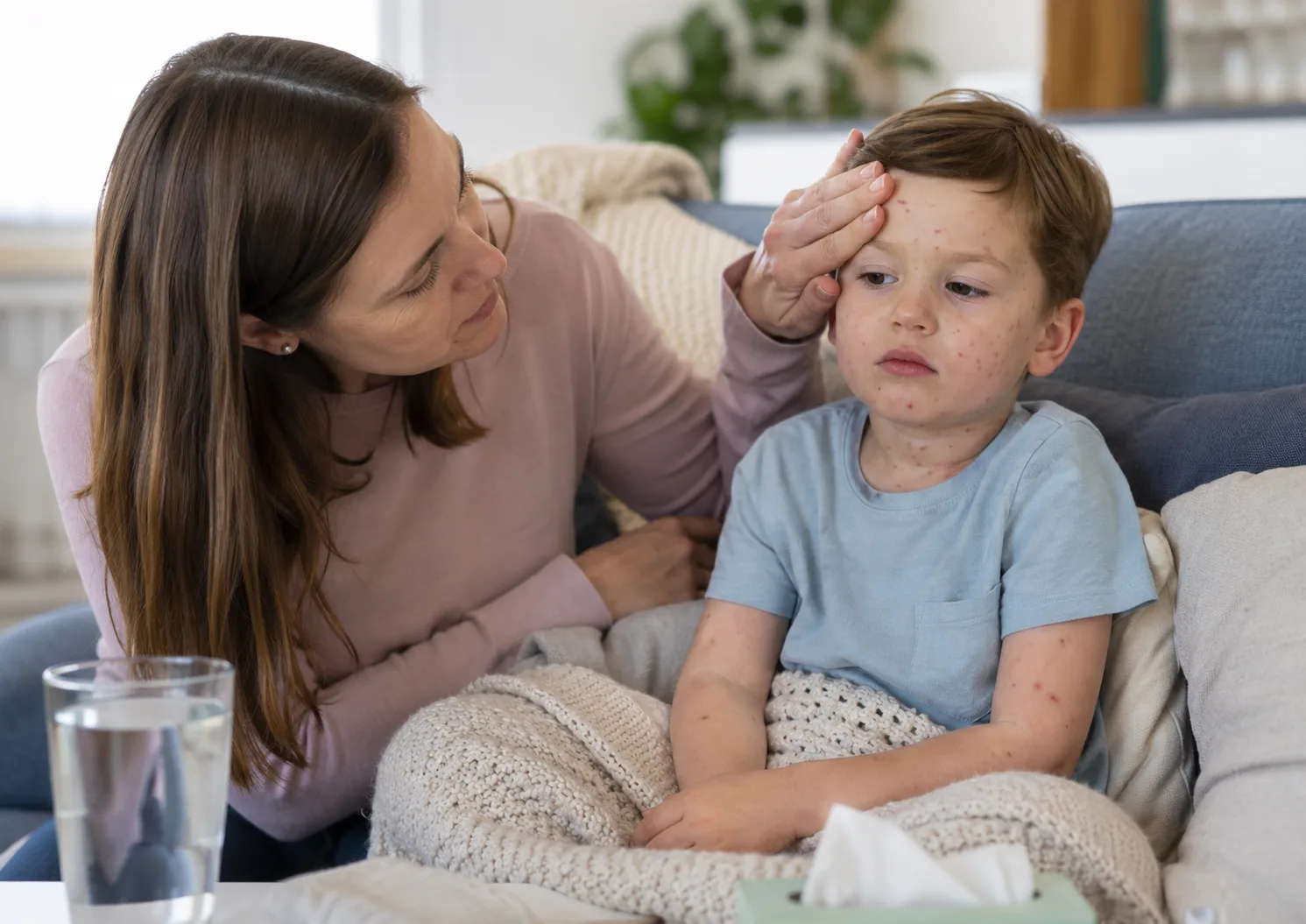
The rash then appears as small red or pink spots, which become raised bumps and then fluid-filled blisters. These blisters eventually burst or dry out and form scabs.
If a child’s main symptom is fever, see fever in children: when to worry and what to do. For adults with fever and body aches, see fever in adults and flu-like symptoms: cold, flu, COVID or something else?.
What does the chickenpox rash look like?
The chickenpox rash is usually itchy and appears in stages. A typical feature is that spots are at different stages at the same time: some are flat red spots, some are small blisters, and some have already scabbed.
The rash often starts on the chest, back, tummy, face or scalp, then spreads. Spots can also appear inside the mouth, on the eyelids, around the genitals or in other sensitive areas.
A typical chickenpox rash may include:
- small red or pink spots
- raised bumps
- fluid-filled blisters
- itching
- spots in different stages at the same time
- scabs as the blisters dry out
Some children only have a few spots. Others have many. Vaccinated children who still catch chickenpox often have milder illness, fewer spots and less obvious blistering, although they may still be contagious.
Chickenpox can look similar to other conditions. If you are unsure, our guides to common rashes in children, rash in adults, insect bites and stings, ringworm and itchy skin may help you compare patterns.
How chickenpox spreads and how long it is contagious
Chickenpox spreads very easily. It can pass from person to person through close contact, droplets in the air, and contact with fluid from the blisters. You can catch chickenpox from someone with chickenpox, and in some situations from direct contact with shingles blisters if you are not immune.
Chickenpox usually develops around 1 to 3 weeks after exposure. The infectious period starts before the rash is obvious, which is why it can spread quickly through households, nurseries and schools.
In general, someone with chickenpox is contagious:
- from about 1 to 2 days before the rash appears
- until all spots have crusted over
The NHS advises staying away from nursery, school or work until all spots have formed a scab. This is usually about 5 days after the rash first appeared, but it can take longer if new spots keep appearing.
Chickenpox can spread rapidly in families. If one child gets it, siblings who are not immune may develop symptoms later. People at higher risk, such as pregnant women, newborn babies and people with weakened immune systems, should avoid contact and seek advice after exposure.
Chickenpox in children: what parents should know
In healthy children, chickenpox is usually managed at home. The most difficult parts are often fever, itching, disturbed sleep and keeping the child from scratching. Children may feel miserable for a few days, then gradually improve as spots scab over.
Home care usually focuses on:
- fluids to reduce dehydration risk
- rest
- paracetamol for fever or discomfort, if suitable
- itch relief
- keeping nails short
- preventing scratching and skin infection
- keeping the child away from school or nursery until spots scab
Do not give aspirin to children. Avoid using ibuprofen for chickenpox unless a doctor specifically advises it. The NHS warns not to use ibuprofen for chickenpox unless advised by a doctor, because it may increase the risk of serious skin infections.
If the child is drinking poorly, vomiting, very sleepy, confused, breathing fast, has a stiff neck, has infected-looking spots, or is getting worse instead of better, seek medical advice.
For related childhood illness guidance, see coughs and colds in children, vomiting and diarrhoea in children, sore throat and dehydration symptoms in adults and children.
Chickenpox in adults: why it can be more serious
Adults can catch chickenpox if they have never had it before and have not been vaccinated. Chickenpox in adults is often more unpleasant than in children. Fever, headache, muscle aches, tiredness and the rash can be more severe.
Adults also have a higher risk of complications, especially chickenpox pneumonia. NICE notes that complications can include pneumonia, hepatitis and encephalitis, and that primary viral pneumonia is the most common complication in adults, with smokers at particular risk. NICE CKS chickenpox complications.
Adults should seek medical advice promptly if they develop chickenpox and:
- are pregnant or might be pregnant
- have a weakened immune system
- have a long-term lung condition
- smoke
- have severe symptoms
- develop cough, chest pain or shortness of breath
- develop confusion, severe headache or neck stiffness
- have a widespread, severe or infected rash
Antiviral medicine may be considered for some adults or higher-risk people, especially if started early. This is one reason not to delay asking for advice if you are an adult with new chickenpox symptoms.
Chickenpox, pregnancy, newborn babies and weakened immunity
Chickenpox needs extra caution in pregnancy, newborn babies and people with weakened immune systems. In these groups, the infection can be more serious, and post-exposure treatment may be needed if they have been in contact with chickenpox or shingles and are not immune.
Seek advice urgently if you have been exposed to chickenpox or shingles and you:
- are pregnant and have not definitely had chickenpox or vaccination
- have a newborn baby who has been exposed
- have a weakened immune system
- are receiving chemotherapy, high-dose steroids or immune-suppressing treatment
- have had a transplant
- have certain blood cancers or immune conditions
UKHSA guidance on post-exposure prophylaxis explains that some at-risk contacts may need assessment for preventative treatment after exposure to varicella or shingles. UKHSA/GOV.UK chickenpox and shingles post-exposure guidance.
The Royal College of Obstetricians and Gynaecologists states that if a pregnant woman is not immune to varicella-zoster virus and has had significant exposure, she should be offered post-exposure prophylaxis. RCOG chickenpox in pregnancy guidance.
If you are pregnant and have been exposed, do not wait to see whether a rash develops. Contact your GP, midwife, maternity unit or NHS 111 for advice.
What helps chickenpox at home?
Most healthy children and some adults with mild illness can recover at home. Treatment is mainly about comfort, itch control, fluids and watching for complications.
Helpful steps include:
- drink plenty of fluids
- use paracetamol for fever or discomfort, if suitable
- keep skin cool
- wear loose, soft clothing
- keep nails short
- avoid scratching
- try calamine lotion or cooling gels if they help
- ask a pharmacist about antihistamines for itching, especially at night
- bathe in lukewarm water rather than hot water
- pat skin dry rather than rubbing
A pharmacist can advise on itch relief, fever medicines and safe options for children. See when to see a pharmacist instead of a GP.
Try to prevent scratching because broken skin can become infected. Signs of skin infection include increasing redness, warmth, swelling, pain, pus, spreading tenderness or the child becoming more unwell.
For mouth spots, soft cool foods and fluids may be easier. Avoid acidic or salty foods if they sting. If a child is not drinking enough, watch for dehydration signs such as dry mouth, fewer wet nappies, dark urine, dizziness or unusual sleepiness.
What to avoid with chickenpox
Some everyday choices can make chickenpox worse or increase risk.
Avoid:
- scratching spots
- hot baths or overheating
- tight, scratchy clothing
- aspirin in children
- ibuprofen unless a doctor advises it
- contact with pregnant women, newborn babies and immunosuppressed people
- school, nursery or work until spots have crusted over
Adults and children should also avoid visiting hospitals, care homes or vulnerable people while contagious unless medical care is needed. If you need medical advice, call first rather than walking into a waiting room, so the service can reduce the risk of spreading infection.
Chickenpox vaccine in the UK
Chickenpox vaccination has changed in the UK. From January 2026, the MMRV vaccine replaced MMR in the routine childhood schedule for eligible children. MMRV protects against measles, mumps, rubella and chickenpox.
The NHS says the MMRV vaccine is usually given to children at 12 months and 18 months, with eligibility depending on date of birth, and some older children are also offered it. NHS MMRV vaccine guidance.
GOV.UK guidance explains the introduction of the routine varicella MMRV vaccination programme for children at one year and 18 months. GOV.UK MMRV programme guidance.
Vaccination greatly reduces the chance of chickenpox and severe disease, but no vaccine is 100% perfect. If a vaccinated child develops chickenpox, it may be milder, with fewer spots and less blistering.
The vaccine is a live vaccine, so it is not suitable for some people with severely weakened immune systems. If you are unsure about eligibility, missed doses or vaccine safety, speak to your GP surgery.
When to seek medical advice urgently
Chickenpox is usually mild, but some symptoms need medical advice. It is better to call NHS 111, your GP surgery or the relevant service first, rather than walking into a clinic while contagious.
Seek medical advice if:
- an adult develops chickenpox
- a pregnant person has chickenpox or has been exposed and is not sure they are immune
- a newborn baby is exposed or develops symptoms
- the person has a weakened immune system
- the rash is very severe, painful or infected-looking
- there is cough, chest pain or shortness of breath
- there is severe headache, stiff neck, confusion or drowsiness
- the fever is high, persistent or the person is getting worse
- the person is not drinking or may be dehydrated
- spots appear near or inside the eye
- you are unsure whether it is chickenpox or another rash
Call 999 if there is severe breathing difficulty, blue lips, collapse, severe confusion, seizure, signs of sepsis, or symptoms that feel like a medical emergency.
Related guides include shortness of breath, urgent eye problems, swollen lymph nodes and how to get a GP appointment quickly.
Frequently asked questions
What is chickenpox?
Chickenpox is a contagious infection caused by the varicella-zoster virus. It usually causes fever, tiredness and an itchy rash that turns into fluid-filled blisters and then scabs.
Is chickenpox serious?
Most healthy children recover without serious problems. It can be more serious in adults, pregnant women, newborn babies and people with weakened immune systems.
How long is chickenpox contagious?
Chickenpox is usually contagious from 1 to 2 days before the rash appears until all spots have crusted over. This is often around 5 days after the rash starts, but it can take longer.
When can a child go back to school or nursery after chickenpox?
Children should stay off school or nursery until all spots have crusted over. This helps reduce the risk of spreading chickenpox to others.
Can adults get chickenpox?
Yes. Adults who have not had chickenpox before and have not been vaccinated can catch it. Adults are more likely than children to have severe symptoms or complications.
What does chickenpox look like at first?
It often starts as small red or pink spots, which become raised bumps and then fluid-filled blisters. New spots may appear while older ones are scabbing.
Can chickenpox spots appear in the mouth?
Yes. Spots can appear in the mouth, on the scalp, around the eyes or in the genital area. Mouth spots can make eating and drinking uncomfortable.
What helps chickenpox itching?
Cool skin, loose clothing, short nails, calamine lotion, cooling gels and antihistamines from a pharmacist may help. Avoid scratching because broken skin can become infected.
Can I use ibuprofen for chickenpox?
Avoid ibuprofen for chickenpox unless a doctor advises it. The NHS warns that ibuprofen may increase the risk of serious skin infections in chickenpox.
Can I use paracetamol for chickenpox?
Paracetamol can usually be used for fever or discomfort if suitable for the person’s age and health, and if used according to the instructions. Ask a pharmacist if unsure.
Is there a treatment for chickenpox?
Most cases are treated with rest, fluids, itch relief and fever control. Antiviral medicine may be considered for some adults or higher-risk people if started early.
What should pregnant women do after chickenpox exposure?
If you are pregnant and not sure you are immune, contact your GP, midwife, maternity unit or NHS 111 promptly after exposure. Do not wait for a rash to appear.
Can you get chickenpox twice?
Most people only get chickenpox once, but repeat infections can rarely happen. The virus can also reactivate later as shingles.
Can chickenpox cause shingles?
Chickenpox and shingles are caused by the same virus. After chickenpox, the virus stays dormant in the body and may reactivate later as shingles.
Is there a chickenpox vaccine in the UK?
Yes. The MMRV vaccine, which protects against measles, mumps, rubella and chickenpox, is now part of the NHS routine childhood vaccination schedule for eligible children. Speak to your GP surgery if your child has missed a vaccine or you are unsure about eligibility.