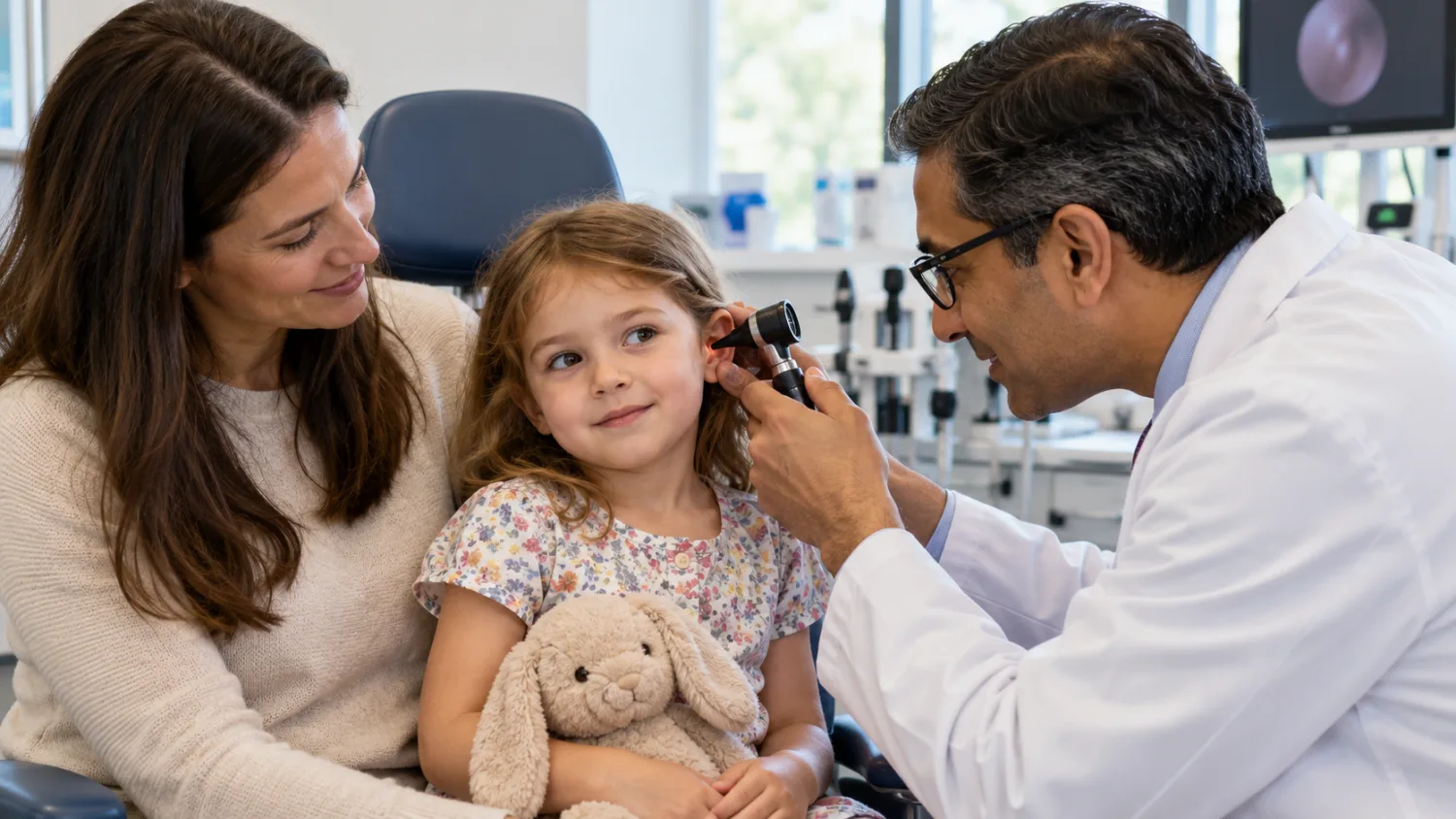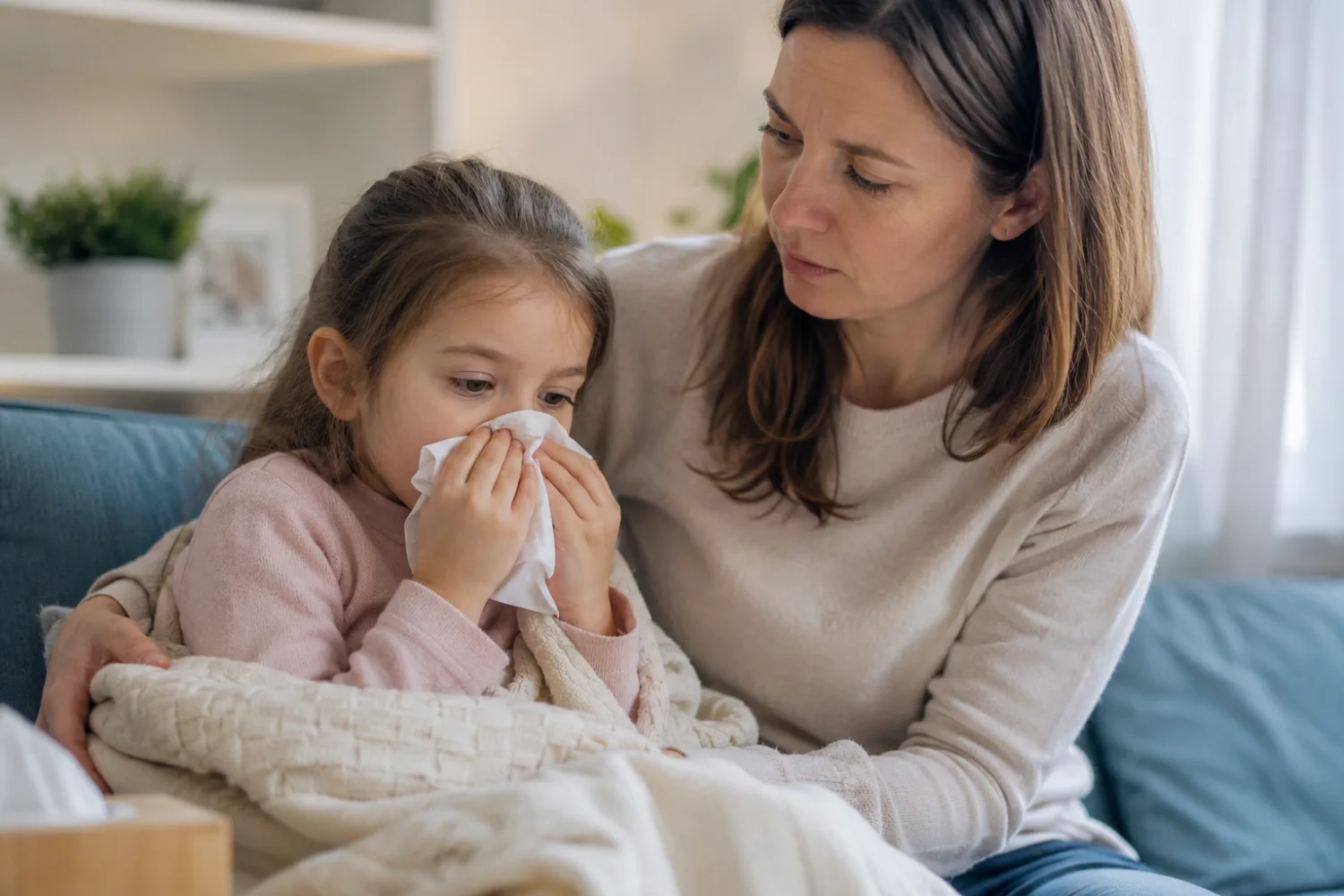
Coughs and colds are part of childhood, especially during the autumn and winter months. Most are caused by viruses and get better with rest, fluids and simple care at home. The challenge for parents is knowing what is normal, what can wait, and when a cough or cold may be a sign of something more serious.
A child with a cold can seem perfectly well one moment and miserable the next. They may have a blocked nose, a runny nose, watery eyes, sneezing, a sore throat, a temperature, a cough that keeps everyone awake, and very little appetite. For babies and younger children, even a simple cold can feel dramatic because they cannot blow their nose, explain how they feel, or sleep comfortably when congested.
The good news is that most coughs and colds in children are not dangerous. They are usually caused by common respiratory viruses and improve on their own. Antibiotics do not help ordinary colds because antibiotics treat bacteria, not viruses. The main treatment is comfort: helping your child drink, rest, breathe a little more easily, and recover in their own time.
But coughs and colds can sometimes look similar to more serious illnesses, including croup, bronchiolitis, pneumonia, flu, asthma or whooping cough. This guide explains what to expect, how to care for your child at home, when they can go to school or nursery, and which warning signs mean you should contact your GP, NHS 111, or call 999.
You can also browse more parent-friendly guides in our Children’s Health section.
What is a cold?
A cold is an infection of the nose, throat and upper airways. It is usually caused by a virus. Children get colds often because their immune systems are still learning to recognise common viruses, and because nurseries, schools and playgroups are perfect places for germs to spread.
A typical cold may cause a runny or blocked nose, sneezing, coughing, a sore throat, mild fever, tiredness and reduced appetite. Some children also complain of earache, headache or tummy ache. Babies may feed less well because a blocked nose makes sucking harder.
Children can get several colds a year. In winter, it may feel as though one cold runs into the next. This can be frustrating, but it is common, especially for young children who have recently started nursery or school.
How long do coughs and colds last in children?
Most colds start gradually. A sore throat, sneezing or runny nose may appear first, followed by a blocked nose and cough. Symptoms are often worst over the first few days, then slowly improve.
The runny or blocked nose usually improves within 7 to 10 days. A cough can take longer. It is common for a cough to continue for two or three weeks after a viral infection, even when the child is otherwise much better. This happens because the airways remain sensitive while they recover.
That said, the overall direction should be towards improvement. A cough that is getting worse, a child who is becoming more breathless, a fever that lasts several days, or symptoms that suddenly worsen after seeming to improve should be taken more seriously.
The NHS has useful guidance on common cold symptoms and when to get help, and its baby health section also covers colds, coughs and ear infections in children.
Why children cough more at night
Night-time coughing is one of the hardest parts of a child’s cold. Parents often worry because the cough sounds worse when the child lies down, and sleep can be broken for everyone.
There are a few reasons this happens. Mucus from the nose can drip down the back of the throat when a child is lying flat. The airways can also become more sensitive during and after a viral infection. Dry air, a warm bedroom, dust or smoke exposure may make coughing worse.
A night cough is not automatically dangerous. If your child is breathing comfortably, drinking, alert when awake and gradually improving, it is usually part of the normal recovery process. But a cough with fast breathing, chest indrawing, blue lips, pauses in breathing, severe wheeze, or a child who is too breathless to speak, cry or feed needs urgent medical help.
How to help a child with a cough or cold at home
Home care should focus on comfort and hydration. Offer regular drinks. Babies may want smaller, more frequent feeds. Older children may prefer water, diluted squash, warm drinks, soup, ice lollies or watery foods. Do not worry too much if they eat less for a day or two, as long as they are drinking and passing urine.
For a blocked nose, simple saline drops or spray may help, especially before feeds or sleep. Keeping your child slightly more upright while awake may make them more comfortable, but babies should always be placed on their back to sleep on a firm, flat surface, following safer sleep advice.
Warm drinks may soothe a sore throat in older children. Honey can help calm a cough in children over 1 year old, but it should never be given to babies under 12 months because of the risk of infant botulism.
Keep your child away from cigarette smoke, vaping aerosols, strong fragrances and very dusty environments. Smoke exposure can irritate the airways and make coughs last longer. If your child has asthma or viral wheeze, follow their inhaler or asthma action plan and seek advice if reliever inhalers are not helping as expected.
Can children take cough and cold medicines?
Many cough and cold medicines are not suitable for young children, and some have limited evidence of benefit. Always check the age on the label and ask a pharmacist if you are unsure.
Do not give adult cold remedies to children. Some contain several ingredients, including decongestants, antihistamines or paracetamol, which can lead to accidental overdose if combined with other medicines. If you are using children’s paracetamol or ibuprofen for discomfort or fever, check that no other medicine contains the same ingredient.
Children’s paracetamol or ibuprofen may help if your child is distressed, in pain or has a fever. You do not need to treat a mild temperature if your child is otherwise comfortable. For more detailed advice on temperature, see our guide to fever in children.
The NHS has separate guidance on paracetamol for children and ibuprofen for children. Always follow the dose instructions and use the measuring syringe or spoon provided.
Green snot does not always mean antibiotics are needed
Many parents worry when clear mucus turns yellow or green. This colour change can happen during a normal viral cold and does not automatically mean a bacterial infection. It is often part of the immune system’s response.
Antibiotics are not usually needed for an ordinary cold, even when the mucus looks thick or coloured. They may be needed if a clinician suspects a bacterial infection such as pneumonia, certain ear infections, sinusitis or tonsillitis caused by bacteria. The decision depends on the whole picture: symptoms, duration, examination findings and how unwell the child is.
If your child’s symptoms are not improving after around 10 days, are getting worse, or are accompanied by persistent fever, facial swelling, severe ear pain, breathing difficulty or unusual drowsiness, seek medical advice.
When a cough may be something more than a cold
Most coughs in children are viral and settle with time. However, the sound of the cough, the child’s breathing and their general condition can give important clues.
A barking cough, especially at night, may suggest croup. Children with croup may also make a harsh noise when breathing in, called stridor. Mild croup can often be managed at home, but stridor at rest, severe breathing difficulty or a child who is becoming exhausted needs urgent help.
A baby or toddler with a cold who develops fast breathing, noisy breathing, poor feeding or pauses in breathing may have bronchiolitis. This is most common in younger children and can be more serious in babies, premature infants and children with heart or lung conditions.
A cough with wheeze may be viral wheeze or asthma, especially if your child has had similar episodes before, has eczema or allergies, or there is a family history of asthma. If your child has an inhaler plan, follow it. If breathing is not improving, seek urgent advice.
A cough with high fever, chest pain, fast breathing, unusual sleepiness or a child who looks very unwell may suggest pneumonia or another chest infection. NICE guidance on cough with chest signs in children highlights the importance of considering lower respiratory infection when cough is accompanied by concerning chest symptoms or signs. You can read the clinical overview from NICE Clinical Knowledge Summaries.
Red flags: when to get urgent help
Call 999 or go to A&E if your child is struggling to breathe, has blue lips, is very difficult to wake, is floppy or confused, has pauses in breathing, has a seizure, or has a rash that does not fade when pressed with a glass.
You should also seek urgent help if your child is making grunting noises, has ribs or the skin under the neck sucking in with each breath, cannot speak or cry normally because of breathlessness, or seems exhausted from the effort of breathing.
Contact your GP or call NHS 111 if your child is under 3 months old, has a high temperature, is drinking much less than usual, has fewer wet nappies or is passing much less urine, has ear pain, has symptoms that are getting worse, has a cough lasting more than three weeks, or you are worried.
Healthier Together has a helpful parent-facing cough and cold traffic-light guide, particularly for children under 5.
Trust your instincts
If your child seems seriously unwell, seek medical advice even if their symptoms sound like “just a cold”. Parents and carers often notice subtle changes before anyone else.
Coughs, colds and fever
A mild fever can happen with a cold, especially in the first few days. Fever is part of the immune response and does not always mean something serious. What matters is your child’s age, how high the temperature is, how long it lasts, and how your child looks overall.
Babies under 3 months with a temperature of 38°C or above should be assessed urgently. Children aged 3 to 6 months with a temperature of 39°C or above should also prompt medical advice. In older children, seek advice if the fever lasts 5 days or more, your child is getting worse, or there are signs such as breathing difficulty, dehydration, severe drowsiness or rash.
For a fuller explanation, read our dedicated article: Fever in Children: When to Worry and What to Do.
Coughs, colds and dehydration
Children with colds may drink less because they feel miserable, have a sore throat, are sleeping more, or have a blocked nose. Babies may struggle to feed if they cannot breathe comfortably through the nose. Fever, vomiting or diarrhoea can increase the risk of dehydration.
Watch for fewer wet nappies, passing urine much less often, dark urine, dry mouth, no tears when crying, sunken eyes, unusual drowsiness or a baby’s soft spot looking sunken. If your child is not drinking, cannot keep fluids down, or has signs of dehydration, contact NHS 111 or your GP.
You may also find our guide to dehydration symptoms in adults and children useful.
Should my child go to school or nursery with a cough or cold?
Many children can go to school or nursery with a mild runny nose, slight cough or sore throat if they are otherwise well, do not have a temperature, and feel able to take part in normal activities.
They should stay at home if they have a fever, are too unwell to join in, have breathing difficulty, or have vomiting or diarrhoea. Children with a high temperature should stay home until the temperature has settled and they feel well enough to return.
Schools and nurseries may also have specific rules during outbreaks or for certain infections. The UK Health Security Agency publishes guidance for health protection in schools and childcare settings, including advice on reducing the spread of infections.
How to reduce the spread at home
Colds spread through droplets from coughs and sneezes, close contact, and contaminated hands or surfaces. With children, it is impossible to prevent every infection, but small habits help.
Encourage regular handwashing, use tissues for coughs and sneezes, put used tissues in the bin, and clean frequently touched surfaces such as door handles, taps, toys and tablets. Try to avoid sharing cups, cutlery and towels while your child is unwell.
If there is a newborn baby, elderly relative or someone with a weakened immune system at home, be extra careful with hand hygiene and close contact while your child has active symptoms.
What about flu, COVID-19 and RSV?
Several respiratory infections can start like a cold. Flu often causes a more sudden illness, with fever, aches, tiredness and a cough. COVID-19 can cause cough, fever, sore throat, runny nose, headache, tiredness or sometimes very mild symptoms. RSV is a common virus that can cause cold-like symptoms but may lead to bronchiolitis in babies and younger children.
You do not always need to know the exact virus if your child is mildly unwell and recovering. What matters most is how they are breathing, drinking and behaving. However, testing or medical advice may be important if your child is at higher risk, symptoms are severe, or there are vulnerable people in the household.
Children eligible for flu vaccination should have it when offered. Routine vaccinations also help protect against infections that can cause more serious illness. If you are unsure whether your child’s vaccinations are up to date, contact your GP surgery.
When a cough lasts for weeks
A cough can linger after a cold because the airways remain irritated. If your child is otherwise well, active, eating and drinking normally, and the cough is slowly improving, it may simply need time.
However, seek medical advice if the cough lasts more than three weeks, is getting worse, causes breathlessness or chest pain, is associated with weight loss or night sweats, brings up blood, or comes in severe coughing fits with vomiting or a whooping sound. A persistent cough may need assessment for asthma, whooping cough, reflux, allergy, infection or another cause.
What not to do
Do not give leftover antibiotics or pressure your GP for antibiotics for a typical cold. They will not make a viral cold go away faster and can cause side effects and antibiotic resistance.
Do not give honey to babies under 1 year. Do not use adult cough and cold medicines in children. Do not give aspirin to anyone under 16 unless prescribed by a doctor.
Do not ignore breathing difficulty. A child who is working hard to breathe needs help, even if the illness started as a simple cold.
Key takeaways
Coughs and colds are extremely common in children and usually get better without specific treatment. The best care is simple: fluids, rest, comfort, saline for blocked noses, appropriate fever or pain relief if needed, and time.
Most children do not need antibiotics. A cough may last two or three weeks after a cold, but your child should gradually seem brighter and breathe comfortably.
Get urgent help if your child is struggling to breathe, has blue lips, is very drowsy or confused, has pauses in breathing, has a non-blanching rash, or seems seriously unwell. Contact your GP or NHS 111 if your child is very young, has a persistent fever, is dehydrated, is getting worse, or you are worried.
Medical disclaimer: This guide is for general information only and does not replace medical advice. If you are worried about your child, contact your GP, pharmacist, NHS 111, or call 999 in an emergency.
FAQs about coughs and colds in children
How many colds a year is normal for a child?
It is common for young children to have several colds each year, especially if they attend nursery or school. In winter, one viral infection can seem to follow another. This is usually normal if your child recovers between illnesses and is growing and developing as expected.
How long should a child’s cough last after a cold?
A cough can last two to three weeks after a cold because the airways stay sensitive while they heal. Seek advice if the cough lasts more than three weeks, is getting worse, causes breathlessness, or your child seems unwell.
Does green or yellow snot mean my child needs antibiotics?
No, not necessarily. Mucus often turns yellow or green during a normal viral cold. Antibiotics are only helpful for bacterial infections and are not usually needed for an ordinary cold.
When should I worry about my child’s breathing?
Seek urgent help if your child is breathing very fast, working hard to breathe, has ribs or the skin under the neck sucking in, has blue lips, is grunting, has pauses in breathing, or is too breathless to feed, speak or cry normally.
Can my child go to school with a cough?
They can usually go to school or nursery with a mild cough or runny nose if they feel well enough and do not have a temperature. They should stay home if they have a fever, are very unwell, have breathing difficulty, or have vomiting or diarrhoea.
What can I give my child for a cough?
Fluids, rest and comfort are usually best. Honey may help soothe a cough in children over 1 year old. Some cough medicines are not suitable for young children, so ask a pharmacist before using them.
Can babies have cough medicine?
Many cough and cold medicines are not suitable for babies or young children. Always check the label and ask a pharmacist, GP or health visitor before giving medicine to a baby.
Should I use a humidifier?
Some families find that moist air helps comfort, but humidifiers are not essential and must be cleaned carefully to avoid mould or bacteria. If the room air is very dry, simple measures such as offering fluids and keeping the bedroom comfortably cool may help.
Why is my child coughing more at night?
Coughs often worsen at night because mucus drips down the throat when a child lies down and the airways become more sensitive. If your child is breathing comfortably and improving overall, this is usually not dangerous.
When should I call NHS 111?
Call NHS 111 if your child is getting worse, has a high temperature that is not settling, is drinking much less, has fewer wet nappies or is passing much less urine, has ear pain, has a cough lasting more than three weeks, or you are unsure what to do.
When should I call 999?
Call 999 if your child is struggling to breathe, has blue lips, is very difficult to wake, is floppy or confused, has pauses in breathing, has a seizure, or has a rash that does not fade when pressed with a glass.
Can a cold turn into pneumonia?
Most colds do not turn into pneumonia. However, seek medical advice if your child develops fast or difficult breathing, chest pain, persistent high fever, unusual drowsiness, worsening cough, or looks very unwell.