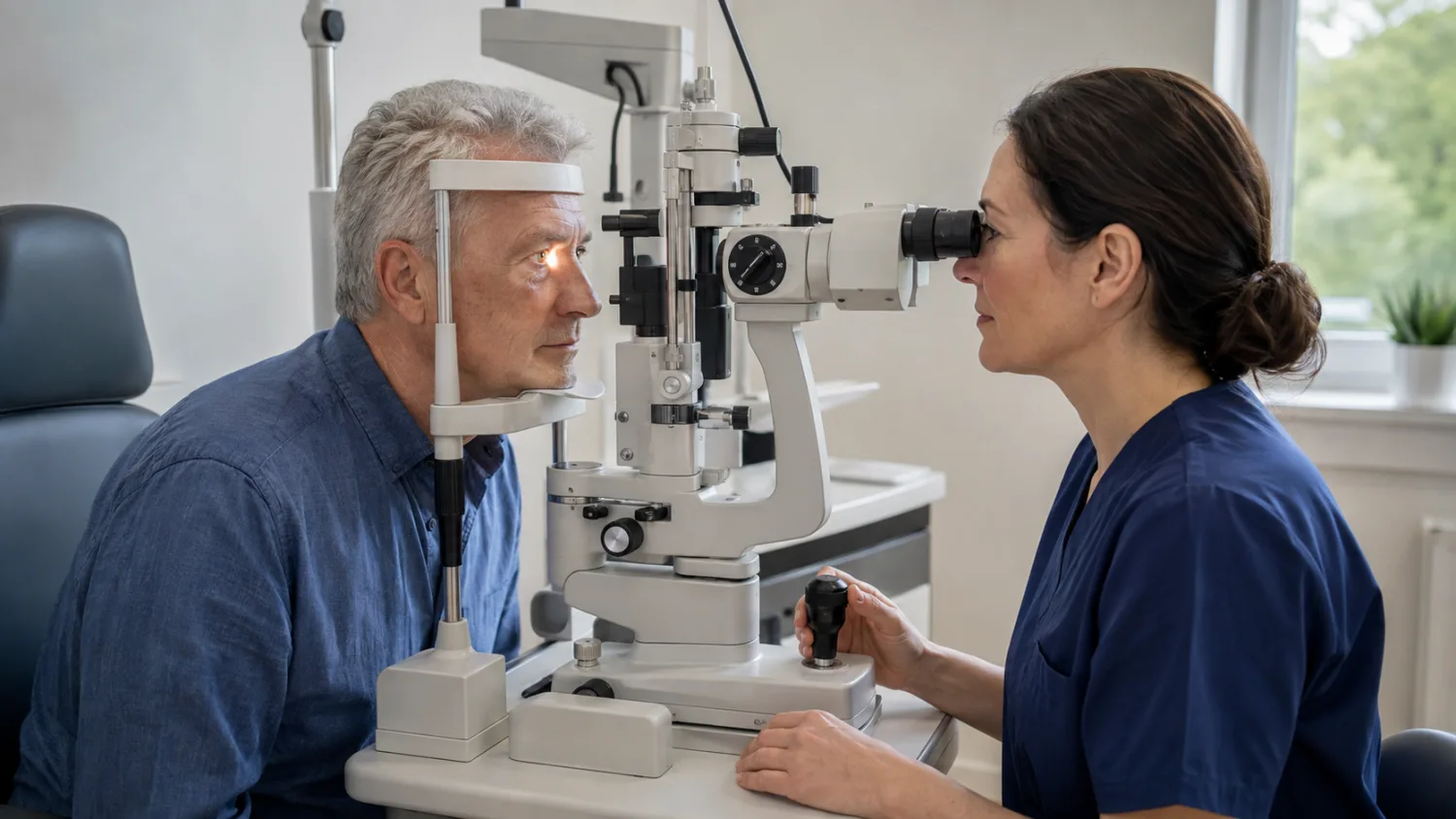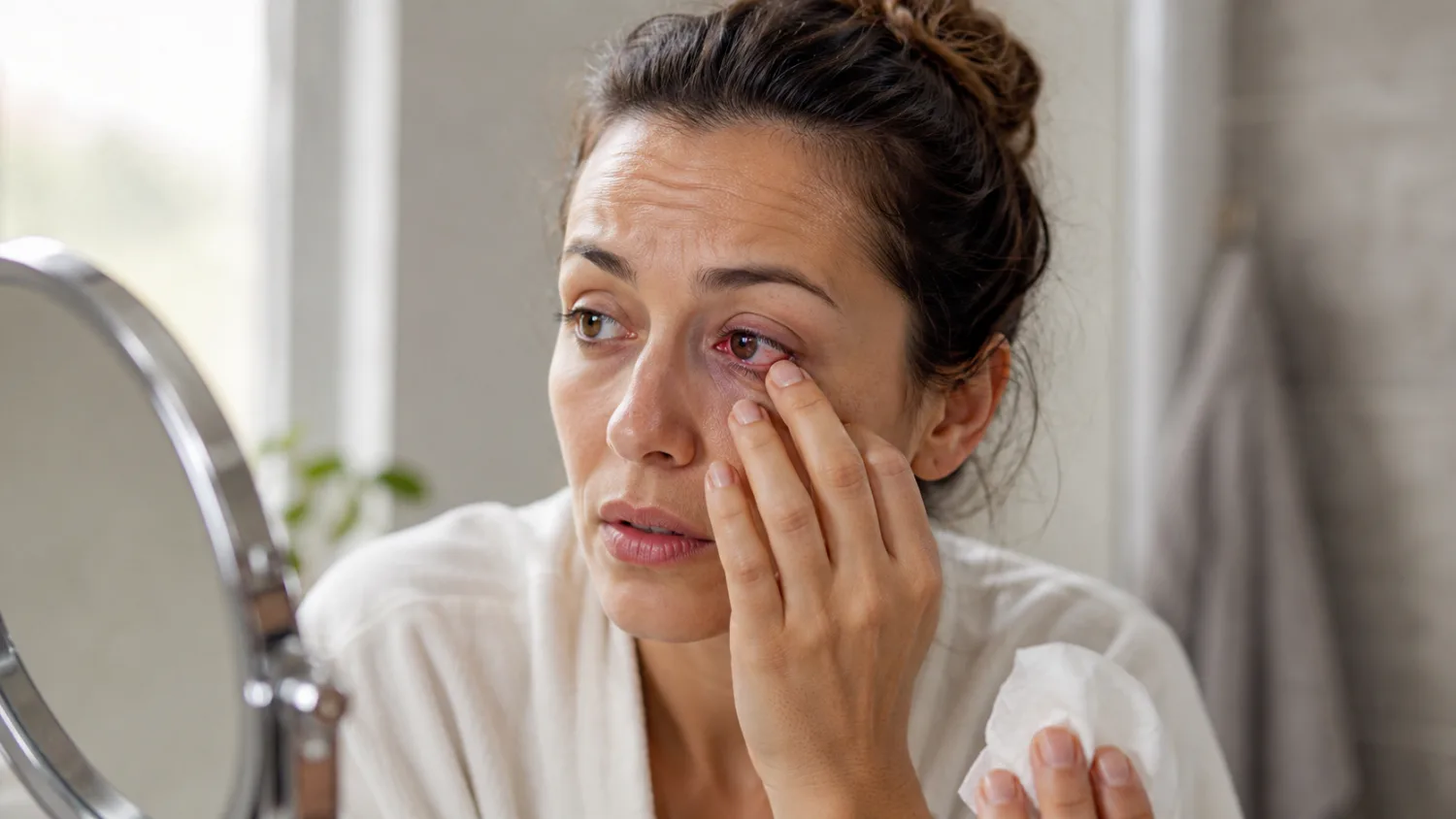
Eye problems can be mild and short-lived, but they can also become urgent quickly. A red eye from hay fever or mild conjunctivitis is very different from a painful red eye with blurred vision, light sensitivity or injury. The challenge is knowing which symptoms can wait for pharmacy or optician advice, and which need same-day urgent care.
Common eye symptoms include redness, watering, itching, pain, swelling, discharge, blurred vision, sensitivity to light, gritty feeling, floaters, flashing lights or a feeling that something is stuck in the eye. Some causes are simple, such as dry eyes or allergy. Others, such as a corneal ulcer, acute glaucoma, uveitis, chemical injury or retinal problem, can threaten sight if not treated quickly.
This guide explains common causes of red eye, eye pain and discharge, what may help at home, when to speak to a pharmacist or optician, and when to get urgent medical help.
Important: Get urgent medical help if you have a painful red eye, sudden vision loss, new blurred vision, flashing lights, a curtain-like shadow, severe headache with eye pain, nausea with eye pain, chemical exposure, serious injury, or a red eye while wearing contact lenses.
When eye symptoms are urgent
Some eye symptoms need same-day assessment because delay can risk permanent damage to the eye or vision. NHS guidance advises urgent help for a very painful red eye and for red eye in contact lens wearers, because this can indicate an eye infection. The NHS also advises urgent help for eye injuries that are very painful or not improving. NHS red eye guidance and NHS eye injury guidance explain these warning signs.
Seek urgent help today if you have:
- sudden loss of vision
- new blurred or reduced vision
- severe eye pain
- a painful red eye
- red eye while wearing contact lenses
- light sensitivity with eye pain or redness
- flashing lights or a curtain-like shadow in your vision
- new floaters, especially with flashes or vision loss
- a chemical in the eye
- an eye injury or something stuck in the eye
- severe headache with eye pain
- eye pain with nausea or vomiting
- swelling around the eye with fever or feeling unwell
- new unequal pupils or a pupil that looks unusual
If you are unsure whether an eye symptom is urgent, contact NHS 111, an urgent eye clinic, an optician or your GP surgery for advice. In England, you can use NHS 111 online.
Red eye: common causes
A red eye means the white of the eye looks bloodshot or discoloured. It may affect one eye or both. It may come with itching, watering, discharge, pain, blurred vision or light sensitivity.
Common causes include:
- conjunctivitis
- dry eye
- hay fever or allergy
- blepharitis
- subconjunctival haemorrhage, a small bleed on the white of the eye
- contact lens irritation or infection
- foreign body or scratch on the eye
- uveitis
- acute glaucoma
- injury or chemical exposure
A red eye without pain, vision changes or light sensitivity is often less urgent. But a red eye that is painful, linked with blurred vision, or occurs in a contact lens wearer needs prompt assessment.
Conjunctivitis: sticky, watery or itchy eyes
Conjunctivitis is inflammation of the conjunctiva, the thin clear layer over the white of the eye and inside the eyelids. It can be caused by infection, allergy or irritation.
Symptoms may include:
- red or pink eye
- watery eyes
- itching or burning
- gritty feeling
- sticky discharge
- eyelids stuck together in the morning
- mild swelling of the eyelids
Bacterial conjunctivitis may cause yellow or green sticky discharge. Viral conjunctivitis often causes watery discharge and may come with cold symptoms. Allergic conjunctivitis usually causes itching, watering and both eyes being affected.
The NHS says a pharmacist can help with conjunctivitis and may suggest eye drops or antihistamines depending on the cause. Contact lenses should not be worn until the eyes are better. See NHS guidance on conjunctivitis.
How to reduce the spread of infectious conjunctivitis
If conjunctivitis may be infectious, good hygiene helps protect others and stops the infection spreading from one eye to the other.
Practical steps include:
- wash your hands often
- avoid touching or rubbing your eyes
- use clean cotton wool and cooled boiled water to gently clean discharge
- use a separate piece of cotton wool for each eye
- do not share towels, pillows or flannels
- wash pillowcases and towels regularly
- avoid wearing eye make-up until symptoms settle
- do not wear contact lenses until symptoms have cleared
NHS Inform advises not rubbing the eyes, not wearing contact lenses until symptoms clear, and not reusing old lenses after infection because they could cause reinfection. NHS Inform conjunctivitis guidance gives more detail.
Eye discharge: what the colour and pattern may suggest
Eye discharge can be watery, sticky, stringy, yellow, green or crusty. It is not possible to diagnose the cause from colour alone, but the pattern can give clues.
- Watery discharge: often viral infection, allergy, irritation or dry eye.
- Sticky yellow or green discharge: can happen with bacterial conjunctivitis.
- Stringy discharge: may happen with allergy or dry eye.
- Crusting around eyelids: can happen with conjunctivitis or blepharitis.
- Discharge with pain or blurred vision: needs medical advice.
Seek urgent advice if discharge comes with eye pain, light sensitivity, reduced vision, contact lens use, injury, swelling around the eye, or fever.
Itchy eyes: allergy, dry eye or irritation?
Itchy eyes are commonly caused by allergy. Hay fever, dust, pets, mould, cosmetics and contact lens solutions can all trigger irritation.
Allergy-related eye symptoms may include:
- itching in both eyes
- watering
- sneezing or runny nose
- puffy eyelids
- symptoms that worsen around pollen, pets or dust
A pharmacist can advise on antihistamine tablets or eye drops if suitable. Avoid rubbing the eyes, as this can worsen irritation.
If you also have sneezing, runny nose or seasonal symptoms, read our guide to Hay Fever: Symptoms, Treatment and When to Get Help. For children, see Spring Allergies in Children.
Dry eye: gritty, burning or tired eyes
Dry eye can make the eyes feel gritty, burning, tired, watery or irritated. It may be worse after screen use, reading, driving, air conditioning, wind, contact lens wear, menopause, some medicines or certain health conditions.
Symptoms can include:
- gritty or sandy feeling
- burning or stinging
- watery eyes
- redness
- blurred vision that improves after blinking
- eye fatigue
Artificial tears, screen breaks, avoiding smoky environments and treating eyelid inflammation may help. A pharmacist or optician can advise. If symptoms are persistent or affecting vision, book an eye assessment.
For more detail, read Dry Eye Syndrome: Symptoms, Causes and Treatment in the UK.
Blepharitis: crusty, irritated eyelids
Blepharitis is inflammation of the eyelid edges. It can cause sore, itchy, red or crusty eyelids and may be linked with dry eye, rosacea or skin conditions.
Symptoms may include:
- crusts or flakes around the eyelashes
- itchy or burning eyelids
- gritty feeling
- red eyelid edges
- watery eyes
- eyelids sticking together
Regular eyelid cleaning often helps, but blepharitis can come and go. Ask a pharmacist or optician for advice on safe eyelid hygiene and suitable products.
Subconjunctival haemorrhage: a bright red patch
A subconjunctival haemorrhage is a small bleed under the clear surface of the eye. It can cause a bright red patch on the white of the eye. It often looks alarming but may be painless and harmless if vision is normal and there is no injury.
It can happen after coughing, sneezing, straining, vomiting, rubbing the eye or sometimes for no obvious reason. It usually clears gradually over 1 to 2 weeks.
Seek advice if it happened after an injury, you have pain, vision changes, repeated episodes, easy bruising, bleeding problems, or you take blood-thinning medicine and are concerned.
Eye pain: when it needs urgent care
Eye pain should be taken seriously, especially if it is moderate or severe, affects one eye, or comes with redness, blurred vision, headache, nausea, light sensitivity or injury.
Possible causes of eye pain include:
- corneal scratch or foreign body
- contact lens infection
- uveitis
- acute glaucoma
- sinusitis
- migraine
- eye injury
- chemical exposure
- optic nerve inflammation
Get urgent advice if eye pain is severe, the eye is red, vision is changed, you are sensitive to light, you feel sick, or you wear contact lenses.
Contact lens wearers: do not ignore red eye
A red or painful eye in a contact lens wearer needs caution. Contact lenses can increase the risk of corneal infection, including microbial keratitis. This can become serious and may threaten vision if not treated quickly.
If you wear contact lenses and develop red eye, pain, discharge, light sensitivity or blurred vision:
- remove your lenses immediately
- do not put them back in
- do not wear lenses until you have been advised it is safe
- keep the lenses and case if a clinician may need to inspect them
- seek urgent optician, urgent eye clinic, GP or NHS 111 advice
The CDC lists contact lens-related microbial keratitis symptoms including irritated red eyes, worsening pain, light sensitivity, sudden blurry vision and unusually watery eyes or discharge, and advises removing lenses and calling an eye doctor immediately. CDC contact lens infection guidance provides more detail.
Acute glaucoma: severe eye pain with nausea or halos
Most glaucoma develops slowly, but acute angle-closure glaucoma can come on suddenly and is an emergency. It happens when pressure inside the eye rises quickly.
Symptoms may include:
- intense eye pain
- red eye
- blurred vision
- seeing rainbow-coloured circles or halos around lights
- headache
- nausea or vomiting
- tenderness around the eye
The NHS says sudden glaucoma can cause intense eye pain, red eye, blurred vision, halos around lights, nausea, vomiting and headache. See NHS information on glaucoma.
Get urgent medical help if these symptoms occur. Do not wait to see if it settles.
Uveitis: red, painful eye with light sensitivity
Uveitis is inflammation inside the eye. It can cause a red, painful eye, blurred vision, floaters and sensitivity to light. It may affect one eye or both.
Uveitis can be linked with autoimmune conditions, infections or other health problems, but sometimes no clear cause is found. It needs prompt assessment and treatment to reduce the risk of complications.
Seek urgent help if you have eye pain with redness, blurred vision or light sensitivity.
Eye injury or something in the eye
Minor irritation may improve after flushing the eye with clean water or sterile saline. But eye injuries can be serious, especially if caused by metal, glass, chemicals, high-speed particles, sports, DIY, gardening, assault or a sharp object.
Get urgent help if:
- there is severe pain
- vision is blurred or reduced
- something is stuck in the eye
- the eye was hit hard
- there is a cut or puncture injury
- there is blood inside the eye
- the pupil looks unusual
- symptoms are not improving after 24 hours
- a child has injured their eye and you are worried
Do not rub the eye. Do not try to remove an object that is embedded or stuck. Cover the eye lightly if needed and seek urgent care.
Chemical in the eye: what to do immediately
A chemical splash in the eye is an emergency. Cleaning products, bleach, acids, alkalis, cement, plaster, fertilisers and some workplace chemicals can damage the eye quickly.
If a chemical gets into the eye:
- start rinsing the eye immediately with clean running water or sterile saline
- continue rinsing for at least 15 to 20 minutes if possible
- hold the eyelids open while rinsing
- remove contact lenses if they come out easily while rinsing
- do not delay rinsing while looking for help
- seek urgent medical care after rinsing
NHS hospital guidance describes chemical eye injuries as an emergency requiring immediate intervention to protect the eye surface and front of the eye. University Hospitals Dorset NHS chemical eye injury information explains why urgent treatment matters.
Flashing lights, floaters or a curtain over vision
New floaters or flashes can sometimes happen with age-related changes inside the eye, but they can also be a warning sign of a retinal tear or retinal detachment. A curtain-like shadow, sudden vision loss or a shower of new floaters needs urgent assessment.
Seek urgent eye care if you notice:
- sudden new floaters
- flashing lights
- a dark curtain or shadow across vision
- sudden blurred or missing vision
- floaters after an eye injury
This is especially important if symptoms affect one eye or are new for you.
Swollen eyelid or swelling around the eye
Swollen eyelids can be caused by allergy, conjunctivitis, stye, blepharitis, insect bite, injury or infection. Mild swelling with itching in both eyes may suggest allergy. Painful swelling, warmth, fever or worsening redness may suggest infection.
Seek urgent advice if swelling around the eye comes with:
- fever
- pain when moving the eye
- bulging eye
- double vision
- reduced vision
- severe headache
- spreading redness or warmth
- feeling very unwell
If swelling is linked with lips, tongue, throat or breathing difficulty, call 999 because this may be a severe allergic reaction.
Eye symptoms with headache
Headache with eye symptoms can be caused by migraine, sinusitis, eye strain, infection, glaucoma or other causes. It can sometimes be urgent.
Seek urgent help if headache comes with:
- sudden vision loss
- severe eye pain
- red eye with nausea or vomiting
- new neurological symptoms such as weakness, speech problems or confusion
- stiff neck and fever
- severe sudden “thunderclap” headache
- pain after head or eye injury
Related guides include Headache: Causes, Red Flags and When to Seek Urgent Help, Migraine: Symptoms, Triggers and Treatment Options in the UK and Sinusitis: Symptoms, Causes and Treatment.
Can hay fever cause red, itchy or watery eyes?
Yes. Hay fever commonly affects the eyes. Symptoms are usually worse during pollen season and may come with sneezing, runny nose, blocked nose, itchy throat or cough.
Eye symptoms can include:
- itching
- watering
- redness
- puffy eyelids
- burning or irritation
Pharmacy treatments may help, including antihistamines and allergy eye drops if suitable. Avoid rubbing the eyes, wear sunglasses outdoors, and consider showering or changing clothes after high pollen exposure.
What can you do at home for mild eye irritation?
If symptoms are mild, vision is normal, pain is not significant, and there has been no injury or chemical exposure, simple self-care may help.
General steps include:
- wash your hands before touching around the eyes
- avoid rubbing your eyes
- remove contact lenses if symptoms start
- use preservative-free artificial tears for dryness if suitable
- use a cool compress for itching or swelling
- use a warm compress for crusty eyelids or a stye
- avoid eye make-up until symptoms settle
- avoid smoky, dusty or windy environments if they worsen symptoms
- take screen breaks if eyes feel dry or tired
Do not use old eye drops, someone else’s eye drops, or steroid eye drops unless prescribed for you. Steroid eye drops can be harmful in some infections and should only be used under medical supervision.
When to see a pharmacist
A pharmacist can help with many mild eye symptoms, especially conjunctivitis, allergy symptoms, dry eye and eyelid irritation. They can suggest suitable eye drops, antihistamines or eyelid hygiene products and advise when urgent care is needed.
Ask a pharmacist if:
- your eyes are itchy or watery and you think it may be allergy
- you have mild conjunctivitis symptoms
- you have dry, gritty or tired eyes
- you need advice on artificial tears
- you have mild eyelid crusting or irritation
- you are unsure whether symptoms need an optician or GP
For more about pharmacy advice, see When to See a Pharmacist Instead of a GP.
When to see an optician
Opticians are often the right place for eye symptoms that are not 999 emergencies but need eye-specific assessment. They can examine the eye, check vision, look for scratches or inflammation, and advise whether urgent referral is needed.
Consider seeing an optician if:
- you have persistent red eye
- vision feels different
- you have new floaters or flashes
- you have eye discomfort that is not settling
- you wear contact lenses and have irritation
- dry eye symptoms are ongoing
- you have recurring headaches with eye strain
- you have not had a recent eye test
Some areas have NHS urgent eye care services or minor eye condition services that can be accessed through participating opticians. Availability varies by location.
When to contact a GP or NHS 111
Contact a GP, out-of-hours service or NHS 111 if:
- you have a painful red eye
- you have a red eye and wear contact lenses
- symptoms are getting worse
- you have discharge with pain or swelling
- you have fever or feel unwell
- there is swelling around the eye
- you have shingles symptoms near the eye
- you have an eye injury that is not improving
- you are worried about a child’s eye symptoms
- you are immunosuppressed or have diabetes and symptoms are concerning
- you are unsure what to do
Use NHS 111 online in England if you need urgent advice and it is not a 999 emergency.
If you need help arranging care, see How to Get a GP Appointment Quickly in the UK.
When to call 999 or go to A&E
Call 999 or go to A&E if you have emergency eye symptoms or symptoms suggesting a serious medical emergency.
Call 999 or seek emergency care if you have:
- sudden loss of vision
- severe eye pain
- serious eye injury
- chemical exposure to the eye after immediate rinsing
- eye pain with severe headache, nausea and vomiting
- new weakness, facial drooping, speech problems or confusion
- swelling of the throat, face or tongue with breathing difficulty
- collapse or severe allergic reaction symptoms
Do not drive yourself if your vision is affected or you feel unwell. Ask someone else to take you or call emergency services.
How to describe eye symptoms clearly
If you speak to a pharmacist, optician, GP or NHS 111, clear details help them decide how urgent the problem is.
Useful details include:
- which eye is affected
- when symptoms started
- whether vision has changed
- whether there is pain and how severe it is
- whether you are sensitive to light
- whether there is discharge and what it looks like
- whether you wear contact lenses
- whether there was an injury or chemical exposure
- whether you have flashing lights, floaters or a shadow
- whether you have headache, nausea, fever or rash
- whether you have used any eye drops or medicines
- whether you have had eye surgery or eye disease before
Frequently asked questions about eye problems
When is a red eye urgent?
A red eye is urgent if it is painful, affects vision, causes light sensitivity, follows an injury, happens with severe headache or nausea, or occurs while wearing contact lenses. A mild red eye without pain or vision changes may be less urgent, but seek advice if it is worsening or not improving.
Can conjunctivitis cause blurred vision?
Conjunctivitis can cause temporary blur from watering or discharge, but true reduced vision, significant light sensitivity or eye pain should be assessed. Do not assume blurred vision is simple conjunctivitis.
Should I wear contact lenses with a red eye?
No. Remove contact lenses if your eye becomes red, painful, watery, light-sensitive or has discharge. Do not wear them again until you have been advised it is safe. Contact lens-related eye infections can be serious.
What does yellow or green eye discharge mean?
Yellow or green sticky discharge can happen with bacterial conjunctivitis, but discharge alone does not confirm the cause. Seek advice if there is pain, vision change, swelling, fever, contact lens use or symptoms are not improving.
Can hay fever make eyes red and watery?
Yes. Hay fever commonly causes itchy, red, watery or puffy eyes, often with sneezing, runny nose and seasonal symptoms. A pharmacist can advise on antihistamines or allergy eye drops if suitable.
Is eye pain always serious?
Mild irritation can happen with dryness or allergy, but moderate or severe eye pain should be taken seriously. Seek urgent help if pain comes with redness, blurred vision, light sensitivity, injury, contact lens use, headache, nausea or vomiting.
What should I do if I get a chemical in my eye?
Rinse the eye immediately with clean running water or sterile saline for at least 15 to 20 minutes if possible, then seek urgent medical care. Do not delay rinsing while looking for advice.
Are flashing lights or floaters urgent?
New flashes, new floaters, a sudden shower of floaters, vision loss or a curtain-like shadow can be urgent because they may suggest a retinal problem. Seek same-day eye care.
Can a headache cause eye pain?
Migraine and sinusitis can cause pain around the eyes, but eye pain with red eye, blurred vision, halos around lights, nausea or vomiting may suggest an eye emergency such as acute glaucoma and needs urgent assessment.
Can dry eyes cause watering?
Yes. Dry eyes can sometimes water because irritation triggers reflex tearing. Dry eye may also cause gritty, burning or tired eyes. A pharmacist or optician can advise on artificial tears and when to seek further help.
Final thoughts
Many eye problems are mild, such as allergy, dry eye or simple conjunctivitis. But eye symptoms should be treated with caution when there is pain, vision change, light sensitivity, injury, chemical exposure, swelling, severe headache or contact lens use.
Ask a pharmacist about mild conjunctivitis, dry eye or allergy symptoms. See an optician or seek urgent advice for symptoms that are persistent, worsening or affecting vision. Contact NHS 111, an urgent eye clinic or emergency care if symptoms are severe or sudden.
For official guidance, see NHS pages on red eye, conjunctivitis, eye injuries and glaucoma.
This article is for general information only and should not replace medical advice. If you are worried about your symptoms or someone else’s, contact NHS 111, your GP, an optician, an urgent eye clinic, or call 999 in an emergency.