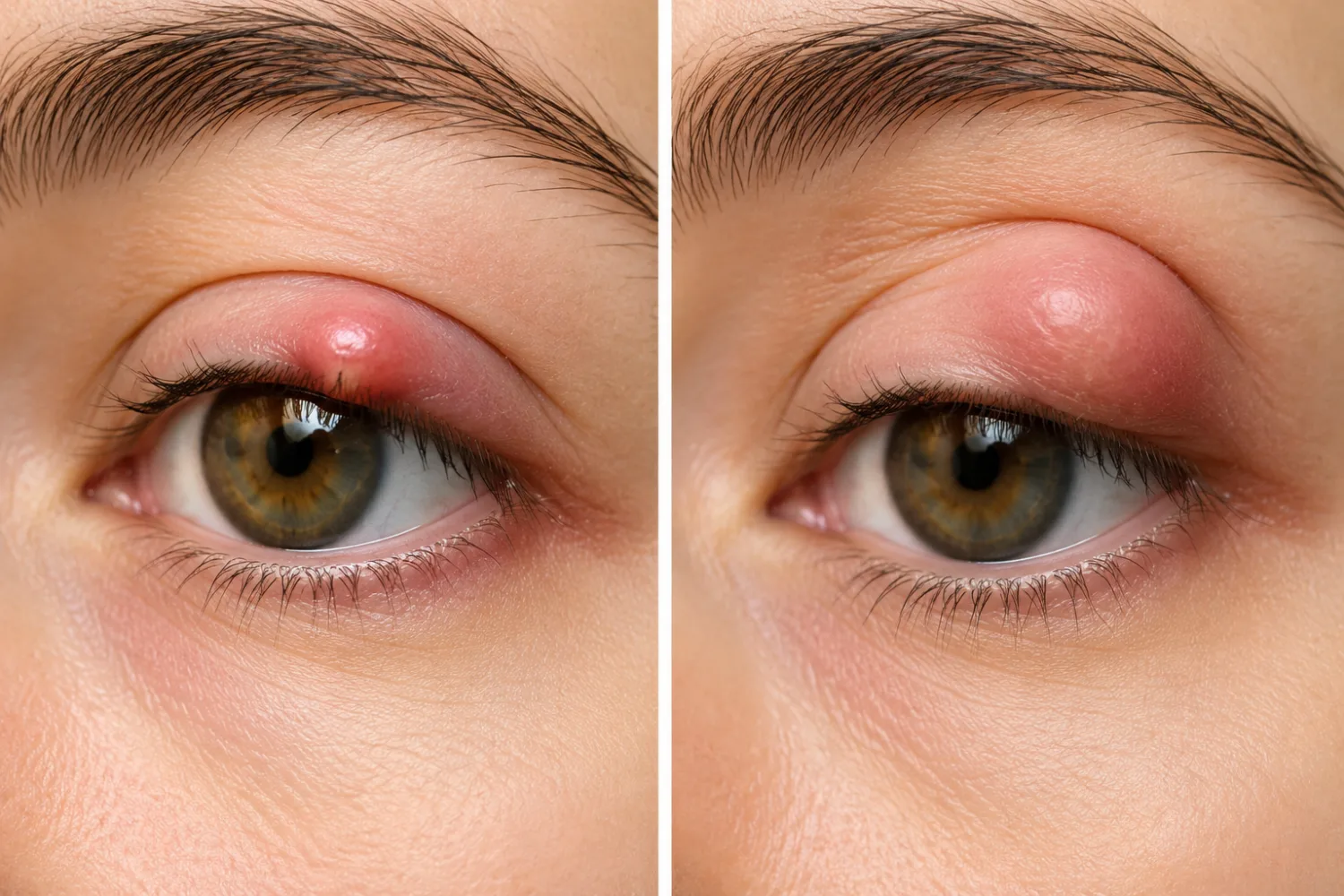
An eyelid bump is often either a stye or a chalazion. The two conditions can look similar, particularly during the first few days, but they develop for different reasons and tend to behave differently.
A stye is usually painful, red and tender. It forms when an eyelash follicle or eyelid gland becomes infected. A chalazion is usually a firmer lump deeper within the eyelid. It develops when an oil-producing meibomian gland becomes blocked and its secretions build up.
Both are common and usually harmless. Warm compresses and gentle eyelid care are often enough to help them settle. A stye commonly improves within several days, while a chalazion can remain for several weeks or occasionally a few months.
Not every eyelid lump is one of these conditions. A bump that repeatedly returns in exactly the same place, causes eyelashes to fall out, bleeds, ulcerates or continues to enlarge needs proper examination.
Seek urgent medical or optician advice if the entire eyelid becomes red, hot and increasingly painful, swelling spreads around the eye, you have a fever, or you cannot open the eye.
Get urgent help through NHS 111, an urgent eye service or A&E if the pain is inside the eye rather than only in the eyelid, your vision changes, light becomes painful, the eye appears to bulge, or moving the eye is painful or restricted.
What is the difference between a stye and a chalazion?
The simplest distinction is that a stye is usually an acute painful infection, while a chalazion is usually a blocked oil gland that becomes a firm cyst-like lump.
| Feature | Stye | Chalazion |
|---|---|---|
| Main cause | Infection of an eyelash follicle or eyelid gland | Blocked meibomian oil gland |
| Pain | Usually painful and tender | Usually painless after the early inflammatory stage |
| Position | Often near an eyelash or along the eyelid edge; may also form inside the lid | Usually deeper within the upper or lower eyelid |
| Appearance | Red lump that may develop a yellow pus-filled point | Round, firm or rubbery lump beneath the eyelid skin |
| Speed of development | Often develops quickly over one or two days | May develop gradually or remain after a stye settles |
| Typical duration | Several days to around one or two weeks | Several weeks; occasionally a few months |
| Usual treatment | Warm compresses, hygiene and natural drainage | Warm compresses, massage and time |
These differences are useful, but they are not absolute. An early chalazion can be sore and red, while a deep internal stye may look like a smooth lump without an obvious yellow point.
A stye can also leave behind a chalazion. Once the infection and pain settle, the gland may remain blocked and form a persistent painless lump.
Medical names you may see
A stye may be called a hordeolum.
- An external hordeolum forms around an eyelash follicle or nearby gland.
- An internal hordeolum forms within a meibomian gland inside the eyelid.
A chalazion may also be called a:
- meibomian cyst;
- meibomian gland cyst;
- tarsal cyst.
Despite the word cyst, a chalazion is usually a collection of trapped oily material and inflammation rather than a dangerous growth.
What does a stye look and feel like?
A stye usually starts with pain or tenderness in one small section of the eyelid. The area then becomes red and swollen, and a visible lump may appear.
Typical features include:
- a painful red bump near the eyelash line;
- tenderness when the eyelid is touched;
- a yellow or white point containing pus;
- localised eyelid swelling;
- watering of the eye;
- mild redness of the eye;
- a gritty or scratchy feeling;
- crusting around nearby eyelashes.
External stye
An external stye develops at the base of an eyelash. It often resembles a small spot on the eyelid edge.
The lump may become yellow in the centre before draining naturally. It is usually easy to identify because the pain and swelling are concentrated around one eyelash follicle.
Internal stye
An internal stye develops deeper within the eyelid when a meibomian gland becomes infected.
It may cause:
- more general eyelid swelling;
- pain deeper inside the lid;
- tenderness without an obvious external spot;
- a red or yellow swelling visible on the inner eyelid.
Internal styes can be more uncomfortable and may take longer to settle.
Can a stye swell the whole eyelid?
Yes. The eyelid contains loose tissue, so even a small infection can produce substantial swelling.
This can be particularly noticeable after waking because fluid accumulates around the eyelid overnight.
The swelling should nevertheless begin to improve. Seek advice if redness becomes increasingly widespread, the eyelid feels hot, or you develop fever or significant illness.
For a more detailed guide, see stye causes, treatment and when to see a doctor.
What does a chalazion look and feel like?
A chalazion usually feels like a round, firm or rubbery lump within the upper or lower eyelid.
It develops when a meibomian gland becomes blocked. These glands sit vertically inside the eyelids and produce oil that helps stop tears evaporating too quickly.
When the gland opening becomes obstructed, oily material builds up and causes inflammation.
Typical features include:
- a firm lump beneath the eyelid skin;
- little or no pain after the initial stage;
- mild heaviness of the eyelid;
- localised swelling;
- occasional redness or watering;
- a lump that persists after a painful stye has settled;
- slow improvement over several weeks.
Can a chalazion be painful?
Yes, particularly when it first develops. The gland and surrounding tissue may become inflamed before the lump settles into a firmer, less painful stage.
A chalazion can also become secondarily infected. It may then become red, hot, tender and more similar to an internal stye.
Can a chalazion affect vision?
A small chalazion should not affect sight.
A large upper-eyelid lump can press against the surface of the eye and temporarily alter the shape of the cornea. This may cause blurred or distorted vision.
Persistent visual disturbance requires an eye examination.
Can you see a chalazion from inside the eyelid?
Sometimes. The inner surface of the eyelid may show a red, grey or yellowish area beneath the lump.
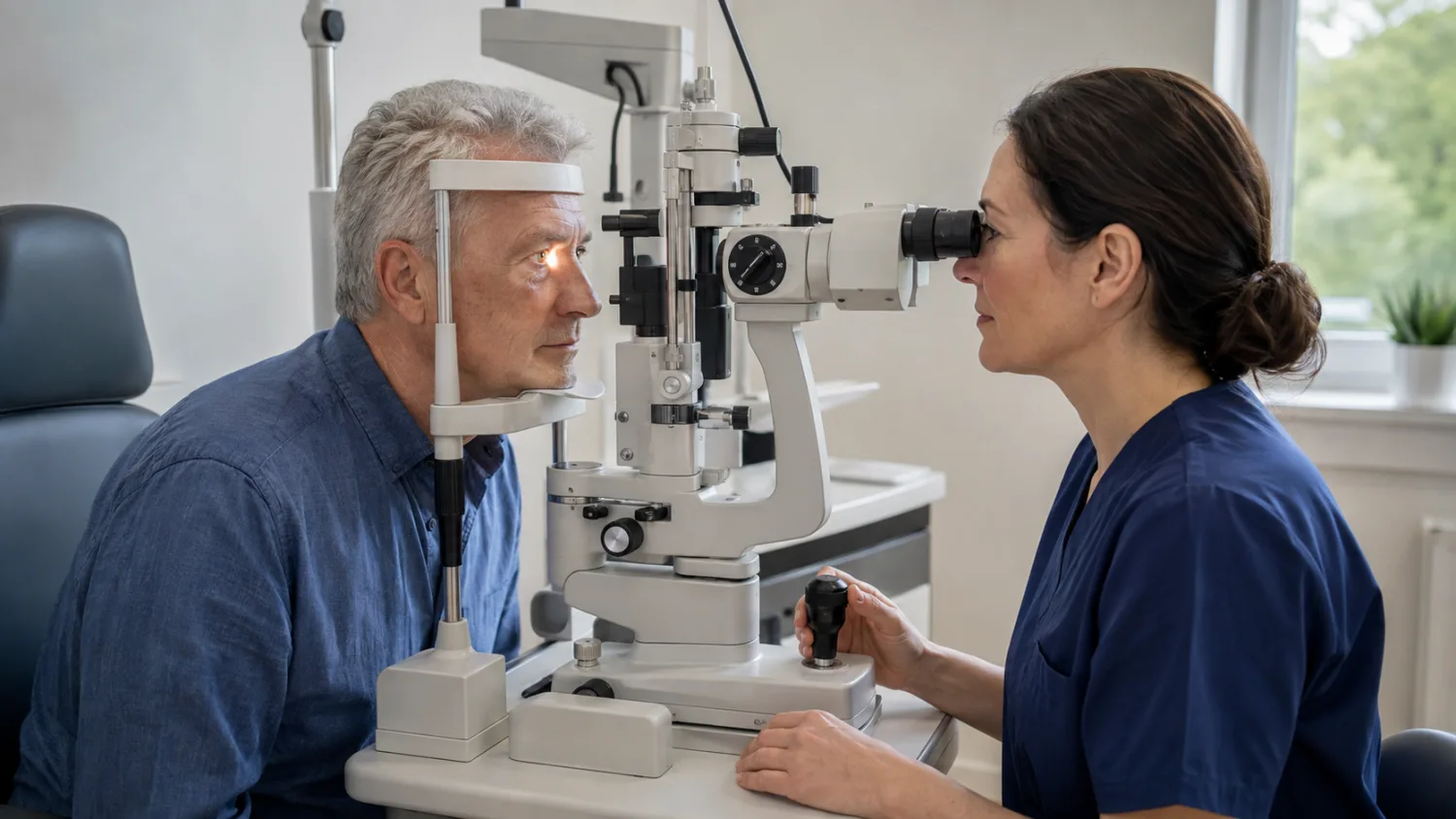
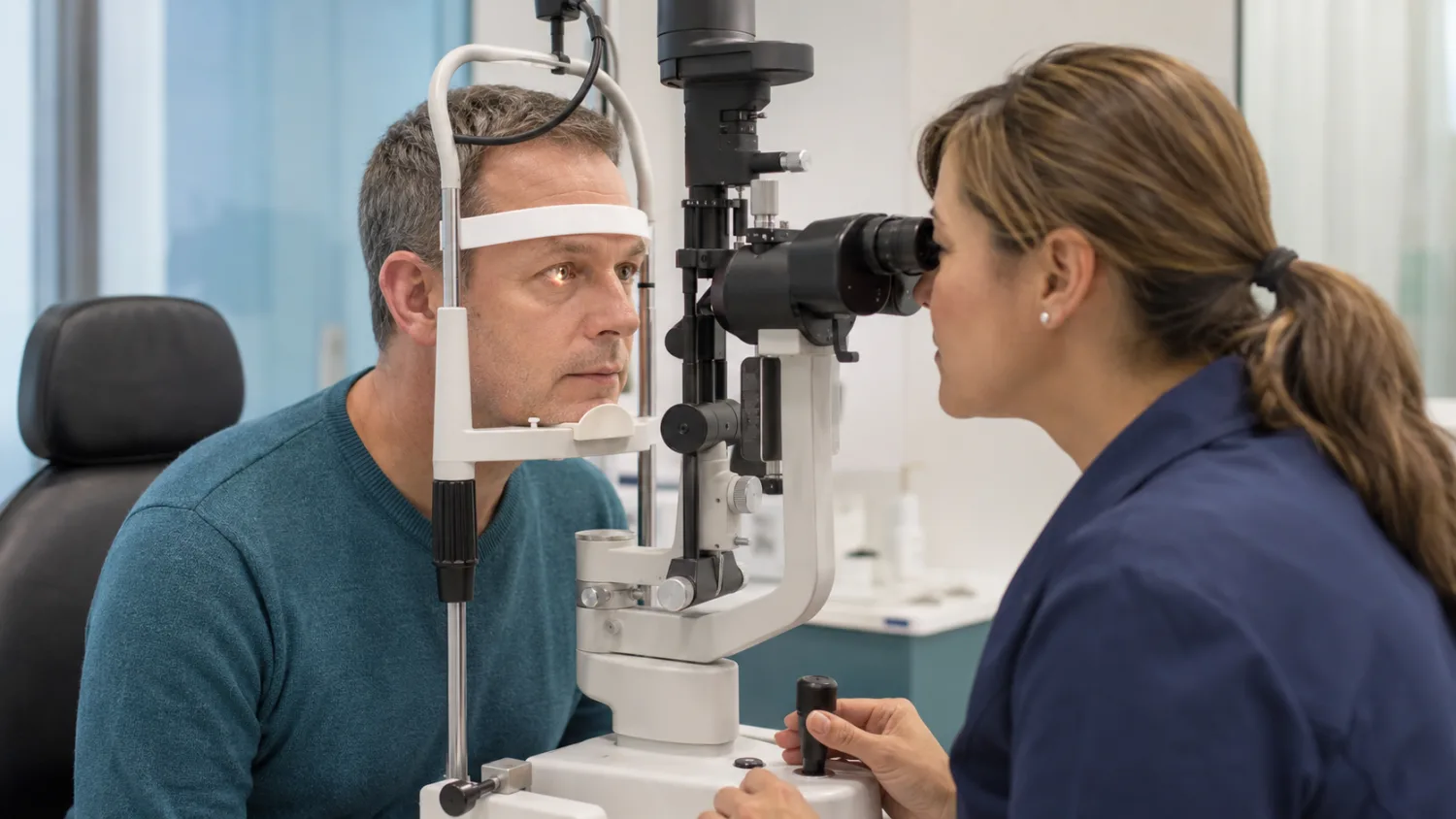
Do not repeatedly turn the eyelid inside out or press hard to inspect it. An optometrist can examine the eyelid safely with magnification and suitable lighting.
How long can a chalazion last?
Many chalazia settle over several weeks. Some remain visible for a few months, particularly when they are large or the meibomian glands remain blocked.
A painless lump does not require emergency treatment simply because it has lasted longer than a stye. It should nevertheless be assessed if it persists, enlarges, affects vision or has unusual features.
Why do styes and chalazia develop?
Both conditions involve structures in the eyelid, but their immediate causes differ.
Why a stye forms
A stye commonly develops when bacteria infect:
- an eyelash follicle;
- an oil gland attached to an eyelash;
- a meibomian gland inside the eyelid.
Staphylococcus bacteria commonly live on the skin and around the nose without causing harm. They can reach the eyelid when a person touches or rubs the eye.
A stye does not necessarily mean someone has poor hygiene. Even normally clean eyelid glands can occasionally become blocked and infected.
Why a chalazion forms
A chalazion develops when thickened oil and inflammatory material become trapped inside a meibomian gland.
The blockage may be associated with:
- blepharitis;
- meibomian gland dysfunction;
- rosacea;
- previous styes;
- skin conditions affecting oil production;
- frequent eyelid inflammation.
Blepharitis
Blepharitis causes inflammation along the eyelid margins. Symptoms can include:
- itching or burning;
- crusting around the eyelashes;
- flaky eyelid skin;
- red eyelid edges;
- gritty or dry eyes;
- recurrent styes or chalazia.
When eyelid lumps repeatedly return, controlling blepharitis may be more useful than treating each lump separately.
Meibomian gland dysfunction
Meibomian gland dysfunction occurs when eyelid oils become too thick or the gland openings become blocked.
This can contribute to:
- dry eye symptoms;
- burning or grittiness;
- eyelid inflammation;
- recurrent chalazia;
- internal styes.
Our guide to dry eye syndrome explains how eyelid oil glands help maintain a stable tear film.
Rosacea
Rosacea can affect the eyelids even when facial redness is mild.
Ocular rosacea may cause:
- blocked meibomian glands;
- recurrent eyelid bumps;
- burning or dry eyes;
- red eyelid margins;
- light sensitivity;
- visible small blood vessels.
Eye make-up and contact lenses
Old cosmetics, sleeping in eye make-up and applying eyeliner directly over the meibomian gland openings can contribute to irritation and blockage.
Poor contact-lens hygiene can introduce bacteria and worsen eye irritation. However, a painful red eye in a contact-lens wearer should not simply be assumed to be a stye because corneal infection is also possible.
How can you tell which eyelid bump you have?
No single feature provides a perfect diagnosis, but asking a few practical questions can help.
Is it painful?
Marked pain and tenderness favour a stye.
Little or no pain favour a chalazion, particularly when the lump has been present for more than several days.
An inflamed chalazion can still be sore, so pain alone does not settle every case.
Is it on the eyelash line?
A lump centred around one eyelash is more likely to be an external stye.
A deeper lump sitting within the body of the eyelid is more likely to be a chalazion or internal stye.
Is there a yellow point?
A visible yellow or white centre suggests a pus-filled stye.
A chalazion usually feels solid and does not have a surface point, although oily material may occasionally drain through the inner eyelid.
How quickly did it appear?
A stye often becomes painful and visible over one or two days.
A chalazion may grow more gradually or become noticeable after the pain from a previous stye has disappeared.
How long has it lasted?
A painful lump that improves within a week is likely to be a stye.
A firm painless lump lasting several weeks is more typical of a chalazion.
Is there a single lump?
If there is no distinct lump and the eyelids are instead itchy, flaky, sticky or diffusely swollen, the problem may be:
- blepharitis;
- conjunctivitis;
- allergy;
- irritation from cosmetics or contact lenses;
- cellulitis.
Is the eye itself painful or light-sensitive?
Neither an uncomplicated stye nor a chalazion should cause severe pain inside the eyeball, pronounced sensitivity to light or significant visual loss.
These symptoms require urgent assessment for another eye problem.
See our guide to eye problems, red eye, pain and when symptoms are urgent.
How to treat an eyelid bump at home
The initial home treatment is similar for both a stye and a chalazion: use warmth to encourage the gland or follicle to drain naturally.
Apply a warm compress
- Wash your hands.
- Soak a clean soft flannel in warm water.
- Test it against your wrist to make sure it is not too hot.
- Close the affected eye.
- Hold the compress gently against the eyelid for around 5 to 10 minutes.
- Rewarm the cloth as it cools.
- Repeat several times each day.
The aim is sustained comfortable warmth, not intense heat.
A purpose-made reusable eye mask may remain warm longer than an ordinary cloth. Follow its heating instructions carefully to avoid burns.
Massage gently after warming
Warmth softens thickened oil. Gentle massage can then encourage movement towards the gland opening.
- For an upper-eyelid lump, massage gently downwards towards the eyelashes.
- For a lower-eyelid lump, massage gently upwards towards the eyelashes.
Do not massage hard enough to cause substantial pain.
Keep the eyelid margins clean
Gently remove crusting or discharge with clean water and a fresh cotton pad.
Someone with ongoing blepharitis may need a regular eyelid-cleaning routine recommended by an optometrist or clinician.
Do not squeeze or puncture the lump
Trying to pop an eyelid bump can:
- push infection deeper;
- spread bacteria;
- increase swelling;
- injure the eye;
- cause scarring.
Do not use needles, pins, tweezers or blades.
Avoid make-up and contact lenses
While the eyelid is inflamed:
- use glasses rather than contact lenses;
- avoid mascara, eyeliner and false eyelashes;
- do not share towels or cosmetics;
- consider replacing old eye make-up;
- discard disposable lenses worn during an active infection.
Pain relief
Paracetamol or ibuprofen may help with pain from a stye when they are normally safe for you.
Ibuprofen may be unsuitable for people with certain stomach, kidney, bleeding or pregnancy-related conditions. Ask a pharmacist when uncertain.
Avoid unproven remedies
Do not place toothpaste, essential oils, garlic, vinegar or other household products around the eye.
A clean warm compress is safer than using tea bags, heated spoons or substances that may irritate the eye.
When are antibiotics, injections or surgery used?
Most styes and chalazia do not need antibiotics or procedures.
Antibiotics for a stye
Antibiotic ointment or drops may be prescribed when there is associated bacterial infection of the eyelid margin or eye surface.
Oral antibiotics may be needed when redness and swelling are spreading through the eyelid, suggesting preseptal cellulitis.
Antibiotics do not mechanically unblock a chalazion and are not normally useful for a painless non-infected lump.
Drainage of a stye
A large, persistent or very painful internal stye may occasionally require drainage by an ophthalmologist.
This is uncommon and should never be attempted at home.
Chalazion surgery
A persistent chalazion can be treated through a minor procedure called incision and curettage.
After local anaesthetic is given, the ophthalmologist usually opens the lump from the inner surface of the eyelid and removes the trapped material.
The procedure may be considered when the chalazion:
- persists despite warm compresses;
- is large;
- affects vision;
- causes significant cosmetic or functional problems;
- has an uncertain diagnosis.
NHS access to chalazion surgery may depend on local commissioning criteria because many lumps eventually resolve without intervention.
Steroid injection
An ophthalmologist may occasionally inject a small amount of steroid into a persistent chalazion.
This is not used routinely for an actively infected stye. The risks and benefits depend on the position, skin tone, size of the lump and clinician’s assessment.
Biopsy
A tissue sample may be recommended when a lump:
- repeatedly returns in the same place;
- looks unusual;
- causes loss of eyelashes;
- bleeds or ulcerates;
- does not behave like an ordinary chalazion;
- occurs in an older adult and remains unexplained.
Most biopsied eyelid lumps are benign, but persistent atypical lesions occasionally resemble a chalazion while having another cause.
When should an eyelid bump be checked?
Small, typical bumps can usually be managed at home initially. Seek professional help when the diagnosis is uncertain, recovery is delayed or red flags appear.
Arrange a routine optician or GP appointment if:
- the lump is not improving after one or two weeks;
- it remains for several weeks or months;
- it repeatedly returns;
- it affects vision;
- you frequently develop eyelid lumps;
- you have ongoing blepharitis or dry-eye symptoms;
- you are unsure whether it is a stye or chalazion;
- the lump is gradually enlarging.
Seek same-day advice if:
- the whole eyelid becomes red, hot and painful;
- swelling spreads around the eye or into the face;
- you have fever or feel generally unwell;
- you cannot open the eye;
- the pain is rapidly worsening;
- the white of the eye becomes very red;
- there is substantial or persistent discharge;
- you wear contact lenses and the eye itself is painful or red.
Get urgent help if:
- vision becomes blurred, reduced or double;
- the pain is inside the eye;
- light becomes painful;
- moving the eye causes pain;
- eye movement becomes restricted;
- the eye appears to bulge or move forwards;
- you develop severe headache, vomiting or confusion;
- you suddenly lose vision.
These symptoms are not typical of an uncomplicated stye or chalazion.
Where can you seek help?
Depending on the symptoms and local services, contact:
- a community pharmacist;
- an optometrist offering urgent eye care;
- your GP practice;
- NHS 111;
- an eye casualty department;
- A&E for severe symptoms.
Your local pharmacist can advise whether home treatment is appropriate or whether you should see an optician or doctor. Read more about when to see a pharmacist instead of a GP.
Other eyelid bumps that can look similar
Styes and chalazia are the most common eyelid lumps, but other conditions can resemble them.
Blepharitis
Blepharitis usually causes widespread irritation rather than one isolated lump.
Typical symptoms include:
- itching;
- burning;
- flaky or crusted eyelashes;
- red eyelid margins;
- gritty eyes;
- recurrent styes and chalazia.
Conjunctivitis
Conjunctivitis causes inflammation of the membrane covering the white of the eye.
It is more likely to cause:
- diffuse redness;
- sticky or watery discharge;
- itching or burning;
- both eyes becoming involved;
- no distinct firm eyelid lump.
Milia
Milia are tiny white keratin-filled cysts, often found on the skin beneath the eyes or on the cheeks.
They are usually:
- very small;
- white or cream coloured;
- painless;
- close to the skin surface;
- not red or inflamed.
They do not normally arise from the deeper meibomian glands.
Xanthelasma
Xanthelasma causes soft yellowish patches or plaques, often near the inner corners of the eyelids.
They are not infections and do not behave like styes. They may occur alongside high cholesterol, although many people with xanthelasma have normal cholesterol levels.
Eyelid papilloma or skin tag
These are usually slow-growing, painless skin growths. They may have a smooth or slightly irregular surface and remain attached to the outer eyelid skin.
Blocked tear duct
A blocked or infected tear drainage system can cause swelling near the inner corner of the eye rather than within the main eyelid.
There may also be watering, tenderness and discharge.
Preseptal cellulitis
Preseptal cellulitis causes a more widespread infection of the eyelid tissues.
The eyelid becomes:
- red;
- hot;
- painful;
- diffusely swollen.
There may not be a single central lump. Medical treatment with antibiotics is normally required.
Eyelid cancer
Eyelid cancer is much less common than a stye or chalazion. Warning features can include:
- a persistent or enlarging lump;
- repeated crusting or bleeding;
- an ulcer that does not heal;
- loss of eyelashes;
- distortion of the eyelid margin;
- a lump repeatedly returning in exactly the same place.
These signs do not prove cancer, but they should be examined.
How can recurring eyelid lumps be prevented?
Not every stye or chalazion is preventable. Recurrences can often be reduced by managing eyelid inflammation and keeping gland openings clear.
Use regular eyelid hygiene
When blepharitis or gland dysfunction is present, an optometrist may recommend:
- regular warm compresses;
- gentle eyelid massage;
- cleaning the eyelid margins;
- lubricating eye drops;
- specific treatment for rosacea or inflammation.
The routine may need to continue after the current lump disappears.
Remove make-up before sleeping
Leaving eye cosmetics on overnight can block glands and irritate eyelid margins.
Use a gentle remover and avoid repeatedly rubbing delicate eyelid skin.
Replace eye cosmetics regularly
Old mascara and liquid eyeliner can accumulate bacteria.
Do not share eye make-up, and consider discarding products used during an active infection.
Avoid applying eyeliner over gland openings
The meibomian glands open along the inner eyelid margin, just behind the eyelashes.
Applying eyeliner directly to this “waterline” can obstruct the openings and contribute to irritation.
Practise safe contact-lens care
- Wash and dry your hands before handling lenses.
- Use fresh recommended solution.
- Do not top up old solution.
- Replace lenses and cases as instructed.
- Do not sleep or swim in lenses unless they are specifically approved.
- Stop wearing them during an active eyelid infection.
Avoid rubbing your eyes
Rubbing transfers bacteria, worsens inflammation and can irritate gland openings.
Persistent itching may indicate allergy, blepharitis or dry eye and should be treated appropriately.
Manage rosacea and skin conditions
Treating facial rosacea, seborrhoeic dermatitis or eczema may reduce inflammation around the eyelids.
Do not apply facial steroid creams close to the eyes unless specifically prescribed for that area.
Consider medical factors
Repeated infections may occasionally be associated with:
- poorly controlled diabetes;
- medicines that suppress immunity;
- other conditions affecting infection risk.
A single stye or chalazion is not a sign that blood tests are automatically needed. Discuss repeated or unusual infections with a GP.
Frequently asked questions about eyelid bumps
Is a painful eyelid bump more likely to be a stye?
Yes. Pain and tenderness strongly favour a stye, particularly when the lump is near an eyelash and develops a yellow point. An inflamed chalazion can also be sore during its early stage.
Is a hard painless eyelid bump a chalazion?
It often is. A chalazion typically feels firm and becomes painless after the early inflammation settles. Persistent or unusual lumps should still be examined.
Can a stye turn into a chalazion?
Yes. The infection may resolve while the gland remains blocked, leaving a firm painless lump.
Can a chalazion become a stye?
A blocked chalazion can become acutely inflamed or infected, making it painful, red and similar to a stye.
Which lasts longer, a stye or a chalazion?
A chalazion usually lasts longer. Styes commonly settle within days or one to two weeks, while chalazia may persist for several weeks or months.
Should I pop an eyelid bump?
No. Squeezing or puncturing it can spread infection, damage the eyelid and injure the eye.
What is the best treatment for both?
Apply a clean warm compress for 5 to 10 minutes several times a day, followed by gentle massage towards the eyelashes.
Do antibiotic drops help a chalazion?
Usually not. A chalazion is mainly a blocked gland rather than a bacterial infection. Antibiotics may be prescribed only when infection or associated bacterial eyelid disease is suspected.
Do antibiotics help a stye?
Most styes resolve without antibiotics. Treatment may be needed when infection spreads, the eyelid margin is infected or there is associated conjunctivitis.
Can I wear contact lenses?
Avoid contact lenses while the eyelid is swollen, painful or producing discharge. Use glasses until the condition has settled.
Can I wear eye make-up?
It is best to avoid mascara, eyeliner and false eyelashes until the lump has healed.
Is an eyelid bump contagious?
A chalazion is not contagious. A stye itself does not spread easily between people, but bacteria from discharge can be transferred through fingers, towels or cosmetics.
Can stress cause an eyelid lump?
Stress does not directly block or infect a gland, but it may contribute indirectly through poor sleep, eye rubbing or disrupted self-care.
Can dry eye cause a chalazion?
Dry eye and chalazia commonly share meibomian gland dysfunction as an underlying problem. Dryness itself does not create a cyst, but blocked oil glands can contribute to both.
Can allergies cause eyelid bumps?
Allergies usually cause itching and widespread swelling rather than one distinct lump. Eye rubbing and eyelid inflammation may indirectly increase the likelihood of blocked glands.
Can a chalazion affect eyesight?
A large chalazion can press on the cornea and cause temporary blurring or distortion. Persistent visual changes should be examined.
Can a stye damage the eye?
An uncomplicated stye should not damage vision. Spreading infection or symptoms involving the eyeball require urgent assessment.
Why does my eyelid lump keep returning?
Common causes include blepharitis, meibomian gland dysfunction, rosacea, cosmetic blockage or incomplete resolution of a gland.
When should a recurring chalazion be biopsied?
An ophthalmologist may recommend biopsy if it repeatedly returns in the same position, causes eyelash loss, bleeds, ulcerates or has an unusual appearance.
Can children get styes and chalazia?
Yes. Both are common in children. Large persistent chalazia may need assessment because pressure on a developing eye can affect focusing.
Where should I go for an eyelid bump?
A pharmacist can advise about initial self-care. An optometrist or GP can examine persistent, recurrent or uncertain lumps. Use NHS 111 or urgent eye services for spreading swelling, fever, vision changes or significant eye pain.