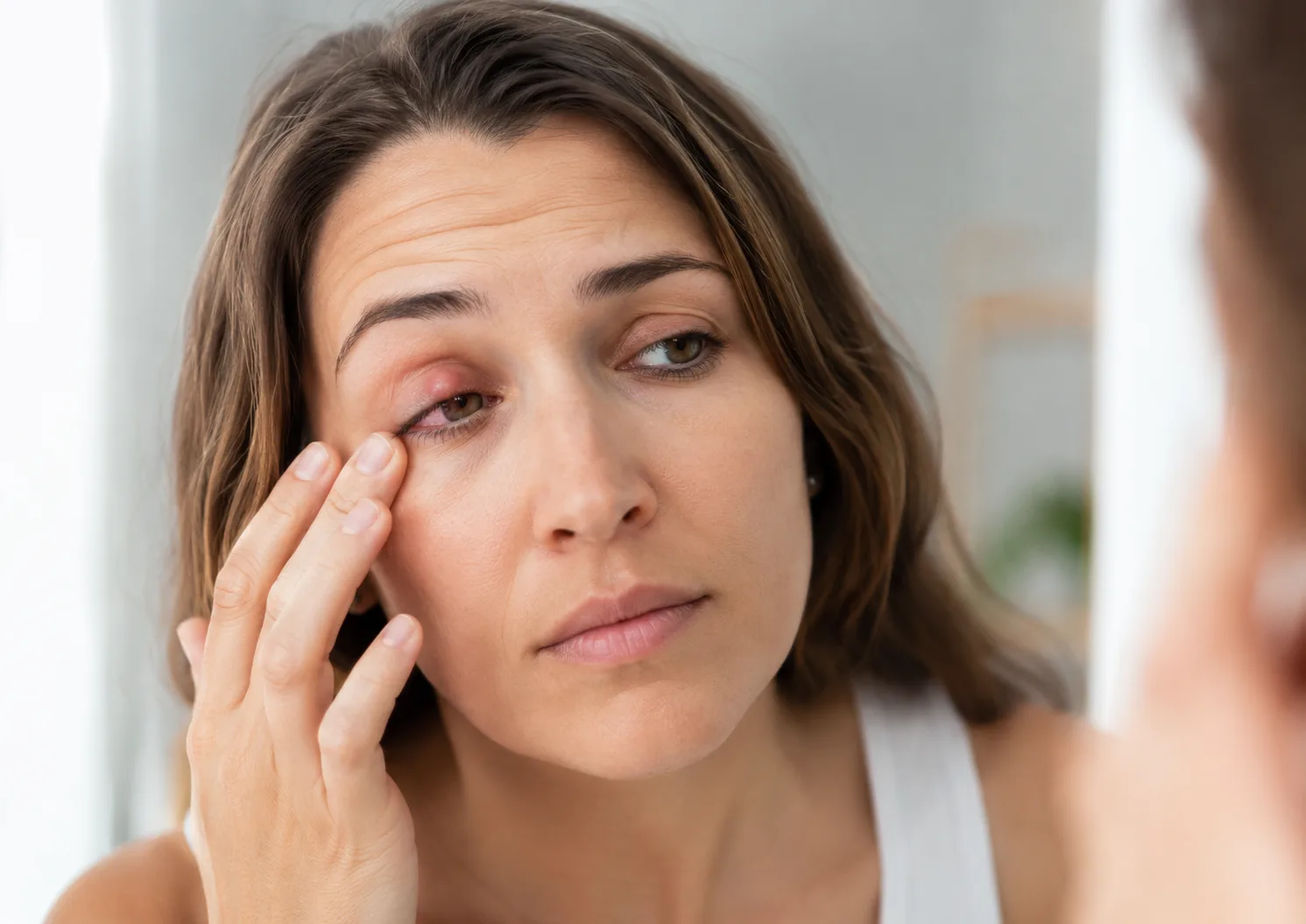
A stye is a small, painful lump that develops on or inside an eyelid. It usually forms when an eyelash follicle or one of the eyelid’s oil-producing glands becomes blocked and infected. The surrounding eyelid may become red, tender and swollen, and the lump can develop a yellow point that resembles a small spot.
Most styes are uncomfortable rather than dangerous. They commonly begin improving within a few days and often clear without prescription treatment. A clean warm compress can encourage natural drainage and relieve soreness.
However, not every eyelid lump is a stye. A painless firm lump is more likely to be a chalazion, while widespread swelling, severe eye pain, sensitivity to light or changes in vision may indicate another eye condition that requires prompt assessment.
Seek urgent medical or optician advice if the redness or swelling is spreading beyond the small lump, the entire eyelid is becoming hot and painful, you cannot open the eye, you have a fever, or the symptoms are getting rapidly worse.
Get urgent help through NHS 111, an urgent optician service or A&E if the pain is inside the eye rather than just in the eyelid, your vision changes, you become sensitive to light, the eye bulges, eye movement is painful or restricted, or you feel significantly unwell.
What is a stye?
A stye is a localised infection or inflamed blockage involving a gland or hair follicle in the eyelid. The medical term is hordeolum.
The eyelids contain several structures that can become blocked or infected:
- eyelash follicles;
- small oil glands attached to the eyelashes;
- meibomian glands located within the eyelid;
- sweat-producing glands around the eyelid margin.
When bacteria multiply within one of these structures, the immune system creates inflammation. The area becomes red, tender and swollen, and a small collection of pus may form.
A stye can appear on the upper or lower eyelid and may affect either eye. It is possible to have more than one stye at the same time, although a single lump is more common.
External stye
An external stye forms near the edge of the eyelid, usually around the root of an eyelash.
It often looks like a small pimple and may develop a visible yellow or white centre. The surrounding skin can be sore and swollen.
External styes are generally easier to see and may drain naturally through the eyelid margin.
Internal stye
An internal stye forms deeper within the eyelid, usually when a meibomian oil gland becomes infected.
The lump may not be visible from the outside at first. Instead, the eyelid may feel diffusely swollen, tender and painful. Turning the eyelid may reveal a red or yellow swelling on its inner surface.
Internal styes can be more painful and may take longer to settle. They are also more likely than external styes to require assessment when swelling is substantial.
Is a stye dangerous?
Most styes remain confined to a small part of the eyelid and resolve without complications.
The main concern is when infection appears to spread into the surrounding eyelid tissues. This can cause preseptal cellulitis, also called periorbital cellulitis.
Very rarely, an infection around the eye can spread deeper into the eye socket and cause orbital cellulitis. This is a medical emergency because it can threaten vision and spread to other nearby structures.
What does a stye look and feel like?
The first sign may be tenderness in one small part of the eyelid. The lump can then become more visible over the following day or two.
Typical features include:
- a small red lump on or inside the eyelid;
- pain or tenderness when the area is touched;
- localised eyelid swelling;
- a yellow or white pus-filled point;
- a gritty sensation;
- watering of the eye;
- mild redness of the eye or eyelid;
- crusting around the eyelashes;
- a feeling that something is in the eye.
The affected eye may feel irritated, but vision should normally remain clear.
Can a stye make the whole eyelid swell?
Yes. A small stye can sometimes cause surprisingly extensive swelling, particularly in the upper eyelid or when the infection is located inside the lid.
The swelling may be worse after sleep because fluid collects around the loose eyelid tissues overnight.
Even so, swelling should remain reasonably localised and should begin improving rather than continuing to spread.
Seek advice if the eyelid becomes increasingly red, hot or painful, the swelling extends around the eye, or you develop fever or feel unwell.
Can a stye blur vision?
A large swollen eyelid can temporarily interfere with vision by pressing on the eye, covering part of the pupil or creating excess tears.
True visual loss, persistent blurring that does not clear after blinking, double vision or changes in colour vision are not typical of an uncomplicated stye.
Our guide to red eyes, eye pain and urgent warning signs explains when an eye symptom needs same-day assessment.
Does a stye always contain pus?
No. Early styes may appear only as a red tender swelling. Some develop a visible yellow point, while internal styes may drain from the inner eyelid without an obvious external spot.
Do not squeeze the lump to try to release pus. Forced drainage can push infection into surrounding tissue.
What causes a stye?
Styes are usually associated with bacteria that normally live harmlessly on the skin and around the nose. Staphylococcus bacteria are a common cause.
A stye can develop when bacteria enter a blocked eyelash follicle or oil gland. This does not necessarily mean the person has poor hygiene.
Common contributing factors include:
- touching or rubbing the eyes with unwashed hands;
- blocked eyelid oil glands;
- blepharitis;
- leaving eye make-up on overnight;
- using old or contaminated eye cosmetics;
- poor contact-lens hygiene;
- skin conditions affecting oil production;
- previous or recurring styes.
Blepharitis
Blepharitis is inflammation around the eyelid margins. It can cause redness, itching, burning, crusting and flaky material around the eyelashes.
The inflammation can block the openings of the oil glands and make styes or chalazia more likely.
Someone with recurring eyelid lumps may therefore need regular eyelid hygiene rather than treating each stye as a completely separate event.
Meibomian gland dysfunction
The meibomian glands produce an oily layer that slows the evaporation of tears.
When their secretions become thick or their openings become blocked, the eyelids may become inflamed and the eyes may feel dry or gritty. Blocked glands can contribute to internal styes and chalazia.
See our guide to dry eye syndrome for more information about tear-film and eyelid-gland problems.
Rosacea and other skin conditions
Rosacea can affect the eyes and eyelids as well as facial skin. Ocular rosacea may cause:
- recurrent styes or chalazia;
- burning or gritty eyes;
- red eyelid margins;
- visible blood vessels;
- dry eye symptoms;
- light sensitivity.
Seborrhoeic dermatitis and some other inflammatory skin conditions can also contribute to eyelid irritation.
Diabetes and reduced immunity
People with poorly controlled diabetes or conditions affecting immunity may be more prone to infections, including recurrent eyelid infections.
A single ordinary stye does not mean that someone has diabetes. Repeated infections alongside thirst, frequent urination, weight loss or slow wound healing may justify discussing diabetes testing with a GP.
Stress and lack of sleep
People commonly notice styes during stressful or tiring periods. Stress and sleep loss are not direct infections, but they may affect immune function, routines and how often someone rubs their eyes or neglects eyelid hygiene.
They should not be treated as the sole explanation for frequently recurring styes.
Stye or chalazion: what is the difference?
A stye and a chalazion are both eyelid lumps, but they are not exactly the same.
A stye is usually an acute, painful infection involving an eyelash follicle or eyelid gland.
A chalazion is usually a blocked meibomian gland that creates a firm, often painless cyst within the eyelid.
Features more typical of a stye
- painful and tender;
- red and inflamed;
- appears relatively quickly;
- often close to the eyelash line;
- may contain pus;
- may drain within several days.
Features more typical of a chalazion
- firm or rubbery lump;
- usually not very painful after the early stage;
- sits deeper within the eyelid;
- may persist for weeks or months;
- does not usually contain active infection;
- may press on the eye if large.
A stye can sometimes settle but leave behind a firm blocked-gland lump. This residual lump is effectively a chalazion and may remain after the pain and redness disappear.
Likewise, an inflamed chalazion can become tender and resemble a stye.
Stye or conjunctivitis?
Conjunctivitis affects the thin membrane covering the white of the eye and the inner eyelids. It is more likely to cause:
- widespread eye redness;
- sticky or watery discharge;
- itching or burning;
- both eyes becoming affected;
- no single painful eyelid lump.
A stye can make the eye water and become mildly red, but the most prominent feature is usually a localised tender lump.
Stye or eyelid cyst?
Other eyelid cysts are often painless and slow growing. Any lump that repeatedly returns in exactly the same position, bleeds, causes loss of eyelashes, changes the shape of the eyelid or fails to heal should be examined by an optometrist, GP or ophthalmologist.
Most persistent lumps are still benign, but unusual eyelid tumours can occasionally resemble recurrent chalazia.
How to treat a stye at home
Most uncomplicated styes can initially be managed with warm compresses and good eyelid hygiene.
Use a warm compress
A warm compress can soften thickened oil, encourage drainage and reduce discomfort.
- Wash your hands.
- Soak a clean flannel or soft cloth in warm water.
- Test the temperature against your wrist. It should feel comfortably warm, not hot.
- Close the affected eye.
- Hold the cloth gently against the eyelid for around 5 to 10 minutes.
- Rewarm the cloth as it cools.
- Repeat several times a day.
The compress should not burn, sting or make the skin intensely red.
A clean reusable eye mask designed for warm compresses may retain heat longer than a flannel. Follow its heating instructions carefully and check the temperature before placing it on the eyelid.
Massage the eyelid gently
After warming the eyelid, gentle massage may help the gland drain.
Using a clean finger, massage towards the eyelash line:
- downwards for an upper-eyelid lump;
- upwards for a lower-eyelid lump.
Do not press hard, scrape the surface or attempt to burst the stye.
Keep the eyelid clean
Gently clean away crusting or discharge with clean water and a fresh cotton pad.
Use a separate pad for each wipe and avoid rubbing the surface of the eye.
People with blepharitis may benefit from a regular eyelid-cleaning routine recommended by an optometrist, pharmacist or doctor.
Use simple pain relief if needed
Paracetamol or ibuprofen may help with discomfort when they are normally safe for you and are taken according to the instructions.
Ibuprofen may be unsuitable for some people, including those with stomach ulcers, significant kidney disease, some forms of asthma, blood-thinning treatment or pregnancy.
Avoid contact lenses
Do not wear contact lenses while the eyelid is painful, swollen or producing discharge.
Contact lenses can irritate the area and may become contaminated. Use glasses until the eye and eyelid have returned to normal.
Disposable lenses worn around the time the stye developed should usually be discarded. Clean reusable lenses and their storage case according to the manufacturer’s instructions.
Avoid eye make-up
Do not apply mascara, eyeliner, false eyelashes or other eye cosmetics until the stye has healed.
Make-up can block glands further, irritate the eyelid and spread bacteria.
Consider replacing mascara, liquid eyeliner or other products used directly around the affected eye, especially when they are old or may have become contaminated.
Do not pop or squeeze it
A stye may resemble a spot, but squeezing it can:
- push infection deeper into the eyelid;
- increase swelling;
- damage the eyelid;
- spread bacteria;
- cause scarring.
Allow it to drain naturally or have it treated by an eye professional if it does not settle.
Avoid unsafe home remedies
Do not put toothpaste, essential oils, vinegar, garlic, urine or other household substances near the eye.
Tea bags are sometimes suggested as warm compresses, but a clean cloth or purpose-made compress is easier to keep hygienic and avoids exposing the eye to plant material or additives.
Do styes need antibiotics or drainage?
Most styes do not need antibiotics. Warm compresses and time are usually sufficient.
Antibiotics do not immediately open a blocked gland, and unnecessary use can cause side effects and contribute to antibiotic resistance.
Antibiotic ointment or drops
An eye professional may prescribe antibiotic ointment or drops when:
- there is infection along the eyelid margin;
- the stye is draining and there is associated conjunctivitis;
- several eyelash follicles are infected;
- another bacterial eye condition is suspected.
Eye drops alone may have limited effect on a deep internal stye because they mainly reach the surface of the eye.
Do not use someone else’s eye drops, leftover antibiotics or products that are past their expiry date.
Antibiotic tablets
Oral antibiotics may be needed if infection has spread through the eyelid or surrounding skin.
Possible signs include:
- worsening diffuse eyelid redness;
- hot and tender skin;
- swelling extending around the eye;
- fever;
- feeling unwell;
- increasing pain rather than gradual improvement.
This may represent preseptal cellulitis and requires medical assessment.
Incision and drainage
A persistent, very painful or large internal stye may occasionally need drainage by an ophthalmologist.
The procedure is performed using appropriate anaesthetic and sterile instruments. It should never be attempted at home with a needle, pin or blade.
Removing an affected eyelash
When an external stye is centred on one eyelash follicle, an eye professional may occasionally remove the affected eyelash to encourage drainage.
Do not pull out eyelashes yourself because it may worsen irritation or spread infection.
Steroid injections
Steroid injections are not routine treatment for an actively infected stye.
They may occasionally be considered by an ophthalmologist for a persistent non-infected chalazion after the acute inflammation has settled.
How long does a stye last?
Many styes begin improving within several days and clear within about a week.
Some take one or two weeks, especially when they form inside the eyelid.
A typical progression may involve:
- localised tenderness and redness;
- development of a visible lump;
- formation of a small yellow point;
- natural drainage;
- gradual reduction in swelling and pain.
The lump does not always burst visibly. The inflammation may simply reduce as the infection settles.
Why is there still a lump after the pain has gone?
An infected gland can remain blocked after the active stye resolves. This may leave a firm painless lump called a chalazion.
The lump can take several weeks or occasionally months to disappear.
Continue warm compresses if advised, but arrange an assessment if it is large, affects vision or persists.
What if the stye bursts?
Natural drainage is usually a sign that the stye is resolving.
When this happens:
- wash your hands;
- gently clean away discharge;
- continue warm compresses;
- do not squeeze the remaining lump;
- avoid contact lenses and make-up until healed;
- use a clean towel and pillowcase.
Seek advice if discharge continues, redness spreads or pain becomes worse.
What if it does not improve?
Arrange an assessment if:
- there is no clear improvement after approximately one week;
- the lump persists for several weeks;
- the swelling is becoming larger;
- the stye repeatedly returns;
- vision is affected;
- the diagnosis is uncertain.
A pharmacist may be able to advise on self-care and whether an optician or GP assessment is needed. See our guide to when a pharmacist may be able to help instead of a GP.
When should you see a doctor or optician?
An uncomplicated small stye does not usually require an appointment. Seek help when the pattern is not typical or recovery is not progressing.
Arrange a routine GP or optician appointment if:
- the stye is not improving after about a week;
- the lump remains for several weeks;
- styes repeatedly return;
- both eyelids are frequently inflamed;
- you have persistent crusting or dry-eye symptoms;
- the lump is large enough to interfere with sight;
- you are uncertain whether it is a stye;
- you have diabetes or reduced immunity and symptoms are not settling.
Seek same-day advice if:
- the entire eyelid is red, hot, painful or very swollen;
- redness is spreading into the surrounding face;
- you cannot open the eye;
- you have fever or feel significantly unwell;
- pain is becoming severe;
- the white of the eye becomes very red;
- there is substantial pus or persistent discharge;
- the symptoms began after an eye injury;
- you wear contact lenses and the eye itself is red or painful.
Get urgent help for:
- blurred, reduced or double vision;
- pain inside the eye;
- pain when moving the eye;
- restricted eye movement;
- the eye appearing pushed forwards or bulging;
- sensitivity to light;
- severe headache with eye symptoms;
- vomiting alongside severe eye pain;
- collapse or confusion.
These are not typical symptoms of a simple stye and may indicate a deeper infection or another urgent eye condition.
Where should you seek help?
Depending on local services and symptom severity, suitable options may include:
- a community pharmacist;
- an optometrist offering urgent eye care;
- your GP practice;
- NHS 111;
- an eye casualty or emergency department.
Call 999 for collapse, severe confusion, sudden loss of vision or another life-threatening emergency.
Why do styes keep coming back?
Recurring styes usually mean an underlying eyelid problem is allowing glands or follicles to become blocked repeatedly.
Possible reasons include:
- blepharitis;
- meibomian gland dysfunction;
- ocular rosacea;
- frequent eye rubbing;
- old eye make-up;
- poor contact-lens hygiene;
- skin conditions affecting the eyelids;
- diabetes or impaired immunity;
- incomplete treatment of eyelid inflammation.
Daily eyelid hygiene
Someone prone to styes may benefit from a regular routine even when no active lump is present.
This may involve:
- applying a warm compress;
- gently massaging the eyelids;
- cleaning the eyelid margins;
- using prescribed treatment for blepharitis or rosacea.
An optometrist or ophthalmologist can advise on an appropriate method. Excessive scrubbing can irritate the eyelids and make symptoms worse.
Review eye cosmetics
To reduce contamination:
- remove eye make-up before sleeping;
- do not share cosmetics;
- replace mascara and liquid eyeliner regularly;
- discard products used during an active infection when contamination is possible;
- clean brushes and applicators;
- avoid applying eyeliner inside the eyelash line.
Applying products along the inner eyelid margin can block the openings of the meibomian glands.
Improve contact-lens hygiene
Always:
- wash and dry hands before handling lenses;
- follow the replacement schedule;
- use fresh recommended solution;
- never top up old solution;
- clean or replace the lens case;
- avoid sleeping or swimming in lenses unless specifically approved.
Contact-lens wearers should seek urgent assessment for a red painful eye because corneal infection can progress quickly and may initially be mistaken for ordinary irritation.
When recurrent lumps need investigation
A clinician may consider further assessment when:
- the lump always returns in exactly the same place;
- eyelashes fall out around it;
- the eyelid margin becomes distorted;
- the lump bleeds or ulcerates;
- it feels unusually hard or irregular;
- it does not respond to normal treatment;
- recurrent infections occur elsewhere.
Most recurrent eyelid lumps are caused by benign gland blockage, but persistent atypical lesions may need biopsy to exclude a rare eyelid tumour.
Styes in children and babies
Styes are common in children and are usually treated in the same way as those in adults.
A clean warm compress can be applied while the child is calm and supervised. Never use water hot enough to burn delicate eyelid skin.
Helping a child tolerate a compress
It may help to:
- apply it while reading a story;
- use a clean soft flannel;
- keep the session brief and repeat it later;
- allow the child to hold the cloth with supervision;
- avoid restraining the child near the eye.
Do not squeeze the lump or attempt to turn the eyelid inside out.
When a child should be assessed
Seek medical advice if:
- the swelling is substantial;
- the child cannot open the eye;
- redness is spreading;
- the child has fever;
- the eye itself is very red;
- the child complains of severe pain or light sensitivity;
- vision appears affected;
- the child is unusually sleepy or unwell;
- the lump is persistent or frequently recurring.
Young children may not describe changes in vision clearly. Watch for covering one eye, bumping into objects, unusual head positioning or reluctance to look at light.
Styes in babies
Any significant eye redness, swelling or discharge in a very young baby deserves clinical advice.
A newborn under one month with a sticky or red eye should receive urgent assessment because infections in this age group can require prompt treatment.
Can a stye affect a child’s vision?
A small stye should not damage vision.
A large persistent chalazion can press on the developing eye and temporarily alter its focusing shape. Children with a large upper-eyelid lump, persistent blurred vision or an eyelid that covers the pupil may therefore need an eye assessment.
Frequently asked questions about styes
What is the fastest way to get rid of a stye?
Use a clean warm compress for several minutes several times a day, followed by gentle massage towards the eyelashes. Do not squeeze or puncture it.
Can a stye go away overnight?
It is possible for discomfort to improve quickly, but most styes take several days to settle. A residual lump may remain longer.
Should I pop a stye?
No. Squeezing or puncturing it can push infection deeper into the eyelid and spread bacteria into surrounding tissue.
Is a stye contagious?
A stye itself is not usually considered highly contagious, but bacteria from discharge can be transferred through fingers, towels, cosmetics or contact-lens equipment.
Wash your hands, avoid sharing towels and do not share eye make-up.
Can I go to work or school with a stye?
Usually yes, provided you otherwise feel well and can maintain good hygiene. Avoid touching the eye and sharing towels or cosmetics.
Can I wear make-up with a stye?
It is best to avoid eye make-up until the stye has completely healed. Cosmetics can irritate the eyelid, block glands and become contaminated.
Can I wear contact lenses?
No. Use glasses until the eyelid and eye have returned to normal. A red or painful eye in a contact-lens wearer needs prompt assessment because corneal infection is a concern.
Do antibiotic eye drops cure a stye?
Most styes do not need antibiotic drops. They may be prescribed when there is associated surface infection, but they do not directly drain a blocked deep gland.
Can a pharmacist treat a stye?
A pharmacist can advise on warm compresses, pain relief and whether symptoms need assessment. Prescription treatment may require a GP, optometrist or eye specialist depending on local services.
Can a stye cause conjunctivitis?
Occasionally bacteria or discharge from a stye can irritate or infect the eye surface, causing increased redness and discharge. Seek advice when the whole eye becomes red or sticky.
Can a stye turn into a chalazion?
Yes. After the infection settles, a blocked gland may remain as a firm, usually painless lump.
Can a chalazion turn into a stye?
A blocked chalazion can become inflamed or infected and develop pain and redness resembling a stye.
Why does my stye keep returning?
Recurring styes are commonly associated with blepharitis, blocked meibomian glands, rosacea, cosmetics or eye rubbing. Regular eyelid hygiene and assessment of the underlying cause may help.
Does a stye mean I have poor hygiene?
No. Skin bacteria and blocked glands can cause styes even in people with good hygiene. Touching the eyes with unwashed hands can increase risk, but it is not the only cause.
Can lack of sleep cause a stye?
Lack of sleep does not directly infect an eyelid gland. It may contribute indirectly through stress, reduced immune resilience, eye rubbing or disrupted hygiene routines.
Can stress cause a stye?
Stress is not a direct bacterial cause, although some people notice more styes during stressful periods. Recurrent lumps should still be assessed for blepharitis or gland dysfunction.
Can allergies cause a stye?
Allergies do not normally cause a true stye, but itchy eyes can lead to rubbing and eyelid inflammation, which may increase the chance of a blocked or infected gland.
Can dry eyes cause styes?
Dry eye and styes can share an underlying problem with the eyelid oil glands. Dryness does not directly infect the gland, but meibomian gland dysfunction can contribute to both conditions.
How do I know whether the infection is spreading?
Warning signs include increasing diffuse redness, heat and swelling around the eye, fever, worsening pain, difficulty opening the eye or feeling significantly unwell.
When is eyelid swelling an emergency?
Seek urgent help when swelling occurs with vision changes, severe eye pain, painful or restricted eye movement, a bulging eye, severe headache, vomiting, confusion or marked illness.
Can a stye damage eyesight?
An uncomplicated stye should not damage eyesight. Changes in vision suggest either substantial swelling or another eye problem and should be assessed.
Why is there a hard lump after the stye has healed?
The gland may remain blocked after the infection has settled, leaving a chalazion. These often resolve gradually but can persist for weeks or months.
Should a persistent stye be biopsied?
Most do not need biopsy. An ophthalmologist may recommend further investigation when a lump repeatedly returns in the same place, causes eyelash loss, bleeds, ulcerates or has an unusual appearance.
Can styes occur in both eyes?
Yes. It is possible to have styes in both eyes, especially when an underlying condition such as blepharitis affects both eyelids.
Can I use a hot spoon or heated object?
No. Metal and other heated objects can become dangerously hot and burn the eyelid. Use a clean warm cloth or a purpose-made compress tested carefully before application.
How long should I wait before seeing someone?
Arrange an assessment if the stye is not clearly improving after about one week, remains for several weeks, repeatedly returns or affects vision. Seek help sooner if redness or swelling is spreading.