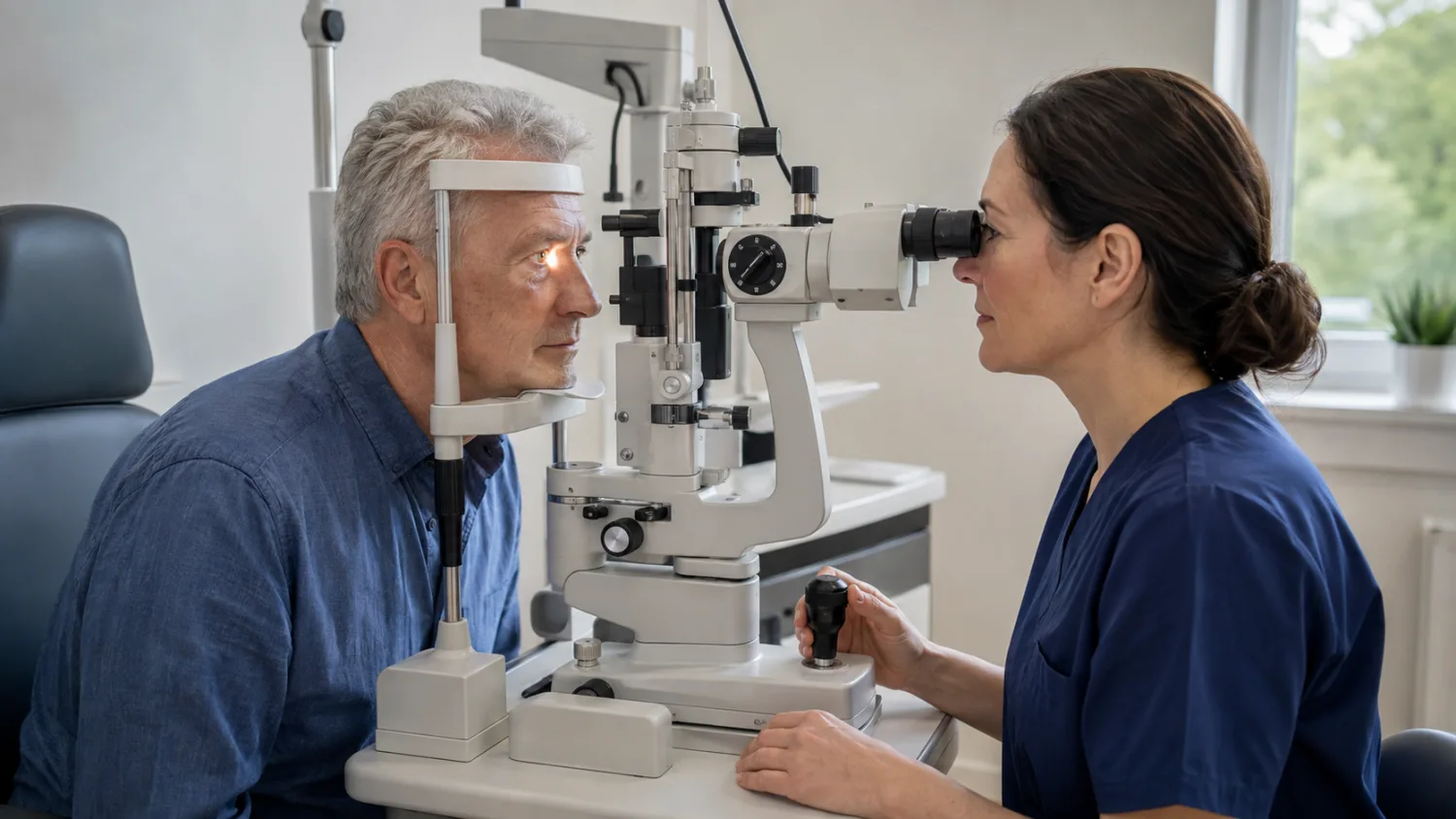
Private cataract surgery in the UK commonly costs approximately £2,500 to £3,500 per eye with a standard monofocal lens. Surgery using a toric, enhanced monofocal, extended-depth-of-focus or multifocal lens may cost around £3,250 to £5,500 per eye.
If both eyes require treatment, the total can therefore range from approximately £5,000 for standard surgery to £11,000 or more for premium lenses. Consultation fees, diagnostic scans, anaesthetic support and some forms of aftercare may be charged separately.
| Private cataract service | Typical UK cost |
|---|---|
| Initial ophthalmologist consultation | £180–£350 |
| Biometry and pre-operative scans | £100–£350 if not included |
| Standard monofocal lens surgery | £2,500–£3,500 per eye |
| Enhanced monofocal lens surgery | £3,000–£4,000 per eye |
| Toric lens surgery | £3,400–£4,500 per eye |
| Extended-depth-of-focus lens surgery | £3,500–£4,800 per eye |
| Multifocal or trifocal lens surgery | £3,500–£5,500+ per eye |
| Anaesthetist or sedation fee | £250–£600 if required and not included |
| YAG laser capsulotomy after surgery | £400–£800 per eye if not covered |
These figures are broad self-pay estimates rather than fixed national prices. Clinics structure their packages differently, so the lowest headline price may not represent the lowest total cost.
The most expensive lens is not automatically the best lens. The appropriate choice depends on your eye health, astigmatism, lifestyle, visual priorities and tolerance of possible effects such as glare and halos.
What does cataract surgery involve?
A cataract forms when the natural lens inside the eye becomes cloudy. This can cause blurred or misty vision, fading colours, glare, halos around lights, difficulty reading and problems driving at night.
During cataract surgery, the surgeon removes the cloudy natural lens and replaces it with a clear artificial intraocular lens, commonly shortened to IOL. The operation is usually performed through a small incision using local anaesthetic drops or an injection around the eye.
Most patients remain awake and return home on the same day. Sedation may be offered when someone is particularly anxious or has difficulty remaining still, but a general anaesthetic is not routinely required for adult cataract surgery.
The artificial lens remains in the eye permanently. It does not feel like a contact lens and does not normally require cleaning or replacement.
Our wider guide to cataract symptoms, treatment and surgery in the UK explains how cataracts develop and what to expect during recovery.
What does standard private cataract surgery cost?
Standard private cataract surgery with a monofocal lens commonly costs between £2,500 and £3,500 per eye. Some regional providers advertise treatment from approximately £2,000, while consultant-led services in central London and major private hospitals may charge £4,000 or more.
The price is affected by:
- the surgeon and hospital;
- the clinic’s location;
- the type and manufacturer of the lens;
- whether the cataract is technically complex;
- the scans required before surgery;
- whether an anaesthetist or sedation is needed;
- how much follow-up care is included;
- whether treatment is required in one or both eyes.
Some providers advertise a “from” price that applies only to straightforward surgery with a particular monofocal lens. The final quotation may increase after the assessment identifies astigmatism, another eye condition or the need for a different lens.
Ask whether the price is fully inclusive and obtain a written quotation before agreeing to treatment.
How much does surgery for both eyes cost?
Private cataract surgery for both eyes commonly costs:
- standard monofocal lenses: approximately £5,000–£7,000;
- enhanced monofocal lenses: approximately £6,000–£8,000;
- toric lenses: approximately £6,800–£9,000;
- extended-depth-of-focus lenses: approximately £7,000–£9,600;
- multifocal or trifocal lenses: approximately £7,000–£11,000 or more.
The second eye is not always discounted. Some providers charge the same amount for each operation, while others offer a package reduction when both eyes are booked.
The eyes are usually treated on separate dates. The appropriate interval depends on the clinic, the patient’s health, how the first eye recovers and whether the surgical plan needs to be adjusted for the second eye.
Some services offer immediate sequential bilateral cataract surgery, in which both eyes are treated on the same day. This is not suitable for everyone and requires specific safety procedures. The surgeon should explain the benefits, risks and alternatives.
How do the different lens options compare?
The intraocular lens determines where the eye is intended to focus after surgery. No artificial lens perfectly recreates the full focusing ability of a healthy young natural lens.
| Lens type | Main aim | Likely need for glasses | Important limitations |
|---|---|---|---|
| Monofocal | Clear focus at one chosen distance | Usually needed for some distances | Does not provide a full range of focus |
| Enhanced monofocal | Distance vision with some additional intermediate range | Often needed for reading | Near vision remains limited |
| Toric | Correct cataract and regular corneal astigmatism | May still be needed | Lens alignment is important |
| EDOF | Extend focus from distance towards intermediate vision | May be needed for small print | Can cause glare or halos |
| Multifocal or trifocal | Provide more than one focal range | Reduced dependence is possible | Halos, glare and reduced contrast can occur |
Monofocal lenses
A monofocal lens has one principal focal point. It is the standard option used for most NHS and private cataract operations.
Many patients choose to focus both eyes for clear distance vision and use reading glasses afterwards. Alternatively, the lenses can be targeted towards near vision, with glasses used for distance.
Another possibility is monovision, in which one eye is targeted more towards distance and the other towards near or intermediate vision. Not everyone adapts comfortably to this difference, so a contact-lens trial may be suggested beforehand.
Standard monofocal surgery usually provides the lowest private price. However, “monofocal” does not describe one single product: different designs and manufacturers are available.
Enhanced monofocal lenses
An enhanced monofocal lens aims to retain good distance vision while offering somewhat more intermediate focus than a conventional monofocal lens. This may help with activities such as viewing a dashboard or computer screen.
It does not guarantee spectacle-free reading. Its visual range and possible side effects should be discussed using the particular lens proposed rather than the broad category alone.
Toric lenses
A toric lens is designed to reduce regular corneal astigmatism as well as replace the cataract. It commonly costs several hundred pounds more than a non-toric lens, although the premium varies by clinic.
Accurate measurements and lens alignment are important. A toric lens can rotate after surgery, reducing the intended correction and occasionally requiring another procedure to reposition it.
A toric lens can also be monofocal, enhanced monofocal, EDOF or multifocal. The word “toric” describes its astigmatism correction rather than its full focusing range.
Extended-depth-of-focus lenses
An extended-depth-of-focus, or EDOF, lens is designed to provide a broader range from distance into intermediate vision. It may reduce dependence on glasses for driving, computers and many everyday activities.
Reading glasses may still be required for small print or prolonged close work. Some people experience halos, glare or reduced contrast, particularly in poor light.
Multifocal and trifocal lenses
Multifocal or trifocal lenses divide light to provide more than one focal point. They aim to reduce dependence on glasses for distance, intermediate and near vision.
They are usually the most expensive option and are not suitable for every eye. Possible disadvantages include:
- halos around lights;
- glare and starbursts;
- reduced contrast sensitivity;
- difficulty driving at night;
- vision that takes time to adapt to;
- continued need for glasses for some tasks.
Retinal disease, advanced glaucoma, irregular corneas and other eye conditions may make a multifocal lens less suitable. A careful assessment is more important than a clinic’s promise of “glasses-free” vision.
What should the quoted price include?
A genuinely comprehensive package may include:
- the initial surgical consultation;
- visual-acuity testing;
- biometry to calculate the lens power;
- corneal measurements and scans;
- the intraocular lens;
- the surgeon’s fee;
- hospital and theatre charges;
- local anaesthetic;
- post-operative eye drops;
- routine follow-up appointments;
- an emergency contact number;
- management of uncomplicated early aftercare.
Do not assume that “all-inclusive” has the same meaning at every clinic. Ask for a written list of inclusions and exclusions.
Important questions include:
- Is the first consultation included?
- Are biometry, OCT and corneal-topography scans included?
- Which exact lens is covered by the advertised price?
- Is there an additional charge for astigmatism correction?
- Are theatre and anaesthetic fees included?
- How many follow-up visits are included?
- Who provides urgent advice after surgery?
- What happens if the planned visual result is not achieved?
- Is YAG laser treatment included if posterior capsule opacification develops?
- Are complication-related appointments covered?
Our guide to private ophthalmologist consultation and scan costs explains the fees that may arise outside a surgical package.
What additional charges might arise?
Consultation and diagnostic scans
An initial ophthalmologist appointment commonly costs £180 to £350. Biometry, OCT imaging, corneal topography and other measurements may add £100 to £350 when charged separately.
Accurate biometry is essential because it helps determine the power of the artificial lens. Previous laser vision correction can make the calculation more complex and may require additional measurements.
Sedation or anaesthetic support
Most cataract operations use local anaesthetic without an anaesthetist being present throughout. If intravenous sedation, monitored anaesthesia or a general anaesthetic is required, an additional fee of several hundred pounds may apply.
Complex surgery
The price may rise when surgery involves:
- a very dense or advanced cataract;
- weak support structures around the natural lens;
- a small pupil requiring additional devices;
- previous eye surgery;
- corneal or retinal disease;
- advanced glaucoma;
- a previous eye injury;
- another factor increasing the operating time or equipment required.
New glasses
Even with a premium lens, glasses may still be necessary for particular distances or detailed tasks. A new spectacle prescription is usually measured after the eye has healed and the vision has stabilised.
The cost of an optician’s examination and glasses is not normally included in the surgery price.
YAG laser capsulotomy
The cataract itself cannot return because the cloudy natural lens has been removed. However, the thin capsule supporting the artificial lens can become cloudy months or years later. This is called posterior capsule opacification, or PCO.
A YAG laser capsulotomy can create a clear opening in the cloudy capsule. Private treatment may cost approximately £400 to £800 per eye, including or excluding consultation fees depending on the provider.
Some cataract packages cover YAG treatment for a limited period, while others exclude it entirely.
Further vision-correction treatment
Lens calculations are highly accurate but cannot guarantee an exact refractive result. Residual short-sightedness, long-sightedness or astigmatism may remain.
Possible responses include:
- wearing glasses or contact lenses;
- laser vision correction where suitable;
- adding another lens;
- exchanging or repositioning the implanted lens.
Ask what corrective treatment is included and under which conditions. Some clinics offer a limited enhancement policy, but exclusions and time limits may apply.
How do you choose the right lens?
Lens choice should begin with your priorities rather than the clinic’s most expensive package.
Consider which activities matter most:
- driving during the day or at night;
- reading books and small print;
- computer work;
- sports and outdoor activities;
- crafts or detailed close work;
- willingness to wear glasses;
- tolerance of glare and halos.
Someone who frequently drives at night may prioritise contrast quality and minimal halos. Another person may accept some optical side effects in exchange for a greater chance of reading without glasses.
The surgeon should also consider:
- the health of the retina and optic nerve;
- corneal shape and astigmatism;
- dry-eye symptoms;
- glaucoma;
- previous laser eye surgery;
- the visual potential of each eye;
- differences between the two eyes;
- your current spectacle prescription.
Ask for the exact lens name and why it is recommended. Terms such as “premium,” “advanced” and “bespoke” are marketing descriptions rather than guarantees of a better result.
Moorfields explains that the appropriate cataract lens depends on individual eye health and lifestyle needs.
What are the risks of cataract surgery?
Cataract surgery is commonly performed and most operations are uncomplicated. Nevertheless, it is an operation inside the eye and cannot be considered risk-free.
Possible complications include:
- infection inside the eye;
- bleeding or inflammation;
- raised eye pressure;
- swelling of the cornea or retina;
- damage to the lens capsule;
- retained lens fragments;
- incorrect lens power or residual prescription;
- movement or rotation of the implanted lens;
- retinal tear or detachment;
- posterior capsule opacification;
- persistent glare, halos or unwanted optical effects;
- rarely, permanent loss of vision.
The NHS provides further information about cataract surgery, recovery and possible complications. NICE also publishes guidance on the management of cataracts in adults.
Contact the surgical team urgently if you develop increasing pain, worsening redness, rapidly deteriorating vision, a new shadow or curtain, or a sudden increase in flashes and floaters.
A dark curtain or shadow across the vision may indicate retinal detachment. Our guide to retinal-detachment warning signs and emergency treatment explains why immediate assessment is important.
Can you have cataract surgery through the NHS?
Yes. NHS cataract surgery is available when the cataract affects vision and daily life sufficiently to justify treatment. The operation, standard intraocular lens and routine aftercare are provided without a private surgical charge.
Referral commonly begins with an optometrist or GP. Eligibility and waiting times vary by local area, but decisions should consider how the cataract affects the individual rather than relying only on a visual-acuity threshold.
NHS surgery generally uses a monofocal lens. The lens can usually be selected to favour distance or near vision, but multifocal lenses intended mainly to reduce dependence on glasses are not routinely offered.
Private treatment may provide:
- a shorter wait;
- greater choice of surgeon or hospital;
- more appointment flexibility;
- access to a wider range of lens designs;
- more control over the timing of each eye.
These benefits do not mean that private surgery is inherently safer or produces better vision. Both NHS and private outcomes depend on the individual eye, appropriate lens selection, surgical quality and management of complications.
Will private medical insurance cover cataract surgery?
Many private medical insurance policies cover medically necessary cataract surgery, subject to the policy terms, consultant network, excess and pre-authorisation requirements.
Insurance may pay only up to the cost of standard monofocal surgery. If you choose a toric or multifocal lens, you may need to pay the difference yourself. Some insurers do not permit a simple upgrade arrangement, so obtain written confirmation before treatment.
Ask the insurer:
- whether the consultation and scans are covered;
- which hospitals and surgeons are approved;
- which lens types are included;
- whether you can pay a premium-lens supplement;
- how much excess or co-payment applies;
- whether both eyes require separate authorisation;
- which follow-up appointments are covered.
Do not assume that authorisation for the first eye automatically covers the second.
Can you pay monthly for cataract surgery?
Many private providers offer finance or payment plans. These may include an interest-free period or a longer interest-bearing agreement.
Before accepting finance, compare:
- the cash price;
- the deposit;
- the annual percentage rate;
- the total amount repayable;
- the monthly payment;
- the repayment period;
- early-repayment conditions;
- what happens if surgery is cancelled.
A low monthly payment can obscure a high total cost when the loan lasts several years. Finance should not influence the clinical choice of lens.
How should you compare private cataract clinics?
Compare the complete care pathway rather than the headline price alone.
Check:
- whether you will meet the operating surgeon before committing;
- the surgeon’s General Medical Council registration and specialist status;
- which healthcare regulator oversees the clinic or hospital;
- who performs the pre-operative measurements;
- the exact lens being recommended;
- who provides emergency advice after surgery;
- where complications would be treated;
- how long routine aftercare remains included;
- whether outcomes and risks are discussed realistically;
- whether the quotation includes every anticipated fee.
Be cautious if a provider:
- guarantees that you will never need glasses;
- promotes one premium lens as suitable for everyone;
- pressures you to book or pay immediately;
- does not explain glare, halos and contrast changes;
- will not name the operating surgeon or lens;
- uses a low headline price but provides no complete quotation;
- does not explain how complications will be managed.
It is reasonable to obtain a second opinion when the lens recommendation is unclear or when a costly premium option is being proposed.
Frequently asked questions
How much is private cataract surgery per eye?
Standard monofocal surgery commonly costs approximately £2,500 to £3,500 per eye. Premium lens surgery may cost £3,250 to £5,500 or more per eye.
How much does private cataract surgery cost for both eyes?
Treatment for both eyes commonly costs around £5,000 to £7,000 with standard monofocal lenses and £7,000 to £11,000 or more with premium lenses.
Why do cataract surgery prices vary so much?
Prices depend on the lens, surgeon, hospital, location, complexity, diagnostic scans, anaesthesia and amount of aftercare included.
What is the cheapest cataract lens?
A conventional monofocal lens is generally the least expensive option. It can provide excellent-quality vision at the chosen focal distance, although glasses are normally required for other distances.
Is a premium lens worth the additional cost?
It may be worthwhile for a suitable patient who strongly values reduced dependence on glasses and accepts the potential visual side effects. It is not automatically better for image quality or night driving.
Will I still need glasses after cataract surgery?
Possibly. Most patients with monofocal lenses need glasses for some activities. Premium lenses may reduce dependence but cannot guarantee complete freedom from spectacles.
Does a toric lens correct all astigmatism?
It can reduce suitable regular corneal astigmatism, but some residual prescription may remain. Astigmatism caused by other parts of the eye may not be fully corrected by the lens.
Are multifocal lenses available through the NHS?
They are not routinely provided solely to reduce the need for glasses. NHS cataract surgery generally uses a monofocal lens selected according to the patient’s clinical needs.
Is laser cataract surgery better?
Femtosecond laser assistance can perform certain stages of the operation, but it does not remove every surgical risk or guarantee better vision. Ask the surgeon what benefit it is expected to provide in your particular case and how much it adds to the price.
Can both eyes be treated at the same time?
Some patients can have both eyes treated on the same day, while others have separate operations. Suitability depends on eye health, general health, the provider’s protocol and informed discussion of the risks.
How long does cataract surgery take?
The operation itself often takes approximately 15 to 30 minutes, although you will spend longer at the clinic for preparation and recovery.
How soon can I drive after surgery?
Do not drive until your vision meets the legal standard, you feel safe and your surgical team has confirmed that driving is appropriate. The timing differs between patients.
Does the cataract come back?
No. The cloudy natural lens has been removed. The capsule behind the artificial lens can later become cloudy, producing similar symptoms, but this can usually be treated with a brief YAG laser procedure.
What happens if I cannot adapt to a premium lens?
Some symptoms improve as the brain adapts and the eye heals. Persistent problems may require treatment of dry eye or residual prescription, YAG laser in selected circumstances, or rarely lens exchange. Ask how the clinic would manage this and which costs would be covered.
Is private cataract surgery better than NHS surgery?
Private care may offer faster access and more lens choice, but it is not automatically clinically better. NHS cataract surgery is an established treatment using standard lenses that provide good results for many patients.