A private ophthalmologist consultation in the UK often costs around £200–£400, although specialist assessments and appointments that include extensive testing can cost £500–£650 or more. Follow-up appointments commonly cost approximately £150–£300, with higher prices for some specialist packages.
Scans and other investigations may be included or charged separately. An optical coherence tomography scan, known as OCT, can add anything from around £60 to £275 in the published examples discussed below. More extensive imaging may cost more.
The most useful figure is therefore the cost of the consultation, necessary tests and results review, rather than the appointment fee alone.
This guide uses published self-pay prices checked in August 2026. These are examples, not a national tariff or a personalised quotation. If you suddenly lose vision or develop severe eye pain, seek emergency care rather than waiting for a routine private appointment.
How much does a private ophthalmologist cost?
Prices vary according to the consultant, clinic, complexity of the problem and tests included. A general eye assessment is not directly comparable with a specialist retinal or neuro-ophthalmology appointment.
| Service | Indicative price | What to check |
|---|---|---|
| Initial consultation | Often around £200–£400 | Whether scans and diagnostic tests are included |
| Follow-up consultation | Often around £150–£300 | Whether repeat testing costs extra |
| Specialist assessment or consultation-and-testing package | Published examples from £515–£650 or more | The specialty and exact package contents |
| OCT scan | Published examples around £60–£275 | Scan type, number of scans and interpretation |
| Visual field test | Published examples around £60–£200 | Whether this is separate from the consultation |
| Broader screening package | Some specialist packages start around £950 | Whether screening is appropriate for your needs |
For example, The Eye Doctor lists a £250 initial consultation and £150 follow-up. London Ophthalmology Centre lists £395 and £275 respectively.
At the specialist end, The Retina Clinic London advertises an initial appointment from £650 and follow-up from £550, including testing for the relevant consultation. A higher headline fee may therefore cover services that another clinic bills separately.
How is an ophthalmologist different from an optometrist?
An ophthalmologist is a medically qualified doctor specialising in eye disease and its medical or surgical treatment.
An optometrist examines vision and eye health, prescribes glasses or contact lenses and can identify conditions needing referral. Some optometrists have additional qualifications and provide treatment or specialist monitoring services.
A dispensing optician primarily helps with selecting, fitting and supplying glasses and other optical aids.
For a routine sight test, a change in glasses prescription or an initial eye-health check, an optometrist is often the appropriate starting point. You do not automatically need a private consultant because your vision has become less clear gradually. The NHS guide to visiting an optician explains these roles.
However, an optometrist may recommend ophthalmology assessment if they find a concern such as cataract, suspected glaucoma or a retinal abnormality.
Do not compare the price of a high-street sight test with a consultant appointment as though they provide identical services. Equally, do not assume specialist care is necessary for every eye complaint.
What should the first consultation include?
The ophthalmologist will usually ask about your symptoms, previous eye conditions, operations, medicines and relevant general health. They may also review your optometrist’s referral and previous test results.
Depending on the problem, assessment may involve:
- measuring vision in each eye;
- checking pupil responses;
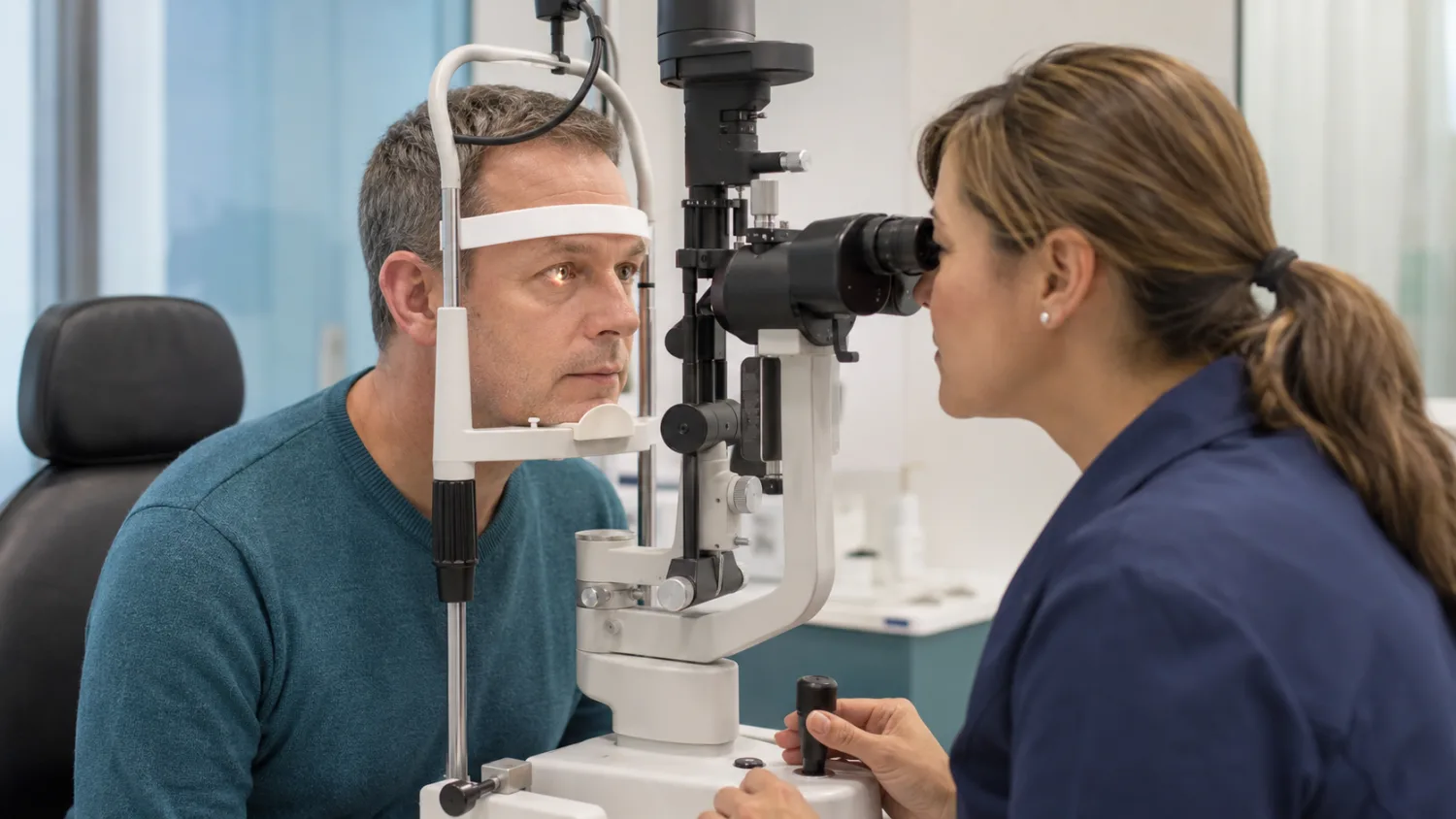
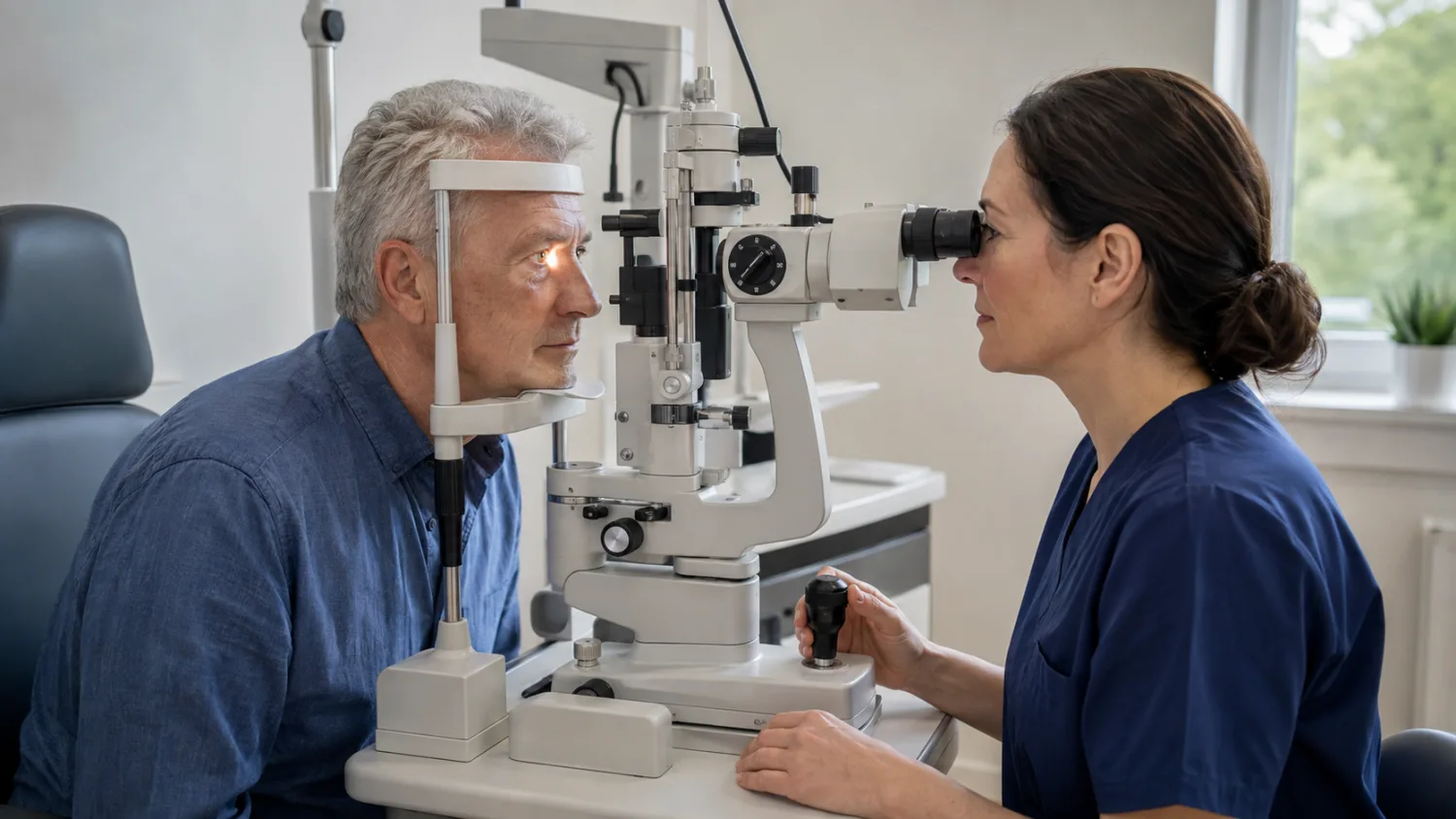
- examining the front of the eye with a slit lamp;
- measuring eye pressure;
- examining the retina and optic nerve;
- using dilating drops when appropriate;
- discussing findings and the next steps.
Not every appointment requires every test. Ask which examinations are included in the consultation fee and which investigations would generate an additional bill.
Confirm whether you will receive a clinical letter, a treatment plan and copies of relevant reports. If another appointment is needed to explain the results, ask about its price before testing begins.
Our guides explain common reasons for referral, including cataracts, glaucoma and dry eye syndrome.
How much does an OCT scan cost?
OCT stands for optical coherence tomography. It uses light to produce detailed cross-sectional images of eye structures. Retinal and optic nerve OCT scans can help assess and monitor conditions such as macular disease and glaucoma.
Published prices differ considerably. The Eye Doctor lists OCT at £60, London Ophthalmology Centre lists £250 for one nerve or retinal scan, and Moorfields Private lists £273 for an additional OCT within its glaucoma assessment pathway.
Before comparing prices, ask:
- Which part of the eye will be scanned?
- Does the price cover one eye or both?
- Are different scan protocols billed separately?
- Is specialist interpretation included?
- Will the scan be compared with previous images?
- Is the consultation charged separately?
An OCT add-on during a routine optometry appointment may cost much less than hospital-based imaging with specialist assessment. That does not make it an equivalent substitute for the full clinical service.
OCT is not a complete examination of every part of the eye. A reassuring scan does not remove the need for appropriate assessment of new symptoms, particularly flashes, floaters or a missing area of vision.
Which other eye tests may cost extra?
The appropriate tests depend on the suspected condition. More testing is not automatically better, and a large screening package may include investigations you do not need.
| Test | What it assesses |
|---|---|
| Visual field testing | Areas of vision, including peripheral vision; often used in glaucoma assessment |
| Retinal photography | Photographs of the retina for assessment and comparison over time |
| Corneal pachymetry | Corneal thickness, which can help interpret eye-pressure measurements |
| Corneal topography | The shape of the cornea, including irregularities relevant to certain diseases or surgery |
| Biometry | Eye measurements used when planning cataract surgery and lens selection |
| Fluorescein angiography | Retinal blood circulation using an injected dye and photographs |
Some investigations require a separate visit or additional preparation. Ask what the test is intended to establish and whether its result will change your care.
A particular price trap is an investigation fee that excludes discussion of the result. For example, The Retina Clinic London lists fluorescein angiography from £650, with a separate £250 consultation required to review results.
For glaucoma, pressure, optic nerve appearance and visual field results are considered together. A single pressure reading cannot provide the whole answer. The NHS glaucoma guide explains that optic nerve damage can sometimes occur even when pressure is within the normal range.
What might consultation, scans and follow-up cost altogether?
The following examples show how individual charges can accumulate. They are illustrative calculations, not packages offered by a particular clinic.
| Example assessment | Illustrative calculation | Total |
|---|---|---|
| Consultation and follow-up without additional testing | £250 + £150 | £400 |
| Consultation, OCT and follow-up | £250 + £100 + £150 | £500 |
| Consultation, OCT, visual fields and follow-up | £350 + £200 + £150 + £200 | £900 |
Actual packages can have different inclusions. Moorfields Private’s glaucoma assessment starts from £515 and includes specified preliminary tests, including visual fields and eye pressure. Adding its listed £273 OCT brings that assessment to £788 before any separately charged follow-up or treatment.
A useful question is: “What is the likely total to assess this problem and explain the results, including tests you commonly need for this type of referral?”
The clinic cannot predict every finding, but it should explain how additional investigations will be agreed and charged.
How much does ongoing monitoring cost?
Some eye conditions need repeated assessment rather than a single consultation. Glaucoma, retinal disease and certain corneal conditions may require reviews and repeat measurements over time.
For budgeting, establish:
- the expected review frequency;
- which tests are likely to be repeated;
- whether tests are included in the review fee;
- the cost of prescribed eye drops;
- what happens if an earlier appointment is needed;
- whether a monitoring package has limits or exclusions.
For example, two reviews at £200 each plus £100 imaging at each visit would total £600, before medicines or other tests. This is an illustration, not a recommended follow-up schedule.
Monitoring frequency should be based on clinical need. Do not extend the interval yourself because symptoms seem unchanged: some eye diseases progress without obvious early symptoms.
If ongoing private care becomes unaffordable, discuss an NHS handover before missing appointments or stopping treatment.
Which additional charges and treatment costs should you check?
A consultation quotation is not a quotation for surgery, laser treatment or injections. If treatment is recommended, request a separate written estimate.
Potential additional charges include:
- hospital or facility fees;
- repeat imaging and laboratory investigations;
- prescriptions and the medicines themselves;
- additional specialist opinions;
- surgeon and anaesthetist fees;
- lens implants or other treatment-specific materials;
- postoperative reviews outside the package;
- treatment of complications or repeat procedures.
Check whether treatment prices are per eye. A cataract or laser quotation for one eye should not be mistaken for the cost of treating both.
Ask whether an initial assessment fee is included in, deducted from or added to a later surgical package. Also clarify whether follow-up includes the necessary scans or only the consultation.
For more background, see our guides to cataract treatment and surgery and laser eye surgery suitability.
Do you need a referral, and can you use insurance or the NHS?
Some self-pay clinics accept direct bookings. Others require or prefer a referral from an optometrist, GP or another specialist. A referral helps the clinic identify the right consultant and understand previous findings.
If using insurance, contact the insurer before booking. Confirm:
- whether a referral is required;
- whether the consultant and hospital are recognised;
- whether diagnostic tests need separate authorisation;
- your outpatient allowance and excess;
- whether any professional fees exceed the insurer’s limits;
- whether the condition or proposed treatment is excluded.
Routine sight tests, glasses and elective vision-correction procedures may be treated differently from investigation of an eye disease. Do not assume that a clinic accepting your insurer means your particular care is covered. Our guide explains private health insurance excess.
You can also access ophthalmology through the NHS when clinically appropriate. Paying for a private opinion does not remove NHS eligibility, but it does not guarantee a faster NHS appointment or automatic acceptance of a particular treatment plan.
Before switching services, ask how reports, scan images and follow-up responsibility will be transferred. Avoid leaving an unresolved gap in monitoring.
How should you choose a consultant and prepare for the appointment?
Choose expertise relevant to your problem. Ophthalmologists may specialise in cataracts, glaucoma, retinal disease, corneal conditions, eyelids, children’s eye care or neuro-ophthalmology.
Check medical registration and the relevant specialist entry through the GMC medical register. Ask whether the clinic has the equipment needed for your assessment and who will explain the results.
Bring:
- your glasses and details of contact lenses;
- a list of medicines and eye drops;
- previous clinic letters, scans and visual field results;
- your optometrist’s referral or recent sight-test findings;
- a brief description of symptoms and when they started;
- insurance authorisation details, if applicable.
Ask whether to avoid contact lenses beforehand, particularly for corneal measurements or surgery planning. Instructions depend on the assessment and lens type.
Plan transport if your pupils may be dilated. Drops can blur vision and increase light sensitivity for several hours. Do not drive until the effects have worn off and you can see safely, following the clinic’s advice. Moorfields explains the effects of dilating drops.
When should you seek urgent eye care instead of comparing prices?
Sudden changes can be sight-threatening even when the eye is not painful. Do not delay assessment while searching for a cheaper appointment.
The NHS vision-loss guidance advises going to A&E or calling 999 if you suddenly cannot see from one or both eyes or suddenly develop severe eye pain. Do not drive yourself.
Seek urgent assessment for:
- new or suddenly increasing flashes and floaters;
- a dark curtain, shadow or missing area of vision;
- new blurred vision alongside flashes or floaters;
- symptoms beginning after eye surgery or injury.
The NHS flashes-and-floaters guidance advises an urgent optician appointment or help from NHS 111. Use the appropriate local urgent-care route where arrangements differ.
If you develop problems after an operation, contact the surgical team promptly and follow its emergency instructions. A routine follow-up booked for next week is not a reason to wait.
Our guides to floaters and flashes and red eyes, eye pain and urgent warning signs provide further information.
Frequently asked questions
How much is a first private ophthalmologist appointment?
A useful starting estimate is £200–£400, although specialist appointments and packages with extensive testing can cost £500–£650 or more.
Is an OCT scan included in the consultation?
Sometimes. Other clinics charge separately. Confirm the scan type, whether one or both eyes are included, and whether results interpretation is part of the fee.
Why is OCT cheaper at some opticians?
An optometry add-on scan and hospital imaging with a specialist consultation have different pricing structures and scopes. Compare the complete assessment rather than the scan price alone.
Can I book without private health insurance?
Yes. Self-pay patients pay directly. Ask for written prices and agree any additional tests before they are performed.
Will a normal OCT mean my eyes are healthy?
Not necessarily. OCT answers particular questions and does not replace every other eye examination. New symptoms still require appropriate assessment.
Can I have a video consultation?
Some clinics offer remote appointments for advice or reviewing existing results. Many eye problems still require in-person examination and measurements.
Will I need follow-up if my vision feels unchanged?
Possibly. Some conditions need monitoring before changes become noticeable. Follow the agreed schedule and discuss affordability concerns rather than missing reviews.
Are fees usually per eye?
Consultation and test arrangements vary. Many treatment prices are quoted per eye, so always confirm whether a quotation covers one or both.
Is private ophthalmology worth the cost?
It may be useful for access to a particular specialist, a second opinion or appointment flexibility. The best comparison is the full cost of clinically appropriate assessment and follow-up—not simply the lowest advertised fee.