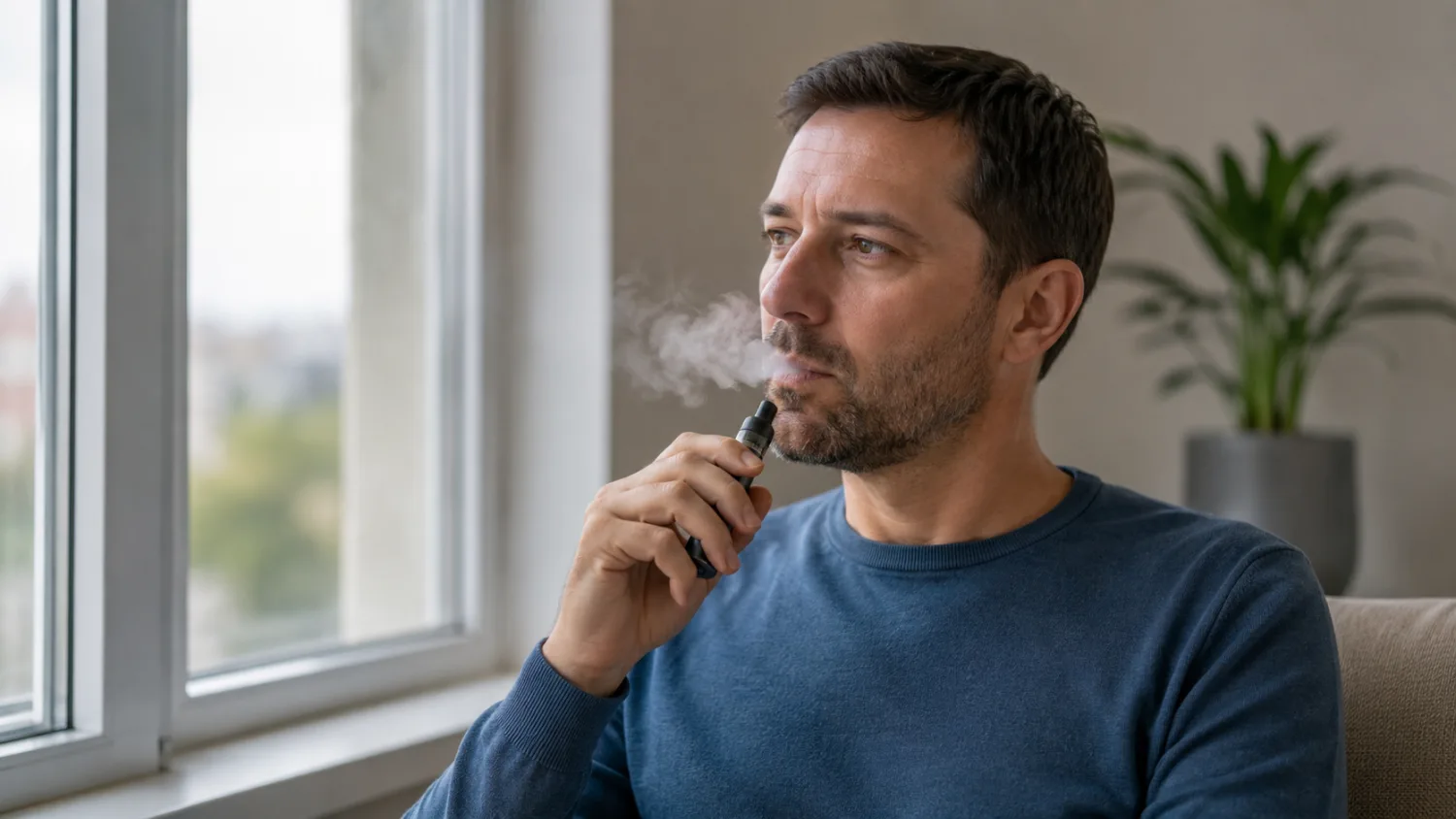
Vaping is generally much less harmful than smoking cigarettes, but it is not harmless. For an adult who already smokes, switching completely from cigarettes to a regulated nicotine vape can substantially reduce exposure to the toxic chemicals produced when tobacco burns. For someone who does not smoke—particularly a child or teenager—there is no health advantage in starting to vape.
That distinction often gets lost in arguments about vaping.
Vapes do not produce tobacco smoke, tar or carbon monoxide, which removes some of the most damaging parts of cigarette smoking. But the aerosol you inhale is not simply harmless water vapour. It can contain nicotine, flavouring chemicals, very small particles and other substances produced when the liquid is heated.
The long-term picture is also less certain than it is for smoking. Cigarettes have been studied over many decades. Modern vaping products have not existed for nearly as long, so researchers cannot yet tell us precisely what 30 or 40 years of daily vaping will do to the lungs, heart and other organs.
The sensible way to think about vaping is therefore relative to what you would otherwise be doing:
- if you do not smoke, not vaping is the healthier choice;
- if you smoke cigarettes, switching completely to vaping is likely to reduce harm substantially;
- if you both smoke and vape, the biggest health gain comes from stopping cigarettes completely;
- if you have stopped smoking using a vape, you can later consider reducing and eventually stopping vaping if you feel ready.
The NHS continues to recommend nicotine vaping as one possible tool for adults trying to stop smoking. Its guidance emphasises both sides of the issue: vaping is considerably less harmful than cigarettes, but it is not risk-free and the long-term risks are not yet fully known.
If cigarettes are still part of the picture, our guide to how to stop smoking and the NHS treatments available explains vapes, nicotine replacement, stop-smoking medicines and behavioural support in more detail.
Get urgent medical help if you develop severe or sudden breathlessness, blue or grey lips or skin, severe chest pain, coughing up blood, collapse or another rapidly worsening breathing problem.
Do not assume new chest or breathing symptoms are “just from vaping”. Asthma attacks, pneumonia, blood clots, heart problems and other conditions can cause similar symptoms and may require urgent treatment.
What actually comes out of a vape?
An e-cigarette heats a liquid to produce an aerosol that can be inhaled.
People often call this “vapour”, which makes it sound like steam from boiling water. That is not quite accurate.
Typical e-liquids contain a mixture of:
- propylene glycol;
- vegetable glycerine;
- flavourings;
- usually nicotine, although nicotine-free products also exist.
Heating the liquid creates an aerosol containing tiny droplets and particles that are drawn into the lungs.
How is this different from cigarette smoke?
The most important difference is combustion.
A cigarette burns tobacco. That combustion produces thousands of chemicals, including tar, carbon monoxide and numerous substances known to cause cancer and cardiovascular disease.
A vape heats liquid rather than burning tobacco.
This does not make the aerosol chemically empty, but exposure to many harmful substances is substantially lower than with cigarette smoke. The UK government's major evidence review found substantially lower exposure to toxic substances associated with cancer, respiratory disease and cardiovascular disease among people who vape compared with people who smoke.
You can read the UK government's nicotine vaping evidence review for the detailed findings.
Does vaping produce tar?
No. Tar is produced when tobacco burns.
This is one of the reasons vaping is considered substantially less harmful than smoking.
Does vaping produce carbon monoxide?
Not in the way cigarette smoking does.
Carbon monoxide is another major harmful component of tobacco smoke and reduces the blood's ability to carry oxygen.
Are there chemicals in vape aerosol?
Yes.
Studies have identified potentially harmful substances in vaping aerosol, including some carbonyl compounds, metals and other chemicals.
The amount varies according to:
- the product;
- liquid ingredients;
- device power;
- coil condition;
- temperature;
- how the device is used.
The important context is that exposure is generally substantially lower than from smoking cigarettes, but higher than inhaling ordinary clean air.
What does vaping do to your lungs?
The lungs are designed primarily to exchange gases—not to receive repeated doses of flavoured aerosol.
It is therefore unsurprising that vaping can irritate the airways.
Some people notice:
- cough;
- dry throat;
- throat irritation;
- increased mucus;
- wheezing;
- chest tightness.
These symptoms do not necessarily mean permanent lung damage, but persistent respiratory symptoms deserve attention.
Can vaping cause a cough?
Yes.
A new vaper may initially cough because the aerosol irritates the throat and airways. Higher nicotine concentrations, particular flavourings or the balance of propylene glycol and glycerine can affect how irritating a product feels.
If coughing continues, gets worse or occurs with breathlessness, fever, blood or unexplained weight loss, it should not simply be blamed on vaping.
Our guide to cough in adults and warning signs explains when a cough should be assessed.
Can vaping make asthma worse?
It can irritate sensitive airways, and some people with asthma find that vaping triggers cough, wheeze or chest tightness.
If vaping repeatedly causes asthma symptoms, continuing exposure is unlikely to be helpful.
However, an adult with asthma who currently smokes cigarettes should not interpret this as a reason to continue smoking. Cigarette smoke is particularly damaging to the lungs.
The goal should be to stop smoking, using the most appropriate quitting method for the individual.
See our guide to asthma symptoms, causes and treatment if you are experiencing recurrent wheeze or breathlessness.
What about COPD?
Smoking is the main cause of COPD in the UK.
Someone with COPD who continues smoking has much more to gain from stopping cigarettes than from worrying about whether a vape is completely harmless.
If vaping allows a smoker with COPD to stop smoking completely, this removes ongoing exposure to tobacco smoke.
But vaping should not be regarded as a treatment for COPD itself.
Our guide to COPD symptoms, causes and treatment explains spirometry, inhalers, pulmonary rehabilitation and smoking cessation.
Does vaping cause permanent lung damage?
This is one of the questions that cannot yet be answered with the same confidence as it can for cigarettes.
Short- and medium-term evidence suggests vaping exposes the lungs to substantially fewer toxic substances than smoking, but good-quality studies following people over several decades do not yet exist.
That uncertainty is a reason not to start vaping if you do not smoke.
It is not a good reason for a smoker to conclude that cigarettes and vapes are equally dangerous. Current evidence does not support that conclusion.
Does vaping affect the heart and blood vessels?
Nicotine has short-term cardiovascular effects regardless of whether it comes from cigarettes, vapes or some other nicotine product.
It can temporarily increase heart rate and affect blood vessels and blood pressure.
The UK's evidence review has identified effects of nicotine on some cardiovascular markers, although translating short-term changes into precise long-term disease risk is much more difficult.
Does vaping increase your heart rate?
Nicotine stimulates the nervous system, so an increase in heart rate can occur soon after use.
Someone who takes repeated puffs throughout the day may therefore be exposed to nicotine almost continuously.
If you experience persistent racing, pounding or irregular heartbeats, see our guide to heart palpitations and when to seek medical advice.
Does vaping raise blood pressure?
Nicotine can cause temporary changes in blood pressure.
The long-term cardiovascular effects of exclusive vaping remain under study.
If you already have hypertension, this does not mean switching back to cigarettes would be safer. Cigarette smoking has well-established cardiovascular harms.
Our guide to high blood pressure explains diagnosis and treatment.
Does vaping cause heart attacks?
Researchers are still establishing the long-term cardiovascular risk of exclusive vaping.
What is much clearer is that cigarette smoking substantially increases the risk of heart attack and stroke.
Biomarker studies generally find substantially lower exposure to cardiovascular toxicants among people who vape than among people who smoke.
The healthiest option is to use neither cigarettes nor vapes. For a current smoker, switching completely to a regulated vape is nevertheless expected to reduce exposure to many of the substances responsible for smoking-related cardiovascular disease.
Our broader guide to cardiovascular risk covers smoking, blood pressure, cholesterol, diabetes and other major risk factors.
Nicotine, addiction and what heavy vaping can feel like
Nicotine is the main reason many people find vaping difficult to stop.
It reaches the brain quickly and activates reward pathways that reinforce repeated use.
Over time, the brain becomes accustomed to nicotine and stopping can produce withdrawal.
Is nicotine the substance that causes most smoking-related cancer?
No.
This is an important misconception.
Nicotine is addictive, but most of the cancer and severe lung damage caused by cigarettes comes from other toxic substances produced when tobacco burns.
This is why nicotine replacement products such as patches and gum have been used for smoking cessation for decades.
Can vaping be very addictive?
Yes.
Modern devices can deliver nicotine efficiently, and vaping can be easier to do repeatedly than smoking.
A cigarette has a natural stopping point. A reusable vape may remain beside someone all day.
This can lead to patterns such as:
- taking a few puffs every few minutes;
- vaping immediately after waking;
- waking at night to vape;
- becoming anxious when the device is unavailable;
- using substantially more nicotine than intended.
What are signs of too much nicotine?
Taking more nicotine than your body comfortably tolerates may cause:
- nausea;
- headache;
- dizziness;
- sweating;
- shakiness;
- palpitations.
If symptoms are severe, persistent or accompanied by chest pain, collapse or serious breathing difficulty, seek medical help.
What happens when you stop vaping?
Nicotine withdrawal can cause:
- strong cravings;
- irritability;
- restlessness;
- difficulty concentrating;
- low mood;
- increased appetite;
- sleep changes.
These symptoms usually become easier with time.
The NHS guide to quitting vaping offers practical advice for gradually reducing nicotine or stopping altogether.
Is vaping safer than smoking?
Yes, based on current evidence, nicotine vaping is substantially less harmful than smoking cigarettes.
But “less harmful” and “safe” are not the same statement.
This distinction is central to sensible public-health advice.
Why cigarettes are much worse
Burning tobacco produces:
- tar;
- carbon monoxide;
- carcinogens;
- toxic gases;
- fine particles;
- numerous chemicals that damage blood vessels and lungs.
Removing combustion removes or greatly reduces exposure to many of these substances.
The Office for Health Improvement and Disparities concluded that in the short and medium term vaping poses only a small fraction of the risk of smoking, while emphasising that vaping is not risk-free and long-term data remain limited.
What about the famous “95% safer” figure?
You may still see claims that vaping is “95% safer” than smoking.
That phrase has become controversial because it can sound much more precise than the underlying long-term evidence allows.
A more useful description is the one now commonly used by UK health bodies: vaping is substantially less harmful than smoking and exposes users to fewer toxins, but it is not harmless.
Is smoking and vaping together better than smoking?
It may reduce cigarette consumption, but dual use should generally be viewed as a transition rather than the destination.
Smoking even a relatively small number of cigarettes still carries significant health risks.
The greatest reduction in harm occurs when cigarettes stop completely.
What if vaping is the only thing that has stopped you smoking?
Do not rush to stop vaping if doing so is likely to send you back to cigarettes.
Remaining smoke-free is the more important health priority.
Once you feel confident that you will not return to smoking, you can gradually reduce nicotine strength or frequency if you want to stop vaping too.
Does vaping cause cancer, popcorn lung or serious lung injury?
Some of the most dramatic claims about vaping mix genuine uncertainties with conditions that have been misunderstood.
Does vaping cause cancer?
It is too early to calculate a lifetime cancer risk with confidence.
Some potentially carcinogenic chemicals can be present in vape aerosol, but exposure to many cancer-related toxicants is substantially lower than in cigarette smokers.
That means vaping should not be described as cancer-free, but there is currently no evidence that its cancer risk approaches that of smoking.
Does vaping cause “popcorn lung”?
Popcorn lung is the informal name for bronchiolitis obliterans, a rare condition involving scarring and narrowing of the smallest airways.
The name arose after workers in a microwave-popcorn factory developed lung disease associated with very high occupational exposure to the flavouring chemical diacetyl.
This history is sometimes used to claim that ordinary UK vaping causes popcorn lung.
Regulated UK nicotine vaping products are subject to ingredient and safety requirements, and the NHS does not regard “popcorn lung from vaping” as an established common consequence of regulated vaping.
That does not mean all inhaled flavouring chemicals are harmless. It means the specific claim is often presented with more certainty than the evidence supports.
What was EVALI?
In 2019, the United States experienced a large outbreak of serious vaping-associated lung injury, commonly called EVALI.
The outbreak was strongly associated with illicit or informal-market THC vaping products, particularly products containing vitamin E acetate.
This matters because images and stories from that outbreak are sometimes presented as if they demonstrated the ordinary risk of regulated UK nicotine vapes.
The MHRA has continued to ask clinicians and the public to report suspected lung injuries and other adverse effects associated with vaping through the Yellow Card scheme.
Does this mean regulated products can never cause serious harm?
No medical or consumer product can be described that way.
Unexpected reactions, product defects, contamination and misuse are possible.
Buying products that comply with UK regulations reduces avoidable risks associated with unknown liquids and illegal devices.
Why vaping is a particular concern for teenagers
The harm calculation looks very different for a 15-year-old who has never smoked than it does for a 55-year-old who has smoked 20 cigarettes a day for three decades.
The adult smoker may reduce a major existing health risk by switching.
The teenager is acquiring a nicotine habit they did not previously have.
The NHS is clear that children and young people should not vape.
Nicotine dependence can develop quickly
Sweet flavours, small devices and the ability to take discreet puffs throughout the day can make vaping easy to repeat.
Some young people progress from occasional experimentation to feeling unable to get through school without nicotine.
Signs of dependence can include:
- vaping soon after waking;
- difficulty concentrating without it;
- irritability during lessons;
- strong cravings;
- spending increasing amounts of money on vaping products.
Why developing brains matter
Children and teenagers are more vulnerable to nicotine dependence because the brain continues developing into early adulthood.
This is one reason UK health advice makes a clear distinction between encouraging adult smokers to switch and discouraging young non-smokers from vaping.
Is selling vapes to under-18s legal?
No.
It is illegal in the UK to sell nicotine vaping products to people under 18 or for adults to buy them on behalf of someone under 18.
UK restrictions have also become tighter. Single-use or disposable vapes were banned from sale across the UK from 1 June 2025.
Further regulation of vape advertising, packaging and promotion is also being strengthened under the Tobacco and Vapes Act.
What if a teenager is already addicted?
Punishment alone is unlikely to make nicotine withdrawal disappear.
It is more helpful to understand:
- how often they vape;
- what nicotine strength they use;
- whether friends also vape;
- whether vaping is being used to manage anxiety or stress;
- how difficult school feels without nicotine.
A GP, pharmacist or stop-smoking professional can advise on an appropriate quitting approach.
Vaping during pregnancy and around other people
Pregnancy creates another situation where relative risk matters.
The best option is not to smoke or vape.
But if someone is smoking cigarettes during pregnancy and a vape enables them to stop smoking completely, current NHS advice considers vaping much less risky than continuing to smoke.
The NHS pregnancy smoking guidance explains the options available.
Is nicotine harmless in pregnancy?
No.
The absence of cigarette smoke does not make nicotine an ideal exposure during pregnancy.
Research into the long-term effects of vaping during pregnancy remains less complete than research into cigarette smoking.
This is why specialist stop-smoking support is particularly useful.
What if you cannot stop smoking without vaping?
Do not return to cigarettes because you have heard that vaping is not completely safe.
Smoking exposes both the pregnant person and baby to carbon monoxide and many other toxins produced by tobacco combustion.
Speak to a midwife, GP, pharmacist or stop-smoking service about the safest practical way to become smoke-free.
What about second-hand vapour?
Second-hand vaping exposure is generally much lower in toxicants than second-hand cigarette smoke.
The UK evidence review found no significant rise in toxicant biomarkers following short-term second-hand vaping exposure among people who neither smoked nor vaped.
However, that does not mean everyone should be expected to breathe someone else's aerosol.
Avoid vaping around:
- babies;
- children;
- pregnant people;
- people with asthma or respiratory sensitivity;
- anyone who has asked you not to.
Ventilation and going outside reduce exposure further.
Are UK vapes regulated and how can you reduce avoidable risks?
Legal nicotine vaping products sold in the UK are regulated.
Among other requirements, current consumer-product rules restrict nicotine e-liquid to a maximum strength of 20 mg/ml, restrict tank size and require nicotine products to meet packaging and notification requirements.
That does not mean every product being sold actually complies.
Avoid illegal or unknown products
Be cautious about devices that:
- claim unusually high nicotine strength;
- appear to contain far more liquid than legally permitted cartridges;
- have no proper packaging or manufacturer information;
- come from informal social-media sellers;
- contain unknown oils or drugs;
- have obviously been modified.
UK rules for consumer vaping products are explained in the government guidance on e-cigarette regulation.
Do not put oils into an ordinary vape
E-cigarettes are designed for appropriate e-liquids.
Do not improvise with essential oils, vitamin oils, homemade mixtures or substances that were not designed and supplied for inhalation.
Replace damaged coils
A burnt taste can indicate that a coil or wick is overheating or no longer functioning correctly.
Do not repeatedly use a device that tastes burnt, leaks excessively or becomes abnormally hot.
Keep e-liquid away from children
Nicotine-containing liquid can be harmful if swallowed, particularly by a child.
Keep bottles and devices securely out of reach.
If a child swallows nicotine liquid or develops symptoms after significant exposure, seek urgent medical advice.
Battery safety matters too
Vapes contain lithium batteries.
Use appropriate chargers, do not continue using obviously damaged batteries and do not carry loose replaceable batteries where metal objects such as keys or coins can contact the terminals.
Damaged lithium batteries can overheat or catch fire.
Disposable vapes are no longer legal to sell
Since 1 June 2025, businesses across the UK have been prohibited from selling or supplying single-use vapes, whether or not they contain nicotine.
Reusable products remain available.
Should you stop vaping, and how can you do it?
If you have never smoked and currently vape, stopping removes an unnecessary exposure and nicotine dependence.
If you started vaping specifically to stop smoking, the decision is a little different.
The priority is to avoid returning to cigarettes.
If you still smoke as well as vape
Focus first on removing cigarettes.
A vape that is not satisfying enough may leave you repeatedly returning to tobacco.
A stop-smoking adviser can help with:
- nicotine strength;
- device choice;
- craving management;
- other medicines or nicotine replacement;
- behavioural support.
Evidence from the continually updated Cochrane review shows that nicotine e-cigarettes can help adults stop smoking and can outperform nicotine replacement therapy in some comparisons.
See the Cochrane review of electronic cigarettes for smoking cessation for the detailed evidence.
If you no longer smoke
Once you are confident that cigarettes are behind you, you can decide whether you want to continue vaping or gradually stop.
Possible approaches include:
- reducing nicotine strength gradually;
- increasing the time between vaping sessions;
- creating vape-free places or periods;
- stopping completely on a planned date;
- using nicotine replacement temporarily if withdrawal is difficult.
Reduce the automatic vaping first
Many people realise they are no longer vaping mainly because of cravings. The hand reaches for the device while driving, scrolling on a phone, watching television or working at a computer.
Breaking some of these automatic associations can make reducing nicotine easier.
You might start by not vaping:
- in bed;
- in the car;
- while walking;
- during meals;
- for the first 30 minutes after waking.
What if cutting nicotine makes you want cigarettes?
Slow down.
There is little benefit in reducing your vaping rapidly if the result is a return to smoking.
For a former smoker, remaining smoke-free is the more important goal.
NHS stop-smoking services can help even if previous attempts to quit have not worked. Our UK stop-smoking guide explains the available routes.
Frequently asked questions about vaping and health
Is vaping bad for you?
Vaping is not harmless. It exposes the lungs to aerosol containing nicotine and other chemicals. However, regulated nicotine vaping is substantially less harmful than smoking cigarettes.
Is vaping worse than smoking?
No. Current evidence indicates that smoking is considerably more harmful because burning tobacco produces tar, carbon monoxide and many toxic and cancer-causing substances.
Is vaping completely safe?
No.
Is vaping just water vapour?
No. A vape produces an aerosol from heated e-liquid rather than simple water steam.
Does vaping contain nicotine?
Most vapes do, although nicotine-free products also exist.
Is nicotine dangerous?
Nicotine is addictive and can have cardiovascular effects, but it is not responsible for most of the cancer and lung disease caused by cigarette smoking.
Can you become addicted to vaping?
Yes. Nicotine dependence can become substantial, particularly with frequent use and higher-strength products.
Can you vape too much nicotine?
Yes. Too much nicotine can cause nausea, dizziness, headache, sweating, tremor and palpitations.
Does vaping damage the lungs?
Vaping can irritate and affect the airways, but the precise long-term risk of decades of exclusive vaping is not yet known.
Can vaping cause coughing?
Yes.
Can vaping cause shortness of breath?
It can irritate the airways, but significant or persistent breathlessness should be medically assessed because many other conditions can cause it.
See our guide to shortness of breath and when to call 999.
Can vaping trigger asthma?
Some people with asthma find vaping irritates their airways and triggers cough, wheeze or tightness.
Is vaping safe if I have COPD?
It is not harmless, but continuing to smoke cigarettes is much more damaging. If you have COPD and smoke, seek help to stop smoking completely.
Does vaping cause lung cancer?
The lifetime cancer risk of vaping is not yet precisely known. Exposure to many carcinogenic substances is much lower than with cigarette smoking, but vaping should not be regarded as risk-free.
Does vaping cause popcorn lung?
Claims that ordinary regulated UK nicotine vaping commonly causes popcorn lung are not supported by current evidence.
What is popcorn lung?
It is the informal name for bronchiolitis obliterans, a rare condition involving scarring of the small airways.
What was the vaping lung injury outbreak in America?
The 2019 EVALI outbreak was strongly linked with illicit THC vaping products, particularly those containing vitamin E acetate.
Can vaping affect your heart?
Nicotine can increase heart rate and affect blood pressure and blood vessels. The long-term cardiovascular consequences of exclusive vaping remain under study.
Can vaping cause palpitations?
Nicotine can cause a faster or more noticeable heartbeat in some people.
Can vaping raise blood pressure?
Nicotine can cause short-term changes in blood pressure.
Can vaping cause a heart attack?
The precise long-term cardiovascular risk is still being studied. Cigarette smoking remains a much more clearly established major cause of heart attacks.
Is vaping better than smoking for your heart?
Switching completely away from cigarettes substantially reduces exposure to many cardiovascular toxicants.
Is it better to smoke five cigarettes and vape than smoke 20 cigarettes?
Reducing cigarettes may reduce some exposure, but smoking even a small number is not harmless. The goal should be to stop cigarettes completely.
Is dual use safe?
No. Continuing to smoke preserves much of the risk associated with tobacco.
Can vaping help you stop smoking?
Yes. Evidence shows nicotine vaping can be an effective smoking-cessation aid for adults.
Is vaping better than nicotine patches?
Both can work. Evidence from Cochrane reviews suggests nicotine e-cigarettes can result in higher quit rates than nicotine replacement therapy in some comparisons.
Should every smoker use a vape?
No. Some people prefer patches, gum, nicotine pouches under guidance, stop-smoking medicines or other approaches.
Should non-smokers vape?
No. There is no health benefit in developing a nicotine habit if you do not smoke.
Is nicotine-free vaping safe?
Removing nicotine removes nicotine dependence and its direct effects, but the lungs are still exposed to heated aerosol and flavouring ingredients.
Can teenagers vape safely?
No. UK health guidance recommends that children and young people do not vape.
Why are teenagers more vulnerable to nicotine?
The brain continues developing into early adulthood, and nicotine dependence can develop during adolescence.
Is vaping illegal under 18?
It is illegal to sell nicotine vaping products to people under 18 or for an adult to purchase them on behalf of someone under 18.
Are disposable vapes still legal in the UK?
No. The sale and supply of single-use vapes has been banned across the UK since 1 June 2025.
Are reusable vapes legal?
Yes, provided the products comply with applicable UK rules.
What is the maximum legal nicotine strength?
For standard consumer nicotine e-liquids, the maximum concentration is 20 mg/ml.
What does 2% nicotine mean?
It generally corresponds to 20 mg/ml nicotine.
Is a stronger vape necessarily more harmful?
A higher nicotine concentration can increase nicotine exposure and dependence, although overall harm also depends on how frequently and intensely the device is used.
Can vaping cause headaches?
Yes. Nicotine, dehydration, excessive use or sensitivity to ingredients may contribute.
Can vaping make you dizzy?
Yes, particularly if nicotine intake is higher than you are accustomed to.
Can vaping make you feel sick?
Yes. Nausea is a common sign of excessive nicotine exposure.
Can vaping cause anxiety?
Nicotine can produce physical sensations such as a faster heartbeat and may worsen anxiety in some people. Withdrawal between doses can also cause irritability or restlessness.
Does vaping help anxiety?
Nicotine may temporarily relieve withdrawal, which can feel calming, but developing nicotine dependence is not a treatment for anxiety.
Can vaping affect sleep?
Yes. Nicotine is a stimulant and vaping close to bedtime may make sleep more difficult for some people.
Can vaping affect your teeth and mouth?
Vaping may contribute to dry mouth and oral irritation. Long-term effects on oral health continue to be studied.
Does vaping stain teeth like smoking?
It generally causes much less staining than tobacco smoke, but this does not make it harmless to oral tissues.
Is second-hand vaping dangerous?
Exposure to toxicants is much lower than with second-hand cigarette smoke, but it is considerate and sensible to avoid exposing children, pregnant people and others unnecessarily.
Should I vape around a baby?
No. Go outside where possible and keep vaping products and nicotine liquids safely away from children.
Can vape liquid poison a child?
Nicotine-containing liquid can be harmful if swallowed. Seek urgent advice after significant accidental ingestion.
Can you vape during pregnancy?
The ideal is to use neither tobacco nor vapes. However, NHS guidance considers vaping much less risky than continuing to smoke during pregnancy if it enables someone to stop cigarettes.
Can vaping affect an unborn baby?
The long-term evidence is incomplete, and nicotine exposure during pregnancy is not considered ideal. Speak to a midwife or stop-smoking adviser about the safest quitting approach.
Can vaping affect fertility?
Research is still developing and there is not enough evidence to define the long-term effect of vaping alone on human fertility with confidence.
Do vapes contain formaldehyde?
Carbonyl compounds including formaldehyde can be produced under some heating conditions, although typical exposure from regulated vaping is generally substantially lower than from cigarette smoke.
Do vapes contain metals?
Small amounts of metals have been detected in some vaping aerosols, with levels varying between devices and conditions of use.
Are flavours harmful?
A flavouring being safe to eat does not automatically mean repeated inhalation is risk-free. The long-term respiratory effects of many inhaled flavouring combinations remain under study.
Is a burnt vape bad for you?
A burnt taste can indicate overheating or a damaged coil. Replace the coil or stop using the faulty device rather than continuing to inhale from it.
Are cheap illegal vapes more dangerous?
They create additional uncertainty because nicotine concentration, ingredients, electrical safety and manufacturing quality may not meet UK requirements.
How can I tell if a vape is legal?
Buy from reputable UK retailers and look for compliant packaging, nicotine warnings and products meeting UK limits rather than unusually large or high-strength devices.
Can you report a bad reaction to a vape?
Yes. Suspected adverse effects or safety problems can be reported to the MHRA Yellow Card scheme.
Should I stop vaping immediately?
If you never smoked, stopping is sensible. If vaping is currently keeping you away from cigarettes, avoid making changes that are likely to trigger a return to smoking.
How do I stop vaping?
You can gradually reduce nicotine concentration, increase the time between vaping, change routines around habitual use or stop on a planned date.
Can nicotine replacement help me stop vaping?
It may be useful for some people, particularly when withdrawal is difficult. A pharmacist or stop-smoking adviser can help you choose an approach.
How long does nicotine withdrawal last?
Cravings and irritability are often strongest early on and gradually improve, although habitual urges can persist longer.
Will quitting vaping make me gain weight?
Nicotine suppresses appetite in some people, so appetite can increase after stopping. Weight change is not inevitable.
What is healthier: vaping or doing neither?
Doing neither is healthier.
What is healthier: vaping or smoking?
For someone who would otherwise smoke cigarettes, regulated nicotine vaping is substantially less harmful.
What is the most important advice for someone who smokes and vapes?
Stop the cigarettes completely. Once you are securely smoke-free, you can decide whether and how to reduce vaping.