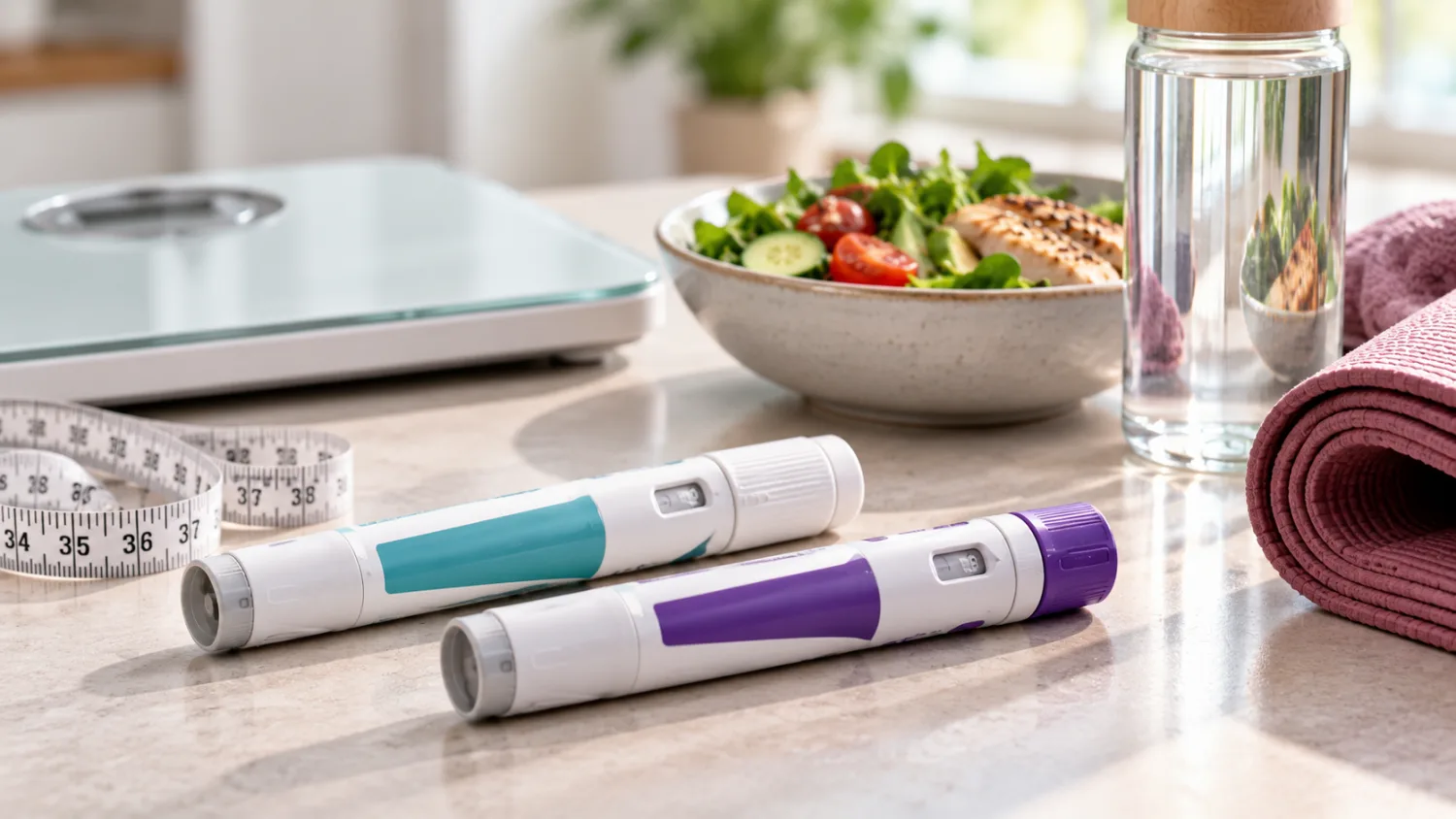
Mounjaro is one of the most talked-about weight loss medicines in the UK right now, which means a lot of people are asking the same practical question: Can I get it on the NHS, and if so, how?
The short answer is yes, some people can get Mounjaro on the NHS. But it is not something you can simply request because you would like help losing weight. Access is based on clinical eligibility, local pathways and a phased NHS rollout, not demand alone. NHS England says tirzepatide, sold as Mounjaro, is being introduced on a phased basis in primary care and specialist services because new services, training and prioritisation are needed to manage demand safely.
That is why so many headlines can feel misleading. People hear that Mounjaro is “available on the NHS” and assume that means any GP can prescribe it to anyone with a weight problem. In reality, the route is narrower than that. NICE has approved tirzepatide for obesity in adults who meet specific criteria, and NHS England has set interim commissioning guidance so the highest-priority groups are reached first.
This guide explains who can get Mounjaro on the NHS, what the official criteria are, whether your GP can prescribe it, what the phased rollout means in practice, and what to do if you think you may be eligible.
If you want the bigger treatment picture too, it may help to read Weight Loss Injections in the UK: Who They’re For, Risks, Costs and What to Expect and Mounjaro vs Wegovy: Which Weight Loss Injection is Better?.
What is Mounjaro?
Mounjaro is the brand name for tirzepatide. It is a weekly injection used in weight management and diabetes care. The NHS says tirzepatide is one of the weight management injections that can help reduce appetite, make you feel fuller and slow how quickly the stomach empties. These medicines can only be prescribed alongside support to change diet and physical activity.
That last point matters. Mounjaro is not treated by the NHS as a cosmetic slimming aid or a standalone quick fix. It sits inside a broader medical weight-management pathway.
Is Mounjaro approved for weight loss on the NHS?
Yes. NICE recommends tirzepatide as an option for managing overweight and obesity in adults, but only within defined criteria. Its recommendation says tirzepatide can be used alongside a reduced-calorie diet and increased physical activity in adults who have an initial BMI of at least 35 kg/m² and at least one weight-related comorbidity. NICE also says a lower BMI threshold, usually reduced by 2.5 kg/m², should be used for people from South Asian, Chinese, other Asian, Middle Eastern, Black African or African-Caribbean ethnic backgrounds because cardiometabolic risk can occur at lower BMI levels in these groups.
So yes, it is NHS-approved. But “approved” does not mean “open to everyone”. It means there is a nationally recognised route for eligible patients.
Who can get Mounjaro on the NHS?
Broadly, the people most likely to be eligible are adults living with obesity whose weight is already affecting their health. NICE’s recommendation is not for people who simply want to lose a stone or two. It is aimed at adults with a high BMI plus at least one weight-related health condition.
The kinds of health problems that usually matter here include conditions linked to obesity, such as high blood pressure, type 2 diabetes risk, obstructive sleep apnoea, cardiovascular risk, or other comorbidities where weight loss could improve health outcomes. NHS England’s implementation documents also make clear that, during the first years of rollout, the people with the greatest clinical need are being prioritised first.
That means two things can be true at once: you may meet the broad NICE criteria on paper, but still not be offered Mounjaro immediately in your area if your local service is following phased prioritisation.
Can your GP prescribe Mounjaro for weight loss?
Sometimes yes, but not always, and not automatically.
NICE says tirzepatide can be prescribed in primary care or in a specialist overweight and obesity management service if people meet the criteria and NHS England’s commissioning guidance. NHS England’s interim commissioning guidance says integrated care boards must fund access, but on a phased basis over the first 3 years of implementation in primary care, prioritising around 220,000 patients with the highest clinical need first.
So the answer is not simply “ask your GP and they will prescribe it”. In some areas, your GP may prescribe it directly if your practice is participating in the local pathway and you fall into the currently prioritised group. In other areas, the route may still run mainly through specialist or organised weight-management pathways rather than routine ad hoc prescribing.
What does the phased rollout actually mean?
This is one of the most misunderstood parts.
NHS England says tirzepatide’s inclusion in the weight-management pathway requires new services and training, and that NICE agreed a funding variation was needed to support a phased introduction. NHS England’s obesity medicines page says around 220,000 patients will be prioritised over the first 3 years of a wider 12-year rollout, based on clinical need.
In practical terms, that means NHS access is not being switched on for every eligible person all at once. Instead, services are gradually building capacity while prioritising those judged to have the highest need or risk. This is why some local NHS pages explicitly tell patients not to contact their GP expecting an instant prescription, because practices may identify eligible patients as pathways open rather than operate a simple first-come, first-served model.
That can feel frustrating, especially if you have been reading about the medicine for months. But it is the system the NHS is currently using.
What are the official criteria again, in plain English?
If you want the simplest version, it is this:
- you need to be an adult
- you usually need a BMI of at least 35
- you also need at least one weight-related health condition
- the medicine must be used alongside diet and activity changes
- you must fit within the NHS pathway currently available in your area
For some ethnic groups at higher cardiometabolic risk, the BMI threshold is usually reduced by 2.5. NICE and the NICE obesity guideline both state this clearly.
That means a person with obesity and conditions such as high blood pressure or sleep apnoea is in a very different position from someone who is mildly overweight and hoping for extra help before a holiday.
What if you qualify on paper but still cannot get it?
This is where NHS reality becomes more complicated than NHS theory.
You may meet the broad NICE criteria but still not have immediate access if your local service is following the current phased prioritisation, if your GP practice is not yet actively delivering the pathway, or if your area is still building wraparound care and prescribing capacity. NHS England’s interim commissioning guidance and wraparound-care document both make clear that tirzepatide rollout is tied to structured care, review and monthly dose titration rather than simple mass prescribing.
So if you ask and the answer is “not yet” or “not through us at the moment”, that does not necessarily mean the medicine is unavailable nationally. It may mean your local implementation has not reached you yet.
What is wraparound care, and why does it matter?
Wraparound care is the support that sits around the prescription itself. NHS England’s January 2026 information on tirzepatide in primary care says the service should include initial assessment, dose titration, monitoring and broader support, not just a prescription handed over with no follow-up.
This matters because Mounjaro is not supposed to be used in isolation. The NHS sees it as one part of weight management, not a substitute for proper care. It also matters because side effects, dose increases and stopping treatment all need sensible medical oversight.
In other words, if the NHS is taking time to build structured delivery, that is not only bureaucracy. It is also about safety and sustainability.
What should you do if you think you may be eligible?
The best first step is usually to speak to your GP practice or check whether your local integrated care board or NHS service has published patient guidance. A number of local NHS sites now explain that GP practices may identify patients who are eligible and contact them, rather than asking every patient to book specifically to request Mounjaro.
That said, if your weight is affecting your health and you think you may fit the criteria, it is still reasonable to raise it. You do not need to pitch yourself like you are applying for a benefit. You can simply explain that your weight is affecting your health and ask what local NHS pathway exists for obesity treatment, including whether tirzepatide is available through it.
What should you say to your GP?
You do not need a perfect script. Something simple is enough:
“My weight is affecting my health, and I’d like to know whether I meet the NHS criteria for specialist weight management or tirzepatide. Is there a local pathway for this?”
It helps to mention the specific ways weight is affecting you, such as high blood pressure, sleep apnoea, rising blood sugar, mobility problems or other related conditions, because the NHS criteria are tied to health impact rather than appearance alone.
Will you be able to get it just because you ask?
No. This is worth stating clearly.
Mounjaro is not an on-demand NHS product. NHS prescribing follows NICE criteria and local commissioning pathways. NHS England has been explicit that patient cohorts with the highest priority are being phased in first, and some local NHS pages tell patients not to contact their GP expecting immediate prescribing because eligible people may be contacted directly by the practice or service.
That can feel impersonal, but it reflects how the NHS is trying to manage a very high-demand treatment safely.
What if you do not qualify?
That does not mean there is no help available. The NHS still offers other forms of support for overweight and obesity, including GP advice, local weight-management services and, in England, the NHS Digital Weight Management Programme for some adults with obesity and conditions such as high blood pressure or diabetes. The main NHS obesity treatment page still treats medicines as only one part of the wider picture.
And if you are trying to understand how Mounjaro compares with other options rather than focusing only on NHS access, your article Mounjaro vs Wegovy: Which Weight Loss Injection is Better? is the natural next read.
What if you are thinking about going private instead?
Many people will consider private treatment if NHS access is not available or not immediate. That is understandable. But private access should still be approached carefully. Mounjaro is a prescription medicine, not a casual lifestyle product. The provider, pharmacy and assessment process matter as much as the medicine itself.
If you are considering that route, it is worth reading Are Online Weight Loss Jabs Safe? before you buy anything.
The bottom line
Yes, you can get Mounjaro on the NHS — but only if you meet the criteria and fit the current NHS pathway. NICE recommends tirzepatide for adults with obesity who usually have a BMI of at least 35 and at least one weight-related comorbidity, with lower thresholds for some ethnic groups. NHS England says access is being rolled out in phases over several years, with the highest-priority patients reached first.
So the real question is not just “Is Mounjaro on the NHS?” It is “Do I meet the criteria, and is my local NHS pathway currently open to someone in my situation?”
If your weight is affecting your health, it is worth asking. Just go into the conversation expecting a pathway, not a quick yes-or-no at the end of one appointment.