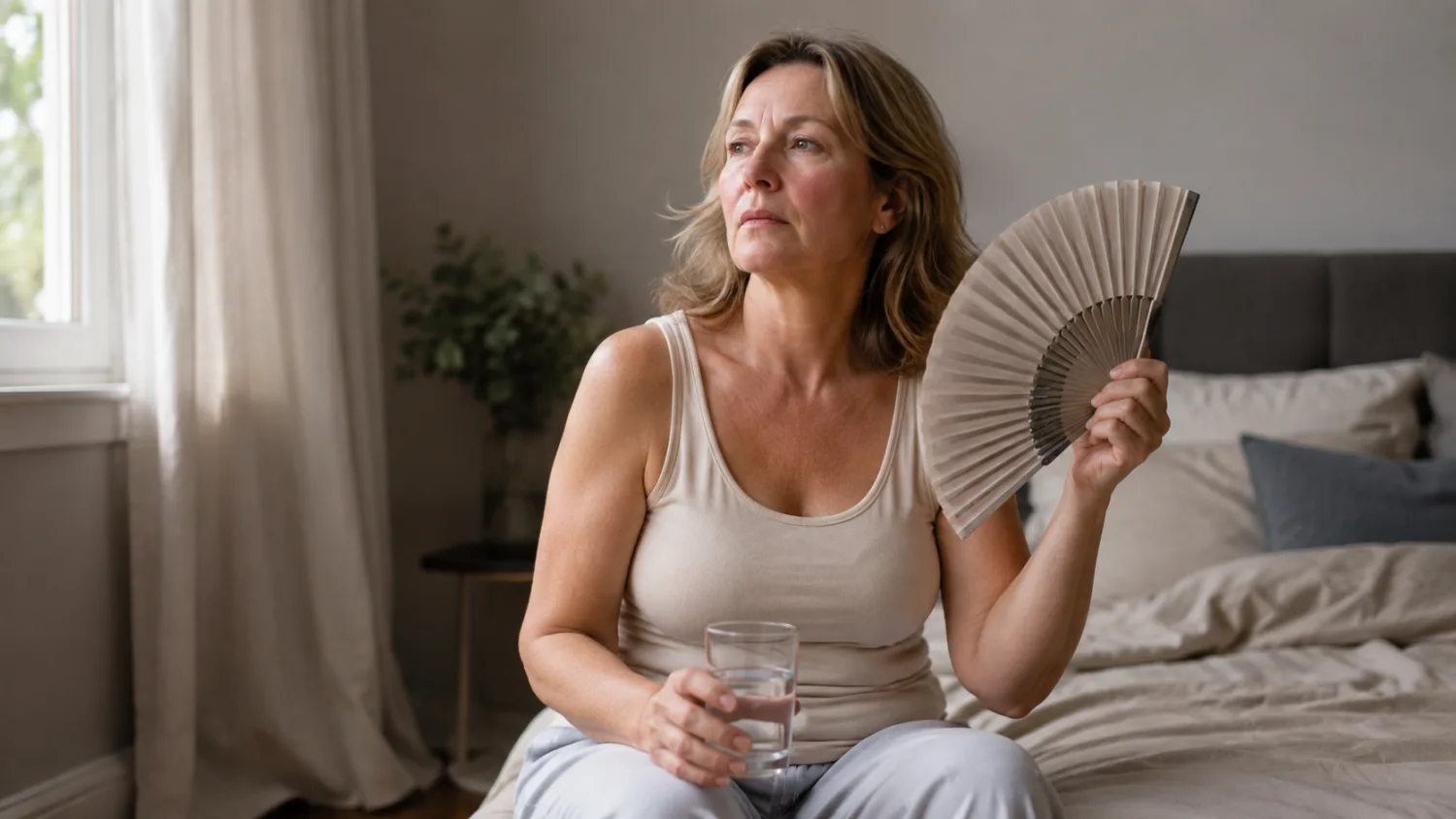
Perimenopause is the transitional stage leading up to menopause, when hormone levels begin to fluctuate and periods may change. It can cause hot flushes, night sweats, disrupted sleep, mood changes, brain fog, headaches, joint aches, vaginal dryness, urinary symptoms and changes in sexual desire.
The word “peri” means around. Perimenopause does not mean that periods have stopped, and it does not mean pregnancy is impossible. Some people continue to have fairly regular cycles while experiencing significant symptoms.
Menopause is a single point in time: it is usually diagnosed after 12 consecutive months without a period when there is no other cause. The years after that point are described as postmenopause.
Perimenopause is a normal life stage rather than a disease, but symptoms can be severe enough to affect work, relationships, sleep, confidence and everyday health. Nobody needs to wait until periods stop before asking for help or discussing hormone replacement therapy.
Not every symptom in the late 30s, 40s or 50s is caused by changing hormones. Anaemia, thyroid disease, pregnancy, medication effects, depression, sleep apnoea and several gynaecological conditions can produce overlapping symptoms. New, severe or unusual symptoms still need appropriate assessment.
Contact a GP promptly for very heavy periods, bleeding after sex, persistent bleeding between periods, bleeding after 12 months without periods, a new breast lump, unexplained weight loss or persistent pelvic pain.
Seek urgent medical help if bleeding is so heavy that you feel faint, breathless, confused or severely weak, or if you develop sudden chest pain, severe breathlessness, one-sided leg swelling, weakness affecting one side of the body or another possible medical emergency.
Seek urgent mental-health support if low mood becomes severe, you develop thoughts of self-harm or suicide, or you feel unable to keep yourself safe.
What is perimenopause?
Perimenopause is the period during which ovarian activity becomes less predictable before periods finally stop.
The ovaries do not simply switch off overnight. Hormone levels can rise and fall unevenly, which is why symptoms may:
- appear suddenly;
- improve for several months;
- return in a different form;
- vary through the menstrual cycle;
- occur despite apparently normal periods.
Which hormones change?
The main hormones involved include:
- oestrogen, which influences the reproductive system, bones, brain, skin and many other tissues;
- progesterone, which is produced after ovulation and helps regulate the menstrual cycle;
- follicle-stimulating hormone, or FSH, which signals the ovaries to develop follicles;
- luteinising hormone, or LH, which is involved in ovulation.
Ovulation may become less consistent. Progesterone exposure often becomes more irregular, while oestrogen can fluctuate considerably before eventually settling at a lower level after menopause.
When does perimenopause begin?
It most commonly begins during the 40s, but the timing varies.
Some people notice symptoms in their late 30s. Others do not experience obvious changes until their early 50s.
Factors that can affect timing include:
- genetics;
- smoking;
- ovarian surgery;
- chemotherapy or radiotherapy;
- certain medical conditions;
- sometimes no identifiable reason.
How long does perimenopause last?
There is no fixed duration.
It may last a few years or continue for considerably longer. NHS information notes that menopause and perimenopause symptoms commonly last around seven to nine years overall, although some people experience symptoms for longer.
How is perimenopause different from menopause?
Perimenopause is the transition while hormone levels and periods are changing.
Menopause is reached after 12 months without a period, provided there is no other explanation.
Postmenopause describes the years after menopause.
Can you be perimenopausal with regular periods?
Yes.
Symptoms such as night sweats, sleep disturbance, anxiety or brain fog may begin before the menstrual cycle becomes obviously irregular.
Regular bleeding does not rule out perimenopause.
What are the symptoms of perimenopause?
There is no single symptom shared by everyone.
Some people mainly notice period changes. Others first recognise sleep, mood, cognitive, sexual or physical symptoms.
Hot flushes
A hot flush is a sudden feeling of heat, commonly affecting the:
- face;
- neck;
- chest;
- upper body.
It may be accompanied by:
- sweating;
- flushing;
- palpitations;
- dizziness;
- anxiety;
- a chill afterwards.
Episodes may last from seconds to several minutes.
Night sweats
Night sweats are hot flushes occurring during sleep.
They may:
- soak nightwear or bedding;
- cause repeated waking;
- leave you feeling cold afterwards;
- contribute to daytime fatigue and irritability.
Drenching night sweats accompanied by fever, unexplained weight loss or persistent illness should not automatically be attributed to perimenopause.
Sleep problems
Sleep may be affected by:
- night sweats;
- difficulty falling asleep;
- waking very early;
- anxiety;
- restless legs;
- needing to urinate at night;
- changes in sleep quality.
Poor sleep can then worsen concentration, pain, mood and appetite.
Mood changes
Possible emotional symptoms include:
- irritability;
- mood swings;
- anxiety;
- low mood;
- reduced confidence;
- feeling overwhelmed;
- greater emotional sensitivity.
Hormonal change may contribute, but work stress, caring responsibilities, poor sleep, relationship difficulties and previous mental-health conditions can also be important.
Brain fog
People may notice:
- forgetting words;
- losing their train of thought;
- difficulty concentrating;
- forgetting why they entered a room;
- feeling mentally slower;
- struggling to multitask.
This does not usually mean dementia.
Sleep loss, stress, depression, thyroid disease, iron deficiency and medication effects can produce similar problems.
Headaches and migraine
Hormone fluctuations can trigger new headaches or change an existing migraine pattern.
Some people develop more frequent migraine around periods. Others improve after hormones become more stable postmenopause.
New severe headache, neurological symptoms or a major change in pattern needs medical assessment.
Palpitations
Hot flushes and hormonal fluctuations can produce awareness of a fast or pounding heartbeat.
Palpitations also occur with:
- thyroid disease;
- anaemia;
- heart-rhythm problems;
- caffeine;
- anxiety;
- medicines.
See our guide to heart palpitations and when to see a doctor.
Joint and muscle aches
People may report:
- morning stiffness;
- aching shoulders or hips;
- painful hands;
- muscle tension;
- slower exercise recovery.
Persistent joint swelling, redness, weakness or severe pain may indicate arthritis or another condition.
Skin and hair changes
Lower and fluctuating oestrogen levels can be associated with:
- drier skin;
- itching;
- changes in skin elasticity;
- hair thinning;
- changes in hair texture;
- increased facial hair in some people.
Sudden or extensive hair loss may need investigation for thyroid disease, iron deficiency or another cause.
Changes in weight and body composition
Weight gain is common in midlife, particularly around the abdomen.
Contributors may include:
- age-related loss of muscle;
- reduced activity;
- poor sleep;
- stress;
- changes in appetite;
- insulin resistance;
- hormonal changes affecting fat distribution.
Perimenopause does not make weight management impossible, but strategies that worked earlier in life may need adjustment.
How do periods change during perimenopause?
Period changes are common but not completely predictable.
Cycles may become:
- shorter;
- longer;
- heavier;
- lighter;
- more painful;
- less painful;
- irregular;
- absent for several months and then return.
Why can bleeding become heavier?
When ovulation does not happen consistently, progesterone exposure becomes less predictable.
The womb lining may build up differently, causing:
- heavier flow;
- clots;
- longer bleeding;
- unexpected spotting.
Fibroids, adenomyosis, polyps and other gynaecological conditions also become relevant in this age group.
When is a period considered heavy?
Signs include:
- changing protection every one or two hours;
- using two products together;
- bleeding through clothing or bedding;
- passing large clots;
- bleeding for longer than seven days;
- avoiding normal activity because of bleeding;
- developing iron-deficiency symptoms.
Symptoms of anaemia
Heavy bleeding can cause iron deficiency and anaemia.
Possible symptoms include:
- fatigue;
- breathlessness;
- palpitations;
- headaches;
- pale skin;
- dizziness;
- restless legs;
- reduced exercise tolerance.
A full blood count and ferritin may be appropriate.
See our guide to iron, ferritin and anaemia blood-test results.
Which bleeding changes need assessment?
Arrange a GP appointment for:
- very heavy bleeding;
- persistent bleeding between periods;
- bleeding after sex;
- periods lasting much longer than usual;
- bleeding that repeatedly occurs every few weeks;
- new pelvic pain;
- bleeding associated with unexplained weight loss;
- any bleeding after 12 months without a period.
Postmenopausal bleeding
Once 12 months have passed without a period, any new vaginal bleeding is considered postmenopausal bleeding.
It should be assessed even when:
- the amount is tiny;
- it appears only once;
- it looks brown or pink;
- you believe dryness caused it.
Most cases are not cancer, but womb, cervical and vaginal conditions need to be excluded.
Vaginal, bladder and sexual symptoms
Changes affecting the vagina, vulva, bladder and urinary tract are often described as the genitourinary syndrome of menopause.
Unlike hot flushes, these symptoms commonly continue or worsen without treatment.
Vaginal dryness
Lower oestrogen can make vaginal tissues:
- thinner;
- drier;
- less elastic;
- more easily irritated.
Symptoms may include:
- dryness;
- burning;
- itching;
- soreness;
- pain with penetration;
- spotting after sex.
Changes in sexual desire
Libido may decrease, increase or remain unchanged.
Sexual wellbeing can be influenced by:
- hormonal changes;
- vaginal discomfort;
- sleep deprivation;
- relationship changes;
- stress;
- body-image concerns;
- medicines;
- depression or anxiety.
Pain during sex
Lubricants may reduce friction during sex, while vaginal moisturisers can support comfort between sexual activity.
Persistent symptoms often respond better to local vaginal oestrogen.
Deep pelvic pain during sex should not automatically be attributed to dryness because endometriosis, fibroids, ovarian conditions and pelvic-floor problems can also cause pain.
Urinary urgency and frequency
Changing tissues around the bladder and urethra may contribute to:
- sudden urgency;
- frequent urination;
- waking to urinate;
- leakage;
- burning without infection;
- recurrent urine infections.
See our guide to overactive bladder symptoms and treatment.
Recurrent urine infections
After menopause, local oestrogen loss can alter the vaginal and urinary environment.
Vaginal oestrogen may reduce recurrent urine infections in suitable people.
New burning, fever, back pain or blood in urine still requires assessment for infection or another cause.
Pelvic-floor symptoms
Perimenopause may overlap with symptoms related to childbirth, ageing or pelvic-floor dysfunction, including:
- stress leakage;
- pelvic heaviness;
- prolapse;
- difficulty emptying the bladder;
- painful pelvic-floor tension.
Pelvic-health physiotherapy may help.
How is perimenopause diagnosed?
For most people aged 45 or over, diagnosis is based on symptoms and menstrual history.
Routine hormone blood tests are usually not needed because hormone levels fluctuate and a single result may not represent what is happening across the cycle.
What will a GP ask?
Questions may include:
- how periods have changed;
- whether hot flushes or night sweats occur;
- sleep quality;
- mood and anxiety;
- headaches or migraine;
- vaginal and urinary symptoms;
- contraception;
- pregnancy possibility;
- medical and family history;
- medicines;
- the effect on work and daily life.
When is FSH testing useful?
FSH may be considered in selected situations, including:
- symptoms before age 45;
- possible premature ovarian insufficiency before age 40;
- uncertainty when periods cannot be assessed;
- specialist investigation.
One result may not be enough, particularly in younger people.
Why can home menopause tests be misleading?
Home tests usually measure FSH in urine.
Because FSH fluctuates, a result may:
- be positive one week and negative later;
- fail to explain symptoms;
- be affected by hormonal contraception;
- provide false reassurance;
- lead to unnecessary concern.
A home result should not replace clinical assessment.
Other tests
Depending on symptoms, a clinician may consider:
- pregnancy testing;
- full blood count and ferritin;
- thyroid function;
- blood glucose or HbA1c;
- pelvic examination;
- ultrasound;
- cervical screening where due;
- investigation of abnormal bleeding.
Thyroid disease or perimenopause?
Both can cause:
- fatigue;
- weight change;
- palpitations;
- anxiety;
- period changes;
- temperature sensitivity;
- hair changes.
See our guide to thyroid blood-test results.
Can hormonal contraception hide perimenopause?
Yes.
Combined hormonal contraception, the hormonal coil, implant, injection and progestogen-only pill can change or stop bleeding.
This can make menstrual patterns less useful for identifying the transition.
Hormone replacement therapy during perimenopause
Hormone replacement therapy, or HRT, replaces some of the hormones that fluctuate and fall during the menopause transition.
You do not need to wait until periods have stopped before starting HRT.
HRT can be used during perimenopause when symptoms are affecting quality of life.
Which symptoms can HRT improve?
HRT is particularly effective for:
- hot flushes;
- night sweats;
- sleep disruption related to vasomotor symptoms;
- vaginal dryness;
- some menopause-related mood symptoms;
- joint aches in some people.
It also helps prevent bone loss while it is being used.
Oestrogen
Systemic oestrogen can be taken as:
- tablets;
- skin patches;
- gel;
- spray.
Transdermal treatment through the skin avoids first-pass metabolism through the liver and is often preferred when there is increased blood-clot risk, migraine or other relevant health factors.
Why is progestogen needed?
If you still have a womb, systemic oestrogen generally needs to be combined with a progestogen.
Progestogen protects the womb lining from excessive stimulation, which could otherwise increase the risk of endometrial cancer.
Progestogen may be provided through:
- tablets or capsules;
- a combined patch;
- a hormonal intrauterine system;
- another prescribed regimen.
Sequential HRT
Sequential or cyclical HRT is commonly recommended during perimenopause when periods are still occurring.
Oestrogen is used continuously, while progestogen is added for part of each monthly cycle.
This usually causes a planned withdrawal bleed.
Continuous combined HRT
Continuous combined HRT provides oestrogen and progestogen every day.
It is generally used after menopause rather than early perimenopause because starting it too soon may cause irregular bleeding.
Vaginal oestrogen
Low-dose vaginal oestrogen is used for vaginal and urinary symptoms.
It is available as:
- cream;
- pessary;
- vaginal tablet;
- ring.
Systemic absorption is very low. Progestogen is not usually required with low-dose vaginal oestrogen.
It can be used alone or alongside systemic HRT.
How quickly does HRT work?
Some symptoms may begin improving within days or weeks.
A fuller response may take several months, and the dose or preparation may need adjustment.
HRT side effects
Early side effects can include:
- breast tenderness;
- headache;
- nausea;
- bloating;
- mood changes;
- spotting or irregular bleeding;
- skin irritation from patches.
Many settle during the first few months.
Does HRT cause weight gain?
There is no good evidence that standard HRT causes substantial general weight gain.
Fluid retention and bloating can occur initially. Midlife ageing, sleep disruption and changes in body composition are usually more important contributors.
Benefits and risks of HRT
HRT decisions should be individual rather than based on the belief that it is either completely safe or universally dangerous.
The balance depends on:
- age;
- time since menopause;
- symptom severity;
- whether the womb is present;
- type and route of HRT;
- personal and family history;
- individual priorities.
Breast cancer
Combined HRT is associated with a small increased risk of breast cancer that generally rises with longer use.
Oestrogen-only HRT has a different and generally lower breast-cancer risk profile.
The baseline risk of breast cancer also changes with:
- age;
- alcohol intake;
- body weight after menopause;
- family history;
- reproductive history.
See our guide to breast cancer symptoms, screening and self-checks.
Blood clots
Oral HRT tablets increase the risk of venous blood clots.
Oestrogen delivered through patches, gel or spray does not appear to increase clot risk in the same way and may be preferred for people with relevant risk factors.
Stroke
Oral oestrogen can slightly increase stroke risk, particularly with increasing age.
Lower-dose transdermal oestrogen has a different risk profile.
Heart disease
For most healthy people who begin HRT before age 60 or within around 10 years of menopause, the cardiovascular balance is generally favourable or neutral.
HRT should not be started solely to prevent heart disease.
Bone health
Oestrogen helps maintain bone density.
HRT reduces the risk of fragility fractures while it is taken, which is particularly important in early or premature menopause.
Who may need specialist advice?
Specialist assessment may be appropriate with a history of:
- breast cancer;
- another hormone-sensitive cancer;
- unexplained vaginal bleeding;
- blood clots or thrombophilia;
- stroke or heart attack;
- severe liver disease;
- complex migraine;
- significant HRT side effects;
- symptoms not responding to standard treatment.
HRT after breast cancer
Systemic HRT is generally avoided after hormone-sensitive breast cancer, but decisions can be complex.
Non-hormonal treatments and carefully considered local vaginal treatment may be discussed with the oncology and menopause teams.
Non-hormonal treatment and lifestyle measures
HRT is not the only option.
Some people cannot use it, prefer not to use it or need additional support for symptoms that remain.
Cognitive behavioural therapy
Menopause-specific CBT can help with:
- hot flushes;
- night sweats;
- sleep problems;
- anxiety;
- low mood;
- coping with symptoms.
CBT does not imply that symptoms are imaginary. It changes how the body and mind respond to symptoms and improves coping.
Fezolinetant
Fezolinetant is a non-hormonal medicine that acts on brain pathways involved in temperature regulation.
NICE recommended it in 2026 as an option for moderate to severe hot flushes and night sweats when HRT is unsuitable.
It does not replace oestrogen and is not intended to treat every menopause symptom.
Liver monitoring and individual suitability need to be considered.
Other prescription medicines
Selected medicines may be used off-label for vasomotor symptoms, including:
- certain SSRIs or SNRIs;
- gabapentin;
- clonidine in selected situations.
Each has its own side effects and withdrawal considerations.
Exercise
Regular activity supports:
- bone health;
- muscle strength;
- cardiovascular health;
- sleep;
- mood;
- weight management;
- balance.
A useful programme includes:
- resistance exercise;
- weight-bearing activity;
- cardiovascular exercise;
- balance and mobility work.
Sleep measures
Helpful steps include:
- keeping a consistent waking time;
- reducing late caffeine;
- limiting alcohol near bedtime;
- keeping the bedroom cool;
- using breathable nightwear;
- addressing snoring or possible sleep apnoea;
- treating night sweats rather than simply tolerating them.
Diet
A balanced eating pattern should provide:
- adequate protein;
- calcium;
- vitamin D;
- fibre;
- fruit and vegetables;
- healthy fats.
Extreme diets are not required for menopause health.
Alcohol
Alcohol can worsen:
- hot flushes;
- sleep;
- anxiety;
- migraine;
- weight gain;
- breast-cancer risk.
Smoking
Smoking is associated with earlier menopause and increases cardiovascular, bone and cancer risks.
Herbal supplements
Products such as black cohosh, red clover and St John’s wort are marketed for menopause symptoms.
Important limitations include:
- variable evidence;
- uncertain product quality;
- medicine interactions;
- possible liver effects;
- uncertain safety in hormone-sensitive conditions.
“Natural” does not automatically mean safe.
Contraception and pregnancy during perimenopause
Ovulation becomes less predictable during perimenopause, but it can still happen.
Pregnancy remains possible until menopause is established.
Does HRT prevent pregnancy?
No.
Standard HRT does not suppress ovulation reliably and should not be used as contraception.
Contraception options
Depending on health and age, options may include:
- combined hormonal contraception;
- progestogen-only pill;
- hormonal intrauterine system;
- copper intrauterine device;
- implant;
- injection;
- condoms;
- permanent contraception.
Combined hormonal contraception
The combined pill, patch or ring can:
- provide contraception;
- regulate bleeding;
- reduce period pain;
- help some perimenopause symptoms;
- support bone density.
It may be unsuitable with:
- smoking over age 35;
- migraine with aura;
- high blood pressure;
- blood-clot history;
- certain cardiovascular risks.
Hormonal coil with HRT
A suitable levonorgestrel intrauterine system can:
- provide contraception;
- reduce heavy bleeding;
- provide progestogen protection for the womb during oestrogen HRT.
The duration for contraception and for HRT protection may differ, so replacement timing should be checked.
When can contraception stop?
The answer depends on age, bleeding pattern and contraception type.
As a general UK principle:
- people under 50 usually continue contraception for two years after their final natural period;
- people aged 50 or over usually continue for one year after their final natural period;
- contraception can generally stop at 55 because natural conception is exceptionally rare.
Hormonal contraception can make it difficult to know when the final natural period occurred, so obtain individual advice.
Pregnancy symptoms or perimenopause?
Pregnancy and perimenopause can both cause:
- missed periods;
- breast tenderness;
- fatigue;
- mood changes;
- nausea;
- urinary frequency.
Take a pregnancy test when pregnancy is possible.
Early menopause and premature ovarian insufficiency
Menopause before age 45 is described as early menopause.
Loss of ovarian function before age 40 is called premature ovarian insufficiency, or POI.
Why does early diagnosis matter?
Longer exposure to low oestrogen can increase the risk of:
- osteoporosis;
- cardiovascular disease;
- vaginal and urinary symptoms;
- fertility problems;
- psychological distress.
Possible causes
Early menopause or POI may be associated with:
- genetic conditions;
- autoimmune disease;
- chemotherapy;
- pelvic radiotherapy;
- removal of both ovaries;
- sometimes no identified cause.
Symptoms before age 45
Contact a GP if you develop:
- irregular or absent periods;
- hot flushes;
- night sweats;
- vaginal dryness;
- fertility difficulty;
- other possible menopause symptoms.
Blood testing is more likely to be appropriate in this age group.
Treatment
Unless contraindicated, hormone replacement is usually recommended until approximately the average natural menopause age.
This may be provided through:
- HRT;
- combined hormonal contraception in suitable people.
Treatment is intended not only for symptom relief but also for bone and cardiovascular protection.
Surgical menopause
Removing both ovaries causes an abrupt fall in hormones.
Symptoms can be more sudden and severe than during natural perimenopause.
HRT should ideally be discussed before surgery where possible.
Cancer treatment and induced menopause
Chemotherapy, radiotherapy and hormone treatments can cause temporary or permanent menopause.
Management requires coordination between oncology, gynaecology and menopause specialists, particularly when systemic HRT is not appropriate.
When should you see a GP?
See a GP when symptoms are affecting sleep, mood, work, relationships, sex, exercise or ordinary daily life.
You do not need to wait until symptoms become unbearable.
Arrange an appointment for:
- hot flushes or night sweats;
- significant mood or anxiety changes;
- sleep problems;
- brain fog affecting work;
- heavy or irregular bleeding;
- vaginal or urinary symptoms;
- pain during sex;
- possible symptoms before age 45;
- questions about HRT or contraception.
Symptoms that need separate assessment
Do not assume the following are simply perimenopause:
- bleeding after sex;
- postmenopausal bleeding;
- a breast lump;
- persistent pelvic pain;
- unexplained weight loss;
- blood in urine or stool;
- progressive abdominal swelling;
- severe or new neurological symptoms;
- persistent fever or drenching night sweats;
- significant shortness of breath.
Preparing for the appointment
It may help to record:
- period dates and flow;
- hot flush frequency;
- night waking;
- mood changes;
- headaches;
- vaginal or urinary symptoms;
- current contraception;
- medical and family history;
- which symptoms most affect your life.
Questions to ask
Useful questions include:
- Do my symptoms fit perimenopause?
- Do I need any tests?
- Could another condition explain these symptoms?
- Would HRT be suitable for me?
- Which route and type would best fit my risks?
- Do I need contraception as well?
- What should happen if bleeding changes?
- When should treatment be reviewed?
HRT reviews
HRT is commonly reviewed after approximately three months and then annually once treatment is stable.
A review should assess:
- symptom improvement;
- side effects;
- bleeding pattern;
- dose and formulation;
- changes in health or medicines;
- whether treatment should continue.
Unexpected bleeding on HRT
Spotting is common during the first months after starting or changing HRT.
Seek assessment for:
- heavy bleeding;
- bleeding lasting longer than expected;
- bleeding that begins after treatment was previously settled;
- persistent bleeding beyond the expected adjustment period;
- bleeding after sex.
Frequently asked questions about perimenopause
What is perimenopause?
It is the transition before menopause, when ovarian hormones fluctuate and periods and other symptoms begin to change.
At what age does perimenopause start?
It commonly begins in the 40s but can start earlier or later.
What is the earliest age it can start?
Symptoms can occur in the 30s, but possible menopause symptoms before age 45 deserve medical assessment, particularly before age 40.
How long does perimenopause last?
It varies from a few years to considerably longer.
What is the first sign?
Period changes are common, but some people first notice sleep problems, hot flushes, anxiety, migraine or brain fog.
Can perimenopause happen with regular periods?
Yes. Symptoms may begin before cycles become visibly irregular.
How do I know whether I am perimenopausal?
Age, symptoms and period changes are usually enough for a clinical diagnosis. Routine hormone tests are generally unnecessary after age 45.
Is there a blood test for perimenopause?
There is no single reliable routine test because hormones fluctuate. FSH testing is used mainly in selected younger people or uncertain cases.
Are home menopause tests accurate?
They can detect raised FSH but cannot reliably confirm or exclude perimenopause from one sample.
Can perimenopause cause anxiety?
Yes. Hormonal fluctuations, sleep disruption and life stress can contribute to new or worsening anxiety.
Can it cause panic attacks?
Some people experience panic-like episodes, especially during hot flushes or palpitations. Heart, thyroid and other causes may still need assessment.
Can perimenopause cause depression?
It can contribute to low mood or depression, particularly in someone with previous hormone-related mood problems. Severe symptoms require proper mental-health care.
Can it cause brain fog?
Yes. Problems with memory, word finding and concentration are commonly reported.
Does brain fog mean dementia?
Usually not. Persistent or progressive cognitive problems still deserve assessment.
Can perimenopause cause dizziness?
Dizziness may occur with hot flushes or anxiety, but anaemia, low blood pressure, inner-ear disorders and heart problems are other possibilities.
Can it cause palpitations?
Yes. Seek assessment if palpitations are prolonged, irregular or associated with fainting, chest pain or breathlessness.
Can it cause headaches?
Yes. Hormone fluctuations may trigger or worsen migraine and other headaches.
Can perimenopause cause joint pain?
Joint and muscle aches are commonly reported, but swollen or inflamed joints may have another cause.
Can it cause itchy skin?
Dryness and itching can occur as oestrogen changes. Persistent rash or severe itching needs separate assessment.
Can it cause hair loss?
Hair may become thinner, but thyroid disease, iron deficiency and pattern hair loss should also be considered.
Can perimenopause cause weight gain?
Weight and fat distribution often change in midlife through a combination of hormones, ageing, sleep and lifestyle factors.
Can it cause bloating?
Bloating can occur, but persistent progressive bloating, pelvic pain, early fullness or weight loss needs medical assessment.
Can it cause nausea?
Some people report nausea, particularly with migraine or hormone fluctuations. Pregnancy and other causes should be considered.
Can perimenopause cause heavy periods?
Yes. Heavy bleeding can also result from fibroids, adenomyosis, polyps or other conditions.
Can periods become closer together?
Yes. Cycles often shorten during part of the transition before becoming more widely spaced.
Can periods stop for months and return?
Yes. Menopause is not confirmed until 12 consecutive months have passed without a natural period.
Can I get pregnant during perimenopause?
Yes. Ovulation is less predictable but can still occur.
Does HRT work as contraception?
No.
Can I take HRT while still having periods?
Yes. Sequential HRT is commonly used during perimenopause.
Do I need progesterone with HRT?
You generally need progestogen protection if you use systemic oestrogen and still have a womb.
Can a hormonal coil be used with HRT?
Yes. A suitable hormonal coil can provide contraception, reduce bleeding and protect the womb lining during oestrogen treatment.
Is HRT safe?
It is suitable for many people, but the balance of benefits and risks depends on medical history, age, route, formulation and personal priorities.
Does HRT cause breast cancer?
Combined HRT is associated with a small increased breast-cancer risk that rises with duration. The risk differs by type of HRT and baseline risk.
Does HRT cause blood clots?
Oral HRT increases clot risk. Transdermal oestrogen through patches, gel or spray has a more favourable clot-risk profile.
Does HRT cause weight gain?
It does not usually cause significant general weight gain, although temporary bloating or fluid retention can occur.
How quickly does HRT work?
Some symptoms improve within days or weeks. Full benefit and dose adjustment may take several months.
How long can I take HRT?
There is no universal maximum duration. Treatment should continue while benefits outweigh risks, with regular review.
Can HRT help anxiety?
It may help anxiety linked to menopause, especially when hot flushes and sleep disruption are contributing. Some people also need psychological or antidepressant treatment.
Can HRT help brain fog?
It may help indirectly by improving sleep and other menopause symptoms, but it is not a treatment for dementia.
Can HRT help joint pain?
Some people report improvement, although persistent joint disease requires separate assessment.
Can HRT help vaginal dryness?
Yes. Local vaginal oestrogen is particularly effective and can also be used with systemic HRT.
Is vaginal oestrogen safe long term?
It can often be used long term because systemic absorption is very low. People with a history of hormone-sensitive cancer need individual advice.
What can I take instead of HRT?
Options include menopause-specific CBT, fezolinetant for suitable people and selected non-hormonal prescription medicines.
Do herbal menopause remedies work?
Evidence varies, and products can interact with medicines. Ask a pharmacist or clinician before using them.
Is perimenopause worse than menopause?
For some people, fluctuating hormones during perimenopause cause more unpredictable symptoms than the postmenopausal stage.
When should I see a GP?
Arrange an appointment when symptoms affect quality of life, periods become very heavy or unusual, symptoms begin before 45, or you want advice about HRT or contraception.
When is bleeding urgent?
Seek urgent help when bleeding is extremely heavy or accompanied by faintness, severe weakness, breathlessness, confusion or collapse.