A private hysteroscopy in the UK commonly costs around £1,500 to £2,500 for a diagnostic procedure. If a biopsy, polyp removal, fibroid treatment, sedation or general anaesthetic is required, the total may rise to approximately £2,500 to £5,000 or more.
The initial gynaecology consultation is often charged separately at £200 to £350. Ultrasound scans, laboratory testing, histology and follow-up appointments can also add to the final cost.
| Private hysteroscopy service | Typical UK cost |
|---|---|
| Initial gynaecologist consultation | £200–£350 |
| Pelvic or transvaginal ultrasound | £200–£400 |
| Outpatient diagnostic hysteroscopy | £1,000–£2,000 |
| Diagnostic hysteroscopy with biopsy | £1,500–£2,500 |
| Histology or laboratory examination | £150–£500+ |
| Polyp removal during hysteroscopy | £2,000–£4,000 |
| Operative hysteroscopy under general anaesthetic | £2,500–£5,000+ |
| Follow-up consultation | £150–£250 |
Published prices illustrate how much packages vary. Some independent clinics advertise diagnostic hysteroscopy at around £1,500 and hysteroscopy with biopsy or small-polyp removal at approximately £1,900. Private hospitals may quote £2,400–£3,000 or more once hospital and consultant fees are combined.
These figures are estimates rather than fixed national tariffs. Ask for a written quote based on the planned procedure, anaesthetic and likelihood of treatment being performed at the same visit.
A lower-cost diagnostic appointment may not include biopsy, histology or removal of an abnormality. The most useful comparison is the likely total pathway cost rather than the headline hysteroscopy fee.
What is a hysteroscopy?
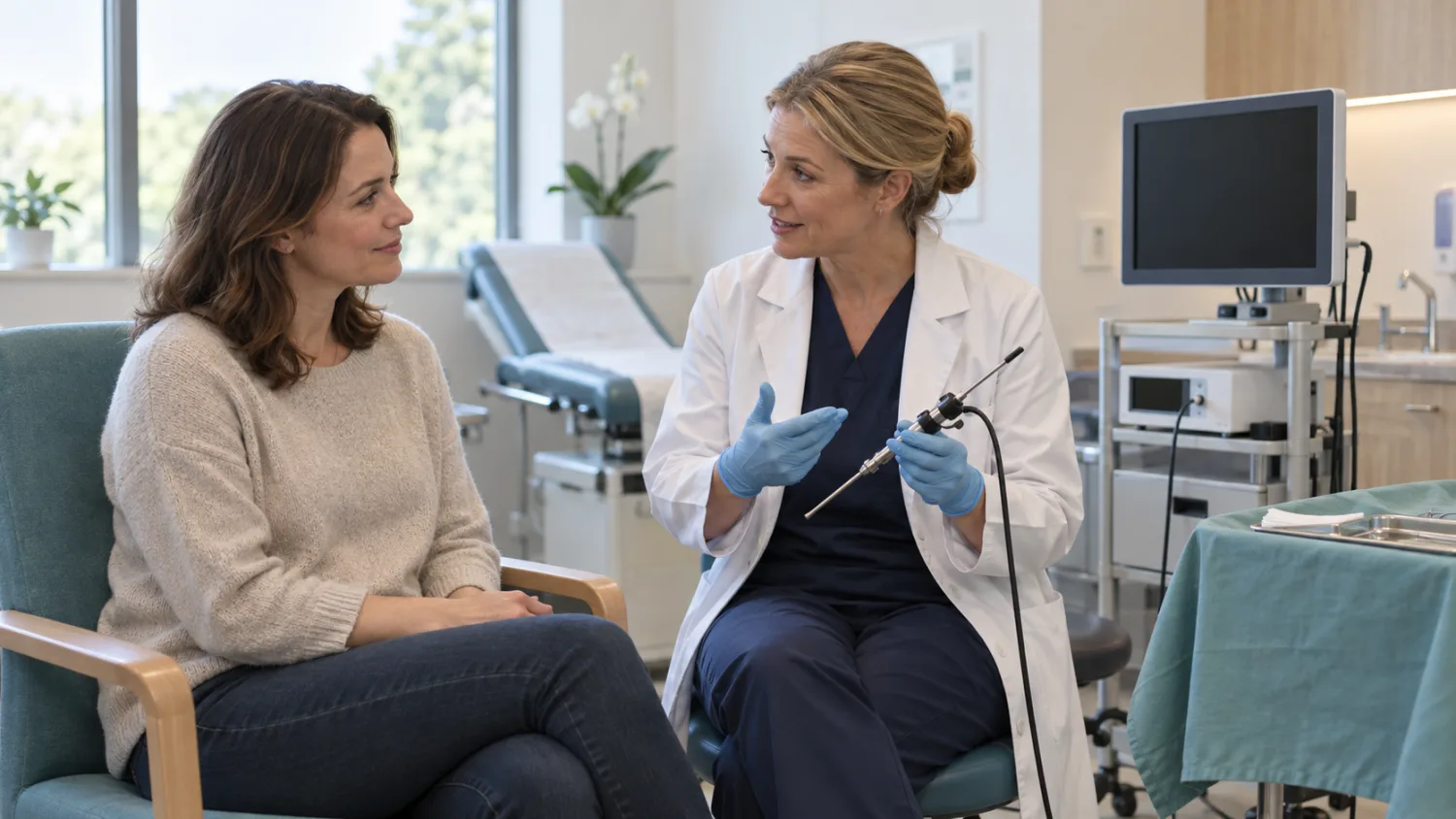
A hysteroscopy is a procedure used to examine the inside of the womb. A narrow instrument called a hysteroscope is passed through the vagina and cervix into the uterine cavity.
The hysteroscope contains a camera that sends images to a screen. Fluid is normally used to open the uterine cavity gently so that its lining can be examined.
There are no cuts through the abdomen or vagina. The procedure may be used to investigate symptoms, take a sample of the womb lining or treat certain abnormalities.
A hysteroscopy is different from a laparoscopy. Hysteroscopy looks inside the womb through the cervix, while laparoscopy involves passing a camera through small abdominal incisions to examine the pelvis.
Why might you need a hysteroscopy?
A gynaecologist may recommend hysteroscopy to investigate:
- heavy periods;
- bleeding between periods;
- irregular bleeding;
- bleeding after menopause;
- suspected endometrial polyps;
- fibroids that project into the womb cavity;
- a thickened womb lining;
- repeated miscarriage;
- some fertility problems;
- scar tissue inside the womb;
- a displaced or difficult-to-remove intrauterine device;
- an abnormality found on ultrasound.
Hysteroscopy can show the surface of the womb lining directly. It may identify a small polyp, submucosal fibroid or focal abnormality that is difficult to confirm using ultrasound alone.
Persistent heavy bleeding has many possible causes, not all of which require hysteroscopy. Our guide to heavy periods, tests and treatment explains the wider assessment.
Postmenopausal bleeding should always be assessed promptly, even though many cases have a non-cancerous explanation. Hysteroscopy and biopsy may be used to investigate abnormal thickening or changes in the womb lining.
What is the difference between diagnostic and operative hysteroscopy?
A diagnostic hysteroscopy is primarily used to inspect the womb cavity and identify the cause of symptoms. A small biopsy may also be taken.
An operative hysteroscopy is used to treat an abnormality. It may involve:
- removing an endometrial polyp;
- removing a fibroid that projects into the womb;
- dividing scar tissue or a uterine septum;
- removing retained tissue;
- retrieving a displaced contraceptive device;
- treating the womb lining in selected circumstances.
Some clinics offer a “see and treat” service in which a small polyp or another straightforward abnormality can be removed during the same outpatient appointment.
Larger abnormalities may require a separate operating-theatre procedure with sedation or general anaesthesia. A diagnostic fee should not be assumed to include this treatment.
What does the initial consultation cost?
An initial private gynaecology consultation commonly costs around £200 to £350. Highly specialised consultants and central London hospitals may charge more.
The gynaecologist may review:
- the pattern and amount of bleeding;
- period pain or pelvic pain;
- menopausal status;
- pregnancy possibility;
- medicines, including anticoagulants;
- contraception and hormone treatment;
- previous pregnancies and gynaecological procedures;
- cervical-screening history;
- ultrasound or biopsy results;
- medical conditions affecting procedure or anaesthetic risk.
A pelvic examination or ultrasound may be recommended before hysteroscopy. Some clinics combine the consultation and ultrasound into one fee, while others bill each component separately.
Our guide to private gynaecologist costs in the UK compares consultations, scans, tests and follow-up fees.
What affects the total price?
The cost depends on much more than the camera examination itself.
Important factors include:
- whether the procedure is diagnostic or operative;
- whether it is performed in an outpatient room or operating theatre;
- the use of local anaesthetic, sedation or general anaesthetic;
- whether a biopsy is taken;
- the number and type of tissue samples;
- whether a polyp or fibroid is removed;
- consultant and hospital fees;
- anaesthetist fees;
- laboratory and histology charges;
- medication and disposable equipment;
- follow-up arrangements;
- the clinic’s location.
A clinic may advertise a low procedure price but charge separately for the consultant, facility, anaesthetist and pathology.
Ask whether the quote is fixed even if the procedure takes longer than expected. Also ask what happens if an abnormality is found but cannot be treated during that appointment.
How much does a biopsy add?
An endometrial biopsy involves taking a small sample from the womb lining. Some diagnostic packages include the biopsy procedure but exclude laboratory examination.
Histology commonly adds around £150 to £500, depending on the laboratory and complexity of the sample. More specialised analysis may cost more.
Clarify whether the quote includes:
- taking the sample;
- transport to the laboratory;
- histological examination;
- communication of the result;
- a follow-up appointment to discuss it.
A visual hysteroscopy cannot always determine whether tissue is benign. Laboratory examination may be necessary to diagnose endometrial hyperplasia, cancer or another cellular change.
How much does polyp removal cost?
Small polyps may be removed during outpatient hysteroscopy for a total cost of approximately £2,000 to £3,000. Larger or multiple polyps requiring theatre treatment and anaesthesia may increase the cost to £3,000–£4,500 or more.
The removed tissue is normally sent for histological examination, creating a separate charge if pathology is not included in the package.
Ask whether the price changes according to:
- polyp size;
- the number of polyps;
- the equipment used;
- whether the cervix needs dilating;
- whether removal can be completed safely during the first visit.
What pain relief and anaesthetic options are available?
Hysteroscopy experiences vary substantially. Some people have mild period-like cramping, while others experience severe pain. Previous pain-free gynaecological examinations do not guarantee that hysteroscopy will be comfortable.
Options may include:
- over-the-counter pain relief taken before the appointment when medically suitable;
- local anaesthetic applied to or injected around the cervix;
- inhaled pain relief at some clinics;
- conscious sedation;
- general anaesthesia in an operating theatre.
Local anaesthetic can reduce pain from cervical manipulation but may not remove all cramping from inside the womb. Sedation can reduce awareness and anxiety but requires monitoring and usually means you cannot drive afterwards.
General anaesthesia is often used for more complex operative hysteroscopy or when an outpatient procedure would be unsuitable. It substantially increases the cost because theatre, recovery and anaesthetist fees are involved.
Discuss pain relief before the day of the procedure, particularly if you:
- have previously found cervical screening or coil insertion very painful;
- have never given birth vaginally;
- have cervical narrowing or scarring;
- are postmenopausal;
- have significant pelvic pain;
- have experienced sexual trauma;
- feel unable to tolerate an awake procedure;
- previously had an unsuccessful hysteroscopy.
You can ask for an outpatient hysteroscopy to stop at any time. Consent to begin is not consent for the clinician to continue despite intolerable pain.
Does sedation or general anaesthesia cost extra?
It often does. Sedation may add several hundred pounds, while general anaesthesia can add approximately £500 to £1,500 or more when it is not already included in the hospital package.
Ask whether the price includes:
- the anaesthetist;
- pre-operative assessment;
- theatre charges;
- medicines and monitoring;
- recovery-room care;
- unexpected overnight admission.
What happens during the procedure?
For an outpatient hysteroscopy, you usually undress from the waist down and lie on an examination couch. A speculum may be used, although many services use a vaginoscopic technique that passes the hysteroscope directly through the vagina without a speculum.
The narrow hysteroscope is guided through the cervix. Sterile fluid opens the womb cavity, allowing the clinician to inspect the lining.
The procedure itself may take around five to ten minutes when it is purely diagnostic. Biopsy or treatment can make it longer.
You may experience:
- pressure as the instrument passes through the cervix;
- period-like cramps;
- brief sharper discomfort during biopsy or treatment;
- dizziness, nausea or feeling faint.
Tell the team how you feel throughout. Agreeing on a clear signal to pause or stop can make communication easier.
An operative hysteroscopy under anaesthesia involves preparation, theatre time and recovery, so you may spend several hours at the hospital even if the operation itself is relatively short.
How should you prepare?
The clinic should provide instructions based on the procedure and anaesthetic.
You may be asked to:
- take suitable pain relief before an outpatient procedure;
- avoid eating or drinking for a specified period if receiving sedation or general anaesthesia;
- provide a urine pregnancy test;
- use contraception or avoid unprotected sex before the procedure;
- adjust anticoagulant or diabetes medication under medical guidance;
- arrange for someone to take you home;
- bring pads for light bleeding afterwards.
Do not stop prescribed anticoagulants or other important medicines without instructions from the clinical team.
Tell the clinic if you may be pregnant, develop an infection, have heavy bleeding on the day or have allergies to medicines or latex.
Hysteroscopy can sometimes proceed during menstruation, but heavy bleeding may obstruct the view. Contact the clinic rather than cancelling automatically.
What is recovery like?
After an outpatient diagnostic hysteroscopy, many people can leave shortly afterwards and return to normal activity the same day or the following day.
Period-like cramps and light spotting are common. The clinic may advise using sanitary pads rather than tampons or menstrual cups while bleeding continues.
Recovery may take longer following:
- polyp or fibroid removal;
- a larger biopsy;
- cervical dilation;
- sedation;
- general anaesthesia.
You must not drive after sedation or general anaesthesia until the clinical team says it is safe. You may need a responsible adult to take you home and remain with you for a specified period.
Follow the provider’s instructions about work, exercise, sex, bathing and swimming. Advice can differ according to what was done.
When should you seek medical help?
Contact the clinic, NHS 111 or another appropriate service if you develop:
- increasing pelvic or abdominal pain;
- heavy bleeding;
- fever or chills;
- foul-smelling discharge;
- persistent vomiting;
- difficulty passing urine;
- dizziness or fainting that does not settle;
- another symptom the discharge instructions identify as concerning.
Call 999 for collapse, severe breathing difficulty, uncontrollable bleeding or another life-threatening emergency.
What are the risks?
Hysteroscopy is generally a low-risk procedure, but possible complications include:
- pain or difficulty completing the procedure;
- bleeding;
- infection;
- damage to the cervix;
- perforation of the womb;
- feeling faint or a vasovagal reaction;
- failure to obtain an adequate sample;
- incomplete removal of a polyp or fibroid;
- the need for another procedure.
Operative hysteroscopy carries additional risks related to the instruments used, absorption of fluid and anaesthesia. Serious complications are uncommon, but the individual risk depends on the planned treatment and medical history.
A perforation may require observation, antibiotics, imaging or, rarely, another operation to check for injury.
What questions should you ask before paying?
Request a complete written quote and clarify exactly what happens if the findings differ from expectations.
Useful questions include:
- Is this a diagnostic or operative hysteroscopy?
- Is the consultant’s fee included?
- Does the price cover local anaesthetic, sedation or general anaesthesia?
- Is biopsy included?
- Are histology and laboratory fees included?
- Can a polyp be removed during the same appointment?
- How much will treatment add?
- What happens if treatment cannot be completed?
- Are pre-operative tests included?
- Is follow-up included?
- How and when will I receive biopsy results?
- Who should I contact if I develop symptoms afterwards?
- What is the cancellation policy?
Ask whether the clinic uses a fixed-price package and what circumstances allow additional charges. The quotation should be clear enough to distinguish expected fees from possible extras.
Can health insurance cover hysteroscopy?
Private medical insurance may cover hysteroscopy when it is medically necessary to investigate symptoms. Coverage depends on the policy, exclusions and whether the condition existed before cover began.
You will normally need:
- a GP or specialist referral if required by the insurer;
- pre-authorisation;
- a recognised consultant and hospital;
- an authorisation code before treatment.
Confirm separately whether the insurer covers:
- the initial consultation;
- ultrasound;
- diagnostic hysteroscopy;
- biopsy and histology;
- polyp or fibroid removal;
- anaesthesia;
- follow-up appointments.
You may still pay an excess or outpatient shortfall. Do not assume that authorisation for diagnostic hysteroscopy automatically includes treatment performed during the procedure.
Can you have a hysteroscopy through the NHS?
Yes. NHS hysteroscopy is available when clinically indicated and is free at the point of use. A GP or gynaecology service may arrange it after assessing symptoms and any ultrasound findings.
The urgency depends on the reason for investigation. Postmenopausal bleeding and symptoms that raise concern about cancer may enter an urgent diagnostic pathway. Routine investigation of heavy or irregular periods may involve a longer wait.
Going privately for the consultation does not guarantee that the NHS will adopt the consultant’s proposed timetable or arrange an immediate procedure. The NHS service makes its own clinical assessment.
If you pay privately for hysteroscopy, your NHS GP can receive the results and provide appropriate continuing care, but the GP is not responsible for refunding private fees or completing routine private follow-up.
Frequently asked questions
How much is a private hysteroscopy in the UK?
A diagnostic hysteroscopy commonly costs £1,500 to £2,500. Operative hysteroscopy involving polyp or fibroid removal, sedation or general anaesthesia may cost £2,500 to £5,000 or more.
Is the initial consultation included?
Often it is not. A private gynaecology consultation commonly adds £200 to £350. Ultrasound and other preliminary tests may also be charged separately.
Is biopsy included in the hysteroscopy price?
Sometimes the act of taking a biopsy is included, but laboratory examination is billed separately. Histology may add approximately £150 to £500 or more.
Can a polyp be removed during the same procedure?
Small polyps can sometimes be removed during an outpatient “see and treat” appointment. Larger or complex polyps may require a separate operative procedure under anaesthesia.
Does hysteroscopy hurt?
Experiences vary from mild cramping to severe pain. Discuss pain relief and anaesthetic options in advance. You can ask for an outpatient procedure to pause or stop at any time.
Can I request sedation or general anaesthesia?
You can discuss these options with the gynaecologist. Their availability depends on the clinic, your health and the planned procedure. Anaesthesia usually increases the cost and recovery time.
How long does a hysteroscopy take?
A straightforward diagnostic procedure may take five to ten minutes, although the full appointment is longer. Biopsy or treatment can extend the procedure. Theatre treatment involves additional preparation and recovery time.
How quickly will I receive biopsy results?
Private results commonly take one to three weeks, but timing varies by laboratory and whether specialist analysis is needed. Ask how the result will be communicated and whether this costs extra.
Can hysteroscopy detect womb cancer?
Hysteroscopy can identify suspicious areas and guide biopsy, but diagnosis normally depends on laboratory examination of tissue. A normal-looking cavity does not replace biopsy when sampling is clinically required.
Can hysteroscopy diagnose fibroids?
It can identify fibroids that project into the uterine cavity. Fibroids located within or outside the muscular wall are usually assessed more fully using ultrasound or other imaging. Read our guide to fibroid symptoms and treatment.
Can it diagnose endometriosis or adenomyosis?
Hysteroscopy does not diagnose most endometriosis because that condition usually affects tissue outside the womb cavity. It is also not the main test for adenomyosis, which affects the muscular wall of the womb. See our guides to endometriosis and adenomyosis.
Can I drive home afterwards?
You may be able to drive after an uncomplicated outpatient procedure if you feel well and the clinic permits it. You must not drive after sedation or general anaesthesia and should arrange transport in advance.
What if the procedure cannot be completed?
The clinician may recommend another attempt with different pain control, cervical preparation, sedation or general anaesthesia. Ask beforehand whether an unsuccessful outpatient procedure is still charged in full and what a second procedure would cost.