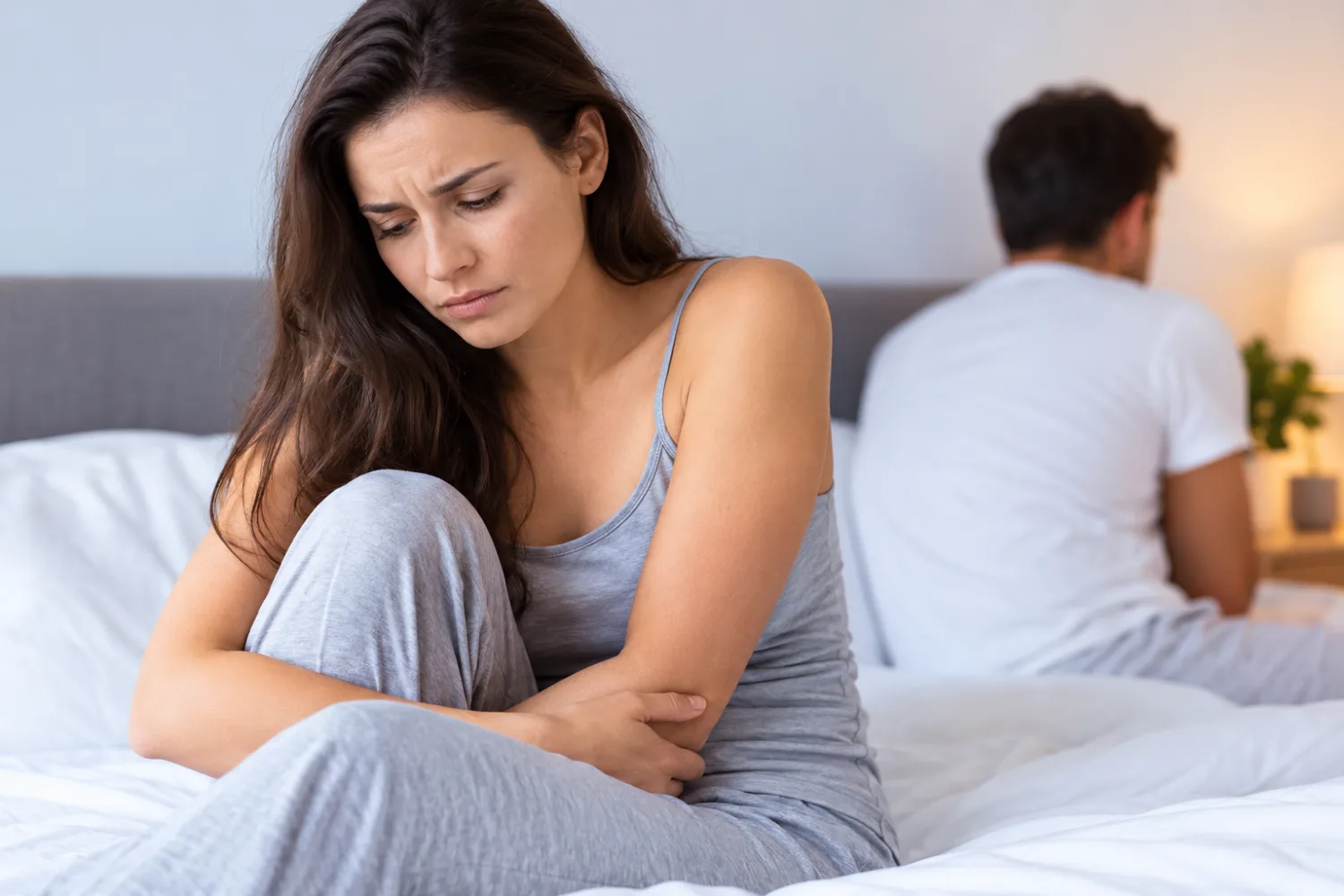
Pain during sex is common, but it is not something you simply have to put up with.
For some people, the discomfort is mild and happens only occasionally. For others, penetration causes burning, sharp pain or a feeling that the muscles are tightening involuntarily. Pain can also occur deeper in the pelvis during or after sex.
The medical term for painful intercourse is dyspareunia.
There are many possible causes, including vaginal dryness, infections, skin conditions, pelvic floor muscle tension, vulvodynia, endometriosis and hormonal changes around menopause.
Sometimes several factors are involved at the same time.
Understanding where the pain occurs and what it feels like can help narrow down the cause.
This guide explains common reasons for pain during sex, what treatments may help and when it is worth speaking to a GP, sexual-health clinic or gynaecologist.
Where Does the Pain Occur?
One of the most useful distinctions is whether the pain occurs near the entrance to the vagina or deeper inside the pelvis.
Pain at the entrance
This may feel like:
- burning;
- stinging;
- tearing;
- rawness;
- a sharp pain when penetration begins.
Possible causes include vaginal dryness, vulvodynia, skin conditions, infection or pelvic floor muscles tightening around the vagina.
Deep pain
Some people can tolerate initial penetration but experience pain deeper in the pelvis during thrusting.
This may feel:
- aching;
- sharp;
- cramp-like;
- like pressure deep inside the pelvis.
Conditions such as endometriosis, ovarian cysts, pelvic inflammatory disease and some pelvic-floor problems can produce deeper pain.
The position, timing and whether the pain continues after sex are all useful details to mention during a medical assessment.
Vaginal Dryness Is a Very Common Cause
Not enough lubrication can create friction during penetration, causing soreness, burning or a feeling that the skin is being stretched.
Vaginal dryness is particularly common during and after menopause because falling oestrogen levels affect vaginal tissue.
But menopause is not the only reason.
The NHS lists possible causes including:
- pregnancy;
- breastfeeding;
- menopause and perimenopause;
- some hormonal contraceptives;
- certain antidepressants;
- cancer treatments;
- reduced sexual arousal.
Perfumed soaps, intimate washes and vaginal douches can also irritate the area and make symptoms worse.
For mild dryness, a water-based lubricant during sex and a vaginal moisturiser used regularly can help.
Do not use oil-based lubricants with latex condoms because they can weaken the latex.
If dryness is related to menopause, vaginal oestrogen may be considered. This is available as creams, pessaries, gels or vaginal rings and usually delivers a low dose directly to the vaginal tissue.
You can read more about wider hormonal changes in our guide to menopause symptoms and HRT.
Could It Be an Infection?
Yes. Vaginal or sexually transmitted infections can make intercourse uncomfortable.
Possible causes include:
- thrush;
- bacterial vaginosis;
- chlamydia;
- gonorrhoea;
- genital herpes;
- trichomoniasis.
Other symptoms may include:
- unusual discharge;
- itching;
- burning;
- pain when passing urine;
- bleeding after sex;
- sores or blisters.
Some sexually transmitted infections produce few or no symptoms, so the absence of discharge does not rule them out.
If you have a new sexual partner, unprotected sex or symptoms suggesting an STI, testing is sensible.
Sexual-health clinics provide confidential testing and treatment. See our guide to sexual-health clinics in the UK for more information.
What Is Vulvodynia?
Vulvodynia is persistent vulval pain lasting at least three months when no clear cause such as infection or a skin disorder explains it.
The pain can feel like:
- burning;
- stinging;
- throbbing;
- rawness;
- sharp or stabbing pain.
Some people have pain all the time.
Others experience pain mainly when the vulva is touched, such as during:
- penetrative sex;
- tampon insertion;
- pelvic examination;
- wearing tight clothing;
- sitting for long periods.
The skin may look completely normal despite significant pain.
Vulvodynia often requires a combination of treatment rather than one simple medicine.
Options can include:
- pelvic-floor physiotherapy;
- medicines used for nerve pain;
- local anaesthetic preparations;
- psychosexual therapy;
- gradual vaginal trainers in selected cases.
Our dedicated guide to vulvodynia and persistent vulval pain explains the condition in more detail.
Pelvic Floor Muscles Can Also Cause Pain
The pelvic-floor muscles surround and support the vagina, bladder and bowel.
These muscles need to be able to tighten and relax normally.
In some people they remain excessively tense.
When penetration is attempted, the muscles around the vagina may tighten automatically and make intercourse painful or sometimes impossible.
This can happen after:
- a previous painful sexual experience;
- childbirth;
- pelvic surgery;
- chronic pelvic pain;
- vulvodynia;
- fear of pain after repeated painful intercourse.
Sometimes no obvious trigger is identified.
The term vaginismus is often used when involuntary tightening makes vaginal penetration difficult or impossible.
This is a physical muscle response. It does not mean somebody simply needs to “relax”.
Pelvic-health physiotherapy can help people learn how to recognise, relax and gradually retrain overactive pelvic-floor muscles.
Psychosexual therapy can also be helpful, particularly when fear of pain has developed after repeated painful experiences.
Can Endometriosis Cause Pain During Sex?
Yes.
Deep pain during or after intercourse is a recognised symptom of endometriosis.
Endometriosis occurs when tissue similar to the lining of the womb grows elsewhere in the pelvis.
Other symptoms can include:
- severe period pain;
- chronic pelvic pain;
- pain when opening the bowels;
- pain when urinating during periods;
- fatigue;
- difficulty becoming pregnant.
Not everyone with endometriosis has all of these symptoms.
Pain during sex may be particularly suggestive when it is deep inside the pelvis and is accompanied by painful periods.
If that pattern sounds familiar, see our guide to endometriosis symptoms, diagnosis and treatment.
Endometriosis is not the only pelvic condition that can cause deep pain. Fibroids, ovarian cysts and pelvic inflammatory disease can also contribute.
Skin Conditions Can Make Sex Painful
Sometimes the problem is in the vulval skin rather than deeper inside the vagina.
Conditions such as:
- eczema;
- contact dermatitis;
- lichen sclerosus;
- lichen planus;
- psoriasis;
can make the skin sore, inflamed or fragile.
Small cracks may develop during penetration.
If you notice persistent itching, skin colour changes, white patches, thickened skin, repeated splitting or visible sores, arrange a medical assessment rather than repeatedly treating yourself for thrush.
A GP may refer you to gynaecology or dermatology depending on the appearance and symptoms.
Can Anxiety or Relationship Problems Cause Pain?
They can contribute, but that does not mean pain is imaginary.
Pain itself can create a cycle.
For example:
You experience pain during sex.
The next time, you understandably expect it to hurt.
Your pelvic-floor muscles tighten.
Lubrication may decrease.
Penetration becomes more painful.
The following time you become even more anxious.
This can continue even after the original physical trigger has improved.
Stress, previous trauma, relationship difficulties and concerns about sex can therefore interact with physical causes.
Treatment may involve addressing both sides of the problem rather than assuming everything is either “physical” or “psychological”.
Psychosexual counselling, pelvic-floor physiotherapy and gradual return to comfortable intimacy can sometimes be used together.
Sex should not need to involve repeatedly pushing through significant pain.
How Is Pain During Sex Investigated?
The investigation depends on your symptoms.
A GP, sexual-health clinician or gynaecologist may ask:
- where the pain occurs;
- whether it happens at the entrance or deeper inside;
- whether it happens every time;
- when it started;
- whether periods are painful;
- whether there is bleeding or unusual discharge;
- whether you have vaginal dryness;
- whether tampon insertion is painful;
- what medication or contraception you use;
- whether pregnancy, childbirth or menopause may be relevant.
An examination may be offered.
This might involve looking at the vulva for skin changes and, where appropriate, an internal examination.
Swabs may be taken to check for infection.
If vulvodynia is suspected, a clinician may gently touch different areas of the vulva with a cotton bud to identify where pain occurs.
If deep pelvic pain suggests conditions such as endometriosis, fibroids or ovarian cysts, further investigation may include pelvic ultrasound and specialist gynaecology assessment.
You can ask for a female clinician where available and can request a chaperone during an intimate examination.
What Can Help With Pain During Sex?
Treatment depends entirely on the cause.
There is no single treatment for dyspareunia.
Useful approaches may include:
- water-based lubricant;
- vaginal moisturisers;
- vaginal oestrogen for appropriate menopausal symptoms;
- treatment for vaginal or sexually transmitted infection;
- treatment for vulval skin disease;
- pelvic-floor physiotherapy;
- pain-modifying medicines for vulvodynia;
- endometriosis treatment;
- psychosexual therapy;
- gradual vaginal trainers in selected cases.
If intercourse is painful, temporarily changing the type of sexual activity can also help prevent repeated irritation while the underlying problem is being investigated.
More foreplay and allowing enough time for arousal can improve natural lubrication.
Different positions may reduce deep penetration and pelvic discomfort.
But persistent pain should not simply be managed by taking painkillers and continuing intercourse.
The goal should be to understand what is causing the pain.
When Should You Get Medical Help?
Arrange a GP, sexual-health or gynaecology assessment if pain during sex:
- keeps happening;
- is getting worse;
- makes penetration difficult or impossible;
- is associated with significant pelvic pain;
- occurs with unusual discharge;
- occurs with vulval burning or persistent soreness;
- is associated with painful periods;
- started after menopause and is not improving with simple measures.
You should also seek medical advice for bleeding after sex, particularly if it happens repeatedly.
Bleeding can have many benign causes, including cervical changes, infection and vaginal dryness, but it deserves assessment.
Any bleeding after menopause should be checked.
Seek more urgent medical help if pelvic pain is severe or sudden, particularly if you also have:
- heavy bleeding;
- fever;
- fainting or severe dizziness;
- shoulder-tip pain;
- a possibility of pregnancy.
Those combinations can occasionally indicate conditions requiring urgent treatment, including ectopic pregnancy or severe pelvic infection.
Frequently Asked Questions
Is pain during sex normal?
Occasional mild discomfort can happen, for example because of temporary dryness, but repeated or significant pain should not be considered something you simply have to accept.
Why does it hurt when penetration starts?
Pain at the vaginal entrance can be caused by dryness, vulvodynia, skin irritation, infection or pelvic-floor muscles tightening excessively.
Why does sex hurt deep inside?
Deep pelvic pain can be associated with endometriosis, ovarian cysts, pelvic inflammatory disease, fibroids or pelvic-floor dysfunction, among other causes.
Can menopause cause painful sex?
Yes. Falling oestrogen can make vaginal tissue thinner, drier and less elastic, leading to burning and discomfort during sex. Lubricants, moisturisers and vaginal oestrogen can help some people.
Can breastfeeding cause painful sex?
Yes. Hormone levels during breastfeeding can reduce vaginal lubrication and cause temporary dryness, particularly during the months after childbirth.
Can thrush cause pain during sex?
Yes. Thrush can cause itching, soreness and inflammation that makes intercourse painful. Repeated symptoms should be properly assessed because several other conditions can look similar to thrush.
Can an STI cause pain during sex?
Yes. Infections including chlamydia, gonorrhoea, herpes and trichomoniasis can cause discomfort. Chlamydia and gonorrhoea can also contribute to pelvic inflammatory disease, which may cause deeper pelvic pain.
What is vaginismus?
Vaginismus describes involuntary tightening of muscles around the vagina when penetration is attempted. It may make penetration painful or impossible. Treatment can include pelvic-floor physiotherapy, vaginal trainers and psychosexual therapy.
Can endometriosis cause painful sex?
Yes. Deep pain during or after sex is a common symptom of endometriosis, particularly when accompanied by severe period pain or other pelvic symptoms.
What is vulvodynia?
Vulvodynia is persistent vulval pain lasting at least three months without a clearly identifiable cause. Pain may occur spontaneously or when the area is touched, including during sex or tampon insertion.
Can lubricant fix painful sex?
Lubricant can help when friction or dryness is the main problem. If pain persists despite good lubrication, another cause should be investigated.
Should I stop having sex if it hurts?
You do not need to continue penetrative sex through significant pain. Repeated painful penetration can increase irritation and create anxiety and muscle tension around future sex. Consider other forms of intimacy while the cause is being investigated and treated.
Who should I see about painful sex?
A GP is a good starting point. A sexual-health clinic may be appropriate if infection is possible. Depending on the suspected cause, you may later be referred to gynaecology, pelvic-health physiotherapy, dermatology or a specialist vulval-pain service.
When is pain during sex urgent?
Seek urgent medical assessment if severe pelvic pain develops suddenly, particularly with heavy bleeding, fever, fainting, severe dizziness or possible pregnancy.
This guide provides general information rather than a diagnosis. Pain during sex can have physical, hormonal, muscular and psychological contributors, and several may occur together. Persistent or recurrent pain deserves medical assessment rather than simply being tolerated.