Adenomyosis is a condition in which tissue similar to the lining of the womb is found within the muscular wall of the womb. It can make the womb enlarged and tender, causing heavy periods, severe period pain, pelvic pressure and pain during sex.
Some people have only mild symptoms or no symptoms at all. Others experience bleeding and pain severe enough to affect work, sleep, exercise, relationships and everyday life. Symptoms can resemble fibroids and endometriosis, and more than one of these conditions can occur at the same time.
A transvaginal ultrasound is normally the first imaging test when adenomyosis is suspected. MRI may be useful when ultrasound findings are uncertain, the condition is difficult to distinguish from fibroids or specialist treatment is being planned.
Treatment depends on the main symptoms, their severity and whether you want to become pregnant. Options include anti-inflammatory painkillers, tranexamic acid, hormonal contraception, a hormonal intrauterine system, specialist procedures and hysterectomy.
This guide provides general information and cannot diagnose the cause of pelvic pain or abnormal bleeding. Seek urgent help for extremely heavy bleeding, fainting, severe sudden pelvic pain or symptoms during a possible pregnancy.
What is adenomyosis?
The womb, also called the uterus, has several layers. Its inner lining is the endometrium, which thickens and sheds during the menstrual cycle. The thicker muscular wall around it is called the myometrium.
In adenomyosis, endometrial-like glands and tissue are present within the myometrium. This tissue responds to hormonal changes and is associated with inflammation, thickening and changes within the uterine muscle.
Adenomyosis may be:
- diffuse, affecting a broad area of the uterine muscle;
- focal, affecting one particular area;
- adenomyoma, forming a more clearly defined mass that can resemble a fibroid.
The womb may become enlarged or asymmetrical, although a normal-sized womb does not exclude adenomyosis.
Adenomyosis is a benign condition. It is not cancer, is not contagious and is not caused by poor hygiene or sexual activity.
What are the symptoms of adenomyosis?
Symptoms vary considerably. The severity of pain or bleeding does not always match how extensive the condition appears on a scan.
Possible symptoms include:
- heavy menstrual bleeding;
- periods lasting longer than expected;
- severe cramping or throbbing period pain;
- pelvic pain at other times of the month;
- a sensation of pelvic heaviness, fullness or pressure;
- bloating or an enlarged lower abdomen;
- pain during or after penetrative sex;
- lower back discomfort;
- fatigue, dizziness or breathlessness caused by iron-deficiency anaemia;
- difficulty becoming pregnant in some people.
Heavy bleeding is not defined only by a specific amount. It matters when periods interfere with physical, social or emotional life.
Signs that bleeding may be excessive include changing period products every one or two hours, needing two forms of protection together, bleeding through clothes or bedding, passing large clots, avoiding activities during a period or developing iron deficiency.
See our detailed guide to heavy periods, possible causes and treatment.
Can adenomyosis cause symptoms between periods?
Pelvic aching, pressure and pain during sex may continue outside menstruation. Some people also experience irregular bleeding or spotting, although bleeding between periods should not automatically be attributed to adenomyosis.
Unexpected bleeding can have many causes, including contraception, polyps, fibroids, infection and changes affecting the womb lining or cervix. It needs appropriate assessment, particularly when it occurs after sex or after the menopause.
Can adenomyosis cause anaemia?
Repeated heavy bleeding can deplete the body’s iron stores. This may eventually cause iron-deficiency anaemia.
Symptoms can include:
- persistent tiredness;
- weakness or reduced exercise tolerance;
- breathlessness;
- headaches or dizziness;
- palpitations;
- pale skin, although this can be harder to recognise in some skin tones;
- hair shedding or brittle nails.
A full blood count can identify anaemia, while a ferritin test helps assess stored iron. Our guide to iron, ferritin and anaemia blood-test results explains these measurements.
What causes adenomyosis?
The exact cause is not fully understood. Several possible mechanisms have been proposed, including movement of tissue from the womb lining into the muscle, changes occurring during uterine development, inflammation and the repair of tissue after pregnancy or uterine injury.
Adenomyosis is influenced by reproductive hormones, particularly oestrogen. This helps explain why it mainly affects people during their reproductive years and why symptoms often improve after the menopause.
It has traditionally been associated with people over 30 who have previously given birth. Improved ultrasound and MRI techniques now show that it can also occur in younger people and those who have never been pregnant.
Possible associations include:
- increasing reproductive age;
- previous pregnancy and childbirth;
- previous uterine surgery, including Caesarean birth;
- endometriosis;
- uterine fibroids.
These are associations rather than proof of a direct cause. Many people diagnosed with adenomyosis have none of the suggested risk factors.
How is adenomyosis different from endometriosis and fibroids?
Adenomyosis, endometriosis and fibroids can all cause heavy or painful periods, pelvic pain and fertility concerns. They affect different tissues, however, and may need different treatment plans.
| Condition | What it involves | Common features |
|---|---|---|
| Adenomyosis | Endometrial-like tissue within the muscular wall of the womb | Heavy bleeding, painful periods, pelvic tenderness, pressure and enlarged womb |
| Endometriosis | Endometrial-like tissue outside the womb, commonly elsewhere in the pelvis | Pelvic pain, painful periods, pain during sex, bowel or bladder pain and fertility difficulties |
| Fibroids | Benign growths made from uterine muscle and fibrous tissue | Heavy bleeding, pelvic pressure, enlarged abdomen, bladder or bowel pressure and fertility problems |
Adenomyosis is contained within the uterine muscle. Endometriosis may affect the ovaries, pelvic lining, bowel, bladder and other areas outside the womb.
Fibroids often form relatively well-defined masses. Focal adenomyosis can also look mass-like, making specialist imaging interpretation important.
The conditions can coexist. Treating one does not necessarily resolve symptoms caused by another.
For more detail, see our guides to endometriosis symptoms, diagnosis and treatment and fibroids and heavy bleeding.
How is adenomyosis diagnosed?
There is no single blood test that diagnoses adenomyosis. Assessment normally combines the symptom history, examination and pelvic imaging.
Your GP or gynaecologist may ask about:
- the timing, duration and heaviness of periods;
- how often period products need changing;
- pain during periods, sex, urination or bowel movements;
- bleeding between periods or after sex;
- pregnancy plans;
- contraception and previous treatments;
- previous pregnancies and uterine surgery;
- family or personal history of endometriosis and fibroids.
Keeping a symptom and bleeding diary for two or three cycles can provide useful evidence. Record pain, bleeding, medication use, missed activities and how often you change period products.
Pelvic examination
With your consent, a clinician may examine the abdomen and perform an internal pelvic examination. Adenomyosis can make the womb feel enlarged, rounded, soft or tender, but examination cannot confirm the diagnosis.
You can ask for a chaperone and request that the examination stop at any point. Tell the clinician if you have pain, anxiety, vaginismus or a history that could make internal examination difficult.
Blood tests
A full blood count is generally offered when heavy menstrual bleeding is present. Further tests depend on symptoms and history.
Blood tests cannot distinguish adenomyosis from endometriosis or fibroids. The tumour marker CA-125 is not sufficiently specific to diagnose adenomyosis and may be raised for several benign reasons.
Pregnancy test
A pregnancy test may be required when there is unexpected bleeding or pelvic pain and pregnancy is possible. Ectopic pregnancy and miscarriage require different and sometimes urgent assessment.
What do ultrasound and MRI show?
Modern imaging allows clinicians to diagnose probable adenomyosis without automatically performing surgery. University College London Hospitals notes that both transvaginal ultrasound and MRI can be used and neither involves ionising radiation.
Transvaginal ultrasound
NICE recommends transvaginal ultrasound for people with heavy menstrual bleeding and suspected adenomyosis, particularly when there is significant period pain or a bulky, tender womb on examination.
During the scan, a slim covered ultrasound probe is inserted into the vagina. This places the probe close to the womb and normally provides more detailed images than an abdominal ultrasound.
Possible ultrasound features include:
- an enlarged or asymmetrical womb;
- uneven thickness of the muscular walls;
- small cysts within the myometrium;
- fan-shaped shadowing;
- irregularity where the endometrium meets the muscle;
- increased or disorganised blood vessels;
- a focal adenomyoma.
No single feature proves the diagnosis in every case. Accuracy depends partly on the equipment and the examiner’s experience in gynaecological imaging.
If you decline a transvaginal scan or it is not suitable, a transabdominal ultrasound or MRI may be considered. An abdominal scan is less invasive but can provide less detailed information about adenomyosis.
MRI
MRI produces detailed images of the uterine muscle and the junctional zone between the endometrium and myometrium. It can help when ultrasound is inconclusive, when fibroids obscure the womb or when a specialist procedure is being planned.
MRI is not always necessary when a good-quality ultrasound clearly shows adenomyosis and the result would not alter treatment.
See our guide to what an MRI scan shows and what to expect.
Is laparoscopy needed?
Laparoscopy examines the outside of the womb and other pelvic organs through keyhole surgery. Because adenomyosis lies within the uterine muscle, laparoscopy does not reliably diagnose or exclude
Adenomyosis is a condition in which tissue similar to the lining of the womb is found within the muscular wall of the womb. It can cause very painful periods, heavy bleeding, pelvic pain, bloating and discomfort during sex, although some people have no symptoms.
The condition is sometimes confused with endometriosis or fibroids because their symptoms overlap. Adenomyosis affects the muscle of the womb itself, while endometriosis occurs outside the womb and fibroids are non-cancerous growths made from muscle and fibrous tissue.
A transvaginal ultrasound is usually the first investigation when adenomyosis is suspected. MRI can provide more detail when ultrasound findings are uncertain or treatment is being planned.
Treatment depends on the severity of symptoms and whether you want to become pregnant. Options include anti-inflammatory painkillers, tranexamic acid, hormonal contraception, the hormonal coil and specialist procedures. A hysterectomy is the only treatment that completely removes adenomyosis, but it is generally considered only after other options have failed and when future pregnancy is not wanted.
This guide provides general information and cannot diagnose the cause of pelvic pain or abnormal bleeding. Seek medical advice if your periods are affecting daily life, and obtain urgent help for extremely heavy bleeding, fainting, severe sudden pain or possible pregnancy complications.
What is adenomyosis?
The womb, or uterus, has several layers. The inner lining is called the endometrium, while the thick muscular wall is called the myometrium.
In adenomyosis, endometrial-like glands and supporting tissue are located within the myometrium. This tissue responds to hormonal changes during the menstrual cycle and can contribute to inflammation, muscle thickening and an enlarged or tender womb.
Adenomyosis may be:
- diffuse, affecting a broad area of the womb muscle;
- focal, concentrated in one area;
- present as an adenomyoma, a more localised mass that can resemble a fibroid.
The depth and extent of adenomyosis vary. Someone with relatively limited changes can experience severe pain, while another person with extensive imaging findings may have few symptoms.
Adenomyosis is benign, meaning it is not cancer. It does not normally develop into cancer, but having adenomyosis does not prevent someone from developing an unrelated gynaecological condition.
What are the symptoms of adenomyosis?
Adenomyosis does not always cause symptoms. When symptoms occur, painful and heavy periods are the most characteristic pattern.
Possible symptoms include:
- very painful periods;
- period pain that becomes progressively worse;
- heavy or prolonged menstrual bleeding;
- passing large blood clots;
- chronic pelvic pain between periods;
- a heavy, dragging or pressured feeling in the pelvis;
- bloating or abdominal fullness;
- pain during or after sex;
- lower-back discomfort;
- fatigue, dizziness or breathlessness caused by iron-deficiency anaemia.
The womb can become enlarged and tender. Some people describe an abdomen that appears more prominent at certain times of the month, although bloating has many possible causes.
Heavy bleeding does not have to involve a specific measured volume to be clinically important. It matters when bleeding interferes with physical, emotional or social wellbeing—for example, needing to change protection frequently, use two products together, miss work or avoid leaving home.
Our detailed guide to heavy periods, their causes and treatment explains when menstrual bleeding should be investigated.
What causes adenomyosis?
The exact cause is not fully understood. Several explanations have been proposed, including movement of tissue from the womb lining into the muscle, developmental changes within the womb and tissue repair following inflammation or injury.
Adenomyosis has traditionally been diagnosed more often in people aged over 30 who have been pregnant, but improved ultrasound and MRI techniques now identify it in younger people and those who have never given birth.
Possible associations include:
- increasing reproductive age, particularly the late 30s and 40s;
- previous pregnancy and childbirth;
- previous womb surgery, including Caesarean birth;
- endometriosis;
- fibroids;
- exposure to oestrogen throughout the reproductive years.
These are associations rather than proof of cause. Many people with adenomyosis have no history of uterine surgery, and having a Caesarean birth does not mean that adenomyosis will develop.
Symptoms often improve after the menopause as reproductive hormone levels fall. However, anyone with new bleeding after the menopause should be assessed because adenomyosis should not be assumed to be the explanation.
How is adenomyosis different from endometriosis and fibroids?
Adenomyosis, endometriosis and fibroids can all cause painful periods, heavy bleeding, pelvic discomfort and fertility concerns. More than one condition can occur at the same time.
| Condition | What it is | Common features |
|---|---|---|
| Adenomyosis | Endometrial-like tissue within the muscular wall of the womb | Very painful or heavy periods, tender enlarged womb, pelvic pressure |
| Endometriosis | Endometrial-like tissue outside the womb | Pelvic pain, painful sex, bowel or bladder pain, fertility difficulties |
| Fibroids | Benign growths made from uterine muscle and fibrous tissue | Heavy bleeding, pelvic pressure, enlarged abdomen, urinary or bowel pressure |
Endometriosis may affect the ovaries, pelvic lining, ligaments, bowel, bladder and other locations. It is often associated with cyclical pain when opening the bowels or passing urine.
Fibroids are usually more clearly defined masses. Adenomyosis tends to create a less distinct area of thickening within the muscle, although a focal adenomyoma can resemble a fibroid.
A laparoscopy can help diagnose endometriosis outside the womb, but it cannot usually see adenomyosis deep within the womb muscle. Treating visible endometriosis during laparoscopy will not necessarily treat coexisting adenomyosis.
See our guides to endometriosis symptoms, diagnosis and treatment and fibroids and heavy bleeding for detailed comparisons.
How is adenomyosis diagnosed?
Diagnosis begins with a discussion of the symptoms and menstrual pattern. Keeping a diary for several cycles can help show the timing of bleeding, pain, medication use and disruption to daily activities.
A GP may ask about:
- how long bleeding lasts;
- how often menstrual products need changing;
- whether you pass clots or bleed through clothing or bedding;
- when pain occurs and how severe it becomes;
- bleeding between periods or after sex;
- pain during sex, bowel movements or urination;
- pregnancy plans and previous pregnancies;
- current contraception and other medication;
- previous pelvic surgery or gynaecological conditions.
An abdominal and internal pelvic examination may be offered. Adenomyosis can make the womb feel enlarged, soft or tender, but examination alone cannot confirm the diagnosis.
Blood tests
A blood test cannot diagnose adenomyosis. A full blood count is commonly used to check for anaemia when periods are heavy. Ferritin may be measured to assess iron stores, particularly when fatigue or other deficiency symptoms are present.
Other tests may be requested according to the bleeding pattern and medical history. For example, pregnancy testing, thyroid tests or clotting investigations may be appropriate in selected cases.
Our guide to iron, ferritin and anaemia results explains what low levels can mean.
Transvaginal ultrasound
A transvaginal ultrasound is usually the first imaging test when adenomyosis is suspected. A slim ultrasound probe is inserted into the vagina to obtain detailed images of the womb.
NICE recommends transvaginal ultrasound rather than transabdominal ultrasound or MRI as the preferred first investigation for heavy menstrual bleeding with significant period pain or a bulky, tender womb suggesting adenomyosis.
Possible ultrasound features include:
- an enlarged or globular-shaped womb;
- unequal thickness of the muscular walls;
- small cysts within the myometrium;
- fan-shaped shadowing;
- irregularity where the lining meets the muscle;
- increased blood flow through affected tissue;
- a focal area consistent with an adenomyoma.
The accuracy depends partly on the equipment and experience of the person performing the scan. A normal or inconclusive routine ultrasound does not always exclude adenomyosis.
If a transvaginal scan is declined or unsuitable, a transabdominal ultrasound or MRI may be considered. You should be told what the examination involves and can ask to stop at any time.
MRI
MRI provides detailed images of the womb muscle and the junction between the endometrium and myometrium. It may help when:
- ultrasound findings are uncertain;
- fibroids and adenomyosis are difficult to distinguish;
- both conditions may be present;
- specialist treatment is being planned;
- the anatomy is complex.
MRI does not use ionising radiation. It is more expensive and less widely available than ultrasound, so it is not usually the first test for everyone.
See our guide to what an MRI scan shows for information about preparation and the scanning process.
Is a biopsy or laparoscopy needed?
A biopsy of the womb lining does not usually diagnose adenomyosis because the affected tissue is located within the muscle rather than only on the surface lining.
Endometrial sampling or hysteroscopy may still be needed to investigate abnormal bleeding and exclude polyps, hyperplasia or cancer, particularly when there is persistent bleeding between periods, treatment failure or additional risk factors.
Laparoscopy is not a routine test for adenomyosis, although it may be performed when endometriosis or another pelvic condition is suspected.
Historically, adenomyosis was confirmed only when the womb was examined under a microscope after hysterectomy. Modern imaging now allows a working diagnosis without removing the womb, although histology remains the most definitive confirmation.
University College London Hospitals provides further specialist information about ultrasound and MRI diagnosis of adenomyosis.
How is adenomyosis treated?
Treatment should be based on the symptoms that matter most to you, the imaging findings, other health conditions and whether you want to become pregnant.
Questions that influence the plan include:
- Is pain, bleeding or both the main problem?
- Has heavy bleeding caused iron deficiency or anaemia?
- Do you need contraception?
- Are you trying to conceive now or in the future?
- Are fibroids or endometriosis also present?
- How close are you to the menopause?
- Which treatments have already been tried?
Anti-inflammatory painkillers
Non-steroidal anti-inflammatory drugs, or NSAIDs, can reduce period pain and may also reduce bleeding to some extent. Examples include ibuprofen, naproxen and mefenamic acid.
They often work best when started shortly before an expected period or as soon as pain begins and then taken according to the prescribed or product instructions.
NSAIDs are not suitable for everyone. They can irritate the stomach and may be unsuitable with stomach ulcers, kidney disease, some forms of asthma, blood-thinning medication or certain cardiovascular conditions. Ask a pharmacist or clinician if you are unsure.
Tranexamic acid
Tranexamic acid helps blood clot more effectively and can reduce menstrual blood loss. It is taken only during the heavy bleeding days rather than continuously throughout the month.
It does not treat the adenomyosis itself and is not a contraceptive. It may be useful when someone wants a non-hormonal treatment or is trying to conceive.
Tranexamic acid is not suitable for every person with a history or high risk of blood clots. A clinician or pharmacist should check that it is appropriate.
Hormonal coil
The levonorgestrel-releasing intrauterine system, or LNG-IUS, is commonly called the hormonal coil. Mirena is one brand.
It releases a progestogen inside the womb, thinning the lining and commonly making periods lighter and less painful. NICE recommends considering an LNG-IUS as the first treatment for heavy menstrual bleeding in people with suspected or diagnosed adenomyosis when it is acceptable and suitable.
Irregular bleeding and spotting are common during the first months. NICE advises explaining that changes in bleeding can last for several cycles and that treatment may need at least six cycles before the full benefit can be judged.
Insertion can be painful, particularly for people with existing pelvic pain. Discuss pain relief and the available insertion options beforehand. The device can sometimes be expelled, and this may be more likely when the womb is substantially enlarged or its cavity is distorted.
Other hormonal contraception
If the hormonal coil is declined or unsuitable, options may include:
- the combined contraceptive pill;
- the contraceptive patch or vaginal ring;
- the progestogen-only pill;
- a contraceptive injection or implant in selected cases;
- cyclical oral progestogens.
Hormonal treatment can suppress ovulation or bleeding and reduce pain. Continuous use of some contraceptives may reduce or stop periods, although suitability depends on age, smoking, migraine history, blood-clot risk and other medical factors.
Hormonal contraception prevents pregnancy while it is being used, so it is not appropriate as symptom treatment when actively trying to conceive.
Specialist hormonal medicines
Gonadotrophin-releasing hormone medicines can temporarily suppress ovarian hormone production, creating a reversible menopause-like state. They may shrink the womb and reduce bleeding and pain.
These medicines are generally used for a limited period because they can cause hot flushes, vaginal dryness, mood changes and loss of bone density. “Add-back” hormone therapy may be prescribed to reduce side effects.
Symptoms often return after treatment stops. These medicines are therefore usually considered by a specialist, sometimes before surgery or as a temporary measure rather than a permanent solution.
Which procedures and operations are available?
Specialist intervention may be considered when symptoms remain severe despite medication, medication is unsuitable or the condition substantially affects quality of life.
Uterine artery embolisation
Uterine artery embolisation, or UAE, is a minimally invasive procedure performed by an interventional radiologist. Small particles are delivered through a catheter to reduce the blood supply to the affected womb tissue.
UAE is established as a treatment for fibroids and may also reduce bleeding and pain caused by adenomyosis. It preserves the womb, but it is not guaranteed to remove all symptoms and some people later need another procedure or hysterectomy.
Pain and cramping are common after embolisation. Other risks include infection, discharge, early menopause and, rarely, serious complications.
The effect of UAE on future pregnancy is uncertain. Anyone who may want to become pregnant should discuss the evidence and alternatives with a gynaecologist and interventional radiologist before proceeding.
Endometrial ablation
Endometrial ablation destroys the lining of the womb to reduce heavy bleeding. It does not remove adenomyosis from within the muscle, so the outcome may be less predictable when the disease extends deeply into the womb wall.
Ablation may reduce bleeding in selected cases but may not adequately treat pelvic pain. Symptoms can persist or return, leading to further treatment.
Endometrial ablation is not suitable for someone planning a future pregnancy. Pregnancy afterwards can be dangerous, so effective contraception is still required until menopause.
Adenomyomectomy
Adenomyomectomy is specialist surgery that removes a focal area of adenomyosis while retaining the womb. It may be considered for a localised adenomyoma or in selected people seeking uterine-preserving treatment.
Diffuse adenomyosis is much harder to remove without damaging the womb. Surgery can cause bleeding, scarring and weakening of the uterine wall, which may affect a future pregnancy and method of birth.
This treatment is available only in selected specialist centres and is not appropriate for every pattern of disease.
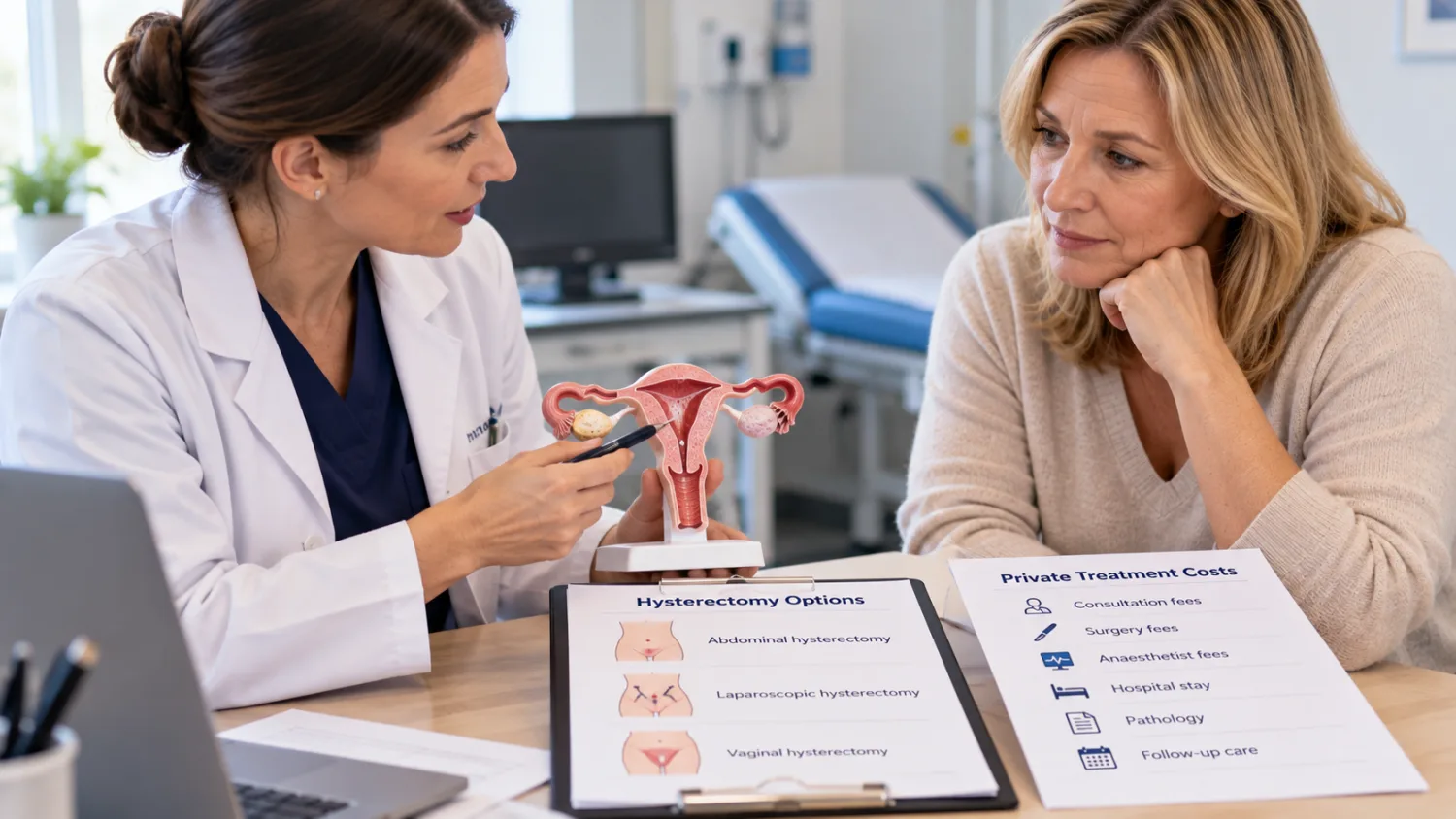
Hysterectomy
A hysterectomy removes the womb and is the definitive treatment for uterine adenomyosis. Periods stop permanently, and carrying a pregnancy is no longer possible.
The NHS states that hysterectomy can cure adenomyosis, but it is usually considered when other treatments have failed and no future pregnancies are wanted.
The ovaries do not normally need to be removed solely because of adenomyosis. Keeping healthy ovaries avoids immediate surgical menopause, although the decision may differ when endometriosis, ovarian disease, cancer risk or another condition is present.
A hysterectomy is major surgery with risks including bleeding, infection, blood clots and injury to surrounding organs. Recovery and risk depend on whether it is performed vaginally, laparoscopically or through an abdominal incision.
The NHS guide to why a hysterectomy may be recommended includes adenomyosis among the conditions for which surgery can be considered.
Does adenomyosis affect fertility and pregnancy?
Many people with adenomyosis become pregnant naturally. However, research suggests that adenomyosis may be associated with reduced fertility, lower implantation rates and a higher risk of miscarriage or some pregnancy complications.
The extent to which adenomyosis itself causes these problems is difficult to determine because age, endometriosis, fibroids and other fertility factors often occur at the same time.
If you are trying to conceive, treatment needs to be planned differently:
- hormonal contraception can control symptoms but prevents pregnancy while used;
- tranexamic acid and appropriate pain relief may be considered for symptom control;
- uterine surgery may create scarring or affect the strength of the womb;
- the effect of UAE on future fertility and pregnancy remains uncertain;
- fertility treatment may need to account for age and coexisting endometriosis or fibroids.
There is no single fertility treatment that is correct for everyone with adenomyosis. A fertility specialist may recommend ovarian reserve testing, assessment of the fallopian tubes, semen analysis for a partner and evaluation of other factors rather than assuming adenomyosis is the only explanation.
Some fertility clinics use hormonal suppression before embryo transfer in selected cases, but protocols vary and evidence continues to evolve.
See our guides to fertility blood tests and IVF and fertility treatment costs in the UK for further information.
How can you manage adenomyosis day to day?
Medical treatment is central, but practical measures can make flares easier to manage.
Options include:
- using a heat pad or hot-water bottle safely;
- taking prescribed pain relief at the recommended time rather than waiting until pain is extreme;
- tracking bleeding, pain and medication use;
- keeping spare menstrual products and clothing available;
- discussing workplace adjustments for severe days;
- treating iron deficiency when confirmed;
- using gentle movement when it helps and resting when needed;
- seeking support for the effect of chronic pain on sleep and mental wellbeing.
Dietary changes do not cure adenomyosis. A balanced iron-containing diet can support general health, but food alone may not replace iron lost through very heavy bleeding. Do not begin high-dose iron indefinitely without checking whether you are deficient.
Record how often protection is changed, whether bleeding leaks through clothing or bedding, the size of clots and any missed work or activities. These details are often more useful to a clinician than trying to estimate millilitres of blood.
When should you seek medical help?
Arrange a GP appointment if:
- period pain is severe or becoming worse;
- heavy bleeding affects work, sleep or daily activities;
- you regularly bleed through protection or pass large clots;
- you have pelvic pain between periods;
- sex is painful;
- you feel persistently tired, dizzy, breathless or weak;
- treatment has not helped;
- you are having difficulty becoming pregnant.
Bleeding between periods, after sex or after menopause should be assessed rather than automatically attributed to adenomyosis.
Seek urgent medical advice if bleeding is extremely heavy—for example, soaking through protection every hour for several hours—or if it occurs with dizziness, fainting, breathlessness, chest discomfort, severe weakness or a racing heartbeat.
Sudden severe pelvic pain, especially with vomiting, collapse, shoulder-tip pain, a missed period or possible pregnancy, requires urgent assessment. Adenomyosis should not be assumed to be the cause because ectopic pregnancy, ovarian torsion, miscarriage and other emergencies can produce pelvic pain or bleeding.
Frequently asked questions
Is adenomyosis the same as endometriosis?
No. Adenomyosis involves endometrial-like tissue within the muscular wall of the womb. Endometriosis involves similar tissue outside the womb. Both conditions can occur together.
Is adenomyosis cancer?
No. Adenomyosis is a benign condition and does not normally turn into cancer. New or unusual bleeding still requires assessment because other conditions can coexist.
Can adenomyosis be seen on an ultrasound?
Yes. A transvaginal ultrasound performed by someone experienced in gynaecological imaging can identify characteristic features. Some cases remain difficult to distinguish, and MRI may then be helpful.
Can a normal ultrasound rule out adenomyosis?
Not completely. Mild disease, difficult imaging or limited operator experience can lead to an inconclusive scan. Persistent symptoms may justify specialist review or MRI.
Do you need a laparoscopy to diagnose adenomyosis?
Usually not. Adenomyosis is located within the womb muscle and is generally diagnosed through symptoms and imaging. Laparoscopy may be used to investigate suspected endometriosis or another pelvic condition.
Does adenomyosis always cause heavy periods?
No. Some people mainly experience pain, while others have heavy bleeding, pressure symptoms or no symptoms at all.
Can adenomyosis make your stomach look bigger?
An enlarged womb and cyclical bloating can make the lower abdomen feel or appear fuller. Persistent abdominal enlargement should still be examined because many conditions can cause it.
Does adenomyosis get worse with age?
Symptoms can become more noticeable during the later reproductive years, but the course varies. They often improve after menopause when hormone levels fall.
Can the hormonal coil treat adenomyosis?
The hormonal coil can substantially reduce bleeding and pain for many people. It controls symptoms rather than physically removing adenomyosis, and irregular bleeding is common during the first few months.
Can adenomyosis disappear on its own?
Imaging changes may persist during the reproductive years even when symptoms fluctuate. Symptoms commonly improve after menopause, but treatment may be needed beforehand if pain or bleeding is severe.
Can adenomyosis cause anaemia?
Yes. Repeated heavy bleeding can deplete iron stores and eventually cause iron-deficiency anaemia, leading to fatigue, weakness, dizziness, headaches, palpitations or breathlessness.
Can you get pregnant with adenomyosis?
Yes. Many people conceive naturally. Adenomyosis may reduce fertility or increase certain pregnancy risks in some cases, particularly when endometriosis, fibroids or age-related factors are also present.
Does hysterectomy cure adenomyosis?
Removing the womb permanently removes uterine adenomyosis. It is major surgery and eliminates the possibility of carrying a pregnancy, so it is generally considered after less invasive treatments have failed.
Do the ovaries need to be removed during hysterectomy?
Not solely because of adenomyosis. Healthy ovaries can often be retained, avoiding immediate surgical menopause. Other conditions and individual cancer risk may affect the recommendation.
When is adenomyosis an emergency?
Adenomyosis itself is usually managed routinely, but extremely heavy bleeding, collapse, severe anaemia symptoms or sudden intense pelvic pain requires urgent assessment. Severe pain or bleeding with possible pregnancy must also be treated urgently.