Paying for a private medical second opinion in the UK will often cost around £150–£300 for a straightforward consultant appointment, although some specialists charge £400–£500 or more.
That sounds simple, but the real cost can be higher if the second doctor needs to review a large amount of medical history, re-examine scans, request new imaging or arrange additional tests.
A formal second-opinion service that includes detailed records review and a written specialist report can cost several hundred pounds, while complex multidisciplinary reviews can run into four figures.
The question, therefore, is not simply whether a second opinion is affordable. It is whether another specialist is likely to give you useful information that could change what happens next.
For someone facing major surgery, a cancer diagnosis, a life-changing treatment or continuing symptoms without a clear explanation, that may be money well spent. For a straightforward condition where the diagnosis and treatment are already clear, the benefit may be much smaller.
This guide explains how much a private second opinion costs in the UK, what the fee normally includes, when another opinion may be worthwhile and how to avoid paying for unnecessary repeat consultations or tests.
How Much Does a Private Second Opinion Cost in the UK?
Most private second opinions begin with an ordinary specialist consultation.
PHIN, the independent organisation that publishes information about UK private healthcare, says an initial consultant appointment typically costs around £150–£300. Another of its current patient guides puts the common range at roughly £170–£250, reflecting the fact that there is no national fixed price.
Individual providers can vary much more widely. Spire Healthcare says new-patient consultation fees can range from around £120 to £500, depending on the consultant and hospital.
A second opinion may sometimes cost more than a standard first consultation because the doctor has more material to review. They may need to go through previous clinic letters, scan reports, pathology results and treatment history before they can give a meaningful opinion.
Some consultants publish a separate second-opinion fee. For example, one UK specialist currently charges £495 for an extended second-opinion appointment including review of previous case files and scans, compared with £395 for a standard new-patient consultation.
More formal records-based services can also be priced differently. Published UK examples in 2026 include consultant second-opinion reports around £250–£500, with more detailed specialist reviews reaching around £600 or considerably more for complex cases.
So, for most people, a sensible starting budget is:
- £150–£300 for a relatively straightforward consultation;
- £300–£600+ where substantial records or scans need reviewing;
- £1,000+ for complex coordinated reviews involving several specialists or extensive re-analysis.
Always ask what is actually included before booking.
What Are You Really Paying For?
A second opinion is not just another appointment where you repeat your symptoms from the beginning.
The value usually comes from having a different specialist independently review the reasoning behind your diagnosis or treatment plan.
That might include looking at previous blood tests, imaging, biopsy results, operation notes, clinic letters and medication history.
The second consultant may agree completely with the first doctor. That can still be useful because it gives you greater confidence before committing to treatment.
Alternatively, they may suggest a different diagnosis, recommend another test, question whether surgery is necessary or propose a different treatment sequence.
The consultation fee usually pays for the doctor's time and opinion. It does not necessarily include new investigations.
Nuffield Health, for example, explains that consultant fees vary individually and that scans or tests requested during the consultation are normally charged separately. PHIN similarly advises patients to obtain a written quotation because additional hospital, diagnostic and professional fees can arise.
That distinction matters. A £250 consultation can quickly become a £700 or £1,000 episode of private care if the new consultant recommends an MRI, ultrasound, blood tests or another specialist review.
When Is a Private Second Opinion Most Worthwhile?
The strongest case for a second opinion is usually when the decision in front of you is significant, difficult to reverse or based on some uncertainty.
Major surgery is an obvious example.
If you have been advised to undergo spinal surgery, joint replacement, heart surgery or another major procedure, spending a few hundred pounds to confirm that the operation is appropriate may be relatively small compared with the consequences of the treatment itself.
The same applies when there are several reasonable options.
One surgeon may favour surgery while another believes physiotherapy, injections or watchful waiting should be tried first. A cancer specialist may recommend one treatment sequence while another centre takes a slightly different approach.
A second opinion may also be particularly useful when:
- the diagnosis remains uncertain;
- your symptoms do not fit the diagnosis comfortably;
- treatment has repeatedly failed;
- you have been offered a high-risk treatment;
- you are being asked to choose between very different treatments;
- you have a rare or unusually complex condition.
It can also provide reassurance. Sometimes the most valuable outcome is hearing a second specialist say that the first doctor’s recommendation is exactly what they would do as well.
When Might Paying for Another Opinion Add Very Little?
Not every medical decision needs two specialists.
If you have a common condition with a clear diagnosis and standard treatment, another consultation may simply reproduce the same advice.
For example, paying several hundred pounds for another consultant to confirm an uncomplicated diagnosis that has already been supported by clear tests may not change anything.
The same is true when the real problem is access rather than uncertainty.
If you know what treatment you need but are waiting a long time for an NHS appointment, a private consultation may help you access care sooner, but that is slightly different from seeking a true second opinion.
Our guide to NHS vs private healthcare in the UK looks more broadly at when paying privately can make sense.
If the issue is simply getting medical advice quickly, a private GP appointment may also be much cheaper than seeing a consultant.
Do You Need a GP Referral for a Private Second Opinion?
Not always.
Many private hospitals allow self-paying patients to book directly with a consultant, particularly for an outpatient consultation.
Nuffield Health, for example, says patients can book appointments directly with many consultants, although a GP referral is required for most procedures.
Some consultants still prefer or require a referral because it gives them a concise medical history and explains why specialist input is needed.
If you are using private medical insurance, the rules are usually stricter. Your insurer may require a GP referral and pre-authorisation before it will pay for the appointment.
It is worth checking this before booking. Seeing a consultant first and asking the insurer afterwards can leave you personally responsible for the entire bill.
If you are already under an NHS specialist, you can also ask your GP or existing consultant whether another NHS opinion can be arranged. You do not necessarily have to pay privately simply because you want another view.
Can You Get a Second Opinion Through the NHS?
Sometimes, yes.
There is no universal legal right to a second specialist opinion in every NHS situation, but patients can ask for one.
In mental health services, for example, NHS guidance explicitly says that you can ask another medical professional to provide a second opinion and that NHS trusts will usually have a process for arranging one, although there is not an automatic legal entitlement.
Similar principles apply more broadly: you can discuss your concerns with your GP or current consultant and ask whether referral to another specialist is appropriate.
The disadvantage is time.
A second NHS referral may mean another waiting list, particularly if you want to see a specific specialist or tertiary centre.
That is one reason people sometimes pay privately for the second opinion even when they intend to have any eventual treatment through the NHS.
Our guide to how hospital referrals work in the UK explains the NHS referral process and what you can do when a referral is delayed.
What Should You Bring to a Second-Opinion Appointment?
The quality of the second opinion depends heavily on the information available to the doctor.
Ideally, the consultant should see the same evidence that informed the original diagnosis.
That may include clinic letters, blood results, radiology reports, discharge summaries, pathology reports and your medication list.
If imaging is important, try to provide the actual scans rather than just the written report.
This is particularly useful in areas such as orthopaedics, neurology, oncology and spinal medicine, where another specialist may interpret the imaging differently.
You should also make a short note of what you actually want answered.
For example:
- Do you agree with the diagnosis?
- Is the proposed treatment necessary now?
- Are there reasonable alternatives?
- Would waiting create additional risk?
- Would you recommend the same treatment if I were your patient?
A focused consultation is usually much more useful than simply asking, “What do you think?”
Will You Have to Pay for More Tests?
Possibly, but not automatically.
A good second-opinion consultation should begin by reviewing what has already been done.
If you have recently had an MRI, CT scan or blood tests, there may be no reason to repeat them unless the quality is inadequate, the clinical situation has changed or the new specialist needs a different type of investigation.
Private tests are normally charged separately from the consultation.
This is why bringing complete records can save money.
There is little value in paying privately for an identical scan simply because the second consultant cannot access the first one.
If new imaging is genuinely necessary, you may also be able to have it through the NHS rather than privately, although that can involve another referral and waiting period.
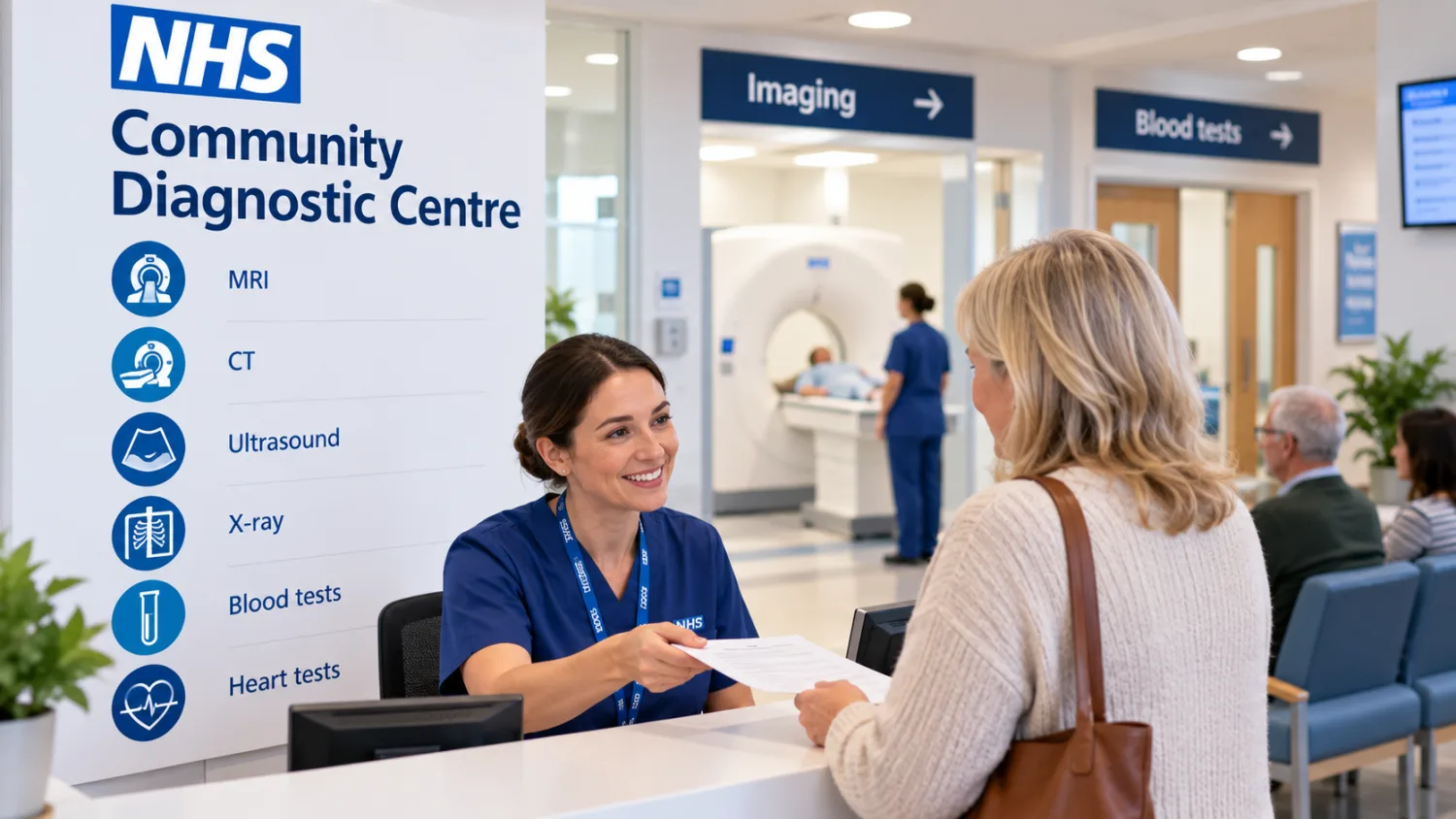
NHS Community Diagnostic Centres are one route through which many scans and tests are now performed after appropriate referral.
Can Private Health Insurance Pay for a Second Opinion?
Sometimes.
Private insurers generally cover medically necessary specialist consultations when they fall within the policy terms, but the details vary considerably.
Bupa, for example, states that its policies and schemes can cover medically necessary planned consultations, tests and treatment for acute conditions at recognised hospitals and clinics.
However, that does not mean you can simply book any consultant you want.
Your insurer may require:
- a GP referral;
- pre-authorisation;
- a recognised consultant;
- a recognised hospital;
- use of an approved network.
You may also have an excess or outpatient limit.
If the second specialist orders additional scans or tests, those may require separate authorisation.
Always contact the insurer before the appointment rather than assuming the consultation will be reimbursed afterwards.
How to Decide Whether Paying Is Worth It
A useful way to think about a second opinion is to compare the cost with the importance of the decision.
If you are being asked to spend £15,000 on private surgery, permanently start a major treatment or undergo a procedure carrying significant risks, spending £200–£500 for another expert view may be relatively modest.
If the issue is minor and the second doctor is unlikely to have access to any new information, the same money may add very little.
The value is generally highest when another expert could realistically change one of three things: the diagnosis, the treatment or the timing.
It is also important to choose the right specialist rather than simply any consultant in the same broad field.
A general orthopaedic surgeon, for example, may be highly experienced but not the best person to review a complex spinal condition. For rare diseases or complicated surgery, subspecialty expertise can matter more than the hospital brand.
Before booking, ask what the consultant specialises in, whether they regularly treat your particular condition and whether they will review your records before the appointment.
PHIN publishes information about private consultants and their typical fees, which can help patients compare options before committing to an appointment.
Frequently Asked Questions
How much does a private second opinion cost in the UK?
A straightforward specialist consultation commonly costs around £150–£300. Some senior specialists or extended second-opinion consultations cost £400–£500 or more.
Why can a second opinion cost more than a normal consultation?
The specialist may need to spend additional time reviewing previous scans, pathology, clinic letters and a long treatment history before seeing you.
Are scans included in the consultation price?
Usually not. New MRI, CT, ultrasound, X-ray or laboratory tests are normally charged separately unless the provider specifically states that they are included.
Do I need my GP to refer me?
Not always if you are self-paying. Many private consultants accept direct bookings, although some require a GP referral and insurers often insist on one.
Can I ask the NHS for a second opinion?
Yes. You can ask your GP or current specialist about another opinion, although there is not an automatic legal right to one in every situation and another NHS referral may involve a wait.
Can I pay privately for the opinion but have treatment on the NHS?
Potentially, yes. A private consultation does not normally mean you must continue privately. However, the NHS clinician responsible for your care will still make their own clinical decisions about NHS treatment and referrals.
Is a second opinion worth it before surgery?
It often can be, particularly before major or irreversible surgery, when there are several treatment options or when you remain uncertain about the diagnosis.
What records should I bring?
Bring relevant clinic letters, test results, medication lists, pathology reports and imaging. If possible, provide the actual scan images as well as the radiologist's report.
Will the second doctor always disagree with the first?
No. Often they agree. Confirmation from another specialist can itself be valuable when you are making a major treatment decision.
Can private insurance cover a second opinion?
It may, but check first. Insurers may require a referral, pre-authorisation and use of recognised consultants and hospitals.
When is a second opinion probably not necessary?
It may add little when the diagnosis is straightforward, supported by clear tests and the treatment is standard with little genuine uncertainty.
This article provides general information about private healthcare in the UK. Fees vary by consultant, specialty, location and complexity. Always obtain the consultation fee and likely additional charges in writing before booking.