Testosterone deficiency is one of the most talked-about topics in men’s health, but also one of the most misunderstood. Many men come across the subject because they feel tired, flat, less interested in sex, less strong in the gym, or simply not like themselves. Online, these symptoms are often packaged into one simple explanation: low testosterone.
Sometimes that explanation is right. But very often it is only part of the story, or not the story at all.
That is why this topic needs a calm, practical guide rather than hype. Testosterone deficiency is a real medical issue, but it should be diagnosed carefully and treated thoughtfully. Many symptoms blamed on testosterone can also be linked with poor sleep, chronic stress, depression, obesity, excess alcohol, medication side effects, thyroid problems or long-term health conditions.
This article explains what testosterone deficiency is, what symptoms it can cause, how it is usually tested in the UK, and what testosterone replacement therapy, usually called TRT, does and does not do. If you want the broader picture first, see our guide to men’s health: symptoms, common conditions and treatment options. If low libido or erection problems are also part of the picture, our article on erectile dysfunction (ED): causes, tests and treatment in the UK may also help.
What testosterone does in the male body
Testosterone is the main male sex hormone, although women produce it in much smaller amounts too. In men, it plays a role in sex drive, erections, sperm production, muscle mass, bone strength, body hair and general sense of energy and wellbeing.
Low testosterone can happen for different reasons. In some men, the testicles are not producing enough hormone. In others, the problem begins higher up in the hormone system, in the pituitary gland or hypothalamus. Some men develop low levels alongside obesity, type 2 diabetes, heavy alcohol use, opioid medication use or previous anabolic steroid use. UK NHS information also notes that testosterone levels can normalise when an underlying cause is addressed. North Cumbria NHS information on TRT explains this clearly.
Is “male menopause” the same thing?
This is where a lot of confusion starts. The phrase “male menopause” is widely used online, but it is not a very accurate term. Unlike female menopause, men do not usually have a sudden hormonal drop at a specific life stage. NHS explains that testosterone levels usually decline gradually, at about 1% a year from around the age of 30 to 40, and that this steady fall is unlikely to cause major symptoms on its own in most men. The NHS page on so-called “male menopause” also notes that many symptoms blamed on hormones are actually due to stress, depression or other causes.
That does not mean age-related testosterone deficiency is not real. It means the diagnosis should not be made casually from symptoms alone.
Symptoms that may suggest testosterone deficiency
Testosterone deficiency can affect men in different ways. For some, the main issue is sex drive. For others, it is tiredness, lower exercise tolerance, poorer recovery, reduced morning erections, or feeling mentally dulled and less motivated than before.
Possible symptoms include:
- reduced libido
- erectile dysfunction or fewer morning erections
- persistent fatigue or low energy
- low mood, irritability or reduced confidence
- reduced muscle bulk or strength
- increased body fat
- poor concentration or “brain fog”
- hot flushes or sweats in some men
- reduced body hair or shaving frequency in more marked cases
These symptoms are recognised in NHS and UK endocrine/urology information, but the important point is that they are not specific. Royal Berkshire Hospital’s patient leaflet on hypogonadism and TRT lists fatigue, low mood, reduced sex drive, erectile dysfunction, reduced strength and poor concentration among symptoms. NHS also stresses that many of these symptoms can happen for reasons other than hormones.
A common real-life example: a man in his late 40s feels permanently tired, has gained abdominal weight, sleeps badly, snores heavily, drinks too much on weekends and has less interest in sex than before. He may worry that testosterone is the answer. It might be part of the picture, but sleep apnoea, stress, weight gain, alcohol and metabolic health may matter just as much or more.
When low testosterone is more likely to be real
Low testosterone becomes more likely when symptoms fit and there are risk factors or physical clues alongside them.
Situations that may make testosterone deficiency more likely include:
- persistently low libido
- fewer or absent morning erections
- very small testes or previous testicular injury
- undescended testicles in childhood
- pituitary disease
- opioid use
- previous anabolic steroid use
- obesity and type 2 diabetes
- infertility concerns
- osteoporosis or low-trauma fractures
UK guidance from specialist groups such as the British Society for Sexual Medicine and NHS pathways highlights that symptoms alone are not enough: clinicians look for a consistent symptom pattern alongside repeatedly low blood levels. BSSM resources emphasise proper diagnosis and management rather than symptom-based assumptions.
What else can look like low testosterone?
This is one of the most important parts of the topic. Low testosterone symptoms overlap heavily with other very common problems.
Other possible explanations include:
- poor sleep or sleep apnoea
- stress and burnout
- depression or anxiety
- obesity
- heavy alcohol use
- thyroid problems
- anaemia
- side effects of medication
- relationship difficulties
- normal ageing combined with lifestyle factors
This is why “I have three symptoms from an online list” is not enough to diagnose testosterone deficiency. NHS makes exactly this point: symptoms such as tiredness, low mood and sexual changes are often not caused by hormones at all. That is set out clearly on the NHS page.
How testosterone deficiency is tested in the UK
Good testing is more specific than many people realise. Testosterone levels vary during the day, and they are usually highest in the morning. That means one random blood test, especially if done later in the day, is often not enough to make a reliable diagnosis.
In UK practice, clinicians usually look for symptoms together with at least two properly timed morning blood tests showing low testosterone. If the result is borderline or the cause is unclear, other hormone tests may be added to help work out whether the problem is in the testes themselves or higher up in the hormone system. Royal Berkshire’s leaflet states that men being investigated for hypogonadism usually need blood tests before 11am on two occasions. BNSSG ICB endocrine guidance similarly describes morning testosterone testing and wider hormone assessment.
Tests may include:
- total testosterone, usually in the morning
- repeat morning testosterone if the first result is low or borderline
- LH and FSH to help identify primary or secondary hypogonadism
- prolactin in selected cases
- SHBG or calculated free testosterone in some men
- thyroid function, blood count, glucose or HbA1c, and other general tests if relevant
Testing should also be interpreted in context. Men who are acutely unwell, sleeping badly, severely overweight or drinking heavily may have temporarily low results that do not necessarily mean lifelong hormone deficiency.
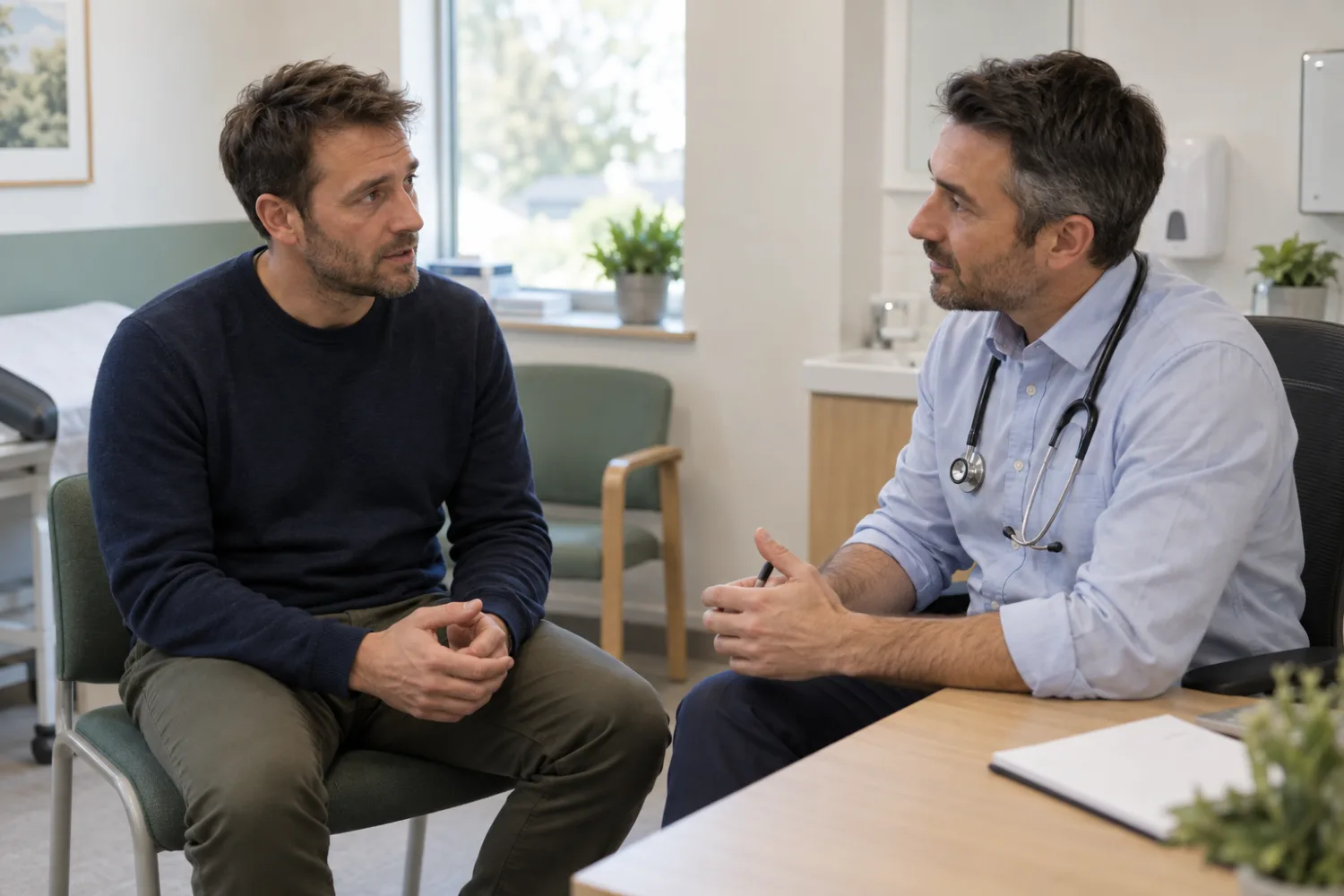
What happens at the appointment?
A GP or specialist will usually start with the wider story, not just the lab result. You may be asked about libido, erections, fertility, mood, energy, exercise tolerance, sleep, snoring, alcohol, weight change, medications, past steroid use and whether you have conditions such as diabetes or high blood pressure.
That wider conversation matters. A man with low libido, absent morning erections, infertility and very low morning testosterone presents differently from a man whose main complaint is tiredness after years of poor sleep and weight gain.
Examination may be simple, but in some cases it includes body habitus, blood pressure, testes, body hair pattern or signs pointing to pituitary or thyroid disease.
What TRT actually is
TRT stands for testosterone replacement therapy. It is treatment used to restore testosterone levels in men with confirmed deficiency and relevant symptoms.
TRT is not a performance enhancer for healthy men with normal levels. It is not a general anti-ageing shortcut. It is a medical treatment that can be helpful in the right patient and unhelpful or inappropriate in the wrong one.
In UK practice, TRT may be given as gel, injections or sometimes other formulations depending on the clinical situation and local prescribing pathways. Royal United Hospitals Bath patient information and BNF/NICE testosterone prescribing information outline the main treatment forms used in practice.
What TRT can help with
When a man genuinely has testosterone deficiency, TRT can improve symptoms such as low libido, low energy, poor wellbeing, and sometimes erectile function, although erections often still depend on other factors too. Some men also notice improvement in body composition, exercise tolerance or mood over time.
Potential benefits may include:
- improved sex drive
- better energy or vitality
- improved mood in some men
- better sense of wellbeing
- improvement in erections in selected men, especially where deficiency is clearly contributing
- support for bone and muscle health over time
But TRT is not instant, and it is not magic. Some symptoms improve sooner than others, and some men find that the bigger gains come from treating weight, sleep, metabolic health and mental health at the same time.
What TRT does not do
This is where expectations need to be realistic.
TRT does not:
- turn normal testosterone into “supernormal” health safely in a medical setting
- fix stress, burnout, depression or relationship problems on its own
- guarantee perfect erections
- work well if the real issue is poor sleep, heavy drinking or obesity and those factors are ignored
- replace the need for proper follow-up and blood monitoring
In short, TRT can help the right man, but it should not be treated as a lifestyle shortcut.
Fertility and testosterone: an important warning
This is one of the most important things men are not always told early enough. If you are trying for a baby, or may want children in the future, you should discuss this clearly before starting TRT.
External testosterone can reduce the body’s own sperm production. That means a treatment given for low testosterone symptoms can actually worsen fertility. UK fertility guidance and NHS sources flag this issue, and recent NICE fertility work specifically includes testosterone use in baseline fertility assessment questions. NICE baseline fertility assessment tools ask about testosterone use, and many UK endocrine/urology services explain that fertility needs separate planning.
If fertility matters, that should be part of the decision from the start.
Risks, side effects and monitoring
TRT needs proper follow-up. It is not something that should be started and forgotten.
Monitoring may include:
- repeat testosterone levels
- blood count, especially haematocrit or haemoglobin
- PSA and prostate-related review in appropriate men
- liver or metabolic checks where relevant
- assessment of symptoms, side effects and treatment benefit
Royal United Hospitals Bath notes potential issues such as worsening urinary symptoms in men with enlarged prostate, reduced testicle size and effects on fertility, while UK specialist guidance also stresses monitoring blood count because testosterone can raise red cell levels in some men.
Possible concerns or side effects include:
- acne or oily skin in some men
- higher red blood cell count
- worsening of some urinary symptoms
- reduced testicular size
- reduced sperm production
- need for long-term follow-up rather than one-off treatment
Not every man gets side effects, but this is exactly why reputable clinics monitor carefully rather than simply selling repeat prescriptions.
When lifestyle changes matter just as much
One of the most useful truths in this area is that some men do not need TRT first. They need a fuller look at weight, sleep, alcohol, stress and metabolic health.
Men who are overweight, inactive, regularly sleep deprived or drinking heavily can have lower testosterone levels that sometimes improve when those issues are addressed. North Cumbria NHS information specifically notes that obesity, excess alcohol and previous steroid use can lower testosterone and that levels may normalise once the underlying cause is managed.
That means real improvement may come from:
- losing weight if overweight
- treating sleep apnoea or improving sleep
- cutting down alcohol
- stopping anabolic steroids
- treating diabetes or metabolic syndrome properly
- addressing depression, anxiety or burnout
Sometimes those steps sit alongside TRT. Sometimes they make TRT unnecessary.
When to see a GP or specialist
You should not start from the assumption that you need a testosterone clinic. In many cases, a GP is the right first step, especially if symptoms are mixed or if there may be broader health issues involved.
It is worth getting assessed if you have:
- persistent low libido
- unexplained fatigue and reduced vitality
- fewer morning erections
- erectile dysfunction plus other suggestive symptoms
- infertility concerns
- very low mood or poor recovery with other physical changes
- history of steroid use, testicular problems or pituitary disease
A specialist may become more important if blood tests are clearly low, the cause is unclear, fertility is an issue, or pituitary/testicular disease is suspected.
What men should avoid
There are a few common mistakes that create more confusion than progress.
- Assuming symptoms prove low testosterone. They do not.
- Using one random blood test as a diagnosis. Proper timing and repeat testing matter.
- Starting TRT without discussing fertility. This is a major oversight.
- Buying testosterone online or from unregulated sources. This is risky medically and legally.
- Ignoring sleep, weight, alcohol and mental health. These often shape the whole picture.
Final thoughts
Testosterone deficiency is real, but it is not something that should be diagnosed by a symptom checklist or treated like a lifestyle trend. The best approach is to look at the whole picture: symptoms, timing, blood tests, general health, sleep, mental wellbeing, fertility plans and long-term monitoring.
For the right man, TRT can be genuinely helpful. For the wrong man, it can distract from the real issue or create new problems. That is why careful testing and good clinical judgement matter so much.
If you feel persistently low in energy, sex drive, confidence or physical vitality, do not assume you know the answer already. Get assessed properly. In many cases the solution is broader, and more effective, than a single hormone level.