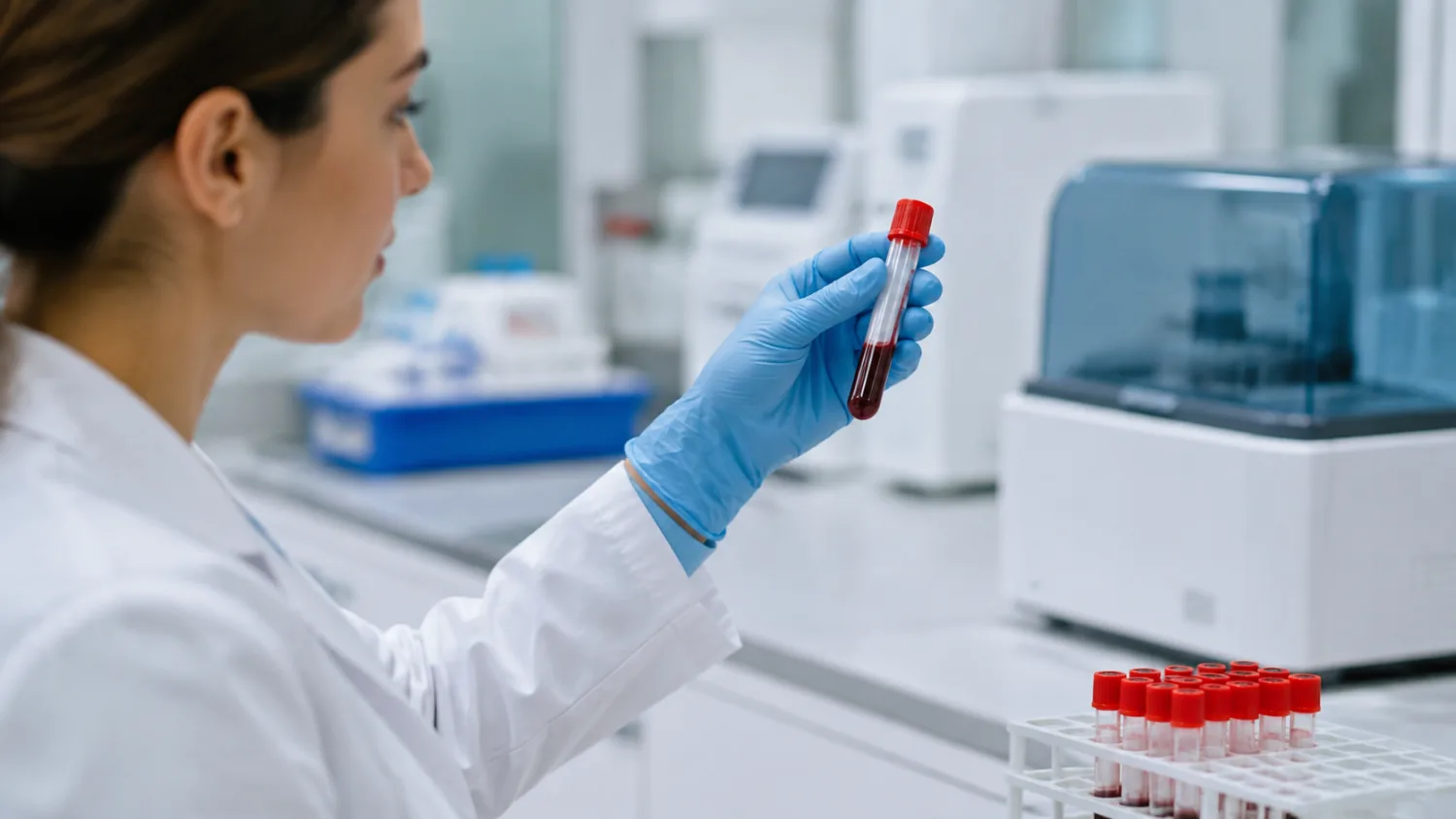
Irregular periods are common, but the reason they happen is not always obvious. A menstrual cycle may become longer, shorter, less predictable or stop altogether because ovulation is being disrupted. In other cases, bleeding that appears to be an irregular period may actually come from contraception, pregnancy, a fibroid, a cervical condition or another problem that blood tests cannot diagnose.
Blood tests can be extremely useful when irregular periods may be related to pregnancy, polycystic ovary syndrome, thyroid disease, raised prolactin, early menopause or another hormonal condition. However, there is no single “irregular periods blood test”, and ordering every reproductive hormone at once does not necessarily provide a clear answer.
Some hormones change significantly during the menstrual cycle. A result that is useful on one cycle day may be misleading on another. Hormonal contraception, pregnancy, breastfeeding, recent illness, weight changes and medicines can also alter the results.
The best investigation therefore begins with the pattern of your periods and any accompanying symptoms. This guide explains which blood tests may help investigate irregular periods, what each result can show, when tests need to be timed and when an examination, ultrasound or other investigation may be more important.
Important: Take a pregnancy test if pregnancy is possible. Seek urgent medical advice for severe pelvic pain, fainting, shoulder-tip pain or heavy bleeding, particularly if you could be pregnant. These can be symptoms of an ectopic pregnancy or another urgent condition.
What counts as an irregular period?
A menstrual cycle is measured from the first day of one period to the first day of the next. Cycles do not need to arrive on precisely the same calendar date every month to be normal.
Periods may be described as irregular when:
- The gap between periods changes significantly from one cycle to another
- Periods repeatedly arrive unusually close together
- There are long gaps between periods
- Periods stop for several months
- The length or flow changes without an obvious reason
- Ovulation appears to occur unpredictably
Bleeding between periods, after sex or after menopause is not simply an irregular cycle. These patterns can require a different assessment.
The NHS advises contacting a GP about irregular periods, particularly when they are accompanied by symptoms such as weight gain, tiredness, facial hair growth, skin changes or difficulty becoming pregnant.
A single late or unusual period is often caused by a temporary change. Travel, stress, illness, disrupted sleep, weight change and unusually intensive exercise can all affect the timing of ovulation.
Testing becomes more useful when the pattern persists, periods stop, there are associated symptoms or pregnancy is being planned.
What can cause irregular periods?
Irregular periods usually mean that ovulation is not happening consistently, but there are many possible reasons.
Common causes include:
- Pregnancy
- Polycystic ovary syndrome
- Perimenopause
- Thyroid disease
- Raised prolactin
- Significant weight loss or weight gain
- Insufficient calorie intake
- Excessive exercise
- Psychological stress
- Breastfeeding
- Hormonal contraception
- Premature ovarian insufficiency
- Medicines that affect reproductive hormones
Irregular bleeding can also be associated with:
- Fibroids
- Uterine polyps
- Adenomyosis
- Sexually transmitted infections
- Problems affecting the cervix
- Changes to contraception
- Pregnancy complications
- More rarely, abnormalities of the womb lining
These structural or local causes may not produce an abnormal hormone blood test. Examination, infection testing, cervical screening, ultrasound or hysteroscopy may be more useful.
This distinction is important. Blood tests are good at investigating some causes of disrupted ovulation, but they cannot show the physical condition of the womb, ovaries or cervix.
When should you see a GP?
Arrange a GP appointment if:
- Your periods have become persistently irregular
- You have missed three periods and are not pregnant
- Your periods last longer than seven days
- You bleed between periods
- You bleed after sex
- You have irregular periods and are struggling to conceive
- Your bleeding is becoming heavier
- You have pelvic pain
- You have symptoms of anaemia
- You have new facial hair, acne or scalp hair thinning
- You have nipple discharge when not breastfeeding
- You have headaches or changes in vision
- You may be experiencing menopause unusually early
Seek urgent medical help for:
- Severe or one-sided pelvic pain
- Fainting, collapse or marked dizziness
- Shoulder-tip pain with possible pregnancy
- Very heavy bleeding
- Severe weakness or breathlessness
- A positive pregnancy test with pain or bleeding
Postmenopausal bleeding should always be medically assessed, even when it happens only once.
Before requesting tests, a clinician will usually ask about:
- Your usual cycle length
- When the pattern changed
- Pregnancy possibility
- Contraception
- Weight changes
- Exercise and diet
- Medicines and supplements
- Acne or excess hair growth
- Menopause symptoms
- Pregnancy plans
- Pelvic pain and abnormal discharge
This history often determines which tests are actually worthwhile.
Which blood tests are commonly used for irregular periods?
The exact tests depend on age, symptoms, contraception and whether periods are irregular, infrequent or completely absent.
Common investigations may include:
- Pregnancy testing
- Thyroid-stimulating hormone
- Prolactin
- Follicle-stimulating hormone
- Luteinising hormone
- Oestradiol
- Testosterone
- Sex hormone-binding globulin
- Sometimes DHEAS
- HbA1c or glucose
- Full blood count
- Ferritin
Not everyone needs every test. For example, someone with irregular periods, acne and increasing facial hair may need an assessment focused on PCOS and androgen excess. Someone aged 39 with hot flushes and periods that have stopped may require investigation for premature ovarian insufficiency.
A person whose only issue is breakthrough bleeding after starting hormonal contraception may need an entirely different assessment.
NICE guidance on amenorrhoea identifies pregnancy testing, FSH, LH, thyroid function and prolactin among the investigations used to assess why periods have stopped. PCOS assessment may also involve androgen measurements while excluding other hormonal causes.
Before purchasing a commercial panel, read our guide to choosing a private blood test. Product names such as “female hormone check” do not always tell you whether the correct markers or timing are included.
Pregnancy, thyroid and prolactin tests
Pregnancy testing
Pregnancy is one of the first possibilities to exclude when a period is late, missed or unexpectedly light.
A urine pregnancy test is suitable in many situations. Blood testing measures human chorionic gonadotropin, or hCG, and may be used when:
- A very early result is needed
- Urine results are unclear
- There is pain or bleeding in early pregnancy
- A clinician needs to monitor how hCG is changing
- An ectopic pregnancy or early pregnancy loss is being investigated
A single hCG result cannot always show whether a pregnancy is developing normally or where it is located. Repeat measurements and ultrasound may be needed.
Do not rely on a negative test taken too early. If pregnancy remains possible, repeat the test at the appropriate time or seek medical advice.
Thyroid function
Both an underactive and an overactive thyroid can affect ovulation and menstrual regularity.
An underactive thyroid may cause:
- Longer or irregular cycles
- Heavy periods
- Fatigue
- Feeling cold
- Constipation
- Dry skin
- Weight gain
- Low mood
An overactive thyroid may be associated with:
- Lighter, less frequent or absent periods
- Weight loss
- Palpitations
- Tremor
- Sweating
- Heat intolerance
- Anxiety
The initial tests usually include TSH and free T4. Free T3 and thyroid antibodies may be added in selected circumstances.
Our thyroid blood test results guide explains how common TSH and thyroid hormone patterns are interpreted.
Prolactin
Prolactin is made by the pituitary gland and supports milk production after childbirth. When it is raised outside pregnancy and breastfeeding, it can interfere with ovulation and cause irregular or absent periods.
High prolactin may also cause:
- Milky nipple discharge
- Reduced libido
- Vaginal dryness
- Difficulty becoming pregnant
- Headaches
- Visual symptoms in uncommon but important cases
Prolactin can rise temporarily because of stress, exercise, sleep, breast stimulation and the discomfort of blood collection. Medicines are another common cause.
Relevant medicines can include some:
- Antipsychotics
- Antidepressants
- Anti-sickness medicines
- Opioid painkillers
- Blood-pressure medicines
A mildly raised result may need repeating under calmer, standardised conditions. A persistently high prolactin result may require further investigation of medicines, thyroid function and the pituitary gland.
Do not stop prescribed medication because of a prolactin result without speaking to the clinician responsible for your treatment.
Blood tests for PCOS and androgen excess
Polycystic ovary syndrome is one of the most common causes of infrequent or irregular periods.
Other features may include:
- Acne
- Increased facial or body hair
- Scalp hair thinning
- Difficulty becoming pregnant
- Weight gain or difficulty losing weight
- Darkened, thickened areas of skin
The Royal College of Obstetricians and Gynaecologists explains that PCOS is generally identified when at least two relevant features are present: irregular or absent ovulation, evidence of increased androgen activity, or polycystic-appearing ovaries on ultrasound, after other causes have been considered.
You do not need to have ovarian cysts to have PCOS, and an ultrasound showing polycystic ovaries does not prove PCOS by itself.
Testosterone
Total testosterone may be measured when irregular periods occur alongside acne, excess hair growth or scalp hair loss.
A raised result can support evidence of androgen excess, but many people with PCOS have testosterone results within the laboratory range.
Testosterone can also be affected by:
- Hormonal contraception
- Pregnancy
- Time of day
- Laboratory method
- Medicines
- Changes in SHBG
Sex hormone-binding globulin
SHBG is a protein that binds testosterone in the blood. When SHBG is low, a greater proportion of testosterone may be biologically available even when the total testosterone result does not appear particularly high.
SHBG can be influenced by:
- Body weight
- Insulin resistance
- Thyroid function
- Liver health
- Oestrogen-containing contraception
- Pregnancy
Total testosterone and SHBG may be used to estimate free androgen activity.
DHEAS and other androgens
DHEAS is mainly produced by the adrenal glands. It may be measured when symptoms of androgen excess are pronounced or when the clinician is considering an adrenal source.
Androstenedione or other markers may sometimes be used, but extensive androgen testing is not required for everyone with irregular periods.
Rapidly developing androgen symptoms
Prompt medical assessment is needed when androgen-related symptoms develop rapidly, particularly when there is:
- Rapidly increasing facial or body hair
- A deepening voice
- Marked scalp hair loss
- Increased muscle development without explanation
- Clitoral enlargement
These symptoms are not typical of ordinary PCOS and should not be investigated only through a routine home panel.
HbA1c and metabolic testing
PCOS is associated with increased risk of insulin resistance and type 2 diabetes. Depending on individual risk, assessment may include:
- HbA1c
- Fasting glucose
- An oral glucose tolerance test
- Cholesterol and triglycerides
- Blood pressure
HbA1c does not normally require fasting. Read our guide to fasting before blood tests before assuming that an entire hormone or PCOS panel needs to be taken without food.
Our female hormone blood test guide explains testosterone, SHBG, LH, FSH, oestradiol and prolactin in more detail.
FSH, LH, oestradiol and ovarian function
FSH, LH and oestradiol are often grouped together as female reproductive hormones. They can provide useful information, but their interpretation depends heavily on age, cycle timing and the question being asked.
Follicle-stimulating hormone
FSH is produced by the pituitary gland and helps stimulate follicle development in the ovaries.
A raised FSH result may occur when the ovaries are responding less effectively, including during menopause or premature ovarian insufficiency. However, one isolated result is not always diagnostic because FSH can fluctuate.
A normal result does not necessarily prove that ovulation is occurring regularly or that ovarian reserve is normal.
Luteinising hormone
LH helps trigger ovulation. It rises sharply around the middle of a typical ovulatory cycle.
LH may be relatively high in some people with PCOS, but the LH-to-FSH ratio is not a reliable standalone diagnostic test. A normal ratio does not exclude PCOS, and a raised ratio does not confirm it.
Oestradiol
Oestradiol is the main form of oestrogen during the reproductive years. Its level changes throughout the menstrual cycle.
Low oestradiol may occur with:
- Menopause
- Premature ovarian insufficiency
- Very low energy intake
- Significant weight loss
- Excessive exercise
- Hypothalamic amenorrhoea
- Some pituitary conditions
A single oestradiol result is difficult to interpret without knowing cycle timing, contraception and the accompanying FSH and LH results.
Premature ovarian insufficiency
Premature ovarian insufficiency describes loss of normal ovarian function before the age of 40.
Possible symptoms include:
- Periods becoming irregular or stopping
- Hot flushes
- Night sweats
- Vaginal dryness
- Reduced libido
- Sleep disruption
- Difficulty becoming pregnant
Diagnosis usually requires appropriately interpreted hormone testing rather than one commercial menopause result. Repeat FSH testing may be needed.
People under 40 with new menopause-type symptoms and irregular or absent periods should speak to a GP because premature ovarian insufficiency has implications for fertility, bone health and cardiovascular health.
Perimenopause after 45
In otherwise healthy people aged over 45 with typical menopause symptoms, routine FSH testing is often unnecessary. Hormone levels can fluctuate widely during perimenopause, and symptoms plus menstrual history are generally more useful.
Testing may be appropriate when:
- Symptoms occur unusually early
- The diagnosis is uncertain
- Hormonal contraception obscures the bleeding pattern
- Another medical cause is suspected
Our guide to menopause blood tests explains when FSH and oestradiol testing may help and when it may not.
Progesterone, ovulation and fertility testing
Progesterone rises after ovulation. It is sometimes measured to provide evidence that ovulation has occurred.
This test is often referred to as a “day 21 progesterone”, but that name can be misleading. Day 21 is appropriate only for someone with a regular cycle of approximately 28 days.
The sample is generally most informative about seven days before the next expected period. For example:
- In a 28-day cycle, this may be around day 21
- In a 35-day cycle, it may be around day 28
- In a 24-day cycle, it may be around day 17
When cycles are highly irregular, predicting the correct day can be difficult. Repeated testing, ovulation tracking or specialist fertility assessment may be required.
A low progesterone result can mean:
- Ovulation did not occur
- The sample was collected too early
- The sample was collected too late
- The expected ovulation date was incorrect
- The cycle was longer than anticipated
It should not be interpreted as proof of infertility from one mistimed sample.
AMH and ovarian reserve
Anti-Müllerian hormone, or AMH, is often marketed as a fertility or “egg count” test. It estimates aspects of ovarian reserve and can help predict response to fertility treatment.
AMH does not:
- Confirm whether you are ovulating
- Explain most irregular periods
- Measure egg quality
- Reliably predict natural conception
- Tell you exactly when menopause will occur
It may be useful in a fertility setting, but it is not usually the first or most important test for an irregular cycle.
When to seek fertility advice
Speak to a GP if you have irregular periods and are trying to become pregnant. Irregular cycles may mean ovulation is infrequent, making conception less predictable.
Do not necessarily wait a full year when periods are very irregular or absent. The NHS or fertility service may arrange earlier investigation because there is already evidence of a possible ovulation disorder.
Our guide to fertility blood tests explains progesterone, AMH, FSH, LH, prolactin and thyroid testing in more detail.
Full blood count, ferritin and tests for heavy bleeding
Irregular periods are sometimes also heavy or prolonged. In this situation, blood tests may be needed to assess the consequences of bleeding rather than the hormonal cause.
Full blood count
A full blood count can identify anaemia. Relevant results include:
- Haemoglobin
- Haematocrit
- Mean cell volume
- Mean cell haemoglobin
- Platelet count
Iron-deficiency anaemia may cause:
- Tiredness
- Breathlessness
- Palpitations
- Headaches
- Dizziness
- Reduced exercise tolerance
- Pale skin
Read our guide to full blood count results.
Ferritin
Ferritin reflects stored iron. It can become low before haemoglobin falls below the laboratory range.
This means someone with heavy or prolonged bleeding may be iron deficient despite not yet meeting the definition of anaemia.
Our guide to low ferritin with normal haemoglobin explains this pattern and common symptoms.
Blood tests cannot identify the source of heavy bleeding
A normal hormone panel does not exclude:
- Fibroids
- Polyps
- Adenomyosis
- A copper coil-related change
- A cervical problem
- A disorder affecting the womb lining
Depending on age, symptoms and examination findings, an ultrasound, pelvic examination or hysteroscopy may be needed.
Persistent bleeding between periods or after sex should not be managed only by checking hormones.
How contraception, weight and lifestyle affect testing
Hormonal contraception
The combined pill, progestogen-only pill, implant, injection, hormonal coil, patch and vaginal ring can all alter bleeding patterns.
Possible changes include:
- Breakthrough bleeding
- Spotting
- Lighter periods
- Infrequent bleeding
- No bleeding
- Unpredictable bleeding during the first months of use
Hormonal contraception also changes reproductive hormone measurements. Testing FSH, LH, oestradiol, testosterone or SHBG while using contraception may not reflect your untreated hormonal state.
Do not stop contraception simply to obtain a “natural” hormone panel without considering pregnancy risk and obtaining appropriate advice.
Weight loss and low energy availability
Significant weight loss, insufficient calorie intake and very intensive exercise can suppress signals between the brain, pituitary gland and ovaries.
This may lead to:
- Long cycles
- Irregular ovulation
- Absent periods
- Low oestradiol
- Low or inappropriately normal FSH and LH
The issue can occur at any body size. A person does not need to appear underweight to have low energy availability.
Blood testing may help, but a dietary, exercise and psychological assessment is often equally important.
Weight gain and insulin resistance
Weight gain does not automatically mean PCOS, but increased insulin resistance can affect ovarian androgen production and ovulation in susceptible people.
Testing may include HbA1c or glucose, cholesterol, testosterone and SHBG when the symptoms fit.
Stress and illness
Severe stress, disrupted sleep, travel, infection and other illness can delay ovulation temporarily.
A normal hormone panel does not mean these effects are imaginary. Blood tests may be completely normal by the time the irregular cycle is investigated.
Medicines
Medicines that can influence periods or reproductive hormones include some:
- Antipsychotics
- Antidepressants
- Anti-sickness medicines
- Opioids
- Steroids
- Hormone treatments
- Cancer treatments
- Epilepsy medicines
Review possible medication effects with a clinician rather than stopping treatment yourself.
How to prepare for hormone testing
Good preparation can make reproductive hormone results considerably easier to interpret.
Record the first day of your last period
Cycle day one is the first day of proper menstrual bleeding, not light spotting before the period begins.
Record:
- The first day of the last several periods
- Typical cycle length
- Bleeding duration
- Episodes of spotting
- Contraception
- Pregnancy possibility
Check whether cycle timing matters
FSH, LH and oestradiol may be requested early in the cycle for some fertility or ovarian assessments. Progesterone is usually timed relative to expected ovulation or the next period.
Do not assume every “female hormone panel” can be collected on any day.
Check whether fasting is required
Most reproductive hormones, including FSH, LH, oestradiol, progesterone and prolactin, do not routinely require fasting.
However, a combined panel may include glucose, insulin or triglycerides with separate fasting instructions. Follow the requirements for the complete panel.
Avoid unnecessary stress before prolactin testing
Prolactin can increase temporarily because of stress, strenuous exercise, breast stimulation and the discomfort of blood collection.
If a previous result was mildly raised, the repeat sample may be collected after a period of quiet rest.
Disclose medicines and supplements
Tell the provider about:
- Hormonal contraception
- HRT
- Fertility medicines
- Testosterone or DHEA
- Thyroid medicine
- Antipsychotics and antidepressants
- Biotin-containing supplements
Biotin can interfere with some laboratory tests. Follow the laboratory or clinician’s instructions about whether it should be paused.
Do not diagnose yourself from one result
Hormone results should be considered alongside:
- Age
- Cycle timing
- Symptoms
- Contraception
- Pregnancy status
- Medicines
- Other hormone measurements
- Ultrasound or examination findings
A single mildly abnormal result may need repeating before it is treated as clinically significant.
Frequently asked questions
What blood tests should I have for irregular periods?
Common tests include a pregnancy test, TSH, prolactin, FSH, LH, oestradiol and, where PCOS or androgen excess is suspected, testosterone and SHBG. The right combination depends on your age, symptoms, contraception and whether periods are irregular or completely absent.
Should pregnancy be tested first?
Yes, when pregnancy is possible. Pregnancy is a common cause of a missed or changed period and should generally be excluded before interpreting reproductive hormones.
Can a blood test diagnose PCOS?
No single blood test diagnoses PCOS. Blood tests may identify increased androgen activity and exclude thyroid disease, raised prolactin or other causes. Diagnosis also considers menstrual patterns, symptoms and sometimes ultrasound findings.
Do I need an ultrasound for irregular periods?
Not always. Ultrasound may be useful when PCOS, fibroids, polyps, ovarian problems or abnormalities of the womb lining are suspected. Blood tests cannot identify these structural causes.
What does a high prolactin result mean?
Raised prolactin can interfere with ovulation and cause irregular or absent periods. It may result from medicines, stress, pregnancy, breastfeeding, thyroid disease or a pituitary condition. Mild elevations often need confirmation.
Can thyroid disease cause irregular periods?
Yes. Both underactive and overactive thyroid conditions can disrupt ovulation and alter the frequency or heaviness of periods.
What cycle day should hormones be tested?
It depends on the hormone and purpose. FSH, LH and oestradiol are sometimes tested early in the cycle. Progesterone is generally tested around seven days before the next expected period. Some tests can be collected at any time.
Do I need to fast for a female hormone blood test?
Most reproductive hormone tests do not require fasting. A combined metabolic or PCOS panel may contain glucose, insulin or lipids with different instructions. Follow the guidance supplied with the test.
Can hormonal contraception affect blood-test results?
Yes. Hormonal contraception changes ovulation and reproductive hormone levels. Results may not reflect your natural cycle and must be interpreted in the context of the contraception you use.
Can perimenopause cause irregular periods?
Yes. Periods commonly become less predictable during perimenopause. In people over 45 with typical symptoms, hormone testing is often unnecessary because FSH can fluctuate substantially.
Can stress cause irregular periods even when tests are normal?
Yes. Physical or psychological stress can delay or suppress ovulation. Routine hormone tests may be normal, particularly if the temporary trigger has already passed.
Can low iron cause irregular periods?
Low iron is more commonly a consequence of heavy or prolonged bleeding than a direct cause of irregular cycles. A full blood count and ferritin may be useful when bleeding is heavy or symptoms of iron deficiency are present.
What does a low progesterone result mean?
It may mean ovulation did not occur, but it can also mean the sample was collected on the wrong day. Progesterone needs to be timed according to the actual cycle length rather than automatically taken on day 21.
Is AMH useful for irregular periods?
AMH can provide information about ovarian reserve and expected response to fertility treatment, but it does not confirm ovulation or explain most irregular cycles. It should not be treated as a general fertility score.
When should irregular periods be investigated?
Speak to a GP when the pattern persists, periods stop for several months, bleeding is heavy or prolonged, you have bleeding between periods, or symptoms such as acne, excess hair growth, hot flushes, nipple discharge or fertility difficulties are present.
Where can I order private blood tests for irregular periods?
Private providers offer female hormone, thyroid, prolactin, PCOS and broader health panels. Check that the selected test includes markers relevant to your symptoms and that you understand the cycle-day and contraception limitations.
A range of home and clinic-based blood tests can be viewed through Medichecks via All Health and Care. Use the code ALLHEALTH10 at checkout for an additional discount.
This is an affiliate link, which means All Health and Care may receive a commission if you make a purchase, at no additional cost to you. Private testing can help investigate hormonal causes of irregular periods, but it cannot replace pregnancy assessment, examination or ultrasound where these are needed.