Premenstrual syndrome, usually called PMS, is the name used for symptoms that happen in the days or weeks before a period and then improve once the period starts, or shortly afterwards. PMS can affect mood, energy, sleep, appetite, concentration and the body itself. For some women it is mild and manageable. For others it affects work, relationships, exercise, sleep and everyday life in a very real way.
One reason PMS is often misunderstood is that people use the term casually. They may say they are “a bit PMS-y” when they really mean they feel irritable. But true PMS is broader than that. It usually follows a pattern: symptoms appear in the second half of the menstrual cycle, get better when bleeding starts, and are much less noticeable during the rest of the month. That repeating pattern is one of the biggest clues.
This guide explains PMS in plain English: what it is, what symptoms are common, how to tell it apart from other problems, what can make it worse, and what treatments may help in the UK. If your symptoms are more about heavy bleeding, pelvic pain or irregular periods, you may also find these guides useful: Heavy Periods: Causes, Tests and Treatment Options in the UK, Endometriosis: Symptoms, Diagnosis and Treatment in the UK, and Women’s Health: Symptoms, Common Conditions, Tests and Treatment Options in the UK.
What is PMS?
PMS means a group of physical and emotional symptoms that happen before a period and improve when the period begins, or soon after. In simple terms, PMS is not just “feeling hormonal”. It is a repeating cycle of symptoms linked to your menstrual cycle. You feel noticeably worse before your period, and then noticeably better after it starts. That cycle often repeats month after month.
For many women, the biggest clue is not one single symptom but the timing. If you feel fine for most of the month and then notice the same emotional or physical changes before each period, PMS becomes much more likely.
What does PMS feel like in real life?
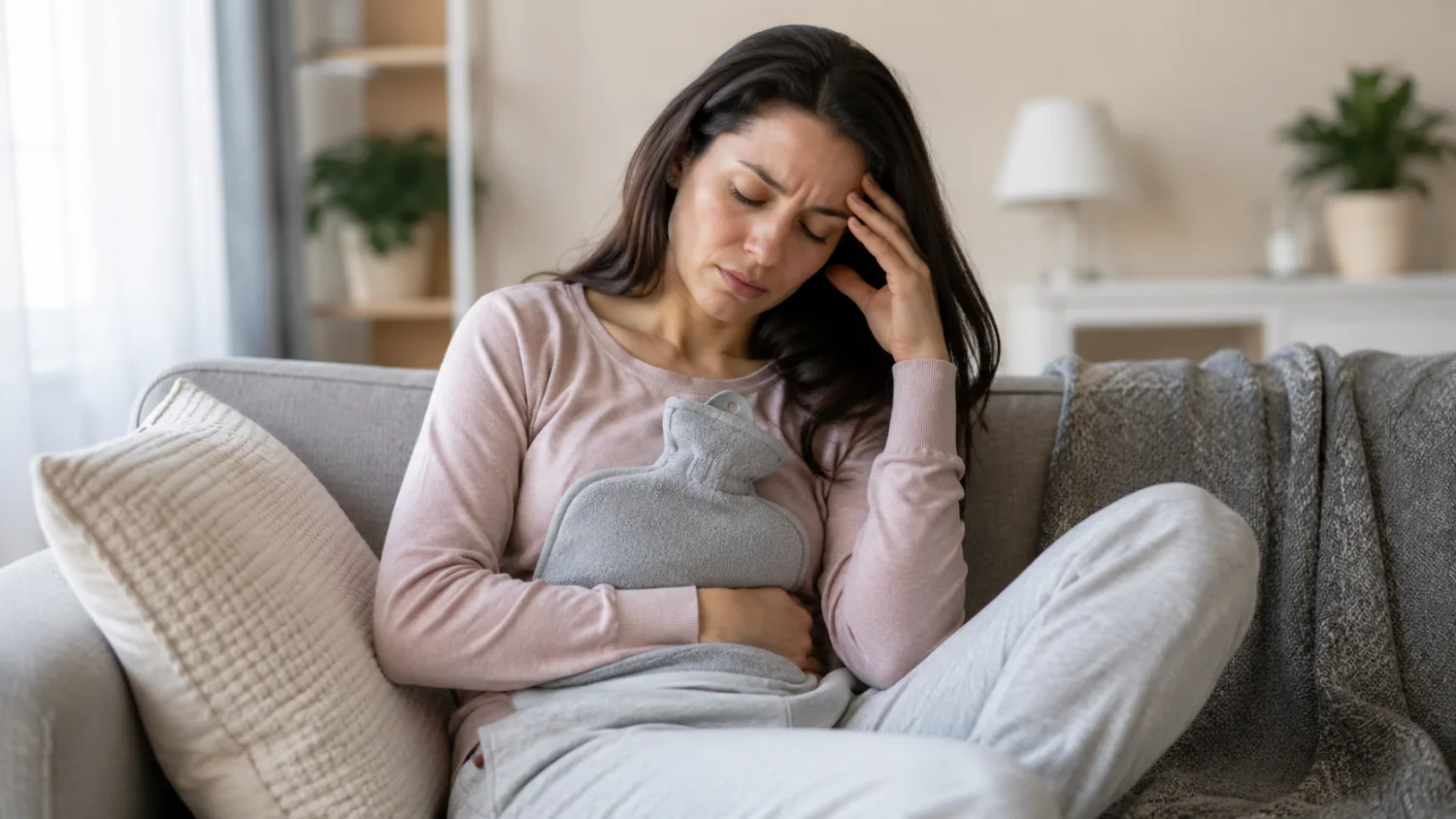
For some women, PMS feels like a few difficult days. For others, it feels as if one or two weeks of every month become harder than they should be. A woman may feel more emotional, more tearful, more anxious, more tired, or more easily overwhelmed. She may also notice bloating, tender breasts, headaches, poor sleep, cravings, or trouble concentrating.
A common example is someone who says, “About a week before my period, I stop feeling like myself.” She may become more irritable at work, less patient at home, more likely to cry, less able to focus, and then feel completely different a few days later once her period starts. That repeating pattern is classic.
Another woman may mainly notice physical symptoms rather than mood symptoms. She may feel bloated, exhausted, headache-prone, snacky, and uncomfortable in her own body for several days every month. PMS can look different from one person to another.
Common PMS symptoms
PMS can affect both the mind and body. Common symptoms include:
- mood swings
- irritability or feeling more short-tempered
- feeling low, tearful or anxious
- tiredness or low energy
- poor sleep
- difficulty concentrating
- bloating
- breast tenderness
- headaches
- food cravings or changes in appetite
- abdominal discomfort
Some women only get a couple of these. Others get a mixture of physical and emotional symptoms that make the pre-period part of the month much harder than the rest.
When does PMS happen?
PMS usually happens in the second half of the menstrual cycle, after ovulation and before the period starts. The symptoms then improve when the period begins, or very soon afterwards. The timing matters as much as the symptoms themselves.
This is why keeping a symptom diary can be so useful. If symptoms come and go randomly throughout the month, PMS may not be the full explanation. If they reliably cluster before each period and then lift again, PMS becomes much more likely.
If you want a simple NHS overview of the timing and symptoms, the NHS PMS guide is a useful starting point.
How is PMS different from PMDD?
You may also hear the term PMDD, which stands for premenstrual dysphoric disorder. PMDD is a more severe form of premenstrual symptoms, with a stronger effect on mood and daily functioning. It is not just “bad PMS”. It can feel more intense, more distressing and harder to cope with.
If premenstrual symptoms are causing severe anxiety, severe low mood, major conflict, or thoughts that feel frightening or out of character, it is important to seek medical advice rather than trying to push through alone.
The NHS also explains that PMDD can cause much more severe symptoms than PMS and needs proper medical attention, especially if symptoms feel overwhelming or unsafe.
What causes PMS?
The exact cause is not fully understood, but PMS is thought to be linked to the body’s response to the normal hormonal changes that happen during the menstrual cycle.
What matters most in practice is not chasing one perfect explanation, but recognising the pattern and working out what helps. Stress, poor sleep and existing anxiety or depression can make PMS feel harder to cope with, but they do not mean the symptoms are imaginary or “just in your head”.
Who gets PMS?
PMS can affect women at any age between puberty and menopause. Some women only notice mild changes. Others have more significant symptoms for years. Symptoms can also change over time. You may find they become more noticeable during stressful periods of life, after having children, or during the years leading up to menopause.
Some women are surprised when symptoms become more obvious in their 30s or 40s. Others have had the same monthly pattern since their teens. There is a wide range of normal when it comes to how PMS shows up.
When should you see a GP?
You should book an appointment if symptoms before your period are affecting work, relationships, sleep, exercise, confidence or mental wellbeing. It is also worth seeking help if you are not sure whether the pattern really is PMS, if symptoms are getting worse, or if low mood and anxiety are becoming hard to manage.
You do not need to wait until things become extreme. If one week or more of every month is regularly harder than it should be, that is enough reason to talk to someone.
You should also seek help sooner rather than later if symptoms are severe, if you feel very low, or if PMS is starting to affect your safety, relationships or ability to cope.
How is PMS diagnosed?
PMS is usually diagnosed from the pattern of symptoms rather than from one blood test or scan.
The most useful tool is often a symptom diary kept for at least two or three cycles. You note what symptoms happen, when they happen, how severe they are, and when they improve. This helps show whether they truly match the premenstrual part of the cycle.
A GP may also consider whether something else could be contributing, such as anxiety, depression, thyroid problems, poor sleep, perimenopause or another gynaecology issue.
What else can look like PMS?
Not every recurring pre-period problem is PMS. Sometimes symptoms are partly due to:
- anxiety or depression that gets worse before a period
- perimenopause
- thyroid problems
- poor sleep or chronic stress
- painful or heavy periods causing exhaustion and irritability
This matters because if the real issue is mainly depression, for example, it needs broader treatment than “PMS advice” alone. And if symptoms are more about pain and bleeding, another condition may be playing a bigger role.
A good rule is this: if symptoms do not clearly improve once your period starts, PMS may not be the full explanation.
How to reduce PMS symptoms
There is no one fix that works for everyone, but there are sensible first steps that help many women.
- Track the pattern. Knowing when symptoms are likely to happen can make them feel more manageable.
- Prioritise sleep. Poor sleep makes premenstrual irritability, cravings and low mood much worse.
- Keep active. Regular exercise can help mood, energy and bloating.
- Watch alcohol and excess caffeine. These can worsen anxiety, sleep and breast tenderness in some women.
- Try regular meals. Skipping meals can make premenstrual fatigue and mood changes feel more intense.
- Reduce unnecessary pressure. If you know one week of the month is harder, plan around it where possible.
These steps are not a cure, but they often make symptoms easier to understand and easier to cope with.
What treatments are available in the UK?
Treatment depends on how severe symptoms are and which symptoms matter most to you.
1. Self-care and lifestyle changes
For mild to moderate PMS, this is often the first step. Exercise, stress management, sleep and a symptom diary can all make a real difference.
2. Pain relief
If PMS comes with headaches, cramps or body aches, simple pain relief may help, depending on what is suitable for you medically.
3. Hormonal contraception
Some women find the contraceptive pill helps by stabilising hormonal fluctuations or making periods easier to manage. Others do not get on with it. This is one of those areas where treatment needs to be individual.
4. SSRIs and mood-focused treatment
If mood symptoms are significant, a GP may discuss medicines such as SSRIs. These are sometimes used for moderate to severe PMS or PMDD, especially where low mood, irritability or anxiety are prominent.
5. Talking therapies
If PMS is interacting with stress, anxiety or low mood, therapies such as CBT can be helpful. That does not mean the problem is “all psychological”. It means the emotional effects are real and worth treating properly.
For a broader NHS explanation of PMS symptoms and when to get help, see the NHS page on premenstrual syndrome.
When PMS affects relationships and work
This is one of the most overlooked parts of PMS. The symptoms themselves matter, but the knock-on effects matter too. Women often feel guilty about becoming less patient, less sociable, less productive or less emotionally steady before a period. That guilt can make things even harder.
If PMS is repeatedly affecting arguments, work performance, concentration, or how you feel about yourself, that is not something to dismiss as trivial. It is a health issue, not a personality flaw.
It can help to recognise the pattern early. Some women find it useful to avoid booking the most demanding things during the worst few days of the month where possible, or at least to build in more breathing room.
What to avoid
Some of the most common mistakes around PMS are:
- assuming all pre-period distress is “just hormones” and never discussing it
- ignoring the pattern and not tracking symptoms
- trying random supplements without understanding what is actually happening
- treating severe mood symptoms as something you simply have to tolerate
- forgetting to consider other causes if symptoms do not clearly improve once the period starts
Another common problem is minimising symptoms because they are common. Common does not mean unimportant.
How to prepare for an appointment
Before seeing a GP, it helps to write down:
- which symptoms you get
- when they start before your period
- when they improve
- how much they affect work, home or sleep
- whether mood symptoms are the main issue or physical symptoms are the main issue
- whether your periods are also heavy, painful or irregular
That kind of summary often makes the appointment much more useful. A simple cycle and symptom diary is often one of the best things you can bring.
Key takeaway
PMS is more than just feeling irritable before a period. It is a repeating pattern of physical and emotional symptoms that happen before bleeding starts and improve soon after it begins. For some women it is mild. For others it can affect daily life, work and relationships. The clearest clue is the timing, and the best first step is often to track symptoms over a few cycles.
If PMS is affecting how you feel, function or cope every month, it is worth getting help. There are treatment options, and you do not have to just put up with it.
Frequently Asked Questions
How do I know if it is really PMS?
PMS usually follows a clear pattern. Symptoms happen in the days or week before your period and then improve once your period starts, or shortly afterwards. If symptoms are present throughout the whole month, PMS may not be the full explanation.
What are the most common PMS symptoms?
Common symptoms include mood swings, irritability, feeling low, anxiety, bloating, breast tenderness, headaches, tiredness, cravings, poor sleep and difficulty concentrating. Some women mainly notice emotional symptoms, while others notice more physical symptoms.
How many days before a period does PMS usually start?
It often starts in the second half of the menstrual cycle, usually a few days to two weeks before bleeding begins. The timing can vary, but the key feature is that it improves when the period starts or soon after.
Can PMS make you feel very anxious or low?
Yes. PMS can affect mood as well as the body. Some women feel much more anxious, emotional, irritable or overwhelmed before a period. If mood symptoms are severe, it is worth speaking to a GP, especially if they are affecting work, relationships or daily life.
What is the difference between PMS and PMDD?
PMDD is a more severe form of premenstrual symptoms. It usually has a stronger effect on mood, mental wellbeing and day-to-day functioning. If premenstrual symptoms feel extreme or distressing, or you feel unlike yourself in a way that is hard to manage, get medical advice rather than assuming it is just normal PMS.
Does PMS get worse with age?
It can change over time. Some women notice symptoms become more noticeable in their 30s or 40s, especially as they get closer to perimenopause. Others find symptoms stay similar for years.
Can lifestyle changes really help PMS?
For many women, yes. Regular exercise, better sleep, stress management, more regular meals and tracking symptoms can all help make PMS easier to manage. These changes are not a guaranteed cure, but they often reduce the impact.
Should I keep a symptom diary?
Yes. A symptom diary is one of the most useful ways to understand whether symptoms really follow a premenstrual pattern. It can also help your GP decide whether PMS is the most likely explanation and which treatment might help.
When should I see a GP about PMS?
You should book an appointment if symptoms are affecting work, sleep, relationships, confidence or mental wellbeing, or if you are not sure whether PMS is really the cause. It is also worth getting help if symptoms are getting worse or feel much harder to cope with than before.
Can PMS be treated?
Yes. Treatment depends on the symptoms and how severe they are. Options may include lifestyle changes, pain relief, hormonal contraception, talking therapies and sometimes medicines for mood symptoms. The best treatment depends on what matters most in your particular case.