Attracting private residents to a care home is not the same as selling an ordinary service. Families are often making a painful, urgent and emotional decision. They may be worried about dementia, falls, hospital discharge, care home fees, safeguarding, contracts, whether money will run out, or whether their parent will be treated with kindness and dignity.
Private-pay families usually have more choice than local authority-funded placements. They may compare several homes, read CQC reports, check Google reviews, ask friends, speak to hospital staff, look at photos, study fees, visit in person and involve siblings or attorneys before deciding. They are not only buying a room. They are looking for trust.
This guide explains how care homes can attract more private residents by improving their positioning, website, local SEO, reviews, enquiry handling, tours, pricing transparency, referral relationships, reputation and family communication.
If you want the wider occupancy strategy first, read our guide to how care homes can improve occupancy. You may also find our family-facing guides useful when planning content, including how to choose a care home in the UK, care home visit questions, care home fees and care home contracts.
Understand what private residents and families are really buying
Private-pay families may ask about fees first, but price is rarely the only factor. They are trying to answer deeper questions:
- Will my parent be safe?
- Will staff be kind when nobody is watching?
- Will dementia, falls, medication and personal care be handled properly?
- Will the home call us if something changes?
- Will fees be clear and fair?
- Will my parent be lonely?
- Will the home cope if needs increase?
- Will we regret choosing this place?
Strong care home marketing answers these concerns before the family has to ask. It does not only say “luxury rooms”, “beautiful gardens” or “person-centred care”. It shows how the home keeps residents safe, known, comfortable, respected and connected.
Private-pay marketing starts with positioning
A private resident is more likely to choose a home that feels specific, confident and trustworthy. Generic marketing makes every care home sound the same.
Instead of positioning the home as simply “a warm and welcoming care home”, be clear about what makes it the right choice for particular residents.
Your positioning might focus on:
- premium residential care;
- dementia care with strong family communication;
- nursing care for complex needs;
- short-stay respite and post-hospital recovery;
- palliative and end-of-life care;
- care for couples;
- high-quality food and hospitality;
- small-home atmosphere;
- large-home facilities and activities;
- quiet rural setting;
- easy family visiting in a town or suburb;
- specialist Parkinson’s, stroke or dementia support.
Only promote strengths you can genuinely deliver. Private-pay families may have high expectations, and overpromising creates complaints, poor reviews and failed placements.
Make the website feel like a real care home, not a brochure
Many care home websites lose private enquiries because they are too vague. They use phrases such as “high-quality care”, “compassionate team” and “beautiful surroundings” without showing what families actually need to know.
A strong care home website should include:
- clear care types;
- private fee guidance;
- room types and photos;
- what is included in fees;
- what costs extra;
- CQC rating and link to the report;
- manager introduction;
- staffing and care approach;
- dementia support details;
- falls prevention approach;
- food, activities and daily life;
- family communication process;
- admission process;
- respite and short-stay information;
- frequently asked questions;
- clear enquiry buttons and phone number.
Private families usually want reassurance before they call. The more uncertainty your website removes, the more likely they are to enquire.
Create pages for each private-care need
One generic “Care Services” page is rarely enough. Families search for specific situations, especially when the decision is urgent.
Create dedicated pages such as:
- Private Residential Care in [Town]
- Private Dementia Care Home in [Town]
- Private Nursing Home in [Town]
- Respite Care in [Town]
- Care Home After Hospital Discharge in [Town]
- Palliative Care Home in [Town]
- Parkinson’s Care Home in [Town]
- Stroke Care Home in [Town]
- Care Home for Couples in [Town]
- Luxury Care Home in [Town], if this is genuinely your market
Each page should explain who the service is for, what support includes, what families often worry about, how assessment works, what fees may depend on, and how to arrange a visit.
Use local SEO to attract families at the right moment
Private-pay families often search locally. They may use phrases such as “private care home near me”, “dementia care home in [town]”, “nursing home near [hospital]”, “respite care for elderly parent” or “care home after hospital discharge”.
To improve local SEO, make sure your website includes:
- the town, county and nearby areas you serve;
- care types in page titles and headings;
- clear address and phone number;
- directions and parking information;
- nearby hospitals and local landmarks where relevant;
- structured internal links between care pages;
- unique content rather than copied group text;
- fast mobile loading;
- real images of the home;
- care home schema where appropriate.
A care home in Bath, York, Leeds, Bristol, Manchester or a small market town should not rely on generic national copy. Families want to know whether this home is suitable for their parent and convenient for relatives to visit.
Optimise your Google Business Profile
For local care home searches, Google Business Profile is often the first impression. A weak profile can lose enquiries before families reach the website.
Check that your profile has:
- correct care home name;
- accurate address;
- working phone number;
- website link;
- correct primary category;
- up-to-date opening or enquiry hours;
- recent exterior photos;
- bedroom photos;
- dining and lounge photos;
- garden photos;
- team photos where appropriate;
- regular posts or updates;
- questions and answers;
- professional responses to reviews.
Photos should be real, warm and recent. Avoid relying only on stock photography. Private families want to see where their relative may live.
Show fees clearly enough to build trust
Private residents need to understand money early. If your website hides pricing completely, some families will assume the home is unaffordable or worry that fees will be unclear later.
You do not always need to publish one fixed weekly fee, because care home fees often depend on room type, care needs, nursing needs and assessment. But you should explain:
- starting private weekly fee or typical range;
- what is included;
- what costs extra;
- whether nursing care costs more;
- whether respite is priced differently;
- how deposits work;
- notice periods;
- fee review process;
- what happens during hospital admission;
- what happens if care needs increase;
- whether local authority funding or top-ups are accepted.
Clear pricing does not weaken your position. It helps serious families understand whether the home is realistic before they enquire.
Make contracts less intimidating
Private-pay families are often nervous about contracts. They may worry about signing as guarantor, sudden fee increases, top-up fees, notice periods, deposits, charges after death, or what happens if money runs out.
To improve trust, provide a plain-English contract summary covering:
- who is responsible for payment;
- weekly fee;
- what is included;
- extra charges;
- deposit terms;
- notice period;
- fee increases;
- hospital admission charges;
- temporary absence charges;
- death and room-clearance terms;
- what happens if funding changes;
- complaints process.
Helpful family-facing links can also reduce anxiety, such as care home fees, self-funding a care home, top-up fees and what happens when money runs out in a care home.
Turn CQC information into a trust signal
Families often check CQC before or after visiting. If your home has a strong rating, make it visible on your website and enquiry materials. If your rating is not where you want it to be, do not hide it. Families will find it. Instead, explain what has changed and what improvement work is underway.
A transparent improvement note can cover:
- what the concern was;
- what action has been taken;
- who is responsible for improvement;
- how progress is monitored;
- what families can expect now;
- how feedback is handled.
Private-pay families do not expect perfection. They expect honesty, safety and visible leadership.
Improve review generation ethically
Reviews are one of the strongest marketing tools for care homes. Families trust other families, especially when reviews mention kindness, communication, dignity, cleanliness, food, activities and end-of-life care.
Care homes can improve reviews ethically by:
- asking satisfied families for honest feedback;
- making review links easy to access;
- asking after positive moments, not only at admission;
- not pressuring residents or families;
- not offering rewards for positive reviews;
- responding professionally to all reviews;
- learning from negative feedback;
- using testimonials only with consent.
A good review request might say:
“Thank you for your kind feedback about the team. If you feel comfortable, an honest online review can help other families who are making a difficult care decision. There is no pressure, and we welcome genuine feedback.”
Respond to negative reviews with care
A negative review does not have to destroy trust. A defensive or careless response can.
When responding to negative reviews:
- stay calm;
- do not share confidential resident details;
- acknowledge the concern;
- invite direct contact;
- avoid arguing online;
- avoid blaming families;
- show that concerns are taken seriously;
- review whether the complaint reveals a real service issue.
A suitable response might be:
“We are sorry to read your concerns. We take feedback seriously and would welcome the opportunity to discuss this privately so we can understand what happened and respond appropriately. Please contact the home manager directly.”
Use photos that show warmth, not just empty rooms
Private residents and families need to imagine life in the home. Empty room photos are useful, but they are not enough.
Your image set should include:
- front exterior;
- entrance and reception;
- bedrooms;
- ensuite bathrooms;
- lounges;
- dining areas;
- gardens;
- activity areas;
- food and dining moments;
- staff portraits;
- lifestyle images with consent;
- seasonal events and community life.
Images should be bright, natural and honest. A private family can often sense when a home is using generic stock images instead of showing real daily life.
Create a short video tour
Video is especially useful for private-pay families who live far away, have siblings in different parts of the country, or are making a decision during hospital discharge.
A simple video tour can show:
- entrance;
- manager welcome;
- example bedroom;
- dining room;
- lounge;
- garden;
- activities;
- how visits work;
- how to arrange assessment.
The tone should be calm and reassuring, not overly corporate. Families want to feel the atmosphere of the home.
Improve the first phone call
Private enquiries can be lost in the first 60 seconds. Families may be anxious, guilty, rushed or unsure what to ask. If the call feels cold or transactional, they may move on.
Train staff to:
- answer warmly;
- ask about the person, not only the room;
- listen before talking about fees;
- explain whether the home may be suitable;
- be honest about availability;
- book a tour or assessment quickly;
- send follow-up information;
- record the enquiry properly.
A better opening might be:
“I’m sorry your family is having to look at care options. I can help you understand whether we may be suitable. Could I ask a few questions about your mum’s needs and what has led you to consider a care home?”
Track every private enquiry
You cannot improve private resident marketing if you do not know what happens to enquiries.
Track:
- date of enquiry;
- source;
- care need;
- funding type;
- urgency;
- preferred room type;
- location of family;
- whether tour was booked;
- whether tour happened;
- whether assessment happened;
- outcome;
- reason lost;
- follow-up date;
- staff member responsible.
After a month or two, patterns become obvious. You may find that Google brings enquiries but tours fail, or that tours are strong but follow-up is weak, or that pricing is unclear and families disappear.
Make tours more consultative
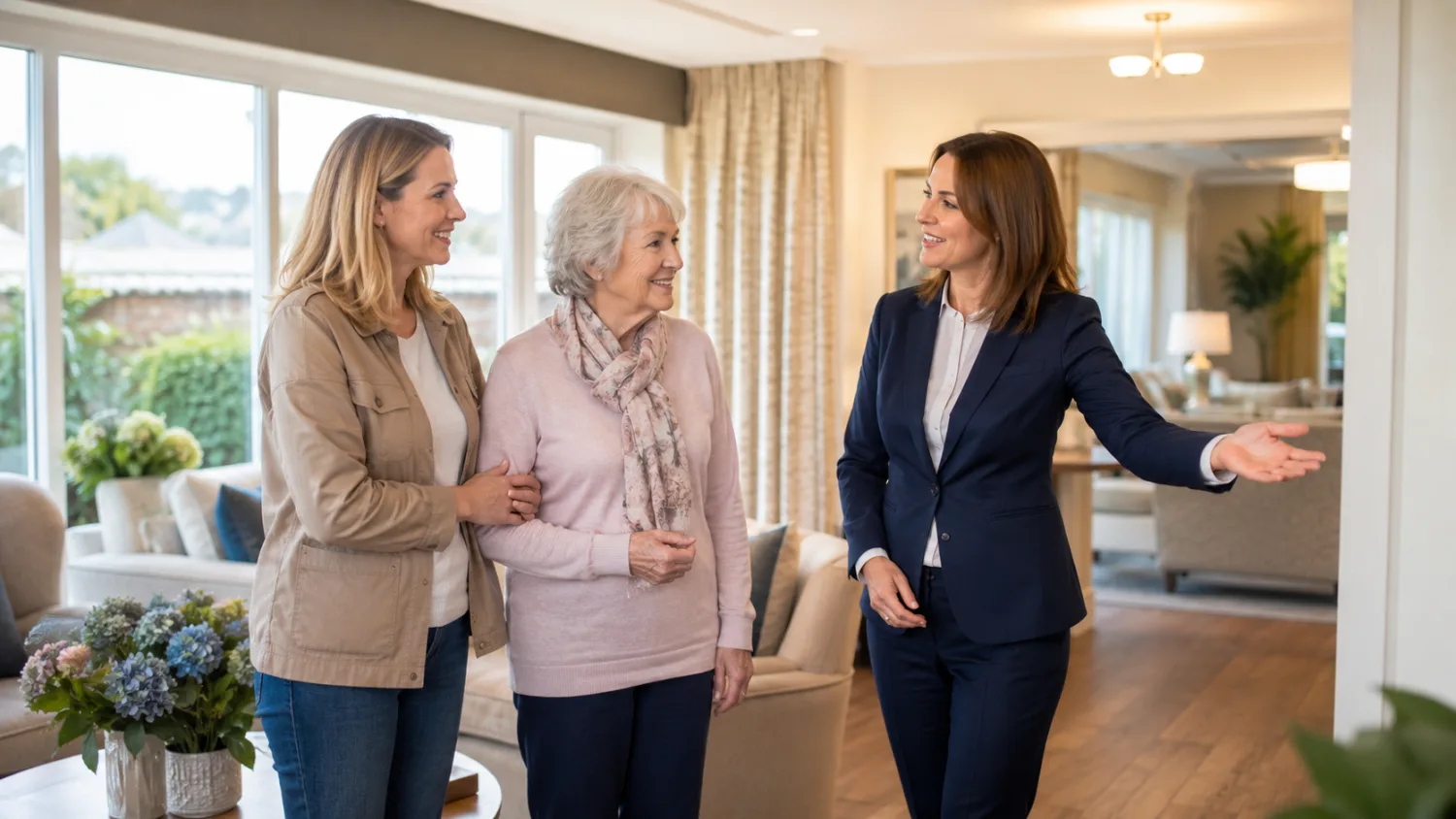
A care home tour is not just a building walk-through. It is a trust-building conversation.
A strong tour should include:
- private discussion of the resident’s needs;
- clear explanation of care types;
- viewing a suitable room;
- showing communal areas;
- explaining daily life;
- discussing meals and activities;
- introducing key staff where appropriate;
- talking about medication, falls, dementia or nursing needs;
- explaining fees and contract basics;
- answering difficult questions openly;
- giving written next steps;
- following up after the visit.
A tour should leave the family thinking: “They understood our situation.” That is far more powerful than simply showing a nice room.
Answer private-pay objections before they stop the enquiry
Private families often hesitate because of fear, guilt or uncertainty. Your marketing should address these concerns directly.
Common objections include:
- “It feels too soon for a care home.”
- “Mum says she does not want to move.”
- “We are worried about selling the house.”
- “We do not understand the fees.”
- “What if Dad’s dementia gets worse?”
- “What if money runs out?”
- “Can we visit whenever we want?”
- “Can you cope with falls?”
- “Will you call us if something happens?”
Good website FAQs, brochures and tour scripts should answer these gently and clearly.
Build family-facing content that attracts private leads
Families often search for advice before searching for a specific care home. Educational content can attract them earlier and build trust.
Useful topics include:
- How to Choose a Care Home in [Town]
- Private Care Home Fees in [Town]
- Dementia Care Home Checklist
- What to Ask When Visiting a Care Home
- Respite Care After Hospital Discharge
- What Happens When a Parent Refuses Care?
- Care Home Contracts Explained
- How Care Homes Prevent Falls
- How Families Are Updated in a Care Home
- What to Bring When Moving Into a Care Home
Useful content helps SEO and gives families confidence that the home understands their situation.
Create downloadable checklists
Private-pay families often compare several homes. A helpful downloadable checklist can capture leads and position your home as supportive rather than pushy.
Possible downloads include:
- Care Home Visit Checklist
- Care Home Fees Questions to Ask
- Dementia Care Home Checklist
- Hospital Discharge to Care Home Checklist
- Moving Into a Care Home: What to Bring
- Questions to Ask Before Signing a Care Home Contract
Ask only for minimal information if using a form. A family in crisis may not want to complete a long marketing form.
Use email follow-up carefully
Not every family is ready after one call or visit. Some need to speak with siblings, attorneys, social workers or hospital teams. A thoughtful follow-up can convert later.
After a tour, send:
- thank-you message;
- summary of discussed needs;
- room availability;
- fee information;
- next steps;
- link to CQC report;
- brochure or admissions pack;
- offer of a second visit;
- named contact details.
Follow up without pressure. Families should feel supported, not chased.
Build relationships with local professional referrers
Private residents often come through professional influence as well as family search. This may include hospital discharge staff, social workers, GPs, district nurses, dementia advisers, solicitors and financial advisers.
Build relationships with:
- hospital discharge teams;
- private hospitals;
- GP practices;
- district nurses;
- community matrons;
- dementia support services;
- Age UK local groups;
- Parkinson’s and stroke support groups;
- later-life solicitors;
- financial advisers;
- funeral directors and palliative care networks, where appropriate;
- local churches and community groups.
The message should not be “please send us residents”. It should be “here is what we can safely support, how quickly we assess, who to contact and when we may be suitable.”
Make respite care a private-pay entry point
Respite care can be a strong route to private long-term admissions. A family may start with a short stay after hospital discharge, during carer illness or while deciding whether permanent care is needed.
To market respite well:
- create a dedicated respite care page;
- explain who respite is for;
- publish minimum stay information;
- explain fees clearly;
- describe assessment process;
- show what is included;
- explain whether respite can become permanent;
- follow up before discharge.
A good respite experience can reassure a family and lead to permanent admission without hard selling.
Use social media to show daily life
Social media should help families feel the atmosphere of the home. It should not only show promotional graphics or recruitment posts.
Good social media content includes:
- activities;
- garden moments;
- seasonal events;
- resident artwork with consent;
- staff appreciation;
- food and dining;
- community visits;
- birthday celebrations with consent;
- open days;
- family feedback;
- behind-the-scenes improvements.
Always protect privacy and dignity. Consent should be clear, recorded and respected.
Run open days that educate, not just sell
Private-pay families may not attend an event called “come and see our care home”, but they may attend something useful.
Good open day themes include:
- Understanding Care Home Fees
- How to Choose a Dementia Care Home
- Care After Hospital Discharge
- Falls Prevention for Older Adults
- Respite Care for Family Carers
- Meet the Manager Coffee Morning
- Planning Later-Life Care
Invite local professionals where appropriate. Keep the tone helpful and calm rather than sales-heavy.
Improve staff stability because families notice it
Private-pay families are sensitive to staffing. They notice rushed staff, agency reliance, low morale and lack of continuity. Staff stability is also central to care quality and reputation.
To support marketing, care homes should be able to talk confidently about:
- staff training;
- staff continuity;
- senior staff availability;
- dementia training;
- nursing leadership if relevant;
- supervision and support;
- family communication;
- how concerns are escalated.
Families choose people as much as premises.
Show how safety is managed
Private-pay families are often worried about falls, medication, safeguarding, pressure sores, nutrition and night-time care. Marketing should not avoid these subjects. It should explain how the home manages them.
Useful pages or sections include:
- how we assess falls risk;
- how medication is managed;
- how care plans are reviewed;
- how families are contacted after incidents;
- how safeguarding concerns are handled;
- how nutrition and hydration are supported;
- how dementia-related distress is supported;
- how end-of-life care is planned.
You can also link families to educational content such as falls in care homes, safeguarding adults in care homes and care homes for people with challenging behaviour.
Differentiate private rooms and hospitality
Private residents may care more about room quality, privacy, food, visiting, gardens and lifestyle. This does not mean care should become hotel-style marketing only. But comfort matters.
Highlight:
- room sizes;
- ensuite bathrooms;
- personalisation of rooms;
- garden access;
- quiet lounges;
- family visiting spaces;
- freshly prepared meals;
- choice at mealtimes;
- hairdressing or chiropody access;
- activities and outings;
- Wi-Fi and TV arrangements;
- laundry arrangements;
- pets or visiting pets policy.
Private residents still need excellent care first. But the full living experience can influence choice.
Make the admissions process simple
Families are more likely to proceed when they understand what happens next.
Explain the private admission process clearly:
- Initial enquiry.
- Conversation about care needs.
- Visit or virtual tour.
- Care needs assessment.
- Fee confirmation.
- Contract review.
- Room choice.
- Move-in planning.
- First-week settling-in review.
- Ongoing care plan review.
A clear process reduces anxiety and prevents families from feeling rushed.
Use paid advertising only after the basics are strong
Google Ads, Facebook Ads and directory advertising can generate enquiries, but they will not fix a weak website, poor phone handling or unclear pricing.
Before paid advertising, make sure you have:
- clear care pages;
- strong photos;
- working phone tracking;
- fast enquiry response;
- clear fees information;
- Google Business Profile updated;
- review strategy;
- tour process;
- follow-up process;
- conversion tracking.
Track cost per enquiry, cost per tour and cost per admission. Clicks and impressions are not enough.
Build landing pages for paid campaigns
Sending paid traffic to a generic homepage can waste budget. Create landing pages matched to search intent.
Examples include:
- Private Dementia Care in [Town]
- Respite Care Available in [Town]
- Private Residential Care Home in [Town]
- Nursing Care Home with Private Rooms in [Town]
- Care Home After Hospital Discharge in [Town]
Each landing page should include:
- clear headline;
- who the service is for;
- photos;
- trust signals;
- CQC rating link;
- fee guidance;
- reviews or testimonials;
- simple enquiry form;
- phone number;
- next steps.
Use directories without depending on them completely
Care directories can help generate enquiries, but your own website, Google profile and local reputation should not be ignored.
For directory profiles, keep updated:
- care types;
- private fee indication;
- room availability if supported;
- photos;
- CQC rating;
- reviews;
- short description;
- contact details;
- specialist support;
- response times.
Make sure the message on directories matches the message on your website and phone calls.
Improve private-pay conversion with better follow-up
Many private enquiries are not lost because the family disliked the home. They are lost because no one followed up at the right time.
Create follow-up stages:
- same-day response to enquiry;
- tour confirmation;
- thank-you email after tour;
- care needs summary;
- fee and room information;
- second visit invitation;
- check-in after hospital update;
- final availability update.
Keep follow-up human. Do not send cold sales sequences for an emotional care decision.
Create a private-resident admissions pack
A professional admissions pack can help families compare the home and involve relatives who could not attend the visit.
Include:
- welcome letter from the manager;
- care types summary;
- private fees guide;
- what is included and excluded;
- sample menu;
- sample activities calendar;
- room information;
- visiting information;
- care planning process;
- family communication process;
- CQC report link;
- contract summary;
- moving-in checklist;
- named contact details.
This feels more professional than simply handing over a glossy brochure.
Measure private-pay marketing properly
Care homes should track private-pay marketing by actual admissions, not vanity metrics.
Track:
- private enquiries per month;
- source of private enquiries;
- phone vs website form enquiries;
- response time;
- tour booking rate;
- tour attendance rate;
- tour-to-admission rate;
- average private weekly fee;
- lost enquiry reasons;
- Google profile views and calls;
- review rating trend;
- website conversion rate;
- paid advertising cost per admission.
If you do not know where private residents come from, you cannot scale what works.
Common mistakes in care home marketing
Using generic language
“Compassionate care in a homely setting” could describe almost every care home. Private families need specific reasons to trust you.
Hiding fees completely
Private-pay families may leave if they cannot understand whether the home is broadly affordable.
Poor enquiry handling
A slow, rushed or vague first response can lose a high-value private admission.
Weak photos
Dark, empty or outdated photos make the home feel less appealing, even if care quality is good.
Ignoring reviews
Families read reviews. Not asking for feedback and not responding professionally leaves reputation unmanaged.
Overpromising specialist care
Marketing dementia, nursing or behaviour support without the right staffing and systems creates risk.
Not training staff for visits
Families judge the whole atmosphere, not only the person giving the tour.
Advertising before fixing conversion
Paid campaigns waste money if the website, phone handling and tour process are weak.
90-day private-resident marketing plan
Days 1–30: fix trust basics
- Audit website pages.
- Update Google Business Profile.
- Add recent photos.
- Check CQC link and rating visibility.
- Create private fees explanation.
- Review enquiry handling.
- Track all enquiries.
- Prepare tour checklist.
- Identify top private-care services to promote.
Days 31–60: improve conversion
- Create care-type landing pages.
- Write FAQs for private families.
- Create admissions pack.
- Train staff for tours.
- Create follow-up templates.
- Ask satisfied families for honest reviews.
- Improve fee and contract explanations.
- Contact local professional referrers.
Days 61–90: increase demand
- Publish family advice content.
- Create a downloadable checklist.
- Run a local open day.
- Test a small Google Ads campaign.
- Improve directory profiles.
- Build local community partnerships.
- Review enquiry-to-admission data.
- Adjust marketing based on results.
Final thoughts
Attracting more private residents is not only about getting more leads. It is about becoming easier to find, easier to trust and easier to choose.
Private-pay families want reassurance. They want clear fees, honest contracts, visible quality, kind staff, strong communication, good reviews, helpful information and confidence that their parent will be safe and respected.
The best care home marketing combines strong care quality, staff stability, transparent pricing, local SEO, useful content, real photos, ethical reviews, thoughtful enquiry handling, excellent tours and professional follow-up. When these parts work together, private enquiries become more consistent and admissions become easier to convert.
For related reading, see how care homes can improve occupancy, care home fees, care home contracts and what a good care home looks like.
Frequently asked questions
How can care homes attract more private residents?
Care homes can attract more private residents by improving local SEO, Google Business Profile, reviews, website content, fee transparency, enquiry handling, tours, professional referrals, photography, family communication and reputation.
What do private-pay families look for in a care home?
They usually look for safety, kindness, clear fees, good communication, CQC information, reviews, suitable rooms, dementia or nursing capability, visiting convenience, food, activities and confidence that the home can meet future needs.
Should a care home publish fees online?
Publishing a starting fee or clear fee range can build trust and reduce unsuitable enquiries. If fees depend on assessment, explain what affects the final cost and what is included or extra.
How important are Google reviews for care homes?
Google reviews are very important for local trust. Families often read reviews before calling. Care homes should ask for honest reviews ethically and respond professionally to positive and negative feedback.
Does CQC rating affect private enquiries?
Yes. Many private families check CQC reports before choosing. A strong rating supports trust. A weaker rating should be handled transparently with clear evidence of improvement.
What pages should a care home website have?
A care home website should include care types, fees guidance, room photos, CQC rating, reviews, admission process, respite care, dementia care, nursing care, activities, food, visiting, FAQs and clear enquiry forms.
How can care homes improve local SEO?
Use local town and county terms, create care-type landing pages, update Google Business Profile, add real photos, collect reviews, improve page titles, add directions and publish useful local care content.
Are paid ads useful for care homes?
Paid ads can work, especially for local searches, but only if the website, phone handling, pricing clarity, photos, reviews and tour process are strong. Otherwise, paid leads may be wasted.
How can care homes convert more tours into admissions?
Make tours consultative, not rushed. Ask about care needs, answer family fears, explain fees, show relevant areas, introduce staff, provide written next steps and follow up after the visit.
What should be in a private admissions pack?
It should include care types, fees, what is included, room details, sample menu, activities, visiting, care planning, family communication, CQC link, contract summary, moving-in checklist and contact details.
How can care homes build referral relationships?
Build relationships with hospital discharge teams, GPs, district nurses, dementia advisers, social workers, solicitors, financial advisers and local charities. Make referral information clear and respond quickly.
Can respite care help attract private residents?
Yes. Respite care can introduce families to the home and may lead to permanent admission if the experience is positive. Clear respite pricing and assessment processes are important.
What are common care home marketing mistakes?
Common mistakes include generic copy, unclear fees, weak photos, poor enquiry response, no follow-up, unmanaged reviews, hiding CQC concerns, overpromising specialist care and advertising before fixing conversion.
How should care homes respond to negative reviews?
Respond calmly, protect confidentiality, acknowledge the concern, invite direct contact and avoid arguing online. Negative feedback should also be reviewed internally for learning.
What is the best marketing strategy for private care homes?
The best strategy combines strong care quality, clear positioning, local SEO, transparent fees, reviews, professional photos, family-focused content, excellent enquiry handling, strong tours and consistent follow-up.