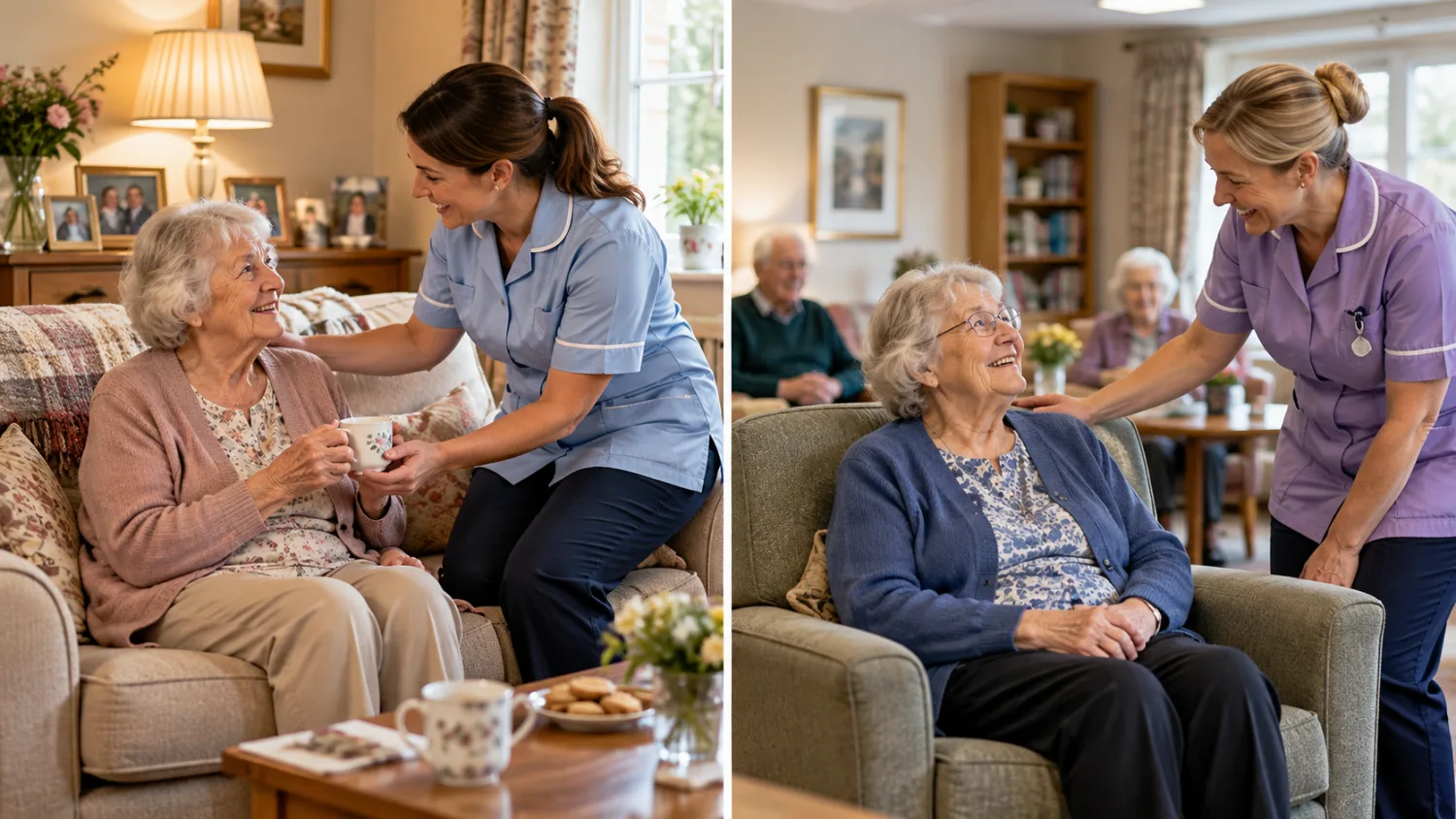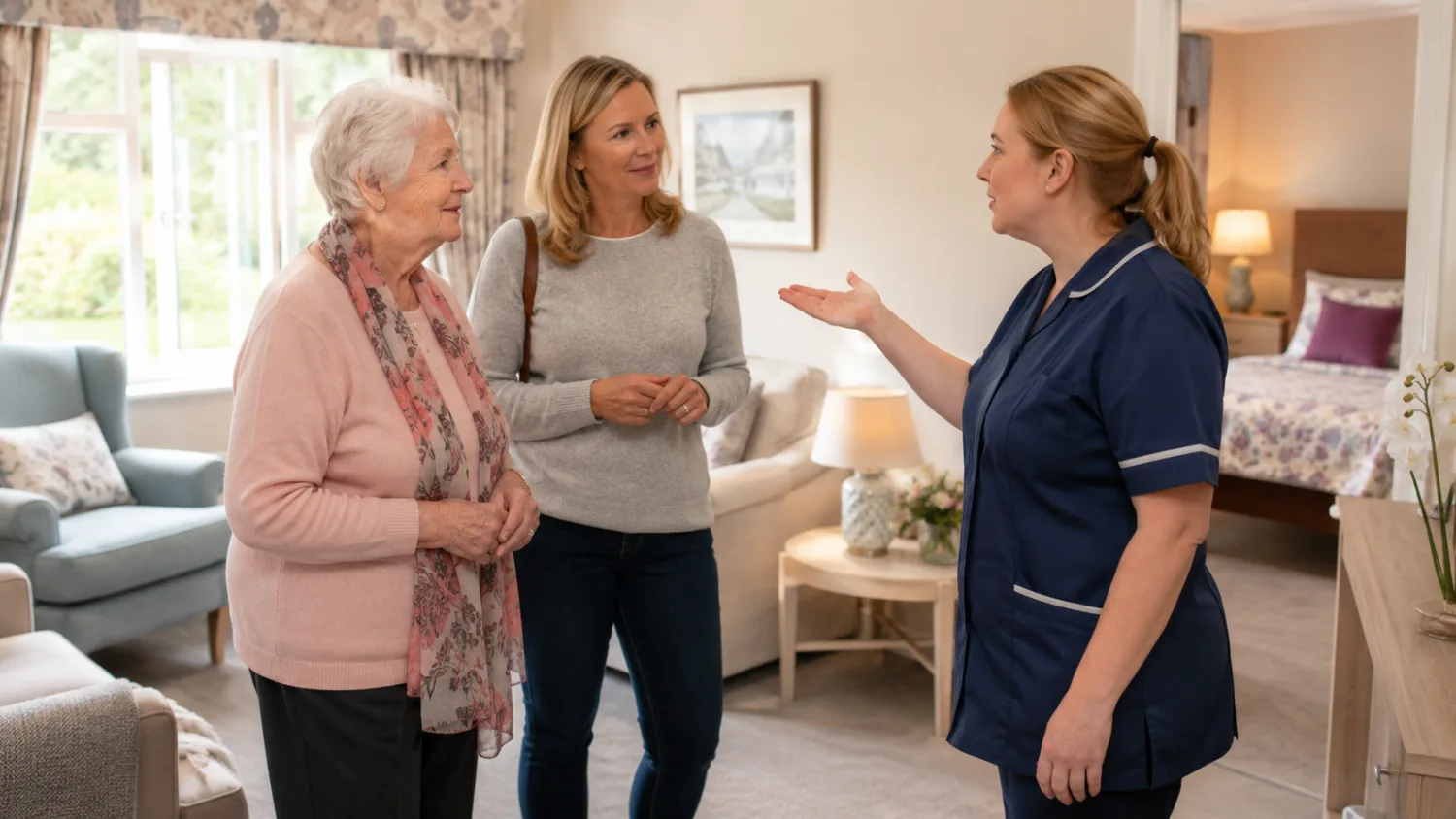
Visiting a care home can feel overwhelming. You may be trying to stay practical while also dealing with guilt, worry, pressure from hospital discharge teams, rising care needs, family disagreement or the sadness of seeing someone you love become less independent.
A good visit should help you answer one central question: could this person live safely, comfortably and with dignity here?
This guide gives you a detailed care home visit checklist for the UK. It explains what to ask, what to observe, what good answers sound like, and which warning signs should make you pause before agreeing to a placement.
If you are at an earlier stage and want a broader guide to the whole decision-making process, read our full guide on how to choose a care home in the UK. This article focuses specifically on the visit itself: the questions, observations and practical checks that help you compare homes properly.
Before you visit: know what you are looking for
Before booking visits, take a little time to write down the person’s current needs, future risks and personal preferences. This makes the visit much more useful. Without this, it is easy to be distracted by nice décor, a friendly tour or a well-presented brochure.
Think about whether the person needs:
- help with washing, dressing and toileting
- support with medicines
- supervision because of memory problems or confusion
- support with eating and drinking
- help with mobility, transfers or falls prevention
- nursing care
- dementia care
- end-of-life or palliative care
- short-term respite or permanent care
- support after a hospital stay
Also think about the person behind the care needs. Do they like company or quiet? Do they enjoy gardens, music, faith activities, television, reading, animals, crafts or conversation? Are they anxious around noise? Do they need routine? Would they be happier close to family, or near a familiar area?
Choosing a care home is not just about finding a service that can “manage” someone. It is about finding somewhere they can still have a life.
Shortlist homes before arranging visits
Before visiting, check the home’s website, location, care types, fees if published, availability and latest inspection information. In England, you can search for care home inspection reports through the Care Quality Commission care home search. CQC reports can help you understand whether a service has been rated as Outstanding, Good, Requires Improvement or Inadequate, and what inspectors found under areas such as safety, care, responsiveness and leadership.
Do not rely only on the headline rating. Read the report itself. Look for comments about staffing, medication, safeguarding, food, dignity, management and how the home responds to concerns. If the report is old, ask what has changed since the inspection.
The NHS also advises considering location, cost, services, activities and visiting arrangements when choosing a care home. You can read its overview of care homes and things to consider.
Book a visit, but ask if you can return at another time
Most first visits are arranged in advance. That is normal. The manager or admissions lead will want time to show you around and answer questions. However, a planned visit only shows part of the picture.
If you are seriously considering a home, ask whether you can visit again at a different time of day. Lunchtime, late afternoon, evenings and weekends can feel different from a weekday morning tour. A second visit can show you how the home works when it is busy, how staff respond under pressure, and whether the atmosphere still feels calm and respectful.
If the home seems uncomfortable with a second visit, ask why. There may be reasonable infection control or privacy reasons, but a good home should usually welcome serious families who want to make an informed decision.
First impressions: what to notice when you arrive
Your first few minutes in a care home can tell you a lot. Try not to judge by luxury or decoration alone. Some excellent homes are modest. Some expensive homes can still have poor care. What matters most is whether the home feels safe, respectful, clean, calm and lived-in.
As you arrive, notice:
- Are you welcomed politely?
- Is the entrance secure without feeling harsh or institutional?
- Does the home smell clean and fresh?
- Are staff visible?
- Are residents sitting comfortably?
- Are residents spoken to with kindness?
- Are communal areas clean and well maintained?
- Does the atmosphere feel calm, rushed, cheerful, silent or chaotic?
- Do residents appear appropriately dressed and cared for?
- Are call bells ringing for a long time?
Be fair in your judgement. Care homes are real places, and real life includes distress, illness, noise and busy moments. One resident being upset does not mean a home is poor. What matters is how staff respond. Do they notice? Do they reassure? Do they protect the person’s dignity?
Question 1: What type of care do you provide?
Start with the basics. Make sure the home provides the type of care the person actually needs.
Ask:
- Do you provide residential care, nursing care, dementia care or respite care?
- Do you have registered nurses on site?
- Can you support people with advanced dementia?
- Can you support people who need hoists or two carers for transfers?
- Can you support people with swallowing difficulties?
- Can you support people with diabetes, Parkinson’s, stroke-related needs or pressure sore risks?
- What needs would you not be able to manage?
A good home should be honest about its limits. Be cautious if the answer to every question is simply “yes” without any detail. Safe care depends on matching the person’s needs to the home’s skills, staffing and environment.
If you are unsure about the difference between care types, read our guide to care homes, nursing homes and residential homes.
Question 2: How do you assess whether someone is suitable for the home?
A responsible care home should assess a person before accepting them. This is especially important if the person has dementia, complex health needs, mobility problems, behaviour that challenges, frequent falls, pressure sores, continence needs or a recent hospital admission.
Ask:
- Who carries out the pre-admission assessment?
- Will you assess the person at home, in hospital or where they currently live?
- Will you speak to family members?
- Will you speak to hospital staff, social workers, GPs or community nurses?
- How do you decide whether you can meet someone’s needs?
- What happens if needs change after admission?
Be wary if a home is willing to accept someone without asking detailed questions. That can suggest the priority is filling a room rather than making a safe, suitable placement.
Question 3: What happens if care needs increase?
Many people move into care because their needs are changing. It is important to know whether the home can support the person not only now, but in the months and years ahead.
Ask what would happen if the person:
- became less mobile
- needed a hoist
- developed more advanced dementia
- needed more help with eating and drinking
- started falling more often
- needed nursing care
- needed end-of-life care
- became distressed or unsettled at night
Some homes can support residents through major changes. Others may eventually say they can no longer meet the person’s needs. That is not always wrong, but you should know the likelihood before moving someone in. A later move can be distressing, especially for someone with dementia.
Question 4: How many staff are on duty during the day and night?
Staffing affects almost everything: call bell response times, personal care, mealtimes, activities, supervision, falls prevention and emotional support. A home may have excellent policies, but if staff are stretched too thinly, care can become rushed.
Ask:
- How many care staff are usually on duty in the morning?
- How many staff are on duty in the afternoon?
- How many staff are on duty at night?
- If this is a nursing home, is a registered nurse on site 24 hours a day?
- How do you decide staffing levels?
- Do staffing levels change when residents’ needs increase?
- How often do you use agency staff?
- What happens if staff call in sick?
There is no single perfect staff-to-resident ratio because it depends on residents’ needs. But the manager should be able to explain the staffing model clearly. Vague or defensive answers are a concern.
Question 5: What training do staff receive?
Training helps staff provide safer, kinder and more confident care. Ask not only what training is offered, but how the home checks that staff apply it in daily practice.
Ask about training in:
- safeguarding adults
- moving and handling
- medication support
- dementia care
- infection prevention and control
- falls prevention
- nutrition and hydration
- mental capacity and consent
- end-of-life care
- communication and dignity
If the person has specific needs, ask about relevant training. For example, dementia care, Parkinson’s medication timing, diabetes support, stroke rehabilitation, pressure care, catheter care or swallowing difficulties.
Question 6: How long has the manager been in post?
The registered manager has a major influence on the home. Strong leadership often shows in staff confidence, communication, cleanliness, family involvement and how quickly problems are dealt with.
Ask:
- How long has the manager worked here?
- How often is the manager present in the home?
- Who is in charge when the manager is away?
- How are staff supervised?
- How does the manager monitor care quality?
- What has the home improved recently?
A good manager should be able to talk honestly about strengths and areas for improvement. Be cautious if the manager seems detached from residents, cannot answer practical questions, or speaks about the home only in marketing language.
Question 7: How do you create and review care plans?
Care plans should be personal, practical and regularly updated. They should not simply sit in a file. They should guide how staff support the resident every day.
Ask:
- When is the care plan created?
- Can family members contribute to it?
- How do you learn about the resident’s life history and preferences?
- How often is the care plan reviewed?
- How do staff know when care needs change?
- How are risks such as falls, choking, pressure sores or weight loss recorded?
- Can relatives attend care review meetings?
Good care planning should include the person’s routines, likes, dislikes, communication style, mobility, health needs, food preferences, sleep habits, religious or cultural needs and what helps them feel safe.
Question 8: How do you support dignity and personal choice?
Care is not only about tasks. The way personal care is given matters deeply. Residents should be treated as adults with preferences, privacy and dignity.
Ask:
- Can residents choose when to get up and go to bed?
- Can residents choose what to wear?
- Are residents supported by male or female carers if they prefer?
- How is privacy protected during washing, dressing and toileting?
- Can residents have baths or showers according to preference?
- How do staff support people who are embarrassed or anxious about personal care?
During your visit, observe how staff speak to residents. Kindness, patience and respect are often more revealing than any policy document.
Question 9: How are medicines managed?
Medication safety is a major issue in care homes. Many residents take several medicines, and some need medicines at precise times.
Ask:
- Who gives medicines?
- How are staff trained in medication administration?
- How are medication errors recorded and investigated?
- How are medicines reviewed with GPs or pharmacists?
- How do you manage pain relief?
- How do you support residents who refuse medication?
- How are controlled drugs stored and recorded?
- How are time-critical medicines handled?
If the person has Parkinson’s, epilepsy, diabetes, heart disease, blood-thinning medication, insulin or complex pain medication, ask very specific questions. A confident home should be able to explain exactly how those medicines are managed.
Question 10: How do you prevent and respond to falls?
Falls are common in older people and can lead to loss of confidence, fractures and hospital admission. A good care home cannot prevent every fall, but it should assess risk and respond properly.
Ask:
- How do you assess falls risk?
- What equipment do you use to reduce risk?
- How do you support people who walk around at night?
- How are walking frames, wheelchairs or hoists managed?
- What happens after a resident falls?
- When do you call an ambulance?
- How quickly are families informed?
- Do you involve physiotherapists or occupational therapists?
Look around the environment. Are floors clear? Is lighting good? Are handrails available? Are residents wearing suitable footwear? Are staff attentive when residents stand or walk?
Question 11: How do you manage food, drink and weight loss?
Meals are a major part of daily life. Good food supports health, mood, strength and social connection. Poor nutrition can worsen frailty and increase the risk of illness.
Ask:
- Can I see a sample menu?
- Are meals cooked on site?
- Can residents choose between options?
- Are snacks and drinks available between meals?
- How do you support people who need help eating?
- How do you monitor weight loss?
- Can you support soft, pureed or texture-modified diets?
- Do you involve dietitians or speech and language therapists?
- Can families join residents for meals?
If you can, visit during a meal. Notice whether the food looks appetising, whether residents are rushed, whether staff offer help discreetly, and whether the atmosphere feels calm.
Question 12: How do you support people with dementia?
If the person has dementia, you need to ask more than whether the home “accepts dementia residents”. Dementia care requires skill, patience and understanding.
Ask:
- What dementia training do staff receive?
- How do you support residents who become distressed?
- How do you respond if someone walks around repeatedly?
- How do you manage night-time confusion?
- How do you support someone who resists washing or dressing?
- How do you learn about a resident’s life story?
- Are activities adapted for people with dementia?
- Is the environment dementia-friendly?
- Can you support advanced dementia?
The NHS guide to dementia and care homes recommends spending time talking to managers, staff and residents where possible. You may also find our guide to dementia care homes in the UK helpful.
Question 13: What activities and social opportunities are available?
Activities should not be treated as decoration for the brochure. They are part of wellbeing. Good activities help residents feel connected, stimulated and recognised as individuals.
Ask:
- Is there an activities coordinator?
- Can I see this week’s activity schedule?
- Do activities actually happen as planned?
- Are activities adapted for dementia, frailty or sensory loss?
- Do residents go outside or into the local community?
- Are religious, cultural or seasonal events supported?
- Can residents continue hobbies?
- How do you support people who prefer quiet time?
Look for evidence of real life: music, conversation, photos, newspapers, gardening, crafts, visits, celebrations, pets, quiet rooms and outdoor spaces. A silent lounge with a television on all day may not be enough.
Question 14: What are the visiting arrangements?
Family involvement can make a huge difference to a resident’s wellbeing. A good care home should welcome relatives and communicate clearly.
Ask:
- What are the usual visiting hours?
- Can families visit in the evening or at weekends?
- Can children visit?
- Can pets visit?
- Can relatives join meals or activities?
- Can families visit privately in the resident’s room?
- How do you support video calls?
- How do you update relatives who live far away?
Ask how the home handles visiting during infection outbreaks. Infection control is important, but families should still expect compassion, communication and proportionate decisions.
Question 15: How do you communicate with families?
Good communication is one of the clearest signs of a well-run care home. Families should not have to chase repeatedly for basic updates, especially after falls, illness, medication changes or hospital visits.
Ask:
- Who is the main contact for families?
- How often are families updated?
- How quickly do you contact relatives after an incident?
- Do you hold care review meetings?
- Can relatives speak to senior staff when needed?
- How do you handle concerns raised by families?
Notice how the home communicates with you before and during the visit. If they are disorganised, vague or dismissive now, that may continue after admission.
Question 16: What healthcare support is available?
Residents often need regular healthcare input. Ask how this is arranged.
Questions include:
- Which GP practice supports the home?
- Can residents keep their existing GP?
- How are GP appointments arranged?
- Do dentists, opticians, chiropodists or physiotherapists visit?
- How are hospital appointments managed?
- Can family members attend appointments?
- How do staff recognise when someone is becoming unwell?
- When would you call 111, a GP or 999?
A good home should have clear systems for noticing deterioration, getting medical advice and updating relatives.
Question 17: Can residents personalise their rooms?
A care home bedroom should feel like the resident’s own space, not just an allocated room. Personal belongings can be especially important for people with dementia or anxiety.
Ask:
- Can residents bring furniture?
- Can they bring photos, pictures, ornaments and bedding?
- Is there space for a favourite chair?
- Can the room be decorated?
- Is there a television or phone point?
- Is Wi-Fi available?
- How are valuables and personal belongings protected?
Check whether the room is warm, bright, clean and easy to move around in. Make sure the call bell is easy to reach from the bed and chair.
Question 18: Is the environment safe and accessible?
The building should support independence, not create unnecessary risks.
Look for:
- clear corridors
- good lighting
- handrails
- accessible toilets
- safe bathrooms
- lifts if needed
- secure outdoor space
- clear signage
- comfortable communal rooms
- quiet areas
For someone with dementia, ask whether the home uses signs, memory boxes, familiar objects, colour contrast or other dementia-friendly design features to help residents find their way around.
Question 19: What is included in the weekly fee?
Care home fees can be confusing. Always ask for written information. Do not rely on verbal estimates.
Ask:
- What is the weekly fee?
- Does the fee depend on care needs?
- Is nursing care charged differently?
- Is dementia care charged differently?
- What is included in the fee?
- What costs extra?
- Are hairdressing, chiropody, toiletries, newspapers, trips or activities extra?
- Is transport to appointments included?
- How often do fees increase?
- How much notice is given before a fee rise?
For more detail, read our guide to care home fees. Age UK also has a useful external guide to paying for a care home.
Question 20: Do you accept local authority or NHS-funded residents?
Funding arrangements can affect which homes are realistic options. Some people pay for their own care. Others receive local authority support after a financial assessment. A smaller number may qualify for NHS Continuing Healthcare if they have significant ongoing health needs.
Ask:
- Do you accept local authority-funded residents?
- Do you accept residents funded by NHS Continuing Healthcare?
- Would a third-party top-up fee be needed?
- What happens if a self-funder’s money runs down?
- Do you help families understand funding options?
You may find our guides to social care funding in the UK and NHS Continuing Healthcare useful before making a decision.
Question 21: Can I see the contract before deciding?
Never leave contract questions until moving-in day. Ask for a sample contract or admission agreement before you commit.
Check:
- Who signs the contract?
- Is anyone being asked to act as guarantor?
- What is the deposit?
- What is the notice period?
- What happens if the resident goes into hospital?
- What happens after death?
- How are fee increases handled?
- Can the home ask the resident to leave?
- What services are excluded?
- How are complaints handled?
Be careful if you are asked to sign as a guarantor. That may make you personally responsible for fees. If you are unsure, get advice before signing.
Question 22: How do you handle complaints?
Every care home should have a clear complaints process. More importantly, it should have a culture that listens rather than becomes defensive.
Ask:
- Can I see your complaints policy?
- Who handles complaints?
- How quickly are complaints acknowledged?
- How are complaints investigated?
- How do you tell families what has changed after a complaint?
- How do you learn from mistakes?
A good answer should be calm and open. A poor answer may sound defensive, vague or dismissive of families who raise concerns.
Question 23: How do you protect residents from abuse or neglect?
Safeguarding is not a comfortable topic, but it is essential. A good home should welcome questions about safety.
Ask:
- What safeguarding training do staff receive?
- How can residents raise concerns?
- How can relatives raise concerns?
- How are safeguarding concerns reported?
- How do you protect people who cannot speak up for themselves?
- How do you monitor staff practice?
If the person has dementia, communication difficulties, mental health needs or limited family support, safeguarding systems are especially important.
Question 24: Can you support end-of-life care?
Many families avoid this question because it feels too painful. But asking early can prevent distress later. Some care homes are very experienced in end-of-life care. Others may need more external support.
Ask:
- Do you support residents at the end of life?
- How do you involve families?
- Do you work with GPs, district nurses or palliative care teams?
- Can families stay with the resident near the end of life?
- How are pain, comfort and dignity managed?
- Do you discuss advance care plans?
A good home should answer this sensitively and confidently.
Question 25: Would you be happy for your own relative to live here?
This is not a formal inspection question, but it can be revealing when asked gently. You might say to the manager or senior carer: “What makes you proud of this home?” or “What would you want families to notice here?”
The best answers often focus on staff relationships, residents’ personalities, dignity, family trust and the little details of daily life. If the answer is only about décor, room sizes or marketing claims, keep asking deeper questions.
What to observe during the visit
Questions matter, but observation matters just as much. During the tour, quietly watch how the home works.
Observe residents
- Do residents seem comfortable?
- Are they clean and appropriately dressed?
- Are people engaged, resting peacefully or left unattended?
- Are residents treated as individuals?
- Do people appear frightened, bored, distressed or ignored?
Observe staff
- Do staff smile and make eye contact?
- Do they speak respectfully?
- Do they know residents by name?
- Do they explain before helping someone?
- Do they look rushed or calm?
- Do they respond quickly to residents?
Observe the environment
- Is the home clean?
- Are unpleasant smells persistent or temporary?
- Is the temperature comfortable?
- Are rooms bright and well maintained?
- Is there safe outdoor space?
- Are corridors clear?
Observe the culture
- Does the home feel warm and human?
- Are relatives welcomed?
- Does the manager seem visible?
- Are residents spoken about with respect?
- Do staff seem proud of the home?
Warning signs during a care home visit
No care home is perfect, but some warning signs should make you slow down, ask more questions or consider other options.
- You are pressured to make a quick decision.
- The home avoids questions about staffing or fees.
- The home accepts the person without a proper assessment.
- Staff seem dismissive, rushed or unhappy.
- Residents are ignored or spoken to disrespectfully.
- Call bells ring for a long time without response.
- There are strong persistent unpleasant smells.
- The manager is not available and no senior person can answer questions.
- Answers about medication, falls or safeguarding are vague.
- The home cannot explain poor inspection findings.
- The contract or fees are unclear.
- Families are treated as a nuisance rather than partners.
Good signs during a care home visit
Positive signs are often simple and human.
- Residents are greeted by name.
- Staff appear calm, kind and attentive.
- The manager knows residents and staff well.
- Questions are welcomed rather than avoided.
- Fees are explained clearly in writing.
- The home is honest about what it can and cannot manage.
- Residents can personalise rooms.
- Mealtimes feel dignified and unhurried.
- Activities are meaningful, not just listed on a board.
- Families are involved in care planning.
- The home feels safe without feeling cold or restrictive.
Should you take the person with you?
If it is safe and practical, involving the person who may move into the care home is usually best. Even if they cannot manage every detail of the decision, their feelings matter.
They may respond to the atmosphere, staff, room, garden, noise level or other residents. They may say what they like or dislike. If they have dementia, their body language may tell you something important. Do they seem calm, interested, anxious or withdrawn?
If they cannot visit, try to bring their preferences into the decision. Take photos if the home allows it. Ask what would matter most to them. Consider whether the home can support their routines, personality and dignity.
What to take with you on a care home visit
Bring:
- a notebook or printed checklist
- a list of the person’s care needs
- a list of medicines, if relevant
- details of mobility aids or equipment used
- questions from family members
- details of funding or local authority involvement, if known
- your phone, if you want to take notes or photos with permission
After the visit, write down your impressions quickly. Homes can blur together, especially if you visit several in one week.
How to compare care homes after visiting
After each visit, score the home from 1 to 5 in these areas:
- ability to meet care needs
- staff kindness and confidence
- manager openness
- cleanliness and safety
- dementia or nursing expertise, if relevant
- food and mealtime support
- activities and quality of life
- family communication
- fees and contract clarity
- location and visiting practicality
Do not choose purely by total score. Some categories matter more than others. For someone with dementia, staff skill and atmosphere may matter more than room size. For someone with complex nursing needs, clinical capability may matter more than activities. For someone who depends heavily on family visits, location may be crucial.
Questions to ask yourself after the visit
Before making a decision, ask yourself:
- Did I feel the person would be safe here?
- Did staff seem kind when they were not directly selling the home?
- Did the manager answer questions clearly?
- Did the home understand the person’s specific needs?
- Were fees and extras explained properly?
- Would I feel comfortable raising a concern here?
- Would the person’s daily life have comfort, routine and meaning?
- Can this home support the person if needs increase?
- Would family and friends be able to stay involved?
If the answer to several of these is no, keep looking if you can.
Final care home visit checklist
Use this shorter checklist when you are actually at the home.
Before the visit
- Check the latest CQC report.
- Confirm the home provides the right type of care.
- Ask about current availability.
- Prepare a list of the person’s care needs.
- Prepare questions about fees and funding.
During the visit
- Observe the atmosphere.
- Watch how staff speak to residents.
- Look at bedrooms, bathrooms and communal spaces.
- Ask about staffing levels.
- Ask about care planning.
- Ask about medication and falls.
- Ask about dementia care if relevant.
- Ask about food, activities and visiting.
- Ask for written fees.
- Ask to see a sample contract.
After the visit
- Write down your impressions.
- Compare the home with others.
- Read the contract carefully.
- Ask follow-up questions.
- Do not rush unless the situation is genuinely urgent.
Final thoughts
A care home visit is not about finding perfection. It is about finding a place where the person can be safe, respected, understood and supported as an individual.
Ask practical questions, but also pay attention to feeling and atmosphere. Look beyond the brochure. Watch the staff. Notice the residents. Read the inspection report. Understand the fees. Ask what happens when things go wrong. A good home will not be offended by careful questions. It will understand why they matter.
If you need help with the wider decision, start with our guide to how to choose a care home in the UK. You may also find our articles on care home fees, dementia care homes and signs it may be time for a care home useful.
Frequently asked questions
What should I ask when visiting a care home?
Ask about the type of care provided, staffing levels, staff training, care planning, medication, falls prevention, dementia support, food, activities, visiting, fees, contracts, complaints and what happens if the person’s needs increase. Also ask how the home assesses whether it can safely care for someone before admission.
How long should a care home visit take?
A useful first visit usually takes at least 45 minutes to an hour. You need enough time to see bedrooms, communal areas, bathrooms and outdoor space, and to ask detailed questions. If you feel rushed, ask for a follow-up conversation or second visit.
Should I visit more than one care home?
Yes, if possible. Visiting two or three homes helps you compare atmosphere, staff, management, rooms, fees and care approach. In urgent situations this may be difficult, but comparison usually leads to a more confident decision.
Should I take my parent or relative to the care home visit?
If it is safe and practical, yes. The person’s views, comfort and reactions matter. If they cannot visit, try to involve them in other ways, such as discussing preferences, showing photos where allowed, or choosing personal priorities before you go.
How do I know if a care home is good?
Good signs include kind staff, respectful communication, clean and comfortable surroundings, clear answers, strong management, personalised care plans, meaningful activities, good food, transparent fees and a willingness to involve families. The home should also be honest about what it can and cannot manage.
What are red flags when visiting a care home?
Red flags include pressure to decide quickly, unclear fees, poor smells, residents being ignored, staff seeming rushed or dismissive, vague answers about medication or safeguarding, long call bell waits, lack of proper assessment, and a manager who cannot explain inspection findings or complaints procedures.
Should I trust online care home reviews?
Online reviews can be helpful, but they should not be your only source of information. Look for patterns across several reviews rather than relying on one very positive or negative comment. Combine reviews with a visit, the CQC report, written fee information and your own observations.
Can I visit a care home without an appointment?
Some homes may allow this, but many prefer appointments so a manager or senior staff member is available. For a first visit, booking is usually sensible. If you are seriously considering a home, ask whether you can return at a different time of day.
What should I look for in a dementia care home visit?
Look for staff who understand dementia, a calm environment, clear signage, safe walking areas, meaningful activities, patient communication and personalised care. Ask how the home responds to distress, night-time confusion, personal care resistance and changes in behaviour.
Should I ask about care home fees during the visit?
Yes. Ask for the weekly fee, what is included, what costs extra, how often fees increase, whether a deposit is required, what happens during hospital stays, and what notice period applies. Always ask for written fee information before agreeing to a placement.
What documents should I ask for after visiting a care home?
Ask for written fee information, a sample contract, the complaints policy, the latest inspection report, information about what is included in the service, and any admission or assessment paperwork. If the person has complex needs, ask how the care plan would be created.
How quickly can someone move into a care home?
This depends on room availability, funding, assessment and the person’s needs. Some urgent placements can happen quickly, especially after hospital discharge, but the home should still assess whether it can safely meet the person’s needs before admission.
What if the care home looks good but something feels wrong?
Take that feeling seriously, but try to identify why. Was communication poor? Did staff seem rushed? Were residents ignored? Were answers vague? If you are unsure, arrange a second visit, ask follow-up questions or compare with another home before deciding.
Can a care home refuse to accept someone?
Yes. A care home should only accept someone if it can safely meet their needs. Refusal may happen if the person needs nursing care the home does not provide, has complex dementia or behavioural needs, or requires equipment or staffing the home cannot safely offer.
Is the cheapest care home a bad choice?
Not necessarily. Cost does not always equal quality. Some lower-cost homes provide warm, safe and personalised care, while some expensive homes may not be the right fit. Compare care quality, staffing, management, safety, atmosphere and transparency, not just price.