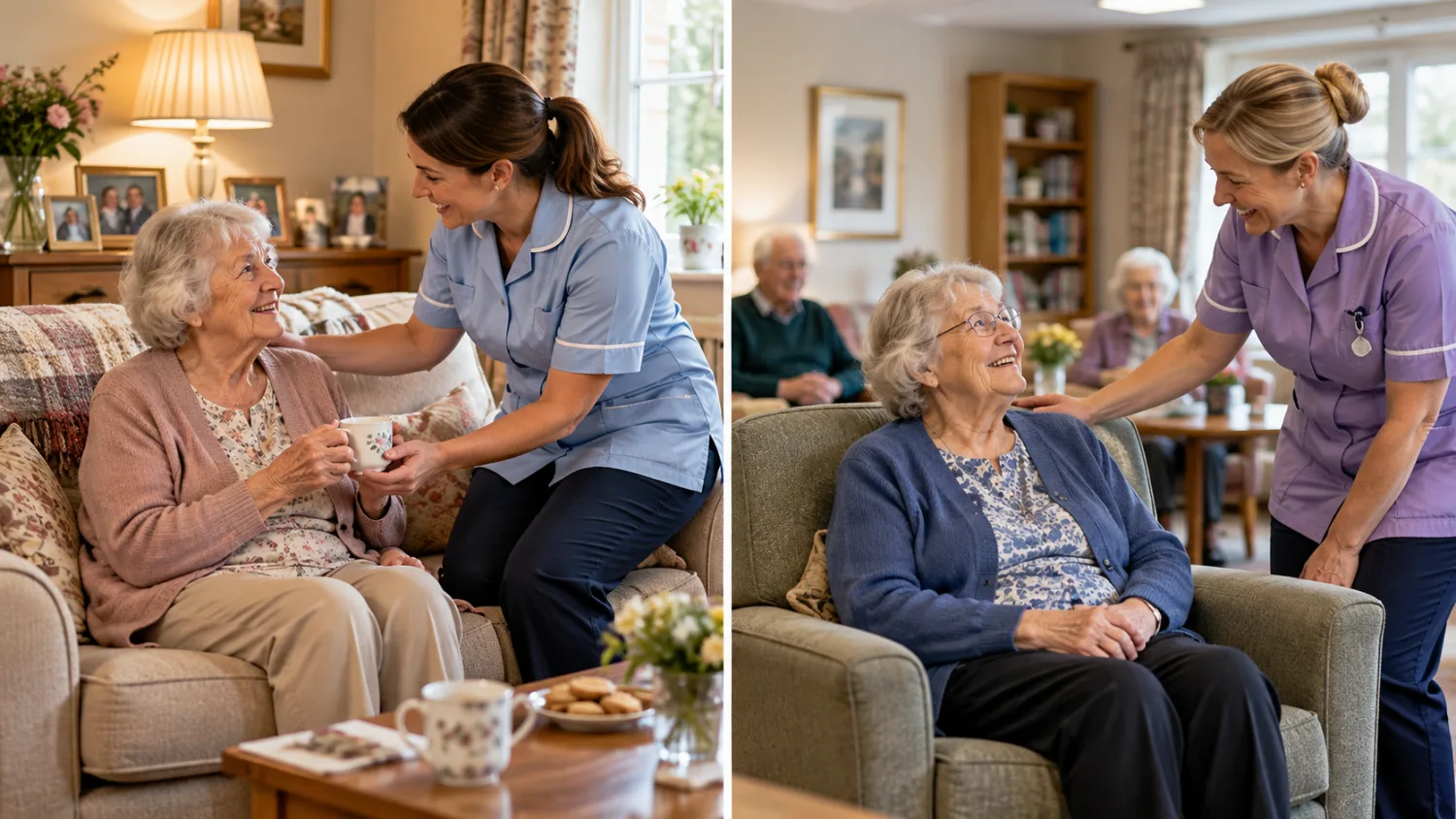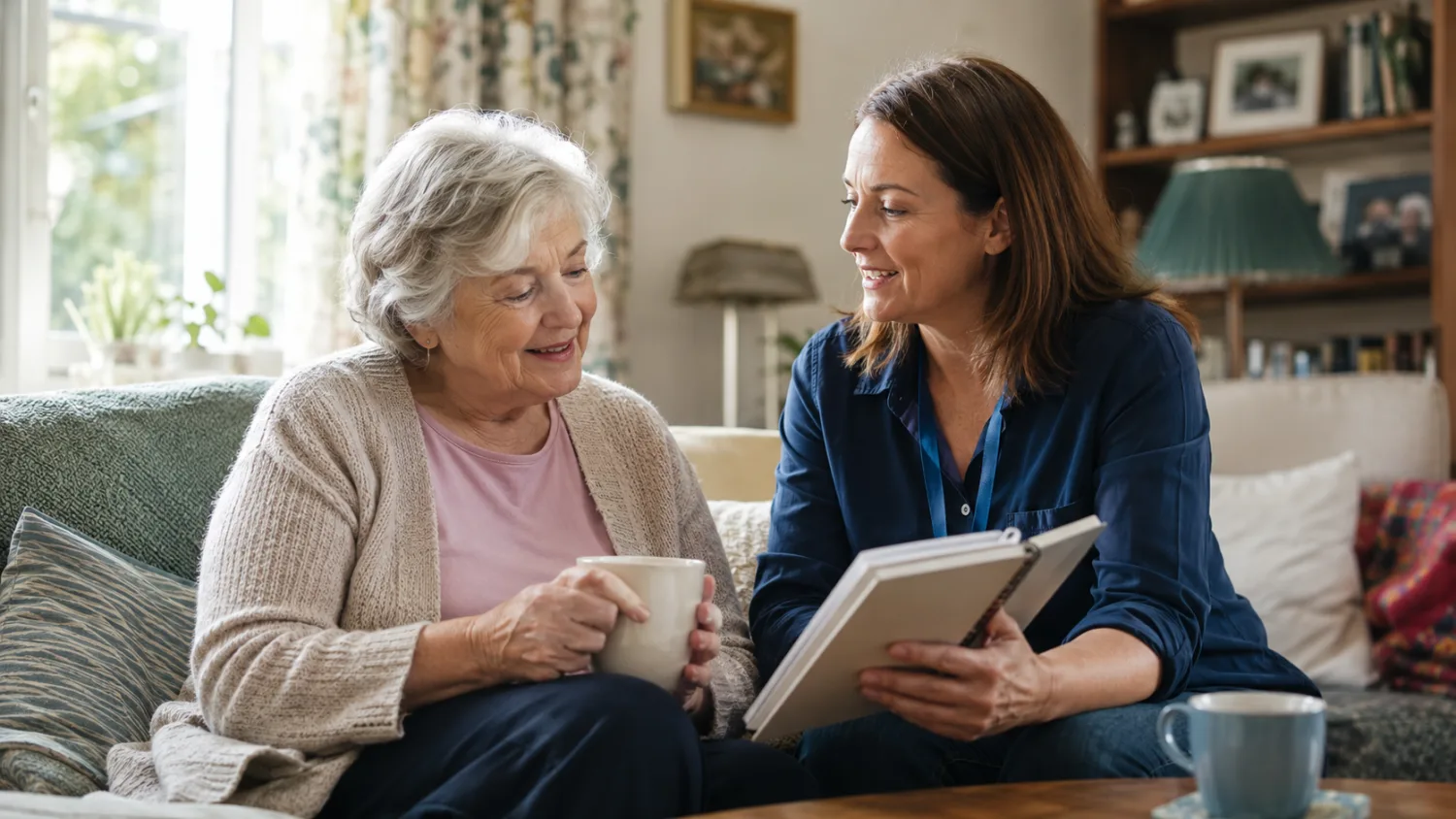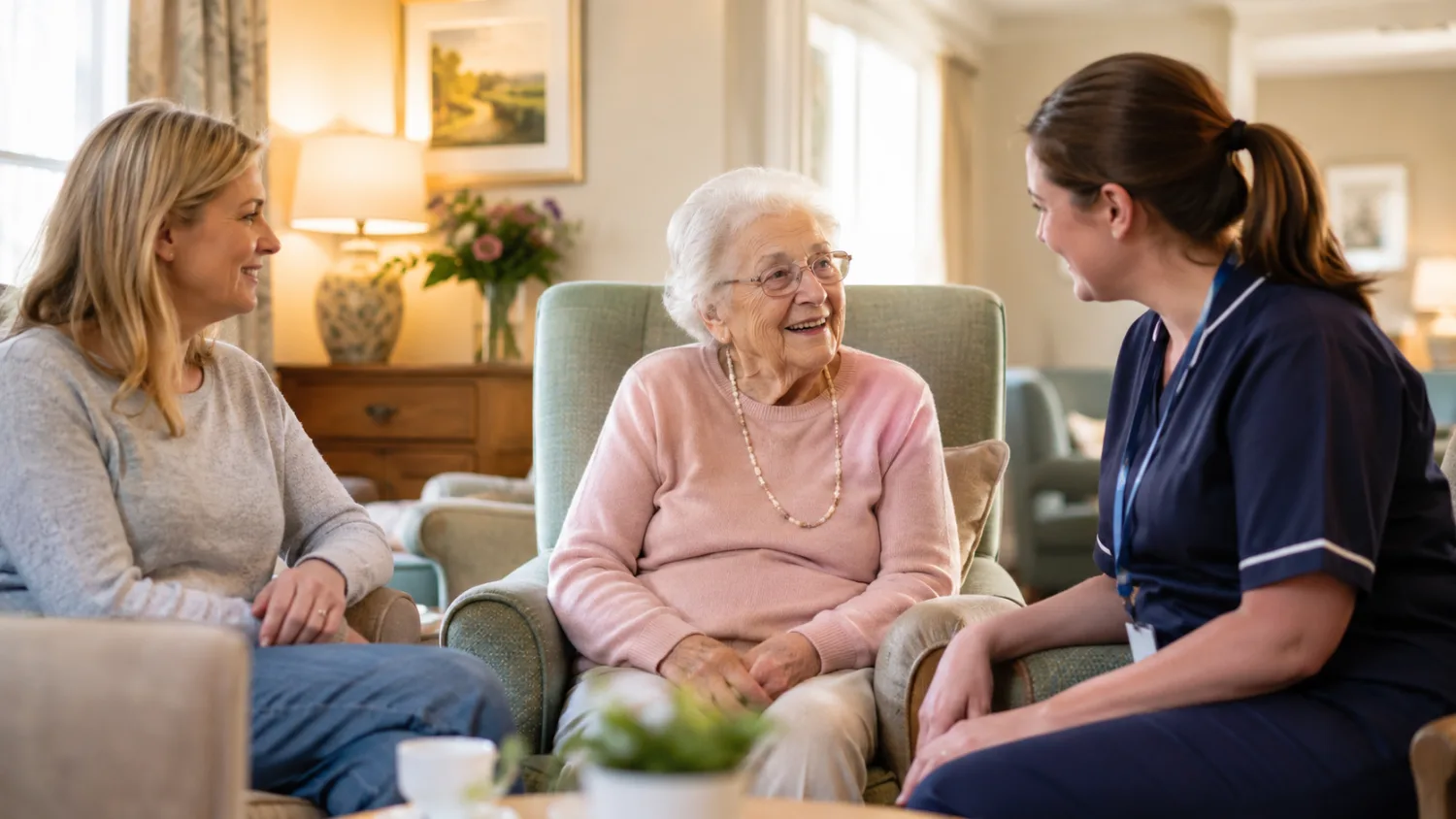
A good care home is not always the newest building, the most expensive option or the one with the glossiest brochure. It is not simply a place that looks clean on a tour or has attractive furniture in the lounge. A good care home is a place where people are safe, known, respected and supported to live as fully as possible.
For families, this can be hard to judge. When you visit a care home, you may be shown bedrooms, menus, activity boards and gardens. These things matter, but they are only part of the picture. The real quality of a care home is often found in smaller details: how staff speak to residents, how quickly they notice discomfort, whether residents look relaxed, whether families are listened to, and whether the manager can explain how care is kept safe.
This guide explains what a good care home should look, feel and sound like. It is designed to help families recognise quality, ask better questions and look beyond surface appearances.
If you are also worried about warning signs, read our guide to care home red flags families should not ignore. If you are actively comparing homes, our care home visit checklist can help you prepare for visits.
A good care home feels safe, but not institutional
Safety is the foundation of good care. Residents should be protected from avoidable harm, supported with medication, helped to move safely, monitored for health changes and treated with dignity. But a good care home should not feel like a hospital ward or a locked institution unless there is a clear clinical or safety reason for certain restrictions.
The best care homes balance safety with comfort and independence. They have secure entrances, clear risk assessments and trained staff, but they still feel warm, human and homely.
When you walk in, look for signs that the home is both safe and lived-in:
- residents moving around safely where possible
- staff nearby without hovering unnecessarily
- clear corridors without clutter or trip hazards
- good lighting
- handrails and accessible toilets
- comfortable seating
- secure outdoor spaces
- clean communal areas
- bedrooms that can be personalised
- a calm atmosphere rather than a chaotic one
A good home should not remove all choice in the name of safety. Residents should still be able to decide what to wear, where to sit, when to join activities, what to eat where possible, and how they spend their day.
Residents are treated as people, not tasks
This is one of the clearest signs of a good care home. Staff should not treat residents as a list of jobs to complete. They should know them as individuals.
In a good home, staff know more than a resident’s room number, diagnosis or care plan. They know whether someone likes tea weak or strong, whether they prefer a quiet morning, what music calms them, whether they enjoy talking about their garden, whether they need reassurance before personal care, and what makes them smile.
You may notice staff:
- using residents’ names naturally
- speaking at eye level
- asking permission before helping
- explaining what they are doing
- offering choices
- noticing when someone looks uncomfortable
- responding kindly to repeated questions
- protecting privacy during personal care
- talking about residents respectfully
Good care is not just efficient. It is personal. A resident should not feel like they are being processed through a routine. They should feel recognised.
The atmosphere is calm, warm and respectful
A care home does not need to be silent. Laughter, music, conversation, staff movement and activity can all be positive signs. But the atmosphere should feel controlled and respectful, not tense or chaotic.
During a visit, pause and listen. What do you hear? Are staff speaking kindly? Are residents calling out without response? Is the television dominating the room? Are people chatting? Are staff laughing with residents in a natural way? Does the home feel alive?
A good care home may have busy moments, but it should not feel permanently rushed. Staff should not seem irritated by residents’ needs. Residents should not be left distressed without comfort. Family members should not feel like intruders.
Atmosphere can be difficult to measure, but families often sense it quickly. A home that feels kind, steady and attentive is usually showing you something important about its culture.
The manager is visible, honest and involved
Leadership has a huge effect on care quality. A good care home usually has a manager who is visible, approachable and actively involved in the life of the home.
The manager does not need to know every detail at every moment, but they should understand the residents, staff team, current challenges and improvement priorities. They should be able to answer questions clearly and honestly.
Good signs include:
- the manager knows residents by name
- staff seem comfortable approaching the manager
- families know who to contact
- questions are welcomed, not avoided
- inspection findings are discussed openly
- complaints are taken seriously
- the home can explain what it is improving
- there is a clear senior person in charge when the manager is away
Ask the manager what they are proud of and what they are working to improve. A good answer should feel specific. Be cautious if the response sounds like a brochure rather than a real understanding of the home.
Staff seem supported, not exhausted
Residents are more likely to receive good care when staff are trained, supervised and supported. A care home can have a beautiful building, but if staff are overstretched or unhappy, quality can suffer.
During your visit, notice whether staff seem calm and confident. Are they rushing from one task to another, or do they have time to speak to residents properly? Do they appear to know what they are doing? Do they seem proud of the home?
Ask about:
- day and night staffing levels
- staff turnover
- use of agency staff
- training
- supervision
- how new staff are introduced
- how staff learn residents’ preferences
- what happens when residents’ needs increase
No care home can promise that every staff member will be perfect every day. But a good home should have enough staff, clear supervision, ongoing training and a culture where staff are encouraged to do the right thing.
Care is personalised, not one-size-fits-all
A good care home does not expect every resident to fit the same routine. It adapts care around the person wherever possible.
Personalised care means the home understands:
- how the person likes to be addressed
- what time they prefer to wake up
- whether they like company or quiet
- what foods they enjoy
- how they communicate pain or discomfort
- what helps them feel calm
- their cultural, religious or language needs
- their previous work, hobbies and family life
- their fears and dislikes
- what dignity means to them
Ask how the home creates care plans. Can families contribute? Are life histories recorded? How often are care plans reviewed? How do staff know when someone’s needs or preferences change?
A good care plan is not just paperwork for inspectors. It should shape daily care.
Residents have real choices in daily life
Choice is easy to promise and harder to deliver. A good care home offers meaningful choices, not just token ones.
Residents should have some say in:
- when they get up
- what they wear
- what they eat where possible
- whether they join activities
- where they spend time
- how their room is arranged
- when they see visitors
- how personal care is provided
Of course, choice may need to be balanced with safety, staffing and health needs. But the attitude matters. A good home asks, “How can we help this person live the way they prefer?” not “How can we make everyone fit our routine?”
Residents look clean, comfortable and appropriately dressed
Personal appearance is not about vanity. It is about dignity and wellbeing. In a good care home, residents should usually look clean, comfortable and dressed in a way that suits them.
Look for:
- clean clothing
- hair brushed or styled according to preference
- glasses and hearing aids in place where needed
- comfortable footwear
- clothing suitable for the temperature
- people sitting comfortably with proper support
- blankets, cushions or pressure-relieving equipment where needed
Do not expect every resident to look formal or perfectly tidy all day. This is their home. But repeated signs of poor hygiene, dirty clothing, discomfort or lack of attention should raise questions.
Food and drink are treated as important
Good food is one of the clearest signs that a care home values daily life. Meals should not feel like a task to get through. They should support nutrition, routine, pleasure and social connection.
A good care home should be able to show you menus, explain how choices are offered, and describe how it supports people who need help eating or drinking.
Look for:
- meals that look appetising
- residents offered choices
- drinks available and within reach
- snacks between meals
- patient support for people who need help eating
- attention to weight loss or dehydration
- support for special diets
- respect for cultural or religious food preferences
- pleasant, unhurried mealtimes
If someone has swallowing difficulties, diabetes, poor appetite, weight loss or advanced dementia, ask how the home manages this. Good homes should involve GPs, dietitians or speech and language therapists where needed.
Medication is managed safely and carefully
Many care home residents take several medicines. Some medicines must be given at specific times. A good care home should have safe systems for storing, administering, recording and reviewing medication.
Ask:
- who gives medicines
- how staff are trained
- how medication errors are recorded
- how medicines are reviewed with GPs or pharmacists
- how pain relief is managed
- how time-critical medicines are handled
- how residents who refuse medicine are supported
- how families are informed about medication changes
A good home should not be vague about medication. It should be able to explain its process clearly and calmly.
Falls and health risks are taken seriously
A good care home cannot prevent every fall, infection or health deterioration. Older people may be frail, unwell or at risk despite good care. But the home should assess risks, respond quickly and learn from incidents.
Ask how the home manages:
- falls risk
- pressure sore prevention
- nutrition and hydration
- infection control
- mobility and transfers
- continence care
- hospital appointments
- changes in behaviour or confusion
- pain or discomfort
Good homes do not dismiss falls or deterioration as “just old age”. They look for causes, update care plans, involve professionals where needed and tell families what has happened.
Dementia care is calm, skilled and respectful
A good dementia care home does not simply lock doors and supervise residents. It understands that dementia affects memory, communication, perception, emotion, sleep, appetite, personal care and relationships.
Good dementia care often includes:
- staff trained in dementia care
- calm responses to distress
- understanding of life history
- clear signage and familiar cues
- safe walking routes
- adapted activities
- support with eating and drinking
- patience with repeated questions
- careful use of medication
- family involvement
If your relative has dementia, ask how the home supports people who become anxious, walk around at night, resist personal care, repeat questions, become suspicious or lose interest in eating. The answer should be practical and compassionate.
You may also find our guide to dementia care homes in the UK helpful.
Activities are meaningful, not just decorative
A good care home should offer more than a television in the lounge. Activities do not need to be complicated, but they should be meaningful. They should reflect residents’ interests, abilities and personalities.
Good activities may include:
- music
- gardening
- gentle exercise
- baking
- crafts
- newspapers and discussion
- religious services or spiritual support
- visits from schools, musicians or community groups
- pet therapy or animal visits
- reminiscence sessions
- quiet one-to-one time
- outdoor time
The best homes understand that not everyone wants group activities. Some residents prefer reading, sitting in the garden, listening to music, chatting one-to-one or simply watching the world go by. Meaningful life looks different for each person.
Families are welcomed as partners
A good care home does not treat families as a problem. It understands that relatives often know the resident better than anyone else. Families can help staff understand routines, preferences, anxieties, history and communication.
Good signs include:
- families are welcomed warmly
- visiting arrangements are clear
- relatives are invited to care reviews
- concerns are taken seriously
- families are updated after incidents
- staff are willing to listen to personal knowledge
- relatives know who to contact
- the home supports video calls or remote updates where needed
Good family communication does not mean staff can share everything with everyone. Confidentiality and consent still matter. But families should feel involved, respected and informed where appropriate.
Complaints are handled openly
Every care home will face concerns from time to time. A good care home does not pretend complaints never happen. It has a clear process and a culture that is willing to learn.
Ask:
- how families raise concerns
- who handles complaints
- how quickly complaints are acknowledged
- how complaints are investigated
- how learning is shared with staff
- what changes have been made after feedback
A good manager should be able to discuss complaints calmly. Defensive answers are not reassuring. A home that listens well to small concerns is more likely to respond properly to bigger ones.
Inspection reports are understood, not hidden
In England, care homes are regulated by the Care Quality Commission. You can search for a home’s latest report using the CQC care home search. The report can help you understand how the home has been assessed for safety, effectiveness, care, responsiveness and leadership.
A good home should be willing to discuss its inspection report. If the home has been rated Good or Outstanding, ask what it does to maintain standards. If it has been rated Requires Improvement, ask what has changed and what evidence shows improvement.
Do not rely only on the headline rating. Read the report and ask questions. Good homes should not be afraid of transparency.
The home is honest about what it cannot provide
A good care home does not claim it can manage every possible need. Honesty is a sign of safety. If someone has complex nursing needs, advanced dementia, severe distress, challenging behaviour, swallowing difficulties, high falls risk or specialist mental health needs, not every home will be suitable.
Ask the manager:
- What needs can you support well?
- What needs would be outside your service?
- What happens if a resident’s needs increase?
- Would a resident ever need to move?
- How would you involve family if that happened?
A home that says “yes” to everything without detail may be overpromising. A good home will be honest about its strengths and limits.
The environment supports independence
A good care home should help residents do as much as they safely can. This may include walking to the dining room, choosing clothes, making a drink with support, going into the garden, taking part in activities or keeping familiar routines.
The physical environment can support this. Look for:
- clear signs
- good lighting
- handrails
- accessible toilets
- safe garden access
- comfortable communal spaces
- quiet areas
- rooms that can be personalised
- space for mobility aids
- safe flooring
For someone with dementia, independence may mean being able to walk safely, recognise their room, find the toilet, sit in a familiar chair or join a simple activity without feeling overwhelmed.
Bedrooms feel personal and comfortable
A bedroom in a care home should not feel like a temporary bed space unless the stay is short-term respite. It should feel like the resident’s own room.
Good homes usually encourage residents to bring personal belongings, such as:
- photos
- pictures
- ornaments
- a favourite blanket
- a familiar chair
- books
- music
- small furniture where safe
Check whether the room is clean, warm, bright and easy to move around in. The call bell should be within reach. There should be enough storage. If the person has mobility problems, the room should have space for equipment and carers to assist safely.
Healthcare links are clear
Residents often need support from GPs, nurses, pharmacists, dentists, opticians, chiropodists, physiotherapists and hospital teams. A good care home should have clear systems for accessing healthcare.
Ask:
- which GP practice supports the home
- whether residents can keep their existing GP
- how urgent health concerns are handled
- how hospital appointments are arranged
- whether dentists, opticians or chiropodists visit
- how families are told about health changes
- how the home supports end-of-life care
A good home should notice when someone is becoming unwell and seek advice promptly. It should not leave families to discover serious changes by chance during a visit.
End-of-life care is handled with dignity
It may feel difficult to ask about end-of-life care when choosing a home, but it is important. Many residents remain in care homes for the rest of their lives. A good home should be able to support comfort, dignity and family involvement as someone becomes more frail or approaches the end of life.
Ask:
- do you support residents at the end of life?
- how do you involve families?
- do you work with GPs, district nurses or palliative care teams?
- can families stay with residents near the end?
- how are pain and comfort managed?
- do you discuss advance care planning?
The answer should be compassionate, practical and calm.
Fees and contracts are explained clearly
A good care home is transparent about money. Families should understand the weekly fee, what is included, what costs extra, how increases work and what happens if funding changes.
Ask for written information about:
- weekly fees
- extra charges
- deposits
- notice periods
- fee increases
- hospital stays
- what happens after death
- local authority funding
- top-up fees
- whether anyone is being asked to act as guarantor
You can read more in our guide to care home fees and our overview of how social care funding works in the UK. Age UK also has a helpful external guide to paying for a care home.
Good care homes do not hide difficult topics
A good care home should be willing to discuss difficult subjects. This includes falls, complaints, safeguarding, medication errors, staffing pressure, dementia distress, hospital admissions, fee increases and end-of-life care.
The presence of a problem does not automatically mean the home is poor. What matters is whether the home recognises problems, responds properly and learns.
Be reassured by honest answers such as:
- “This is how we record incidents.”
- “This is how we inform families.”
- “This is what we changed after a complaint.”
- “This is where we are trying to improve.”
- “This need may be beyond what we can safely support.”
Honesty is often a stronger sign of quality than perfection.
What a good care home visit should feel like
After visiting a good care home, you should usually feel clearer, not more confused. You may still feel emotional, but you should feel that your questions were answered and your relative’s needs were taken seriously.
You should feel that:
- staff were kind to residents
- the manager was open
- the home understood your relative’s needs
- fees were explained clearly
- the environment was safe and comfortable
- residents were treated with dignity
- families were welcome
- you could raise concerns if needed
- the home was honest about its limits
If something feels wrong, do not ignore it. Sometimes it may be a minor issue, but sometimes it may be a warning sign. Our guide to care home red flags explains what families should watch for.
What a good care home does not necessarily look like
It is easy to be influenced by appearances. Some families assume the best care home will look like a hotel, with modern furniture, a smart reception and beautiful brochures. These things can be pleasant, but they do not guarantee good care.
A good care home does not necessarily have:
- the newest building
- the most expensive rooms
- hotel-style décor
- a large garden
- a long activity list
- perfect online reviews
- the most polished website
These may be positive, but they are not enough. A more modest home with stable staff, warm relationships, good leadership and personalised care may be a better choice than a luxurious home where residents are not truly known.
Questions to ask when judging whether a care home is good
Use these questions during or after a visit:
- Do residents seem comfortable and respected?
- Do staff know residents as individuals?
- Is the manager open and specific?
- Can the home meet my relative’s needs now?
- Can it support likely future needs?
- Are staffing levels explained clearly?
- Are medicines, falls and health risks managed safely?
- Are families welcomed and updated?
- Are activities meaningful?
- Are food and drink taken seriously?
- Are fees and contracts transparent?
- Would I feel comfortable raising a concern here?
- Would my relative feel safe and valued here?
How to compare good care homes
Sometimes you may visit more than one care home that seems good. The decision then becomes about fit.
Compare homes based on:
- the person’s specific care needs
- dementia or nursing expertise if needed
- staff warmth
- manager confidence
- location for family visits
- room suitability
- food and daily routine
- activities that match the person’s interests
- ability to support changing needs
- fees and affordability
The “best” home in general may not be the best home for your relative. A quiet person may prefer a calm, smaller home. Someone sociable may enjoy a livelier environment. Someone with advanced dementia may need specialist staff and a dementia-friendly setting more than a large bedroom.
Final thoughts: good care is visible in the details
A good care home is not defined by one thing. It is the combination of safety, kindness, leadership, staffing, environment, communication and dignity.
Look at how residents are spoken to. Watch whether staff notice small needs. Ask how the home handles difficult situations. Read the inspection report. Understand the fees. Speak to the manager. Visit more than once if possible. Most importantly, think about whether your relative would be known and valued there.
The right care home should offer more than supervision. It should offer safety, comfort, respect and a sense of home.
If you are still comparing options, read our guides on how to choose a care home in the UK, questions to ask during a care home visit and care home warning signs.
Frequently asked questions
What are the signs of a good care home?
Signs of a good care home include kind staff, respectful communication, clean and comfortable surroundings, personalised care, clear management, meaningful activities, good food, safe medication systems, family involvement, transparent fees and residents who appear comfortable and well supported.
Does a good care home need to be expensive?
No. Higher fees do not always mean better care. Some expensive homes may offer attractive rooms and facilities, but the most important signs of quality are staffing, leadership, safety, dignity, personalised care and communication. Always compare care quality as well as cost.
Is a modern building a sign of a better care home?
A modern building can be helpful, especially for accessibility and comfort, but it does not guarantee good care. A more modest home with stable staff, strong leadership and warm relationships may provide better care than a luxury-style home with poor staffing or weak communication.
How can I tell if staff are kind?
Watch how staff speak to residents when they are not directly talking to you. Good signs include using residents’ names, speaking patiently, offering choices, explaining before helping, responding to distress and treating people with dignity. Rushed, dismissive or patronising communication is a concern.
What should residents look like in a good care home?
Residents should generally look clean, comfortable, appropriately dressed and supported according to their needs. Some may be unwell or tired, but they should not appear consistently ignored, distressed, poorly dressed, hungry, thirsty or uncomfortable.
How important is the care home manager?
The manager is very important. Good leadership affects staffing, safety, culture, complaints, family communication and care quality. A good manager should be visible, honest, approachable and able to explain how the home supports residents and improves care.
Should I rely on the CQC rating?
The CQC rating is useful, but it should not be your only source of information. Read the full report, ask the home about any findings, visit in person, observe staff and residents, check fees and consider whether the home is suitable for your relative’s specific needs.
What does good dementia care look like?
Good dementia care is calm, patient and personalised. Staff should understand distress, memory loss, communication changes, personal care difficulties, walking around, night-time confusion and life history. The environment should be safe, clear and supportive without feeling unnecessarily restrictive.
How should a good care home involve families?
A good care home welcomes families as partners. It keeps relatives informed, involves them in care planning where appropriate, listens to concerns, invites feedback and communicates clearly after incidents, health changes or care reviews.
What should mealtimes be like in a good care home?
Mealtimes should feel calm, dignified and unhurried. Residents should be offered choices where possible, drinks should be available, people who need help eating should receive patient support, and the home should monitor nutrition, hydration and weight loss.
What questions should I ask to check if a care home is good?
Ask about staffing, training, care planning, medication, falls, dementia care, food, activities, visiting, complaints, fees, CQC findings and what happens if needs increase. Also ask how the home learns from mistakes and how families are kept informed.
Can a good care home still have complaints?
Yes. Even good care homes may receive complaints. What matters is how they respond. A good home listens, investigates, communicates clearly and makes improvements where needed. A home that claims it never has complaints or becomes defensive may be more concerning.
How do I know if a care home is right for my relative?
A care home may be right if it can meet your relative’s care needs, feels safe and respectful, has kind staff, communicates well with families, offers suitable daily life and can support likely future needs. The best home is not just good in general; it is a good fit for that person.
Should I visit a care home more than once?
Yes, if possible. A second visit at a different time of day can show you more about staffing, mealtimes, atmosphere and daily life. It can also help you check whether your first impression was accurate.
What if a care home looks good but I feel unsure?
Take that feeling seriously. Ask yourself what made you unsure. Was it the staff, the atmosphere, the manager’s answers, the residents’ appearance, the fees or the inspection report? Arrange another visit, ask follow-up questions and compare with other homes before deciding.