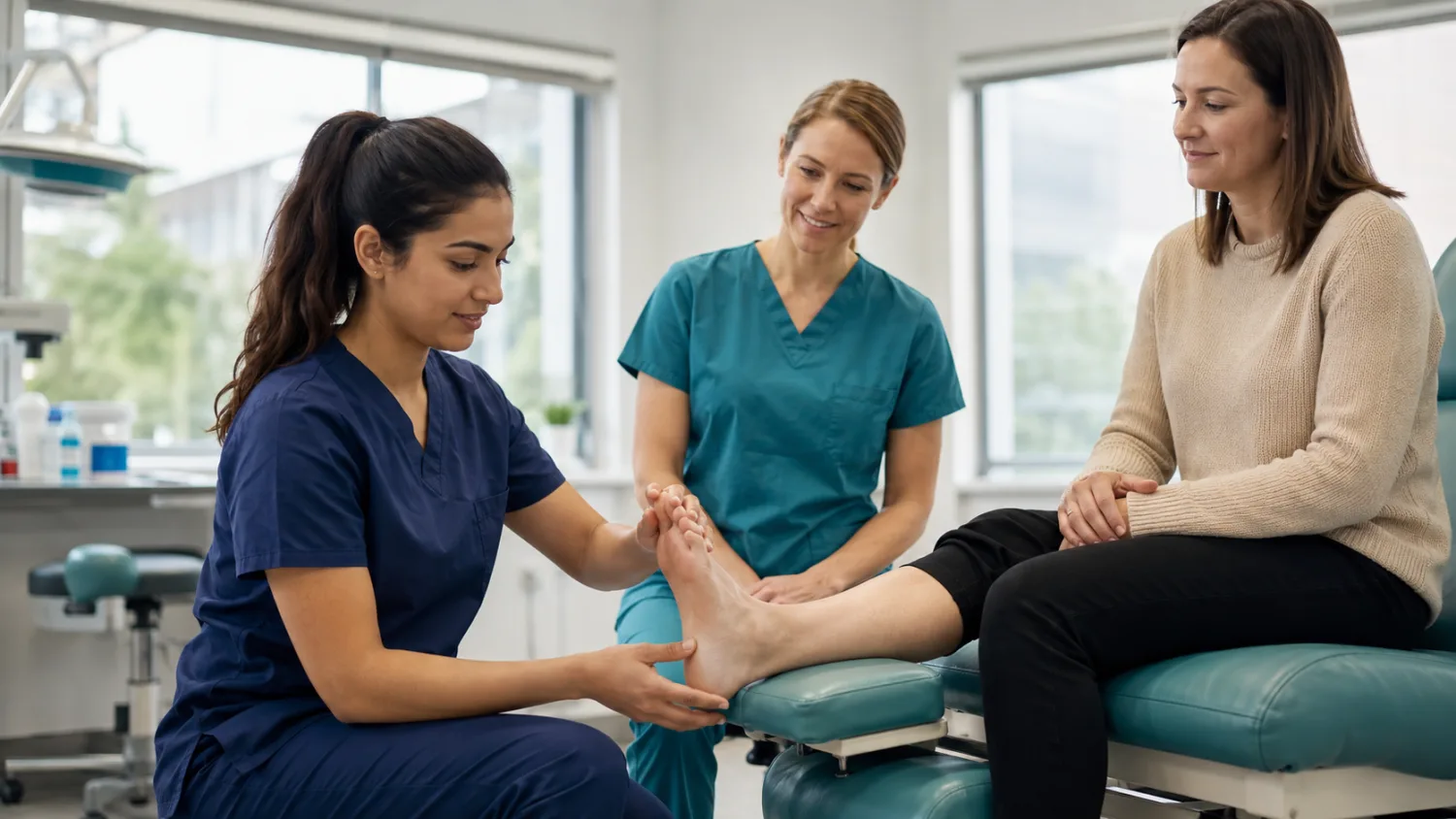
Care workers are among the most essential people in the UK’s health and social care system. They support people to live with dignity, safety and independence, whether that is in their own home, a care home, supported living, hospice care or another community setting.
With an ageing population, pressure on hospitals, rising demand for home-based care and growing awareness of mental health, demand for skilled and compassionate care workers remains high across the UK.
This guide explains what care workers actually do, how to start with little or no experience, what training matters, what pay and career prospects look like, and how the role can develop over time.
What does a care worker do?
When many people hear “care worker”, they think of helping someone wash or dress. That can be part of the job, but the role is broader and more human than the stereotype suggests.
A care worker in the UK might:
- support personal care, such as washing, dressing and toileting
- help people move safely around their home or care setting
- prepare meals and support eating and drinking
- prompt or assist with medication, depending on the care plan and training
- provide companionship and emotional support
- encourage social activity and reduce isolation
- help with shopping, housework and practical tasks
- notice and report changes in health, mood, appetite, behaviour or mobility
- support families by giving reassurance and regular updates
In home care, the role is usually part of a wider care plan involving family, supervisors, social workers, community nurses or GPs. If you want to understand this setting better, read our guide to home care, types of support, funding and choosing a provider.
In residential care, care workers usually work as part of a larger team, often alongside senior carers, nurses, activity coordinators and managers. The work may involve personal care, mealtime support, mobility assistance, dementia support, activities, family communication and end-of-life care.
Good care work is as much about connection and observation as it is about tasks. A strong care worker notices small changes, asks gentle questions, records concerns clearly and helps people feel safe, respected and heard.
Is a care worker the same as a nurse?
No. Care workers and nurses work closely together, but they are not the same role.
Nurses are clinically trained professionals regulated by the Nursing and Midwifery Council. They can carry out clinical assessments, administer certain medicines, manage wounds, monitor clinical conditions and make professional nursing decisions.
Care workers are not nurses, but they are vital partners in care delivery. They often spend more day-to-day time with the person and may be the first to notice that something has changed.
For example, if a care worker notices that someone has lost weight, seems more confused, is eating less, has new bruising, appears low in mood or is struggling to swallow, they might:
- record the observation in care notes
- alert a senior carer or supervisor
- contact family if this is part of the agreed process
- support a GP appointment or nurse review
- help update the care plan
This is why understanding the wider healthcare system helps. Our guide to how GP registration works in the UK explains how GPs coordinate many aspects of non-emergency care.
Mental health also overlaps with care work. Older adults, disabled people, people with dementia, family carers and people living alone may experience anxiety, depression, grief, distress or isolation. Care workers do not replace mental health professionals, but they can notice concerns and help people access support. For more context, see how to access mental health services in the UK.
Where do care workers work?
Care workers are employed across a range of settings. The core purpose is similar, but the day-to-day work can feel very different depending on the environment.
- Home care agencies — carers visit people in their own homes, often for short scheduled visits or longer support blocks.
- Residential care homes — carers support people who live in a care home but do not necessarily need nursing care at all times.
- Nursing homes — carers work alongside registered nurses for people with higher clinical needs.
- Supported living — carers support adults with disabilities, learning disabilities, autism or mental health needs to live more independently.
- Hospice and palliative care services — carers support comfort, dignity and family needs near the end of life.
- Specialist dementia services — carers support people with memory loss, confusion, distress, communication difficulties and changing behaviour.
If you are interested in care home work specifically, our guides to care homes in the UK, what a good care home looks like and dementia care homes show what families look for when choosing care.
How to become a care worker in the UK
1. Understand your motivation and strengths
Care work is practical, relational and emotionally demanding. Before applying, ask yourself:
- Do I enjoy helping people with practical and emotional needs?
- Can I stay calm when routines change or someone is distressed?
- Am I patient, observant and reliable?
- Can I respect someone’s dignity even when helping with intimate tasks?
- Can I communicate clearly with families, colleagues and supervisors?
Soft skills matter as much as qualifications. Employers often look for kindness, reliability, common sense, good communication and willingness to learn.
2. Start applying: you do not usually need a degree
One of the strengths of care work is that it is accessible. Many people start with no formal care qualification, especially in entry-level care assistant, support worker or home care assistant roles.
Employers often provide:
- induction training
- shadow shifts with experienced carers
- supervision and mentoring
- mandatory safety training
- routes into formal qualifications
Example:
Samira, 21, left retail and applied to a home care agency in Birmingham. She had no previous care experience but was used to speaking with customers and working under pressure. In her first weeks, she completed training in safeguarding, moving and handling, infection prevention and dementia awareness. After probation, she began a Level 2 adult care qualification and later started mentoring new staff.
This kind of earn-and-learn route is common in social care. If you are exploring healthcare roles more broadly, see our guide to healthcare jobs that do not require a degree.
3. Complete mandatory training
Even entry-level care roles involve practical training before you work independently. Core training usually includes:
- Safeguarding adults — recognising abuse, neglect and risk, and knowing how to report concerns.
- Moving and handling — helping people move safely while protecting them and yourself from injury.
- Infection prevention and control — reducing infection risk through hygiene, PPE and safe procedures.
- Medication awareness — understanding prompts, records, safe handling and when to escalate concerns.
- Equality, diversity and inclusion — treating people respectfully regardless of background, beliefs, disability, sexuality or culture.
- Health and safety — working safely in homes, care settings and community environments.
- First aid or emergency awareness — knowing what to do if someone falls, becomes unwell or appears unsafe.
- Dementia awareness — especially useful in older adult care, home care and residential care.
Your employer will usually arrange mandatory training and may pay you for completing it. Always ask whether training time is paid, how shadow shifts work, and what support is available before you work alone.
4. Consider formal qualifications
You do not always need qualifications to start, but they help with confidence, progression and employability.
Common qualifications include:
- Care Certificate — a recognised induction standard for health and social care support workers in England.
- Level 2 Diploma or Certificate in Care — useful for new care workers building core skills.
- Level 3 Diploma in Adult Care — useful for experienced carers, senior care workers and people aiming for supervisory roles.
- Level 4 or 5 qualifications — useful for team leaders, deputy managers and registered managers.
- Adult care apprenticeships — paid work combined with structured learning.
Specialist certificates can also help if you want to work in dementia care, end-of-life care, autism support, learning disability services, safeguarding, medication support or mental health-related care.
5. Build experience and progress
Care work can be a long-term career rather than a stopgap. With experience and training, you may move into roles such as:
- senior care assistant
- team leader
- care coordinator
- field care supervisor
- support worker in specialist services
- activities coordinator
- deputy manager
- registered care manager
- occupational therapy assistant
- nursing associate or nurse, with further training
Care experience can also be valuable if you later apply for nursing, social work, occupational therapy, physiotherapy support, mental health support work or management roles.
Care worker pay in the UK
Care worker pay varies by region, employer, setting, seniority and whether the role involves nights, weekends, live-in care or specialist support.
As a rough guide, care worker pay may look like this:
- Entry-level care worker: often around £11–£14 per hour, sometimes higher depending on region and employer.
- Experienced or specialist care worker: often around £13–£18+ per hour.
- Senior care worker or team leader: may be higher, especially with supervisory duties, nights or specialist responsibilities.
- Live-in care roles: often paid as weekly rates or salaried arrangements, depending on the provider and rota.
Many employers also offer:
- enhanced pay for evenings, weekends or bank holidays
- travel pay or mileage in home care roles
- paid training
- holiday pay
- pension contributions
- uniforms or equipment
- career progression support
In home care, always check whether travel time between clients is paid and whether mileage is reimbursed. A slightly higher hourly rate can be less attractive if travel time, gaps between visits and fuel costs are not handled fairly.
Example:
Grace started as a home care assistant in Leeds earning around £12 per hour. After completing a Level 3 qualification and gaining 18 months of experience, she moved into a senior role supporting rotas, medication records and new staff. Her hourly rate increased, and she began working towards a team leader role.
If you are comparing pay with wider NHS roles, our guide to NHS pay bands explains how NHS salaries are structured, although many social care jobs are outside the NHS pay system.
Job prospects for care workers
Job prospects in care remain strong because demand is driven by long-term demographic and social trends.
Key reasons include:
- An ageing population — more people are living longer, often with multiple long-term conditions.
- More care delivered at home — health and social care policy increasingly aims to support people in their own homes where safe and possible.
- Pressure on hospitals — good care at home and in care settings can help prevent avoidable admissions and support discharge.
- Growth in dementia and complex care needs — more families need trained support for memory loss, mobility issues and long-term conditions.
- Workforce turnover — social care has ongoing recruitment needs because some workers leave, retire or move into other roles.
This means care work can offer strong opportunities for people who are reliable, compassionate, willing to train and able to work flexibly. It is also a sector where progression is possible, especially if you complete recognised qualifications and develop leadership skills.
For employers and providers, recruitment remains a major challenge. If you are interested in the workforce side of the sector, our guides on hiring healthcare staff and how to recruit care staff in the UK look at this from the provider perspective.
Challenges and rewards of care work
Care work can be meaningful and rewarding, but it is important to be realistic about the challenges.
Common challenges include:
- early starts, late finishes, weekends or split shifts
- physically demanding tasks
- emotional strain when people are distressed, unwell or nearing the end of life
- travel between clients in home care
- time pressure during busy shifts
- working with people who may be confused, anxious, angry or frightened
Rewards can include:
- seeing the direct impact of your work on someone’s quality of life
- building long-term relationships with clients or residents
- helping people stay independent for longer
- supporting families during stressful periods
- working as part of a close team
- developing skills that can lead to senior roles or further healthcare careers
One former carer described the role this way:
“Some days I knew I made someone’s whole week better just by being there on time, making afternoon tea and listening.”
That human impact is why many care workers stay in the sector and grow into senior, training, coordination or management roles.
Tips for succeeding as a care worker
Whether you are just starting or hoping to progress, these habits help:
- Listen carefully. People receiving care often communicate discomfort, fear or embarrassment indirectly.
- Be reliable. Turning up on time matters deeply when someone depends on you for washing, food or medication.
- Keep learning. Training in dementia, moving and handling, safeguarding and communication builds confidence.
- Record clearly. Good notes protect the person, the care team and you.
- Ask for help early. Escalate concerns rather than trying to handle everything alone.
- Look after yourself. Care work can be emotionally intense, and good carers need support too.
- Understand boundaries. Kindness matters, but you still need professional boundaries and safe working practices.
- Learn the local system. GPs, district nurses, mental health teams, social workers and voluntary groups often overlap with care services.
Being thoughtful about how you work prepares you for a career, not just a shift.
A day in the life of a care worker
Morning with a home care team
Sophie starts early and checks her rota. Her first visit is to help Mr H with washing, medication prompts and breakfast. She notices he looks thinner and records this for her supervisor. Later, she supports another client with lunch preparation, a shopping list and paperwork for a benefits review. The day involves practical care, travel, note-taking and regular communication with the office.
Residential care shift
In a care home, the day begins with a team handover. Nurses update carers on any clinical concerns. Care workers then support residents with breakfast, personal care, mobility and activities. Later, they help with lunch, speak with visiting families, report changes in mood or comfort, and support evening routines. The work is busy, varied and team-based.
These examples show the rhythm of care work: practical tasks, emotional support, observation, communication and teamwork. No two days are exactly the same.
FAQ: becoming a care worker in the UK
Do you need qualifications to become a care worker?
Not always. Many entry-level care worker roles do not require formal qualifications, and employers provide induction and mandatory training. However, qualifications such as the Care Certificate, Level 2 care qualifications and Level 3 Adult Care Diploma can help you progress.
Can I become a care worker with no experience?
Yes. Many employers recruit people with no previous care experience if they have the right attitude, communication skills, reliability and willingness to learn.
What skills do care workers need?
Care workers need patience, empathy, reliability, observation skills, clear communication, respect for dignity, teamwork and the ability to stay calm under pressure.
How much do care workers earn in the UK?
Pay varies by employer, region and role. Entry-level roles are often paid hourly, with higher rates for experience, nights, weekends, specialist care or senior responsibilities. In home care, travel pay and mileage are important to check.
Is care work physically demanding?
It can be. Care workers may help with transfers, mobility, personal care, standing, walking and equipment. Good moving and handling training is essential to protect both the care worker and the person receiving care.
Is being a care worker emotionally difficult?
Sometimes. Care workers may support people who are lonely, distressed, confused, seriously ill or nearing the end of life. Good supervision, team support and boundaries are important.
Can care work lead to nursing?
Yes, it can be a useful starting point. Some care workers later train as nursing associates, nurses or healthcare assistants, although nursing requires further study, clinical training and registration.
What is the difference between a care assistant and support worker?
The terms overlap. Care assistants often work with older adults in home care or care homes, while support workers may work more often in supported living, disability, autism, learning disability or mental health services. Duties vary by employer.
Do care workers give medication?
They may prompt, assist or administer medication depending on the employer, training, care plan and local policy. More complex medication or clinical tasks may require nurses or specialist oversight.
Is care work a good career?
It can be a strong career for people who are compassionate, reliable and willing to learn. There is demand across the UK, and progression is possible into senior care, coordination, training, specialist support, management or further healthcare roles.
Final takeaway
Care work is about helping people live with dignity, safety and connection, whether they are at home, in supported living, in a care home or approaching the end of life. It is practical, emotional and deeply human work.
You do not usually need a degree to start, and many employers provide training. With the right attitude, clear communication and a willingness to keep learning, care work can become a long-term career with real purpose and progression.