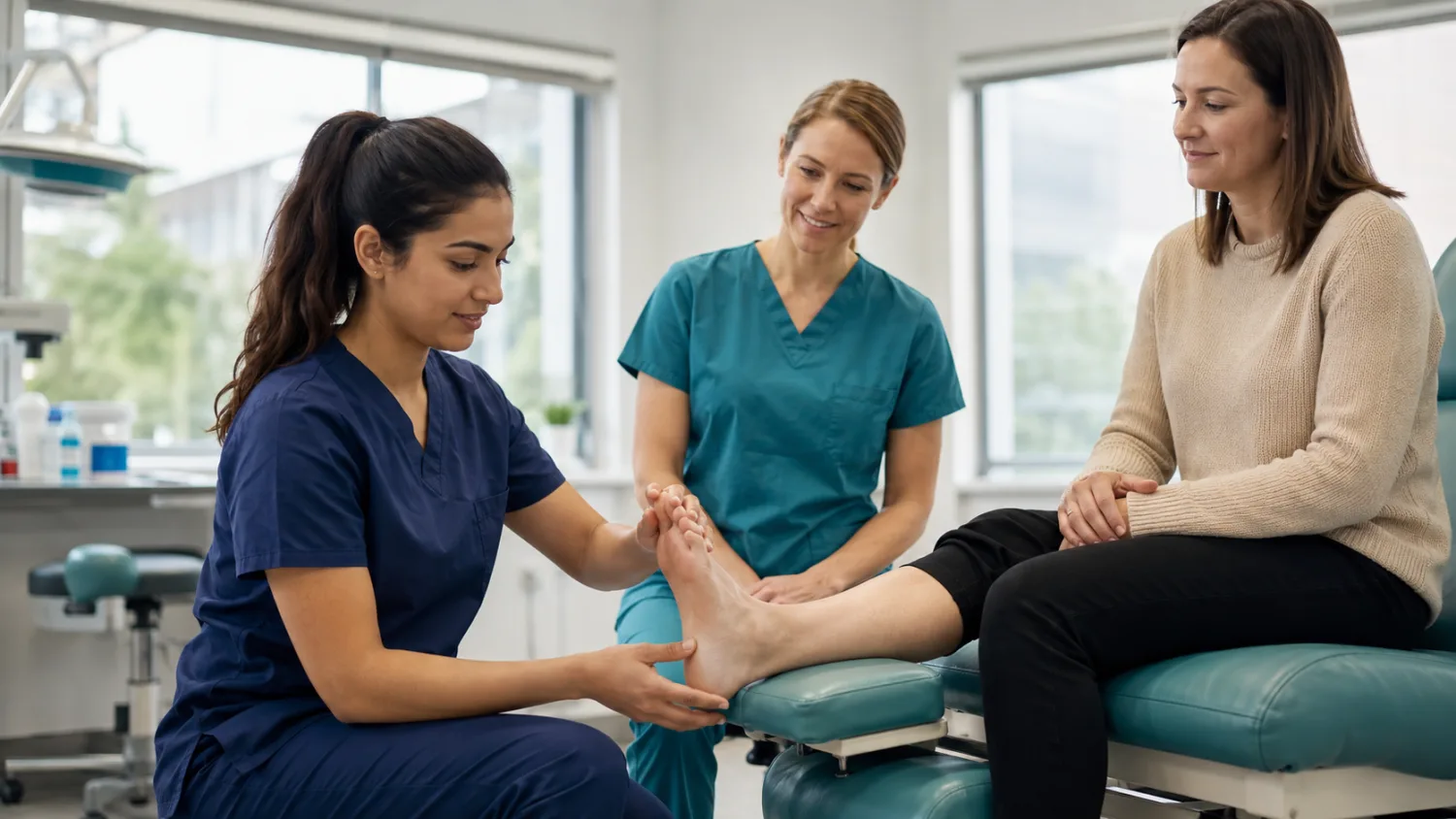
Nursing in the UK offers one of the most varied, respected and socially meaningful careers in healthcare. Nurses support patients through some of the most difficult and important moments of their lives, from emergency admissions and cancer treatment to community care, mental health support and end-of-life care.
It is a career built on science, communication, compassion, judgement and critical thinking. But for people new to the field, the route into nursing can feel confusing. There is not just one type of nurse, and there are several training routes, funding options, pay bands and specialisms to consider.
This guide explains how to become a nurse in the UK, the main training routes, how NMC registration works, what NHS pay bands mean, and what career paths are available after qualification.
Types of registered nurses in the UK
When people talk about becoming “a nurse” in the UK, they usually mean becoming a Registered Nurse. Registered nurses are regulated by the Nursing and Midwifery Council, usually called the NMC.
There are four recognised fields of nursing at degree level:
- Adult nursing
- Children’s nursing
- Mental health nursing
- Learning disability nursing
Most students choose one field when they apply. Some universities also offer dual-field courses, such as adult and mental health nursing, for students who want broader options.
Adult nursing
Adult nurses support adults with a wide range of health needs. They may work in hospitals, GP practices, community teams, care homes, hospices, outpatient clinics, surgical wards or specialist services such as oncology, cardiology or diabetes care.
Children’s nursing
Children’s nurses care for babies, children and young people. They work closely with families and may be based in hospitals, community children’s services, neonatal units, children’s wards or specialist clinics.
Mental health nursing
Mental health nurses support people experiencing mental illness, distress or crisis. They may work in inpatient units, crisis teams, community mental health teams, secure services, addiction services, eating disorder services or child and adolescent mental health services.
If mental health care interests you, our guide to how to access mental health services in the UK explains how NHS and private pathways fit together.
Learning disability nursing
Learning disability nurses support people with learning disabilities to live healthier, safer and more independent lives. They often work in community teams, specialist services, schools, supported living, social care settings and hospitals.
If you are interested in healthcare and care careers more broadly, you may also find our guide to how to become a care worker in the UK useful.
Training routes into nursing
The traditional route into nursing is a university nursing degree. However, this is no longer the only option. Apprenticeships, postgraduate routes and progression from support roles have made nursing more accessible to career changers and people already working in health or social care.
Undergraduate nursing degree
The most common route is a pre-registration nursing degree approved by the NMC. This usually takes three years in England, Wales and Northern Ireland, and often four years in Scotland.
Nursing degrees combine:
- academic study
- clinical skills training
- hospital placements
- community placements
- simulation learning
- assessment against professional standards
Entry requirements vary by university, but applicants often need A-levels, T-levels, BTECs, Scottish Highers, an Access to Higher Education Diploma, or equivalent qualifications. Some courses prefer science, health or social care subjects, but requirements differ.
Nursing degree apprenticeships
Nursing degree apprenticeships allow people to work while training towards registered nurse status. They can be attractive for healthcare assistants, care workers or support workers who want to progress without leaving employment.
Apprenticeships often take longer than a full-time degree, commonly around four years, but you earn a salary while training and your employer supports the route. NHS Employers has more information about nursing degree apprenticeships.
This route can be competitive because places depend on employer support and local workforce plans.
Postgraduate or accelerated nursing courses
If you already have a degree in another subject, you may be able to apply for a postgraduate pre-registration nursing course. These are sometimes shorter than undergraduate routes, often around two years, because your previous study and experience may be recognised.
Universities will still check whether you meet academic, health, safeguarding and placement requirements.
Progression from healthcare support roles
Some people start as healthcare assistants, support workers, care workers or nursing associates before progressing into registered nursing.
This can be a strong route if you want to build confidence, understand healthcare settings and confirm that nursing is right for you before committing to training.
Related roles include:
- healthcare assistant
- care assistant
- support worker
- nursing associate
- assistant practitioner
For people comparing early healthcare roles, see our guide to healthcare jobs that do not require a degree.
NMC registration and becoming a registered nurse
To work as a registered nurse in the UK, you must be registered with the Nursing and Midwifery Council. The NMC sets professional standards for education, conduct, safety and ongoing practice.
You can learn more on the NMC website.
NMC registration allows you to use the protected title Registered Nurse. It also means you must meet professional standards, keep your knowledge up to date and complete revalidation throughout your career.
Nurses must practise safely, communicate clearly, keep accurate records, maintain confidentiality, escalate concerns and work within their competence.
What NMC-approved training means
An NMC-approved course is designed to meet national professional standards for nursing education. This includes both theory and supervised practice, so students are assessed on knowledge, clinical skills, professionalism and safe care.
Completing a nursing course is not only about passing academic modules. Students must also show they can work safely with patients, communicate with teams, understand risk and meet professional expectations.
Revalidation after qualification
Registration is not a one-off event. Registered nurses must keep their practice up to date and complete revalidation at regular intervals. This helps show that they remain fit to practise and are continuing professional development throughout their careers.
Revalidation may include practice hours, continuing professional development, reflection, feedback and confirmation from an appropriate professional.
NHS nurse pay bands and career progression
Most NHS nurses are paid under the Agenda for Change pay system. Private hospitals, agencies, care homes and charities may use different pay structures, but NHS bands are the main reference point for nursing pay in the UK.
Newly qualified registered nurses usually start at Band 5. Progression to higher bands depends on experience, responsibilities, specialist training and role type.
Very broadly:
- Band 2–4: support roles, such as healthcare assistants, assistant practitioners and some nursing associate roles.
- Band 5: newly qualified registered nurses and staff nurses.
- Band 6: experienced nurses, deputy ward managers, specialist nurses, community nurses and some practice nurse roles.
- Band 7: ward managers, advanced specialist nurses, clinical nurse specialists and some advanced practice roles.
- Band 8+: matrons, advanced clinical practitioners, nurse consultants, service leads and senior managers.
Pay can also be affected by location, shift patterns, unsocial hours, overtime, agency work, private sector rates and whether the role is in the NHS or outside it.
For a fuller breakdown, see our guide to NHS pay bands explained.
How nurses move from Band 5 to higher bands
Progression usually comes through experience, additional responsibility, specialist knowledge and successful applications for higher-banded roles.
A nurse may move from Band 5 to Band 6 by becoming a senior staff nurse, community nurse, specialist nurse, deputy ward manager or experienced practice nurse. Band 7 roles often involve team leadership, advanced clinical responsibility, specialist expertise or service management.
Private, agency and care home nursing pay
Not all nurses work in the NHS. Private hospitals, care homes, hospices, agencies, charities and occupational health services may use different pay structures.
Some private or agency roles may offer higher hourly rates, but the wider package may differ, including pension, sick pay, annual leave, career development, supervision and job security.
Nursing career paths and specialisms
Modern nursing extends far beyond hospital wards. Registered nurses can specialise clinically, move into leadership, work in the community, teach, research, prescribe, manage services or develop advanced practice roles.
Common nursing specialisms
Common nursing specialisms include:
- critical care nursing
- emergency department nursing
- oncology nursing
- surgical nursing
- theatre nursing
- community nursing
- district nursing
- GP practice nursing
- palliative and hospice nursing
- mental health crisis nursing
- learning disability community nursing
- school nursing
- health visiting
- prison healthcare
- research nursing
- occupational health nursing
- travel health nursing
- infection prevention and control
- diabetes nursing
- respiratory nursing
- dementia and older adult care
This breadth means nursing can change significantly over a career. A nurse might start on an acute hospital ward, move into community care, specialise in diabetes, become a prescriber, then move into education or service leadership.
If older adult care interests you, our guides to care homes in the UK, home care and palliative and end-of-life care in care homes may help show where nursing overlaps with social care.
Independent prescribing and advanced practice
Some nurses become independent prescribers after additional postgraduate training. This can increase clinical autonomy, especially in general practice, community nursing, mental health, urgent care, sexual health, pain services and long-term condition management.
Advanced practice roles usually require significant experience and postgraduate education. Advanced clinical practitioners may assess, diagnose, treat, prescribe and discharge patients in settings that were once more doctor-led.
Examples of advanced roles include:
- advanced clinical practitioner
- nurse consultant
- clinical nurse specialist
- advanced nurse practitioner
- non-medical prescriber
- matron or service lead
These roles are not entry-level. They usually come after years of clinical practice, supervision, further study and demonstrated competence.
How nursing relates to social care careers
Not everyone exploring nursing ends up becoming a registered nurse. Some people discover they prefer care work, home care, supported living, activities coordination, care management or social care leadership.
These roles can still offer meaningful work, community connection and career progression, but usually involve different levels of clinical responsibility.
If you are comparing nursing with social care, useful guides include how to become a care worker in the UK, what home care is and care homes in the UK.
International nurses and different routes into the profession
The UK nursing workforce includes school leavers, apprentices, graduates, healthcare assistants, career changers and internationally educated nurses. This is one reason nursing can be accessible to people from very different backgrounds.
International nurses and overseas recruitment
The UK has long recruited nurses internationally. Overseas-trained nurses usually need to meet NMC registration requirements before working as registered nurses in the UK.
This may involve:
- checking qualification eligibility
- English language evidence, such as IELTS or OET where required
- computer-based testing
- an objective structured clinical examination, often called OSCE
- identity, health and character checks
- visa and employment requirements where relevant
International nurses are an important part of the NHS and wider UK healthcare workforce. Requirements can change, so overseas applicants should always check the latest NMC and visa guidance before making plans.
Example 1: school leaver to adult nurse
Megan is 18 and finishing college. She has volunteered in a hospice and wants to work in cancer care. She applies for an adult nursing degree, completes academic modules and placements, registers with the NMC and starts as a Band 5 nurse on an oncology ward.
Example 2: healthcare assistant to mental health nurse
Daniel is 36 and works as a healthcare assistant in a community mental health team. After several years of experience, he gains employer support for a nursing apprenticeship. He trains while earning, qualifies as a registered mental health nurse and later progresses into a Band 6 crisis team role.
Example 3: graduate career changer
Priya already has a psychology degree and has worked in support roles. She applies for a postgraduate mental health nursing course. Her previous experience helps, but she still has to complete clinical placements, NMC-approved training and registration before practising as a nurse.
These examples show that nursing is not limited to one age, background or route.
What working as a nurse is really like
Nursing can be rewarding, but it is not easy. It involves responsibility, teamwork, documentation, emotional resilience, clinical judgement and constant communication.
Common challenges
Common challenges include:
- long shifts or unsocial hours
- physical demands
- emotional pressure
- staffing pressures
- supporting people in pain, fear, crisis or grief
- balancing compassion with clinical priorities
- keeping accurate records under pressure
- communicating with families and multidisciplinary teams
Common rewards
Rewards can include:
- making a visible difference to patients and families
- building specialist knowledge
- working as part of a close team
- career stability and progression
- moving between different fields and settings
- being present at important moments in people’s lives
Many nurses say the most meaningful part of the job is not a single clinical task, but being there when someone is frightened, recovering, grieving, giving birth, receiving a diagnosis or nearing the end of life.
Why nursing demand will keep growing
The UK’s population is ageing, and more people are living with long-term conditions, frailty, dementia, cancer, diabetes, respiratory illness and mental health needs. Hospitals, GP practices, community teams, care homes and mental health services all rely on nurses.
The NHS Long Term Plan highlights the need for more healthcare staff across acute care, mental health, community services and primary care. You can read more on the NHS Long Term Plan website.
This means nursing demand is likely to remain strong, although working conditions, staffing levels and pay remain important issues across the profession.
FAQ: becoming a nurse in the UK
Do you need a degree to become a nurse in the UK?
Yes, to become a registered nurse you usually need to complete an NMC-approved nursing degree or an approved nursing degree apprenticeship. Support roles such as healthcare assistant do not usually require a nursing degree.
How long does it take to become a nurse?
A full-time nursing degree usually takes around three years in England, Wales and Northern Ireland, and often four years in Scotland. Apprenticeships and part-time routes can take longer. Some postgraduate routes may be shorter for graduates.
Can I become a nurse without A-levels?
Yes, it may be possible through an Access to Higher Education Diploma, relevant vocational qualifications, foundation routes or apprenticeship pathways. Entry requirements vary by university and employer.
What GCSEs do you need for nursing?
Many universities ask for GCSEs in English, maths and sometimes science, usually at grade 4/C or above, but requirements vary. Always check the specific university or apprenticeship listing.
Can a healthcare assistant become a nurse?
Yes. Many healthcare assistants progress into nursing through university, employer-supported training, nursing associate routes or nursing degree apprenticeships.
What band does a newly qualified nurse start on?
Newly qualified NHS registered nurses usually start at Band 5 under Agenda for Change. Progression to Band 6 and above depends on experience, role, training and responsibility.
Can nurses prescribe medication?
Some nurses can prescribe after completing approved additional training as independent or supplementary prescribers. Not all nurses are prescribers.
Is nursing physically demanding?
It can be. Nurses may spend long periods standing, help with moving and handling, respond to emergencies and work long shifts. Training and safe staffing are important for reducing risk.
Is nursing emotionally difficult?
Sometimes. Nurses support people through illness, distress, trauma, death, recovery and uncertainty. Emotional resilience, supervision, teamwork and self-care are important.
Can international nurses work in the UK?
Yes, if they meet NMC registration requirements and any visa or employment requirements. This may include English language evidence, tests, OSCE and professional checks.
Can nurses work outside hospitals?
Yes. Nurses work in GP practices, community teams, schools, prisons, hospices, care homes, research, public health, mental health services, occupational health and private healthcare.
Is nursing a good career?
Nursing can be a strong career for people who want meaningful work, clinical responsibility and varied progression routes. It can also be demanding, so it is worth speaking to nurses and gaining experience before applying.
Final takeaway
Becoming a nurse in the UK means joining a profession with real social value, clinical responsibility and wide-ranging career options. You might work in hospitals, mental health, children’s services, GP practices, care homes, community teams, prisons, research, education or advanced practice.
The routes into nursing are more varied than many people realise, including university degrees, apprenticeships, postgraduate routes and progression from support roles. If you are considering nursing, the best first step is to research the field that interests you, speak to nurses, compare training routes and get some experience in a care or healthcare setting if possible.