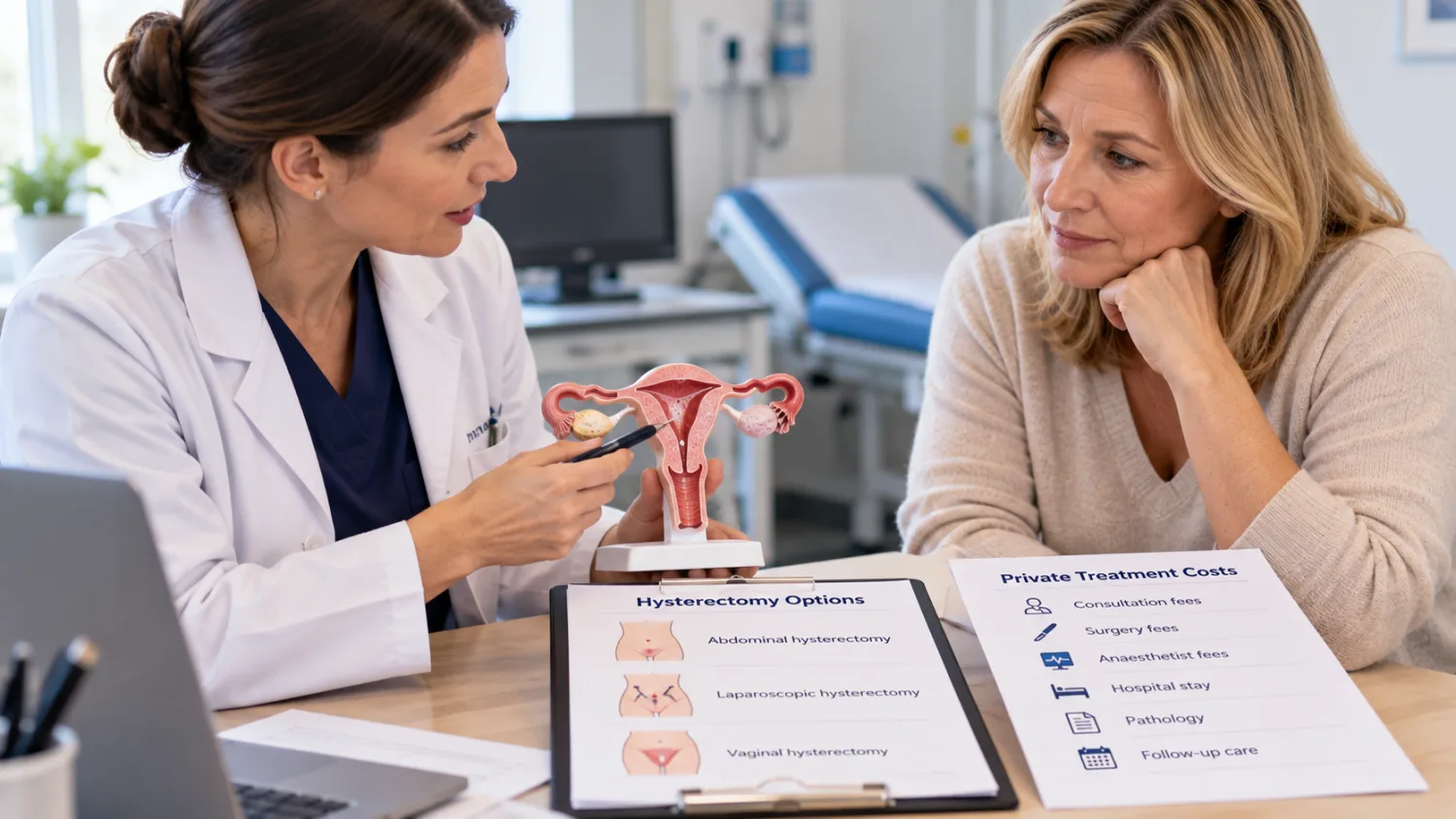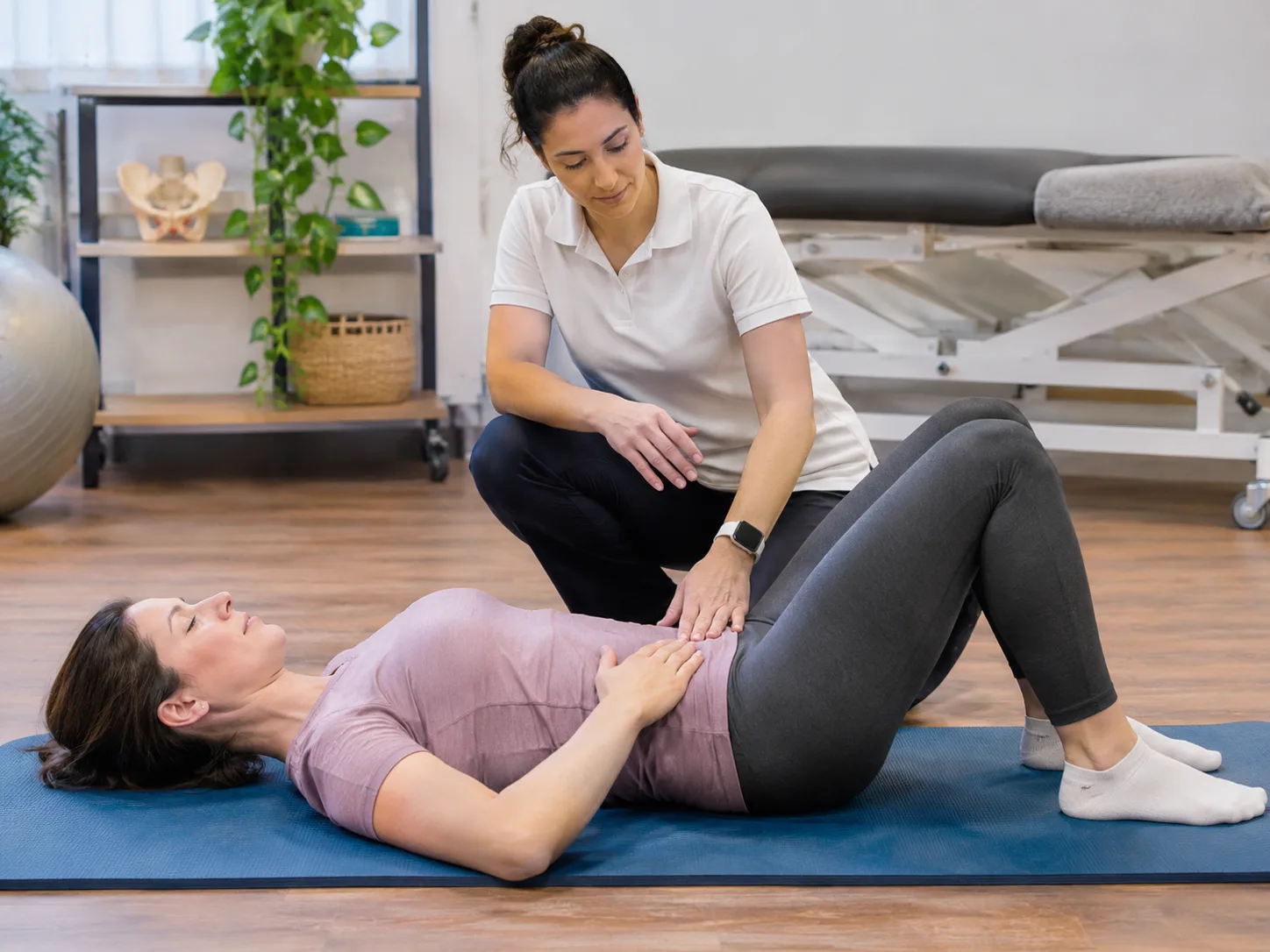
Pelvic floor exercises sound simple: squeeze, hold and repeat.
But many people are not completely sure which muscles they are supposed to squeeze, whether they are doing the movement correctly or how often they need to practise before anything changes.
That matters because pelvic floor exercises work best when the correct muscles are being trained consistently.
They can help with urine leakage, bladder control, recovery after childbirth, some symptoms of pelvic organ prolapse and urinary leakage after prostate surgery. They may also support bowel control and sexual function.
The exercises are useful for both women and men.
This guide explains how to find your pelvic floor, how to perform slow and quick contractions, how often to practise, the mistakes that can make training less effective and when it is worth seeing a pelvic health physiotherapist.
What Is the Pelvic Floor?
The pelvic floor is a group of muscles and connective tissues forming a supportive layer at the bottom of the pelvis.
You can think of it as a muscular hammock supporting organs above it.
In women, the pelvic floor supports the bladder, uterus and bowel. In men, it supports the bladder and bowel and surrounds structures involved in urinary and sexual function.
The muscles also help control the openings used for urination and bowel movements.
When the pelvic floor contracts effectively, it helps close these openings and lift the pelvic organs upwards.
When it relaxes, it allows urination, bowel movements and, in women, vaginal penetration and childbirth.
A healthy pelvic floor therefore needs to be able to contract and relax. Stronger is not always better if the muscles are constantly tense.
Who Can Benefit From Pelvic Floor Exercises?
Pelvic floor muscle training is commonly recommended for people who leak urine when coughing, laughing, sneezing, running or lifting.
This is known as stress urinary incontinence.
NICE recommends supervised pelvic floor muscle training for at least three months as first-line treatment for women with stress or mixed urinary incontinence. A programme should include at least eight contractions performed three times a day.
Pelvic floor training is also encouraged during pregnancy and after childbirth. NICE advises women of all ages to practise pelvic floor muscle training and recommends continuing it throughout life because long-term training may help prevent pelvic floor symptoms.
Men can benefit too, particularly after prostate surgery. NICE recommends supervised pelvic floor muscle training for men with stress urinary incontinence following prostatectomy and advises continuing for at least three months before considering other options.
Pelvic floor exercises may also be part of treatment for some cases of pelvic organ prolapse or bowel-control difficulties.
How to Find Your Pelvic Floor Muscles
The first challenge is working out what a pelvic floor contraction actually feels like.
Imagine that you are trying to stop yourself passing wind while at the same time trying to stop the flow of urine.
The feeling should be one of squeezing and lifting upwards inside, rather than pushing down.
For women, the sensation is often described as tightening around the vagina and back passage and lifting upwards.
For men, imagine tightening around the back passage while also trying to stop urine flow. You may notice the base of the penis draw slightly inward and the testicles lift towards the body.
NHS pelvic-floor guidance for men describes the contraction as tightening around the back passage while imagining stopping urine flow and drawing the testicles upwards.
You should still be able to breathe normally.
Your stomach, thighs and buttocks should remain relatively relaxed.
Should You Stop Your Urine Mid-Flow to Find the Muscles?
You may have heard that the easiest way to find the pelvic floor is to stop urinating halfway through.
Doing this once occasionally can help some people recognise the muscles.
It should not become your regular exercise routine.
Repeatedly stopping urine mid-flow can interfere with normal bladder emptying and potentially contribute to urinary problems.
Once you recognise the correct muscles, practise away from the toilet.
How to Do a Pelvic Floor Exercise
Start somewhere comfortable.
Many people find lying down or sitting easiest when learning. Once the movement becomes familiar, you can practise standing as well.
Relax your shoulders and breathe normally.
Then gently tighten the muscles around your back passage and urinary opening as though preventing wind and urine from escaping.
Think about drawing the muscles upwards and inwards.
Do not squeeze as hard as possible. A controlled contraction that you can sustain is more useful.
Hold briefly, then release the muscles completely.
You should notice a definite sensation of relaxation after the contraction.
Slow Pelvic Floor Exercises
The slow contractions build endurance.
This matters because the pelvic floor needs to provide support for long periods while you are standing, walking and carrying out ordinary daily activities.
Start by tightening the pelvic floor and holding for as long as you comfortably can while maintaining normal breathing.
If you can only manage three seconds initially, that is fine.
Relax fully after each contraction.
Over time, gradually work towards holding each contraction for around 10 seconds.
NHS guidance recommends gradually increasing holds towards 10 seconds, while NICE recommends at least eight contractions three times per day for women being treated for urinary incontinence.
A simple beginner pattern might therefore be:
- squeeze and lift the pelvic floor;
- hold for 3 to 5 seconds initially;
- relax completely;
- rest for several seconds;
- repeat 8 to 10 times.
As strength improves, gradually extend the holding time rather than forcing longer holds immediately.
Quick Pelvic Floor Exercises
The pelvic floor also needs to react quickly.
This is especially important when pressure suddenly rises inside the abdomen, such as when you cough, sneeze, laugh or jump.
For quick contractions, tighten and lift the pelvic floor strongly for about one second, then release completely.
Repeat several times.
Cambridge University Hospitals advises practising both slow holds and fast contractions because the two types train different functions of the pelvic floor.
It is useful to include both types in the same session.
A Simple Daily Pelvic Floor Routine
You do not need complicated equipment.
A practical routine is to perform around 8 to 10 slow contractions followed by 8 to 10 quick contractions.
Repeat the routine around three times during the day.
NICE specifically recommends at least eight contractions three times daily for women undergoing pelvic floor training for urinary incontinence.
Men's NHS physiotherapy guidance similarly recommends three exercise sessions per day, combining longer holds with shorter contractions.
Quality matters more than squeezing hundreds of times.
If your muscles become tired and the contraction turns into a weak push, stop and return later.
The “Knack”: Squeeze Before You Cough or Lift
One particularly useful technique is sometimes called the knack.
Just before coughing, sneezing, laughing, lifting something heavy or making another movement that normally causes leakage, tighten your pelvic floor.
Keep it engaged during the movement, then relax afterwards.
This helps the muscles support the bladder at the exact moment abdominal pressure increases.
NHS men's pelvic-floor guidance specifically recommends contracting the pelvic floor before activities likely to cause leakage, such as coughing, laughing or lifting.
With practice, this response can become more automatic.
Common Pelvic Floor Exercise Mistakes
The most common mistake is squeezing the wrong muscles.
If your buttocks are clenching tightly, your thighs are squeezing together or your stomach is being pulled in forcefully, you may be relying on surrounding muscles instead of the pelvic floor.
Holding your breath is another common problem.
You should be able to breathe normally while holding the contraction.
Another mistake is pushing down rather than lifting up.
The correct movement should feel like the pelvic floor is drawing upwards into the body. Bearing down is the opposite movement.
It is also important to relax fully between repetitions. Constantly holding the pelvic floor tight is not the goal.
NHS guidance specifically advises avoiding breath-holding, pushing down and excessive tightening of the abdomen, buttocks or thighs.
How Long Do Pelvic Floor Exercises Take to Work?
Pelvic floor training is not usually an instant fix.
You may notice some improvement within several weeks, but meaningful change often takes a few months.
NHS guidance for men notes that improvements may take several weeks and that the best results may require three to six months of daily practice.
NICE recommends at least three months of supervised pelvic floor muscle training for women with stress or mixed urinary incontinence.
Consistency matters far more than occasionally doing a very intense session.
Once symptoms improve, continuing some pelvic floor training helps maintain the result.
Pelvic Floor Exercises After Pregnancy and Childbirth
Pregnancy places considerable pressure on the pelvic floor, even before labour begins.
Vaginal birth can stretch the muscles and supporting tissues further.
That is why urine leakage after childbirth is common.
NICE encourages pelvic floor muscle training during pregnancy and after birth and recommends that women continue the exercises during postnatal care.
Gentle contractions can often be started relatively early after an uncomplicated birth, but recovery varies.
If you have had significant tearing, pelvic pain, an assisted delivery or another complication, individual advice from your maternity team or a pelvic health physiotherapist may be useful.
Pelvic floor exercises should not cause significant pain.
Pelvic Floor Exercises for Men
Men often first encounter pelvic floor exercises around prostate treatment.
The muscles play an important role in urinary continence, and prostate surgery can temporarily disrupt bladder control.
Training before and after surgery may therefore be part of rehabilitation.
The technique is essentially the same: tighten around the back passage as though preventing wind, simultaneously tighten as though stopping urine, and feel the muscles lift upwards.
A good contraction should not require clenching the buttocks or holding the breath.
If urinary leakage continues after prostate surgery despite several months of regular training, specialist assessment is appropriate rather than simply doing more and more repetitions.
Can Pelvic Floor Exercises Help an Overactive Bladder?
An overactive bladder is slightly different from stress incontinence.
Instead of leakage mainly with coughing or exercise, the dominant symptom is often a sudden difficult-to-control urge to urinate, sometimes accompanied by frequent trips to the toilet.
Pelvic floor contractions can sometimes help suppress urgency, but bladder training is also important.
NICE recommends supported bladder retraining for women with urinary frequency, urgency or mixed incontinence.
Our guide to overactive bladder symptoms and treatment explains this in more detail.
Constipation and the Pelvic Floor
Pelvic floor health is closely connected with bowel habits.
Repeatedly straining to pass hard stools increases pressure on the pelvic floor.
Over time, chronic constipation can contribute to pelvic floor symptoms and prolapse.
NICE therefore includes healthy bowel habits and appropriate fluid and fibre intake as part of pelvic floor management.
If constipation is frequent, treating it may be just as important as strengthening the muscles.
See our guide to constipation in adults for practical advice.
Can Pelvic Floor Exercises Make Things Worse?
They can if the underlying problem is not weakness.
Some people have an overactive or overly tense pelvic floor.
Symptoms can include pelvic pain, pain during sex, difficulty starting urination, difficulty emptying the bowel or a persistent sensation of pelvic tension.
In this situation, repeatedly doing strong contractions without learning how to relax the muscles may make symptoms worse.
This is why pelvic floor treatment is not simply about squeezing harder.
NICE recommends that supervised pelvic floor assessment includes checking both the ability to contract and the ability to relax the muscles.
If exercises cause pain or make pelvic symptoms worse, stop forcing them and ask for professional assessment.
When Should You See a Pelvic Health Physiotherapist?
If you are unsure whether you are activating the right muscles, a pelvic health physiotherapist can assess the contraction and create a programme suited to your strength and symptoms.
Professional assessment is particularly worthwhile if you have persistent urine leakage, pelvic organ prolapse symptoms, bowel-control difficulties, pelvic pain or problems after childbirth or prostate surgery.
NICE recommends supervised training for several pelvic floor conditions and specifically notes that supervision should include assessing the person's ability to contract and relax the pelvic floor correctly.
If you have been exercising correctly for around three months with little improvement, that is another good reason to ask for help.
Do not assume that persistent leakage is something you simply have to live with.
Frequently Asked Questions
How many pelvic floor exercises should I do each day?
A common programme involves at least 8 to 10 contractions around three times a day, combining slow holds and quick contractions.
How long should I hold each pelvic floor squeeze?
Start with whatever you can manage comfortably and gradually work towards around 10 seconds. Relax fully between repetitions.
How do I know if I am doing pelvic floor exercises correctly?
You should feel a squeeze and lift around the back passage and urinary opening without strongly tightening your buttocks, thighs or stomach. You should still be able to breathe normally.
Should pelvic floor exercises hurt?
No. Muscle fatigue can occur, but pain is not expected. Pain may indicate that the technique is incorrect or that the pelvic floor is already overly tense.
Can men do pelvic floor exercises?
Yes. They are particularly useful for men experiencing urinary leakage after prostate surgery, although they can also help with other pelvic floor problems.
Can pregnant women do pelvic floor exercises?
Yes. NICE encourages pelvic floor muscle training during pregnancy and after childbirth.
Can pelvic floor exercises stop urine leakage?
They can significantly reduce stress urinary leakage in many people, particularly when performed correctly and consistently for several months.
How quickly will I notice improvement?
Some people notice change within several weeks, but three months or longer is often needed for significant improvement.
Should I stop my urine mid-stream as an exercise?
No. It may occasionally help identify the muscles, but repeatedly interrupting urine flow is not recommended as regular pelvic floor training.
Do I need pelvic floor weights or electrical devices?
Most people do not need them. NICE does not recommend routine electrical stimulation or biofeedback alongside standard pelvic floor training. These approaches may occasionally help people who cannot produce an effective contraction.
Can you do too many pelvic floor exercises?
Yes. Excessive contractions without adequate relaxation can cause fatigue and may be unhelpful in people whose pelvic floor is already too tight.
Should I continue the exercises after symptoms improve?
Yes. NICE recommends continuing pelvic floor training when it has been beneficial because ongoing exercise can help maintain improvement.
This article provides general information about pelvic floor muscle exercises. Persistent urinary or bowel leakage, pelvic pain, difficulty emptying the bladder, blood in the urine, new pelvic pressure or worsening symptoms should be assessed by an appropriate healthcare professional rather than managed with exercises alone.