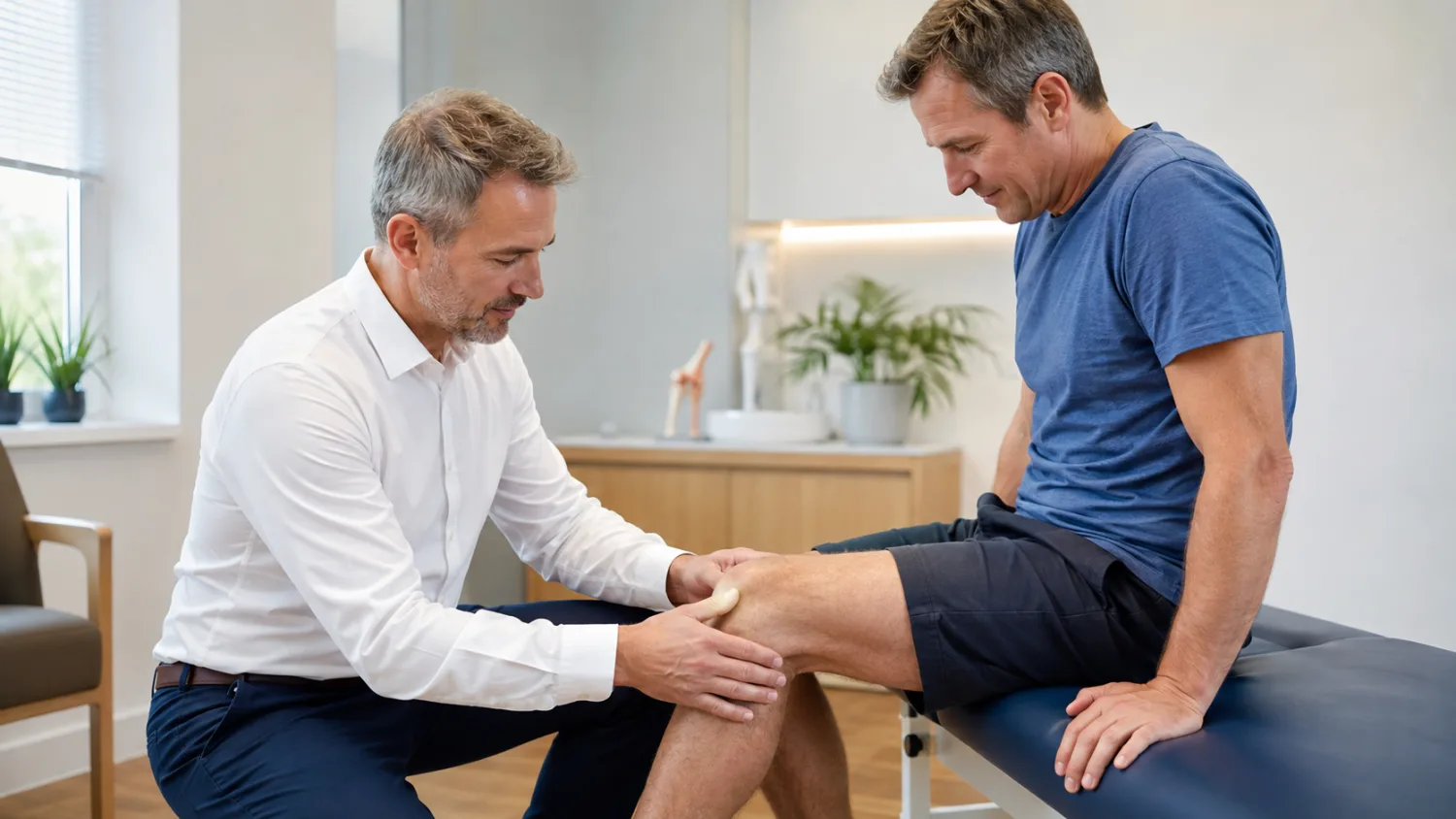
Hypermobility means that one or more joints move beyond the range normally expected for that person’s age, sex and background. For some people this is simply a physical trait. They may have been able to do the splits, bend their thumbs unusually far or describe themselves as “double-jointed” without ever having pain or instability.
For others, unusually mobile joints are associated with repeated sprains, joints that partially or completely dislocate, muscle fatigue, persistent pain, poor balance and difficulty tolerating ordinary physical activity. This is where terms such as hypermobility spectrum disorder, joint hypermobility syndrome and hypermobile Ehlers-Danlos syndrome may enter the conversation.
The terminology can be confusing. “Joint hypermobility syndrome” is still widely recognised by patients and appears in NHS information, but modern specialist classification increasingly distinguishes hypermobility spectrum disorders from hypermobile Ehlers-Danlos syndrome. The practical point is that being flexible is not itself an illness. A clinical diagnosis becomes relevant when hypermobility is associated with symptoms, instability or wider connective-tissue features.
Treatment is not about making every joint less flexible. The main aim is to help the body control that flexibility more effectively through strength, coordination, pacing, appropriate footwear and management of specific symptoms.
Seek urgent medical help if joint or back symptoms are accompanied by sudden weakness, loss of bladder or bowel control, numbness around the genitals, a cold or blue limb, severe unexplained chest pain, sudden severe breathlessness or collapse.
Seek prompt assessment after a significant joint dislocation that cannot be comfortably returned to position, after an injury where the limb looks deformed, or when a joint becomes hot, very swollen and severely painful.
Easy bruising and flexible joints are common and usually do not indicate a dangerous connective-tissue disorder. However, unexplained arterial rupture, organ rupture, very fragile skin or a strong family history of sudden vascular events at a young age requires specialist assessment for rarer types of Ehlers-Danlos syndrome.
What is hypermobility syndrome?
Hypermobility simply describes joints that move further than average. It can affect a few joints or be widespread throughout the body.
Commonly hypermobile areas include:
- fingers and thumbs;
- wrists;
- elbows;
- shoulders;
- hips;
- knees;
- ankles;
- spine.
Many dancers, gymnasts and athletes are naturally flexible and experience no medical problems. Others may notice that flexibility provides advantages in some activities but makes stability more difficult in others.
The term symptomatic joint hypermobility is more useful when flexibility is accompanied by problems such as pain, repeated injury or instability.
Joint hypermobility syndrome
Joint hypermobility syndrome, often shortened to JHS, has historically been used when a person has hypermobile joints together with symptoms such as pain, recurrent sprains or dislocations.
The NHS still uses this term in patient information, but international classification has evolved.
Hypermobility spectrum disorder
Hypermobility spectrum disorder, or HSD, describes symptomatic hypermobility that is not better explained by another connective-tissue condition.
HSD may be:
- generalised, affecting many joints;
- peripheral, mainly affecting the hands and feet;
- localised to one body region;
- historical, where someone was clearly hypermobile earlier in life but has become less flexible with age, injury or surgery.
The severity of symptoms is not determined simply by the diagnostic label. Someone with HSD can have substantial pain and disability.
Hypermobile Ehlers-Danlos syndrome
Hypermobile Ehlers-Danlos syndrome, or hEDS, is one of the Ehlers-Danlos syndromes and is characterised particularly by generalised joint hypermobility, instability and chronic musculoskeletal symptoms.
The NHS notes that hEDS can also be associated with:
- easy bruising;
- fatigue;
- digestive symptoms;
- dizziness or increased heart rate on standing;
- bladder problems;
- pelvic or organ prolapse in some people.
There is currently no genetic blood test that confirms hEDS. Diagnosis is clinical. Genetic testing is useful for several rarer EDS types when their characteristic features are suspected.
What symptoms can hypermobility cause?
Symptoms vary dramatically. Two people with equally flexible joints can have entirely different levels of pain and disability.
The most common problems arise because muscles and other tissues must work harder to control joints that move through a greater range.
Joint and muscle pain
Pain may affect:
- knees;
- hips;
- shoulders;
- ankles;
- feet;
- hands;
- neck;
- lower back.
The pain may be aching, sharp, burning or related to activity. Some people feel relatively comfortable while moving but develop significant aching later in the day.
Pain does not necessarily mean that the joint is being progressively damaged every time it moves. Overload, poor movement control, muscle fatigue and repeated minor injuries can all contribute.
Repeated sprains and strains
Ligaments normally help restrain excessive joint movement. When joints are more mobile, muscles may have to provide more active stability.
This can make a person more prone to:
- ankle sprains;
- knee strains;
- shoulder irritation;
- tendon problems;
- minor sports injuries;
- pain after repetitive activity.
Joint instability
A hypermobile joint may feel:
- loose;
- unreliable;
- as though it may give way;
- difficult to control at the end of its range.
Instability is often more important than flexibility itself.
Dislocations and subluxations
A dislocation means the joint surfaces completely lose their normal alignment.
A subluxation is a partial loss of alignment that may return to position spontaneously.
People may describe joints that:
- “pop out”;
- shift unexpectedly;
- click painfully;
- need to be repositioned;
- become unstable during ordinary movements.
Not every click is a subluxation. Painless clicking and cracking are common even in people without hypermobility.
Fatigue
Fatigue can be substantial.
Possible contributors include:
- muscles working harder to stabilise joints;
- persistent pain;
- poor sleep;
- deconditioning;
- autonomic symptoms;
- anxiety or depression;
- another medical condition such as anaemia or thyroid disease.
Fatigue should not automatically be attributed to hypermobility without considering other treatable causes.
Poor balance and coordination
Proprioception is the brain's sense of where a joint is positioned without needing to look at it.
Some hypermobile people appear to have less precise joint-position awareness, contributing to:
- clumsiness;
- ankle rolling;
- difficulty balancing;
- misjudging joint position;
- feeling less secure on uneven ground.
Why does hypermobility happen?
Joint flexibility is influenced by genetics, ligament structure, joint shape, muscle tone, age, hormones and physical training.
Hypermobility often runs in families.
Connective tissue
Connective tissue provides structural support throughout the body. It includes collagen-containing tissues in:
- ligaments;
- tendons;
- skin;
- blood vessels;
- organs;
- other supporting structures.
Differences in connective-tissue properties can allow ligaments and joint capsules to stretch further.
It is tempting to explain all hypermobility as “faulty collagen”, but the biology is more complicated and not fully understood in every person.
Genetics
Family patterns are common. A parent may remember being able to do the splits, repeatedly spraining ankles or having unusually flexible fingers.
Many genes influence ordinary joint flexibility, and several inherited connective-tissue disorders also cause hypermobility.
Unlike most recognised EDS subtypes, a single causative gene has not yet been established for hEDS in routine clinical practice.
Age
Children are naturally more flexible than adults.
Joint range usually decreases with age, meaning someone who was extremely flexible as a teenager may no longer achieve the same movements at 40.
This is why childhood history matters when assessing an adult for a hypermobility disorder.
Hormones
Some people report changes in joint stability or pain around:
- menstrual cycles;
- pregnancy;
- the postpartum period;
- perimenopause.
Hormonal influences on ligaments are biologically plausible, but symptoms are individual and should not be reduced to hormones alone.
Training and acquired flexibility
Dancers, gymnasts and martial artists may increase their range through training.
A highly flexible athlete does not automatically have HSD or hEDS. The diagnosis requires considering symptoms, natural flexibility, family history and wider clinical features.
How is hypermobility diagnosed?
There is no single blood test or scan that diagnoses ordinary joint hypermobility or HSD.
The assessment usually begins with medical history and examination.
The Beighton score
The Beighton scoring system is commonly used to assess generalised joint hypermobility.
It gives a score from 0 to 9 based on specific movements involving:
- the little fingers;
- the thumbs;
- the elbows;
- the knees;
- forward bending to place the hands flat on the floor.
Higher scores indicate greater generalised joint mobility.
The score is useful, but it has limitations. It samples only a small number of joints and does not directly assess shoulders, hips, ankles, feet, neck or jaw.
A low score therefore does not automatically mean someone has never been hypermobile.
Age matters
Diagnostic thresholds vary with age because children and younger adults are naturally more flexible.
The current hEDS criteria use different Beighton thresholds for younger people, adults up to age 50 and adults over 50.
Historical hypermobility
A clinician may ask whether you could previously:
- place both hands flat on the floor with straight knees;
- bend the thumb to touch the forearm;
- do the splits;
- contort the body into unusual shapes;
- repeatedly dislocate a shoulder or kneecap.
These questions help assess someone who has become less flexible through age, pain, arthritis, surgery or injury.
Blood tests and scans
These tests do not prove hypermobility, but they may help exclude other causes of joint pain.
Depending on symptoms, a GP may investigate conditions such as:
- rheumatoid arthritis;
- other inflammatory arthritis;
- vitamin deficiency;
- thyroid disease;
- muscle disorders;
- structural joint injury.
Our guide to arthritis, osteoarthritis and rheumatoid arthritis explains how inflammatory and degenerative joint disease differ from hypermobility-related pain.
Does hypermobility show on an MRI?
An MRI can identify some consequences of injury, such as ligament, cartilage or tendon damage, but it does not provide a general diagnosis of HSD or hEDS.
Imaging should answer a specific clinical question rather than being used simply because joints hurt.
Hypermobility spectrum disorder or hypermobile EDS?
This is one of the most confusing parts of the subject.
People sometimes assume that severe symptoms automatically mean hEDS and milder symptoms mean HSD. That is not how the distinction works.
Someone can have significant disability from HSD while not meeting the specific hEDS diagnostic criteria.
Current hEDS criteria
Adults diagnosed with hEDS need to meet all parts of the current clinical criteria.
These include:
- generalised joint hypermobility;
- a required combination of systemic connective-tissue features, family history and musculoskeletal complications;
- exclusion of alternative diagnoses and other connective-tissue disorders.
The criteria include features such as unusually soft skin, mild skin hyperextensibility, certain scars, unexplained stretch marks, hernias, pelvic-floor prolapse, dental crowding, particular body proportions and selected cardiovascular findings.
Not every person with hEDS has every feature.
There is currently no genetic test for hEDS
This is an important distinction.
Several other Ehlers-Danlos syndromes have identifiable genetic causes and can be investigated through clinical genetics.
hEDS currently remains a clinical diagnosis.
What is HSD?
HSD may be diagnosed when symptomatic hypermobility is present but the criteria for hEDS or another connective-tissue disorder are not met.
Treatment frequently overlaps substantially with hEDS because management is driven by the person's problems:
- instability;
- pain;
- fatigue;
- recurrent injuries;
- functional limitations.
Does the label change treatment?
Often less than patients expect.
Both HSD and hEDS may require:
- physiotherapy;
- strength and stability work;
- pacing;
- pain management;
- occupational therapy;
- podiatry;
- management of associated symptoms.
The distinction becomes especially important when features suggest a rarer connective-tissue disorder with specific vascular, skin, eye or skeletal risks.
When might genetics referral be appropriate?
A genetics assessment may be appropriate when there are features suggesting a rarer inherited connective-tissue disorder, for example:
- unusual skin fragility and extensive abnormal scarring;
- arterial aneurysm, dissection or rupture at a young age;
- organ rupture;
- congenital severe spinal curvature;
- significant eye fragility;
- multiple characteristic skeletal abnormalities;
- a strong family history of a defined connective-tissue disorder.
Ordinary joint hypermobility alone does not usually require genetic testing.
How is hypermobility treated?
There is no tablet that makes hypermobile connective tissue normal.
Treatment instead aims to improve joint control, strength, confidence and everyday function while reducing injury and pain.
The NHS describes improving muscle strength and fitness as the main treatment because stronger muscles provide better support around mobile joints.
Physiotherapy
A physiotherapist can assess:
- joint stability;
- strength;
- movement patterns;
- balance;
- proprioception;
- specific painful areas;
- activity tolerance.
Exercise usually works best when it is progressive rather than aggressive.
The goal is not to prove how far the joint can move. It is to control the joint through the range that is useful for everyday activity.
Strength before stretching
Many hypermobile people already have more range than they need.
Repeatedly forcing joints to the end of their available range may increase irritation or instability.
A rehabilitation programme may place more emphasis on:
- strength;
- joint control;
- slow resistance exercises;
- balance;
- core and hip stability;
- shoulder-blade control;
- graduated cardiovascular fitness.
Start gradually
A person who has reduced activity for months because of pain may be significantly deconditioned.
Beginning an intensive exercise programme can create a major symptom flare and lead to the conclusion that exercise is harmful.
A better approach is often:
- start below the level that causes a major flare;
- repeat consistently;
- increase one variable at a time;
- allow recovery;
- build capacity over weeks and months.
Low-impact exercise
The NHS suggests activities such as swimming or cycling when returning to exercise.
Other useful options may include:
- walking;
- controlled resistance training;
- Pilates-style strengthening;
- water-based exercise;
- carefully progressed gym work.
“Low impact” does not mean a person with hypermobility must avoid strength training. Resistance exercise can be extremely useful when taught and progressed appropriately.
Occupational therapy
An occupational therapist may help when symptoms interfere with:
- work;
- studying;
- cooking;
- personal care;
- typing;
- lifting;
- household tasks.
The aim is often to make tasks more efficient rather than simply advising the person to stop doing them.
Podiatry and footwear
Foot and ankle hypermobility may contribute to pain, fatigue or repeated ankle sprains.
Supportive footwear can help some people. Orthoses may be useful when a podiatrist identifies a specific mechanical problem.
Not everyone with flat or flexible feet requires custom insoles.
Managing pain, fatigue and flare-ups
Persistent hypermobility-related pain often requires more than one strategy.
Pain relief
The NHS suggests that medicines such as paracetamol or anti-inflammatory medicines may help some people with joint pain.
Anti-inflammatory medicines are not suitable for everyone, particularly people with:
- stomach ulcers;
- kidney disease;
- some heart conditions;
- certain asthma patterns;
- anticoagulant treatment;
- pregnancy.
Ask a pharmacist or clinician if regular pain relief is needed.
Chronic pain is not always ongoing tissue damage
Persistent pain can become more complicated than the original sprain or unstable joint.
The nervous system can become more sensitive, sleep may deteriorate and activity may progressively reduce. This can increase pain even after injured tissues have healed.
Chronic pain treatment may therefore involve:
- graded movement;
- sleep management;
- psychological strategies;
- physiotherapy;
- appropriate medication;
- pain-clinic support.
This does not mean the pain is imaginary. It means pain is influenced by the nervous system as well as the tissues themselves.
Heat
Warm baths, heat packs and warm showers may reduce muscle stiffness and aching.
Do not apply very hot products directly to skin, particularly if sensation is reduced.
Pacing
Pacing is not the same as avoiding activity.
It means balancing activity and recovery so that one unusually productive day does not cause several days of severe symptoms afterwards.
A common cycle is:
- feel slightly better;
- do everything that has been postponed;
- develop a major pain and fatigue flare;
- rest almost completely;
- lose strength;
- repeat the cycle.
More consistent activity is often more sustainable.
Fatigue
Persistent fatigue should prompt consideration of:
- sleep quality;
- iron deficiency;
- vitamin B12 deficiency;
- vitamin D deficiency;
- thyroid disease;
- depression or anxiety;
- medicine side effects;
- sleep apnoea;
- autonomic symptoms.
Do not assume every episode of exhaustion is simply part of hypermobility.
Braces and supports
A brace, tape or splint can sometimes help during:
- injury recovery;
- specific unstable activities;
- short periods of increased symptoms.
Wearing rigid supports unnecessarily for long periods may reduce muscle use and confidence.
A physiotherapist or occupational therapist can help decide when support is useful and when active strengthening is preferable.
Associated symptoms: POTS, digestion, bladder problems and more
Some people with HSD or hEDS report symptoms extending beyond muscles and joints.
These associations are real in clinical populations, but an important principle is that each symptom still deserves its own assessment. Having hypermobility should not become an explanation for every future health problem.
Dizziness and rapid heart rate on standing
Some people experience:
- light-headedness;
- palpitations;
- weakness;
- brain fog;
- near-fainting;
- a large increase in heart rate when standing.
These symptoms may be associated with orthostatic intolerance or postural tachycardia syndrome.
Our guide to POTS symptoms, diagnosis and treatment explains how POTS is assessed and why dizziness should not be diagnosed from heart rate alone.
Digestive symptoms
Reported problems can include:
- acid reflux;
- bloating;
- constipation;
- abdominal discomfort;
- irritable-bowel-type symptoms.
New gastrointestinal symptoms still require ordinary medical assessment. Blood in stool, unexplained weight loss, persistent vomiting or progressive swallowing difficulty should not be attributed to hypermobility without investigation.
Bladder and pelvic-floor symptoms
Some people experience:
- urinary leakage;
- pelvic-floor dysfunction;
- pelvic organ prolapse;
- difficulty managing bladder symptoms.
Pelvic-health physiotherapy, continence services and gynaecology or urology input may be appropriate depending on the problem.
Headache and neck pain
Neck muscle fatigue and mechanical pain can occur in hypermobile people.
Our guide to neck pain, common causes and urgent warning signs covers symptoms that need separate neurological or medical assessment.
Skin features
Some people with hEDS have:
- soft skin;
- mildly increased stretchiness;
- easy bruising;
- stretch marks;
- selected scar patterns.
Marked skin fragility, very abnormal scarring or unexplained tissue rupture is less typical of ordinary HSD and may justify specialist assessment for another connective-tissue disorder.
Dental and jaw symptoms
Jaw-joint hypermobility may contribute to clicking, pain or episodes where the jaw feels unstable.
Dental crowding and a high or narrow palate are also among the systemic features considered in hEDS criteria.
Exercise, sport and everyday joint protection
One of the most damaging messages someone with hypermobility can receive is that their joints are too fragile to use.
Unless a specific medical problem requires restriction, complete avoidance of activity generally leads to poorer fitness and less muscular support.
Do not repeatedly demonstrate your flexibility
Being able to bend a finger, elbow or knee unusually far can become a party trick.
Repeatedly pushing joints to their extreme range provides little benefit and can irritate the tissues.
Use only as much range as the task requires.
Learn the difference between flexible and stable
A person can have excellent flexibility and poor control.
Useful training emphasises:
- alignment;
- controlled speed;
- strength through useful ranges;
- balance;
- coordination;
- confidence.
Can you lift weights?
Many people with hypermobility can perform resistance training successfully.
Good principles include:
- start with manageable loads;
- learn technique;
- avoid locking joints into extreme hyperextension;
- progress gradually;
- control the lowering phase;
- stop if instability rather than ordinary muscle effort becomes the limiting factor.
Someone with repeated dislocations or complex pain may benefit from physiotherapy guidance first.
Can you run?
Some hypermobile people run without difficulty. Others develop repeated ankle, knee or tendon problems.
There is no universal prohibition.
A gradual programme, strength work, suitable footwear and attention to previous injury are more useful than assuming all impact exercise is unsafe.
Swimming
Swimming is often comfortable because it reduces weight-bearing load while allowing cardiovascular exercise.
Very flexible shoulders can still become irritated with repetitive high-volume swimming, so technique and training load matter.
Yoga
Yoga can improve strength, body awareness and relaxation, but hypermobile people should avoid treating maximum range as the goal.
A person may need to stop before the visual end-position of a pose and instead focus on muscular control.
Contact sports
People with significant joint instability or repeated dislocations may need to reconsider high-collision activities.
The decision should be individual rather than based on hypermobility alone.
Supportive footwear
The NHS recommends supportive shoes where appropriate.
Features that may help include:
- secure fastening;
- appropriate width;
- a stable sole;
- enough room for the toes;
- comfort during the activity being performed.
When should you see a GP or specialist?
Being unusually flexible without symptoms does not normally require medical investigation.
See a GP or appropriate musculoskeletal clinician when hypermobility is causing repeated or persistent problems.
Arrange an assessment if you have:
- persistent joint or muscle pain;
- repeated sprains;
- frequent subluxations or dislocations;
- significant fatigue;
- poor balance or repeated falls;
- pain interfering with work, study or sleep;
- a child who is repeatedly injured or struggling physically;
- wider symptoms suggesting a connective-tissue disorder.
Physiotherapy
A physiotherapist may be the most useful professional when the main problems involve:
- instability;
- strength;
- movement confidence;
- recurrent sprains;
- joint control;
- return to exercise.
Rheumatology
Rheumatology assessment may be appropriate when inflammatory arthritis, autoimmune disease or another joint disorder needs excluding.
Not every person with HSD or hEDS requires long-term rheumatology follow-up.
Clinical genetics
Genetics referral is most relevant when the pattern suggests one of the rarer inherited connective-tissue disorders for which genetic testing is available.
Routine genetics referral is not necessary simply because a person scores highly on the Beighton scale.
Pain clinic
A multidisciplinary pain service may be helpful when persistent pain has become the dominant problem despite rehabilitation and ordinary treatment.
Modern pain management usually focuses on function and quality of life rather than escalating medication indefinitely.
Seek urgent help if:
- a limb becomes cold, blue, pale or suddenly numb;
- a major dislocation cannot be reduced;
- severe swelling follows injury;
- there is sudden new neurological weakness;
- back pain occurs with bladder, bowel or saddle-area numbness;
- there is unexplained sudden severe chest, abdominal or back pain with collapse or serious illness.
Frequently asked questions about hypermobility syndrome
What does hypermobility mean?
It means one or more joints move through a greater range than expected.
Is being double-jointed the same as being hypermobile?
Usually, yes. “Double-jointed” is an informal description of joint hypermobility; people do not literally have an extra joint.
Is hypermobility always a medical problem?
No. Many people are naturally flexible and have no pain, instability or other symptoms.
What is joint hypermobility syndrome?
It is a term historically used for symptomatic joint hypermobility. Current classification more commonly uses hypermobility spectrum disorder or, where strict criteria are met, hypermobile Ehlers-Danlos syndrome.
What is HSD?
Hypermobility spectrum disorder describes symptomatic hypermobility that is not better explained by another connective-tissue diagnosis.
Is HSD the same as hEDS?
No. They are separate diagnostic classifications, although their symptoms and management can overlap substantially.
Is hEDS more severe than HSD?
Not necessarily. Someone with HSD may have severe pain and disability despite not meeting the specific hEDS criteria.
Is hypermobility syndrome Ehlers-Danlos syndrome?
Sometimes symptomatic hypermobility is related to hEDS, but many people instead meet criteria for HSD or another explanation.
How is hypermobility tested?
The Beighton score is commonly used to assess several hypermobile movements, together with history and examination.
What is a normal Beighton score?
The interpretation depends on age and other factors. The score should not be used alone to self-diagnose hEDS.
Can you be hypermobile with a low Beighton score?
Yes. The score does not test every joint, and flexibility often reduces with age, injury or surgery.
Can hypermobility get worse with age?
Joint range often becomes less extreme with age, but pain, arthritis, deconditioning or instability may make symptoms feel worse.
Can you develop hypermobility suddenly?
Generalised inherited hypermobility does not usually appear suddenly in adulthood. New joint instability after injury or another medical problem should be assessed separately.
Does hypermobility cause arthritis?
Some hypermobile joints may be more prone to injury or degenerative change, but hypermobility does not mean severe arthritis is inevitable.
Why do my joints click?
Clicking can come from tendons moving, gas bubbles within a joint or changes in joint position. Painless clicking is common and does not automatically indicate damage.
Is cracking joints dangerous?
Ordinary painless joint cracking is not known to cause arthritis. Repeatedly forcing a hypermobile joint to its extreme range is less advisable because it may irritate unstable tissues.
Why do hypermobile joints hurt?
Possible reasons include muscle fatigue, instability, repeated minor injury, tendon overload and increased pain sensitivity.
Can hypermobility cause muscle pain?
Yes. Muscles may work harder to stabilise joints and can become fatigued or painful.
Can hypermobility cause fatigue?
It can contribute, but persistent fatigue should also be assessed for sleep problems, anaemia, thyroid disease, vitamin deficiencies and mental health conditions.
Can hypermobility cause dizziness?
Some people with HSD or hEDS experience orthostatic intolerance or POTS. Dizziness has many other possible causes and should be assessed rather than automatically linked to hypermobility.
Can hypermobility cause bowel problems?
Digestive symptoms are reported more often in people with hEDS and HSD, but bowel symptoms still need ordinary medical assessment.
Can hypermobility affect the bladder?
Some people experience urinary leakage or pelvic-floor problems.
Can it affect pregnancy?
Many hypermobile people have uncomplicated pregnancies. Joint and pelvic symptoms can change during pregnancy, and people with a diagnosed connective-tissue disorder should discuss individual risks with their maternity team.
Can children have hypermobility syndrome?
Yes, although children are naturally more flexible. Paediatric assessment needs to consider age, symptoms, developmental stage and the child's evolving joint mobility.
Do children grow out of hypermobility?
Flexibility commonly decreases as children grow, and some become less symptomatic. Others continue to experience pain or instability.
Can hypermobility be cured?
The underlying tendency to increased flexibility cannot usually be removed, but symptoms and stability can often improve significantly through appropriate management.
What is the best treatment?
For most symptomatic hypermobility, progressive strength, fitness and joint-control work are the foundation of treatment.
Should hypermobile people stretch?
Stretching is not automatically forbidden, but repeatedly pushing already-mobile joints to their end range is rarely useful. Stretch genuinely tight muscles rather than trying to increase flexibility everywhere.
Should hypermobile people lift weights?
Resistance training can be very useful when progressed gradually with good technique and control.
Is swimming good for hypermobility?
It can be a useful low-impact cardiovascular exercise, although shoulder instability and individual technique need consideration.
Is Pilates useful?
Controlled Pilates-style exercise may help core strength and body awareness when movements are adapted to avoid uncontrolled end-range positions.
Should I avoid running?
Not automatically. Some people tolerate running well, while others need strength and rehabilitation first because of repeated injuries.
Should I wear braces all day?
Usually not without professional advice. Supports can be useful for specific activities or injuries, but excessive reliance may reduce active muscle use.
Does everyone with hEDS need genetic testing?
No. There is currently no routine confirmatory genetic test for hEDS. Genetics testing is mainly used when another inherited connective-tissue disorder is suspected.
Can a blood test diagnose hEDS?
No. hEDS remains a clinical diagnosis.
When should I see a GP?
Arrange an assessment when flexibility is associated with persistent pain, repeated injuries, recurrent dislocations, significant fatigue or problems managing ordinary activities.