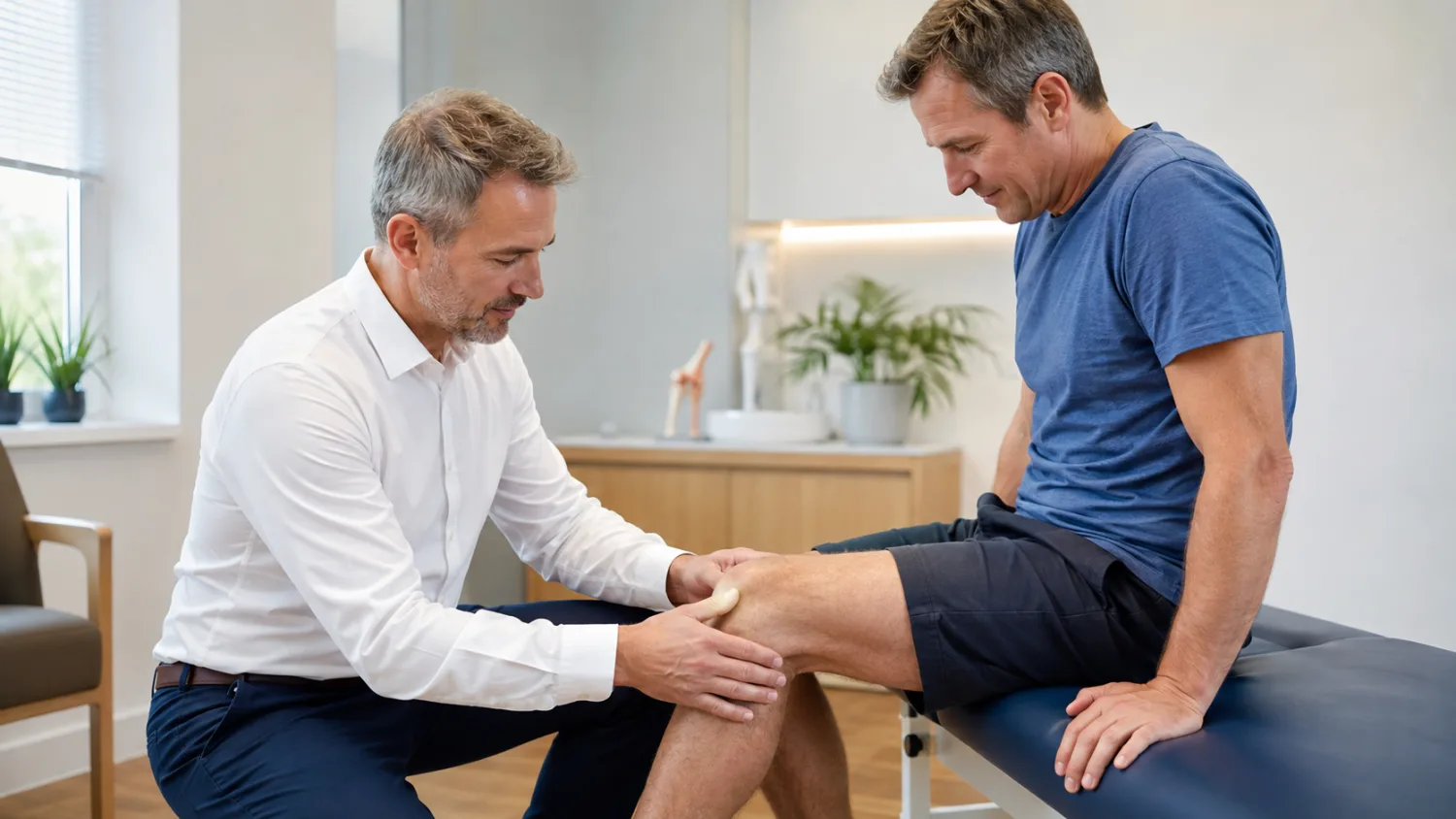
A private orthopaedic consultation in the UK typically costs approximately £150 to £300. Fees may begin at around £95 to £150 at lower-cost providers, while experienced specialists and central London consultants may charge £300 to £400 or more.
A follow-up appointment commonly costs £100 to £200. However, the consultation is only one part of the possible bill. X-rays, MRI scans, blood tests, injections, braces and physiotherapy may all be charged separately.
A relatively straightforward assessment may cost less than £300. If you need an initial consultation, MRI scan and follow-up appointment, the complete diagnostic process could cost approximately £550 to £1,200 or more before treatment begins.
Prices in this guide are approximate self-pay ranges. Fees vary between consultants, hospitals, locations and medical circumstances. Ask for an individual written quotation before booking.
How much does a private orthopaedic consultation cost in the UK?
| Appointment or service | Typical private cost |
|---|---|
| Initial orthopaedic consultation | Approximately £150–£300 |
| Premium or central London consultation | Approximately £250–£400+ |
| Follow-up consultation | Approximately £100–£200 |
| Second opinion | Approximately £200–£400+ |
| Remote or telephone follow-up | Approximately £80–£180 |
The Private Healthcare Information Network says an initial private consultant appointment tends to cost around £170 to £250, although leading specialists and consultants in London may charge more. Its guide to self-funding private treatment also explains why patients should ask about consultant, hospital and diagnostic fees separately.
Published orthopaedic prices illustrate the variation. Practice Plus Group advertises orthopaedic consultations at £145, including certain basic tests, while independent practices publish initial fees of approximately £275 to £350. These examples should not be treated as fixed national prices.
The fee may also depend on the consultant’s subspecialty. A general assessment of uncomplicated knee pain may cost less than an appointment with a highly specialised spinal, paediatric or complex revision surgeon.
What does the consultation fee include?
An initial orthopaedic consultation usually includes:
- a discussion of your symptoms and how they affect daily life;
- a review of previous injuries, operations and medical conditions;
- questions about medication, work, sport and activity;
- a physical examination of the affected area;
- an assessment of movement, strength and stability;
- review of any scans or reports you bring;
- an explanation of possible causes;
- a proposed plan for investigation or treatment;
- a letter or report sent to you and, with permission, your GP.
Some hospitals include a basic X-ray in a fixed consultation package. Most independent consultants charge separately for imaging, injections and hospital facilities.
Before booking, ask whether the quoted price includes:
- X-rays taken on the same day;
- review of existing scans;
- a written consultation letter;
- administration or prescription charges;
- VAT where applicable to a non-medical item;
- a short results call;
- any follow-up appointment.
A clinic advertising a £150 consultation may ultimately cost more than one charging £220 if the first clinic adds separate hospital and diagnostic fees.
How much do X-rays, scans and tests cost?
An orthopaedic consultant may be able to make a diagnosis through your history, examination and a straightforward X-ray. Soft-tissue injuries and complex joint or spinal problems may require more detailed imaging.
| Investigation | Possible self-pay cost |
|---|---|
| Standard X-ray | Approximately £100–£250 |
| Ultrasound scan | Approximately £200–£450 |
| MRI scan of one area | Approximately £300–£700 |
| CT scan | Approximately £400–£800+ |
| Basic blood tests | Approximately £50–£200+ |
| Nerve-conduction studies or EMG | Approximately £300–£700+ |
Prices depend on the body area, number of views, whether contrast is used and whether a radiologist’s report is included. Imaging at a central London hospital may cost substantially more than a scan at an independent diagnostic centre.
Do not assume that the most expensive scan is the most appropriate. An X-ray can show joint-space narrowing, fractures, alignment and advanced arthritis more clearly than an MRI in some circumstances. MRI is particularly useful for structures such as ligaments, tendons, cartilage, discs and bone marrow.
Our guide to what an MRI scan can show explains the procedure. You can also compare typical charges in our overview of private MRI, CT and ultrasound costs.
What is the total cost of getting a diagnosis?
The most useful figure is often the cost of the complete assessment rather than the advertised price of the first appointment.
| Example diagnostic pathway | Possible total |
|---|---|
| Initial consultation with an included or low-cost X-ray | Approximately £150–£350 |
| Consultation, separately charged X-ray and follow-up | Approximately £350–£700 |
| Consultation, MRI scan and follow-up | Approximately £550–£1,200 |
| Consultation, MRI, blood tests and follow-up | Approximately £650–£1,400+ |
| Complex second opinion with review of several scans | Approximately £300–£700+, excluding new imaging |
For example, a £220 consultation followed by a £500 MRI and a £150 results appointment produces a total diagnostic bill of £870. This does not include an injection, physiotherapy or surgery.
Ask whether a formal follow-up is essential to receive the results. Some providers include a brief explanation by telephone, while others require a separately charged appointment before making treatment recommendations.
If you already have recent NHS imaging, ask whether the consultant can access it or whether you should request a copy. Avoiding unnecessary repeated scans can reduce both cost and delay.
Which treatment costs might follow the consultation?
Orthopaedic treatment does not always mean surgery. Depending on the diagnosis, the consultant may recommend time, activity modification, medication, physiotherapy, an injection or another non-operative treatment.
| Possible treatment | Approximate private cost |
|---|---|
| Physiotherapy assessment | Approximately £50–£100 |
| Physiotherapy follow-up session | Approximately £40–£80 |
| Steroid or local-anaesthetic injection | Approximately £200–£600+ |
| Ultrasound-guided injection | Approximately £300–£700+ |
| Custom brace, splint or orthotic | Approximately £100–£500+ |
| PRP injection | Approximately £350–£800+ per treatment |
| Minor hand or foot procedure | Often £1,500–£5,000+ |
| Arthroscopy or ligament procedure | Often several thousand pounds |
| Hip or knee replacement | Often approximately £11,000–£17,000+ |
These are broad estimates rather than quotations. Complexity, implants, anaesthesia, hospital choice and length of stay can change the cost considerably.
Circle Health Group, for example, advertises hip-replacement packages beginning at approximately £12,750 but states that the outpatient consultation and diagnostic investigations are not included. This shows why patients should check the boundary between pre-operative costs and the surgical package. See its explanation of private hip-replacement pricing.
Our guides cover private hip and shoulder surgery costs, NHS and private knee replacement and private physiotherapy costs.
What happens during a private orthopaedic appointment?
An initial appointment usually lasts approximately 20 to 40 minutes, although this varies. Complex cases and second opinions may be given longer.
The consultant will ask:
- where the pain or other symptom is located;
- when and how it started;
- whether there was an injury;
- what makes it better or worse;
- whether the joint locks, clicks, swells or gives way;
- whether you have weakness, numbness or tingling;
- what treatment you have already tried;
- how the problem affects sleep, mobility, work and exercise.
The examination depends on the affected area. It may involve watching you walk, moving the joint, testing muscle strength and checking stability, sensation, reflexes or blood circulation.
You may be offered an X-ray during the visit if imaging facilities are available. An MRI or other specialist investigation is normally booked for another date, although some hospitals can arrange it immediately.
The consultant should explain the likely diagnosis, reasonable treatment choices, expected benefits, uncertainties, recovery and important risks. You do not have to agree to treatment or pay a deposit during the appointment.
Which type of orthopaedic specialist should you see?
Orthopaedics covers bones, joints, muscles, ligaments, tendons and parts of the nervous system affected by musculoskeletal problems. Most consultants specialise in particular body areas or types of treatment.
Common subspecialties include:
- hip surgery;
- knee surgery;
- foot and ankle surgery;
- shoulder and elbow surgery;
- hand and wrist surgery;
- spinal surgery;
- sports injuries;
- paediatric orthopaedics;
- trauma and fracture care;
- joint replacement and revision surgery.
A surgeon whose practice concentrates on the relevant body area is generally more useful than choosing someone solely because they have the earliest appointment or the longest list of impressive titles.
Some problems are better assessed initially by a rheumatologist, neurologist, physiotherapist, podiatrist or pain specialist. For example, widespread joint swelling and prolonged morning stiffness may suggest an inflammatory condition rather than an isolated surgical problem.
Our guide to osteoarthritis and rheumatoid arthritis explains why the distinction can affect the most appropriate specialist.
Do you need a GP referral?
Self-paying patients can often book an orthopaedic appointment without a GP referral. Nevertheless, a referral can help direct you to the right subspecialist and provide a useful summary of your medical history and previous treatment.
Private medical insurers commonly require a GP or approved digital-GP referral before authorising a specialist appointment. Some offer direct-access musculoskeletal services that assess the problem first and decide whether you need physiotherapy, imaging or an orthopaedic consultant.
Contact the insurer before booking to confirm:
- that the condition is eligible;
- whether a referral is required;
- which consultants are recognised;
- which hospital network you can use;
- whether an excess applies;
- the outpatient benefit remaining;
- whether scans need separate authorisation.
A consultant accepting insured patients does not guarantee that the insurer will cover that consultant’s entire fee. Ask whether they charge within the insurer’s recognised fee schedule and whether you could face a shortfall.
See our guide to what private health insurance covers before starting a claim.
Can you have the consultation privately and treatment on the NHS?
Yes. Paying for a private consultation does not remove your right to NHS care. You can take the consultant’s report to your GP and ask whether NHS referral, investigation or treatment is appropriate.
However, paying for the consultation does not allow you to bypass NHS waiting lists. The NHS team remains responsible for assessing the referral, deciding what tests are needed and prioritising treatment according to clinical need.
An NHS clinician may accept good-quality private imaging, but they can request another scan if the images are unavailable, outdated or unsuitable for planning treatment.
If you intend to return to the NHS, ask the private consultant to provide:
- a clear diagnosis or differential diagnosis;
- the examination findings;
- copies of scan reports;
- access to the original images;
- recommended treatment and urgency;
- a letter addressed to your GP.
Some people use a private appointment to obtain an earlier opinion but continue all treatment through the NHS. Others self-fund both assessment and treatment. Our comparison of NHS and private healthcare explains the practical differences.
How should you choose an orthopaedic consultant?
Check the consultant’s medical registration and specialist credentials through the General Medical Council medical register. An orthopaedic surgeon should normally appear on the Specialist Register in trauma and orthopaedic surgery.
Useful questions include:
- Does the consultant regularly treat this particular problem?
- Do they offer non-surgical as well as surgical options?
- Where would scans and treatment take place?
- How much is the initial consultation?
- Which additional charges are likely?
- Do they participate in recognised outcome reporting?
- Who provides support if complications occur?
- Is post-operative physiotherapy included?
- How many follow-up appointments are included in a surgical package?
The Private Healthcare Information Network publishes information about private consultants and hospitals, including fees submitted by consultants and information about some procedures. You can use the PHIN consultant and hospital search alongside the GMC register.
Do not judge suitability from online reviews alone. Reviews may reflect reception, waiting time and hospital facilities rather than diagnostic accuracy, operative outcomes or complication management.
How can you avoid unexpected costs?
Ask for prices from both the consultant and the hospital because they may invoice separately. A consultant’s secretary may not know the hospital’s charge for imaging, equipment or an injection room.
Before attending, ask:
- What is the exact consultation fee?
- How much is a follow-up?
- Are X-rays included?
- Could a scan be performed on the same day?
- What would that scan cost?
- Is the radiologist’s report included?
- Is there a separate hospital facility fee?
- Would an injection be charged separately?
- What is the cancellation policy?
- Will I receive a written treatment estimate before proceeding?
If surgery is recommended, request an itemised quotation showing:
- the surgeon’s fee;
- the anaesthetist’s fee;
- hospital and theatre charges;
- implants or prostheses;
- medication and equipment;
- follow-up appointments;
- physiotherapy;
- the policy for complications or readmission.
A fixed-price package can reduce uncertainty, but only if you understand what is excluded. The cheapest initial consultation is not necessarily the cheapest complete pathway.
When should joint or bone symptoms receive urgent attention?
A routine private appointment is not appropriate for every musculoskeletal problem.
Seek urgent medical advice if you have:
- a visibly deformed limb after an injury;
- an open wound with visible bone;
- inability to bear weight after significant trauma;
- a cold, pale or blue limb;
- sudden loss of movement or sensation;
- a hot, intensely painful and swollen joint with fever;
- rapidly worsening weakness or numbness;
- new bladder or bowel disturbance with back pain;
- numbness around the genitals or buttocks;
- severe pain following a major fall or collision.
Use NHS 111 for urgent advice when you are unsure where to go. Call 999 or attend emergency care for a serious injury, loss of circulation, sudden neurological symptoms or another life-threatening situation. Do not delay emergency assessment while comparing private fees.
Persistent pain, swelling, instability, reduced movement or symptoms that interfere with sleep and daily activities can usually begin with a GP, physiotherapist or routine orthopaedic assessment.
Frequently asked questions
How much is a private orthopaedic consultation?
An initial appointment commonly costs approximately £150 to £300. Some lower-cost providers charge around £95 to £150, while premium and central London consultants may charge £300 to £400 or more.
How much is a follow-up appointment?
A follow-up typically costs approximately £100 to £200. Confirm whether discussing scan results requires a full paid appointment.
Is an X-ray included in the consultation fee?
Sometimes, but not usually. Certain providers offer a fixed package including basic X-rays, while other hospitals charge the consultant fee and imaging fee separately.
How much does an orthopaedic consultation and MRI cost?
The consultation and MRI together may cost approximately £450 to £1,000. Adding a follow-up appointment can take the diagnostic total to roughly £550 to £1,200 or more.
Can I book without a GP referral?
Self-paying patients can often book directly. Insured patients should check because the insurer may require a GP referral or use of its own musculoskeletal pathway.
Will the consultant perform treatment at the first appointment?
Usually the first visit focuses on assessment. An injection or minor treatment may sometimes be offered, but you should receive an explanation of the benefits, risks and additional cost before agreeing.
Should I have an MRI before seeing the consultant?
Not unless advised by an appropriate clinician. The consultant may find that an X-ray, ultrasound or no imaging is more suitable. Ordering the wrong scan can waste money and still need to be repeated.
What should I take to the consultation?
Bring your medication list, referral letter, relevant medical history, previous clinic letters, scan reports and access instructions for the original images. Wear clothing that allows the affected area to be examined.
How long does an orthopaedic consultation last?
Many initial appointments last approximately 20 to 40 minutes. A complex second opinion may take longer, so ask when booking.
Does private health insurance cover orthopaedics?
It may cover eligible acute conditions, subject to underwriting, exclusions, outpatient limits, the hospital network and authorisation. Pre-existing and chronic conditions may be restricted.
Can I get a second opinion?
Yes. A private orthopaedic second opinion often costs around £200 to £400 or more. Complex cases may attract a higher fee because several scans and records must be reviewed.
Does a private consultation guarantee faster NHS surgery?
No. You can return to the NHS, but the NHS service assesses and prioritises you through its normal clinical pathway.
Is the most expensive orthopaedic surgeon the best?
Not necessarily. Price can reflect location, seniority and demand rather than suitability for your condition. Relevant subspecialist experience, clear communication, governance and outcomes are more useful considerations.
Is a private orthopaedic consultation worth it?
It may be worthwhile when you want an earlier specialist opinion, clearer diagnosis or treatment options and can afford the likely tests and follow-up. It offers less value if you budget only for the first appointment but cannot fund recommended investigations or treatment.