Lymphocytes are one of the main types of white blood cell, and they play an important role in defending the body against infections and abnormal cells.
If your blood test shows a high or low lymphocyte count, the result can look worrying — especially when it is highlighted outside the laboratory reference range.
But an abnormal lymphocyte count does not automatically mean something serious.
High lymphocytes are often seen during or after viral infections. Low lymphocytes can occur temporarily after illness, during physical stress or because of medicines such as steroids or other immunosuppressive treatments.
Persistent or marked abnormalities deserve more attention, particularly when they are accompanied by swollen lymph nodes, unexplained weight loss, drenching night sweats, recurrent infections, anaemia or a low platelet count.
This guide explains what lymphocytes do, what high and low counts can mean, how to interpret the absolute number and percentage, and when an abnormal result may need further investigation.
What Are Lymphocytes?
Lymphocytes are white blood cells involved in the immune system.
They are made in the bone marrow and circulate through the blood, lymph nodes and other lymphatic tissues.
There are several major types of lymphocyte.
B lymphocytes
B cells produce antibodies that help recognise and neutralise infections.
T lymphocytes
T cells have several roles, including coordinating immune responses and destroying cells that are infected or abnormal.
Natural killer cells
Natural killer cells, or NK cells, can recognise and destroy certain virus-infected or abnormal cells.
MedlinePlus explains that B cells help defend against viruses, bacteria and toxins, while certain T cells can destroy infected or cancerous cells. Its blood differential guide explains the main white-cell types.
Where Do Lymphocytes Appear on a Blood Test?
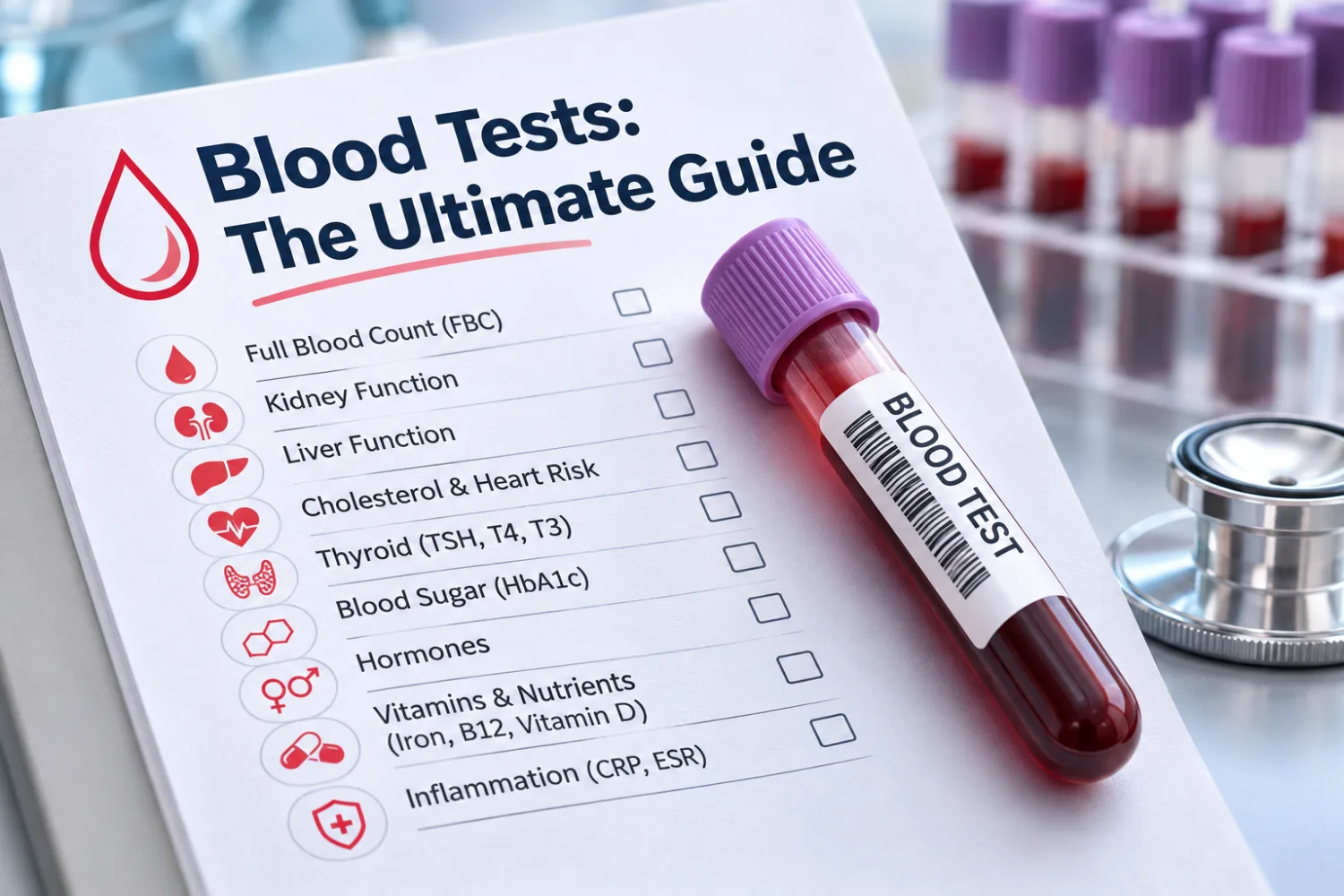
Lymphocytes are usually measured as part of a full blood count with a white-cell differential.
Your report may show them as:
Lymphocytes, LYMPH, LYM or a similar abbreviation.
The result may be given as an absolute count, usually in × 109/L, and sometimes also as a percentage of all white blood cells.
For example:
Lymphocytes: 2.1 × 10⁹/L
That absolute number is usually more useful than the percentage alone.
If you want to understand the rest of the report as well, see our full blood count results guide and white blood cell count guide. These are already part of the site's blood-test library.
What Is a Normal Lymphocyte Count?
Reference ranges vary slightly between laboratories, so the range printed on your own report is the one that matters.
One NHS laboratory, Gloucestershire Hospitals NHS Foundation Trust, uses an adult lymphocyte reference range of 1.0 to 4.0 × 10⁹/L. Its published haematology reference ranges can be viewed here.
Children normally have higher lymphocyte counts than adults, so adult reference ranges should not be applied to a child's result.
| Result | General meaning |
|---|---|
| Within your laboratory reference range | Usually considered normal |
| Above the range | Lymphocytosis |
| Below the range | Lymphopenia or lymphocytopenia |
A small deviation outside the range does not automatically indicate disease.
Doctors look at the size of the abnormality, whether it is temporary or persistent, your symptoms, previous results and the rest of the full blood count.
Absolute Lymphocytes vs Lymphocyte Percentage
This distinction causes a lot of confusion.
A blood differential may show lymphocytes as both a number and a percentage.
MedlinePlus notes that lymphocytes normally make up roughly 20% to 40% of circulating white cells in many adults, although ranges vary.
But the percentage can be misleading if another white-cell type changes.
For example, your lymphocyte percentage could look high simply because neutrophils are temporarily low.
Likewise, the percentage could look low if neutrophils rise sharply during a bacterial infection even though the actual lymphocyte count remains normal.
That is why clinicians generally pay particular attention to the absolute lymphocyte count.
What Does a High Lymphocyte Count Mean?
A high lymphocyte count is called lymphocytosis.
The most common explanation is often that the immune system is responding to an infection.
Viral infections are particularly well known for causing temporary lymphocytosis.
Cleveland Clinic notes that lymphocytosis is commonly caused by infection and is frequently seen when the immune system is fighting a virus or other illness.
NHS haematology guidance from Cornwall similarly says viral infection usually produces a modest, temporary rise lasting less than around two months.
So if your lymphocytes are mildly raised while you have recently had a viral illness, the result may simply reflect that immune response.
Common Causes of High Lymphocytes
Viral infections
These are among the most common causes.
Examples include infectious mononucleosis caused by Epstein–Barr virus, hepatitis and several other viral illnesses.
MedlinePlus lists viral infections such as mononucleosis, mumps and measles among recognised causes of an increased lymphocyte percentage.
Some bacterial infections
Although neutrophils are more commonly associated with bacterial infections, certain bacterial illnesses can cause lymphocytosis.
Whooping cough and tuberculosis are classic examples.
Smoking
Smoking can produce a reactive increase in lymphocytes in some people.
NHS referral guidance specifically lists smoking among recognised non-malignant causes of lymphocytosis.
Physical stress
Severe physical stress, trauma and some acute medical events can temporarily alter lymphocyte numbers.
After spleen removal
Some people who have had their spleen removed can have persistently higher lymphocyte counts.
Blood and lymphatic disorders
Persistent lymphocytosis can occasionally reflect a clonal lymphocyte disorder such as chronic lymphocytic leukaemia, or CLL.
This is much less common than a temporary reactive rise, particularly in younger people.
Does a High Lymphocyte Count Mean Leukaemia?
No.
A mildly high lymphocyte result, especially after infection, is far more likely to have a reactive explanation than to mean leukaemia.
However, doctors become more interested in a haematological cause when lymphocytosis is persistent, progressively rising or accompanied by other abnormalities.
NHS South Tees guidance notes that mild lymphocytosis has two broad causes: a reactive process, particularly infection, or a lymphoproliferative disorder such as CLL.
Features that make further assessment more important include:
- persistently high or rising lymphocyte counts;
- swollen lymph nodes;
- an enlarged spleen;
- unexplained weight loss;
- drenching night sweats;
- recurrent fevers;
- recurrent infections;
- anaemia;
- a low platelet count;
- abnormal or immature cells reported on a blood film.
South Tees NHS guidance suggests considering haematology referral where lymphocytes remain above 10 × 109/L or where lymphocytosis is accompanied by anaemia, thrombocytopenia, lymphadenopathy, splenomegaly or systemic symptoms.
Thresholds vary between NHS services, so these figures should not be used as a self-diagnosis rule.
Why Doctors Often Repeat a High Lymphocyte Result
One isolated result does not always tell you much.
If you recently had an infection, the simplest next step may be to allow time for the immune response to settle and then repeat the full blood count.
Several NHS haematology guidelines recommend this approach in otherwise well adults with isolated lymphocytosis.
South Tees recommends repeating an isolated lymphocytosis after around six to eight weeks, while Cornwall guidance suggests repeating the FBC in roughly two to three months when no red flags are present.
The trend can be more informative than the first number.
A count that falls back towards normal after illness is reassuring.
A count that continues to increase may justify further investigation.
What Does a Low Lymphocyte Count Mean?
A low lymphocyte count is called lymphopenia or lymphocytopenia.
It can occur temporarily during acute illness or physical stress and does not always indicate an immune-system disorder.
Cornwall NHS guidance defines adult lymphopenia as a count below approximately 1.0 × 10⁹/L for the purpose of its referral pathway and notes that isolated lymphopenia is common, particularly in older adults.
Unlike severe neutropenia, a mildly low lymphocyte count on its own does not usually create an immediate emergency.
The significance depends on how low it is, whether it persists and whether the person is having unusual or recurrent infections.
Common Causes of Low Lymphocytes
Recent infection
Some infections can temporarily reduce lymphocyte numbers.
This may occur during the acute illness or shortly afterwards and then resolve naturally.
Physical stress or surgery
Cornwall NHS guidance notes that lymphopenia may occur as a response to acute illness, physical stress or recent surgery.
Steroids and immunosuppressive medicines
Corticosteroids can reduce circulating lymphocyte levels.
Other treatments designed to suppress the immune system may have the same effect.
Chemotherapy and radiotherapy
Cancer treatment can suppress bone marrow or directly affect lymphocyte populations.
HIV and other immune disorders
HIV can reduce particular lymphocyte populations, especially CD4 T cells.
MedlinePlus lists HIV among recognised causes of low white-cell and lymphocyte-related abnormalities.
Malnutrition or heavy alcohol use
Severe nutritional problems may affect production and survival of immune cells.
Cornwall NHS guidance specifically advises considering malnutrition and excess alcohol when investigating persistent lymphopenia.
Autoimmune and bone-marrow disorders
Some autoimmune diseases and disorders involving bone marrow can reduce lymphocytes along with other blood-cell types.
Is a Low Lymphocyte Count Dangerous?
Not necessarily.
In fact, current NHS guidance notes that isolated lymphopenia is common and often does not need haematology referral when there are no other concerning findings.
The result becomes more important when it is very low, persistent or associated with recurrent or unusual infections.
You should also pay more attention if several components of the blood count are abnormal at the same time.
For example, lymphopenia accompanied by low haemoglobin, neutropenia or thrombocytopenia deserves a different level of assessment from an isolated slightly low lymphocyte count in someone who feels well.
The NHS advises medical review if a low white-cell count is associated with repeated infections, fever, chills, recurrent mouth ulcers or other signs of infection.
What Happens After an Abnormal Lymphocyte Result?
The next step depends on the pattern.
A clinician may first review previous blood tests to see whether the result is new or longstanding.
They may also ask about recent viral illness, smoking, medicines, weight loss, night sweats, recurrent infections and swollen lymph nodes.
If the lymphocyte count is high and remains elevated, a blood film may be performed.
This allows laboratory staff to examine the appearance of the cells under a microscope.
Some persistent cases may also undergo flow cytometry or immunophenotyping, which identifies different populations of lymphocytes and can determine whether the cells are reactive or represent a clonal lymphocyte population.
NHS referral guidance commonly recommends further investigation when lymphocytosis persists, particularly where other abnormalities or clinical symptoms are present.
If the lymphocyte count is low, the clinician may instead review medicines, recent infection, nutritional status and immune-system risk factors.
If you received the result from a commercial test rather than your GP, our guide to what to do after abnormal private blood-test results explains the practical next steps. That page is already part of your blood-test content.
How to Interpret Lymphocytes With the Rest of the Full Blood Count
Lymphocytes should not be interpreted in isolation.
The total white-cell count tells you whether white cells overall are high, low or normal.
The differential then shows how much each white-cell type contributes.
A mildly raised lymphocyte count with normal haemoglobin, platelets and neutrophils after a viral infection is usually much less concerning than persistent lymphocytosis accompanied by anaemia or thrombocytopenia.
Likewise, a low lymphocyte percentage may simply reflect high neutrophils during an infection rather than true lymphopenia.
This is why looking at the whole FBC matters.
See our white blood cell count guide, full blood count guide and platelet count guide if several numbers on the report are outside range. These related blood-test pages are already present in the site resource library.
When Should You See a GP?
A single mildly abnormal lymphocyte count often does not require urgent action.
It is reasonable to arrange medical review if:
- the count remains abnormal on repeat testing;
- the lymphocyte count is progressively increasing;
- you have persistently swollen lymph nodes;
- you have unexplained weight loss;
- you have drenching night sweats;
- you have recurrent unexplained fevers;
- you keep developing infections;
- you have unusual bruising or bleeding;
- haemoglobin or platelets are also abnormal;
- a blood film reports abnormal or immature cells.
UCLH notes that abnormalities in white-cell counts can have many causes, both mild and serious, and that most people referred to haematology do not turn out to have cancer.
This is useful perspective: an abnormal result needs context, not panic.
Frequently Asked Questions
What does LYMPH mean on a blood test?
LYMPH usually refers to lymphocytes, one of the major types of white blood cell involved in immune defence.
What is a normal lymphocyte count?
Adult ranges vary by laboratory. One NHS laboratory uses approximately 1.0 to 4.0 × 10⁹/L, but always use the range printed on your own report.
What does a high lymphocyte count mean?
It is called lymphocytosis. Viral infections are a common cause, although smoking, some bacterial infections, physical stress and certain blood disorders can also cause it.
Do high lymphocytes usually mean a viral infection?
They often can, particularly when the rise is mild and temporary. However, the count alone cannot tell you exactly which infection is present.
Can COVID or flu raise lymphocytes?
Viral infections can alter lymphocyte counts, but the pattern varies depending on the virus and stage of illness. A single count should therefore be interpreted with symptoms and the rest of the FBC.
Can smoking raise lymphocytes?
Yes. Smoking is recognised in NHS haematology guidance as a possible cause of reactive lymphocytosis.
Does a high lymphocyte count mean cancer?
Usually not. Infection and other reactive causes are more common. Persistent or rising lymphocytosis with swollen nodes, systemic symptoms or other abnormal blood counts is more likely to prompt investigation for a blood disorder.
What does a low lymphocyte count mean?
Low lymphocytes are called lymphopenia. Causes can include recent illness, physical stress, steroids, immunosuppressive medicines, chemotherapy, HIV, malnutrition and some autoimmune or bone-marrow conditions.
Is 0.9 lymphocytes low?
A result of 0.9 × 10⁹/L would be below the reference range used by many adult laboratories. Whether it needs investigation depends on your symptoms, previous results and the rest of the blood count.
Can steroids lower lymphocytes?
Yes. Corticosteroids are a recognised cause of lymphopenia.
Can stress affect lymphocyte counts?
Yes. Significant physical stress, acute illness and surgery can temporarily alter lymphocyte numbers.
Why are my lymphocytes high but my total white count normal?
A mild increase in one white-cell type may occur while the total white-cell count remains inside the laboratory range. The absolute count and the rest of the differential provide more useful context than the total alone.
What is the difference between lymphocyte count and percentage?
The count measures the actual concentration of lymphocytes in the blood, while the percentage shows what proportion of all white cells are lymphocytes. The absolute count is generally more useful for determining whether true lymphocytosis or lymphopenia is present.
Should a high lymphocyte result be repeated?
Often yes, particularly when the rise is mild and you have recently been unwell. Several NHS haematology pathways recommend repeating an isolated lymphocytosis after a period of weeks or a few months to see whether it resolves.
When should high lymphocytes be investigated further?
Further investigation is more likely when lymphocytosis persists, rises over time, becomes marked or is accompanied by lymph-node enlargement, an enlarged spleen, weight loss, night sweats, recurrent infections, anaemia or low platelets.
This article provides general information about lymphocyte blood-test results and cannot diagnose the cause of an abnormal count. Reference ranges vary between laboratories and by age. Persistent or markedly abnormal results should be interpreted alongside your symptoms, medication history, previous blood tests and the rest of the full blood count.