Blood tests can tell doctors an enormous amount about what is happening inside the body.
They can show whether you are anaemic, whether your kidneys are filtering normally, how your liver is coping, whether your blood sugar suggests diabetes, whether your thyroid is underactive, whether you may be deficient in iron or vitamin B12, and how your cholesterol affects your future cardiovascular risk.
There are also far more specialised blood tests for hormones, inflammation, fertility, allergies, heart problems, blood clots and certain cancers.
That variety can make private testing confusing.
It is easy to assume that ordering the biggest possible blood panel must provide the most reassurance. In reality, more testing is not always better testing. Every blood test has a purpose, limitations and a clinical context in which it becomes useful.
A mildly abnormal result does not automatically mean disease. A normal result does not always rule a condition out. And some tests that are extremely useful in hospital are poor choices for general health screening.
This guide explains the main types of blood tests used in the UK, what they measure, which symptoms may make particular tests useful, how private blood testing differs from NHS testing and what to consider before choosing a panel yourself.
What Can a Blood Test Actually Tell You?
A blood sample contains far more information than most people realise.
Some tests count the physical cells circulating in your blood. Others measure proteins, enzymes, electrolytes, hormones, vitamins, fats or metabolic waste products.
The NHS lists common blood tests including full blood count, blood glucose, kidney testing, cholesterol profiles and thyroid testing. These are often requested because they can help explain symptoms or identify problems that have no obvious symptoms at all. The NHS blood-test overview provides a useful introduction to common tests.
A doctor rarely interprets one result completely in isolation.
Suppose your ALT liver enzyme is raised. That does not immediately diagnose liver disease. The clinician may look at your other liver markers, medications, alcohol intake, weight, symptoms and previous results.
The same is true across almost every type of blood test.
The most useful question is therefore not simply:
“Is this number high or low?”
It is:
“What does this result mean in the context of my symptoms, other tests and medical history?”
The Core Blood Tests in a General Health Check
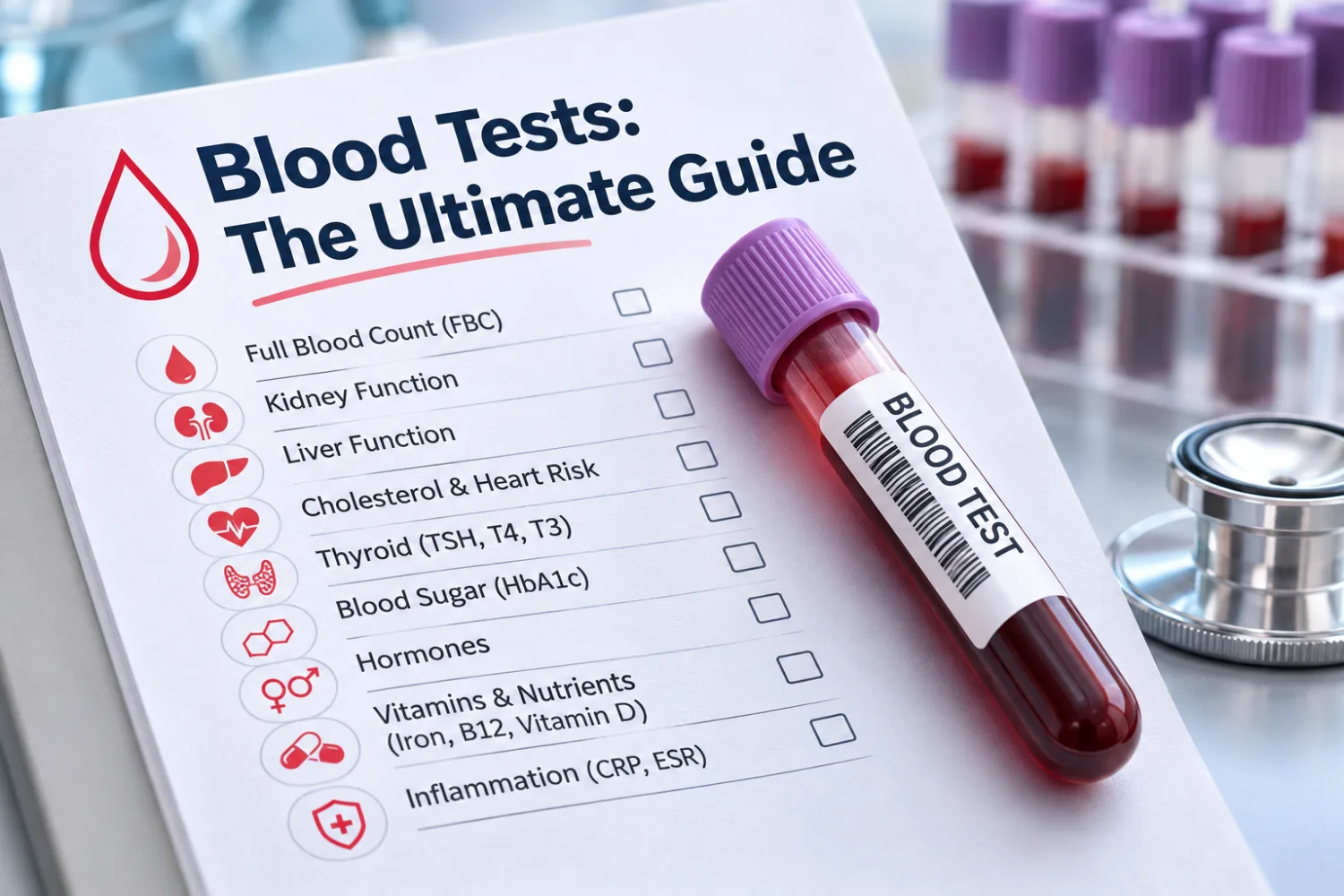
If you buy a broad private health panel, several groups of tests appear repeatedly.
A typical panel may include a full blood count, kidney function, liver markers, HbA1c or glucose, cholesterol, thyroid function and sometimes nutritional markers such as ferritin, vitamin B12, folate or vitamin D.
There is a reason these appear so often: together they cover several common and clinically important areas.
But there is no universally agreed “complete blood test”. A panel containing 40 markers is not necessarily better than one containing 20 relevant ones.
For cardiovascular screening, for example, the NHS Health Check concentrates on established risk factors such as cholesterol, blood pressure and, where appropriate, blood sugar rather than trying to measure every possible biomarker. The programme is aimed mainly at people aged 40 to 74 who do not already have certain cardiovascular conditions. You can read how NHS Health Checks work here.
If you are choosing a private test, our guide to which private blood test to choose explains how to match a panel to the question you are actually trying to answer.
Full Blood Count: Red Cells, White Cells and Platelets
The full blood count — usually shortened to FBC — is one of the most frequently requested blood tests in medicine.
It does not measure one thing. It looks at several different types of blood cell.
Haemoglobin and red blood cells
Haemoglobin carries oxygen around the body.
A low haemoglobin level can indicate anaemia. Iron deficiency is one possible cause, but anaemia can also result from vitamin deficiencies, blood loss, kidney disease, chronic illness and many other conditions.
Red-cell measurements such as MCV can provide clues about the type of anaemia. Small red blood cells may point towards iron deficiency, while unusually large red cells can occur with vitamin B12 or folate deficiency, alcohol use and some medications.
The NHS notes that red-cell reference ranges are guides and vary between laboratories.
White blood cells
White blood cells are involved in immune defence.
A raised white-cell count may occur during infection, inflammation, stress, steroid treatment and many other situations. A low count can also have multiple causes.
The differential count divides white cells into groups such as neutrophils, lymphocytes, monocytes and eosinophils, which can provide additional clues.
Platelets
Platelets help blood clot.
They can rise temporarily after infection or inflammation, while very low platelet counts can increase bleeding risk.
If you want the individual markers explained in more detail, see our guides to full blood count results, platelet counts and white blood cell results.
Iron and Ferritin: Testing for Iron Deficiency
Ferritin is one of the most useful tests when iron deficiency is suspected.
Ferritin reflects iron stores rather than simply measuring the amount of iron circulating in your blood at one moment.
This distinction matters because someone can have low ferritin while their haemoglobin remains normal. In other words, iron stores may be depleted before full anaemia develops.
Symptoms can include tiredness, reduced exercise tolerance, headaches, hair shedding and restless legs, although these symptoms are not specific to iron deficiency.
A more complete iron assessment may include ferritin, serum iron, transferrin and transferrin saturation.
Ferritin also behaves as an inflammatory marker. It can rise during infection, inflammation and liver disease, so a high ferritin does not automatically mean that someone has excessive iron.
For more detail, see our guides to iron, ferritin and anaemia results, low ferritin with normal haemoglobin and high ferritin.
Vitamin B12, Folate and Vitamin D
Nutrient testing is a major reason people buy private blood tests.
Vitamin B12 and folate are particularly relevant because both are involved in normal blood-cell production and nervous-system function.
B12 deficiency can cause anaemia, but neurological symptoms such as tingling, numbness, balance problems and cognitive changes can occur as well.
Vitamin D is different. It is involved in bone and muscle health, but indiscriminate testing of everyone is not necessarily useful.
People at greater risk of low vitamin D include those with limited sunlight exposure, darker skin, malabsorption and certain medical conditions.
It is usually more useful to test nutrients when there is a reason rather than assuming that every symptom requires an enormous vitamin panel.
See our guides to B12 and folate blood-test results and vitamin D results.
Kidney Blood Tests: Creatinine, eGFR, Urea and Electrolytes
Kidney blood tests usually look at several related markers.
Creatinine is a waste product generated largely by muscle metabolism. Healthy kidneys remove it from the blood.
From creatinine, laboratories calculate an estimated glomerular filtration rate, or eGFR, which gives an estimate of kidney filtration.
Urea is another waste product, although it can be influenced by hydration and protein intake as well as kidney function.
A U&E panel also includes electrolytes such as sodium and potassium.
These minerals are important for nerve function, fluid balance and heart rhythm.
Kidney results are particularly useful in people with diabetes, high blood pressure or existing kidney disease and when monitoring medicines that can affect kidney function or potassium.
An isolated slightly low eGFR does not always mean chronic kidney disease. Age, hydration, muscle mass and previous results all matter.
Our guides to kidney blood-test results, eGFR and creatinine and U&E results explain these markers in more detail.
Liver Blood Tests: ALT, AST, ALP, GGT, Bilirubin and Albumin
The phrase “liver function test” is slightly misleading.
Some markers in a liver profile indicate liver-cell injury rather than directly measuring how well the liver is functioning.
ALT and AST can rise when liver cells are irritated or damaged.
ALP may rise with problems affecting bile ducts, although it is also produced by bone.
GGT can help interpret other liver abnormalities and may be influenced by alcohol and some medicines.
Bilirubin is produced when red blood cells are broken down. Raised bilirubin can cause jaundice, although mild inherited conditions such as Gilbert's syndrome can also increase it.
Albumin is a protein produced by the liver and is one of the markers that provides more information about synthetic liver function.
The pattern is often more informative than one isolated number.
See our guides to liver function tests and ALT, AST, ALP and GGT.
Blood Sugar Tests: HbA1c, Fasting Glucose and Random Glucose
Blood sugar testing can identify diabetes and, in some situations, prediabetes.
The two terms people most commonly encounter are glucose and HbA1c.
A glucose result measures blood sugar at the time the sample is taken.
HbA1c is different. It reflects how much glucose has attached to haemoglobin and provides an indication of average blood-sugar exposure over the preceding weeks and months.
It is particularly useful because it usually does not require fasting.
HbA1c is not perfect for everyone. Conditions that affect red-blood-cell turnover, haemoglobin variants and certain forms of anaemia can make interpretation more complicated.
The NHS Health Check may include blood-sugar testing depending on the person's diabetes risk.
For the thresholds and interpretation, see our guides to HbA1c and blood sugar results, diabetes screening and diabetes blood-test results.
Cholesterol Blood Tests and Cardiovascular Risk
A standard lipid profile usually includes total cholesterol, HDL cholesterol, non-HDL cholesterol and triglycerides. LDL may also be reported or calculated.
These numbers are not interpreted in isolation.
The NHS explains that cholesterol results are combined with factors such as age, blood pressure and other health conditions to estimate cardiovascular risk.
For healthy adults, the NHS currently gives broad guide levels such as total cholesterol below 5 mmol/L and non-HDL cholesterol below 4 mmol/L, but targets can be lower for people who already have cardiovascular disease or are at high risk.
Most people do not need to fast for routine cholesterol testing.
See our guide to cholesterol test results for a fuller explanation.
ApoB and Lipoprotein(a): More Detailed Heart-Risk Testing
Standard cholesterol testing is enough for many people, but more specialised cardiovascular markers are increasingly available privately.
Apolipoprotein B, or ApoB, estimates the number of cholesterol-carrying particles capable of contributing to atherosclerosis.
It can sometimes provide additional information when conventional LDL cholesterol does not tell the whole story.
Lipoprotein(a), or Lp(a), is more genetically determined. High concentrations can increase cardiovascular risk even when other cholesterol measurements look relatively reassuring.
These are not replacements for standard cardiovascular assessment, but they may be useful in selected people — particularly those with a strong family history or unexpected cardiovascular disease.
See our guides to ApoB testing and Lipoprotein(a) for more detail.
Thyroid Blood Tests: TSH, Free T4 and T3
Thyroid testing usually starts with TSH, or thyroid-stimulating hormone.
TSH is released by the pituitary gland and acts as the body's signal to the thyroid.
When thyroid hormone production is low, TSH often rises because the pituitary is trying to stimulate the thyroid more strongly.
Free T4 helps show how much circulating thyroid hormone is available.
T3 is useful in some situations, particularly when an overactive thyroid is suspected, but it is not required in every routine thyroid check.
Thyroid tests can be useful when symptoms include unusual tiredness, temperature intolerance, unexplained weight change, palpitations or certain menstrual problems.
But these symptoms are common and have many possible causes, so a thyroid test is often one part of a broader assessment.
See our guide to TSH, free T4 and T3 results.
CRP and ESR: Blood Tests for Inflammation
CRP and ESR are often called inflammatory markers.
C-reactive protein, or CRP, can rise fairly quickly during infection or inflammation and fall again as the underlying problem improves.
ESR, or erythrocyte sedimentation rate, is a different test that can also increase with inflammation but is influenced by additional factors such as age and anaemia.
Neither test diagnoses a specific disease.
A high CRP does not tell you whether inflammation is caused by pneumonia, an autoimmune condition, surgery or another problem.
Conversely, a normal CRP does not rule out every inflammatory disease.
These tests are most useful when interpreted alongside symptoms and other investigations.
See our guides to CRP and ESR results.
Hormone Blood Tests
Hormone testing is one of the most heavily marketed areas of private blood testing — and one of the easiest to misinterpret.
A hormone level may vary according to age, biological sex, menstrual-cycle phase, pregnancy, menopause, medication use and even time of day.
Testosterone
Testosterone is usually best measured in the morning when investigating possible testosterone deficiency.
A borderline result may need repeating rather than immediately leading to treatment.
Other tests such as SHBG, LH and FSH can sometimes help explain whether a low testosterone result reflects a testicular problem or signalling from the pituitary.
Female reproductive hormones
FSH, LH, oestradiol and progesterone all change through the menstrual cycle.
A result without knowing when in the cycle the sample was taken can therefore be misleading.
AMH is used mainly as a marker related to ovarian reserve, particularly in fertility care. It does not provide a simple measure of whether someone is fertile.
Prolactin can be relevant when investigating irregular periods, unexpected milk production, infertility or pituitary problems, but stress around having blood taken can itself sometimes raise it.
See our guides to testosterone results, female hormone blood tests, fertility tests and menopause blood tests.
PSA: A Blood Test for Prostate Problems
PSA stands for prostate-specific antigen.
It is produced by the prostate and can increase with prostate cancer, but it can also rise because of benign prostate enlargement, inflammation, infection, recent ejaculation and other factors.
This is why PSA is not a simple cancer test.
The NHS specifically notes that an elevated PSA does not mean someone has cancer and that testing can lead to further investigations and treatment that may not ultimately have been necessary.
The NHS currently does not offer universal routine PSA screening, although men and others with a prostate can discuss testing with their GP.
See our guide to PSA blood-test results.
CA125: Useful in the Right Situation, Poor as a General Screening Test
CA125 is another blood test that is often misunderstood.
It can be raised in ovarian cancer, but also in non-cancerous conditions including endometriosis, menstruation and other abdominal or pelvic inflammation.
NHS guidance uses CA125 mainly when someone has symptoms that could suggest ovarian cancer, often followed by ultrasound if the result is raised.
NHS laboratory guidance explicitly states that CA125 is not suitable as a screening test in asymptomatic people.
This is a good example of why buying every available tumour-marker blood test is not necessarily reassuring or medically helpful.
See our guide to CA125 results for more detail.
Troponin: A Test for Heart-Muscle Injury
Troponin is released when heart-muscle cells are injured.
It is central to the hospital assessment of suspected heart attack, but it is not a general heart-health screening marker.
A raised troponin can occur for reasons other than a blocked coronary artery, including severe infection, heart failure, myocarditis, kidney disease and very fast heart rhythms.
The timing of the test also matters. Hospitals frequently repeat troponin because the change between measurements can be clinically important.
If someone is experiencing acute chest pain or possible heart-attack symptoms, ordering a private troponin test and waiting for the result is not an appropriate substitute for urgent medical assessment.
See our guide to troponin blood-test results.
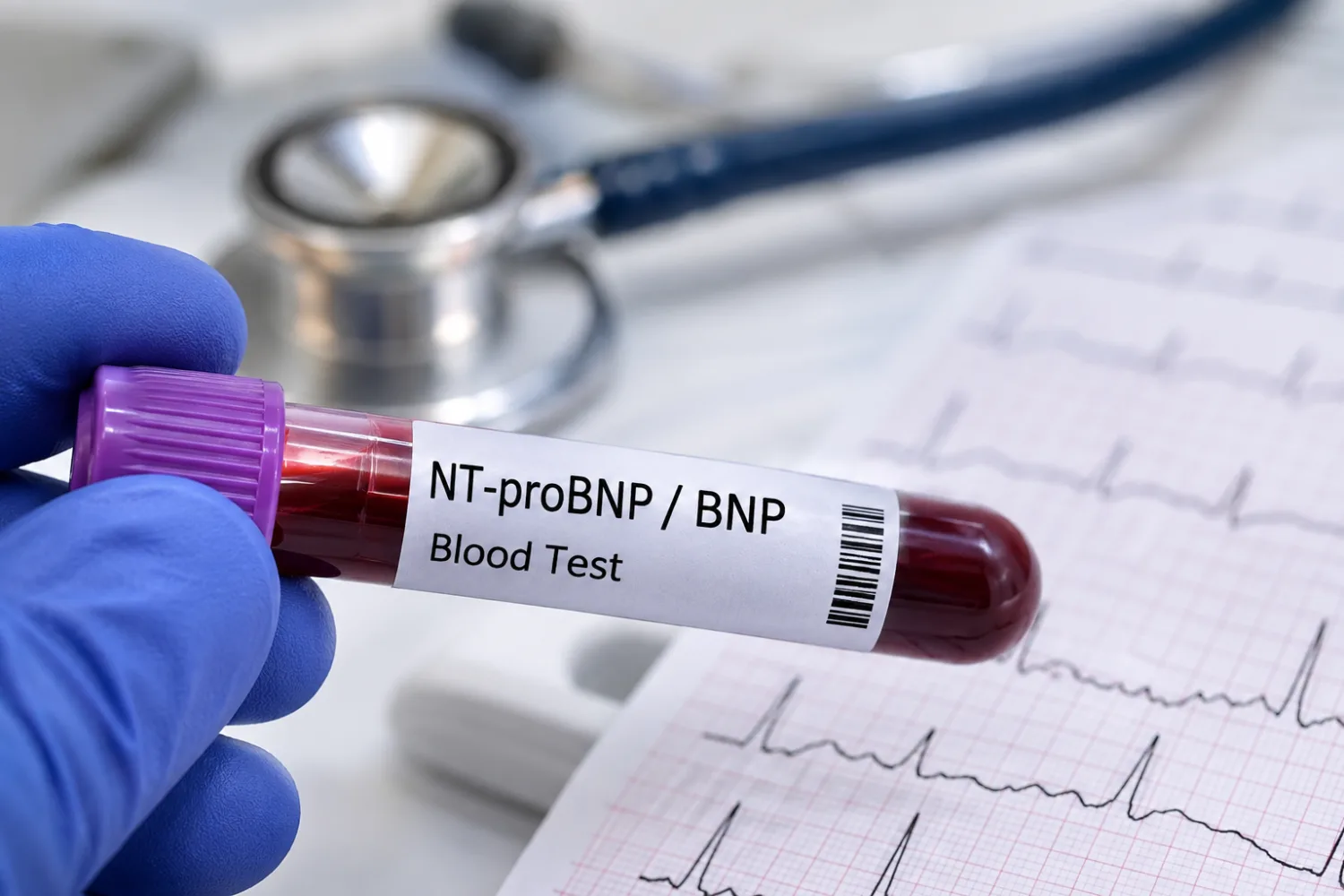
BNP and NT-proBNP: Testing for Possible Heart Failure
BNP and NT-proBNP are released when the heart is under increased pressure or stretch.
They are particularly useful when someone has symptoms such as unexplained breathlessness or swelling and heart failure is being considered.
A low level can make heart failure less likely, while a high level may lead to specialist assessment and echocardiography.
But the result is not specific. Age, kidney disease, atrial fibrillation and several other illnesses can increase natriuretic-peptide concentrations.
See our guide to BNP and NT-proBNP results.
D-Dimer: A Blood-Clot Test That Needs Context
D-dimer measures breakdown products formed when the body creates and dissolves blood clots.
A low D-dimer can be extremely useful for helping rule out a blood clot in someone whose clinical probability is already low enough.
A high D-dimer is much less specific.
It can increase because of infection, inflammation, pregnancy, recent surgery, age and many other conditions.
That means a positive D-dimer does not diagnose deep-vein thrombosis or pulmonary embolism.
It is primarily a test used within a diagnostic pathway rather than a sensible general screening test.
See our guide to D-dimer results.
Coeliac Blood Tests
Blood testing can help investigate suspected coeliac disease.
The most commonly used initial marker is tTG-IgA, usually alongside total IgA.
EMA and other antibodies may be used in particular circumstances.
One important point is that testing is most reliable while the person is still eating gluten.
Starting a gluten-free diet before testing can reduce antibody levels and potentially produce a misleading result.
See our guide to coeliac blood-test results.
Allergy Blood Tests
Allergy blood tests usually measure allergen-specific IgE.
They can be useful when there is a plausible history of allergy and a specific suspected trigger.
They are much less useful when used as enormous screening panels against dozens or hundreds of foods without a clinical reason.
A positive IgE result can show sensitisation without proving that exposure actually causes symptoms.
This is why test results should be interpreted alongside the reaction history rather than being used alone to diagnose food allergy.
See our guide to allergy blood-test results.
What Blood Tests Can Help With Tiredness and Fatigue?
Fatigue is one of the most common reasons people look at private blood testing.
There is no single “fatigue blood test”.
Depending on symptoms and history, useful starting tests may include an FBC, ferritin, thyroid function, B12 and folate, HbA1c, kidney function and liver markers.
Vitamin D may be relevant in some people.
But fatigue can also result from poor sleep, sleep apnoea, depression, chronic infection, medication, overtraining and many other causes that may not be diagnosed by a broad blood panel.
See our detailed guide to blood tests for tiredness and fatigue.
What Blood Tests Might Help With Hair Loss?
Hair loss is another area where targeted testing is more useful than testing everything.
Ferritin and a full blood count may help identify iron deficiency, while thyroid testing can be relevant when other symptoms suggest thyroid dysfunction.
Hormone tests may be appropriate if hair loss occurs alongside irregular periods, excess facial hair or other signs of androgen excess.
But many forms of hair loss are diagnosed by examining the pattern and scalp rather than through blood tests alone.
See our guide to blood tests for hair loss.
Blood Tests for Vegans and Vegetarians
A well-planned vegetarian or vegan diet can be nutritionally adequate, but certain nutrients deserve particular attention.
Vitamin B12 is especially important for vegans because reliable natural dietary sources are limited.
Iron status can also be worth investigating when symptoms or dietary intake raise concern, particularly in people with menstrual blood loss.
Vitamin D may be relevant depending on sun exposure, supplementation and other risk factors.
See our guide to blood tests for vegans and vegetarians.
Blood Tests for Men and Women at Different Ages
There is no universal panel that every healthy person should repeat annually.
What is useful changes with age, symptoms and medical history.
Cardiovascular risk becomes increasingly important with age, so cholesterol, blood pressure and diabetes risk deserve more attention in midlife.
For women, ferritin may be especially relevant when there are heavy periods, while hormone testing may occasionally help investigate menstrual or fertility problems.
For men, PSA can become a discussion later in life, but it should be an informed decision rather than treated as a routine cancer screen.
See our separate guides to blood tests for women in their 30s, 40s and 50s and blood tests for men by age.
Blood Tests Before Weight-Loss Injections
People considering medicines such as Wegovy or Mounjaro sometimes undergo blood testing before or during treatment.
Which tests are useful depends on the person's medical history, but common areas include blood sugar, kidney function, liver markers and cholesterol.
Thyroid or nutritional testing may be appropriate when symptoms suggest a problem rather than as an automatic requirement for everyone.
See our guide to blood tests before weight-loss injections.
Finger-Prick vs Venous Blood Tests
Private testing has made finger-prick sampling much more common.
It is convenient because a small sample can be collected at home and mailed to a laboratory.
For some markers, this works well.
But finger-prick samples have limitations. It can be difficult to collect enough blood, squeezing the finger excessively can affect the sample, and some tests require a larger venous sample for reliable analysis.
A venous blood draw generally provides more blood and may be preferable for larger panels, hormone testing and tests where sample quality is particularly important.
The NHS also uses both finger-prick and venous sampling in appropriate situations; for example, cholesterol can sometimes be measured with a finger-prick device.
See our guides to finger-prick vs venous testing and the accuracy of home blood-test kits.
Do You Need to Fast Before a Blood Test?
Many blood tests do not require fasting.
The NHS says that if fasting or another preparation step is needed, your healthcare professional should tell you.
Modern routine cholesterol testing frequently does not require fasting.
Some glucose or metabolic investigations may still require a period without food, depending on what is being measured.
If a test does require fasting, water is usually allowed unless you have been told otherwise.
Do not stop prescription medicines purely because you are having a blood test unless the doctor or testing provider has instructed you to do so.
See our guide to fasting before blood tests.
What Else Can Affect Blood-Test Results?
Blood results are not completely fixed numbers.
Hydration, recent exercise, illness, alcohol, medicines, supplements and timing can all influence particular markers.
Hard exercise can temporarily alter muscle and liver enzymes. Dehydration can make some results appear more concentrated. Acute infection can change CRP, ferritin and white blood cells.
Hormones may vary throughout the day or menstrual cycle.
Even something as simple as sitting versus lying down can influence certain measurements.
That is why repeat testing under more standardised conditions is sometimes more informative than reacting immediately to one mildly unusual result.
See our guide to what can affect blood-test results.
What Does “Normal Range” Actually Mean?
Reference ranges are one of the most misunderstood parts of blood testing.
A laboratory range is not a perfect boundary separating healthy people from sick people.
Different laboratories can use somewhat different methods and reference populations, so the ranges shown beside your result may differ from those you find online.
NHS laboratories explicitly publish different reference ranges for some tests.
There is also natural biological variation between healthy individuals.
This creates an important consequence when buying very large private panels.
If dozens of markers are tested, it becomes increasingly likely that at least one will fall slightly outside its reference range purely through normal variation.
A result highlighted in red is therefore not automatically evidence of disease.
Doctors look at how abnormal it is, whether related markers are also abnormal, whether the pattern makes biological sense and whether you have symptoms.
Why More Blood Tests Are Not Always Better
This is perhaps the most important principle in private testing.
More data can feel reassuring, but unnecessary testing can create uncertainty rather than remove it.
Imagine testing 60 different markers in a healthy person with no symptoms. Even if that person is entirely well, there is a reasonable chance that several results will sit just outside the laboratory reference range.
That may lead to repeat tests, GP appointments, anxiety and occasionally further investigations that were never truly needed.
The opposite problem also exists.
A huge normal blood panel can create false reassurance if the symptom being investigated requires imaging, examination or another type of test.
Blood tests cannot rule out every cancer, structural heart disease, many neurological conditions or countless other illnesses.
The best private test is therefore not usually the one with the greatest number of biomarkers. It is the one that answers a meaningful health question.
NHS vs Private Blood Tests
NHS blood testing is based primarily on clinical need.
If you have symptoms suggesting anaemia, thyroid disease, diabetes or another problem, your GP may arrange appropriate blood tests without charge.
Private testing offers something different.
It can provide faster access, more choice over the markers tested and the convenience of home sampling or private clinic appointments.
It can also allow people to check markers that the NHS may not consider medically necessary in their particular circumstances.
The trade-off is that you pay for the testing and may also need to organise follow-up yourself if something abnormal appears.
See our detailed comparison of NHS vs private blood tests.
How Much Do Private Blood Tests Cost?
Private testing ranges from relatively inexpensive single-marker tests to comprehensive panels costing several hundred pounds.
The price depends on the number and complexity of biomarkers, whether a clinician reviews the results, whether the sample is collected at home or in a clinic and whether a venous blood draw is included.
Simple cholesterol, HbA1c or vitamin tests may be relatively inexpensive.
Large hormone, performance or comprehensive health panels can cost much more.
Before paying, check whether the quoted price includes:
- the laboratory analysis;
- sample collection;
- clinical interpretation;
- a written report;
- follow-up if a result is significantly abnormal.
Our guide to private blood-test costs in the UK covers typical pricing in more detail.
What Should You Do If a Private Blood Test Is Abnormal?
Do not panic because one number is highlighted in red.
First look at how far outside the range it is and whether there is a plausible explanation.
Some mildly abnormal results simply need repeating.
Others should be discussed with a GP, particularly when several related markers are abnormal or you have relevant symptoms.
Very abnormal potassium, severe anaemia, extremely abnormal blood sugar and other potentially dangerous results can require urgent assessment.
A responsible private provider should have a process for escalating critically abnormal findings, but you should still know what follow-up is available before buying the test.
See our guide to what to do after abnormal private blood-test results.
Frequently Asked Questions
What are the most common blood tests?
Common tests include a full blood count, kidney function, liver profile, cholesterol, HbA1c or glucose, thyroid function and, when relevant, ferritin and other nutritional markers.
What blood test checks everything?
There is no single blood test that checks everything. Different tests measure different organs, cells, hormones and metabolic processes, and many diseases cannot be diagnosed through blood testing alone.
What is usually included in a full health blood test?
Private health panels commonly include an FBC, kidney function, liver markers, cholesterol, blood sugar and thyroid tests. Larger panels may add vitamins, iron, inflammation markers and hormones.
What blood tests should I get for tiredness?
Depending on your history, common starting tests include an FBC, ferritin, thyroid function, B12 and folate, HbA1c, kidney function and liver markers.
Can a normal blood test mean I am definitely healthy?
No. Blood tests only assess what has actually been measured. Many conditions require examination, scans or other investigations.
Can blood tests detect cancer?
Some blood tests can contribute to investigating certain cancers, but there is no routine blood panel that reliably rules out all cancer. Tumour markers such as PSA and CA125 have important limitations.
Can blood tests show vitamin deficiencies?
Yes, some deficiencies can be assessed with blood testing, including vitamin B12, folate and vitamin D. Iron deficiency is commonly assessed using ferritin and related tests.
Can blood tests show heart disease?
Blood tests can measure cardiovascular risk factors such as cholesterol and diabetes and can detect markers such as troponin or BNP in particular clinical situations. They cannot directly show whether coronary arteries are blocked.
Should I have blood tests every year?
Not necessarily. The useful frequency depends on age, symptoms, medical conditions, medications and previous results. Healthy people do not automatically need an enormous annual panel.
Are private blood tests accurate?
Tests processed by accredited laboratories can be analytically reliable, but usefulness depends on choosing the right test and interpreting it correctly. Sample quality is also important, particularly with some home finger-prick tests.
Is a finger-prick blood test as accurate as a venous test?
For some biomarkers it can be suitable, but venous samples are preferable for certain tests and larger panels. Finger-prick samples are more vulnerable to insufficient volume and collection problems.
Do I need to fast before a blood test?
Usually not. Some specific tests may require fasting, so follow the instructions given by the laboratory or healthcare professional.
Why is one of my blood results slightly abnormal?
Reference ranges contain natural biological variation, and mild abnormalities can occur in healthy people. Illness, exercise, food, hydration, medications and laboratory variation can also influence results.
Should I repeat an abnormal blood test?
Sometimes. A repeat measurement can show whether a mild abnormality was temporary or persistent, but significant abnormalities should be interpreted by an appropriate healthcare professional rather than simply repeatedly self-testing.
What is the best private blood test?
The best test is the one that addresses a specific question. A targeted panel chosen because of symptoms, risk factors or a health goal is usually more useful than simply buying the largest available test.