At-home blood test kits have become popular in the UK. They promise quick access to results for vitamin D, ferritin, cholesterol, HbA1c, thyroid function, hormones, liver health, kidney function and wider “wellness” panels without needing to book a GP appointment or attend a clinic.
For some people, they can be useful. A well-designed home blood test, collected correctly and processed by a reliable laboratory, can provide helpful information. But at-home blood testing is not automatically the same as having blood taken from a vein by a trained healthcare professional. The accuracy depends on the test, the sample type, how the sample is collected, how quickly it reaches the lab, whether the marker is suitable for finger-prick testing, and whether the result is interpreted properly.
It is also worth knowing that “at home” does not always mean “finger-prick”. Some private testing providers offer professional home blood collection, where a nurse comes to your home and takes a venous blood sample from your arm. This can be a useful middle ground: you still avoid travelling to a clinic, but the blood sample is taken professionally. Through Medichecks via All Health & Care, you can order private blood tests and, where available, choose a nurse home visit for venous sample collection.
The biggest risk is not only an inaccurate number. It is what happens next. A normal home result may give false reassurance. A mildly abnormal result may create anxiety. A large panel may flag several borderline results that are not clinically meaningful. And a genuinely serious result may need urgent follow-up that the testing company may not be responsible for managing.
This guide explains how at-home blood test kits work, when they can be accurate, when they are less reliable, which tests need caution, and how to use private home testing safely in the UK.
Important: This article is for general information only. At-home blood tests should not be used as the first step for urgent symptoms such as chest pain, severe shortness of breath, signs of stroke, black stools, vomiting blood, fainting, severe abdominal pain, confusion, severe weakness or suspected sepsis. Seek urgent medical advice instead.
How at-home blood test kits work
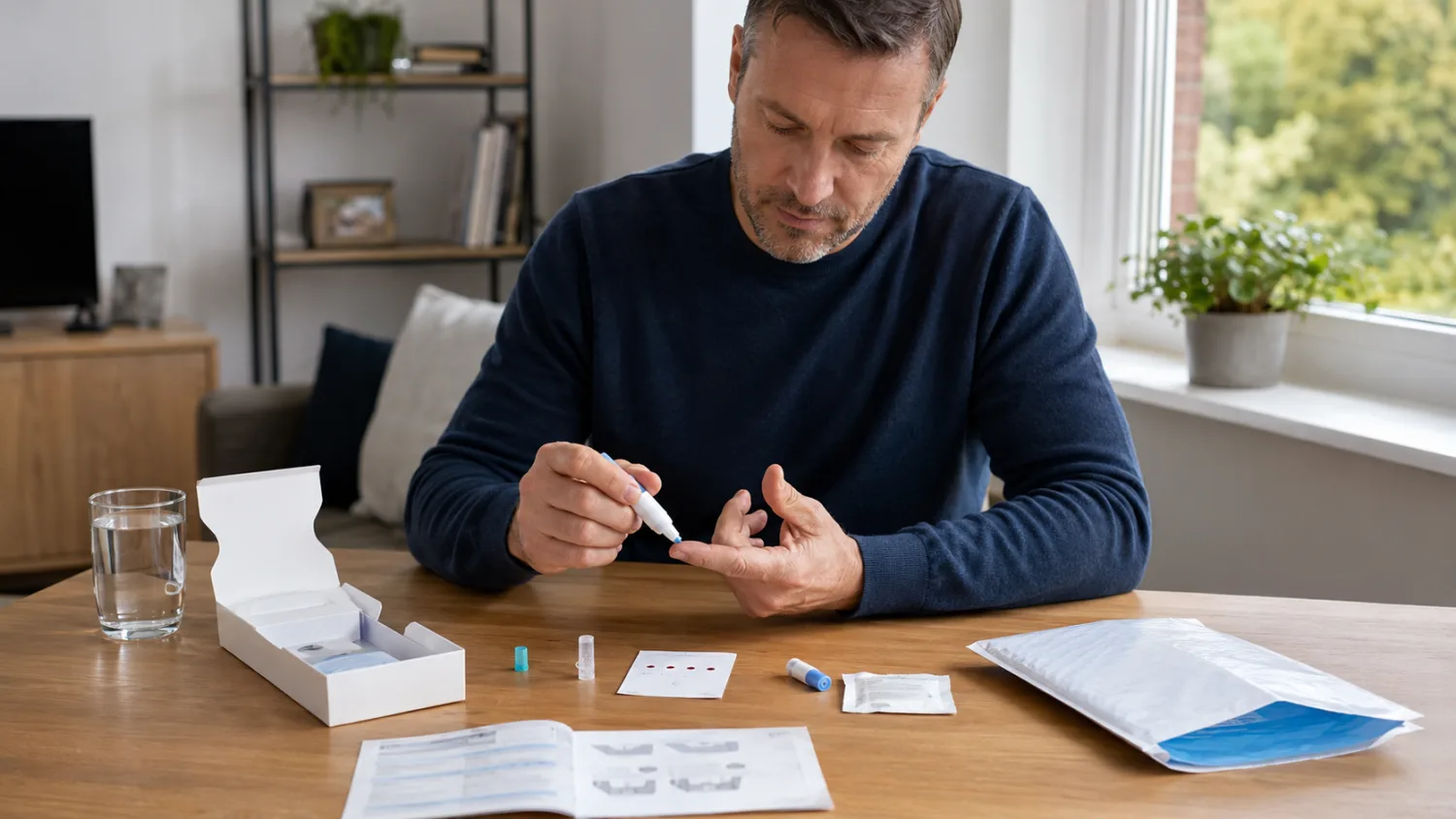
Most at-home blood test kits use a finger-prick sample. The provider sends you a kit, usually containing lancets, a small collection tube, wipes, plasters, instructions and return packaging. You prick your finger, collect drops of blood into the tube, package the sample and post it to the laboratory.
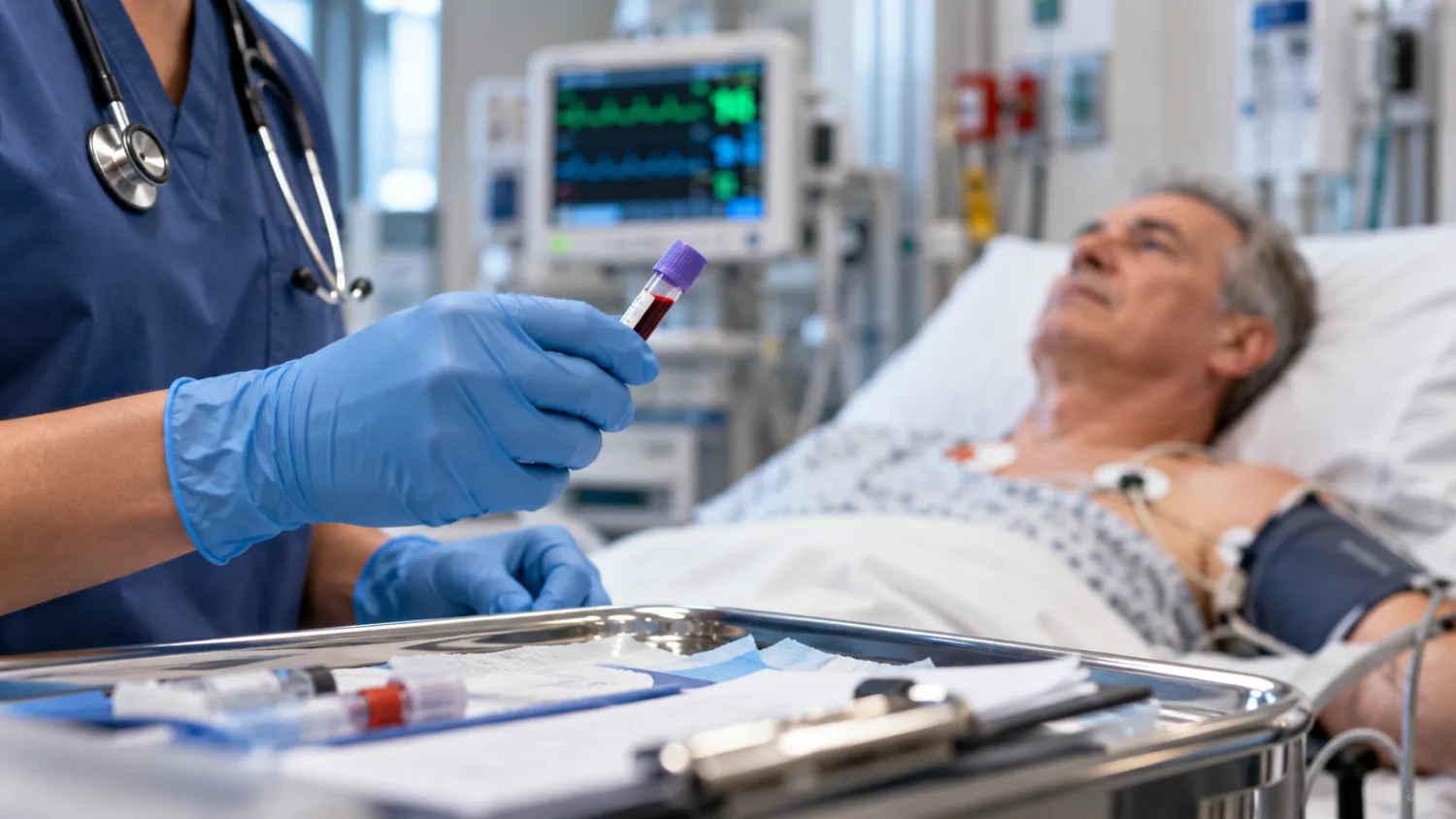
Some providers also offer home venous blood testing. This means a nurse, phlebotomist or other trained professional visits your home and takes blood from a vein, similar to a clinic blood test. This usually costs more than a finger-prick kit, but it may be better for larger panels or tests that need a bigger, cleaner or more stable sample.
This is one reason private home testing can vary so much. A small finger-prick kit may be convenient for selected markers, while a home nurse visit can be more suitable for broader panels or tests where sample quality matters. For example, Medichecks blood tests available through All Health & Care can include professional venous sample collection options, including a nurse visit at home for many tests.
Once the sample reaches the laboratory, it is processed and results are uploaded to an online account or sent by email. Some providers include clinician comments. Others provide only an automated report with reference ranges. Some offer paid follow-up with a private GP or clinician.
If you are comparing home testing with NHS or clinic-based testing, see NHS vs Private Blood Tests and Private Blood Test Costs in the UK.
Are at-home blood test kits accurate?
At-home blood test kits can be accurate, but only in the right circumstances. The answer is not simply yes or no.
A home blood test is more likely to be reliable if:
- the test is suitable for the sample method being used
- the provider uses a suitable accredited laboratory
- the sample is collected exactly as instructed
- enough blood is collected
- the sample is not squeezed excessively from the finger
- the sample is posted quickly
- the test is taken at the correct time of day or cycle stage if timing matters
- the result is interpreted with symptoms, medication, supplements and medical history
A home blood test is less likely to be useful if the sample is poor quality, delayed in the post, clotted, diluted with tissue fluid, collected on the wrong day, affected by supplements or medication, or interpreted without clinical context.
This is why two people can have very different experiences. One person may get a clear, useful vitamin D or HbA1c result. Another may receive a failed sample, a borderline hormone result taken on the wrong cycle day, or an abnormal marker with no clear explanation of what to do next.
It is also why sample method matters. If you are ordering a larger private panel, have struggled with finger-prick samples before, or need results that may affect treatment decisions, it may be worth choosing a venous sample collected by a professional rather than a self-collected finger-prick sample.
Finger-prick vs venous blood tests
The main difference between most home kits and clinic tests is the sample. Finger-prick tests use capillary blood from the fingertip. Clinic tests usually use venous blood from a vein in the arm. Some private providers also offer venous blood testing at home, where a nurse comes to you and takes the sample professionally.
| Feature | Finger-prick home test | Venous clinic or home phlebotomy test |
|---|---|---|
| Sample source | Capillary blood from the finger | Blood from a vein |
| Convenience | High — can be done at home | Moderate to high if mobile phlebotomy or a home nurse visit is arranged |
| Sample volume | Small | Larger |
| Risk of collection error | Higher | Lower when taken by trained staff |
| Suitable for large panels | Sometimes limited | Usually better |
| Best for | Selected markers and convenient monitoring | Important results, larger panels, confirmation or complex cases |
Finger-prick testing is not “bad” by default. It is widely used in healthcare for certain tests, such as glucose monitoring. But not every laboratory marker behaves the same way in a small capillary sample. Some tests need more blood, careful handling or a venous sample to reduce error.
If a result is unexpected, very abnormal, does not match your symptoms, or may affect treatment decisions, it is often sensible to confirm it with a venous blood test through a GP, clinic or private phlebotomy service. If convenience is the main reason you are considering a finger-prick kit, a professional home venous draw may be a useful alternative because you can still test from home while getting the sample taken by a nurse.
What can make a home blood test inaccurate?
Many home blood test problems happen before the sample reaches the laboratory. The laboratory may process the sample accurately, but the result can still be misleading if the sample was not suitable.
Not enough blood
Finger-prick kits often need the tube filled to a marked line. If there is not enough blood, the laboratory may reject the sample or the result may be less reliable. This is one of the most common reasons home samples fail.
Excessive squeezing
If you squeeze the finger too hard, tissue fluid can mix with the blood. This may dilute the sample and affect some results. Warming the hand, standing up, staying hydrated and following instructions can help the blood flow more easily.
Clotted sample
Some tubes need gentle mixing after collection. If blood clots before processing, the laboratory may be unable to run some tests. Clotting can happen if the sample takes too long to collect or is not mixed properly.
Delay in posting
Blood samples can change over time. Some markers are more stable than others. Posting a sample late in the week, leaving it in a post box over a weekend, or delays during hot or cold weather may affect sample quality.
Wrong timing
Some tests need specific timing. Hormone tests may need a particular menstrual cycle day. Testosterone is often best interpreted from a morning sample. Some tests may be affected by fasting, recent exercise, alcohol, illness or supplements.
Biotin and supplements
Biotin, often found in hair and nail supplements, can interfere with some laboratory tests, especially some hormone and thyroid assays. High-dose supplements, iron tablets, vitamin D, calcium, magnesium, creatine and other products can also affect certain results or interpretation.
Wrong test for the question
A technically accurate result can still be clinically unhelpful if it is the wrong test. For example, a broad hormone panel may not diagnose menopause in someone over 45 with typical symptoms. An IgG food intolerance panel may not explain bloating. A tumour marker may create anxiety without being appropriate for screening.
Which at-home blood tests are often reasonable?
Some tests are more suitable for home testing than others, especially when the result is used for non-urgent monitoring or a clear health question.
Vitamin D
Vitamin D is commonly tested with home kits. It can be useful if you are checking deficiency risk, monitoring supplementation, or have symptoms and risk factors that make testing relevant. But many people can follow standard UK supplementation advice without repeated testing unless there is a clinical reason.
See Vitamin D Blood Test Results Explained.
Ferritin and iron stores
Ferritin home testing may be useful for people with fatigue, heavy periods, hair shedding, restless legs, vegetarian or vegan diets, or previous low ferritin. However, low ferritin needs context, especially in men, postmenopausal women or anyone with gut symptoms.
See Low Ferritin but Normal Haemoglobin and Iron, Ferritin and Anaemia Blood Test Results Explained.
HbA1c
HbA1c can be suitable for home testing in many cases. It reflects average blood sugar over the previous few months and is used to assess diabetes and prediabetes risk. An abnormal result should be discussed with a GP or clinician, especially if you have symptoms such as thirst, frequent urination, weight loss or recurrent infections.
See HbA1c and Blood Sugar Results Explained.
Cholesterol
Home cholesterol testing can be useful as a screening or monitoring tool, especially if the result is interpreted with overall cardiovascular risk. Cholesterol numbers alone do not tell the full story. Age, blood pressure, smoking, diabetes, kidney disease and family history also matter.
See Cholesterol Blood Test Results Explained, High Cholesterol: Causes and Treatment and Cardiovascular Risk: The Complete Guide.
B12 and folate
B12 and folate tests can be useful if you have fatigue, mouth ulcers, pins and needles, vegan diet, gut conditions, anaemia patterns or medication that may affect absorption. However, results can be complex and may need interpretation with full blood count and symptoms.
See B12 and Folate Blood Test Results Explained.
Basic liver, kidney and bone markers
Some home panels include kidney, liver and bone profile markers. These can be useful for general screening or follow-up, but abnormal results should be interpreted carefully. A mildly abnormal liver enzyme or adjusted calcium result may need repeat testing, medication review or further assessment.
See Kidney Blood Test Results Explained, Liver Function Test Results Explained and Calcium and Bone Profile Blood Test Results Explained.
Which home blood tests need extra caution?
Some home tests are more likely to be misunderstood. They may still have a role, but only when used for the right reason and interpreted properly.
Thyroid panels
Thyroid home tests are popular. A basic TSH or thyroid profile may be useful, but interpretation depends on symptoms, medication, pregnancy status, previous thyroid disease and supplement use. Biotin can interfere with some thyroid tests. A borderline result may need repeat venous testing.
See Thyroid Blood Test Results Explained.
Female hormone and menopause tests
Hormone levels fluctuate across the menstrual cycle and during perimenopause. A home hormone panel may look scientific but still fail to answer the real question. For many people aged 45 or over with typical menopause symptoms, blood tests are often not needed to diagnose menopause.
Timing is essential for fertility and cycle-related tests. A progesterone test taken on the wrong day can be misleading. A fertility hormone panel without cycle timing may be difficult to interpret.
See Female Hormone Blood Test Results Explained, Menopause Blood Tests Explained and Fertility Blood Tests Explained.
Testosterone tests
Testosterone results depend on timing, symptoms, SHBG, medication, age and clinical context. In men, testosterone is usually best interpreted from morning blood tests, often repeated if low. In women, testosterone testing can be difficult because levels are much lower and standard assays may be less precise.
See Testosterone Blood Test Results Explained.
Allergy and food intolerance tests
Allergy blood tests should be targeted to a clear reaction history. Broad panels can produce false positives and unnecessary food avoidance. IgG food intolerance tests are especially problematic because they are not generally recommended for diagnosing food intolerance.
See Allergy Blood Test Results Explained.
Coeliac tests after reducing gluten
Coeliac blood tests usually need you to be eating gluten before and during testing. If you have already stopped or reduced gluten, a home coeliac test may be falsely negative.
See Coeliac Blood Test Results Explained.
Tumour markers
Tumour markers such as PSA or CA125 can be useful in the right clinical context, but they are not simple cancer screening tests. A normal result can falsely reassure, and a raised result can be caused by non-cancer conditions. These tests should be interpreted with symptoms, age, examination and medical history.
See PSA Blood Test Results Explained and CA125 Blood Test Results Explained.
What to check before buying an at-home blood test kit
Before paying for a home blood test, check more than the price and number of biomarkers. A cheaper test may not include clinician review, venous sampling or repeat sample support. A large panel may include markers that are not useful for your situation.
Ask these questions before booking:
- What exact markers are included? Do not rely only on package names such as “wellness panel” or “full health MOT”.
- Is the sample finger-prick or venous? Some tests are less suitable for finger-prick sampling.
- Can a nurse take the sample at home? For larger or more important panels, a professional home venous draw may be more suitable than collecting a small finger-prick sample yourself.
- Is the laboratory accredited? Look for clear information about the laboratory and quality standards.
- Is clinician review included? Automated traffic-light reports may not be enough.
- What happens if the sample fails? Will they send another kit or charge again?
- How quickly must the sample be posted? Some samples should not be posted just before weekends or bank holidays.
- Does the test need fasting? Some tests do, some do not.
- Does timing matter? Hormones, testosterone and some metabolic tests may need specific timing.
- Can medication or supplements affect it? Biotin, iron, thyroid medication, hormones and other products may matter.
- What will you do if the result is abnormal? Have a follow-up plan before testing.
If a provider sells supplements, treatments or memberships directly alongside testing, be cautious. A good provider should explain limitations and encourage appropriate medical follow-up, not push unnecessary treatment from borderline results.
For readers who want the convenience of home testing but would prefer a professionally collected sample, Medichecks private blood tests through All Health & Care may be worth comparing, especially where a home nurse venous collection option is available.
How to improve the chance of an accurate home blood sample
Good collection technique matters. Always follow the instructions from your own kit, because tube types and requirements vary.
General tips that often help include:
- read the instructions fully before starting
- check whether fasting or morning collection is needed
- avoid collecting just before a weekend or bank holiday unless the provider says it is safe
- drink water beforehand unless you have been told not to
- warm your hands in warm water for a few minutes
- stand up or let your hand hang down to encourage blood flow
- use the side of the fingertip rather than the centre
- wipe away the first drop if instructed
- do not scrape the finger on the tube
- avoid squeezing aggressively
- fill the tube to the required line
- mix the tube gently if instructed
- label the sample correctly
- post it as soon as possible using the provided packaging
If you struggle to collect enough blood, have poor circulation, faint with needles or have had failed finger-prick samples before, a venous sample may be better. This does not always mean you need to travel to a clinic. Some private services allow you to arrange a home nurse visit, so a trained professional can take the blood sample from your arm at home.
What to do with home blood test results
The result is only useful if you know how to act on it. Do not focus only on whether the provider has coloured a marker red, amber or green.
If the result is normal
A normal result can be reassuring, but it does not rule out every condition. If symptoms are persistent, worsening or concerning, speak to a GP or clinician.
For example, normal blood tests do not rule out all cancers, endometriosis, gallstones, asthma, sleep apnoea, heart rhythm problems, inflammatory bowel disease, neurological conditions or mental health problems.
If the result is borderline
Borderline results are common, especially in large panels. They may reflect normal variation, sample issues, recent illness, exercise, alcohol, timing, supplements or early disease. Do not panic. Ask whether it needs repeating, whether it fits symptoms and whether a venous test is needed.
If the result is clearly abnormal
If a result is clearly abnormal, contact the provider for clinical interpretation if available. If the result is significant, unexplained or linked with symptoms, speak to your GP or a private clinician.
For a step-by-step guide, see What to Do After Abnormal Private Blood Test Results.
If the result is urgent
If the provider tells you a result is urgent, or if the result is very abnormal and you feel unwell, do not wait for a routine appointment. Use NHS 111, contact your GP urgently, attend urgent care or call 999 depending on the symptoms.
Urgent examples may include very abnormal potassium, very high calcium with symptoms, severe anaemia, serious kidney impairment, very abnormal liver results with jaundice, or blood sugar results suggesting severe diabetes with symptoms. The exact urgency depends on the result and your condition.
When at-home blood tests are not the right choice
At-home blood tests are not a safe replacement for medical assessment when symptoms may be serious.
Do not rely on a home blood test first if you have:
- chest pain
- severe shortness of breath
- signs of stroke
- fainting or collapse
- confusion or severe weakness
- black stools or vomiting blood
- blood in stool with weight loss or bowel change
- severe abdominal pain
- unexplained rapid weight loss
- persistent fever or night sweats
- a new lump
- severe headache or new neurological symptoms
- heavy bleeding or symptoms of severe anaemia
- possible pregnancy complications
- symptoms in a baby, child or vulnerable adult that need assessment
In these situations, you may need examination, observations, ECG, urine tests, stool tests, imaging, urgent referral or treatment. A home blood test can delay care if used in the wrong situation.
How to decide whether a home blood test is worth it
At-home blood tests are most useful when they answer a clear, non-urgent question. They are least useful when used as a broad search for “what is wrong” without medical guidance.
Before buying, ask:
- What question am I trying to answer?
- Is this the right test for that question?
- Is finger-prick sampling suitable?
- Would venous sample collection be more appropriate?
- Would a home nurse visit solve the convenience problem without relying on a finger-prick sample?
- Will the result change what I do next?
- Could symptoms need a GP appointment instead?
- Do I understand the limitations?
- Is clinician interpretation included?
- Do I have a plan if the result is abnormal?
Examples of clearer questions include:
- “Has my vitamin D improved after supplementation?”
- “Is my ferritin still low?”
- “What is my HbA1c?”
- “What is my cholesterol profile?”
- “Do I need to discuss this thyroid result with a clinician?”
Vague questions such as “Do I have a hidden disease?” or “Can this test check everything?” are less suitable for home testing.
The bottom line is that at-home blood test kits can be accurate and useful, but they are not foolproof. They work best for targeted, non-urgent questions, suitable markers, good sample collection and clear follow-up. They are riskier when used for large panels, complex symptoms, hormones, tumour markers or urgent health concerns.
For simple checks, a finger-prick kit may be enough. For broader panels, important results or people who want a professionally collected sample without visiting a clinic, a home venous blood draw from a nurse may be a better option. You can compare private blood tests and collection options through Medichecks via All Health & Care.
If symptoms matter, the safest route is still clinical assessment. A blood result should support good healthcare, not replace it.
Frequently asked questions
Are at-home blood test kits accurate?
They can be accurate for some markers if the sample is collected correctly, posted quickly and processed by a suitable laboratory. However, finger-prick samples are more vulnerable to collection errors than venous blood tests.
Are finger-prick blood tests as accurate as venous blood tests?
Sometimes, but not for every marker or situation. Venous blood tests are often better for larger panels, clinically important results, repeat confirmation and tests needing more sample volume.
Can a nurse come to my home to take a blood test?
Yes, some private providers offer home nurse or mobile phlebotomy options. This means a trained professional takes a venous blood sample from your arm at home. Through Medichecks via All Health & Care, you can compare private blood tests and available sample collection options, including home nurse visits where offered.
Is a home nurse blood test better than a finger-prick test?
It can be better for larger panels, important results or tests needing more sample volume. A home nurse blood test is still convenient, but the sample is taken professionally from a vein rather than collected by finger-prick.
Why do home blood test samples fail?
Common reasons include not enough blood, clotting, delayed postage, incorrect labelling, sample leakage, excessive squeezing or using the wrong tube.
Can squeezing my finger affect the result?
Yes. Squeezing too hard can mix tissue fluid with blood and may affect some results. Follow the kit instructions and try warming your hands to improve blood flow.
Can I post a blood sample over the weekend?
Usually it is better to avoid posting samples just before weekends or bank holidays unless the provider says it is acceptable. Delays can affect some samples.
Which home blood tests are most useful?
Home tests can be useful for selected markers such as vitamin D, ferritin, HbA1c, cholesterol, B12 and some monitoring tests, provided they are interpreted properly.
Which home blood tests need caution?
Hormone panels, menopause tests, testosterone tests, allergy panels, food intolerance tests, tumour markers and coeliac tests after reducing gluten need extra caution.
Can home blood tests diagnose disease?
They can support diagnosis in some situations, but they rarely diagnose everything by themselves. Symptoms, examination, repeat testing, imaging or specialist review may still be needed.
Are home thyroid tests reliable?
They can be useful, but interpretation depends on symptoms, medication, pregnancy, supplements such as biotin and whether the sample is suitable. Borderline results may need repeat testing.
Are home hormone tests reliable?
Some hormone tests can be useful when timed correctly. But hormone levels fluctuate, and poorly timed tests can be misleading, especially for fertility, menopause and menstrual cycle questions.
Can a home blood test rule out cancer?
No. A normal home blood test cannot rule out cancer. Symptoms such as unexplained weight loss, blood in stool, a new lump, persistent pain or night sweats need medical assessment.
Can I take home blood test results to my GP?
Yes, but your GP may repeat the test through NHS pathways before acting on it, especially if the result is unexpected, the sample method is unclear or symptoms need assessment.
What should I do if my home blood test is abnormal?
Contact the provider for interpretation if available. Speak to a GP or clinician if the result is significant, unexplained, repeated or linked with symptoms.
What should I do if my home blood test is normal but symptoms continue?
Do not ignore persistent symptoms. A normal result does not rule out every condition. Speak to a GP if symptoms continue, worsen or concern you.
Are large home blood test panels worth it?
Not always. Large panels increase the chance of borderline results that may not be clinically important. A targeted test chosen for a clear reason is often more useful. If a large panel is appropriate, venous sample collection may be preferable.
Do home blood tests need fasting?
Some do and some do not. Follow the provider’s instructions. Cholesterol, glucose and some metabolic tests may have specific timing or fasting advice depending on the provider.
Can supplements affect home blood test results?
Yes. Biotin, iron, vitamin D, calcium, magnesium, creatine and hormone supplements can affect some results or their interpretation. Tell the provider or clinician what you take.
Are home blood tests safe?
For many people, finger-prick collection is low risk. The bigger safety issue is misinterpreting results, delaying medical care or acting on abnormal results without proper advice.
Should I use a home blood test for urgent symptoms?
No. Urgent symptoms need medical assessment, not self-testing. Use NHS 111, contact your GP urgently or call 999 depending on severity.
How can I make a home blood test more reliable?
Follow the instructions carefully, collect at the right time, warm your hands, avoid excessive squeezing, fill the tube correctly, label it properly and post it promptly. For larger or more important tests, consider whether a professionally collected venous sample would be more suitable.