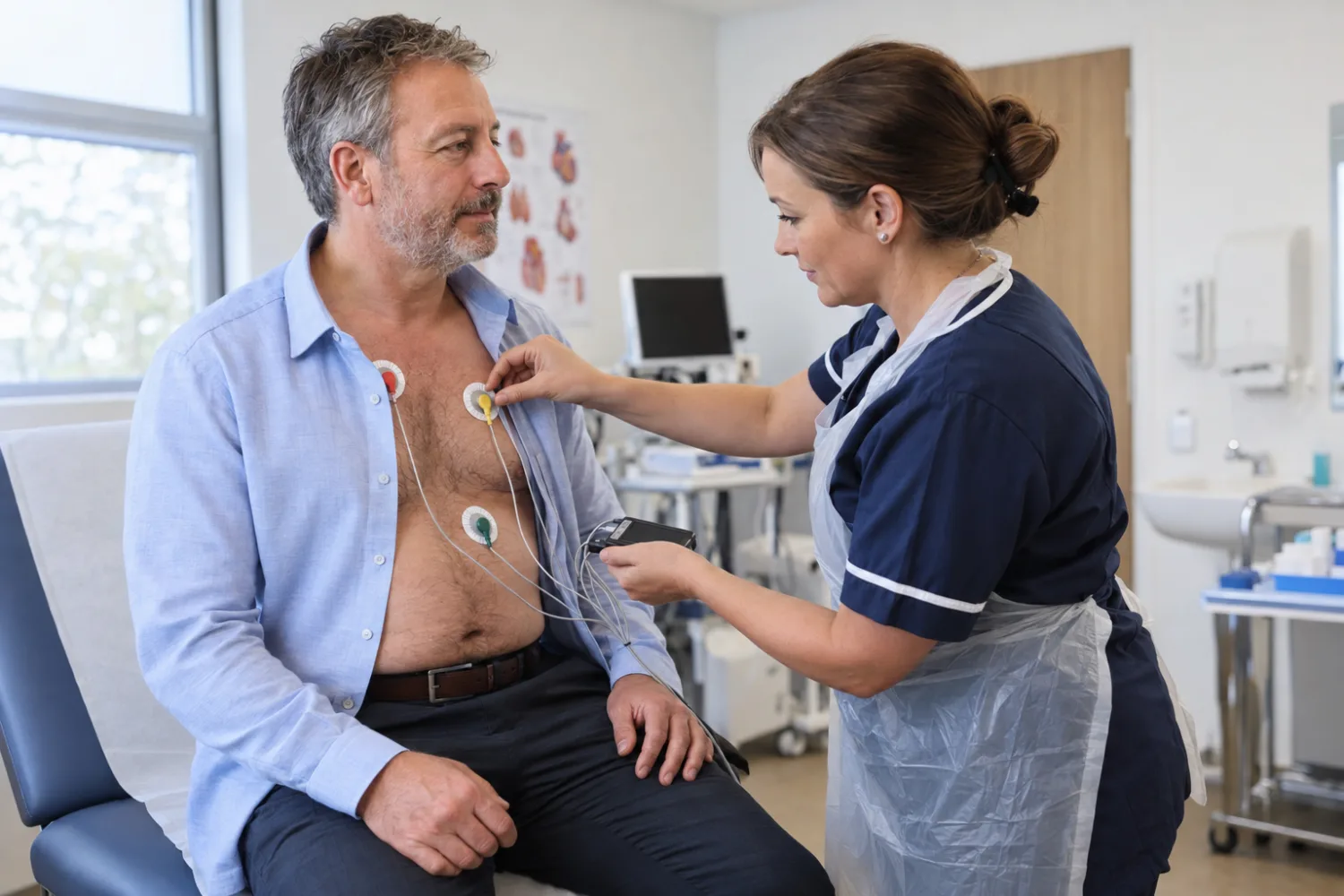
A troponin blood test is one of the most important tests used when doctors are concerned about a heart attack. But seeing a result marked "high" can be frightening, particularly because an elevated troponin does not automatically mean that you have had a heart attack.
Troponin is released into the bloodstream when heart muscle cells are injured. A blocked coronary artery is one reason this can happen, but there are others, including myocarditis, heart failure, pulmonary embolism, severe illness and sometimes kidney disease.
There is another complication: there is no single troponin number that counts as "normal" for every patient or every hospital. Different laboratories use different troponin tests, and their reference ranges and reporting thresholds can differ.
Doctors therefore interpret troponin alongside your symptoms, an ECG, the timing of those symptoms and often a second or third troponin measurement.
This guide explains what troponin is, what a raised result can mean, why doctors repeat the test and why two apparently similar troponin numbers may have very different significance.
What Is Troponin?
Troponin is a group of proteins involved in muscle contraction. The forms measured in heart testing are cardiac troponin I and cardiac troponin T.
These proteins are found in heart muscle cells. When heart muscle is injured, troponin can leak into the bloodstream.
This makes troponin a useful marker of myocardial injury — medical language for damage or stress affecting heart muscle.
The test is particularly important when somebody arrives at hospital with symptoms that could represent an acute coronary syndrome, such as:
- chest pressure, tightness or pain;
- pain spreading into the arm, jaw, back or shoulder;
- shortness of breath;
- sweating;
- nausea or vomiting;
- light-headedness or collapse.
Doctors will usually assess more than the blood test. NICE recommends a 12-lead ECG and a high-sensitivity troponin I or T measurement when somebody is assessed in hospital for suspected acute coronary syndrome.
If you are having new or severe chest pain now, particularly with breathlessness, sweating, nausea or pain spreading to the arm, jaw or back, call 999 rather than arranging a routine private blood test.
What Is a High-Sensitivity Troponin Test?
Most hospitals now use high-sensitivity cardiac troponin tests, often abbreviated to hs-cTn.
Older troponin tests could detect relatively large releases of troponin. High-sensitivity tests can detect much smaller amounts.
This matters because doctors can identify or rule out heart muscle injury earlier than was possible with older assays.
A high-sensitivity test does not mean that every detectable amount of troponin represents a heart attack. In fact, very small amounts can be detected in many healthy people.
The question is therefore not simply:
"Is there any troponin in the blood?"
Doctors are more interested in:
- how high the concentration is;
- whether it is above the laboratory's reference limit;
- whether the result is rising or falling;
- when the symptoms began;
- what the ECG shows;
- how likely a heart attack is from the overall clinical picture.
The British Heart Foundation notes that high-sensitivity testing can detect lower troponin levels and that hospitals may repeat the blood test to see whether the concentration is changing.
What Is a Normal Troponin Level?
This is where online interpretation can become misleading.
There is no single universal normal troponin value.
Results are commonly reported in nanograms per litre (ng/L), but the threshold depends on which laboratory assay was used.
Different manufacturers produce different troponin I and troponin T tests. Even among high-sensitivity troponin I tests, the upper reference limits can differ substantially.
For example, one laboratory may use a reference limit somewhere around the teens, while another assay may have a cutoff several times higher. Some assays also use different reference limits for men and women.
This is why a result of "20 ng/L" cannot be labelled normal or abnormal without knowing:
- whether it was troponin I or troponin T;
- which assay was used;
- the laboratory's reference range;
- the patient's sex where sex-specific thresholds are used;
- the timing of the blood sample;
- any previous or subsequent troponin measurements.
NICE specifically advises clinicians to consider that the 99th-percentile thresholds for troponin I and T may differ between sexes.
Your laboratory report should normally display its own reference range or decision threshold. That is more useful than comparing your result with a number found on another hospital's website.
What Does a High Troponin Result Mean?
A raised troponin means that there is evidence of heart muscle injury.
It does not, on its own, tell doctors why that injury occurred.
A heart attack is one important possibility, particularly when someone has typical symptoms and corresponding ECG changes.
But the medical definition of a heart attack requires more than a single elevated troponin result.
NICE describes myocardial infarction as a rise and/or fall in cardiac troponin, with at least one measurement above the assay's 99th-percentile upper reference limit, together with evidence suggesting myocardial ischaemia, such as characteristic symptoms, ECG changes, imaging findings or a coronary artery clot.
That distinction is important.
Raised troponin = heart muscle injury.
Raised troponin does not automatically = heart attack.
A person with severe myocarditis, for example, may have a considerably elevated troponin because their heart muscle is inflamed. The result can be genuinely abnormal without the cause being a blocked coronary artery.
Why Is Troponin Tested More Than Once?
The direction of change can be as important as the first number.
Doctors may take one sample when you arrive and another after an interval, often using an established hospital pathway.
Depending on the particular high-sensitivity assay and local protocol, repeat testing may take place around one to three hours later.
Imagine two people both have an initial troponin result of 30 ng/L.
In one person, the next result is 31 ng/L and they are known to have chronic kidney disease with previous similar results.
In another person, the result rises from 30 to 150 ng/L while they are experiencing central chest pressure.
Although the first numbers were identical, the clinical significance is very different.
This is why doctors look for a rise or fall, sometimes referred to as the troponin delta or change.
A substantial dynamic change can suggest an acute process, while a relatively stable elevation may suggest chronic myocardial injury — although neither pattern should be interpreted without the rest of the clinical information.
NICE supports several high-sensitivity troponin strategies, including pathways using an initial sample followed by another measurement one to three hours later when required.
Can You Have a Heart Attack With a Normal Troponin?
It is possible for an early troponin result to be low or within the reference range even when somebody is having a heart attack.
Troponin does not necessarily rise immediately when symptoms begin.
This is one reason the timing of the sample matters and why repeat testing may be necessary.
Modern high-sensitivity assays have made it possible to rule out certain heart attacks much earlier in appropriately selected patients, but this is done using validated clinical pathways rather than simply looking at whether the result has an "H" next to it.
NICE states that a single very low high-sensitivity troponin result may sometimes be used to help rule out a non-ST elevation myocardial infarction in a patient assessed as being at low risk. However, the threshold depends on the assay and clinical context.
Troponin also does not replace an ECG.
A person with a STEMI — a major type of heart attack associated with characteristic ECG changes — needs urgent treatment and doctors should not wait for the troponin to rise before acting.
If you are interested in how ECG testing works, see our guide to private ECG costs and what an ECG can show.
What Else Can Cause Raised Troponin?
Heart attack may be the condition most strongly associated with troponin, but many medical problems can injure or place significant stress on heart muscle.
Possible causes of raised troponin include:
- myocarditis, or inflammation of the heart muscle;
- heart failure;
- very fast or abnormal heart rhythms;
- pulmonary embolism;
- severe infection or sepsis;
- very low blood pressure or shock;
- severe anaemia or lack of oxygen;
- kidney disease;
- heart surgery or other cardiac procedures;
- cardiac arrest;
- some forms of extreme physical exertion.
Kidney disease
People with chronic kidney disease can have persistently raised high-sensitivity troponin, particularly troponin T.
This does not mean that raised troponin should simply be ignored in somebody with kidney disease.
Instead, clinicians often pay close attention to previous values, the rise or fall in serial measurements, symptoms and ECG findings.
Myocarditis
Myocarditis can damage heart muscle and therefore release troponin. Symptoms may include chest pain, breathlessness, palpitations or fatigue, sometimes following a viral infection.
Pulmonary embolism
A large blood clot in the lungs can place sudden strain on the right side of the heart and cause troponin to rise.
Troponin is not the main diagnostic test for pulmonary embolism. Doctors assess the whole clinical picture and may use tests such as D-dimer and CT pulmonary angiography where appropriate.
Our guide to D-dimer blood test results explains why that test is interpreted differently.
Heart failure
Troponin can also be elevated in people with acute or chronic heart failure, reflecting stress or injury to the heart muscle rather than necessarily a new blocked artery.
The higher the troponin, the more important it is to establish the cause — but the size of the number alone cannot make the diagnosis.
What Happens After an Abnormal Troponin Result?
What happens next depends on why the test was requested and what the rest of your assessment shows.
If doctors suspect an acute heart attack, investigations and treatment may proceed urgently.
You may have repeated ECGs, serial troponin measurements and continuous heart monitoring.
Depending on the findings, further tests can include:
- an echocardiogram;
- coronary angiography;
- CT coronary angiography;
- other blood tests;
- chest imaging.
An echocardiogram uses ultrasound to examine how the heart is pumping and whether different areas of heart muscle are moving normally. You can read more in our guide to echocardiograms and what they show.
If an elevated troponin is discovered outside an emergency setting and you are otherwise stable, the clinician may investigate underlying heart disease, kidney function or another possible cause depending on the circumstances.
For non-emergency cardiac symptoms that require specialist assessment, our guide to private cardiologist consultations and tests explains common routes into private cardiology.
When Should Chest Pain Be Treated as an Emergency?
A troponin test should not become something that delays emergency care.
Call 999 if you have symptoms suggesting a possible heart attack, particularly:
- persistent central chest pressure, heaviness, squeezing or tightness;
- pain spreading to either arm, the jaw, neck, back or stomach;
- chest discomfort with sweating;
- chest pain with nausea or vomiting;
- severe or sudden breathlessness;
- collapse or feeling as though you may pass out.
Not everybody having a heart attack experiences dramatic chest pain. Symptoms can sometimes be less typical, particularly in older people, people with diabetes and some women.
Breathlessness can also be an important symptom. Our guide to shortness of breath and when to call 999 explains other warning signs that need urgent assessment.
Do not order a private troponin blood test and wait for the result if you are currently experiencing symptoms that could represent a heart attack.
Troponin is most useful in this situation as part of an emergency medical assessment where doctors can interpret it alongside an ECG, examination and repeat testing.
Frequently Asked Questions
What troponin level means a heart attack?
There is no single number that proves a heart attack. Different troponin assays have different reference limits. Doctors usually look for a rise and/or fall in troponin with at least one result above the assay's 99th-percentile reference limit, together with clinical evidence of myocardial ischaemia such as symptoms, ECG changes or imaging findings.
Is a troponin result of 14 high?
It depends on the assay used. A value of 14 ng/L may be around the reference threshold for some high-sensitivity troponin tests but not others. The laboratory's own reference range, your symptoms and any change between serial samples are needed to interpret it.
Is troponin 20 high?
Again, it depends on the laboratory assay. A result of 20 ng/L can be above the reference limit for some tests and within or below the threshold for others. Do not compare the value with a reference range taken from a different laboratory.
Does a high troponin always mean heart damage?
A raised cardiac troponin generally indicates myocardial injury — injury or stress affecting heart muscle cells. It does not tell you the underlying cause. Heart attack is one possibility, but myocarditis, heart failure, pulmonary embolism, severe illness and several other conditions can also raise troponin.
Can anxiety raise troponin?
Ordinary anxiety itself would not usually be expected to cause a substantial troponin rise. However, chest pain and palpitations caused by anxiety can resemble heart symptoms, so clinicians may still need to exclude cardiac causes. Rare forms of severe physiological stress can affect the heart, but an elevated troponin should not simply be dismissed as anxiety.
Can exercise increase troponin?
Yes. High-sensitivity troponin can temporarily rise after prolonged or very strenuous endurance exercise in some people. The clinical context matters, and an unexpected high result should still be interpreted by a clinician rather than automatically attributed to exercise.
How quickly does troponin rise after a heart attack?
Troponin begins to rise after heart muscle injury, but the timing varies. High-sensitivity assays can detect changes earlier than older tests. If somebody presents soon after symptoms begin, doctors may repeat the measurement because an initial low value may not tell the whole story.
How long does troponin stay elevated?
Troponin can remain elevated for days after significant heart muscle injury. The exact duration depends on the type of troponin measured, the size of the injury and the patient's clinical circumstances. For this reason, an elevated result does not always mean the injury occurred immediately before the blood sample.
Why was my troponin repeated after one or two hours?
Doctors often want to see whether the concentration is rising, falling or staying relatively stable. Modern high-sensitivity troponin pathways use serial measurements at specified intervals when one initial test is not enough to safely confirm or exclude acute myocardial injury.
What does a falling troponin mean?
A falling result may indicate that an episode of myocardial injury occurred earlier and the troponin concentration is now declining. It still needs to be interpreted with the earlier values, symptoms and other tests. Falling troponin does not by itself prove that the cause was a heart attack.
Can kidney disease cause high troponin?
Yes. People with chronic kidney disease may have chronically elevated troponin levels. Doctors therefore often compare serial measurements and previous results and consider symptoms and ECG findings rather than using a single result to diagnose a heart attack.
Can troponin be high without chest pain?
Yes. Some causes of myocardial injury do not produce typical chest pain, and some heart attacks present with breathlessness, nausea, sweating, weakness or other symptoms instead. An unexpectedly raised result still requires interpretation in its clinical context.
Should I get a private troponin test for chest pain?
If you currently have symptoms that could indicate a heart attack, a standalone private blood test is not the appropriate first step. You need urgent medical assessment where an ECG, troponin and other investigations can be performed and acted on quickly. Call 999 for severe or persistent suspected heart-attack symptoms.